


A useful how-to, available free on our SubStack feed.


Catholic comments on the passing parade.


 Posts
All Comments
Posts
All Comments

 |
| An Asian demon. |
My Chinese student immediately sees the absurdity of the term “mental illness.” Like a physical illness?
“Mental illness” is a euphemism. We have sadly come to take it literally, and have even come to treating the thing with pills. Given this approach, the problem is incurable.
Older terms are more accurate. The various experiences we call mental illness are experienced subjectively as oppression, obsession, or possession by some will which either inhibits, distracts, or completely suppresses our own. Often, people actually “hear voices” in their head. You could say “out of your mind” or “beside yourself” or “driven to distraction.” But that is only half the equation. If you are out of your mind, who is in it? Who or what is distracting you? The best, most lucid description of the experienced reality we euphemistically call “mental illness” is demonic possession, or demonic affliction.
We refuse to use the terms only because we arbitrarily refuse to accept the existence of demons. Despite the overwhelming evidence—the evidence of “mental illness” itself. People are experiencing demonic wills interfering with their own, and fairly commonly.
Understand this simple truth, understand the problem in these terms, and the cure becomes obvious. You need spiritual assistance. The shamanic approach is to negotiate peace terms with the demon, the “voice in your head.” It does nothing to simply ignore it and pretend it does not exist. The Judeo-Christian approach, more effective, is to cast the demon out, supplanting it with the imminent presence of the one true God.
“When the unclean spirit has gone out of a person, it passes through waterless places seeking rest, but finds none. Then it says, ‘I will return to my house from which I came.’ And when it comes, it finds the house empty, swept, and put in order. Then it goes and brings with it seven other spirits more evil than itself, and they enter and dwell there, and the last state of that person is worse than the first.”
Therefore, it is necessary to occupy the spirit with a “strong man.”
“if it is by the Spirit of God that I cast out demons, then the kingdom of God has come upon you. Or how can someone enter a strong man's house and plunder his goods, unless he first binds the strong man? Then indeed he may plunder his house.”
In other words, with a faith in the one true God.
And this approach, unlike that of modern psychiatry, actually works. It is scientifically proven to work.
 |
| NB Provincial Asylum before demolition. |
I have been reading a history of the New Brunswick Provincial Mental Asylum.
A mental patient committed in 1868 kept a diary. In it, he classified fellow inmates as falling into three groups:
“Those that had become crazy about religion…others that had gone crazy about loss of property…and many that had become insane through the immoderate and excessive indulgences of their sensual passions.”
I find it interesting to see a lay classification not influenced by the modern DSM. I think these classifications are much more helpful than “bipolar,” or “schizophrenic,” or “depressed,” which only describe symptoms. It is as if modern psychiatry is trying to avoid looking at causes. But without knowing causes, you are unlikely to find a cure.
I nevertheless think this classification is off the mark on one thing. I doubt anyone actually goes crazy about religion. I can’t imagine the mechanism that would involve. That is the reaction of someone who starts by assuming religion is false—so that an excessive interest in it is automatically harmful or insane. Yes, many insane people seem deeply religious; just as many sick people enter hospitals. That is not evidence that the hospital makes them sick. I’d posit that religion is something many crazy people gravitate towards as a cure. Unfortunately, mental hospitals and psychiatry, then and now, will do everything they an to steer them away from it.
Which leaves two categories: those driven mad by injustice, and those driven mad by guilt. I think that is right, from reading the accounts of various inmates.
But this can then be reduced to one cause for all mental illness: injustice.
We all have an inner gyroscope, a conscience, which demands justice. Kant argued persuasively that justice is a self-evident truth, a “categorical imperative.” Monotheists assume justice because the universe is governed by a just God. Each of us faces judgement at death, and at the end of time all will be judged. But even non-theists believe the cosmos is necessarily just: this is the doctrine of karma. The ancient Greeks held that the gods themselves were bound by Dike, the moral law.
The matter is obscured by the current misuse of the term “social justice.”
And the matter is obscured by modern psychiatry because it refuses to recognize morality, justice. Which makes it useless in treating “mental illness.”
For the obvious cause of mental illness is that someone’s internal gyroscope is thrown off by the prolonged experience of some injustice—either done to them, or done by them to someone else. Something within us rebels, says this cannot be, this cannot be allowed to continue. If they cannot take action to correct it, they will and do experience great emotional turmoil and disorientation.
It all seems to me to make perfect sense.
Religion is then indeed the cure, as it is the assurance of justice eventually being done.

I don’t know if you’ve noticed it yet, but most Canadians are mad.
You might object. Who am I to make such a judgement? Isn’t it more likely, if everyone else thinks differently, that I am the insane one? Orwell said, “Madness is a minority of one.”
And this is indeed how modern psychiatry tends to frame it.
An example of the current madness: this is the ad populum fallacy. Reality is not determined by popular vote. We cannot vote to make the earth flat.
I believe I have some perspective on this, from studying philosophy, comparative religions, and history, and from living abroad in diverse cultures: China, Korea, the Philippines, Saudi Arabia, Qatar, Dubai, not to mention across Canada and in the US. I also married into a Pakistani family.
Surely this allows me to see beyond the common consensus, and judge it.
Canadians are mostly mad.
To be fair, not just Canadians. Koreans are also mad. Americans are mad. Brits are mad. Japanese are mad. Filipinos are sane. Arabs are mostly sane, if you step away from mentioning Jews or Israel.
What makes the difference? Wealth seems to be part of it: rich people go crazy. And we have always known this: large manor homes are always haunted. There are skeleton closets.
But that, I think, is not the key. Wealth drives you crazy because, as the Gospel warns, wealth drives you away from God. It turns your focus towards the world.
And belief in God, the necessary first premise, is required for sanity.
In Filipino or in Arab culture, the existence of God is taken as a given.
In Canada, Korea, America, Britain, Japan, even when nominally acknowledged, God is mostly ignored. He seems at most an abstract concept.
You will object that in America there is a distinct and lively evangelical element. There is indeed; that is why there is hope for America. But even in America, this is a counterculture. In the Philippines or Saudi Arabia, monotheism is the mainstream.
In the New Testament, Jesus and the apostles spend most of their time casting out demons. This is their initial mission. In the early church, exorcist was a common ecclesial rank. It was assumed that any pagan converts needed to be exorcised. The rapid spread of Christianity through the Roman Empire, the rest of Europe, and today across Africa, was due to its famed ability to cast out demons.
And the classical gods were demons, as the early Christians indeed identified them. Each was or represented an obsession that could possess the mind.
Broadly, what we now call mental illness.
Now that faith in Christianity is waning, the demons are returning.
God is not just the ground of being, but also the ground of reason; he is the necessary first premise from which anything else and everything else is deduced. This, I think, is evident in Descartes’ Meditations: our warrant that anything else is real is that God is real, and would not deceive us.
Pull that anchor, and we know nothing. We do not even know, contra Descartes, that we ourselves exist. Buddhism challenges this very premise.
This is why in Buddhist and Hindu Asia, without a strong tradition of ethical monotheism, everything is seen as illusion, a moving sea of dreams. Not just the physical universe, either; but chains of induction, systematic philosophy, do not form. Only gnomic aphorisms, bursts of insight.
And the rapid growth of insanity in the developed world is due to the collapse of faith in God. The demons are returning.
On a social level, to give an example of how we have come untethered—without the anchor of God, we no longer understand what human equality means. Many—it seems most—now think it means people are the same, or even that they all deserve the same life outcomes. There is, for example, the feminist doctrine that men and women are the same and should perform all the same roles in equal proportions.
We can see this is obviously wrong, in athletics. Yet many deny it even here.
Human equality really means equal moral worth; equal worth in the eyes of God. And therefore equal treatment by the law. This is founded on Descartes’s reasoning: God exists; God is perfect goodness; God is just. It follows that God values us equally, in principle, judging us only on our own volitions. For this reason, for God’s sake, we must treat our neighbour as our equal.
Pull God from that equation, and it does not work. If we are not seeing it from God’s view, we are seeing it only from our own. Human worth, good and evil, is then based on our neighbour’s usefulness to us, or to the society as a whole.
One can immediately see how this has led to some of the worst mass murders and social upheavals of the last century and more; the worst cases of social madness.
Without the anchor of God, we similarly no longer understand freedom. Freedom is now just freedom to be selfish: self-indulgence, being able to do what we want, when we want.
Yet this is obviously wrong. The alcoholic wants to have another drink. Yet being an alcoholic is the opposite of freedom: it is enslavement to a want.
So too with most other wants. There is a truth to the old joke, “everything I want to do is either immoral, illegal, or fattening.” Most wants are addictions that, indulged too often, soon enslave us and do us harm.
True freedom is freedom to do what God wants. It is freedom of conscience: the freedom to do what our conscience tells us we ought to do.
Because we no longer understand this, social policy has become warped. It has actually been suppressing freedom of conscience, for the sake of feeding addictions.
Without the anchor of God, we cannot even agree on what is real. “Once people stop believing in God, they will believe anything.” Science is breaking down, along with public morality and civil discourse.
America, at least, now looks as though it might be regaining lucidity. I credit this to that evangelical remnant in the culture.

Friend Xerxes has written a recent column arguing that
1. There should be no stigma around mental illness.
2. People who are mentally ill should get professional help.
However, on the way he raises something else, which I think is more important. He argues that mental illness is really sin. Which explains the traditional stigma. But there should be no stigma around sin either. Sin is just a matter of “being different.”
“A medical issue,” he writes, “is probably better than lynching people for being different.”
This is a radical and a philosophically untenable position; ask Kant. Right and wrong are not arbitrary or random categories.
We should not condemn someone for rape or murder? They are just being different?
How about, say, Hitler?
And if there is no right or wrong, how then can you condemn anyone in turn for condemning anyone? They too are just being different. You have no basis to judge any action, to act or not act.
So is mental illness sin? Does this explain the stigma traditionally attached to it?
The argument is plausible.
A “mental illness” is self-evidently or definitionally spiritual—the mind is the spirit. This means, to begin with, that to refer them to medical science or a physician is obviously wrong. Spiritual illnesses are the preserve of the priest. And indeed, psychiatry and psychology say they cannot cure these things.
There are two forms of spiritual illness. Firstly, sin, a wilful turning away from truth and good, and secondly, being “dispirited,” a loss of meaning or understanding of what is true and good.
Most of what we call mental illness is the latter, a loss of meaning: a disorientation, a lack of confidence in what is and is not real or of value.
There is nothing shameful about that. So why is shame attached to it?
The shame and guilt that is being concealed by pretending there is no sin and that it is a medical issue is in this case the guilt of the family, those around him or her, not the sufferer. It is pretty well established and understood that such “mental illness” is caused by childhood abuse and neglect. So sin is involved, but the “sufferer” from “mental illness” is the victim of the sin, not the perpetrator. It is in this sense that the Bible say that “the sins of the father are visited on the son, unto the third or fourth generation.” It is this that is implied by the concept of original sin.
This being so, the worst possible treatment for “mental illness” is the one currently always prescribed: to leave treatment to some family “caregiver.” This is to condemn the victim to a lifetime of torture. All to conceal the corporate guilt. They are, in effect, designated scapegoats.
This truth is complicated because other things we class as “mental illness” are indeed sins—or more properly, vices. These are the psychopaths, sociopaths, and narcissists, the “Type B personality disorders.” These are the guys who shoot up schools and drive cars into crowds.
It’s all pretty straightforward, and solvable, “treatable,” once you accept the reality of sin. Lamentably, as Xerxes says, only “white American evangelicals” any more believe in sin. Properly speaking, Catholics do to, as does the Lord’s Prayer. But the torrent of the world has caused this to be suppressed even within Catholicism. I balked at the curriculum and pulled out of teaching Catechism class for the local diocese because the curriculum prohibited any mention of sin. “The message has to be only that God loves you.” Nor will you hear any mention of sin from the pulpit; for all that they still have the sacrament of confession, more recently renamed “reconciliation.” The core message at a recent “Life in the Spirit” seminar was “we are born to love, and learn fear.”
So the problem is not sin, but fear of punishment.
As a result, we have a growing epidemic of “mental illness,” suicide, addictions, and mass murder.

Then Jesus entered a house, and again a crowd gathered, so that he and his disciples were not even able to eat. 21 When his family heard about this, they went to take charge of him, for they said, “He is out of his mind.”
22 And the teachers of the law who came down from Jerusalem said, “He is possessed by Beelzebul! By the prince of demons he is driving out demons.”
23 So Jesus called them over to him and began to speak to them in parables: “How can Satan drive out Satan? 24 If a kingdom is divided against itself, that kingdom cannot stand. 25 If a house is divided against itself, that house cannot stand. 26 And if Satan opposes himself and is divided, he cannot stand; his end has come. 27 In fact, no one can enter a strong man’s house without first tying him up. Then he can plunder the strong man’s house. 28 Truly I tell you, people can be forgiven all their sins and every slander they utter, 29 but whoever blasphemes against the Holy Spirit will never be forgiven; they are guilty of an eternal sin.”
30 He said this because they were saying, “He has an impure spirit.”
31 Then Jesus’ mother and brothers arrived. Standing outside, they sent someone in to call him. 32 A crowd was sitting around him, and they told him, “Your mother and brothers are outside looking for you.”
33 “Who are my mother and my brothers?” he asked.
34 Then he looked at those seated in a circle around him and said, “Here are my mother and my brothers! 35 Whoever does God’s will is my brother and sister and mother.”
There is a great deal to consider in this short passage, Sunday's gospel reading, For now, notice that it is framed as a conflict between Jesus and his family. Is the Bible warning us to beware of “family values”?
His family, it begins, went out to seize him; on the grounds that he was “out of his mind” or had an “impure spirit.” That he was insane, we would say today. “Insane” literally means “unclean,” “impure.”
“If a house is divided against itself, that house cannot stand,” Jesus observes. By “house” he clearly means family: it is hard to see how the physical structure of a building can be “divided against itself.” And Jesus’s own family, at this moment, is divided against him. He is saying that a divided, dysfunctional family must be shunned.
“And if Satan opposes himself and is divided, he cannot stand.” In other words, when there is a divided family, or a divided nation, Satan cannot be on both sides. Whenever there is strife, one side is righteous, and the other side is wrong. There is no moral ground for pacifism or for being an innocent bystander.
“no one can enter a strong man’s house without first tying him up. Then he can plunder the strong man’s house.”
This looks at first like a non sequitor. What does the question of whether he is mad have to do with binding strong men and stealing from them? Why do “strong men” even come up?
The answer is obvious: his family is trying to seize him, to bind him, as we do with those we declare insane, either literally or, currently, through the use of chemicals. He is saying this is to steal from him. We must question: how often is this true of diagnoses of madness, of mental illness, generally? Are they attempts to steal? Is mental illness really a case of families trying to steal from a particularly strong child or sibling?
Freud himself, after all, observed that “the neurosis rides the strongest horse in the stable.”
Next, what is the unforgivable sin, blasphemy against the Holy Spirit? It is, here, calling someone mad who is not mad, but inspired. Understand that “mad” and “possessed by a demon” meant the same thing in Jesus’s day. It still does, really: “obsession” has this meaning.
I think we can abstract further: the unforgivable sin is when one recognizes the truth, or the right, and deliberately denies it. When one tries to convince a victim that they are insane or immoral for cleaving to it: gaslighting. When one tries to convince the rest of the world that someone is mad or bad for speaking the truth or doing the good: things like antisemitism; perhaps much of the edifice of “mental illness.” This is unforgivable because it is a conscious and deliberate turning against God, who is in his being truth and goodness. These are the Logos.
Jesus concludes by explicitly denying his family. Our true family is those who seek the truth and do the right; in this family of the church we are all brothers.
This all raises an awkward theological point. It would seem that, far from being without sin, as Catholicism teaches, Mary here is guilty of the one unforgivable sin.
But it can be reconciled by referring to St. Paul: that the essence of morality for women is to obey their husbands. It is Jesus’s mother and brothers who come—Mary may simply be acquiescing to the will and judgment of her male relatives. Which is what "brothers" meant in ancient Aramaic. Just as she acquiesces in her essential moral act: “let it be done to me according to your word.” This is perhaps why the Bible cites the presence of male relatives; Joseph having died by this time.
Feminists won’t like the message; but it is consistent. Morality for women consists not in judgment, but acquiescence,
There are indeed many messages here. But one important one is to beware of family values. Family values are not Christianity. They are a hijacking of Christianity, comparable to nationalism or racism. And as dangerous.
Greg Gutfield and the crew attempt to tackle a growing current problem: what to do about the homeless?
The same issue arises in my current classes on “The Glass Menagerie.” Laura, in that play, is the type: the type who end up homeless. Surely this is her likely fate, once her mother dies.
How then could she escape her glass menagerie?
Psilocybin is snake oil. I think Gutfield comes closest to the solution when he says, get them out of the cities. Get them out of their current situation, which, as with Laura, is driving them mad. Madness is situational. It is a rational response to an impossible situation.
This would not be a matter of involuntary confinement, a violation of their human rights. You might say, and it would be true, that some people living in tents do not want a proper apartment. Offered shelter, they refuse to move.
That is because they fear being trapped by “the system.” They want to opt out.
In other words, get them out into the countryside. These tent people are doing their best to simulate that in the city. Give them a bus ticket, and a permanent room in a motel at the edge of some small town, and leave them alone, and they will be delighted.
Consider Tom, in the play. He understands the imperative need to get away—he imagines joining the merchant marine.
Laura, by contrast, seeks to escape into her imagination, with her “glass menagerie.” This is the path to “psychosis”; to imaginary things becoming real. An opting out of the world as a whole.

The immediate need is more specific: generally to escape from a manipulative and narcissistic parent, who views their children as extensions of themself. This, however, develops into a mortal fear of “the system,” as with Tom, or, in Laura’s case, a mortal fear of life in general.
The need is to “get away from it all.”
We used to know this; and we used to have many fewer mentally ill. The original asylums, built at the beginning of the 19th century, were intended to be in tranquil rural settings where the agitated could simply have a restorative rest. In other words, true “asylums.” The New Brunswick Asylum, put up on the 1830s near where I write, was a prime example. It was on a piece of high ground outside the city, within soothing earshot and sight of the scenic Reversing Falls. It had an attached farm which the inmates worked; others did handicrafts. The spot is now a park. In Kingston, the asylum was built along the waterfront, again away from the city. The site is now, again, a park.
These original asylums had a cure rate of something like 80 to 90 percent within a year. Yet they devolved into the supposed “snake pits” that we closed down in the 1960s, in favour of throwing all our Lauras out in the street to freeze or starve.
What happened?
In the mid eighteen hundreds, “scientific” psychiatry began to emerge and to take over the asylums, turning them into “mental hospitals.” Rather than being left alone to sort out their troubles, the inmates of these institutions began to be poked and prodded and ordered about, experimented on and, in effect, tortured, in accordance with the latest “scientific” methods. We got the horrors of hydrotherapy, lobotomy, straightjackets, shock treatments, and the rest. The patients were subjected to the very same sort of bullying, objectification, and manipulation that had driven them mad in the first place. Mental illness became, for the first time in history, incurable.
Because people stopped getting well, these “hospitals” grew overcrowded, and conditions further deteriorated. As the cities spread to surround and enclose them.
Granted, simply getting people homes out in the countryside is not necessarily going to be enough. This is only removing them from the source of the problem. They will be left with trauma.
But why did we need to build these large asylums in the 19th century in the first place? What happened to the mentally ill before then?
Before then, we had monasteries and convents in the countryside. A child from an abusive family, or a child rejected by their family, could go there.
Picture Laura again: isn’t this the one plausible happy ending for her? To become a Carmelite nun?
A monastery can replace the faulty programming by a narcissistic milieu with new programming, true programming.
And the postulants are otherwise left alone to sort things out.
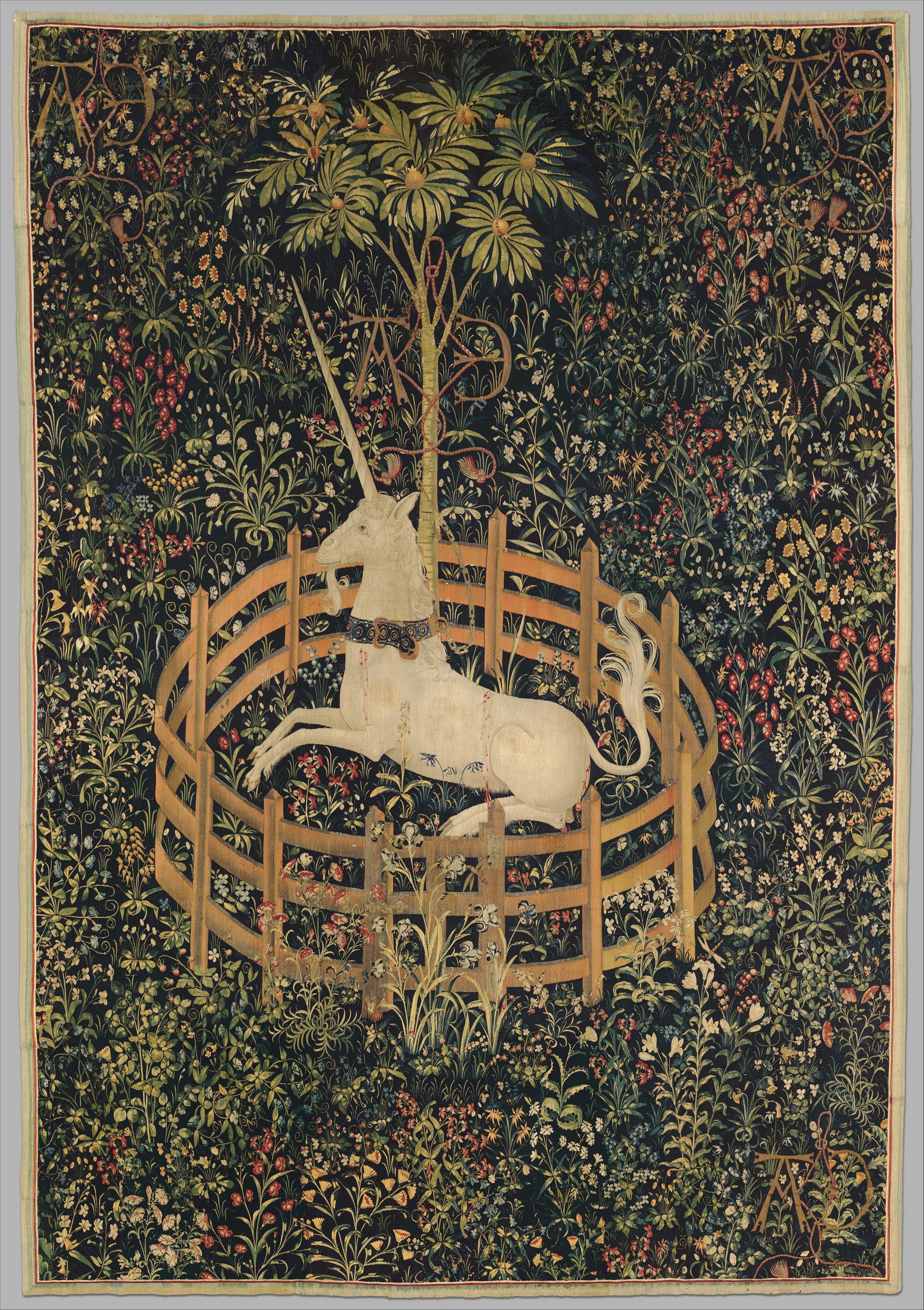
Most of the world is mad. Most of the world is in denial of reality.
I have lived in more than a few cultures now, around the world. As an outsider, it is easier to see collective delusions. Koreans think all evil comes from foreigners, especially Japanese. Arabs commonly believe the Protocols of the Elders of Zion. Americans, whether conscious of it or not, tend to think the rest of the world does not really exist. Chinese think the current authority is always, necessarily, right. Don’t ask me about Canada. That would take too long.
All the countries I have lived in are insane except for the Philippines. I suspect from visits that Ireland and Italy are also sane. Although, counter to this, Italy did go with fascism not that long ago.
I spent many years in higher education, naively thinking that there I would find truth, or at least the search for truth. But, as with most things in this fallen world, the reality was the reverse of the claim.
Example: in first year philosophy, the lecturer discounted this or that philosophy with the statement that, by this premise, one would have to believe that unicorns are real. “But of course, unicorns are not real,” Case closed.
Wait a minute, I thought even at the time. That’s begging the question.
How about that: a philosophy lecturer teaching a logical fallacy.
But then, the philosophy class never taught us to detect logical fallacies of any kind. No class I ever took did. Why not?
Unicorns are, of course, real. They are not physical. That is not the same thing.
Example: when I formally studied the New Testament, all scholarship began with the premise that any miracles in the New Testament were lies and inventions; our goal was to get to the “real man,” Jesus of Nazareth, an ordinary carpenter. And when I studied the life of the Buddha, the premise was the same: the goal was to recover the “real” historical man behind the supposed legend.
But this is tautological. If Jesus is divine, miracles are to be expected. The miracles are recorded to prove his divinity. And the same for the Buddha.
Example: in the history of philosophy, there are dozens of proofs of the existence of God. Nothing could be more firmly established. Yet these proofs were never directly addressed in philosophy classes, nor in nine years of formally studying religion. Instead, they were literally ignored even when they were plainly present in the texts being studied, and the existence of God was presented as a highly dubious and arbitrary matter of “faith.” One was supposed to look down on anyone who so professed as an intellectual weakling. As someone who rejected “reason”—even though reason evidently required the opposite, the admission of God’s being.
Example: William Blake’s religious ideas are essential to understanding his poetry. They were his core interest and intent. Understanding his religious beliefs is essential to understanding Yeats’ poetry. These two are arguably the greatest poets in the English language. Studying literature for nine years, I noticed that Blake and Yeats seemed to be largely avoided, at least in comparison to their merits. And when they were discussed, their religious beliefs were ignored. What, I wondered from an early age, was going on?
The case was most obvious with Blake and Yeats; but it was also obvious with other poets. Gerard Manley Hopkins was given short shrift, and when his “terrible sonnets” came up, the conventional claim was that his suffering was no doubt due to his being a devout Catholic. Shakespeare’s religious views were generally ignored, even though it is impossible to make sense of Hamlet without them. Instead, that play was just declared a “problem.” Oscar Wilde’s Catholicism was ignored. And on and on.
Similarly, the curriculum always seemed to concentrate on poets’ early work. The Romantics conveniently tended to die young; but we also rarely looked at the later poems of Eliot, or Auden, or Blake, or Ginsberg. I assumed for a long time this was because poetry was a young man’s game, like mathematics; that the gift usually faded with age.
But this makes little sense. Poetry is mostly about insight, into the human psyche and the human condition, and in the natural course, insight into life and human nature expands with age. It’s a thing called wisdom.
Rather, I come to conclude that the later writings of the greatest minds have generally been avoided because in our later years we become more concerned with metaphysical insights and speculations. In youth, we are biologically driven to focus on sex and reproduction. In age, these distractions lessen. We start to speak truth; people do not want to hear it. Aged poets become awkwardly religious. We’d rather talk about sexual longing.
We deny the “supernatural” or metaphysical out of hand. This is illegitimate. You have not demonstrated that it does not exist: you have just closed your eyes and stuck your fingers in your ears and begun to sing loudly to yourself. You are in denial.
And denying the supernatural is not honestly possible. Man is supernatural in his essence: “nature” is, literally, what exists where man is not present.
All along, through my years of academic study, I knew perfectly well that there were metaphysical realities. That is why I wanted to study religion and literature in the first place: because these realities were denied everywhere else. Yet I was compelled by the pressures of social authority to hold my tongue. If I said unicorns were real, would I be declared mad? Was I, in fact, mad? This used to be a real fear, causing me immense anxiety. Chronic anxiety, for which I had to take tranquilizers and anti-depressants.
Why is everyone in denial of the self-evident?
Guilt. We must control and deny reality, because reality is dangerous to our self-esteem.
Everyone is aware of their sinfulness, even if we are sinful to greater and lesser degrees. And there are two approaches to an awareness of guilt. Deny and be damned, or repent and be saved.
The majority choose denial.
Writers and poets are the true psychologists, the authorities on the psyche. It takes a deep empathy, a deep understanding of how the human psyche works, to make a believable fictional character, or to write a poem that resonates with many souls, not just your own. This is what Keats called “negative capability.” Their fruits—the beauty of their writings—certifies their wisdom and expertise. We are mad that we do not turn to them first when in mental turmoil.
By contrast, we have no way of knowing if a scientific psychologist or analyst knows what they are talking about; and can generally assume they don’t. Because the psyche cannot be studied “scientifically.”
As the greatest of writers, this makes Shakespeare the greatest of authorities on the human mind. His characters always have authentic motivations.
He has much to say on the matter of madness.
MacBeth is one example. Both MacBeth and Lady MacBeth go mad in the play. Both have what psychologists these days call “psychotic breaks”: they hallucinate. Lady MacBeth commits suicide.
And Shakespeare makes the cause clear: guilt. People are commonly driven mad, psychotic, by their own guilty conscience. A concept familiar too in classical mythology: one is hounded to madness by the Erinyes.
Modern psychiatry/psychology rules this out altogether. Moral considerations are not allowed in modern psychiatry. Meaning that in such cases modern psychiatry is useless, or worse than useless.
No wonder that, in modern times, “schizophrenia” and “bipolar disorder,” the psychotic forms of madness, are considered incurable. Psychiatry only dulls the symptoms with drugs.
By contrast, in Shakespeare’s play, while Lady MacBeth kills herself, MacBeth seems to recover lucidity by the end of the play—seemingly because he accepts that he is about to be killed, and accepts it as his proper fate. He has ended his rebellion against God, and returned to an appreciation and acceptance of divine justice.
Once, abroad, needing something to read, I picked up a paperback on Florida’s Death Row. And the author claimed the prisoners on Death Row were invariably barking mad.
Yet they cannot have been mad when they committed their murders: some were mob hit men, professional murderers. They did it for money, and had to plan for the killings. You can’t do that if you are out of touch with the physical world around you.
They too seem, then, to have been driven mad by guilt.
This is not the cause for all mental illness; Shakespeare makes this, too, clear.
Lady MacBeth’s Doctor remarks: “yet I have known those which have walked in their sleep who have died holily in their beds.”
“More needs she the divine than the physician.”
Implying that others will, to the contrary, need a physician. Some madness is caused by physical illness. Some is caused by bad upbringing: Plato and the New Testament agree on this.
But when, as is often the case, the problem is moral, no “physic” can work.
MacBeth:
Canst thou not minister to a mind diseased, Pluck from the memory a rooted sorrow, Raze out the written troubles of the brain And with some sweet oblivious antidote Cleanse the stuff'd bosom of that perilous stuff Which weighs upon the heart?
Doctor:
Therein the patient Must minister to himself.
The cure is confession, repentance, and restitution.
However, the sufferer also has an obvious vested interest in avoiding confession. This conflict is what drives them mad. On the one hand, fearing discovery, they become paranoid, and will add sin to sin in defiance of their conscience, now an enemy.
“I am in blood Stepp'd in so far that, should I wade no more, Returning were as tedious as go o'er.”
Himmler said more or less the same thing in justifying the Nazi Holocaust.
“Things bad begun make strong themselves by ill.”
Sin hardens into vice.
This is why it is up to the patient to minister to themselves. If their only help is confession, they will try to destroy anyone who tries to help.
On the other hand, the desire to confess, to “make a clean breast of it,” also becomes overwhelming. This causes them often to, as if inadvertently, let their guilt slip out. As MacBeth does before a table full of prominent nobles. As Lady MacBeth feigns doing with her nighttime notes.
“I have seen her rise from her bed, throw her night-gown upon her, unlock her closet, take forth paper, fold it, write upon't, read it, afterwards seal it, and again return to bed; yet all this while in a most fast sleep.”
The cure for such mental illness is obvious. And you will never get it from a psychiatrist.

Since it came up in our reading, I posed to my students in
the last few days the question, “is there a rule book of a program for life? Is
there a purpose to life?”
Unfortunately, none could give a satisfactory answer.
My most thoughtful student first offered the constructivist
position: the goal and the rules and the real are whatever one’s own society
has decided they are.
So, okay, is it, on this basis, legitimate to criticise Nazi
Germany—let alone go to war with them? Is it legitimate to go to war to end
slavery in a society that accepts it as proper? What about child sacrifice?
Cannibalism? Wife-beating? They can be no better or worse in principle than any
other random moral standard, right?
And when the world believed the world was flat, then it was flat.
He backed away at this, and proposed instead the existentialist position. We are free to decide for ourselves on our own particular life goals.
We had been reading MacBeth. So, did MacBeth or Lady MacBeth choose properly, in making their life goal to gain power no matter who else got harmed? Don’t they themselves soon come to regret the choice? And indeed, on this basis, o we have any right to criticize John Wayne Gacy? Execute, perhaps; but arbitrarily, in the end.
These are the official, and it seems prevalent, views on ethics and ontology in our time. They are logically and indeed morally untenable. For right and wrong, justice, and reality are actually objective and immutable qualities. You cannot will a thing into being, or into being right.
This shows why mental illness is rapidly on the rise. It explains why drug use and suicide are surging. And it explains why mass shootings and such desperate escapes as transvestitism are on the rise. It explains social breakdown generally.
The problem is quite simple, and it is drastic: to most moderns, life itself is pointless.
Some, the good among us, will sink into hopeless depression. Some will seek death, a chemical escape, or self-mutilation. Others will conclude that the only value left is self-interest, and become like MacBeth.
This is often a failure of parenting. But then, if the parent has no moral core or values, they have nothing to pass on. And our culture has suffered a collapse of values.
Going to Catholic schools growing up, the answer to the question was obvious. The purpose of life was to know and love God, and to serve him in this world and the next. There was a rule book: the Ten Commandments. One might reject it, but at least the answer was held out to you.
Public schools, of course, no longer teach any such thing. They teach constructivism, or existentialism.
There I no excuse for this; for even across all religious beliefs, the purpose of life is clear, and always has been, even to the ancient pagans. The purpose of life is—in fact, self-evidently—to seek and promote truth, justice, and beauty. This corresponds to the Catholic teaching, because that is what God is: the perfect ultimate source and essence of truth, justice, and beauty. But it is equally true ithout that insight. There is, leaving aside the Ten Commandments, necessarily, a necessary rule: the rule of universal love, expressed in all cultures as “do unto others as you would have them do unto you.” Kant demonstrated that, apart from any specific religious belief, this was a categorical imperative: treat others as an end, never a means. Act as you would wish all others to act. Stray from these essential truths, and you are insane.
Most of us are, in the true sense, insane.
It makes me fear to even walk among other men.
 |
| Born with the gift of laughter, and a conviction that the world is mad. |
The mask of mental illness, the mask of the fool, is one way to get away with telling the truth. Another is to tell a story.
This is why Hemingway said the one essential qualification for becoming a writer is to have had a terrible childhood. It gives you the need to tell the truth. The same could be said of the other arts.
That is why we have myths and fairy tales. They are “the stories”; the literal meaning of the word “mythos.” They are the distilled truths of human nature and the world of man, told obliquely. The common run of humankind use the terms “myth” or “fairy tale” as synonyms for “not true”: this is a perfect example of denial. Pay close attention to the stone that is rejected.
Jesus spoke in parables; and warned the rest of us, the good people, not to speak plainly to the mob, not to throw “pearls before swine.”
“Do not give dogs what is sacred; do not throw your pearls to pigs. If you do, they may trample them under their feet, and turn and tear you to pieces.”
Or crucify you.
Some people are not people. They are dogs or pigs. Consider the symbolism of these two animals. Dogs go along with social authority, no matter what. Pigs go with their natural urges.
Heartbreakingly, most people read Jesus’s parables in ways the text makes untenable. My father actually believed, or pretended to believe, that the moral of the tale of the prodigal son was that children should never leave the parental home and strike out on their own. He ignored the meaning of the word “prodigal.” Many seem to believe that the tale of the good Samaritan was simply about helping others in need. Of course we should; but we did not need the tale of the Samaritan to know. They ignore the meaning of the word “Samaritan.” And so it goes; the Pharisees can always quote scripture to their purposes.
The postmodernists, the vanguard of the lost, even insist that no text has any inherent meaning. You are free to have it mean whatever you want. Supreme denial.
On one Facebook group, two hedonists were snickering about stupid Christians playing Cohen’s “Hallelujah” at their funeral. Didn’t they realize that it was a paean to sadomasochistic sex? The “Hallelujah!” refrain indicated orgasm; and the lines “She tied you to a kitchen chair; she broke your throne, she cut your hair” were female domination sex play.
And then there are the snickerfests at Ishmael and Queequeg sharing a bed in Moby Dick; or Huck and Jim sharing a raft in Huckleberry Finn. This is pig thought.
I used to despair at this. What is the point of creating art, what is the point of telling parables or fairy tales, since nobody ever seems to understand them anyway? The Pharisees just co-opt it all and pretend they wrote it.
Jesus’s response is “let those who have ears to hear, hear.” One’s real audience is probably a small minority of the literal or physical audience. The rest enjoy a story, as an “escapist” exercise of the imagination, a few hours of not thinking of your problems. Or they like a painting because the colours go well with their other possessions.
A very few will understand; but then they will understand they are not mad, and are not alone.
That is perhaps the best we can do in a fallen world.
 |
| Hermes and Athena |
Many suppose that Christians do not believe in the pagan gods. I’ve heard atheists make the point that they just believe in one fewer god than monotheists.
This is a misunderstanding of the nature of the pagan gods. It ignores the Bible. It also, on a little reflection, makes no sense. The ancient Greeks, so logical and deep in their thinking, just arbitrarily believed in things that did not exist?
And the Greeks or Romans could recognize their same gods in Egypt or Mesopotamia or Germany or India or Carthage. Could they all have fixed upon the same random fantasies?
Of course the pagan gods existed. Being immortal, by definition, they continue to exist. Being a monotheist simply means you are not to worship them. They have no saving power. “You shall have no other gods before me.”
The pagan gods are disembodied spirits. We know they exist, because we find they command reverence and take over the will. They are wills that act independently of our own. We know they exist for the same reason we know other people exist: by the evidence of their independent will.
The easiest example to illustrate the point is Dionysus, as god of wine. We are aware that wine, or other drugs, take over the mind and distort the will. There is an old saying, “First the man takes a drink. Then the drink takes a drink. Then the drink takes the man.” We once spoke of absinthe as the “green fairy.” Not a metaphor. At the point of drunkenness, the man is an avatar of Dionysus. He is possessed by the daemon Dionysus. As were his traditional acolytes, the Maenads, who ran wild in the forests and tore things apart.
Dionysus is an especially crude and obvious model, but the same is true of the other well-known polytheistic gods. They are spirits that can possess and animate us.
Consider Aphrodite, with her son Eros. As any male of a certain age can attest, she is capable of driving us mad, causing us to act against our own interests. “The lunatic, the lover, and the poet, are of imagination all compact.” She expresses herself in female physical beauty, the sort that, we might say in our gross materialist way, triggers hormones. Shakespeare rightly portrays erotic love in “A Midsummer Night’s Dream,” or “Romeo and Juliet,” as like a madness or a drug. Leonard Cohen was a prominent and rather tragic victim of this daemon.
The juice of it on sleeping eyelids laid
Will make or man or woman madly dote
Upon the next live creature that it sees
More respectably, Hephaestos, Aphrodite’s sometime spouse, is the daemon of geekdom, the “weaponized autism” that keeps so many young men in their basements, fascinated by logical and practical problems. They lose themselves in this—the sure sign of demonic possession--and neglect other aspects of their lives. They become avatars of the smith god, trolls working at their forges.
Ares may be less obvious; yet we are all possessed, at times, by the spirit of Ares. We are outside ourselves, out of our right minds, in combat, in a fistfight, or in a heated argument. In such situations, it is as if we are driven by another spirit, so that we are heedless of our own safety or best interests.
Athena is more difficult to dislike. The poet Miriam Waddington laments, in her memoirs, that too few Canadians value “the aesthetic life.” The aesthetic life is the life of an acolyte of Athena. It too involves an all-consuming passion, and lack of regard to other aspects of life. Like an alcoholic, one is likely to end up starving in a garret.
Hera is the irrational drive for social status and propriety: people who surrender their selves to live their lives in the eyes of others.
Zeus is power: the spirit that possessed Mao, Napoleon, Hitler, Stalin.
Apollo, as the sun god, is the god we worship as “science” today. Under his influence we see only the impressions of the physical senses as real, neglecting the larger metaphysical elements of existence.
Artemis, his sister, is the illusory drive for innocence. She is exceptionally powerful in our times, as “the state of nature.” An idolatrous nature, she must remain forever virgin and shun men. Those who worship her, like Rousseau, believe in the “noble savage” and the idea that civilization corrupts. She is the spirit who, if she possesses you, may cause anorexia nervosa. Or, in some large part, feminism.
Ceres, her counterpoint, is the “maternal instinct.” Admirable at the proper dosage, it can easily become idolatrous. It drives some women, and fewer men, to a hysterical attitude towards their children, in which the latter can do no wrong, or can never be left alone. Acolytes can come to live through their children, possessing and being possessed by them. This too is like a drug, is a madness.
Hermes is more subtle, and perhaps for this more powerful. He is the spirit of commerce, in the sense of communication of all sorts. His spirit we know as postmodernism. To his disciples, “reality” is a matter of social consensus. To say a thing is to make it so. He makes us obsess over political correctness and pronouns. His adherents are eventually no longer in touch with reality at all.
Hestia is the spirit we call “family values.” To her the cow and apple pie are sacred. She may look harmless, but on the larger scale, she is the soul of nationalism, of racism. All for the “fatherland” or “motherland”; our race is our extended family. One can see how this often works against the interests of the individual acolyte, and against the interests of humankind.
Poseidon, god of seas and horses and hurricanes, is the spirit of change. We see a lot of him currently, too. He is the spirit of “wanderlust,” for some an addiction, pulling them out of themselves. But we also see him in those who call themselves “progressives,” or yearn for unspecified “hope and change,” or for “diversity.” Change by itself, of course, is not an intrinsic good. Necessarily, much that is good may end up being sacrificed to the idol “change.”
All of these daemons are held in decent check by the worship of the one true God, who is Truth, Good, and Beauty. They have been held in check for the past two thousand years. They fade like the stars of night when the sun appears. So too the more disreputable vices: wrath, acedia, envy, lust, gluttony, greed, pride. All the petty ambient spirits who can take over the human will.
Yet now, because the faith in the one true God is fading, we see them all reemerging in our time.
We see a rise in all sorts of strange madnesses.
We see rough beasts now slouching towards Bethlehem to be born.
It is generally taken as given that we love children. Dictators wanting to look good always open a children’s park.
But as in the case of dictators, is it often or even usually
a sham? After all, honestly, how often do we have sex in order to produce
children, and how often do we do it just for physical pleasure? Aren’t kids
usually a dubiously welcome byproduct?
We pretend to love kids. Some of us do; some of us are good
people. But a lot of us love ourselves. We do not want to waste such effort on
the benefit of some other. What’s in it for us? How does the kid earn his keep?
Such bad people will of course pretend to love children.
Because if you are going to get away with being a bad person, you have to
pretend to be a good person.
Abortion statistics are a preliminary measure of how much we
love children: last I checked, 25% of North American women had already had at
least one abortion. Most of us insist on a right to abortion, according to
polls. So most ofr us don’t have scruples about killing them, do we?
That is not to suppose that those who make it to birth are
going to be well treated. There are other reasons to have children than for
their own benefit. Small children can make good punching bags. They can be fun
to bully and dominate. It is exciting to have complete power over another. Or
they can be a welfare ticket, allowing a life of idleness.
This is not new. Most pre-modern societies practiced
infanticide. Many practiced child sacrifice. A convenient alibi: “the gods made
me do it.”
The current drive to encourage children to get “gender
reassignment surgery” looks to me malicious. The demand that children get vaccinated
for Covid looks malicious; the vaccine is likely to be more dangerous to them
than the disease. Our wild deficit spending suggests we don’t give a damn for
the children. Much of what we teach in the schools seems designed to hold
children back; it is not what they would need to achieve any kind of power. It
turns them into useful drones. This includes the current relentless drive for
STEM. We set up elaborate and unnecessary barriers to entering almost any trade
or profession.
And then there is “mental illness.” The evidence really has
been clear all along that what we currently call “mental illness” is in most if
not all cases a result of childhood abuse. Writers, artists, even psychologists
have been pointing this out for centuries, millennia. It is the essential
message of almost every fairy tale, for example; if you go behind the Disneyfied
versions.
Even Freud pointed this out. He was then forced to invent
his “Oedipus complex” as a socially acceptable substitute. It would not do to
blame parents; he had to find some way to blame the victim. Society would not
tolerate the truth.
And this is the continuing problem. There is a general
social conspiracy to look the other way, and venerate “family values” and “motherhood.”
Consider the Indian Residential Schools. They functioned largely as a place to
care for abused and abandoned children from alcoholic homes. There is every
reason to believe that the average student was far better off there than at
home. Yet they are blamed for everything, and Indian children, including
obviously troubled children, are now always forced back to their birth
families.
Even for the general population, there is actually evidence
that the average child who grows up in an orphanage has a better adult life
than the average child who grows up in a family. We just assume, or insist on
believing without evidence, that families are better. All we can really say is
that two-parent families are better than one-parent families.
In practice, the entire social construct of “mental illness”
is an alibi used to conceal child abuse. And not just to conceal it: society
almost always sides with the parents and family against the abused child, even
joining in the fun of abuse. Lobotomy is a good example.

An interesting insight into dog psychology from Wikipedia. I quote: “Attempting to teach Siberian Huskies aggressive behavior can lead to mental problems in the dog.”
It is reasonable to suppose that what causes mental problems in dogs is the same as what causes mental problems in humans. Not teaching aggressive behavior specifically, but, in both cases, teaching things that violate their conscience.
This is the result, most often, of bad parenting, by parents
who themselves have no morals. These are the parents Jesus says would be better
thrown in the ocean with a millstone around their necks, for causing “little
ones” to stumble.
Sadly, it is those children who have the strongest conscience who will be most severely affected by such ill counsel--the best among us.
Modern psychiatry or psychology is unable to help the
mentally ill, because they begin with the premise that there is no right and
wrong. This makes mental illness “incurable.” Getting back in touch with
objective morality is the cure.
 |
| Vlad the Inhaler. |
There is discussion of whether Vladimir Putin has gone mad. Having previously been cautious, he is suddenly acting recklessly. When he entertains guests, he has them sit far away from him. Macron in France says he has changed. Marco Rubio, reflecting US intelligence, says he has changed.
Of course he has gone mad. In a predictable way.
It’s called hubris.
Most national leaders are prone to hubris; the mental problem we often these days call “narcissism.” They start out with an unreasonably high evaluation of their own abilities and their own importance to the universe. This drives them to seek power, and often to attain it, by whatever means necessary. If they achieve power, this is of course validates their opinion of their own self-worth. If they hold power for a long time, they are liable over time to indulge this tendency more and more, moving further away from reality and viewing themselves as god-like. For this reason, whenever a Roman general was given a triumph, a slave beside him was instructed to keep whispering in his ear, “remember, you are mortal.”
As hubris grows, and to the extent that their rule is autocratic, it becomes less and less advisable to bring the king bad news. He is liable to fly into a “narcissistic rage” and blame the messenger. So the monarch grows less well-informed of the real situation, and more convinced of his delusions. He is bound to overestimate his own and his nation’s power. We saw this in Saddam Hussein: he convinced the Americans and the world that he had weapons of mass destruction, because he was convinced he had weapons of mass destruction, and acted accordingly.
For this reason, medieval and Renaissance kings had court jesters, who had special license to mock.
Without any window on the real world, the king will also inevitably become paranoid. If you are so important, everything that happens must be about you. And he is at least half-aware that he is regularly being lied to. He can trust no one.
The end is inevitable: it is the end of every Greek tragedy. The king will overreach, and bring the polis down around his ears.
Today, Putin. Tomorrow, perhaps Xi.
 |
| Basil the Blessed, a celebrated Russian "fool for Christ" |
Another possible objection to Christianity found in my 1982 notebook:
“Because religion is unreasoning. It is bound to appeal primarily to those whose reasoning is deficient. Therefore it is by nature anti-intellectual, and, if I subscribe to it, I am announcing to the world that I am not as intelligent or intellectual as I would like them to think. Therefore the world will mock me as a fool.”
This is based on a false premise, dealt with in a previous post: that religion is unreasoning.
But, leaving that aside, this is a good example of the first of the three great temptations to sin, “the world, the flesh, and the devil.” It is caring about what the world thinks instead of what is true.
If you become religious, it is probably always true that the world will mock you as a fool. “For the wisdom of this world is foolishness with God.” The world is, by definition, of average intelligence and, as the old saying goes, “no better than it should be.” The world will value the average, and resent the exceptional. Some psychologist claims to have determined that, if you meet someone whose IQ is fifteen points higher than yours, you simply cannot understand their thinking. They will to you appear mad.
This principle of mediocrity therefore extends to the social class commonly recognized as “the intellectuals.” Who decides who is or is not of this class? They choose one another, generation after generation, in the academic faculty and “peer review” model. Which tends to extend as well to such things as literary magazines. But who selected this group, to go on to select the others? It will ultimately be the mass of common people—crowds flocking to Jordan Peterson lectures today, students flocking to Socrates in his day. The mass of common people are not qualified to recognize who is much smarter than they are, and who isn’t. A little smarter, yes. A lot smarter, no.
The recognized intelligentsia will therefore not be the highly intelligent, but people of average intelligence or a bit more who play this role, and mouth the opinions currently supposed to be the intelligent ones. The only thing certain about these opinions is that they will go against common sense—for if they were common sense, they would not set you apart as one of the intellectuals.
Not that common sense is a very reliable guide—just a better one than always having to go against common sense.
One could, perhaps, select the supposed intelligentsia by raw IQ score. But this would not work either. There is the issue of application. Just because you have tha ability to reason well does not mean you habitually use it. Not everyone who is seven feet tall is a great basketball player. In fact, people with high natural intelligence can learn to be intellectually lazy. To cope with everyday life they never need to think very hard.
We all have the moral obligation, however, not to just conform to those around us, and to think as carefully as we can, for ourselves, about what is true and right and wrong.
How narrow is the gate, and restricted is the way
that leads to life! Few are those who find it.
--Matthew 7:14
 |
| Sir Francis |
Francis Bacon wrote:
For everybody … has his own individual den or cavern, which intercepts and corrupts the light of nature; either from his own peculiar and singular disposition, or from his education and intercourse with others, or from his reading, and the authority acquired by those whom he reverences and admires, or from the different impressions produced on the mind, as it happens to be preoccupied and predisposed, or equable and tranquil, and the like: so that the spirit of man (according to its several dispositions) is variable, confused…
We are all, in other words, more or less mad, thanks to our upbringing. More mad if our parents or our culture did not raise us well.
In our current culture, our perceptions are especially distorted. The proof of this is the upward spiral of mental illness, suicides, “accidental” deaths and overdoses. A recent study calculates that “overall, more than 50% of the general population in middle‐ and high‐income countries will suffer from at least one mental disorder at some point in their lives.”
I rue the many years I spent struggling with the delusions imposed by the culture, before I finally had the courage to reject them fully and walk away.
1. The delusion that the existence of a divine intelligence is dubious. There are actually multiple proofs—more proofs than there are of anything else in human experience. Why are we not told this in school?
2. The common delusion that the universe is meaningless. It is suffused with meaning. This follows almost automatically from the existence of God. But it is also true that science would not work otherwise—yet it does. Realizing this could prevent many suicides and overdoses.
3. The assertion that there is no objective right and wrong, but ethics is simply decided by society. Kant proved this wrong, and it is impossible to think rationally in these terms. Make the assertion, and you immediately go on to insisting that those who point out a wrong are wrong—a self-contradiction.
4. The delusion that it is wrong to make moral judgements, to be ”judgmental.” This is the self-contradiction just cited.
5. Intertwined with this, the notion that the majority has the right or the ability to determine truth or morality. That would mean, if we voted that the moon was plaid, it would be. Why does anyone assert such nonsense? A desire to avoid admitting their own sin.
6. The idea that morality consists of respect for authority, going along, and not making waves. A fine idea, if your goal is the full and final rehabilitation of National Socialism. Is it?
7. The delusion that the physical is the real; that only the physical exists. I recall first noticing the words of the Nicene Creed translated as “I believe in all things visible and invisible.” It hit me like a slap upside the head with a wet flounder. Prior to this, I had always heard it as “seen and unseen,” which lacks the clear implication that there is a world beyond the senses. Not only is there, self-evidently; Berkeley nicely demonstrated that the existence of the world of the senses is dubious.
8. The delusion that “science” means “truth.” In fact, science makes no truth claims, as Karl Popper pointed out, and Copernicus understood. “Believe in science” is the opposite of the scientific point of view.
9. The delusion that “science” means “reason”: that the scientific view is the only rational view. In fact, science is the rejection of reason in favour of experience. It has its place, as a check on pure reason, but it must not be allowed to supplant reason.
10. The nonsensical idea that imagined things “do not exist.” This is incoherent: if they did not exist, we could not imagine them. If we imagine them, they exist. They are simply not physical objects.
11. The Freudian idea that emotions or urges grow more powerful and fester if they are not acted upon. If this were true, the cure for alcoholism would be to have another drink.
12. The “Playboy philosophy”: the delusion that sexual gratification can be divorced from either genuine affection or procreation, and enjoyed for itself. If this is true of anyone, they should not be proud of it. It makes them animal, not human.
I submit that most people in North America currently embrace all of these delusions. This makes the average person significantly less sane than many diagnosed as “mentally ill.” A little “mental illness” may be the truth dawning.
I count it my great good fortune that I attended Catholic grade schools. Few can. This planted the seeds of dissent against some of these delusions, which survived many winters to at last be there when I needed them.
It would have been far better had I attended a high school that gave an early education in philosophy and logical fallacies, as some Catholic high schools do. For most of these popular delusions are simple logical fallacies, relatively easy to disprove.
I find it sinister that philosophy is not taught in the schools.

To be insane is to be out of touch with reality. But what is reality?
It is not just the majority opinion. That is the ad populum fallacy. The majority of men once thought the sun moved around the earth. A plurality of Germans voted for Hitler.
Plato’s cave analogy suggests reality is experienced by only a few; most of us may live a delusion. Buddhism asserts the same. As, arguably, does Christianity. “For the wisdom of this world is foolishness in God’s sight.” (1 Corinthians, 3:19) A more familiar concept to many may be that of the Matrix films.
And postmodernists, of course, assert that there is no reality. Everyone just makes things up.
So what is real is not self-evident. We therefore cannot use it as a standard for sanity, or else one man’s sanity becomes another’s madness. The person who experienced the world as it is might be declared insane by the deluded majority. “Men would say of him that up he went and down he came without his eyes; and that it was better not even to think of ascending.” (The Republic, Book 7, Jowett trans.)
Rather, then, than saying that sanity is knowing what is real and what is not, we might say that Sanity is the quest for what is true. Insanity is no longer caring or trying to find out. We all understand the concept of a lie, a denial of the facts or of the evidence. Insanity is believing a lie, while being at least partly aware that it is a lie.
This means that sanity is always at least in part a moral issue.
 |
| The 16th Century Dancing Mania |
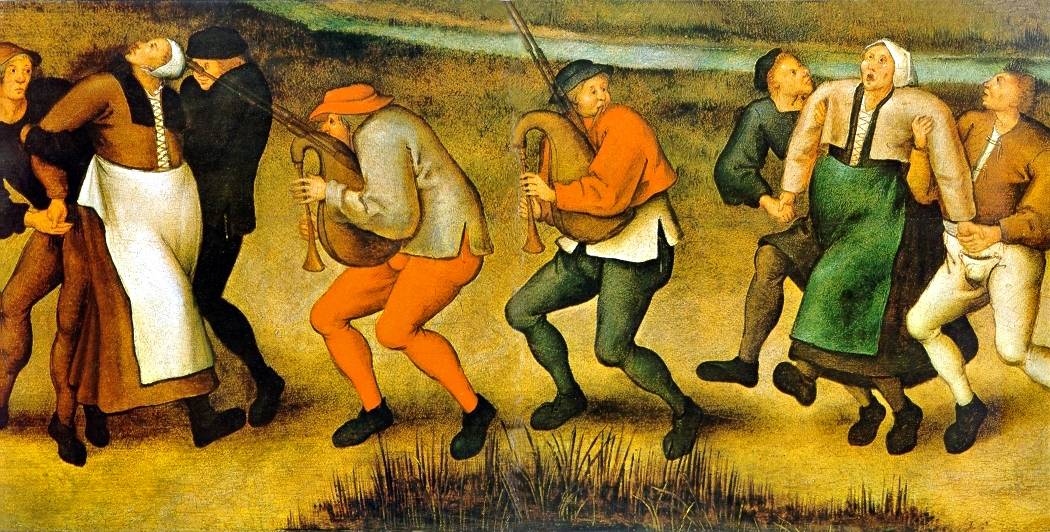
Nietzsche wisely sad that madness, while rare in individuals, is common in groups. Madness is hard to sustain as an individual alone; but if everyone around you is saying the same insane thing, it gets easier.
Having lived in several countries, it seems to me that most nations are collectively mad. South Korea is quite mad. The US may be as mad or madder. The UK, despite seeing themselves as the home of common sense, is barking mad. Germany has a history of going mad, as does the Netherlands, and Japan. China is insane. It is hard to judge, because it is my own country, but I think Canada is maddest of all.
That is, in each of these countries, a majority of people believe or claim to believe things that are pretty obviously not true. And get agitated if the delusion is challenged. And look for scapegoats.
What country is the sanest? In my experience, the Philippines and Italy. You might object that Italy went mad under Mussolini, but did it? The government went mad, especially later, under the influence of Hitler; it is not clear to me that the average Italian took that government seriously. The Irish in Canada or the US seems saner than the rest of the population; I do not know if the same holds for the Irish in Ireland. The Poles seem sane. I may be missing some entirely sane nations just through lack of experience.
The Arab countries are saner than the US or Canada, at least, but not sane.
It looks as though being Catholic might have something to do with it. On the other hand, this does not seem to have preserved the French, who are batty.
Perhaps one needs to be more than nominally Catholic. France has other influences, and historically flirted with Calvinism. Italy and the Philippines are more thoroughly culturally Catholic, and the Irish or Poles have Catholicism deeply embedded in their national self-image.
It fits with something Chesterton said: once you stop believing in God, you’re liable to believe in anything. The surest protection against madness is a solid and comprehensive religious faith. If solid, Catholicism is comprehensive. More comprehensive than Protestantism or Islam or Buddhism.
It also seems obvious that there is no relationship between sanity and economic development. This stands to reason. The most materialistic nations are likely to be most materially prosperous. But materialism is not a sane view of the world.
I do think there is a relationship between sanity and happiness. Or rather, “happiness” may be too ambiguous here. The link is more between sanity and serenity.

Just in case you can accept it now, let me sketch in the truth of “mental illness.”
We all live in bubbles. These bubbles are our assumptions about ourselves, the world around us, and our place in it. Call it our narrative. Outside it is the real world as it is.
We cannot, in principle, experience the real world directly. Kant, for one, has demonstrated this; so have Descartes, Berkeley, Plato. All we can do is strive to make our account of it as accurate as possible: to keep the bubble transparent.
When the bubble instead becomes opaque, like an egg shell, we have a “mental illness.”
Madness is a matter of being relatively disconnected from objective reality. Didn’t we always know this? Hasn’t modern psychiatry only obscured this?
There are two ways the bubble can become opaque. One is if we choose to believe lies, because we find them more to our liking that the truth. Another is that those around us have been lying to us.
These two possibilities define the two opposite types of mental illness. We might call them hubris and melancholia— to avoid common psychiatric terms, which come with distracting theoretical baggage.
Notice that the hubristic type, who spins lies, is likely to produce the melancholic type, who has been lied to.
Either condition will experience grief and anxiety. The hubristic will be constantly frustrated with and in paranoid flight from reality, which does not recognize to their wishes. The melancholic will be constantly frustrated by inconsistencies in the narrative, so that reality does not seem to make sense.
In either case, a sudden trauma can precipitate a crisis: that is, if reality suddenly disproves the accepted narrative. A crack appears in the cosmic egg. Then you get violent denial, cognitive dissonance, mental confusion, or psychosis.
The solution, in every case, is to preemptively doubt the entire narrative, and start again from first principles.
This is a terrifying thing to do. It is the ultimate leap in the dark.
Shall we?

