Playing the Indian Card

Showing posts with label abuse. Show all posts

Sunday, May 18, 2025

Francis and Mark Carney as Abusive Fathers


Two unaccountable and unpredicted things have happened recently. I think they are connected.

First, everyone thought the successor to Pope Francis would be a progressive “Francis 2.0.” After all, Francis had appointed 80% of the voting cardinals. Yet Leo XIV is so far signalling traditionalism. How did that happen? 

Second, having just won an election, Mark Carney’s cabinet and caucus seems rife with dissent. This shouldn’t happen right after an election win. Liberal MPs live in fear of their leader: he gets to veto their nominations if they alienate him. And Carney just saved the party’s bacon. Until he stepped in, they were headed for a historic defeat. Why the dissatisfaction?

In the case of Rome, I think we all missed the dynamic in thinking the divide in the hierarchy was between “progressives” and “traditionalists.”

The first sign was a report that, as they gathered for Francis’s funeral, the cardinals demanded the opening of a repository of traditional vestments kept under lock and key by Francis. Were they all secretly traditionalist?

Then reports of an elevated mood in the Vatican—shocking at the death of a pope. Now someone is quoted as saying, for the years of Francis’s pontificate, they were all living in fear. “It is like we are escaping an abusive father.”

And that, I think, is the key. Not left or right, progressive or traditionalist, but abusive.

Francis gave no moral direction. He seemed annoyed by those who followed the traditions of the church; yet offered no clear alternative either. This left everything up to the will of Francis. 

Take, for the most obvious example, the Latin mass. Francis suppressed it, on the grounds that wanting the Latin mass was an expression of opposition to his authority. That was a tautology: if he did not suppress the Latin mass, wanting it would not be an expression of opposition to his authority.

I(t was all about the exercise of power. Francis was a narcissist. Narcissists worship their own will.

When a parent, or a superior, acts in this way, one lives in constant fear. You can never know whether you are doing right or wrong, you can never relax or feel good about yourself; you never know when the hammer will fall. Francis’s position on any given matter was unpredictable: he blew hot and cold; it seemed to depend on how he was feeling that day. He had arbitrary favourites, and punished others arbitrarily.

This is the essence of abuse. The sense of disorientation this causes is the font and source of virtually all spiritual distress, which we commonly and improperly call “mental illness.”

Francis was driving everyone mad.

And Carney seems to be in the same mold. What is his true stand on any issue? He campaigned on imposing tariffs on the US, and standing up to Trump. Now he has quietly suspended the tariffs. He endorsed the carbon tax, then set it to zero. 

In personnel matters, word leaked out that Chrystia Freeland was being dropped from cabinet; then she wasn’t. I suspect this was not a false rumour; Carney changed his mind. A more public example is Nate Erskine-Smith. In Carney’s first, stripped-down cabinet, he kept Erskine-Smith. Only a month later, in his greatly expanded cabinet, he dropped Erskine-Smith. This seems inconsistent, arbitrary. This is clearly the way Erskine-Smith experienced it; he got blindsided. Carney kept Stephen Guilbault in Cabinet, and promoted Anita Anand, seeming to signal a turn to the left; then publicly adopted much of the Conservative platform. This seems like a mismatch; he seems to have blindsided them too. It is as though Carney is just enjoying imposing his will. Another narcissist. L’etat, c’est toi.

A dysfunctional caucus, a dysfunctional church, or a dysfunctional family, is the result. “Mental illness” is the result.


Thursday, September 08, 2022

What's Behind Lobotomy


It is generally taken as given that we love children. Dictators wanting to look good always open a children’s park.

But as in the case of dictators, is it often or even usually a sham? After all, honestly, how often do we have sex in order to produce children, and how often do we do it just for physical pleasure? Aren’t kids usually a dubiously welcome byproduct?

We pretend to love kids. Some of us do; some of us are good people. But a lot of us love ourselves. We do not want to waste such effort on the benefit of some other. What’s in it for us? How does the kid earn his keep?

Such bad people will of course pretend to love children. Because if you are going to get away with being a bad person, you have to pretend to be a good person.

Abortion statistics are a preliminary measure of how much we love children: last I checked, 25% of North American women had already had at least one abortion. Most of us insist on a right to abortion, according to polls. So most ofr us don’t have scruples about killing them, do we?

That is not to suppose that those who make it to birth are going to be well treated. There are other reasons to have children than for their own benefit. Small children can make good punching bags. They can be fun to bully and dominate. It is exciting to have complete power over another. Or they can be a welfare ticket, allowing a life of idleness.

This is not new. Most pre-modern societies practiced infanticide. Many practiced child sacrifice. A convenient alibi: “the gods made me do it.”

The current drive to encourage children to get “gender reassignment surgery” looks to me malicious. The demand that children get vaccinated for Covid looks malicious; the vaccine is likely to be more dangerous to them than the disease. Our wild deficit spending suggests we don’t give a damn for the children. Much of what we teach in the schools seems designed to hold children back; it is not what they would need to achieve any kind of power. It turns them into useful drones. This includes the current relentless drive for STEM. We set up elaborate and unnecessary barriers to entering almost any trade or profession.

And then there is “mental illness.” The evidence really has been clear all along that what we currently call “mental illness” is in most if not all cases a result of childhood abuse. Writers, artists, even psychologists have been pointing this out for centuries, millennia. It is the essential message of almost every fairy tale, for example; if you go behind the Disneyfied versions.

Even Freud pointed this out. He was then forced to invent his “Oedipus complex” as a socially acceptable substitute. It would not do to blame parents; he had to find some way to blame the victim. Society would not tolerate the truth.

And this is the continuing problem. There is a general social conspiracy to look the other way, and venerate “family values” and “motherhood.” Consider the Indian Residential Schools. They functioned largely as a place to care for abused and abandoned children from alcoholic homes. There is every reason to believe that the average student was far better off there than at home. Yet they are blamed for everything, and Indian children, including obviously troubled children, are now always forced back to their birth families.

Even for the general population, there is actually evidence that the average child who grows up in an orphanage has a better adult life than the average child who grows up in a family. We just assume, or insist on believing without evidence, that families are better. All we can really say is that two-parent families are better than one-parent families.

In practice, the entire social construct of “mental illness” is an alibi used to conceal child abuse. And not just to conceal it: society almost always sides with the parents and family against the abused child, even joining in the fun of abuse. Lobotomy is a good example. 

Wednesday, August 10, 2022

Stephen King's Misery


I have never until just now read Stephen King. I remember trying to start on Salem’s Lot once, and then at another time on The Shining, but soon putting them down. Other than the acknowledged great works, I have never felt I had time for novels. They were mere entertainment. And Stephen King has that reputation. Horror: cheap thrills.

Recently, however, I caught Misery streaming on Tubi. I watched idly for a while before bed, figured I’d finish it the next day. But the next day it had been removed from the service. Driven to know want happened next—nobody says King is bad at plotting--I just had to pick up the book from the library.

I now stand amazed at how good a writer King is. Of course he is great at plot—that is why he is so popular. But I discover he is also a master at description, writing dialogue, and, most importantly, characterization. I teach writing. King is a master craftsman, who is a model of all aspects of the trade. Especially characterization. This is the mark of the great writer—to understand human psychology. You need to understand human psychology to know what will keep the reader reading; you must be deeply empathic. And you need to understand human psychology to be able to create characters who seem alive on the page. 

In the character of Annie Wilkes, King gives us a perfect analysis of the narcissist, in their true self, behind closed doors. Having had the misfortune of having to survive narcissists for much of my own life, I found the accuracy of the portrayal haunting. King understands it far better than the psychiatrists. How does he know? I wonder about the details of his own upbringing.

Annie Wilkes, the narcissist, is hopelessly sentimental. Narcissists have sentiments, not emotions. As Jung said, “sentimentality is a façade concealing brutality.” So she is inevitably, in her own eyes, the “number one fan” for Paul Sheldon’s series of bodice rippers. And she cannot tolerate the heroine dying at the end of the story.

Perhaps this is where King learned about narcissism—from fans of his own writing. Although actually written to a high standard, his writing can also be enjoyed by readers at the penny dreadful level.

As a narcissist, Annie is obsessed with exercising power over others. She therefore gravitates to a profession that offers this: nursing. She seeks to control Sheldon to the point not only of kidnapping him, but hobbling him. She decides what he can and cannot write. She enjoys inflicting pain. She enjoys killing.

Like all narcissists, she projects her own moods on those in her power. This is the great evil of living with a narcissist, and what is most disorienting. One minute she is declaring her undying love; the next she turns dark and starts maiming him for his supposed wickedness. 

Like all narcissists, she has her own rigid sense of morality, and presents herself as the arbiter of right and wrong. She burns Sheldon’s manuscript because he uses bad language. But in reality ”good” only means what she wants. Anyone else who does not do what she wants is a “brat.”

Like all narcissists, she is paranoid. Everyone else is out to get her. This may be a projection: she is out to get everyone else. Or it may be because she is, to herself, so important. So everyone else’s thoughts must be of her.

Like all narcissists, she lies and gaslights. In the novel, she kills a policeman, then blames Sheldon for it. It was his fault, for crying for help. That especially rings true. She claims to have been lovers with a tourist she killed; Sheldon finds this improbable, and I think we can assume he is right. More likely, she killed him because he would not make love to her. A narcissist will insist that whatever they want to be true is true. Yet they also know they are lying, for Annie certainly takes care to conceal the evidence of her misdeeds.

Most remarkably accurately, perhaps, Annie smells bad. I have never seen anyone else but King mention this before. But in my experience, narcissists always smell bad. Heaven knows why. Perhaps because they think they’re wonderful as they are, and so see no need to stay clean. Perhaps because their conscience troubles them, so they sweat a lot. But I think no one mentions this because it seems supernatural, and perhaps it is. Perhaps evil stinks.

Now I must read more from King. And I recommend Misery to others.


Thursday, June 23, 2022

Abusive Relationships


Discovered by my daughter, a song written from the point of view of a man trapped in an abusive relationship.


Why would anyone tolerate this? Or even, as in the song, at least half desire it?

It comes, as in Johnny Depp's case, from being raised by an abusive parent. 

We are pre-programmed to love parents, and to assume they love us. If the parent is abusive, we are most often doomed to spend the rest of our life accepting being abused is an expression of love.

As a result, we are drawn as if to a magnet, or like a moth to a flame, to some new abuser.

Hint: anyone who abuses you does not love you.

It is a hard cycle to break out of.


Sunday, August 08, 2021

Britney Spears' Dysfunctional Family


An interesting, if necessarily highly speculative, analysis.

Britney Spears may be doing many of the abused a great service by bringing the syndrome to public attention.


In other, perhaps related news, Britney revealed in a recept post, since deleted, that she has become Catholic. This reinforces my thesis that the first necessity to escape the effects of a dysfunctional family is to re-ground yourself in transcendent reality. 


Sunday, November 29, 2020

A Midrash


While he was yet speaking with them, Rachel came with her father’s sheep, for she kept them. When Jacob saw Rachel the daughter of Laban, his mother’s brother, and the sheep of Laban, his mother’s brother, Jacob went near, and rolled the stone from the well’s mouth, and watered the flock of Laban his mother’s brother. Jacob kissed Rachel, and lifted up his voice, and wept. Jacob told Rachel that he was her father’s relative, and that he was Rebekah’s son. She ran and told her father. 
--Genesis 29:9-11, WEB. 


Jacob treated Rachel at once as his cousin, which caused significant whispering among the by-standers. They censured Jacob for his demeanor toward her, for since God had sent the deluge upon the world, on account of the immoral life led by men, great chastity had prevailed, especially among the people of the east. The talk of the men reduced Jacob to tears. Scarcely had he kissed Rachel when he began to weep, for he repented of having done it.

There was reason enough for tears. Jacob could not but remember sadly that Eliezer, his grandfather's slave, had brought ten camels laden with presents with him to Haran, when he came to sue for a bride for Isaac, while he had not even a ring to give to Rachel. Moreover, he foresaw that his favorite wife Rachel would not lie beside him in the grave, and this, too, made him weep.
--Midrash (Ginsberg, Legends of the Jews).

“Then Jacob kissed Rachel. and he raised his voice and wept.” Bereishis 29: 11

Rashi explains that he cried because he came empty-handed. He said, “My father’s servant came with ten camels laden with gifts and finery, and I come with empty hands.”

Rashi goes on to explain to us why he didn’t bring a gift for Rachel. When Jacob found out that Esau was plotting to kill him, he fled from his father’s home. Esau sent his son Alifaz to chase down Jacob. Alifaz was a Tzaddik, and when he approached Jacob he said, “I can’t kill you because you are an innocent man. On the other hand, what will be with the command of my father?” Jacob said to him, “A poor man has the halachic status of a dead man. Take my money, and it will be considered as if you killed me, so on some level you will have fulfilled your father’s words.” As a result, Jacob came to the well empty-handed. When it was time to propose to Rachel, he didn’t have the gifts that would be expected, and so, he raised his voice and cried.

--Rabbinic commentary.

The theme that runs through this is the need to respect the proprieties. And this is the solution to the problem that sometimes moral demands will conflict: as in the case of Alifaz. Following tradition and set laws, even if in a “legalistic” manner, protects us in such moments.

Alifaz’s dilemma speaks to the children of dysfunctional families, as he was, who are torn between the requirement for “filial piety,” on the one hand, the demands of the family, and the fact that a narcissistic parent is often seeking their harm or demanding that they behave immorally towards others. The answer is apparently to give the parent their strict literal due, no more. Observe the proprieties. Confucius makes the same point.

In order to do this, it is essential to have an established moral code, the meaning of which is precise and clear. This is why we need the Ten Commandments, despite the fact that the principles of true morality are embedded in the conscience of each of us. This is why we need the Bible, and organized religion.

And this is also why people who act on their immediate desires without minding the requirements of propriety, are so damaging.

The situation of Jacob and Rachel is in turn a warning against the mirage of “true love,” which so often misleads the abused. It is not enough that two people are “in love.” A love that does not follow the proprieties is not true love, for this is ultimately disrespectful of the other party. This is putting the emotion or the urge above their human dignity.

Clear traditions and requirements protect us from giving another either too much or too little recognition. Too much, and you are feeding their possible narcissism. Too little, and you are driving them towards depression and anxiety. For this, it is essential to have a Book, a Law, a tradition.

And it is dangerous too for the once-abused to go about seeking excessive recognition—looking for the “unconditional love” they are told by some therapists they always deserved. Because this will lead that poor fly into the lair of the next narcissistic spider, who recognizes the need.

Monday, October 05, 2020

The Parable of the Tenants


The Stone that was rejected.

Jesus said to the chief priests and the elders of the people:
"Hear another parable.
There was a landowner who planted a vineyard,
put a hedge around it, dug a wine press in it, and built a tower.
Then he leased it to tenants and went on a journey.
When vintage time drew near,
he sent his servants to the tenants to obtain his produce.
But the tenants seized the servants and one they beat,
another they killed, and a third they stoned.
Again he sent other servants, more numerous than the first ones,
but they treated them in the same way.
Finally, he sent his son to them, thinking,
'They will respect my son.'
But when the tenants saw the son, they said to one another,
'This is the heir.
Come, let us kill him and acquire his inheritance.’
They seized him, threw him out of the vineyard, and killed him.
What will the owner of the vineyard do to those tenants when he comes?"
They answered him,
"He will put those wretched men to a wretched death
and lease his vineyard to other tenants
who will give him the produce at the proper times."

Jesus said to them, "Did you never read in the Scriptures:  
The stone that the builders rejected
has become the cornerstone;
by the Lord has this been done,
and it is wonderful in our eyes?  
Therefore, I say to you,
the kingdom of God will be taken away from you
and given to a people that will produce its fruit."


The obvious interpretation of the parable is that it is directed towards Jewish authorities who rejected Christ.

But this is not satisfactory; if so, it would hold no meaning for us today. It must also apply to Christians, or there is no reason to include it in the Bible.

Each of us is given our various gifts: intelligence, fortunate birth, physical beauty, athleticism, and so on. Since we are not responsible for this, they are on lease from God. God gave them to us, rather than someone else, for a purpose. If we fail to return the owner’s share of the produce, if we fail to use them to bear fruit, we are like the tenants in the parable.

This surely means something more profound than simply tithing or giving to charity. It means that our overall intent must be the greater good; that whatever our special circumstances or talents are, these are applied to making the world a better place.

A second significance: whoever is being beaten, killed, and stoned, for their own morality—these are the servants of God, and our duty is to support and respect them. These are the cornerstones on which God is building the New Jerusalem. This echoes the Beatitudes: “blessed are you when you are persecuted for my name’s sake.”

No doubt many think and hope they are doing this when they support “Black Lives Matter,” or feminism, or “Idle No More,” or gay or transgender rights. This is delusional. Demonstrably, African Americans are not being persecuted, women are not being persecuted, and aboriginals and gays and transvestites are not being persecuted, in North America. Governments are mobilized to their advantage. More or less by definition, the persecuted will not have governments or popular opinion on their side.

So who are the persecuted? Who is actually being punished because they are acting morally? Think about it.

One way most of us can build a better world, most obviously, is in parenting. In that one situation when we are most responsible for the wellbeing of another.

Hence perhaps the appearance of the landlord’s son.

This need not refer only to Jesus: every child born is a child of God, leased to their biological parents as wards. How we treat our children is the ultimate test: are we passing on what we were given, or trying to keep it all to ourselves?

The issue of abortion springs to mind. The issue of child abuse. The issue, in particular, of parents possibly punishing children for acting morally or for their innocent faith.

How much care have we been taking to educate our children properly, especially in religious and ethical matters? Especially with both parents working, as is now the rule?

The civilization that does not devote its greatest effort to raising the next generation in its religious and ethical traditions is a civilization in decline. That vineyard will soon be given to other tenants.


Wednesday, July 01, 2020

The Spider and the Fly


A fascinating interview with Mary Margaret O’Hara, who has rightly been called a national treasure. I think if she walked into any psychiatrist’s office, she would be diagnosed as schizo-affective. She would certainly be considered psychotic. She reminds me of others I have known.

But that is not a helpful way to see it.

Listening to her, it ought to be clear that she is in contact with the spiritual world. It is obvious that she is highly intelligent, as psychotics usually are; her mind is working too quickly. She is seeing things the rest of us cannot see. Her consciousness is shamanic.

While most psychotics are silenced, either drugged or cowed into silence, O’Hara is able to channel her inspiration in her music.

Which is wonderful, and which I recommend, if you have not heard it.

She also radiates the moral purity, the sincerity, the lack of a filter or mask, and the vulnerability I have seen in others with such diagnoses. As well as the constant self-doubt of one who has been systematically abused or profoundly emotionally betrayed in childhood. Which is usually their story.

That is worth observing closely. But something else is worth observing, and is disturbing.

It is disturbing to watch the interaction with Jian Ghomeshi.

We know enough about Ghomeshi to know that, while his conduct may never have been criminal, he is a sexual predator and a narcissist. And he is charming her like a snake hypnotizing his prey. He is feigning understanding her in some special way, and feigning sympathizing with her entirely. She is not used to being able to have a serious conversation with someone. Most people just don’t want to talk about real things; they probably ignore most of what she says.

You can see she is drawn to him.

And he is, I fear, expressing covert malice by choosing to coax her into that particular duet: "Baby, It's Cold Outside," with its hint of less than fully-consensual sex.

It feels like the narcissist asserting his feelings of superiority and demanding dominance. And testing how much he can get away with before she realizes what is going on.

It is an illustration of how the abused remain eternally vulnerable to narcissistic predators. It is terrifying to think of how she might have been hurt if Ghomeshi drew her in.


Thursday, February 06, 2020

Righteousness


Fighting for truth, justice, and the American way...

Blessed are those who hunger and thirst for righteousness; for they shall be satisfied.
This beatitude implies that those who seek righteousness, who most eagerly strive for the moral good, are those who have themselves been treated unjustly.

One does not hunger and thirst surrounded by food and wine.

So this beatitude describes someone whose overall experience of the world is one of injustice.
This again puts the lie to the “Hallelujah” chorus of some contemporary Christian thought.

It also puts the lie to the common modern psychological claim that being abused causes one to abuse, and being favoured causes one to treat others better. This idea, now so widespread, is social and spiritual poison.

This is also an argument for Purgatory.

A bad person fears punishment.

A good person, one who hungers for righteousness, does not fear punishment as much as injustice.

Such a person could not accept entering Heaven and the divine presence without atoning for any wrong they had done.


Tuesday, December 24, 2019

Michael Caine Educates Us


A guy I met with yesterday had met Michael Caine.

He was hired as an extra on Educating Rita. One day at the canteen, he saw Caine just behind him, waiting in line for food like everyone else. He offered to let Caine go ahead of him, and Caine refused.

“Good God, no. You’re just as hungry as I am.”

And so, he reported, in wonder, Michael Caine, despite being such a big star, had no ego.

You here these stories often, about big stars. They say Rod Steiger, or Peter Sellers, or Laurence Olivier, seemed to have no ego at all. Marilyn Monroe was famously unsure of her attractiveness.

And this is actually not surprising. It all stand to reason.

If you had a large ego, how could you be a good actor?

The whole trick of acting is to inhabit someone else’s ego. To put yourself aside, and be them instead of you for a while, to act and think and say as they would.

You need a vanishingly small ego for that.

Perhaps you need that for any art. Keats called it “negative capability.”

As to the poetical Character itself ... it is not itself—it has no self—it is every thing and nothing—It has no character—it enjoys light and shade; it lives in gusto, be it foul or fair, high or low, rich or poor, mean or elevated.... A Poet is the most unpoetical of any thing in existence; because he has no Identity—he is continually in for—and filling some other Body—The Sun, the Moon, the Sea and Men and Women who are creatures of impulse are poetical and have about them an unchangeable attribute—the poet has none; no identity—he is certainly the most unpoetical of all God’s Creatures. …

When I am in a room with People if I ever am free from speculating on creations of my own brain, then not myself goes home to myself: but the identity of every one in the room begins so to press upon me that I am in a very little time annihilated—not only among Men; it would be the same in a Nursery of children: I know not whether I make myself wholly understood: I hope enough so to let you see that no despondence is to be placed on what I said that day.[i]

This is why it takes a life of suffering to produce great art. This is “depersonalization,” a typical symptom of abuse: having been demeaned, rejected, criticized, the depressed have low self-esteem, low ego, and even a tendency to lack a sense of self. This makes it easy for them to temporarily inhabit other selves, giving them a keen sense of empathy for others.

This also means that anyone who can generate genuinely good art has to be a good person—someone who tends to think of others before themselves. You hear stories of artists doing “anti-social” things, but society was never a guide to morality. Being conventional is really the opposite of being moral—so long as you just do what everyone does, you are not making moral choices.

And anyone who has bad taste in art, is pretty surely a bad person. For getting fully into a work of art, or a fictional character and their struggles, takes the same talent of getting beyond ego and seeing things from a different perspective.

This is a useful test to apply in daily life. You cannot judge a book by the cover, but you can judge the person by the bookshelf.


[i] John Keats, Letter to Richard Woodhouse, October 27th, 1818.


Saturday, July 06, 2019

The Spider's Poetry Workshop


Went to a poetry workshop at a local library. Being new in town, seemed an obvious way to find friends with a similar interest.

Within five minutes it was obvious that this “poetry workshop” was actually a narcissist’s little emotional abuse racket.

An obvious opportunity for a narcissist. People are revealing themselves emotionally when they write poetry. So this is the ideal time to belittle them; they are vulnerable. The downside, from the narcissist’s perspective, is only that he or she will have no idea about poetry. But if the level of the participants is low enough, this will not become evident.

As soon as I entered the room, the guy beside me handed me a page of rules for the group. In summary:

- People read their poems in order of arrival.

- Others comment around the table in turn, starting from either left or right.

- The author should not participate or respond

- Feedback should be about the poem, never the author

- Feedback should include praise as well as “constructive suggestion.”

“Workshop participants must always remember that comments are never about ‘you’ but about the poem. Participants must refrain from judging a work based on political or personality differences – comments should never be made or received as personal.”

Can you see the problem? Superficially, it seems almost reasonable. But note the concluding paragraph makes it impossible for anyone to object to a personal attack—the moderator, if he is so inclined, can easily accuse them of breaking the rules by TAKING the comment as personal. The idea that the author should remain silent as others comment on the work is bizarre, and seems designed to permit abuse. Natural justice requires that defense as well as prosecution must present their case.

So alarm bells were immediately going off on seeing this sheet of rules.

And the very next thing that happened was—the moderator himself broke these rules.

I was sitting to the immediate right of the first participant. By the rules, I should have commented first; or else comment should have begun with the first person on the left, and moved on from there. Instead, the moderator just started to comment, ignoring the rule. He was seated to my right.

Typical narcissism: rules do not apply to them, only to the little people.

The moderator took the author to task for a line in which she said there was dew on the ground. Wrong, he said, there cannot be dew on the bare ground.

This was surely just finding fault. “Dew on the ground” is a common construction. Google it, if you like. Why would you assume there was no grass on the ground?

The author at this point, rightly, also ignored the rules. She tried to defend herself.

“But then you would have to indicate that there was grass,” he responded, “you didn’t.”

She had. The first line of the poem says she is in a park.

The whole point was apparently finding fault, somehow, with what she wrote. And on some purely pedantic grounds. Something that did not require any understanding of poetry. And there was perhaps a special reason for this particular objection: the author needed "ground" here for the rhyme. There was no question of simply substituting another word. She would have to substantially rewrite the poem. The moderator was, figuratively, shoving a rod in her spokes.

At this point, with nobody else defending her, I stepped in by noting that I saw no problem with saying “dew on the ground.”

At which the moderator wheeled on me for “breaking the rules.”

I had dread the rules—they are given above.

I pointed out that there was no such rule—only a rule that the author should be silent. Which was itself not being followed. He ignored this, and repeated the accusation.

At this point, the narcissism was obvious. If rules do not apply to narcissists, neither do either reason or evidence. What is so is simply whatever they want to be so. They will lie even when the lie has to be obvious to both parties. Gaslighting.

I perhaps should have left then. I did not.

Others present remained silent and submissive. The comments continued, moving away from me.

This first poem was indeed awful, although not without a few good lines. But their comments were no more insightful than his. Not one of them said anything good about the poem, and neither did he. It was only criticism, and not constructive. Pedantic and arbitrary. So much for the stated rules.

This again sounds like narcissism. As long as you say you are doing the right thing, you get to do whatever you want. And I suspect that this tone of constant negativity was set by the moderator over time. It was set up and designed as a bullying session. Everyone else, as usual in such situations, were recruited as his flying monkeys, on pain of being turned on and berated as the new scapegoat.

Finally, after everyone else had spoken, he had no choice but to allow me to participate. I pointed out several good things in the poem, and made my suggestions. One—the last one—was that she hyphenate the word “heart-felt” in the last line to give it the right rhythm. This was not standard spelling, I pointed out, but it is acceptable in poetry to deviate.

At which the moderator butted in—breaking the rule he had himself declared a few minutes earlier, that nobody else should speak while one of us was commenting—to suggest that the author look in the dictionary to see how the word was spelled.

This was transparent bullying, as I had just said this was not standard spelling. I pointed this out, and he declared again that I wasn’t following the rules. Typical narcissistic projection. Presumably in his mind it was “breaking the rules” to defend against his attack or in any way to make him look bad.

What was the point of continuing this charade? He was a blatant narcissist, sitting there like a vast malicious spider with his prey around him in his web. I certainly did not need to be involved. I felt sorry for the others, but then, they were all sitting there taking it week after week. As flying monkeys, they would not be on my side.

And such a “Stockholm syndrome” response to abuse is not unusual in the least. Melancholics are like that. And it is melancholics who are drawn to things like writing poetry. Having been abused and emotionally crushed in childhood, they just accept that they are getting what they deserve whenever a new abuser latches on to them. I felt truly terrible for them, and I figured I was doing just what the narcissist would want in leaving, but all I could do unless I felt like being a martyr for the umteenth thousandth time was call him out, and leave. Not my circus; not my monkeys.

Which is what I did: called him a bully and a narcissist to his face, and told the women present that they were his victims. And left.

I doubt it made an impression on any of them.

I just wish as a society we had a mechanism for dealing with this kind of narcissistic abuse. Instead, as in this case, the narcissist is more often than not able to present themselves as the voice of authority—here backed by the public library system. Because the narcissist will always seek such power, and we have no checks or protections against giving it to them. Appeasement is our usual instinct.

For my part, at least I can say I have learned how to spot a narcissist quickly. Years ago, I would probably have tortured myself about it, refusing to believe what was obviously happening was happening.


Thursday, January 04, 2018

Fifty Million Frenchmen Can Be Wrong


Ravana: The Many.


A depressed friend recently explained that he is told by his family that he was always the problem child growing up. He concludes that this must be true: “if there are seven people in the family and they all, except for me, have this recollection of how things went down, then there must be something to it. Kind of like, you could discount the first, second, or third woman who accused Bill Cosby of sexual misconduct, but when the tally is 38, well then you have to figure what they have to say has some merit to it.”

There it is: the one against the many. The abused child must always deal with a hostile social consensus.

Yet today he is the gentlest, least aggressive person one could imagine. One can only assume he always was; such traits, if basic, are not likely to change.

His logic is wrong here; but it is a logic on which much abuse is founded and made possible. To begin with, it is the “ad populum” fallacy. Truth is not decided or found by majority vote. This is a bit hard to accept when you were raised in a democracy, in which the majority is extolled as having some kind of mystical wisdom: “The people are always right.” We grow up in a cult of the majority.

Yet the majority is no more likely to be right than a minority of one. If five hundred people believe something, or 75% of the people in a group believe something, that is no more compelling than if one random person believes it; because the difference is only in number. To put it in mathematical terms, 500 times an unknown quantity is still an unknown quantity. If there is no other reason to believe that a group has some special wisdom, then there is no reason to believe that 75% of them have some special wisdom.

Majorities are often demonstrably wrong: this is what has happened when you see an investment “bubble,” for example. They form and burst because a large majority has come to some false conclusion, which then collides with the facts. Really successful investors always invest against the majority view. You buy properties because the majority has undervalued them, and is selling too low; you sell because the majority has overvalued them, and is buying too high. Believe the majority is always right, and you get and stay relatively poor.

So too in any other field. Accept the majority view, the consensus, and you are at a dead stall. Nothing new can be created. There is no development.

Granted, if it is purely a question of fact rather than a belief or opinion that you need to consider, then the more eyewitnesses you have, the stronger the case that it is so. Five people seeing a crime committed are better evidence than one person. Such evidence is still not terribly strong, however, as psychologists will tell you. We use eyewitness testimony in court mostly because we have nothing better; this does not mean it is very reliable. A Roper Poll in 1991 estimated that about 4 million people in the US believe they have been abducted by aliens. A lot of people have spotted Elvis alive in recent decades. These would seem to be fairly factual claims. Yet I am not prepared to take their word for it. Are you?

And even for a question of fact, there is a second important consideration. My friend thinks of the Cosby accusers. As of this writing, their claims have not been properly evaluated in court. But how about the accusers of Jian Ghomeshi? Six women accused him of similar sexual offenses. Their stories, as reported in the press, seemed to tally. But he was acquitted. Largely because it turned out they had been in communication about the matter. Because of this, they could have constructed a joint fiction. As any group is naturally inclined to do.

A family is such a group. Families are in daily communication, in daily collusion, in just such a way. They can and always do construct their fictional little worlds, as spontaneously as a spider spins its web.

This is no doubt why Nietzsche said “Madness is rare in individuals--but in groups, parties, nations, and ages it is the rule.” It is difficult for a solitary individual to convince himself that wrong is right, or that he is Napoleon. It is much easier for a group, who have one another to support the claim. If everyone around you tells you you are Napoleon every day, it becomes much easier to believe.

It is a prime characteristic of a dysfunctional family that it creates, within itself, a complex fictitious world. In the classic case, it is all built around denial of the harm done by the alcoholism of an alcoholic parent. As a matter of course, if there is parental abuse, there will be a general denial that parental abuse has occurred.

The same is easily seen in nations, if to a much lesser extent. Ask any Canadian, and they will probably tell you that Canada won the War of 1812, and burned down the White House in Washington in the bargain. Both of these claims would probably be considered plain nuts on the streets in the US. And they are not, objectively, true. In China, I was at first taken aback to learn that the Chinese all understand that they won the Korean War. It had never occurred to me that the UN and US had lost it. We won. Yet, really, either claim is about equally defensible. Korea is full of such popular delusions. If anything goes wrong in Korea, it must be the fault of foreigners, and most often the Japanese. In Canada, of course, everything is the fault of the Americans.

All groups do this, to a greater or lesser extent, to the extent that they are dysfunctional; less so if they are fundamentally healthy and moral. One of the classic delusions, almost the essential one, is the designation of a scapegoat. The scapegoat preserves group solidarity; the group is virtually defined in opposition to the scapegoat, and the more immoral and delusional the group, the fiercer will be the need for and treatment of, the scapegoat. Consider Emmanuel Goldstein, in Orwell’s 1984: group solidarity was built around the ritual of the “Two Minute Hate.”

Or consider the Jews in Nazi Germany.

The scapegoating becomes more intense the more dysfunctional the group is; for the more delusional and immoral it is, the more desperate its need for group solidarity to support the growing web of lies. And the more dysfunctional the group, the greater the fear and real danger involved in stepping out of line of the social consensus.

Renounce the scapegoating, and you lose your membership in the group. And set yourself up to become another scapegoat.

In the case of a family, membership in the group can be a huge proportion of their self-identity. The more dysfunctional the family, the more clannish it will become, in its desperate need for solidarity, and so the more each member's self-identity becomes wrapped up in group membership. It is a vicious circle of abuse.

Accordingly, the abused child, who has been scapegoated by his or her own family, requires true heroism. If he or she is to survive.


Friday, October 13, 2017

It's a Duck


Duck


The latest idea from the professionals in the field of mental illness is that mental illness is the result of abusive treatment. This notion probably first caught their attention because we are seeing a lot of PTSD—post-traumatic stress disorder—in the US these days from the wars in Iraq and Afghanistan. And the obvious similarity between the symptoms of PTSD and what is usually called depression or anxiety disorder is apparent to the doctors. Moreover, the standard anti-depressants usually work on PTSD.

If it looks like a duck, and it quacks like a duck…

This means that depression, and perhaps mental illness in general, can be assumed to be most often the consequence of a traumatic childhood. A childhood about as frightening as living through a war on the front lines.

Recent studies seem to confirm this insight. A lot of recent studies, it turns out.

The Center for Disease Control, official arm of the US government, takes it as proven.i They note that, “In one long-term study, as many as 80% of young adults who had been abused met the diagnostic criteria for at least one psychiatric disorder at age 21.”ii Given the relative inaccuracy of psychiatric diagnosis, the real figure may be 100%. Or it may be 100% if the same group were to be surveyed a few years later. Psychology Today writes, “In almost every case of significant adult depression, some form of abuse was experienced in childhood, either physical, sexual, emotional or, often, a combination.”iii A recent study by Dr. Martin Teicher of Harvard demonstrates that childhood abuse even causes definite and permanent changes in the brain.iv Brain damage, you could say.

The Wikipedia entry for “Depression” accordingly currently gives, under “Causes”:

“Adversity in childhood, such as bereavement, neglect, mental abuse, physical abuse, sexual abuse, and unequal parental treatment of siblings can contribute to depression in adulthood. Childhood physical or sexual abuse in particular significantly correlates with the likelihood of experiencing depression over the life course.”

And it is not just depression. Childhood abuse has also been found to correlate strongly with panic attacks, dissociation, dissociative identity disorder, bipolar disorder (manic depression), schizophrenia, alcoholism, addiction and drug abuse, and eating disorders.v That’s pretty much the entire range of what we call “mental illness”--notably excluding narcissism.

Nor is it just mental illness. Childhood abuse has also been found to produce higher rates of cardiovascular disease (heart disease), lung and liver disease, hypertension (high blood pressure), diabetes, asthma, and obesity.vi

At the website Psych Central, Rick Nauert writes, “Historically, the psychological damage resulting from childhood abuse and the effects on physical health have been well documented.”vii

Psychiatry and psychology does not have a great track record. It has led us down the garden path several times before. Wasn’t it only yesterday that the popular consensus seemed to be that mental illness was caused by a “chemical imbalance,” presumably hereditary? And we were on the verge of finding a “gene for schizophrenia”? And not long before that, weren’t the Freudians all telling us it was about an unresolved Oedipus complex?

But this time, at least, modern psychiatry has found itself in synch with not just physical medicine—the brain scans, the links with stress-related physical ailments—but also with the ancient wisdom. The Dymphna legend suggests that many people, not least among the mentally ill themselves, have understood for a millennium or more that child abuse was the cause of mental illness. We may at last be on to something.

Or back on to something. Frustratingly, it looks as if that this was something everyone knew, or many people knew, until Freud showed up.


Notes:


i“Long Term Consequences of Child Abuse and Neglect,” Child Welfare Information Gateway, July, 2013, p. 5. https://www.childwelfare.gov/pubPDFs/long_term_consequences.pdf https://www.cdc.gov/violenceprevention/childmaltreatment/consequences.html


iiA. Silverman, H. Reinherz, R. Giaconia, “The Long-Term Sequelae of Child and Adolescent Abuse: A Longitudinal Community Study,” Child Abuse Negl.1996 ; 20 (8): pp. 709–723.


iiiEllen McGrath, “Child Abuse and Depression,” Psychology Today, https://www.psychologytoday.com/articles/200305/child-abuse-and-depression


ivMaia Salavitz, “How Child Abuse Primes the Brain for Future Mental Illness,” Time magazine, February 15, 2012, http://healthland.time.com/2012/02/15/how-child-abuse-primes-the-brain-for-future-mental-illness/


vhttps://www.blueknot.org.au/Resources/General-Information/Abuse-related-conditions


viAnnie Kolodziej, “Does Child Abuse Predict Poor Mental Health?” AllPsych, July 2015, https://blog.allpsych.com/does-child-abuse-predict-poor-mental-health/


viiRick Nauert, “Childhood Abuse & Neglect Linked to Adult Health Risks,” Psych Central, https://psychcentral.com/news/2013/09/27/child-abuse-neglect-linked-to-adult-health-risks/60011.html


Friday, April 17, 2015

Jung and the Mandala


Mandala drawn by Jung himself.

“I gathered all my courage, as though I were about to leap forthwith into hell-fire, and let the thought come. I saw before me the cathedral, the blue sky. God sits on His golden throne, high above the world - and from under the throne an enormous turd falls upon the sparkling new roof, shatters it, and breaks the walls of the cathedral asunder ... I felt an enormous, an indescribable relief. Instead of the expected damnation, grace had come upon me. I wept for happiness and gratitude.” - Jung, Memories, Dreams, Reflections.

Carl Jung claimed to be able to heal the mentally ill largely by having them draw “mandalas.” He borrowed the term from Buddhism, specifically Tibetan Buddhism, which has a tradition of drawing elaborate, mostly geometric, patterns radiating outward from a central point.


The real thing: a Tantric Buddhist mandala.

According to Jung, “it is easy to see how the severe pattern imposed by a circular image of this kind compensates the disorder of the psychic state– namely through the construction of a central point to which everything is related, or by a concentric arrangement of the disordered multiplicity and of contradictory and irreconcilable elements.” Elsewhere, he observes “the mandala is the centre. It is the exponent of all paths. It is the path to the centre, to individuation.”

Church ceiling, Bucharest.
Jung's understanding of just what a mandala is about, and what it is showing, actually differs from that of his source, Tantric Buddhism. To Jung, the mandala shows the psyche, and the central point represents the self: "Their basic motif is the premonition of a centre of personality, a kind of central point within the psyche, to which everything is related, by which everything is arranged, and which is itself a source of energy." To Buddhists, it shows the universe, and to place one's self at the centre would be the worst sort of heresy. The core Buddhist doctrine is “anatman”--the non-existence of any continuous self.

Church ceiling, Santo Domingo.


It is also a bit surprising that Jung reached for a Buddhist model in classifying this sort of image, of a variety of things radiating from a central core—for it is at least as common in Christianity. The reason may well be that, had he cited the Christian examples, it would have been too evident to his readers and his patients that he was reinterpreting its significance in a profane way. For in Christian models, and to Christians, it is achingly clear that the subject is the cosmos, not the soul, and that the central point of the motif the divine, is God, not the self.

Rose window, Paris.

As to Jung's idea that the mandala shows “contradictory and irreconcilable elements,” that too seems debatable, both in its eastern and its western forms. It is, of course, an image of symmetry. Symmetry implies the balance of opposites, as in left and right, up and down. Opposites are not, however, in themselves either contradictory or irreconcilable. Quite the reverse: men and women are opposites, sexually speaking, but in the natural order of things they reconcile rather well. So do left and right. If they did not, there would in fact be no possibility of balance.

Church ceiling, St. Petersburg.
Here Jung seems to have his own little Gnostic axe to grind, primarily because this idea of a “reconciliation of contradictory elements” was an opportunity for an end run around conventional morality. After all, if good and evil are opposites which could and should be balanced, that gives one a perfect excuse for behaving badly when it seems to be in one's self-interest. And why not, indeed, if one's self, as Jung sees it, is the centre of the universe?

Labyrinth, Amiens. A "labyrinth,"in this usage, is the opposite of a maze. There is only one path; one cannot go astray.

Might it be too unkind to suggest that Jung's interpretation of the mandala is that of a perfect narcissist; the view of an evil man? The self is the centre of everything, and anything that seems good for the self is not just permitted but divinely ordained.

Bad medicine. Although no doubt it played well in the German-speaking world during a certain period...

Labyrinth, Boxgrove.

Still, I submit that Jung is perfectly right in claiming that the mandala, at least in its proper significance as an image of cosmic order, is indeed an image of mental health. It might even be true that drawing one is a useful form of therapy, as Jung found it.

Rose window, Durham.

Begin with the premise that mental “illness” generally is mental confusion. This naturally springs most commonly from having been emotionally abused: that is, having been put consistently in a situation in which any conceivable choice is represented as wrong; R.D. Lang's “double-bind.” Take this for a few years, and it gets hard to see which way is up. Take this throughout a childhood, and you are left with very little solid ground on which to grow. Hence the lack of motivation commonly seen in depression: if any move is the wrong move, it is terribly hard to get out of bed in the first place.

Rose window, Strasbourg.
On top of this, as M. Scott Peck observes, because of the demands of conscience, any abusive situation, any evil regime, is founded on and sustained by a web of lies. Peck calls the evil or narcissistic “people of the lie”; Jesus calls them “hypocrites,” meaning, roughly, “actors.”

Labyrinth, San Francisco.
Accordingly, the experience of depression is very much like being trapped in a maze, but one for which there is no exit. It is the proverbial “rat race.”

Schizophrenia, in which people see or hear hallucinations, may really be no different. As Oliver Sacks points out in his recent book on the subject, hallucinations are in fact fairly common, and in most cases unrelated to schizophrenia. The problem, therefore, may not be with seeing things, but with not being able to meaningfully interpret them, to fit them into one's existing world-view. One therefore becomes confused by them, frightened by them; and this is the “schizophrenia.”

Labyrinth, Lucca.
So: if the essence of mental illness is mental confusion, the essential medicine is a new or restored vision of cosmic order. One that can accommodate all of one's real experiences, one that restores meaning to life, one that restores a path that one can take.

This is religion; this is what religion is all about. Religion is the antidote to mental illness. QED.

Image of New Jerusalem, church ceiling, St. Petersburg. Holy Spirit at centre.


The mandala is simply the image of this. But icons, as an aid to meditation, can no doubt have healing power. The mandala is an anti-maze, a cosmos in which all the ways have been made straight for the Lord, in which the plain truth is plainly visible.

So religion is the antidote to mental “illness.” Among other things.

Rose window, Chartres.

This explains Jesus's call to the depressed and abused in the Beatitudes. They are those most in need of true religion.

Jesus even introduces a mandala immediately after calling for their attention. He says, of the abused, "You are the light of the world. A city that is set on a hill cannot be hidden." (Matthew 5:14). The image of a city is an image of order; being set upon a hill for all to see, and radiating light to all the world—that is a mandala. The city he mentions is, of course, the New Jerusalem, the Christian heaven. At its centre is the Lamb of God, the divine.

The New Jerusalem, French. According to Revelations, it is a perfect cube, symmetrical in three dimensions, made of precious stones, radiating light.

But the very next thing Jesus says is the opposite of Jung. Jung declares, the heck with conventional morality. You should do what's best for your self. Jesus says conventional morality is not really strong or straight enough; it is a compromise. You should tear out your own eye if it leads you to sin; you should cut off your own hand. You should be perfect, as God is perfect.

The New Jerusalem. German.
Jesus's demands here are commonly taken to be hyperbolic—nobody, perhaps, has ever followed them literally. Jesus himself doesn't. But to the abused and depressed, they were and are probably what the doctor ordered. The last thing the depressed want or need is a fudge: they hunger for truth, the whole truth, and nothing but the truth. This Jesus gives them; no compromise, no minced words, no softening of blows, but what moral perfection looks like.

Labyrinth, St. Lambertus.

I recall a talk by an Australian priest who, for whatever reason, once had a psychotic break and ended up raving in an asylum. He believes that his cure began—for he is now perfectly well--when a fellow priest came to visit, grabbed him by his shoulders, looked him in the eyes, and, in the true spirit of Aussie mateship, said “You've gone crazy, you bugger.”

Rose window, St. Dunstan's.

That was the first sane word he had heard since he had been in there. Certainly, he had gotten no truth from the doctors.

Yet it is the Truth that sets you free.

Monday, December 23, 2013

Poor Little Fuhrer


Rich Jewish shop owners. From a Nazi poster.

It is a truism in the social sciences that abusers are people who have themselves been abused. But this is obviously wrong.

Simple common sense: who would understand the pain of being abused more than one who has suffered it? How then could they visit it on others? Moreover, abusing others morally legitimizes the original abuse. This should be an intolerable contradiction to anyone who has themselves been abused. So the I Ching, repository of the wisdom of the east, observes that “through oppression one learns to lessen rancor.” Just the reverse of what the social scientists say.

Social science has been interviewing abusers, the abusers have all said they were themselves abused, and the social scientists, not being very bright, are accepting this at face value.

Enter history. History is a far better source for understanding humanity than social sciences will ever be. Social sciences are worthless in principle. The study of history, however, leads to wisdom. Wisdom comes with experience. History is the study of the whole world’s experience.

To get to the bottom of what causes people to become abusive, consider societies and groups of people from the past universally understood to have been abusive. Who comes first to mind? Nazi Germany, apartheid South Africa, the segregated US South.

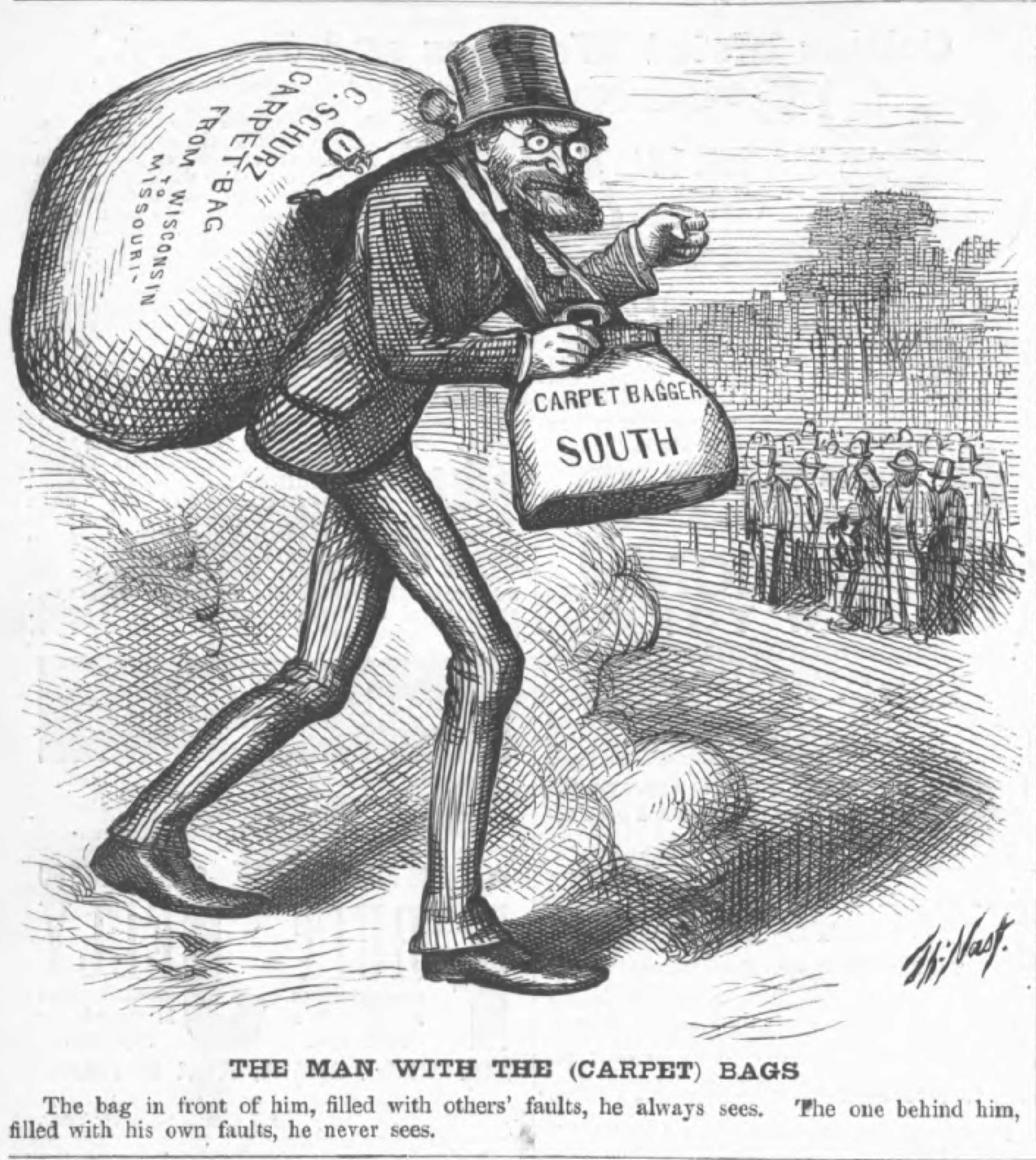
All of them would indeed, like those modern abusers interviewed by social scientists, have insisted that they have been abused. They too would have insisted that this is the reason for their actions. The Nazis held themselves intolerably oppressed by the Versailles Treaty--and, yes, by the rich Jews. The Boers considered themselves oppressed by the British during the Boer War, and by Imperial policy after that that they felt favoured blacks. The Southerners considered themselves oppressed by carpetbaggers and reconstruction following the Civil War.


An oppressed Afrikaner.

Were they in fact oppressed? Perhaps briefly; but this came within a wider experience of privilege. Versailles may have been bitter to the Germans, but it followed a period of success after success, culturally, economically, and militarily, during the late nineteenth century, not incidentally including imposing punitive treaties on their own opponents several times. Up until 1918, they were very much accustomed to seeing themselves as the rising star of Europe and of the world. The growing tip of evolution; the master race. It is when that seemed to be thwarted that they went berserk.

So too, the Afrikaners had a credible claim to being oppressed, but this was brief. Fifteen percent of all Boers died in British concentration camps during the Boer War. But this was a group accustomed for many years to owning and commanding black slaves, and to moving into new lands and throwing off the former inhabitants at will. They were a group of people so accustomed to having their own way that they found virtually any government intolerable.


A carpetbagger oppressing Southern U.S. whites.

And so with the whites in the US South: used to having black slaves do all the hard work, they saw themselves as New World aristocrats. Virginia credibly claimed to be the leading state of the union, home of most US presidents, until they lost the Civil War. Or the Protestants of Northern Ireland, accustomed to seeing themselves as the ruling class, then faced with the loss of that status at Irish independence.

Compare Nelson Mandela, Vaclav Havel, or Jomo Kenyatta, who emerged from the deliberate oppression of years in prison to prove exceptionally mild rulers, reconciliation turning out to be their main concern. You don't hear a lot of whining from the Armenians either.

The lesson here is that it is not the oppressed who abuse, but those who have been accustomed to being pampered and to having their will obeyed. When they suddenly have that rug pulled out from under their jackboots and stilettos, they shift into overdrive, becoming obvious abusers. In other words, it is not the abused, but the spoiled, who abuse.

Yet these abusers will also see themselves as abused, and complain loudly about it. This is the psychological phenomenon dealt with so well in “The Princess and the Pea.” By contrast, the truly abused are most often incapable of seeing the extent of their own oppression, since it is what they have always been accustomed to. Fish know nothing of water.

Why do we hear so much more about the holocaust of the Jews by Hitler than about the holocaust of the Ukrainians by Stalin? Or the holocaust of the gypsies or Jehovah's Witnesses by Hitler? Or the much higher death rate under Mao? Because the Jews in Germany and Eastern Europe were indeed, as the Nazis portrayed them, wealthier than their non-Jewish neighbours. Until the holocaust, they were accustomed to viewing themselves as in the higher reaches of the social order. They knew immediately that there was something wrong with the way they were suddenly being treated. Ukrainian or Chinese peasants? Gypsies? Not so much.

Therefore, those who complain most loudly of abuse or of being bullied in the public square are not those who have been treated the worst, but most often the bullies themselves. When these squeaking wheels are inevitably given government grease, it is almost always an additional injustice, which aids and abets their injustices against others.

Thus we see abusers branding the abused with being abusers.


Oppressed women, NYC, 1912

Such, for example, is the case with feminism. Who is more accustomed to being pampered than the average young woman?