Playing the Indian Card

Showing posts with label bullying. Show all posts

Saturday, September 27, 2025

On Being Spiritually Bullied


Friend Xerxes, the formerly left-wing columnist, who has now mostly eschewed politics, wrote recently objecting to the evangelical Protestant “born-again” concept of sudden conversion. He considers this “bullying,” and says it is not in the Bible.

Pressed on how this is bullying, he emphasizes the demand to repent past sins. That is the bullying; and that is what is not in the Bible.

As a Catholic, I really have no dog in this fight. Instant conversions are not the expected norm in Catholicism. Catholicism is dubious about recognizing sudden conversions, because they may not be sincere. The usual advice is to sit on it for six months to a year, and spend that time walking the walk and studying the faith, before going public. 

But surely there is much Biblical warrant and saintly testimony for sudden conversion. Even outside Christianity: consider the case of the Buddha. Or the legend of Newton under the apple tree. Or Archimedes’s famous “Eureka!” Everyone has had such experiences in minor matters.

And the Bible gives several examples, aside from the famous one of Saul on the road to Damascus.

See Matthew 4:

“18 As Jesus was walking beside the Sea of Galilee, he saw two brothers, Simon called Peter and his brother Andrew. They were casting a net into the lake, for they were fishermen. 19 “Come, follow me,” Jesus said, “and I will send you out to fish for people.” 20 At once they left their nets and followed him.

21 Going on from there, he saw two other brothers, James son of Zebedee and his brother John. They were in a boat with their father Zebedee, preparing their nets. Jesus called them, 22 and immediately they left the boat and their father and followed him.”

“At once.” “Immediately.” James and John even left their father Zebedee sitting in the boat. The gospel seems to actually be emphasizing how sudden this conversion was. And this, the calling of the first apostles, is presumably the intended template for Christian conversion.

See again Luke 19:8:

“But Zacchaeus stood up and said to the Lord, ‘Look, Lord! Here and now I give half of my possessions to the poor, and if I have cheated anybody out of anything, I will pay back four times the amount.’”

Again the suddenness seems to be significant. The tax collector converts “here and now.”

See too the mass conversion at Pentecost, very much like a modern revival meeting. Acts 2:38-41.

“Those who accepted his message were baptized, and about three thousand were added to their number that day.”

Saul’s conversion is most obvious because it represents a 180 degree turn. But compare the conversion of the good thief; or the centurions who, after crucifying Jesus, conclude, “this surely was the son of God.”

Consider too St. Augustine’s account of his conversion, after hearing a child’s voice say “take and read.” 

“For instantly, as the sentence ended, there was infused in my heart something like the light of full certainty and all the gloom of doubt vanished away.”

So too with Old Testament prophets: most famously, Moses surprised by the burning bush on Sinai.

Xerxes objects that these conversions do not involve the element of repentance. So they are not bullying, and the born-agains are still bullies.

He is right that Simon, Andrew, James and John were not asked to repent their sins when they were called to follow Jesus. 

Does this mean that the modern Protestant model is flawed? That repentance is not necessary?

Surely Zaccheus was called to repent—or at least he did repent, instantly, and make reparations. For him, conversion and repentance seems to have been the same act. As, surely, it was in the case of Saul/Paul. After his vision, Paul refused food and drink for three days—surely an act of penance. And the Roman centurions must have repented of crucifying the son of God—kind of goes without saying. In the case of the Good Thief, his admission of guilt is explicit: “And indeed, we have been condemned justly, for the sentence we received corresponds to our crimes.”

Augustine also repents, before conversion: “I was sick and tormented, reproaching myself more bitterly than ever, rolling and writhing in my chain till it should be utterly broken.”

The need for repentance does seem to be clearly present in the New Testament taken as a whole. This is the commission of John the Baptist. “In those days John the Baptist came, preaching in the wilderness of Judea and saying, ‘Repent, for the kingdom of heaven has come near.’”

And people from the whole region responded. “People went out to him from Jerusalem and all Judea and the whole region of the Jordan. Confessing their sins, they were baptized by him in the Jordan River.”

Quite plausibly, Simon, Andrew, James and John were among those who had gone to the Jordan to be baptized. That would mean they had already repented of their sins. As a matter of fact, the Gospel of John cites Andrew and John as disciples of the Baptist. So that seems to explain it.

So it certainly seems Biblical that true conversion requires the admission of sins—that one is a sinner.

So where is Xerxes’s bullying?

Religion, in the sense of belief or faith, by its nature simply cannot be imposed on another. It cannot be compelled. So bullying is not possible.

Religion in the sense of certain rules of conduct, like fasting or public prayer or going to church, can be imposed by government or family: but in Canada or the US, religions are always voluntary associations.

Now consider this from the point of view of the missionary. If he or she is indeed a Christian believer, he is not bullying in calling on you to repent and give your life to Jesus. He is offering you eternal salvation and saving you from eternal damnation. To paint him as a bully, you must not just deny the truth of Christianity, but deny that anyone could believe it. It is like accusing the nurse of bullying for bringing a dying patient food and adjusting her pillow instead of leaving her to die alone—only infinitely worse. It is like blaming a fireman for rescuing someone from a burning building.

This example touches me personally. I had a great-uncle who converted and received extreme unction on his deathbed. The thought of it gives me great solace. It is never too late for salvation, this side of the grave.

Xerxes objects that there are religious cults, and they at least do bully: “They smother potential members with pseudo love and care. They never left the newbie alone. Until their victim succumbed – and felt huge relief that it was over.”

There was a great deal of concern about this back in the Seventies and Eighties. Hare Krishna, People’s Temple, Scientology, Heaven’s Gate, the Moonies, the Children of God, and the like. Parents hired “deprogrammers” to recover their children from such groups.

But such groups cannot kidnap anyone; they cannot hold anyone anywhere against their will. If someone wanted to leave, and were prevented, all they needed to do was approach the nearest cop. Or contact their family. They were necessarily there of their own free will. Who has the right to overrule their own judgement and freedom of religion and conscience?

I have known several ex-Moonies, one ex-Scientologist, and one ex-Children of God. They had migrated to other faiths, and had no reason to defend their former denomination. But they insisted this claim of brainwashing or constraint was bosh. They had never felt any kind of compulsion. And nobody tried to prevent them from leaving.

The objection to young people joining “cults” echoes the common experience of Catholic saints. St. Thomas of Aquinas’s family kidnapped him and confined him to prevent him entering the monastery. St. Francis of Assisi was kidnapped, confined, and tortured by his father when he sought to become a mendicant friar: his father “laid hands on him very shamelessly and disgracefully, and carried him off to his own house. And so, without any mercy, he shut him up for several days in a dark place, and thinking to bend his son’s spirit to his own will, urged him at first by words, and then by stripes and chains.”

The two groups that can get away with holding people against their will are the government, and the family. To most who entered the supposed “cults” of the seventies and eighties, I suspect this was their escape from bullying at home. An escape that has been shut down, by the persecution of the “cults” and their leaders. The bullies are now more firmly in control.

It is of course entirely possible, and likely, that some cults are sinister. Al Qaeda is a cult. People’s Temple was a cult. The Manson family was a cult. At the same time, these cults were not really religious. They were primarily political in their aims and interests, and this is how they claimed the right to bully and control.

As to bullying someone by asking them to admit that they are a sinner, it stands to reason that any Christian conversion must involve repentance. Nor is it unreasonable to point this out to one who wants to convert. Jesus says “call no one good but your Father who is in heaven.” The acknowledgement of God involves the acknowledgement that we are not ourselves God, that we are imperfect by comparison. We are all sinners.

Someone who will claim they have never sinned, is clearly not telling the truth, and is not prepared to stand before God, who sees all things.

In sum, there is nothing wrong or unreasonable or unbiblical with the evangelical Protestant concept of sudden conversion. And it is certainly not a form of “bullying.”


Wednesday, June 12, 2024

Why Canada Is So Woke


Canada has a reputation as the wokest country in the Anglosphere; perhaps in the developed world. What is it about Canada that makes it so susceptible to this?

I say it is the legendary Canadian “niceness,” the love of social harmony. “Peace, order, and good government.” This, I think, traces back to the UE Loyalists: English Canada was founded on the fundamental principle of deference to authority. This means not just government authority—and Canada is surely the only country in the world where the police force is such a beloved national symbol—but also social authority generally, the dictates of good manners and polite discourse.

This means that Canadians are peculiarly vulnerable to being bullied. Anyone who shouts loudly will have their demands met, for the sake of social peace, and anyone who speaks as an authority will be accepted as such. 

This is what the modern woke left really is: a selection of bullies making demands. A set of special interest groups, overall a minority. Like any bully, they will not desist until and unless firmly challenged; their demands will only grow and grow. And against this trend, Canada is uniquely defenseless.

Women are a similar case. Feminism was the vanguard of the woke trend; women continue to be more “woke” then men. Yet women are the chief victims of wokery. Feminism, in rejecting the traditional feminine role, subverted all their interests. This was more obvious in the early days, when “consciousness-raising sessions” were the main feminist activity. Women had to be bullied or socially shamed into the new doctrine. But now studies show that women are less happy than they were pre-1960, and women in developed nations are less happy than those in the Third Word, where traditional roles are still more common. And they are losing their advantage in life expectancy over men. 

This has happened because women are like Canadians. Women are naturally inclined—naturally inclined, note—to be nice, to defer to authority, to be flexible and go along. This, like Canadian niceness, is usually an admirable trait, but leaves one vulnerable to bullying and abuse. 

And the bully’s demands grow and grow. Now being nice requires accepting men in women’s washrooms, rapists in women’s prisons, men taking the trophies in women’s sports. 

This also perhaps explains the commonly noted phenomenon of “flying monkeys”: how bullies and narcissists always find willing accomplices. “We are three times the slaves of the owner of the Golden Cap, whosoever he may be.”

How far can it all go before the enslaved monkeys rebel? Perhaps we are about to see.


Wednesday, November 22, 2023

The Bigger Beating Up the Lesser


The good guy?

Friend Xerxes, in a recent private conversation, made guilelessly clear why the far left is generally in support of Hamas in the current Gaza struggle: because Israel is “the bigger beating up the lesser.”

Obvious enough, but also revelatory. This would seem to be, to the left, the only thing that matters: whoever is judged to be weaker, to have less power, is automatically in the right.

Consider intersectionality. Nobody in a designated “oppressed” group can be accused of being racist or oppressive. “Whites,” however, are racist and oppressive no matter what they think or do or have done, because they are supposedly in power: “privileged.”

It is not necessarily the correct perception in this case that Israel is the stronger, and Hamas the weaker. It is foolish for a weaker party to attack a stronger one; and Hamas attacked Israel. But the Arabs are all one ethnicity, by any traditional measure: the same language, the same religion, the same government until divided recently by European powers. Hamas no doubt hoped that the rest of the Arab world would come to their assistance, should hostilities begin, as they did in 1967 or 1973--not to mention the rest of the Muslim world, which is, in principle, supposed to be one political entity, Dar al Islam. In this wider context, Israel is a little sliver of land and a local population surrounded by powerful enemies.

But then too, those designated by the left as oppressed and weak minorities is also arbitrary: women, although the majority of the population is female; non-whites, although the majority of the world is non-white; and so on.

I think it was always objectively improbable, since the Abraham Accords, that Hamas would have received direct and immediate military support. But they might have hoped to flip the growing consensus for peace for the future.

But, not to get bogged down in this one case, if the left’s overall moral logic is correct, Al Qaeda was also in the right to strike the World Trade Centre: after all, Osama Bin Laden’s resources were less than America’s. But then, the left actually is currently thinking better of Osama and his justifications.

Japan was also, apparently, in the right to bomb Pearl Harbor: the USA was the bigger country. They were, therefore, the bullies.

But the idea that the weaker party is always in the right is moral nonsense. It certainly wouldn’t do, for example, as a parenting principle. The child is always right, then, and the parent always wrong?

Nevertheless, you see it in the left’s call a couple of years ago to defund the police: since the police have more power than the criminals, it is the police who are at fault, not the criminals.

Yet it is simply the doctrine of “might makes right” inverted. And it is self-defeating: if you support the weaker party to win, then, if it wins, you must oppose it as the stronger party. And so the wheel spins eternally, in constant blood and strife.

So why, since it is so destructive and nonsensical, does the left want to apply so assiduously?

Because it is an alibi for the sin of envy. 

If you are not morally developed, you will naturally resent anyone who seems to be doing better than you are, or does things better than you. You want to pull them down.

Like the desire to pull down statues of any recognized heroes.

Envy is the sin of Cain against Abel: if another seems favoured by fortune or by God, you resent them and seek their harm. It helps if you can declare them a “bully,” or “arrogant,” or rapacious, or greedy, simply for revealing their talents.

That would, for example, explain why the left calls Trump a bully. He skewers his opponents too well.

That explains why Bin Laden targeted the World Trade Center. It was too impressive a structure.

That explains antisemitism. The Jews are objectively highly accomplished as an ethnicity. 

That explains anti-white hatred; the same observation applies. They have accomplished too much to be allowed to live in peace.

And that is the way of the world.


Tuesday, July 25, 2023

Speech after Long Silence

 My apologies for not posting. I was moving, from Toronto to New Brunswick, and on top of the attention this required, had no Internet. I hope to return to a normal schedule soon. Fortunately, it is summer, proverbially a slow news period when many of you may be off on the golf course or at the cottage.

In the meantime, read this harrowing tale of contemporary Canada.


Sunday, August 28, 2022

Narcissist in Power


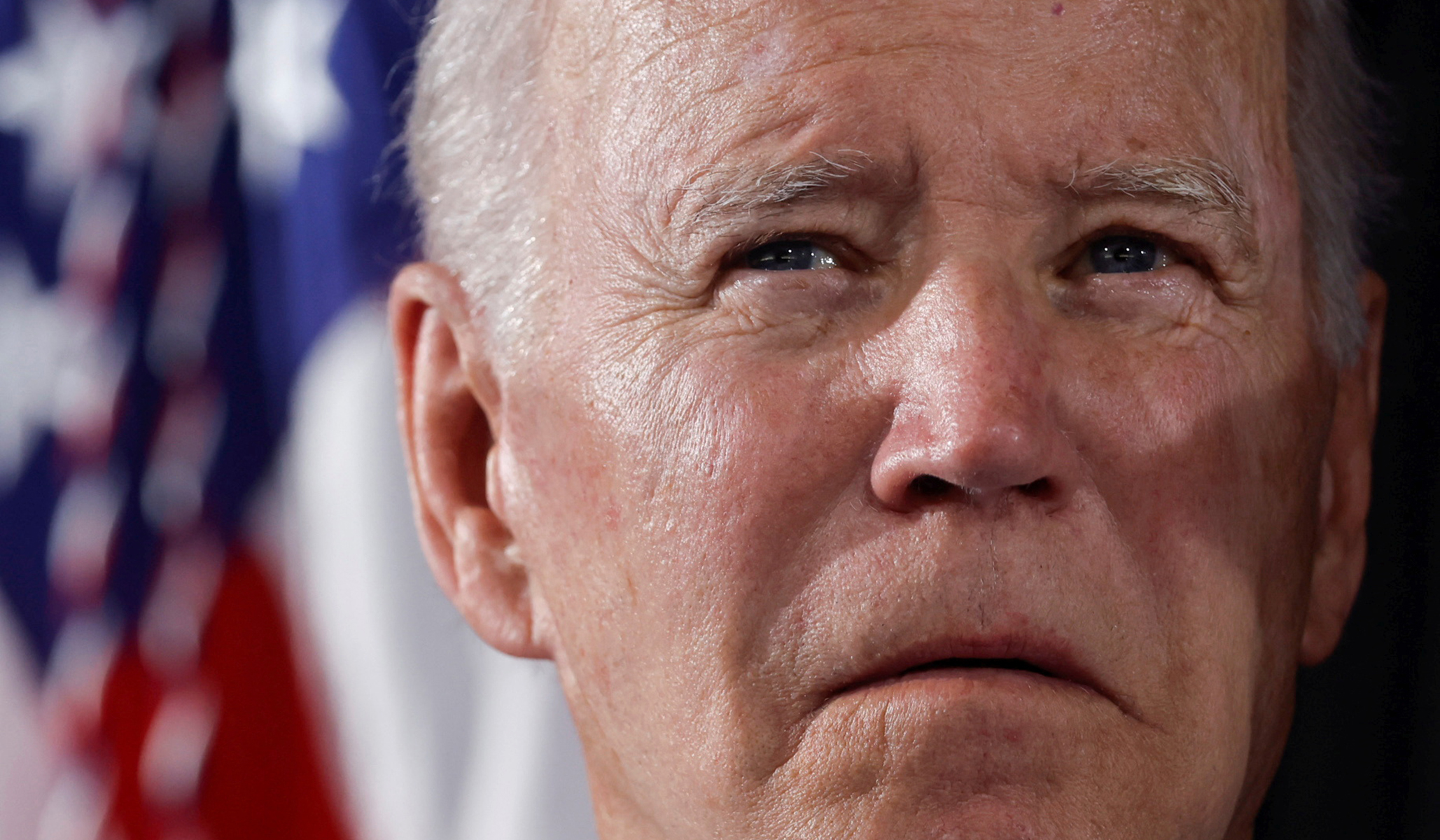
It is clear that Joe Biden is a narcissist. The revelations on his son’s laptop and in his daughter’s diary put this beyond question.

Why do Biden’s children have this odd and seemingly self-destructive tendency to leave their secrets lying around? 

It is a cry for help. It is a way to cry for help without being held by the narcissist to blame. 

Ashley Biden’s diary reveals at least a strong suspicion of pedophilic incest. 

This is a common feature of a dysfunctional family.

We think of narcissism as self-love; but what is “self”? Narcissists can be self-destructive. Better to see it as addiction to one’s desires, one’s vices. Sex is pleasurable. A child of the opposite sex readily available behind closed doors makes a target of opportunity.

Another child, readily available behind closed doors, makes a convenient target to vent your bad feelings. It seems, however, that Biden at least did not have this malicious streak. He also had enough self-control, or cunning, not to mess himself up with drugs or alcohol or public scandal.

Scapegoats will be considered wrong no matter what they do. But to those children not selected as scapegoats narcissists are likely to pass on the ethic of indulging every desire. Indeed, this will be encouraged. Children of narcissists therefore often themselves become narcissists. We see Ashley’s and Hunter’s sex addiction and drug addictions.

A narcissist will lie convincingly whenever it is to their advantage. What they desire to be true is more important than the truth. Biden has shown this tendency throughout his career.

A narcissist will worship his own body. It is, after all, the instrument of pleasure. He will expect others to adore it as well. Hear Biden talk fondly about how the hair stands up on his legs, and children like to stroke it. Witness Hunter’s endless naked selfies.

Narcissists are almost always personally charming. Because they lack morals, they are free to say whatever seems in their interest to say. Find someone who has no enemies, and you have probably found a narcissist.

As Confucius said, “If a man has no enemies at court, it is necessary to make enquiries.”

It is therefore alarming how everyone around Washington claims that Joe Biden is a nice guy personally.

Remarkable how the media and the FBI run interference for him, trying to suppress and ignore all the evidence. But this is a familiar phenomenon when dealing with narcissists: the flying monkeys.

At the same time, many call Trump a narcissist. Trump’s kids are evidently well-adjusted, personally happy and successful. Trump is accused of constantly lying. To the contrary, unlike Biden, he is strikingly truthful: he says what he thinks. Lots of people love him, lots of people hate him. This is the sure sign of a man of principle. 

Rather than a narcissist or bully, Trump is a man who stands up to narcissists and bullies. Unlike most of us, he refuses to be a kapo or a flying monkey.

That is why we hate him. He won’t play the game. He is a threat to the narcissists, and he shames the rest of us. 

We are, most of us, cowards. Narcissists will go great lengths to get what they want. If you oppose them, they will set up an infernal howl. If possible, they will bully you. So most of us go along with them immediately, and even help them destroy others. If we do not, we fear ourselves becoming the scapegoat.

It works this way in a dysfunctional family, and it works this way in a dysfunctional nation.

So all the flying monkey gang up against Trump.

We are in a particularly bad situation now, because for several generations, the “experts” have been telling us the most important thing is to make sure children have “self-esteem.” That is, are coached towards narcissism.

Now we have a critical mass, and all hell is breaking loose. And few are available to stop it.

The best lack all conviction, while the worst

Are full of passionate intensity.


Saturday, July 06, 2019

The Spider's Poetry Workshop


Went to a poetry workshop at a local library. Being new in town, seemed an obvious way to find friends with a similar interest.

Within five minutes it was obvious that this “poetry workshop” was actually a narcissist’s little emotional abuse racket.

An obvious opportunity for a narcissist. People are revealing themselves emotionally when they write poetry. So this is the ideal time to belittle them; they are vulnerable. The downside, from the narcissist’s perspective, is only that he or she will have no idea about poetry. But if the level of the participants is low enough, this will not become evident.

As soon as I entered the room, the guy beside me handed me a page of rules for the group. In summary:

- People read their poems in order of arrival.

- Others comment around the table in turn, starting from either left or right.

- The author should not participate or respond

- Feedback should be about the poem, never the author

- Feedback should include praise as well as “constructive suggestion.”

“Workshop participants must always remember that comments are never about ‘you’ but about the poem. Participants must refrain from judging a work based on political or personality differences – comments should never be made or received as personal.”

Can you see the problem? Superficially, it seems almost reasonable. But note the concluding paragraph makes it impossible for anyone to object to a personal attack—the moderator, if he is so inclined, can easily accuse them of breaking the rules by TAKING the comment as personal. The idea that the author should remain silent as others comment on the work is bizarre, and seems designed to permit abuse. Natural justice requires that defense as well as prosecution must present their case.

So alarm bells were immediately going off on seeing this sheet of rules.

And the very next thing that happened was—the moderator himself broke these rules.

I was sitting to the immediate right of the first participant. By the rules, I should have commented first; or else comment should have begun with the first person on the left, and moved on from there. Instead, the moderator just started to comment, ignoring the rule. He was seated to my right.

Typical narcissism: rules do not apply to them, only to the little people.

The moderator took the author to task for a line in which she said there was dew on the ground. Wrong, he said, there cannot be dew on the bare ground.

This was surely just finding fault. “Dew on the ground” is a common construction. Google it, if you like. Why would you assume there was no grass on the ground?

The author at this point, rightly, also ignored the rules. She tried to defend herself.

“But then you would have to indicate that there was grass,” he responded, “you didn’t.”

She had. The first line of the poem says she is in a park.

The whole point was apparently finding fault, somehow, with what she wrote. And on some purely pedantic grounds. Something that did not require any understanding of poetry. And there was perhaps a special reason for this particular objection: the author needed "ground" here for the rhyme. There was no question of simply substituting another word. She would have to substantially rewrite the poem. The moderator was, figuratively, shoving a rod in her spokes.

At this point, with nobody else defending her, I stepped in by noting that I saw no problem with saying “dew on the ground.”

At which the moderator wheeled on me for “breaking the rules.”

I had dread the rules—they are given above.

I pointed out that there was no such rule—only a rule that the author should be silent. Which was itself not being followed. He ignored this, and repeated the accusation.

At this point, the narcissism was obvious. If rules do not apply to narcissists, neither do either reason or evidence. What is so is simply whatever they want to be so. They will lie even when the lie has to be obvious to both parties. Gaslighting.

I perhaps should have left then. I did not.

Others present remained silent and submissive. The comments continued, moving away from me.

This first poem was indeed awful, although not without a few good lines. But their comments were no more insightful than his. Not one of them said anything good about the poem, and neither did he. It was only criticism, and not constructive. Pedantic and arbitrary. So much for the stated rules.

This again sounds like narcissism. As long as you say you are doing the right thing, you get to do whatever you want. And I suspect that this tone of constant negativity was set by the moderator over time. It was set up and designed as a bullying session. Everyone else, as usual in such situations, were recruited as his flying monkeys, on pain of being turned on and berated as the new scapegoat.

Finally, after everyone else had spoken, he had no choice but to allow me to participate. I pointed out several good things in the poem, and made my suggestions. One—the last one—was that she hyphenate the word “heart-felt” in the last line to give it the right rhythm. This was not standard spelling, I pointed out, but it is acceptable in poetry to deviate.

At which the moderator butted in—breaking the rule he had himself declared a few minutes earlier, that nobody else should speak while one of us was commenting—to suggest that the author look in the dictionary to see how the word was spelled.

This was transparent bullying, as I had just said this was not standard spelling. I pointed this out, and he declared again that I wasn’t following the rules. Typical narcissistic projection. Presumably in his mind it was “breaking the rules” to defend against his attack or in any way to make him look bad.

What was the point of continuing this charade? He was a blatant narcissist, sitting there like a vast malicious spider with his prey around him in his web. I certainly did not need to be involved. I felt sorry for the others, but then, they were all sitting there taking it week after week. As flying monkeys, they would not be on my side.

And such a “Stockholm syndrome” response to abuse is not unusual in the least. Melancholics are like that. And it is melancholics who are drawn to things like writing poetry. Having been abused and emotionally crushed in childhood, they just accept that they are getting what they deserve whenever a new abuser latches on to them. I felt truly terrible for them, and I figured I was doing just what the narcissist would want in leaving, but all I could do unless I felt like being a martyr for the umteenth thousandth time was call him out, and leave. Not my circus; not my monkeys.

Which is what I did: called him a bully and a narcissist to his face, and told the women present that they were his victims. And left.

I doubt it made an impression on any of them.

I just wish as a society we had a mechanism for dealing with this kind of narcissistic abuse. Instead, as in this case, the narcissist is more often than not able to present themselves as the voice of authority—here backed by the public library system. Because the narcissist will always seek such power, and we have no checks or protections against giving it to them. Appeasement is our usual instinct.

For my part, at least I can say I have learned how to spot a narcissist quickly. Years ago, I would probably have tortured myself about it, refusing to believe what was obviously happening was happening.


Monday, February 12, 2018

Sarahah the Bully


There is a campaign afoot, with petitions flying, to ban an app popular with teenagers called Sarahah. The problem is that it is reportedly being used for “cyberbullying.”

I cannot go along with the call to ban. It seems to misdirect from the basic problem: which is bullying, not Sarahah. It seems rather like banning fire because bullies can use it to burn someone.

There is a very simple and obvious way to avoid being bullied by anyone on Sarahah: don’t install the app. What could be easier? Indeed, according to a review I read online, to get comments, you not only have to download the app, then create an account, but it is then up to you to share the link with those you yourself choose, and ask for their comments. If, after this, anyone starts sending nasty comments, individual senders can be blocked at any time. If you want to be shot with this gun, you have to buy it, load it, and cock it yourself, before handing it to the bully. Then you have to pose for them in plain sight.

Nor are comments on Sarahah really anonymous. I checked for “Sarahah” in the Google play store, and that search term produced not just the app itself, but a variety of other apps promising to reveal the names and email addresses of anyone who sends comments. Anyone offering to allow others to comment anonymously is really simply on their honour not to check. Conversely, if you want to bully someone anonymously, it is simple enough to do that by email. Just create a dummy email account. Or, for that matter, just start a rumour at the corner or the water cooler.

Sarahah, on the other hand, clearly has valid uses. Like the one it was designed for. It could be a blessing for a conscientious boss.

Accordingly it seems to me that the only value to anyone of a campaign against Sarahah is to distract attention from the real problem of bullying, and deflect blame from the bullies.

The best way to prevent bullying is to raise general social awareness of morality and personal responsibility. This campaign goes in the opposite direction. It blames things for the acts of people.

And I think that has to be the deliberate point; otherwise complaining about Sarahah is utterly illogical. People want to avoid the concept of personal responsibility. The idea of the campaign is to have everyone accept the idea that individual humans are not responsible for their acts. Lets the bad people off the hook; they can then feel free to do as they like. And this general social tendency is what is making things like bullying more common.


Tuesday, February 21, 2017

Bullying


Young Abe Lincoln vanquishes a bully.

Bullying is a serious problem, but our attempts to do anything about it seem worse than crippled by a general inability to understand what bullying actually is.

This seems odd, because the matter is straightforward. My leftist columnist friend offers a good one: when “it makes you feel good to make someone else feel bad.” I’d expand it: less extreme bullying is the attempt to control another person: to “push them around.” Merriam-Webster has: “bully: one who is habitually cruel, insulting, or threatening to others who are weaker, smaller, or in some way vulnerable.” Oxford says: “bully: A person who uses strength or power to harm or intimidate those who are weaker.”

Yet people keep getting it wrong.

For example, I went to a talk by a supposed expert on teaching writing from McGill University. His main thesis was that writing should always be done in groups. With no assigned roles. And, if one member of a group tended not to go along, such “bullying” was to be punished.

So dissent from the group is bullying? Orwell would be proud: that makes Winston Smith the bully in 1984. It just about has the valences perfectly reversed.

Then it occurred to me: one big reason why we seem to have such trouble dealing with bullying and with even understanding the concept is that there are, in fact, a lot of bullies out there. And bullies are never going to admit the real nature of bullying. Not as a matter of deliberate conspiracy, mind you. It is just that bullies are never going to see themselves as bullying. That, after all, would reflect badly on them. And bullies always have to be right. They will see themselves as special, above others. And so bullying as their right, because they are special. And anyone who resists their bullying—that is the bully.

Who is feeding us our current ideas about bullying? Who is pushing the current “anti-bullying” initiative? Most notably, teachers, psychologists, psychiatrists, and perhaps social workers.

Guess what? Those are exactly the professions in which one would expect bullies to congregate.

As a result, it is only too likely that this “anti-bullying” initiative is really going to be a huge boon to bullies. It gives them another, especially choice weapon for their arsenal: charging their victims with being bullies. Imagine the mental anguish! No wonder the thing is so popular.

People keep saying, for example, that Donald Trump is a bully. This is an example similar to that of the McGill professor. Trump is the very opposite of a bully. He is someone who stands up to bullies and bullying. He actively and openly resists being pushed around by the media, and by the Republican party establishment. So he gets called a bully, and not them! But whom has he ever bullied, so far as we know?

Yes, he can be harsh and strident. But he seems to follow a clear moral code. He does not attack unless attacked. It is always in defense.

This is why a lot of people who feel bullied have rallied behind him.

It seems unlikely that Trump is a bully even in private. First, politics is not a good career for a bully. Succeeding in politics, in a democratic system, requires continuing support by those under you—ultimately, the general public. A bully might not be found out, but it surely goes against his grain to be always helping others in need, and deliberately being nice to them. Trump’s electoral success in itself suggests therefore that he is not a bully.

Young George Dewey, the hero of Manila, takes on a bully.


Hillary Clinton, on the other hand—there we have reasons to suspect a bully. There are indeed rumours that she is a bully in private, to secret service agents, to aides. And it would help to explain her surprising electoral failures. She has gotten further than she ought through marriage; she got to parachute in at the top of the electoral pyramid. But in a serious campaign, she seems to have consistently lost, despite starting out as a favourite. The public senses something, a lack of empathy, and her subordinates are perhaps not prepared to go the extra mile for her.

Second, Trump is a notable success as an entrepreneur and a salesman. Again, that is especially hard for a bully to pull off. Both require people trusting you and feeling inspired by you. You pretty much have to treat them well to get very far at this.

Bullies can succeed in business now and then, but as bureaucrats in large corporations, not as entrepreneurs and salesmen. In any business, bullies are going to pull the enterprise down. A bully will be a consistent failure at business. You do not get far in business by treating either your customers or your employees badly. Because, generally speaking, they always have somewhere else to go. Business is not where you are likely to find them. But in a large corporation they may not as swiftly be detected.

Third, Trump’s children seem close to him, and he seems prepared always to give them important responsibilities. This is a good test: a bully will probably bully, first and foremost, his own children. Trump, far from controlling them, seems to treat them as colleagues.

My left-wing friend then singles out military officers as bullies. This is another common false conception. The common image of the drill sergeant. But this is also based on a second dangerous misdirection: the identification of strict discipline with bullying. There is no relation. The military is a pretty unlikely place to find a bully. A bully wants a helpless victim. With the military any potential victims are likely to be armed. Not just the enemy, either. An officer who was not honourable to his men always stood the chance of getting “fragged” in combat, in any war. Most times, nobody would ever know. Among higher officers, the main element of success is the ability to inspire: to inspire people to risk their lives for you. That is an extremely high level of trust, and no bully is going to command it.

He then mentions clergy. It is popular to bash clergy today, but this is probably the one least likely place in the world to find bullying. A bully needs a victim who is trapped. Everything about religion is voluntary. You bully a parishioner, and he just turns and walks out the door. Without leaving anything in the collection plate.

A current anti-bullying campaign urges everyone to wear a pink shirt, in solidarity with bullying’s victims. And here we see another common misdirection. Pink seems to suggest homosexuality, does it not? Maybe, you will protest, not to you, because that sounds possibly politically incorrect to notice. But undeniably, to most people, pink on a man puts a blip on the gaydar. The misdirection is a common suggestion that bullying has something in particular to do with your treatment of gays. There is no, or little relation. Yes, once upon a time, you could use their homosexuality as a club to bully people with. But no more. Moreover, it is equally possible for gays to bully. If you do not believe this, you know little of the English public school system. Or, for that matter, the SA and Hitler’s rise to power. So making it all about being nice to gays just gives a blank cheque to gays who are bullies.

Where are you actually likely to find bullies, and the worst, most unrestrained bullying?

Think for a moment. The perfect venue is the family. The perfect scenario for a determined bully is simply to have a kid, or better, a bunch of kids, and push them around mercilessly. They are completely vulnerable. They are there all the time. And you, legally, have close to absolute power over them. The rest of the world really does not want to interfere with the family. Yes, you do have to contend with their other parent. But that can be solved by marrying a doormat, or a milquetoast, which a bully is going to tend to do anyway. Then they will not dare to raise a peep. And you can bully them into the bargain.

Hence, I suspect, most or all of what we call mental illness. It is PTSD from those who have grown up being bullied, with no escape.

First and foremost, actually, in the family. If you are a bully, the simplest and most satisfying outlet is simply to have a good number of kids, and torture them at will. Nobody wants to interfere, because we do not want to bust up families. You get them day or night, and it’s generally nobody else’s business. The only tricky part is having to deal with your spouse. Properly, you want someone who is temperamentally an absolute worm, because the spouse really does have options.

Another really great option, unfortunately, is to become a psychiatrist or psychologist. The downside is that it is hard to qualify. But the upside is that, once you have, you are accorded immense social prestige, so you will be more or less left alone to do your worst. With great pay for pursuing your hobby. Obviously, psychiatric patients are emotionally vulnerable. Most often, they are pre-selected as the perfect victims. That is how they got where they are: by being systematically bullied by someone in the past. If they object or report you, no problem. Heck, they’re crazy. You are a respected professional. Why would anyone believe them? It’s perfect.

And who is it who is giving us our current perspective on bullying and its causes? We should assume everything we are being fed about bullying by the “professionals” will be a lie.

Next to psychiatry, palliative care nursing is probably your best option. Failing that, any kind of in-hospital nursing. There people are under your care around the clock, often when no one else is around. They are often physically unable to protect themselves—that’s why they’re there—and in many cases, nobody cares what happens to them any more.

We’re incredibly careless about this possibility—no, probability.

Next to that, probably teaching. This makes it especially worrisome that the current drive against bullying comes from the schools. Teaching is a great profession. The kids are of course physically and emotionally vulnerable. The system gives you physical control and supervision of them for a good number of hours every day, and the wonderful weapon of getting to mark them as well. If you’re a bully, you get to be both perpetrator, prosecutor, and judge. Kafka would enjoy the situation. If the kids complain, well, they are just kids; they are probably lying, imagining things, or they got it wrong. The danger, of course, is from the parents. If schools is no longer compulsory, or if they have the option to change schools, the jig is up. Hence you are adamantly against things like school vouchers. Public education is our right!

Not as good is being a judge. You get to self-righteously drop heavy bricks of phony moral outrage on the vulnerable, and nobody faults you for it. On the other hand, we have a solid system of judicial review, so I don’t think this is a great problem in our system. Prison guard is another good one, although those prisoners can be tough, and there are a lot of them, so there are certain risks. Cop is good, but nowadays we are pretty well on to the risks, and web cams can go a long way towards accountability.

Being a social worker is a really great one. You get to mess with people’s most intimate concerns. Usually people of low social status, poor, socially vulnerable. And we have few checks against this. Sure, they can complain to the politicians, but if they are marginal enough, they are likely not to be listened to.

Being a manager in the civil service is a pretty good one. First off, being in charge of people, you get to mess with them. Second, because it’s the civil service, nobody gets fired. So you cannot get fired for acting as you want. Sure, you can’t fire anyone either, but you can make their lives hell. Your victims are trapped to some extent by their very job security. It would be catastrophic for most to leave their secure job and huge promised pension. So they have to put up with offal from you indefinitely. You can humiliate; you can berate; you can hogtie; you can play mind games forever. This is why we get the term “go postal.” A poisonous work environment is the norm in the civil service.

In a dictatorship, being a civil servant generally is an ideal opportunity for a bully. The public is at your mercy; nobody can walk away from the government. It works much less well in a democracy, because your political bosses are vulnerable to public displeasure. This is one of the best arguments for democracy.

Why do bullies become bullies? Again, we must not trust the experts here. Many or most of them have a vested interest in misdirection. The common claim today is that bullies bully because of “low self-esteem.” And/or they bully because they have been bullied. This, again, is the predictable opposite of the truth. By process of natural empathy, if someone has suffered, they identify more easily with others who are suffering. Those with low self-esteem are the least likely to put their own interests over others, as bullies do even in the most trivial matters.

No, bullies are made by being spoiled. By being taught to believe they are special, and whatever they do is wonderful. Therefore, if they want something, or if they do something, it is wonderful. Other people, by comparison, are significantly less wonderful in every way, and so the bully, as the hammer of righteousness, has the right to kick them around. Pharisees are bullies; bullies are pharisees. They will be convinced of their own righteousness, and so impervious to improvement.

Hence the old wisdom that to spare the rod is to spoil the child. We are now adamant against any sort of physical punishment. Another misdirection as to bullying: the claim that it is the same as being violent. Children must always be told they are awesome, and that everything they do it wonderful. Another misdirection: fair but strict rules and honest but tough evaluations are not bullying.

No, far from ending bullying, such educational movements guarantee more of it over time.


Wednesday, December 28, 2016

Trump the Bully


That ought to work.

Here is yet another nasty piece about Donald Trump in the media, referring to him as the “bully-in-chief.” And here’s another. Here and everywhere, Trump is being called a bully.

He is not.

This ought to serve as a warning to us all. “Bullying” as a concept is being misappropriated. It is being used to bully.

This is possible because the concept of “bullying” starts out be ing pretty vague. This makes it terribly useful to those who would use it to push others around. It can be redefined more or less at will to target anyone you want to kick around. It’s even better in this regard than “sexual harassment.”

On what basis is Trump a bully? I would think being the aggressor was a sine qua non. Otherwise, it can be the one who stands up for himself or others when attacked by a bully, who is charged with bullying.

Yet this, worryingly, seems to be missing from many definitions.

Merriam-Webster: “a blustering browbeating person; especially: one habitually cruel to others who are weaker”

Trump as he is shown on Pixabay.

Oxford: “A person who uses strength or power to harm or intimidate those who are weaker.”

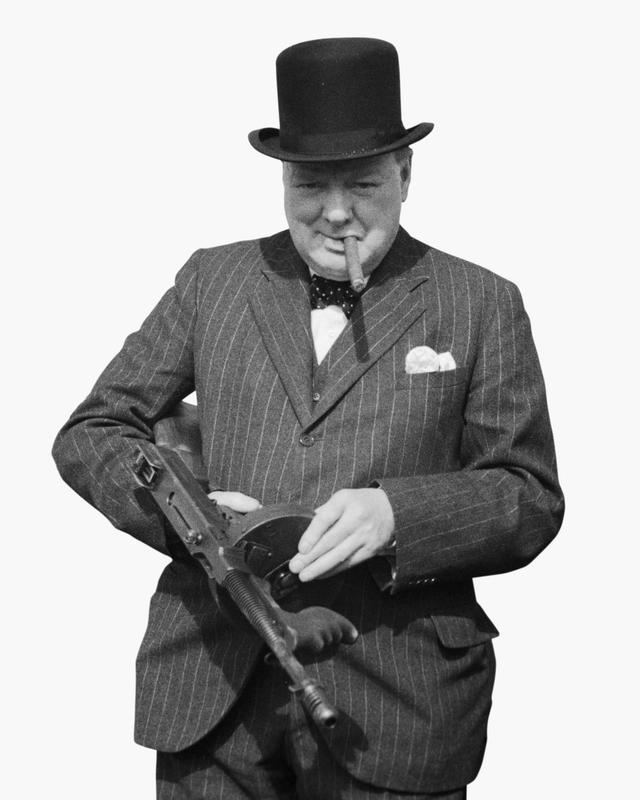
By this definition, Roosevelt or Churchill were bullies. After all, they were demonstrably stronger in the end than Nazi Germany and Imperial Japan. And they were certainly mean to them. Police are by this definition also bullies when they arrest a suspect; the state is bullying when they bring a criminal to trial. Anyone who wins a fight is, ipso facto, the bully.

Moreover, we have commonly seen the premise that there are systemic “imbalances of power” misused to discriminate already. If anyone who fights someone who is weaker is a bully, then, given the “fact” of male or privilege, any time there is a conflict between black and white, or male and female, the man or the white can be charged with “bullying,” regardless of the actual circumstances.

Not great; especially when such a definition gets put into law. The concept of a disparity in power being definitive is then an open invitation to use the law against groups already suffering discrimination. That is just the way it seems to be being used already: descriptions of bullying commonly refer to race, sexual orientation, and disability, as if this were part of the definition. Hitler would have happily pointed out that Jews had, on average, greater wealth and social power than Aryan Germans. Stalin would have said the same of the kulaks, or the Young Turks of the Armenians.

So much for equal protection under the law.

Picture of Churchill the bully favoured by Nazi propaganda. 


Proposed legislation and other initiatives in Canada to prevent “bullying” in schools always presupposes that only students can bully, never teachers or the school administration. This is absurd even on the basis of a supposed power differential: so kids are always more powerful than adults?

No; what will actually happen is that the charge of “bullying” will always be used by those in power against those lacking power. It will, in other words, always be used to bully, never to prevent bullying.

Some definitions suggest that bullying has to do with violence. That fits the materialist preoccupations of the age. But it surely does not, as the charge is commonly used. Trump, unlike the police or Roosevelt, is clearly not violent.

So it has to do then with his insulting language? Indeed, Singal specifically calls Trump a bully for “constantly launching attacks— many of them rather offensive— against both his political rivals and members of the media he believes have treated him unfairly.” Insults? Attacks? You mean like calling someone a “sociopath,” accusing them, despite being married to an immigrant, of “dog whistle xenophobia,” accusing them without evidence of abusing their wife, calling them a “ham-faced, race-baiting, woman-hating monster,” accusing them without evidence of “violent misogyny,” again without evidence of “gaslighting the entire world,” referring to their wife as a “kidnap victim” in their marriage, referring to her as a “piece of ass,” a “fibreglass mannequin” whose “body is available to inspect at the click of a button,” saying they have a “thug’s understanding” of consent, and want to “violently screw the world”? Glad we have that cleared up.

Yet Trump is not guilty of anything like this, unlike his detractors. Not only do they obviously go much further than he ever has, in calling people ugly or “low energy” or “fat” or “little.” (Ouch?) He also seems scrupulous in only doing so if he has himself been attacked. No sucker punches, no drive-bys. Only the honour of a duelist. He was notably nice to Ted Cruz, for example, until Cruz began to attack him. And even after people have been nasty, Trump seems to be magnanimous once they stop: notice his recent overtures to Mitt Romney, or Paul Ryan. Note the appointment of Ben Carson as HUD Secretary.

By contrast, cowardly leftist commentators like the present poison penners cannot plausibly claim that Trump has attacked them first.

So why is Trump the bully, and Laurie Penny is not?

Singal, in turn, gives his own “expert” advice to the other Republican candidates: “if I were advising the Republican Party I’d say to the other candidates, ‘You guys, together, should be shooting Trump down,’”

That is, they should gang up on him.

So how is it that Trump is a bully, but ganging up is not bullying? “Bullying Canada” lists, as one of the “four most common forms of bullying,” “keeping certain people out of a group.” This goes rather further than that.

It could hardly be clearer that the charge of “bullying” can be used, and is currently being used, to suppress dissent and keep the peasants down.

The key to Trump’s popularity is in fact that he has had the guts to resist being bullied. Two words: “political correctness.” The Republican rank and file grew fed up with candidates who insisted on remaining polite and being steamrolled by the biased media and the forces of political correctness who would shout them down. Political correctness has been and remains an endemic form of bullying that has infested our culture: speech codes, “hate speech” tribunals, “microaggressions,” sexual harassment kangaroo courts, the open browbeating and scapegoating of whites, males, heterosexuals, Christians, and the “cisgendered”: real instances of bullying, in the proper sense, both endemic and severe in its consequences. They are unprovoked, they are persistent, and their intent is to intimidate and control.

Trump had the stomach, the self-confidence, and the financial means to stand up and say “Hell no.”

That made him a champion for all the bullied masses.

The bullies, of course, are having none of this.


Sunday, August 02, 2015

The Stripped Gears of Social Science


Photographed in an antique shop window. Is it live, or Memorex?

There are only two kinds of discoveries in the social sciences: those that do no more than confirm common sense, and those that are wrong. The latter is more common.

This study is probably correct. It suggests that bullies have high self esteem than the average person and are less likely than others to experience depression. So much, indeed, is common sense. Unfortunately, it goes directly against everything social science have been telling us for a generation or two. For at least that long, we have been told that bullies and abusers act as they do because they were themselves abused in the past, and because they have low self-esteem.

Teaching and parenting practice has, of course, been altered, sometimes forcibly altered, to reflect this for that same two generations, always sparing the rod in hopes of more perfectly spoiling the child. Everything a child does is now awesome. Nothing a child does can be punished in any meaningful way.

No surprise if we now have a much bigger problem with bullying in schools. We of a certainty also have it in the wider world of work, in society, in marriages, in life in general.

And we paid large sums to get screwed in this way.

What's worse, we've been told for about the same time to work on our and our children's “emotional intelligence.” Sounds good, put in that way, but it really means learning to falsify your own true feelings while manipulating those of others. In other words, training to be a proper psychopath.

Here's another instance of this academic game at work. Some time ago, a prominent paper came to the conclusion that there was never any significant discrimination against the Irish in America, and few if any “No Irish Need Apply” signs or ads. The Irish had simply imagined the whole thing. Now, a high school student—a high school student—has managed to disprove the claim comprehensively, simply with a bit of web searching.

A bit of web searching.

How, you might ask, is this possible? How can an academic paper become so widely accepted while making such extremely improbable claims, and on the basis of so little evidence?

It is really quite simple. Academia is set up to make this happen. Imagine if the original paper by the reputable history professor with the Yale Ph. D. had researched the record thoroughly and discovered that, yes, as everyone had always assumed to be true, discrimination against the Irish in America was widespread in past generations, and there were a good number of signs denying them employment. Would there then be a publishable paper, simply confirming what everybody already knew? Probably not. But if you can put out a paper that seems to show that what everybody thought was wrong—then you get it published, get tenure, get a lot of attention. You have discovered something!

All that really prevents this is the sheer honesty of individual academics. Unfortunately, morality has become unfashionable in such circles. Indeed, academics as a group, as a class, have a vested interest in promoting this kind of behaviour, rather than censuring or preventing it. If a field as a whole seems to produce no new discoveries, can produce nothing the general public doesn't already know, it is hard to justify its very existence. Why take a Ph.D. in it, if you learn nothing? Why pay someone to teach it, if he has nothing to teach? Thus, it becomes important for any field to consistently violate common sense. This is probably, on the whole, not a good thing.

Yes, there is the risk that someone will try to reproduce your results and find them wrong; as happened here. But the same problem applies: merely repeating and confirming someone else's study is not generally publishable. So others rarely do it. The high school student's paper made waves because the original paper, arguing that the Irish had not been discriminated against, had become so widespread among academics to have become, itself, a new received wisdom. At this point, “revisionism” begins to pay dividends. And the cycle begins again.

Just as a clock that has stopped dead will still be accurate about twice a day, so all these crazy ideas emerging from the academy probably get disproven eventually. However, what we are witnessing is not a quest for truth or knowledge, and alarmingly little get added year by year to the store of human knowledge. In the meantime, a great deal of damage gets done.

It is worst in the social sciences, because they are based on incoherent premises—primarily, an insurmountable observer paradox. But the same also applies in the humanities and in the hard sciences. The difference is that the social sciences emit nothing but this static; humanities and hard sciences do also sometimes produce valid results.


Even so, anyone who has lived long enough and made some effort over their lives to follow medical advice will surely have noticed the pattern. Sugar will kill you. It will make you fat. You must take artificial sweeteners. No, wait, artificial sweeteners will kill you and make you fat; you must take sugar. No, they are quite safe; sugar is bad and will make you fat. You must get more sunlight for vitamin D. You must stay out of the sun or get skin cancer. You must get more sunlight for vitamin D. You fools! Why have you not been listening to us experts? Cholesterol is bad for your heart; cholesterol is good for you. Eggs are healthy; eggs are unhealthy; eggs are healthy. Aspirin is dangerous; safer to take acetaminophen. Acetaminophen is dangerous; safer to take aspirin. Statistics at least tell us medicine does make some progress; technology proves that hard sciences make some progress; but there is obviously still a huge amount of static involved.

This is one reason why I love the Catholic Church. Of all human institutions with intellectual pretensions, it seems uniquely immune from this disease. All other human “knowledge” seems built on sand; it alone is built on rock.

Monday, December 23, 2013

Poor Little Fuhrer


Rich Jewish shop owners. From a Nazi poster.

It is a truism in the social sciences that abusers are people who have themselves been abused. But this is obviously wrong.

Simple common sense: who would understand the pain of being abused more than one who has suffered it? How then could they visit it on others? Moreover, abusing others morally legitimizes the original abuse. This should be an intolerable contradiction to anyone who has themselves been abused. So the I Ching, repository of the wisdom of the east, observes that “through oppression one learns to lessen rancor.” Just the reverse of what the social scientists say.

Social science has been interviewing abusers, the abusers have all said they were themselves abused, and the social scientists, not being very bright, are accepting this at face value.

Enter history. History is a far better source for understanding humanity than social sciences will ever be. Social sciences are worthless in principle. The study of history, however, leads to wisdom. Wisdom comes with experience. History is the study of the whole world’s experience.

To get to the bottom of what causes people to become abusive, consider societies and groups of people from the past universally understood to have been abusive. Who comes first to mind? Nazi Germany, apartheid South Africa, the segregated US South.

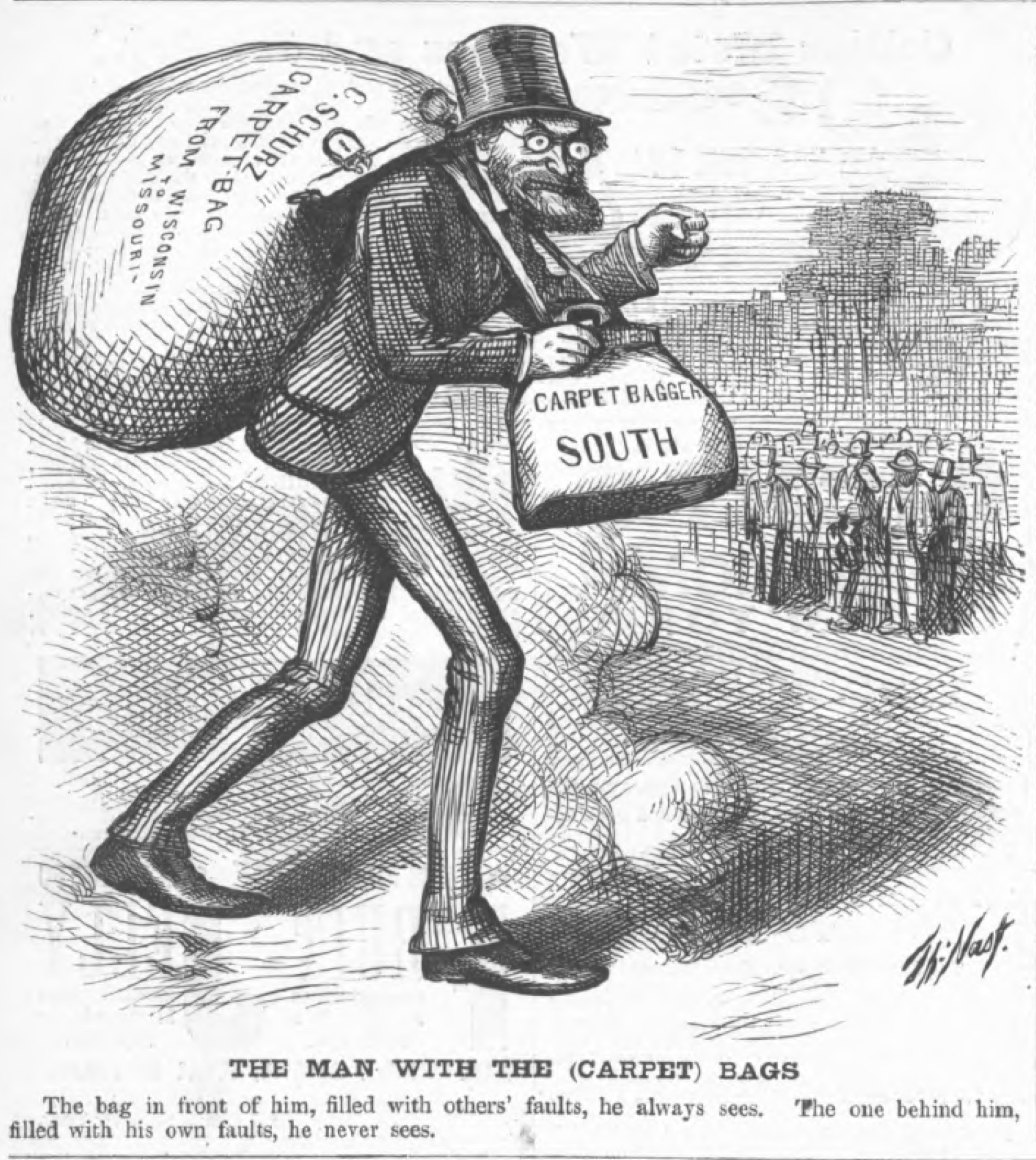
All of them would indeed, like those modern abusers interviewed by social scientists, have insisted that they have been abused. They too would have insisted that this is the reason for their actions. The Nazis held themselves intolerably oppressed by the Versailles Treaty--and, yes, by the rich Jews. The Boers considered themselves oppressed by the British during the Boer War, and by Imperial policy after that that they felt favoured blacks. The Southerners considered themselves oppressed by carpetbaggers and reconstruction following the Civil War.


An oppressed Afrikaner.

Were they in fact oppressed? Perhaps briefly; but this came within a wider experience of privilege. Versailles may have been bitter to the Germans, but it followed a period of success after success, culturally, economically, and militarily, during the late nineteenth century, not incidentally including imposing punitive treaties on their own opponents several times. Up until 1918, they were very much accustomed to seeing themselves as the rising star of Europe and of the world. The growing tip of evolution; the master race. It is when that seemed to be thwarted that they went berserk.

So too, the Afrikaners had a credible claim to being oppressed, but this was brief. Fifteen percent of all Boers died in British concentration camps during the Boer War. But this was a group accustomed for many years to owning and commanding black slaves, and to moving into new lands and throwing off the former inhabitants at will. They were a group of people so accustomed to having their own way that they found virtually any government intolerable.


A carpetbagger oppressing Southern U.S. whites.

And so with the whites in the US South: used to having black slaves do all the hard work, they saw themselves as New World aristocrats. Virginia credibly claimed to be the leading state of the union, home of most US presidents, until they lost the Civil War. Or the Protestants of Northern Ireland, accustomed to seeing themselves as the ruling class, then faced with the loss of that status at Irish independence.

Compare Nelson Mandela, Vaclav Havel, or Jomo Kenyatta, who emerged from the deliberate oppression of years in prison to prove exceptionally mild rulers, reconciliation turning out to be their main concern. You don't hear a lot of whining from the Armenians either.

The lesson here is that it is not the oppressed who abuse, but those who have been accustomed to being pampered and to having their will obeyed. When they suddenly have that rug pulled out from under their jackboots and stilettos, they shift into overdrive, becoming obvious abusers. In other words, it is not the abused, but the spoiled, who abuse.

Yet these abusers will also see themselves as abused, and complain loudly about it. This is the psychological phenomenon dealt with so well in “The Princess and the Pea.” By contrast, the truly abused are most often incapable of seeing the extent of their own oppression, since it is what they have always been accustomed to. Fish know nothing of water.

Why do we hear so much more about the holocaust of the Jews by Hitler than about the holocaust of the Ukrainians by Stalin? Or the holocaust of the gypsies or Jehovah's Witnesses by Hitler? Or the much higher death rate under Mao? Because the Jews in Germany and Eastern Europe were indeed, as the Nazis portrayed them, wealthier than their non-Jewish neighbours. Until the holocaust, they were accustomed to viewing themselves as in the higher reaches of the social order. They knew immediately that there was something wrong with the way they were suddenly being treated. Ukrainian or Chinese peasants? Gypsies? Not so much.

Therefore, those who complain most loudly of abuse or of being bullied in the public square are not those who have been treated the worst, but most often the bullies themselves. When these squeaking wheels are inevitably given government grease, it is almost always an additional injustice, which aids and abets their injustices against others.

Thus we see abusers branding the abused with being abusers.


Oppressed women, NYC, 1912

Such, for example, is the case with feminism. Who is more accustomed to being pampered than the average young woman?

Thursday, October 10, 2013

Anti-Bullying Programs Promote Bullying

You read it predicted here first; now confirmed by a study. Just as "anti-racism" programs promote racism. This is the usual and predictable (and often intended) effect of most such interventions.

Tuesday, June 25, 2013

Don't Taze Me, Teach!


A friend sends the following piece about a student who won a court case against a bullying teacher.

http://news.yahoo.com/student-booted-class-saying-don-t-accept-gays-123034366.html


The case is not egregious—the school board itself ruled in the student's favour. I do wonder if the matter would have turned out so well in Canada, where freedom of speech is far less well respected. Moreover, it needs to be said straight off that the student is ill-informed about his own Catholicism. Catholicism certainly does not reject gays. In my experience, gays often make the best Catholics.

But it does illustrate a few interesting points. First, how "anti-bullying" programmes are so easily turned by any teacher already inclined to bullying into an ideal bullying opportunity. If you want to reduce bullying, you do not give more power to those already in a position of authority. Yet this is exactly what anti-bullying programmes do.

Next, the fact that the students seemed to stand up against this bullying speaks well of them. We hear a lot of complaints from teachers—and parents, for that matter—about today's students being harder and harder to discipline. But I wonder how much of this supposed growing problem with discipline in the schools us really due to the fact that we increasingly put people at the heads of classrooms that the students innately cannot respect, because they are genuinely not worthy of that respect. And how much of it is because the schools are trying to push political correctness and indoctrination instead of clear thinking and real learning?

In such a circumstance, the only intelligent and honourable response is to argue back and to rebel. Would we really want our kids quietly accepting this? Do we want our schools to turn out "Good Germans"?

I wonder how much less our supposed classroom discipline problems would be if we went back to the common-sense method of teacher recruitment: selecting teachers on the basis of 1) subject knowledge, and 2) good moral character.

Wednesday, May 29, 2013

The Real World of Abuse


Why are some people bullies and abusers? What is the psychology at work?

We all know the story about the man who has a bad day at work, and then comes home and kicks the dog. This seems to be the basic abusive turn: trying to make yourself feel good by making someone else feel bad. Like the demons in hell. In sum, some of us, because we are essentially weak people, cannot handle our own feelings by ourselves, if they are unpleasant feelings. To avoid them, some take to alcohol. Some, really the same sort of people, take to kicking the dog; or anyone else who is nearby and helpless. Kids, especially.

This is contemptible and completely immoral, of course. But it is also, on the face of it, completely illogical. How does making someone else feel bad make me feel better?

For most types of bad feeling, it won’t, will it? But there is one exception: guilt. People commonly seem to believe that guilt is transferable; this is the Pharisaic impulse. The phenomenon of the scapegoat seems to be ingrained in human nature and human culture, found all over the world: you blame someone or something else for your own sins, punish them severely for them, and so convince yourself that your vehement reaction to supposed sin makes you a moral paragon.

You see this urge in politics all the time. This is the essence of the witch hunt, and this is the essence of the nanny state. People who make large incomes in rather dishonest ways and never give to charity can often claim themselves to be highly moral people because they vote to enforce higher rates of aid to the poor—i.e., making others behave as they should. Vlad the Impaler, the original Dracula, claimed to simply be punishing evildoers.

It really looks as though most people are abusive, given the opportunity. Most people will join a lynch mob; that’s what makes it a mob. Milgram’s shock experiment famously demonstrated this fairly scientifically. So too, a democratic plurality of Germans voted for Hitler, and so far as we can tell, he retained his popularity with the German public just as long as he seemed to be winning the war. Daniel Goldhagen argues that most Germans knew perfectly well what was going on in the death camps--and were all for it. Jews always make good scapegoats.

The greatest horror of bullying and of abuse, in the end, is indeed the self-righteousness of the perpetrator. He or she will always add insult to injury: it is not enough to punish the victim, but the victim must also accept that it is deserved. For the abuser, that is the whole point.

It also follows that, if confronted with incontrovertible proof of their own bullying or abusive behavior, anyone who is truly abusive, truly a bully, will not admit guilt for it, but seek to deflect. They will deny it if they can. If faced with incontrovertible evidence, their obvious fallback position is to insist that they themselves are or were being abused, and so are the real victims. Indeed, they are the first who are going to whine about their own lot. That is their established modus operandi; the whole point of the exercise from the beginning has been to deflect guilt.

Unfortunately, the “experts” in psychology and in authority generally are either too stupid or too complicit to see this. Probably too complicit: psychology and authority are natural magnets for abusers. As a result, most of their interventions, which grow more and more insistent, tend to be on the side of the abuser, and will actively seek to obscure the issue.