


A useful how-to, available free on our SubStack feed.


Catholic comments on the passing parade.


 Posts
All Comments
Posts
All Comments


I believe that the growing epidemic of “mental illness,” drug abuse, self-mutilation, and suicides in North America is all due to a loss of any sense of meaning in life. Resisting the call to religion, a psychology-oriented friend suggests instead the value of “Meaning-Centred Therapy,” based on Viktor Frankl’s “logotherapy,” based on the postwar philosophy of existentialism. It “helps people find purpose and meaning in life, even amidst suffering, by focusing on creating, experiencing, and sustaining meaning, often through structured exercises to connect with sources like values, relationships, and creativity.”
Can you see the problem? This approach has two premises: first, you are depressed because you feel there is no meaning to life. Second, you are right, there is no meaning to life. You need to make something up. That will be $80. Thanks.
You cannot “create” meaning. You cannot pull yourself up by your own bootstraps.
Religion tells you what the meaning of life is.
“Meaning-Centred Therapy” should lead to despair.

Psychology emerged towards the end of the nineteenth century as an attempt to apply the principles of empirical science to the study of the psyche-- that is, the soul. Say “mind” if you prefer, but “psyche” translates literally as “soul.”
It was, therefore, a replacement for religion, which is the traditional practice of care of souls, and the body of knowledge about the soul.
The question is, therefore, has psychology done a better job than religion at the care and nurturing of the human soul?
Conceptually, unfortunately, an empirical study of the soul or mind is nonsense. The methods of empirical science cannot be applied to the soul, because the soul is not a material object. It cannot be directly observed, cannot be seen, touched, tasted or touched. Science is learning by observation, and the soul cannot be observed.
All of the “clinical evidence” from psychology is hearsay, and would not be acceptable in a court of law. Nor would it be acceptable to real science—it is all anecdotal and second or third hand.
As for experiment—psychology faces an insurmountable observer paradox. As Labov pointed out, in this case, the act of observation alters the object observed—or opinion expressed. As a result, psychology has no valid findings, and the currently fashionable theories simply change every twenty years or so, with no progress. Mathematician Stanislaw Ulam issued the challenge, “Name me one proposition in all of the social sciences which is both true and non-trivial." The only response so far has been the economic theory of comparative advantage. Perhaps.
It is worth noting as well that all psychological experiments, such as they are, are unethical. They violate Kant’s categorical imperative, that our fellow men must be treated as ends, never as means.
A friend of mine wrote a book about his grandfather. His grandfather was a prominent psychiatrist, once chief medical officer of the Queen Street Asylum in Toronto. Confined to a bed on suicide watch, said grandfather laboriously severed an artery in his leg with a butter knife. My friend gave a presentation to the assembled staff of the Clarke Institute, Toronto’s second asylum, hoping for answers. Silence. At the end, one came up and said to him, “you realize, none of us has any idea what we are doing.”
Before “scientific” psychology took over in the mid-nineteenth century, cure rates reported for serious mental illnesses were quite high—often 80 or 90 percent. And mental illness was rare—perhaps a hundred patients in the Bedlam Asylum, the only one in the UK, in pre-modern Britain. As the culture has gradually turned from religion and towards psychological explanations and treatments, the incidence of what we call mental illness has grown year over year—one might almost say exploded. And all major forms of “mental illness,” once commonly cured, are now considered incurable.
This is not a record of success.
A world-wide WHO study in the seventies found that reported cure rates for serious mental illness are still far higher in the Third World than in the developed world. Which certainly seems to suggest that less psychology leads to better mental health.
Why does psychology persist? Too many wealthy vested interests with political power, often with the coercive power of the state behind them. And an irrational veneration of anything called “science” among the general public.
But things are reaching a crisis point: not just with mental illness, but also drug addiction, mass shootings, suicide, self-harm, and general social dysfunction.
It is urgent that we turn back to God.
 |
| An Asian demon. |
My Chinese student immediately sees the absurdity of the term “mental illness.” Like a physical illness?
“Mental illness” is a euphemism. We have sadly come to take it literally, and have even come to treating the thing with pills. Given this approach, the problem is incurable.
Older terms are more accurate. The various experiences we call mental illness are experienced subjectively as oppression, obsession, or possession by some will which either inhibits, distracts, or completely suppresses our own. Often, people actually “hear voices” in their head. You could say “out of your mind” or “beside yourself” or “driven to distraction.” But that is only half the equation. If you are out of your mind, who is in it? Who or what is distracting you? The best, most lucid description of the experienced reality we euphemistically call “mental illness” is demonic possession, or demonic affliction.
We refuse to use the terms only because we arbitrarily refuse to accept the existence of demons. Despite the overwhelming evidence—the evidence of “mental illness” itself. People are experiencing demonic wills interfering with their own, and fairly commonly.
Understand this simple truth, understand the problem in these terms, and the cure becomes obvious. You need spiritual assistance. The shamanic approach is to negotiate peace terms with the demon, the “voice in your head.” It does nothing to simply ignore it and pretend it does not exist. The Judeo-Christian approach, more effective, is to cast the demon out, supplanting it with the imminent presence of the one true God.
“When the unclean spirit has gone out of a person, it passes through waterless places seeking rest, but finds none. Then it says, ‘I will return to my house from which I came.’ And when it comes, it finds the house empty, swept, and put in order. Then it goes and brings with it seven other spirits more evil than itself, and they enter and dwell there, and the last state of that person is worse than the first.”
Therefore, it is necessary to occupy the spirit with a “strong man.”
“if it is by the Spirit of God that I cast out demons, then the kingdom of God has come upon you. Or how can someone enter a strong man's house and plunder his goods, unless he first binds the strong man? Then indeed he may plunder his house.”
In other words, with a faith in the one true God.
And this approach, unlike that of modern psychiatry, actually works. It is scientifically proven to work.

I am disturbed by a recent casual conversation with two guys who are both certified clinical psychologists. Between them, they seemed to believe every mass delusion and “conspiracy theory” currently on the market. I may not know much, but as a writer and a student of world mythologies, I can generally spot an urban legend when I hear one. They seemed to have no such ability. They believe whatever they hear on YouTube, generated by algorithms designed to feed them what they want to hear. I thought of the phrase, “the blind leading the blind.”
How are these people qualified to give advice to others on life, on what is real, on values? When they are so suggestible and easily misled themselves? Why do we think they have any such qualifications?
To advise others on what is real, or good, or advantageous, we need a firm grip on some objective standard. We need to know what is real, or good, or advantageous; we cannot teach what we do not know. Psychology does not know.
This is the task of religion, or religion and philosophy.
Whether any one religion is true or false, if any life advice is to be found, this is the only place it is to be found. By definition. “Worship” means “worth-ship,” determining the value and reality of things. “What is real?” is a religious question. “What is good?” is a religious question. “What is the good life?” is a religious question.
The great universal faiths agree on most things; psychology is an outlier. One could do better relying on any one of them.
 |
| NB Provincial Asylum before demolition. |
I have been reading a history of the New Brunswick Provincial Mental Asylum.
A mental patient committed in 1868 kept a diary. In it, he classified fellow inmates as falling into three groups:
“Those that had become crazy about religion…others that had gone crazy about loss of property…and many that had become insane through the immoderate and excessive indulgences of their sensual passions.”
I find it interesting to see a lay classification not influenced by the modern DSM. I think these classifications are much more helpful than “bipolar,” or “schizophrenic,” or “depressed,” which only describe symptoms. It is as if modern psychiatry is trying to avoid looking at causes. But without knowing causes, you are unlikely to find a cure.
I nevertheless think this classification is off the mark on one thing. I doubt anyone actually goes crazy about religion. I can’t imagine the mechanism that would involve. That is the reaction of someone who starts by assuming religion is false—so that an excessive interest in it is automatically harmful or insane. Yes, many insane people seem deeply religious; just as many sick people enter hospitals. That is not evidence that the hospital makes them sick. I’d posit that religion is something many crazy people gravitate towards as a cure. Unfortunately, mental hospitals and psychiatry, then and now, will do everything they an to steer them away from it.
Which leaves two categories: those driven mad by injustice, and those driven mad by guilt. I think that is right, from reading the accounts of various inmates.
But this can then be reduced to one cause for all mental illness: injustice.
We all have an inner gyroscope, a conscience, which demands justice. Kant argued persuasively that justice is a self-evident truth, a “categorical imperative.” Monotheists assume justice because the universe is governed by a just God. Each of us faces judgement at death, and at the end of time all will be judged. But even non-theists believe the cosmos is necessarily just: this is the doctrine of karma. The ancient Greeks held that the gods themselves were bound by Dike, the moral law.
The matter is obscured by the current misuse of the term “social justice.”
And the matter is obscured by modern psychiatry because it refuses to recognize morality, justice. Which makes it useless in treating “mental illness.”
For the obvious cause of mental illness is that someone’s internal gyroscope is thrown off by the prolonged experience of some injustice—either done to them, or done by them to someone else. Something within us rebels, says this cannot be, this cannot be allowed to continue. If they cannot take action to correct it, they will and do experience great emotional turmoil and disorientation.
It all seems to me to make perfect sense.
Religion is then indeed the cure, as it is the assurance of justice eventually being done.
 |
| The old New Brunswick Asylum |
Modern psychiatry considers all major forms of “mental illness” incurable, including chronic depression. All they can do is prescribe pills to reduce the “symptoms.”
Yet the early mental hospitals, circa the first half of the 19th century claimed cure rates up to 82% (C.M. McGovern, The Masters of Madness: Social Origins of the American Psychiatric Profession. 1985, Hanover Press: University Press of New England.)
What went wrong?
A history of the local asylum here in Saint John, N.B., is instructive. Founded in 1835, it was the first in what later became Canada.
Based on the success of such model asylums as York, England, and Worcester, Massachusetts, the plan was to get the patients away from whatever was causing them disorientation, stress or grief, in a calm and relaxing atmosphere. Dr. Waddell, an early superintendent, wrote that when “the cause of excitement no longer exists and they are confined to one scene and one set of companions, improvements are made.” And not just any scene. There were set principles for asylums: “Every hospital for the insane should be in the country, and within less than two miles of a large town.” “No hospital for the insane, however limited its capacity, should have less than fifty acres of land devoted to gardens and pleasure grounds for its patients. At least one hundred acres … for two hundred patients.”
So when a permanent site was sought for the provincial asylum, the site chosen was one that had previously been used for a summer resort, overlooking a major tourist attraction, the Reversing Falls. At the time, it was a mile outside the city, “commanding a magnificent view of the harbour and city.” “Varied scenery, but near enough to the active and changing scenes of life to arrest the attention and amuse the inmates.”
“The sound caused by rushing water is the music of nature, and is always in harmony with, and soothing in its effects on, the nervous organism.”(Waddell, 1874)
So how did we lose this seemingly effective model?
One mistake was putting these hospitals too close to the cities. Inevitably, the nearby city grew and spread to and beyond the hospital gates. The land reserved for outdoor activities became too valuable and was sold off. No more peaceful natural surroundings. At the same time, with growing populations, the hospitals became overcrowded. Giving out pills and sending them home, back to the conditions that caused their upset, was cheaper.
And there was a second mistake. The early successful asylums were generally run by religious organizations. Or else they were run by romantic idealists with a sense of mission. Staff were often themselves former patients.
Given that the primary cause of “mental illness” is a sense of loss of meaning and purpose, this religious element was probably critical to their success. And it prevented an obvious problem with staffing. Once the state took over, it was just a job.
And a job likely to attract a certain type of person: someone who likes preying on the vulnerable. For who is more vulnerable than a psychiatric patient?
The first supervisor of the asylum, Dr. George Peters, resigned under a cloud. Seven female employees had accused him of “violating their person,” and having “illicit intercourse” with patients.
This has been a recurring problem, it seems, for psychiatry.
A patient committed in 1868 recorded his experiences. The admitting clerk would not address him, but spoke of him in the third person. “I was searched with as little ceremony and feeling as if they had been examining a horse.” He was then, throughout his stay, “ordered about like a dog.”
“The keepers,” he writes, “are all very ignorant men and are selected purposely for their brutal and cruel disposition.” He could not of course know this, could not know on what basis employees were chosen. I am sure his assumption is wrong. But lacking any control, bullies would naturally self-select for such a job. “They are, without exception, the most unfeeling, heatless wretches I have ever met.”
And so the cure for mental illness was lost. Obviously, if, as is currently understood, most or all mental illness is caused by abuse, especially in childhood, the mental hospital as it came to be constituted was in fact the perfect prescription for making the problem incurable.
And so, supposedly wanting to reform this situation, we now send the unwell off to die on the streets. Causing our “homeless crisis.” The Saint John Asylum was torn down in 1998, and the site is now a popular park.
But have you noticed how much the original, successful asylum concept resembles a Christian or Buddhist monastery? Which were historically not just self-sustaining, but financially highly successful.
You have your solution.

I don’t know if you’ve noticed it yet, but most Canadians are mad.
You might object. Who am I to make such a judgement? Isn’t it more likely, if everyone else thinks differently, that I am the insane one? Orwell said, “Madness is a minority of one.”
And this is indeed how modern psychiatry tends to frame it.
An example of the current madness: this is the ad populum fallacy. Reality is not determined by popular vote. We cannot vote to make the earth flat.
I believe I have some perspective on this, from studying philosophy, comparative religions, and history, and from living abroad in diverse cultures: China, Korea, the Philippines, Saudi Arabia, Qatar, Dubai, not to mention across Canada and in the US. I also married into a Pakistani family.
Surely this allows me to see beyond the common consensus, and judge it.
Canadians are mostly mad.
To be fair, not just Canadians. Koreans are also mad. Americans are mad. Brits are mad. Japanese are mad. Filipinos are sane. Arabs are mostly sane, if you step away from mentioning Jews or Israel.
What makes the difference? Wealth seems to be part of it: rich people go crazy. And we have always known this: large manor homes are always haunted. There are skeleton closets.
But that, I think, is not the key. Wealth drives you crazy because, as the Gospel warns, wealth drives you away from God. It turns your focus towards the world.
And belief in God, the necessary first premise, is required for sanity.
In Filipino or in Arab culture, the existence of God is taken as a given.
In Canada, Korea, America, Britain, Japan, even when nominally acknowledged, God is mostly ignored. He seems at most an abstract concept.
You will object that in America there is a distinct and lively evangelical element. There is indeed; that is why there is hope for America. But even in America, this is a counterculture. In the Philippines or Saudi Arabia, monotheism is the mainstream.
In the New Testament, Jesus and the apostles spend most of their time casting out demons. This is their initial mission. In the early church, exorcist was a common ecclesial rank. It was assumed that any pagan converts needed to be exorcised. The rapid spread of Christianity through the Roman Empire, the rest of Europe, and today across Africa, was due to its famed ability to cast out demons.
And the classical gods were demons, as the early Christians indeed identified them. Each was or represented an obsession that could possess the mind.
Broadly, what we now call mental illness.
Now that faith in Christianity is waning, the demons are returning.
God is not just the ground of being, but also the ground of reason; he is the necessary first premise from which anything else and everything else is deduced. This, I think, is evident in Descartes’ Meditations: our warrant that anything else is real is that God is real, and would not deceive us.
Pull that anchor, and we know nothing. We do not even know, contra Descartes, that we ourselves exist. Buddhism challenges this very premise.
This is why in Buddhist and Hindu Asia, without a strong tradition of ethical monotheism, everything is seen as illusion, a moving sea of dreams. Not just the physical universe, either; but chains of induction, systematic philosophy, do not form. Only gnomic aphorisms, bursts of insight.
And the rapid growth of insanity in the developed world is due to the collapse of faith in God. The demons are returning.
On a social level, to give an example of how we have come untethered—without the anchor of God, we no longer understand what human equality means. Many—it seems most—now think it means people are the same, or even that they all deserve the same life outcomes. There is, for example, the feminist doctrine that men and women are the same and should perform all the same roles in equal proportions.
We can see this is obviously wrong, in athletics. Yet many deny it even here.
Human equality really means equal moral worth; equal worth in the eyes of God. And therefore equal treatment by the law. This is founded on Descartes’s reasoning: God exists; God is perfect goodness; God is just. It follows that God values us equally, in principle, judging us only on our own volitions. For this reason, for God’s sake, we must treat our neighbour as our equal.
Pull God from that equation, and it does not work. If we are not seeing it from God’s view, we are seeing it only from our own. Human worth, good and evil, is then based on our neighbour’s usefulness to us, or to the society as a whole.
One can immediately see how this has led to some of the worst mass murders and social upheavals of the last century and more; the worst cases of social madness.
Without the anchor of God, we similarly no longer understand freedom. Freedom is now just freedom to be selfish: self-indulgence, being able to do what we want, when we want.
Yet this is obviously wrong. The alcoholic wants to have another drink. Yet being an alcoholic is the opposite of freedom: it is enslavement to a want.
So too with most other wants. There is a truth to the old joke, “everything I want to do is either immoral, illegal, or fattening.” Most wants are addictions that, indulged too often, soon enslave us and do us harm.
True freedom is freedom to do what God wants. It is freedom of conscience: the freedom to do what our conscience tells us we ought to do.
Because we no longer understand this, social policy has become warped. It has actually been suppressing freedom of conscience, for the sake of feeding addictions.
Without the anchor of God, we cannot even agree on what is real. “Once people stop believing in God, they will believe anything.” Science is breaking down, along with public morality and civil discourse.
America, at least, now looks as though it might be regaining lucidity. I credit this to that evangelical remnant in the culture.
Nobody gets the point of Hans Christian Andersen’s tale “The Princess and the Pea.” When I Grok for the moral of the story, its search of the consensus on the Internet brings up “don’t judge by appearances.”
That is, the princess does not look like a real princess, but she is.
This misses everything. In what sense is she a “real princess”?
Follow the text. The hero’s conflict is the inability to find a real princess. “He travelled all over the world to find one, but nowhere could he get what he wanted.”
Now, how hard is it to identify a real princess? A king will be the most prominent and well-known person in the country. His daughters will be princesses. Merriam-Webster: “princess: a female member of a royal family.”
Finding a real princess is about as hard as asking one question to anyone in the next country over. If somehow you don’t already know.
Andersen is plainly telling us that “princess” here is meant metaphorically.
“Suddenly a knocking was heard at the city gate, and the old king went to open it.”
Would a king go out personally to open the city gate? No king would, for reasons of national security and his own safety from assassins, even before any other considerations. Let alone an elderly king, on a stormy night.
Andersen is telling us that “king” here is also metaphorical.
“It was a princess standing out there in front of the gate. But, good gracious! what a sight the rain and the wind had made her look. The water ran down from her hair and clothes; it ran down into the toes of her shoes and out again at the heels. And yet she said that she was a real princess.”
Obviously, no princess in the dictionary meaning of the word would be out wandering in a foreign country alone with no place to go in a rainstorm.
Let alone “down at heel.” The rain is running into the toes of her shoes and out the heel. In other words, her shoes are worn out so that the heel is lower than the toe, and both have holes. She is literally not “well-heeled,” “down at the heel.” She is not someone accustomed to luxury.
So by what authority is she a princess? By her own. She says so.
Next, the elderly queen then puts a pea on her bed, and covers it with twenty mattresses and twenty coverlets. This odd old queen clearly has no maids nor ladies in waiting.
Were this not yet enough to make matters clear, how plausible is it for anyone, however sensitive and accustomed to luxury, to feel a pea under twenty mattresses?
“Princess” here means someone who demands to be treated like a princess; someone who will complain no matter what is done for her or given to her. A narcissist.
The next question is why on earth would any man want to marry such a woman? Yet the prince does exactly that, indeed searches far and wide for such a woman; with his mother assisting in the hunt.
And the clue is that his father is a “king,” and his mother a “queen.” They are both also narcissists. Andersen is showing to us why abused children come to be magnets for abusive partners. The “prince” has grown up with the experience of those he loves being constantly self-important and demanding. As the Catechism of the Catholic Church puts it, the family is the “school of love.” Seeking for love, the poor man will seek the same thing he knows in a mate. It will look like affection to him. He will feel unworthy of anything else.
And so he is trapped in a lifetime of abuse.
There, that is a true story.
 |
A friend who is himself a therapist sent me a link to a brief summary by David D. Burns, promoting his book Feeling Good. Reading it, Burns himself acknowledges that no known form of psychotherapy actually can be shown to be effective. Including his own.
“For example, in one large, well-controlled outcome study, CBT [Cognitive Behaviour Therapy, essentially his own approach] was found to be comparable to the popular antidepressant medication paroxetine (Paxil) in the short-term, and slightly more effective in the long run, when patients were contacted a year or more after treatment (DeRubeis et al., 2005; Hollon et al., 2005). Most researchers and clinicians have concluded that if CBT is at least as good as treatment with antidepressants, then it must be effective.”
Wait. The problem is, the SSRI inhibitors have not been shown to be effective. So if CBT is no better, it does not work. I had thought it was at least one therapy that did have scientific backing.
Burns confirms this further on:
“if you examine the data closely, and understand the rating scales the investigators used, it becomes clear that neither CBT nor antidepressants (nor any form of psychotherapy) appears to be much better than treatment with placebos. In fact, many recent research studies indicate that the so-called ‘anti-depressant’ medications may have few or no significant anti-depressant effect above and beyond their placebo effects.” One study I saw found them no more effective against depression than sleeping pills. “In order for any treatment to be truly deemed ‘effective’ it must provide an effect significantly superior to placebo. Sadly, this is not the case for any of the currently prescribed antidepressant medications or any currently practiced forms of psychotherapy.”
There you go—little to no scientific backing for any form of psychotherapy. You might as well just put on a mask and do a rain dance.
Burns cites no stats for his own “TEAM” approach, only anecdotes. But he does make the following claim for using his book:
“Results indicate that bibliotherapy [meaning his book specifically] can be almost as good, if not better, than the results obtained with antidepressant medications or psychotherapy in controlled outcome studies (Ackerson, Scogin, Lyman, & Smith, 1998;…)”
In other words, his book too does just about as well as a sugar pill.
Now you might rightly ask, what are you supposed to do if you are a therapist, and someone comes to you with a problem? You want to help; you do not want to send them away; you must give them something. Isn’t it better to give them a placebo than to give them nothing?
Yes, so long as you are not charging more than the cost of a sugar pill for it.
And only if there are no alternative treatments available that do work. To say that no forms of psychotherapy work is not to say that nothing works for depression or mental illness or the problems of life. There is an obvious alternative treatment for the problems of life, or for those who struggle with meaning or the nature of reality; it is almost too obvious. That is what religion is about.
Psychotherapy and psychology began as an attempt to replace religion. This is plain in Freud. Jung admits this. It is a failed replacement. Religion works, and materialist psychotherapies do not.
You can see the rates of depression, mental illness, drug addiction and suicide rise as church attendance falls. Correlation does not prove causation, but it is a clear correlation. Looking further back, the reason Christianity spread so quickly across the Roman Empire, then Northern Europe, then the Americas, then Africa, according to the chroniclers of that day, was its ability to cast out demons—in modern terms, to cure severe mental illness. That’s a lot of empirical evidence that it works.
In the Seventies, the World Health Organization did an international study, and found the recovery rate for mental illness was dramatically higher in the “Third World” than in the developed West. The obvious variable is that the developed West relies on scientific psychology, and the poor South relies more commonly on religion.
You might argue that there is in turn no proper scientific proof for the effectiveness of religion. I believe there is, but this is not that relevant. Science is a tool to study nature, not mankind; it does not work on subjects, only objects. Mankind is studied through history, philosophy, and the arts—the humanities. We deduce from first principles, from the lessons of history, and the advice of great minds.

Friend Xerxes writes that his father’s doctoral dissertation was almost rejected. His father was using the standard Rorschach test on Indian (as in India) subjects. The problem was, his study showed that most of India’s population was schizophrenic.
There are several possibilities here. One is that Xerxes senior was not properly applying the test. The thesis examiners, however, could not find and flaw here, and so had to approve his thesis.
The second, and the conclusion Xerxes draws, is that the Rorschach test is culturally biased.
But this implies a further conclusion: that our understanding of schizophrenia is culturally biased. It is primarily a cultural prejudice, not an illness. This has grave implications. It means people might actually be drugged up or put in mental hospitals because of their cultural background. And it has been suggested that this has happened, often, to Native Americans/First Nations shamans.
And there is actually a third possibility, currently not permitted to be mentioned: maybe schizophrenia is a real mental disorder, and the majority of Indians are indeed schizophrenic. Maybe an entire culture can be mad, out of touch with objective reality.
We cannot entertain this last possibility, because we currently falsely identify culture with race; and then with the concept of human equality. So we cannot admit that one culture can be better than another.
This is obviously false. A culture is a tool for living, a technology, and one tool can always be better than another.
I will go further. Our present Western culture, which asserts that a man can become a woman, and vice versa, is objectively mad. It is leading to rising rates of depression and suicide.
It is always possible that the schizophrenics, and the Indians, are sane, and psychology and the psychologists and modern secular scientistic “Western” culture, are mad.
If this sounds shocking, this is actually the foundational assumption of Christianity, or Buddhism, or Hinduism: that an entire culture, indeed “the world,” can have it wrong.

I have lived in a number of countries around the world. One thing I have learned from that—the main thing—is that everyone is insane.
This should not be surprising. Every religion tells us so. Truth, enlightenment, is revealed only to a few. It might come as a surprise only if you buy into modern “scientific” psychology. Lacking any standard for truth or reality, it merely defines “sane” as “having the majority opinion.” That obviously does not work. It is a recognized logical fallacy: ad populum.
We all live on delusions. Francis Bacon classified the common sources centuries ago, and founded empirical science as a way to break through. It has not worked. Churchill once said something like, “Most people, if they stumble upon the truth, will just pick themselves up and dust themselves off.” Bertrand Russel once said, “Most of us would sooner die than know the truth. And most of us do.”
One of the standard sources of delusion, as Bacon shrewdly classifies them, is “idols of the tribe.” These are delusions shared by a social group, the members of which can easily mutually reinforce each other in the delusion. It is hard in isolation to persist in a delusion. When everyone around you is agreeing with you, it is far easier. These delusions of the tribe are actually encouraged by psychology. Shared delusions tend to define a nation.
Living in another country, especially one with a significantly different culture, reveals these delusions. If unreflective, an expat will after a few months come to the conclusion that they are all mad here. If he is more thoughtful, and more self-reflective, he may conclude instead that he is mad. If more reflective still, he will realize that both are—or at least, he too had been, on this or that matter, before now.
All that is a lead-in to this: not all nationalities are equally mad. In my still limited experience, North Americans, at least in these times, are profoundly mad. Madder than hatters. Thank me for sharing. The Chinese can always be counted on to be mad. The French are certainly mad. We all know about the Germans and their fits of madness. The Japanese are mad, Koreans are mad. These are beautiful cultures, perhaps the most impressive cultures, cultures in which education is highly valued. And one would expect education to be a cure for madness. Yet it can as easily be the reverse: it can be an education into the shared delusions. And great art can be the individual’s desperate attempt to break through the matrix of thyeir culture. Like the sand in the oyster’s shell that forms the pearl of great price.
Italians are far less prone to be mad. Greeks are less prone to group madness. This despite their impressive cultures. But perhaps too, it explains why they are not as creative as they once were.
I probably can’t be objective about the Irish, but I think they are uncommonly sane.
But the sanest group of people I have ever had to deal with—and I have dealt with them quite a bit, largely for this reason—are the Filipinos. They are on the whole profoundly sensible, always with their two flat feet on the ground. Among other things, this makes them, contrary to what seems the stereotype, quite unromantic. They are, on the other hand, religious, and take seriously the other world. Being practical and non-delusional means you do take account of the spiritual world.
Materialism is the greatest of our North American delusions.

Then Jesus entered a house, and again a crowd gathered, so that he and his disciples were not even able to eat. 21 When his family heard about this, they went to take charge of him, for they said, “He is out of his mind.”
22 And the teachers of the law who came down from Jerusalem said, “He is possessed by Beelzebul! By the prince of demons he is driving out demons.”
23 So Jesus called them over to him and began to speak to them in parables: “How can Satan drive out Satan? 24 If a kingdom is divided against itself, that kingdom cannot stand. 25 If a house is divided against itself, that house cannot stand. 26 And if Satan opposes himself and is divided, he cannot stand; his end has come. 27 In fact, no one can enter a strong man’s house without first tying him up. Then he can plunder the strong man’s house. 28 Truly I tell you, people can be forgiven all their sins and every slander they utter, 29 but whoever blasphemes against the Holy Spirit will never be forgiven; they are guilty of an eternal sin.”
30 He said this because they were saying, “He has an impure spirit.”
31 Then Jesus’ mother and brothers arrived. Standing outside, they sent someone in to call him. 32 A crowd was sitting around him, and they told him, “Your mother and brothers are outside looking for you.”
33 “Who are my mother and my brothers?” he asked.
34 Then he looked at those seated in a circle around him and said, “Here are my mother and my brothers! 35 Whoever does God’s will is my brother and sister and mother.”
There is a great deal to consider in this short passage, Sunday's gospel reading, For now, notice that it is framed as a conflict between Jesus and his family. Is the Bible warning us to beware of “family values”?
His family, it begins, went out to seize him; on the grounds that he was “out of his mind” or had an “impure spirit.” That he was insane, we would say today. “Insane” literally means “unclean,” “impure.”
“If a house is divided against itself, that house cannot stand,” Jesus observes. By “house” he clearly means family: it is hard to see how the physical structure of a building can be “divided against itself.” And Jesus’s own family, at this moment, is divided against him. He is saying that a divided, dysfunctional family must be shunned.
“And if Satan opposes himself and is divided, he cannot stand.” In other words, when there is a divided family, or a divided nation, Satan cannot be on both sides. Whenever there is strife, one side is righteous, and the other side is wrong. There is no moral ground for pacifism or for being an innocent bystander.
“no one can enter a strong man’s house without first tying him up. Then he can plunder the strong man’s house.”
This looks at first like a non sequitor. What does the question of whether he is mad have to do with binding strong men and stealing from them? Why do “strong men” even come up?
The answer is obvious: his family is trying to seize him, to bind him, as we do with those we declare insane, either literally or, currently, through the use of chemicals. He is saying this is to steal from him. We must question: how often is this true of diagnoses of madness, of mental illness, generally? Are they attempts to steal? Is mental illness really a case of families trying to steal from a particularly strong child or sibling?
Freud himself, after all, observed that “the neurosis rides the strongest horse in the stable.”
Next, what is the unforgivable sin, blasphemy against the Holy Spirit? It is, here, calling someone mad who is not mad, but inspired. Understand that “mad” and “possessed by a demon” meant the same thing in Jesus’s day. It still does, really: “obsession” has this meaning.
I think we can abstract further: the unforgivable sin is when one recognizes the truth, or the right, and deliberately denies it. When one tries to convince a victim that they are insane or immoral for cleaving to it: gaslighting. When one tries to convince the rest of the world that someone is mad or bad for speaking the truth or doing the good: things like antisemitism; perhaps much of the edifice of “mental illness.” This is unforgivable because it is a conscious and deliberate turning against God, who is in his being truth and goodness. These are the Logos.
Jesus concludes by explicitly denying his family. Our true family is those who seek the truth and do the right; in this family of the church we are all brothers.
This all raises an awkward theological point. It would seem that, far from being without sin, as Catholicism teaches, Mary here is guilty of the one unforgivable sin.
But it can be reconciled by referring to St. Paul: that the essence of morality for women is to obey their husbands. It is Jesus’s mother and brothers who come—Mary may simply be acquiescing to the will and judgment of her male relatives. Which is what "brothers" meant in ancient Aramaic. Just as she acquiesces in her essential moral act: “let it be done to me according to your word.” This is perhaps why the Bible cites the presence of male relatives; Joseph having died by this time.
Feminists won’t like the message; but it is consistent. Morality for women consists not in judgment, but acquiescence,
There are indeed many messages here. But one important one is to beware of family values. Family values are not Christianity. They are a hijacking of Christianity, comparable to nationalism or racism. And as dangerous.
This is a video by a local YouTuber about the slums of Saint John. Locals claim it is the worst slum in Canada, although I doubt that.
What most prompts my reaction is the interview with “front-line worker” Melanie from a non-profit. She stresses that the real problem is poverty; she repeats this for emphasis. Yet she also says, correctly, that homelessness, drug use, and mental illness are a growing problem everywhere, “around the world.” Is poverty growing everywhere? According to the statistics, just the reverse.
Why then does she say such a thing?
Firstly, because she is ideologically motivated. The system is not broken, she explains. The system was designed wrong from the start; it is all about colonialism, oppression and misogyny.
But where does this ideology, in turn, come from?
Melanie reports with satisfaction that at last the government seems to be listening to the front-line workers, that the solution is to “bring us to the table,” and hear what these workers say they need.
Not the addicts or the mentally ill, note. The front-line workers.
In the real world, this is probably a bad approach. The jobs and power of the front-line workers depend on there being a continuing problem and “clients” to “serve”; their interest is to ensure that matters never get better.
Hence they usually turn to ideology about “the entire system.” That guarantees permanence of employment. Poverty as explanation works the same way. As Jesus rightly says, “the poor you will have always with you.” At least in relative terms, poverty can never be eliminated. So, a good job until retirement.
They will also have incentive to exaggerate the problem; and gradually redefine terms to make everyone officially poor, addicted, and mentally ill.
In sum, if you want to make sure a problem never improves, set up a government bureaucracy to fix it. Witness the troubles of indigenous Canadians.
So what is the solution?
The veteran in the video seems to think the need is for more money for mental health. But Jordan Owens, the interviewer, hints at the problem: mental health treatments have not worked. They are also hugely costly, when our heath system is in crisis. Just a wealth transfer from average taxpayers to highly-paid medical professionals.
Given that the immediate problem, and the problem that is growing, is drug addiction, how about attacking that directly? Make it illegal, and throw them all in jail. Thus the current controversy over whether hard drugs should be recriminalized in B.C.. Although “decriminalization” has clearly been a disaster in BC, I cannot support making drugs illegal, on the grounds of bodily autonomy and the right to the pursuit of happiness. As a practical matter, I also don’t see how it does much. In N.B., and elsewhere, police have largely stopped enforcing the laws anyway. They do not have the resources. They arrest some junkie, the matter works its way through the court system, they perhaps spend some time in jail—they can’t pay a fine—and then are back out on the street. All at great taxpayer expense. Given that many of them are mentally ill, with delusions of persecution, having the police harass them is not a great idea in order to achieve compliance. It is almost sure to create an escalation of tensions and public disorder. And certainly not good for homeless, mentally ill, addicts.
The problem is that the real problem is despair. How do you cure despair? These are people who have given up on life, on the world, and on themselves.
If I were in government, I would set up a sanatorium away from the city, and so away from kids and temptations to steal—as well as from their problems. Maybe convert some of the many motels that are no longer prospering since the road trip declined in popularity. I would send these people there for as long as they want—any who wanted shelter. No medical interventions, no pokes or prods. Three squares and beyond that left alone, in a quiet room to themselves. But no drugs on the premises. Art supplies, writing materials, Bible, Talmud, donated religious literature. Chaplains encouraged to visit; a common room for services.
The mad thing is, this is just about exactly what we had two hundred years ago, sitting on top of a pastoral hill overlooking the Reversing Falls. And the cure rate was quite high. We abandoned that for a materialistic medical model. Things have been going downhill ever since, and we are now in the maelstrom at the foot of the Falls.
It seems plausible that the reason for the rapid rise in depression and other mental illness has been the growing use of seed oils.
But this relies on the premise that depression is a “chemical imbalance in the brain.” That looks like a categorization error, mistaking something spiritual for something physical, the menu for the meal. It is like supposing that doing a dance wearing a false face will scare away cancer. It actually can work—witness the placebo effect—because mind and body do interact. But it is going about it the long way around.
What is depression really? It is not particularly related to feeling sad. “Depression” is a misleading term. The older word, “melancholia,” is better. Often more like an emotional numbness, and as often anxiety.
It is best described, perhaps, to those who have not experienced it, as like being in a maze. And in that maze, there is a minotaur. Any way you turn is probably wrong. But staying put is also wrong.
The obvious way to understand that, is that you have lost your moral compass. You have lost your sense of right and wrong.
Not in the way psychopaths are supposed to. Psychopaths seem to have the opposite experience, that nothing is wrong, and you are free to do what you want. The depressed feel instead that nothing is right; which paralyses them.
Most likely either is the result of an immoral upbringing, an upbringing by a parent who themselves had no moral sense; a parent who is either a psychopath, or chronically depressed.
The more dramatic experience we call schizophrenia seems adjacent in kind. Here the problem is not just what is right or wrong, but what is real. Probably produced most often by a parent who chronically “gaslit,” to use the currently popular term. And here, too, there are logically two opposite forms: either anything I want to be real is probably real; or anything I don’t want to be real is probably real. The former produces what we call narcissism. The latter produces what we call schizophrenia.
So what is the proper or probable cure?
Where do we go to discover what is genuinely right and wrong, and what is genuinely real? Where do we go to reprogram our minds out of this trap?
Obviously, to philosophy and to religion.
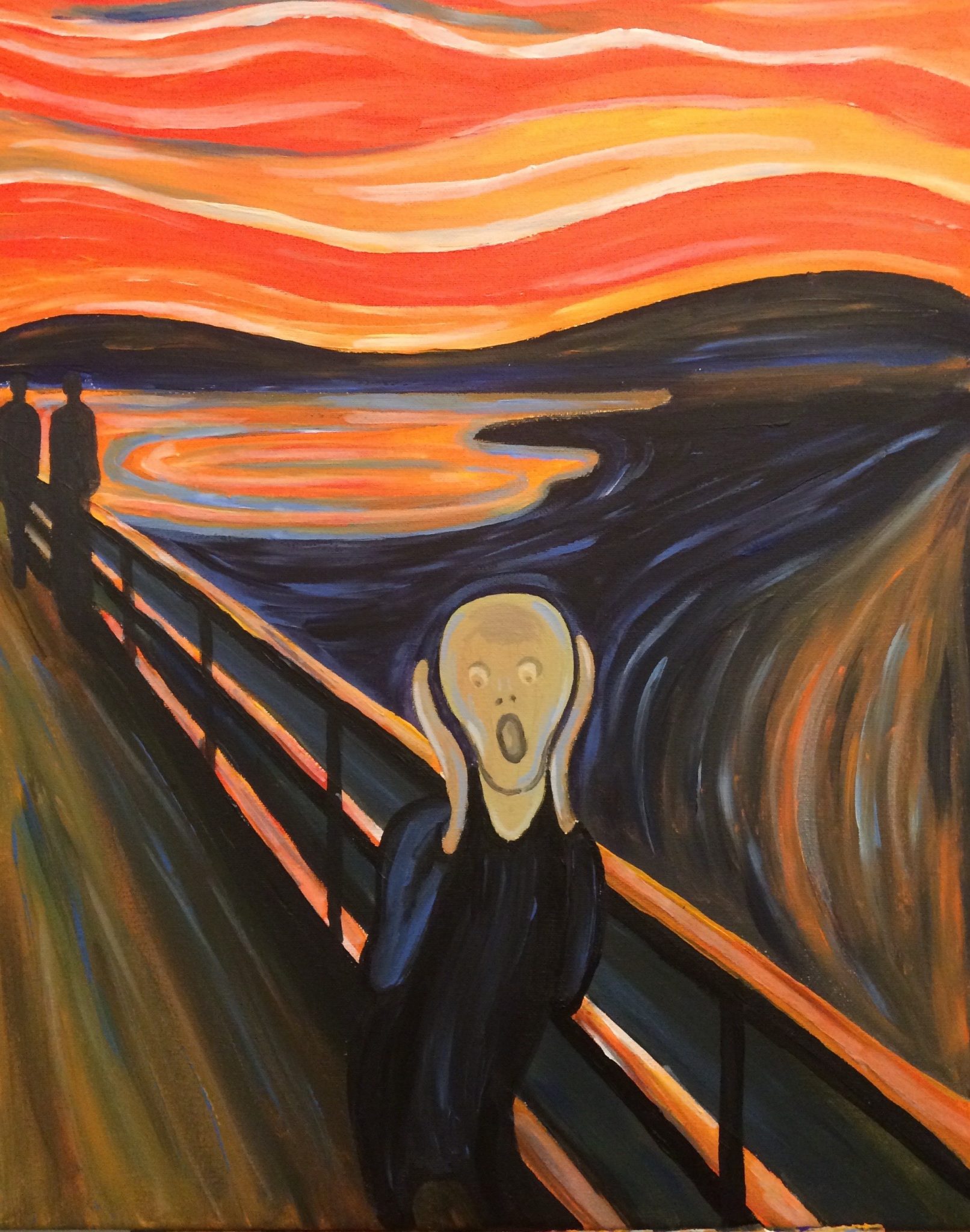
A recent article somewhere listed famous people who were depressive or bipolar (‘manic depressive”).
They could have saved time and energy by simply noting “all famous writers and artists, all famous war leaders, and all famous philosophers.” No mystery, no news: Aristotle pointed this out over two thousand years ago. Problemats XXX: “Why is it that all those men who have become extraordinary in philosophy, politics, poetry, or the arts are obviously melancholic?”
I fear, however, that moderns grab the stick at the wrong end. The assumption seems to be that they did great stuff despite being mentally ill. “High functioning depressives.” Which is absurd, when the highest functioning of us all turn out to be depressives.
“Considered by many to be the greatest English writer in history, Charles Dickens, like many great writers, battled depression for his entire life. It was said that he went through long periods of insomnia whenever he started a new novel.
“To deal with his sleeplessness, Dickens would wander aimlessly around London, once covering 30 miles (48 km) in a single night. On the bright side, it’s been reported that his spirits would lift bit by bit as he made more and more progress on his stories.”
The real story is that Dickens would be driven to write a new novel by the chronic anxiety that caused his insomnia. The act of writing soothed the anxiety and depression.
I am reminded too of Socrates’s comment: “By all means marry. If you marry well, you will have a happy life. If you marry poorly, you will become a philosopher.”
An intolerable home situation, being abused, causes what we call depression.
Depression is principally a sense of loss of purpose and meaning to one’s life. This is the permanently damaging effect of abuse. It can be expressed as sadness or as anxiety, but these are just symptoms: the problem is a lack of meaning and direction. “What is the point of me?”
Art, or philosophy, is an effort to create meaning. One is reaching for the transcendental values, the things that bestow meaning. The artist is reaching for beauty; the philosopher is reaching for truth. And the lawgiver or military leader is reaching for justice, the moral good. With desperation, in such a case, and so with the greatest concentration and energy.
This is salvation for the mentally ill: to stop being "mentally ill" and become an artist, or a teacher, or a shaman.
But don’t many artists end up losing the battle, and committing suicide? Don’t many philosophers?
They do; because art or philosophy is the path, and only the initial path, and not the goal. The quest for meaning begins to yield solid results once it generates and confirms a religious conviction.
Artists who become religious do not commit suicide. Instead, the depression eases and recedes. Religion happens when art or religion achieve their goal.
| Amanda Gorman |
Many Canadian universities now require an essay to apply for competitive programs. Most competitive of all, reputedly, is McMaster Medicine. And many of the essay topics assigned are concerning. They seem designed to elicit one’s political position; and could be used to select and exclude on this basis.
Here is one example from a recent intake:
OPTION A: In The Hill We Climb (2021), National Youth Poet Laureate Amanda Gorman wrote "...being American is more than a pride we inherit. It's the past we step into and how we repair it." What aspect of the past will you play a role in repairing?
It is not possible, of course, to either step into or change the past. If there are wrongs in the past, they cannot be “repaired.”
This sounds as though one must embrace the current leftist call for “equity” in order to enter medical school. One must endorse and practice discrimination on the grounds of physical appearance or ethnic identity.
In justice, granted, if harm is done to an individual, they deserve compensation--by whatever party or corporate entity caused the harm.
One cannot, however, simply look at someone—say, their skin colour--and know they have been mistreated; any more than you can look at their skin colour and know they are lazy, or avaricious. This is the essence of prejudice.
Nor can you rely on people self-reporting the matter. If saying you are abused gets you privileges or payouts, many who aren’t will claim to have been abused.
However, there actually is a way to tell—and doctors are best positioned to do so.
The Center for Disease Control, official arm of the US government, notes that, “In one long-term study, as many as 80% of young adults who had been abused met the diagnostic criteria for at least one psychiatric disorder at age 21.” Psychology Today maintains that “In almost every case of significant adult depression, some form of abuse was experienced in childhood, either physical, sexual, emotional or, often, a combination.”
A recent study by Martin Teicher at Harvard, confirmed by other researchers, demonstrates that childhood abuse causes permanent changes in the brain.
The Wikipedia entry for “Depression” accordingly gives, at this writing, under “Causes”:
Adversity in childhood, such as bereavement, neglect, mental abuse, physical abuse, sexual abuse, and unequal parental treatment of siblings can contribute to depression in adulthood. Childhood physical or sexual abuse in particular significantly correlates with the likelihood of experiencing depression over the life course.
Childhood abuse has also been found also to correlate strongly with panic attacks, dissociation, dissociative identity disorder, bipolar disorder (manic depression), schizophrenia, alcoholism, addiction, drug abuse, and eating disorders.
Childhood abuse has also been found to produce higher rates of cardiovascular disease (heart disease), lung and liver disease, hypertension (high blood pressure), diabetes, asthma, and obesity.
A summary meta-analysis by Judith Carroll and colleagues, published in the Proceedings of the National Academy of Sciences (US), concludes that the psychological damage resulting from childhood abuse and its effects on physical health are “well documented.”
Medical doctors are thus in a favourable position to diagnose abuse, from its established symptoms—not just current child abuse, but past abuse. This could be a genuinely just basis for determining compensation.
But if a student suggested this to McMaster, would he or she be permitted to become a doctor?
Greg Gutfield and the crew attempt to tackle a growing current problem: what to do about the homeless?
The same issue arises in my current classes on “The Glass Menagerie.” Laura, in that play, is the type: the type who end up homeless. Surely this is her likely fate, once her mother dies.
How then could she escape her glass menagerie?
Psilocybin is snake oil. I think Gutfield comes closest to the solution when he says, get them out of the cities. Get them out of their current situation, which, as with Laura, is driving them mad. Madness is situational. It is a rational response to an impossible situation.
This would not be a matter of involuntary confinement, a violation of their human rights. You might say, and it would be true, that some people living in tents do not want a proper apartment. Offered shelter, they refuse to move.
That is because they fear being trapped by “the system.” They want to opt out.
In other words, get them out into the countryside. These tent people are doing their best to simulate that in the city. Give them a bus ticket, and a permanent room in a motel at the edge of some small town, and leave them alone, and they will be delighted.
Consider Tom, in the play. He understands the imperative need to get away—he imagines joining the merchant marine.
Laura, by contrast, seeks to escape into her imagination, with her “glass menagerie.” This is the path to “psychosis”; to imaginary things becoming real. An opting out of the world as a whole.

The immediate need is more specific: generally to escape from a manipulative and narcissistic parent, who views their children as extensions of themself. This, however, develops into a mortal fear of “the system,” as with Tom, or, in Laura’s case, a mortal fear of life in general.
The need is to “get away from it all.”
We used to know this; and we used to have many fewer mentally ill. The original asylums, built at the beginning of the 19th century, were intended to be in tranquil rural settings where the agitated could simply have a restorative rest. In other words, true “asylums.” The New Brunswick Asylum, put up on the 1830s near where I write, was a prime example. It was on a piece of high ground outside the city, within soothing earshot and sight of the scenic Reversing Falls. It had an attached farm which the inmates worked; others did handicrafts. The spot is now a park. In Kingston, the asylum was built along the waterfront, again away from the city. The site is now, again, a park.
These original asylums had a cure rate of something like 80 to 90 percent within a year. Yet they devolved into the supposed “snake pits” that we closed down in the 1960s, in favour of throwing all our Lauras out in the street to freeze or starve.
What happened?
In the mid eighteen hundreds, “scientific” psychiatry began to emerge and to take over the asylums, turning them into “mental hospitals.” Rather than being left alone to sort out their troubles, the inmates of these institutions began to be poked and prodded and ordered about, experimented on and, in effect, tortured, in accordance with the latest “scientific” methods. We got the horrors of hydrotherapy, lobotomy, straightjackets, shock treatments, and the rest. The patients were subjected to the very same sort of bullying, objectification, and manipulation that had driven them mad in the first place. Mental illness became, for the first time in history, incurable.
Because people stopped getting well, these “hospitals” grew overcrowded, and conditions further deteriorated. As the cities spread to surround and enclose them.
Granted, simply getting people homes out in the countryside is not necessarily going to be enough. This is only removing them from the source of the problem. They will be left with trauma.
But why did we need to build these large asylums in the 19th century in the first place? What happened to the mentally ill before then?
Before then, we had monasteries and convents in the countryside. A child from an abusive family, or a child rejected by their family, could go there.
Picture Laura again: isn’t this the one plausible happy ending for her? To become a Carmelite nun?
A monastery can replace the faulty programming by a narcissistic milieu with new programming, true programming.
And the postulants are otherwise left alone to sort things out.


