
Playing the Indian Card

Showing posts with label homelessness. Show all posts

Wednesday, December 18, 2024

Giving to the Poor


I keep seeing stupid posts saying things like this: “Elon Musk is worth $442 billion. Such greed! There are only 8 billion people on Earth. If he handed all that money out, everyone on Earth would be a billionaire. No one man should have so much.”

Seriously. I see and hear this repeatedly.

Do the math: 442 divided by eight: Elon Musk could give each of us 55 dollars and 25 cents.

Musk would then have nothing, and nobody else would really be any richer.

A similar comment: “How can Musk complain about homelessness being due to addiction and mental illness? Why doesn’t he give some of his money to the poor and actually do something about it?”

This assumes that homelessness is caused by poverty; that you can fix poverty by giving poor people money; and that Musk is doing nothing useful with his money.

In principle, nobody should hoard possessions. See the parable of Dives and Lazarus. Luke 16: 19-31. If you have two coats, and you see someone else freezing, you owe him one of them. 

However, someone who is rich is not necessarily hoarding. Not all gains are ill-gotten. Musk or another wealthy man may be living modestly, but using his money as a tool to improve the world. Entrepreneurs commonly are. Musk clearly is. Give away all his money, and we get none of the innovations he is responsible for, which cumulatively improve everyone’s lives far more than a one-time payment of $55.

And if we do have more than we need, we must target our charity so that it actually does help others, rather than just using it to salve our conscience, or make us feel superior. We need to do what is best for them, not what is easiest for us. 

Homelessness is not caused by poverty. 

I volunteer at Romero House, giving meals to the poor. Some of the people who volunteer there have been on the streets themselves. They never got off the streets because someone gave them money. It is always because they found religion. Ask AA about that. Ask the Salvation Army.

One guy gave me some interesting information. Back in those days, he would beg on the streetcorner uptown. He claimed he cleared thousands in a week just doing this. The problem was, in the afternoon, he spent it all on drugs or alcohol.

So it does no good to simply give a truly destitute person money. It probably does them harm. 

The local own council sought last year to end homelessness by setting up a village of containers converted into mini homes, in a downtown parking lot where the homeless already gathered.

Yesterday, I saw the containers have all been shut down and moved into a pile. At the onset of another winter. Clearly the experiment did not work. 

The problem is meaninglessness. These people are in real need; they are dying by the day. But we have to give them meaning and hope, not money for another fix. Or, worse, a free fix. 

We need to get out and talk to them, about Jesus, the Gospel, God. As the religious charities are or ought to be doing. If you want to help, volunteer with them.


Sunday, May 19, 2024

Waterloo Village


This is a video by a local YouTuber about the slums of Saint John. Locals claim it is the worst slum in Canada, although I doubt that.

What most prompts my reaction is the interview with “front-line worker” Melanie from a non-profit. She stresses that the real problem is poverty; she repeats this for emphasis. Yet she also says, correctly, that homelessness, drug use, and mental illness are a growing problem everywhere, “around the world.” Is poverty growing everywhere? According to the statistics, just the reverse.

Why then does she say such a thing? 

Firstly, because she is ideologically motivated. The system is not broken, she explains. The system was designed wrong from the start; it is all about colonialism, oppression and misogyny.

But where does this ideology, in turn, come from?

Melanie reports with satisfaction that at last the government seems to be listening to the front-line workers, that the solution is to “bring us to the table,” and hear what these workers say they need.

Not the addicts or the mentally ill, note. The front-line workers.

In the real world, this is probably a bad approach. The jobs and power of the front-line workers depend on there being a continuing problem and “clients” to “serve”; their interest is to ensure that matters never get better.

Hence they usually turn to ideology about “the entire system.” That guarantees permanence of employment. Poverty as explanation works the same way. As Jesus rightly says, “the poor you will have always with you.” At least in relative terms, poverty can never be eliminated. So, a good job until retirement.

They will also have incentive to exaggerate the problem; and gradually redefine terms to make everyone officially poor, addicted, and mentally ill.

In sum, if you want to make sure a problem never improves, set up a government bureaucracy to fix it. Witness the troubles of indigenous Canadians.

So what is the solution? 

The veteran in the video seems to think the need is for more money for mental health. But Jordan Owens, the interviewer, hints at the problem: mental health treatments have not worked. They are also hugely costly, when our heath system is in crisis. Just a wealth transfer from average taxpayers to highly-paid medical professionals.

Given that the immediate problem, and the problem that is growing, is drug addiction, how about attacking that directly? Make it illegal, and throw them all in jail. Thus the current controversy over whether hard drugs should be recriminalized in B.C.. Although “decriminalization” has clearly been a disaster in BC, I cannot support making drugs illegal, on the grounds of bodily autonomy and the right to the pursuit of happiness. As a practical matter, I also don’t see how it does much. In N.B., and elsewhere, police have largely stopped enforcing the laws anyway. They do not have the resources. They arrest some junkie, the matter works its way through the court system, they perhaps spend some time in jail—they can’t pay a fine—and then are back out on the street. All at great taxpayer expense. Given that many of them are mentally ill, with delusions of persecution, having the police harass them is not a great idea in order to achieve compliance. It is almost sure to create an escalation of tensions and public disorder. And certainly not good for homeless, mentally ill, addicts.

The problem is that the real problem is despair. How do you cure despair? These are people who have given up on life, on the world, and on themselves.

If I were in government, I would set up a sanatorium away from the city, and so away from kids and temptations to steal—as well as from their problems. Maybe convert some of the many motels that are no longer prospering since the road trip declined in popularity. I would send these people there for as long as they want—any who wanted shelter. No medical interventions, no pokes or prods. Three squares and beyond that left alone, in a quiet room to themselves. But no drugs on the premises. Art supplies, writing materials, Bible, Talmud, donated religious literature. Chaplains encouraged to visit; a common room for services.

The mad thing is, this is just about exactly what we had two hundred years ago, sitting on top of a pastoral hill overlooking the Reversing Falls. And the cure rate was quite high. We abandoned that for a materialistic medical model. Things have been going downhill ever since, and we are now in the maelstrom at the foot of the Falls.


Monday, July 10, 2023

The Causes of Homelessness, and the Solution


Friend Xerxes the gauche columnist writes of homelessness, a growing problem in Canada. He puts it down to two causes: poverty, and mental illness. Which latter he regrettably conflates with addiction, as many seem to nowadays.

As I see it, there are five causes of homelessness.

First, mental illness. Due to mental illness, some people are incapable of organizing their lives well enough to manage such necessities. These people are urgently in need of our help. We have foolishly or deliberately shut down the mental institutions, turning the chronically mentally ill out on the street to die. And mental illness is growing by leaps and lunges.

Second, addictions. Addicts, if they get any money, spend it on alcohol or their drug, rather than on necessities. This is not the same group as the mentally ill, and the issue is different. There is not much we can do for them; they have to do it for themselves.

Third, abusive families. Young people trying to escape abuse are often too young and inexperienced to look after themselves; child labour laws and minimum wage laws prevent them from making an honest living. For example, this is the simple and obvious explanation for the “missing and murdered indigenous women.” Or the suicide pacts among native youth. Yet we do nothing for this group; we seem to try to make things worse for them. If they happen to come to the attention of the authorities, the first thing the authorities will do is send them back to their families.

These kids are also vulnerable to child trafficking.

Fourth, economic instability. People can be temporarily caught short by sudden unemployment, illness, bankruptcy, a recent move, and the like. One problem is that you cannot get welfare without a fixed address; but it is likely that you cannot get a fixed address without welfare. This almost seems a deliberate catch-22.

Fifth, voluntarily homeless, an often admirable desire to escape the system and get off the grid. Like the Franciscans, or the sannyasins of India.

The best solution, in all cases, is this: build more monasteries.

Monasteries used to be the haven for the homeless. They served this purpose in Europe, in East Asia, or in the Middle East. And they gave not just a temporary bed and a meal, but a reason for living, and the chance for quiet contemplation required to put your life back together. This is the prime cause of mental illness and addictions and voluntary homelessness, that urge to escape, in the first place: a sense of the meaninglessness of modern life. A collapse in faith. Faith is the cure. 

Children from abusive families, in particular, could once escape to a monastery, and receive not just physical sustenance, but a community, a voluntary family, an education, a trade.

The monasteries were also financially self-sustaining; they generally took no tax dollars. Indeed, they were so successful that they were destroyed across Europe and China by an envious civil authority, to crush a competing centre of power and to confiscate their assets.

There was an attempt to revive something like the Medieval monasteries in the “cults” of the seventies: the Moonies, the Hare Krishnas, the Children of God, Scientology and the like. But again, civil authority and social authority came down hard on them. Remember Waco?

It is no doubt true that some such cults were harmful. This is why it is better to have monasteries, that can be overseen by some larger and established authority, rather than individual charismatic leaders. But the cults were fulling a hole left unfilled by the established religions, afraid of crossing the civil authority, and they were better than nothing.

This crushing of the monasteries, then the cults, was a terrible mistake. It was probably also a mistake to close the Indian Residential Schools, which served part of the same purpose, for at least a segment of the population.

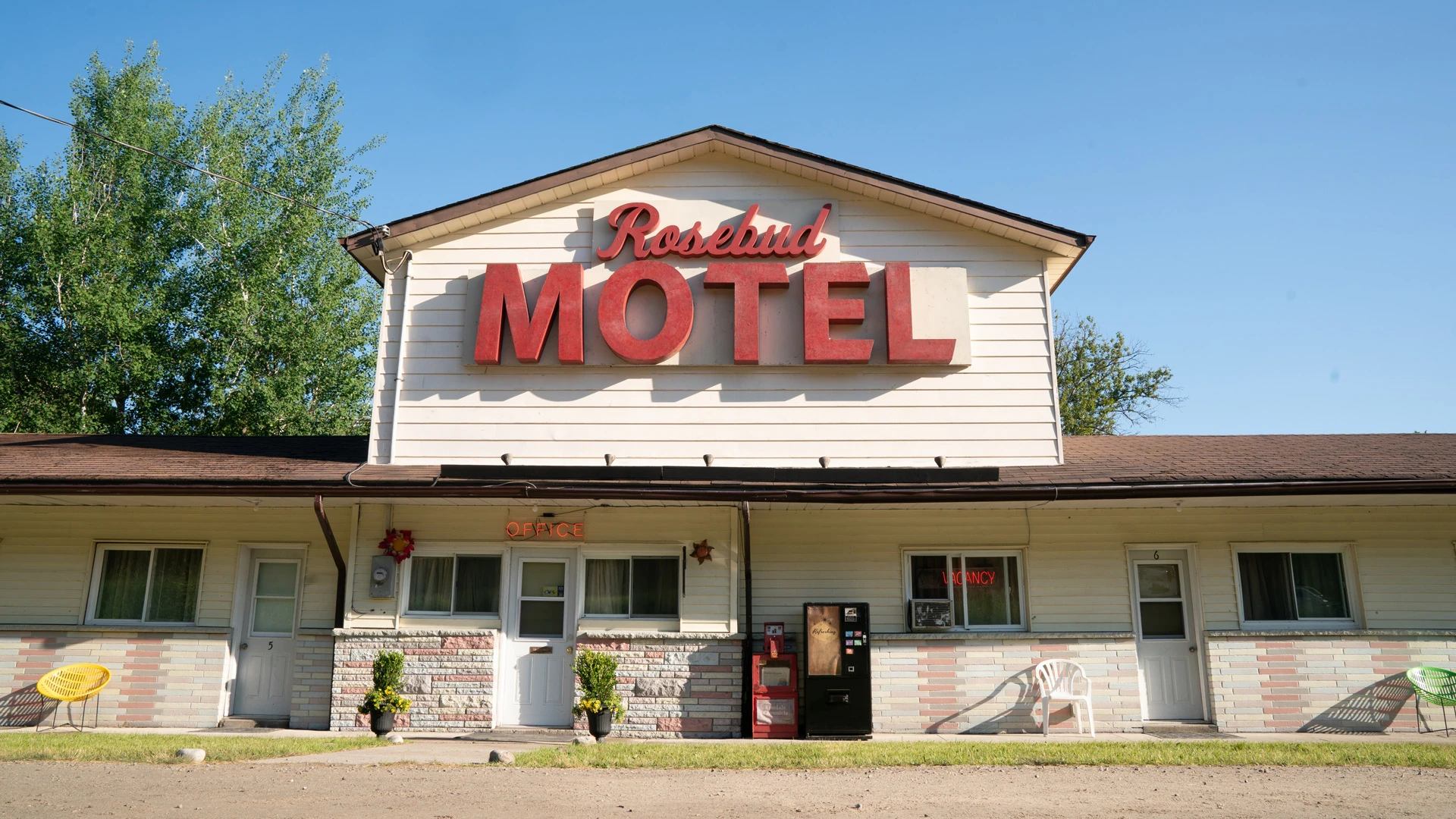
Something that might be done, for at least some temporary help, is to buy up the many motels across the country that are now in relative disuse, as vacationing by car has fallen out of fashion. They could be refitted as basic homes: just a bed, a bathroom, a hot plate and a refrigerator. No cost, no questions, but subject to regular drug testing.

And hoe about similarly converting the old abandoned residential schools?


Sunday, June 19, 2022

Solving Homelessness


This is exactly the point I was making in the recent Ontario provincial election.

My idea was to quickly convert the many declining or derelict motels.


Saturday, May 14, 2022

Solving the Housing Crisis


Further remarks from the Beaches-East York All-Candidates Meeting on May 12

When I first came to Toronto in the early 80’s, there was a housing crisis.

Forty years later, there is a housing crisis. But far worse.

It is time to try more than band-aid solutions.

I am a fan of co-operative housing. I used to live in the Oak Street Co-op, and in a student co-op when I went to Queen’s. I helped organize an abortive East End co-op. But public housing and social housing have never been enough to produce affordable housing, and are never going to be enough. The poor cannot forever hope and wait.

Tinkering with mortgage rates and down payments and savings plans does not work. Making it easier to buy a home only drives up prices. 

Imposing rent controls does not work. It reduces supply.

The problem is on the supply side.

The real problem is the Sargasso Sea of red tape which prevents either private or public builders from efficiently putting up the units that people need, want, and can afford. Such urban planning brought us the sprawling soulless suburbs that kill community, eat up green space, and force everyone to drive a car. 

We live in Beaches-East York to escape this. The Beach is so nice because it grew organically before urban planning.

Some regulation is needed, but the tendency of bureaucracy unchecked is always to overregulate to the point of strangulation. The great political philosopher Ibn Khaldun, back in the 14th century, explained that this is how civilizations die: overregulation. We are seeing it acted out in our time. 

Civilizations die of strangulation, from the top down.

Municipalities are the creatures of the provinces; the province can cut away some of this red tape and speed construction. In future, for every new zoning regulation, it should be a requirement that at least two old ones be scrapped.

One business owner on Queen Street complained to us that he could not allow dogs on his outdoor patio. Health regulations. But in the Beach, everyone owns a dog. His customers wanted their dogs. Why not let the consumer decide? 

I love dogs; if you don’t, another establishment will surely cater to you.

Owners may fear that fewer restrictions on development might harm the value of their property. But if land is opened to the highest and best use, all real estate becomes more valuable.

I’d love to see Toronto full of distinctive walkable neighbourhoods like the Beach.

But there is also the immediate crisis of homelessness. 

I have another suggestion.

There are aging motels in smaller towns falling into disuse. Many are being torn down. The days of motels are ending, with less tourism by car, and more AirBnBs. They are available, if we move quickly, for immediate low-cost conversion as shelter for the homeless, especially the mentally ill.


Friday, December 31, 2021

Lost Causes


Friend Xerxes writes of his efforts to feed a hummingbird stranded in the BC interior during the recent severe temperatures. He tried keeping his hummingbird feeder operational with various heating options. But eventually the hummingbird stopped coming. No doubt it froze to death.

Nevertheless, Xerxes concludes that such “lost causes” are worth pursuing.

I disagree. Realistically, unless he could trap it and bring it inside, that hummingbird was going to freeze to death. In the course of nature, most hummingbirds die in their first year. So what did he hope to accomplish? It seems to me Xerxes was not being noble, but only indulging his whimsy. More cruelly, I might accuse him of trying to play God.

You might accuse me of just not caring about animals. I do—I am a committed vegetarian, have been for going on thirty years.

But unreasonable, purely sentimental concern for animals can be a cheap way to feel virtuous. Xerxes’s actions did little or nothing to benefit the hummingbird; only his image of himself. Jung once observed (paraphrasing from memory) that “sentimentality is a superstructure concealing brutality. “ Hitler himself was a dog lover and a vegetarian.

Because God made all creatures great and small, all is good. Evil exists simply as an inversion of values: a lesser good treated as a greater good. 

Such efforts invested in the hummingbird look like an example of this. It is putting hummingbirds before humans. There is something wrong when you expend so much effort on a doomed bird at the same time the same weather is causing homeless to freeze on the streets in East Vancouver. Close enough to Xerxes that he can hardly be unaware. 

One might object that we pay taxes to take care of that. But the fact that there are homeless demonstrates that the government is not, in fact, taking care of that.

One might object that these people are addicts. They are responsible for their own predicament, and they will just use any money to buy drugs or alcohol.

Some are addicts; many are mentally ill, abandoned by the system, who cannot take care of themselves. Many are adolescents fleeing abusive families. With the current cost of housing, their numbers are growing.

It is not a time to be playing with hummingbirds and lost causes.


Friday, August 20, 2021

How to End Homelessness


Moby Grape. Bob Mosley, bottom centre.

The cost of housing in Canada and across the developed world has grown unrealistically high. Tent cities are sprouting up. 

However, the main cause of homelessness is not poverty, but mental illness.

The mentally ill cannot get organized enough to go through the proper channels to get aid. But that is not the only problem. Tim Poole recently observed that he has worked with the homeless, and he found that most often, they will refuse shelter if offered. Toronto mayor John Tory has recently made the same observation. He asked the police to clear the local parks. He thought that arranging for accommodations for everyone would fix the problem. He has been blindsided by this all becoming controversial, because the tent-sitters refuse to move.

I read long ago about the bassist for Moby Grape, Bob Mosley. He went schizophrenic, and was found years later sleeping under a bridge. He refused to rejoin for a band reunion or to come indoors. “He felt he’d earned this.”

"We went to find Bob, and there he was, living in this cardboard box. He had these friends, the squirrels and the lizards that he had. And I brought this guitar, cost me a hundred bucks, you know, and I left that with him and a tape of Moby Grape songs and a tape recorder with batteries in it and some extra batteries. So the next weekend, I came back, and there was no guitar, but the cassette case... He had tried to tear all the tape out of it and had left it, you know, down there in the bushes.”

Generally speaking, the “mentally ill” are people who have seen the madness of the people around them, and, one way or another, want nothing to do with it. They are doing what they can to escape the matrix.

My own brother suffered chronic depression. He owned a house in the city, but preferred to live out in the woods in a cabin without running water or, I believe, year-round road access. He felt calmer there.

This explains the stigma of mental illness. They are heretics. Their views are potentially contagious. They might make sense.

The solution to homelessness is simple, and cheaper than what we are doing now. Set these people up in cabins in the woods. 

Or revive the monasteries.