





 Posts


Showing posts with label art. Show all posts
Showing posts with label art. Show all posts
Sunday, August 30, 2026


Tuesday, April 28, 2026

Sunday, February 08, 2026
Beauty Is Our Duty

Today’s gospel reading:
"You are the salt of the earth.
But if salt loses its taste, with what can it be seasoned?
It is no longer good for anything
but to be thrown out and trampled underfoot.
You are the light of the world.
A city set on a mountain cannot be hidden.
Nor do they light a lamp and then put it under a bushel basket;
it is set on a lampstand,
where it gives light to all in the house.
Just so, your light must shine before others,
that they may see your good deeds
and glorify your heavenly Father."
This is a critical passage in the Sermon on the Mount, following immediately after the Beatitudes, in which Jesus identifies his flock, the good people of the earth. It is, therefore, the very core of the Christian message.
No sermon I have ever heard gets it right.
What does it mean to be the salt of the earth? What good deeds cause your light to shine?
Not moral deeds, like helping old ladies cross the street, or volunteering at a soup kitchen. You might think so. Everybody seems to think so. But this interpretation is not tenable. For in the same sermon, a few verses on, Jesus says
“Be careful not to practice your righteousness in front of others to be seen by them. If you do, you will have no reward from your Father in heaven. ... But when you give to the needy, do not let your left hand know what your right hand is doing, so that your giving may be in secret. Then your Father, who sees what is done in secret, will reward you.” Matthew 6: 1-4.
Now, obviously, God is not going to contradict himself. The deeds he is speaking of doing in full view of as many as possible, letting your light shine like a city on a hill, are obviously not these deeds of righteousness. For all that it is good to do what is morally good, this is not what he is speaking of here.
What else counts as a deed?
Simple hard work? Hard manual labour? This does seem to be the meaning some take from this. But most jobs do not seem to shed light over the world, or give it more flavour. And Martha was told that Mary, in not pitching in with the housework, had chosen the better part.
What is it that gives savour to the world? What introduces taste to the world? What makes the drabness of the world seem brighter?
The obvious answer is beauty. Beauty brings grace, light, and savour to our lives.
Which is to say, Christians are commanded to produce art. By these fruits you will know them.
It is what we can do, as individuals, to genuinely improve the world. By having an attractive front garden, we are giving joy to every passerby. By painting flowers on the wall of the laundromat we operate; by singing in the choir; by composing rhymes; and, ideally, by letting our light shine as far as possible, by doing it in as public a way as we can. Unlike deeds of charity, best done in secret, in the case of art, exposing the work of beauty to as many people as we can increases the value of the deed.
Jesus is also telling us we have it in us to be artists, if we are God’s people, those described by the Beatitudes. It is significant that Jesus says “you are salt,” not, “you can be salt,” or “you should strive to be salt.” Necessarily, if you are one of God’s chosen, you have been given this gift, the ability to create beauty.
It is your duty now to use the talents you have been given. See the parable of the talents, Matthew 25:14-30.
You should also cloth the naked, feed the hungry, and visit those in prison. This is also commanded. But this is not enough to justify our existence. “The poor you will have always with you.”
Sunday, January 18, 2026
The Art of the Deal

“Being good in business is the most fascinating kind of art. Making money is art and working is art and good business is the best art.” – Andy Warhol
Everybody except Andy Warhol seems to have missed this obvious fact: entrepreneurship is a form of art. An entrepreneur is a creator; perhaps the most creative of all artists. He works on the biggest canvas: the world.
I see it every day. Many small local businesses are expressions of an artistic soul.
No, they are not designed to maximize profits. They are designed to make enough money to permit them to exist, in all their beautiful eccentricity. To express their owner’s vision: of what a cocktail should be, of the timeless traditions of the barber shop, of the beauty of old books and magazines.
It is ignorant to suppose that business is about greed. It is about “busy-ness,” that is, making things, getting things done. It is about the work, the craft, the opus, the essay. It is the joy of inventing a work of art that is self-perpetuating, that can live and run.
When asked why he kept creating new businesses, local magnate K.C. Irving responded plainly: “I like to see gears turning.”
Money is just what makes the next thing possible, the artist’s brush, the writer’s pen
And it is grossly ungrateful not to see how much great entrepreneurs have contributed to American culture. What would America be today without P.T. Barnum? Without Henry Ford? Without Steve Jobs? Without Walt Disney? Without Elon Musk?
The great accomplishment of American culture is the entrepreneur and his art.
We are now seeing, I believe for the first time since Washington and Jefferson, an entrepreneur in the Oval Office. And it feels as though America is coming into its own.
Wednesday, October 08, 2025
Jesus Reveals the True Meaning of Faith

The apostles said to the Lord, "Increase our faith."
The Lord replied, "If you have faith the size of a mustard seed, you would say to this mulberry tree, 'Be uprooted and planted in the sea,' and it would obey you.
"Who among you would say to your servant who has just come in from plowing or tending sheep in the field, 'Come here immediately and take your place at table'? Would he not rather say to him, 'Prepare something for me to eat. Put on your apron and wait on me while I eat and drink. You may eat and drink when I am finished'? Is he grateful to that servant because he did what was commanded?
So should it be with you. When you have done all you have been commanded, say, 'We are unprofitable servants; we have done what we were obliged to do.'"
This was the gospel reading at last Sunday’s mass.
Jesus’s initial statement is striking: if anyone has the slightest faith, they can order trees to uproot and grow on the surface of the ocean.
It would seem to follow that nobody has even the slightest faith. Because nobody can do that. Doesn’t that mean all is lost?
No, wait—I can do that. I can make a mulberry tree uproot itself and float upright on the ocean. I can do it in my imagination, in my mind’s eye. Anyone who has a decent imagination can do it. And we can draw it, too, or put it in a story.
So what Jesus is actually telling us is that faith = imagination. Or rather, faith is the willing suspension of disbelief, the ability to accept that the world of the imagination, and not the material world, is the real world. Our imagination is the kingdom of heaven, or our window into it.
But although the kingdom of heaven is in this sense within, we are also not in the kingdom of heaven now. We are living in a material world, where we must tend to our ploughs and our flocks, earning our daily upkeep by the sweat of our brow. This is what Jesus goes on to point out: we are servants spending most of our time just maintaining ourselves. And when we have free time—we ought to be taking the products of the fields, and using them to feed God. “You may eat and drink when I am finished.”
The kingdom of heaven is our reward, once we have done this—presumably, in the next life.
And this stands to reason. There must be some need for the material world; otherwise, why did God create it? Why not have us born into heaven?
The need is not simply to prove our worthiness for the world to come, although this might be reason enough. We are here to accomplish something God needs us to accomplish: to feed him.
That is, to take the produce of the fields, of the material world, and fashion something from it that will satisfy him.
Which seems to me to describe the process of creating art. In making art, we are co-creators with God; we are completing his plan for creation.
Sunday, September 07, 2025
Man the Creator
Julia James Davis argues that men are better creative artists than women; and her argument makes sense. I just dare not make it as a man. Moreover, it seems objectively true. Most great artists are men.
As she points out, this is no more remarkable than that most great athletes are men. The male body is different from the female body; the male mind is different from the female mind.
Men are creative; women are receptive.
Art must express truth to be great. Female artists generally lack a sense of truth, and express only prettiness. Their art tends to be decorative.
Thursday, April 10, 2025
A Complete Unknown
I’ve just finished watching “A Complete Unknown.” I think it is a brilliant movie. There were so many things going on, so many telling details. I think it needs watching again and again. Which is what we need in movies now: because we no longer see them in theatres, a one-shot thing, but buy them, as we used to buy records, to play over again.
And what is in effect a musical is ideal for this.
The casting for Dylan was incredibly good. Timothée Chalamet really gets Dylan down pat, reminiscent of Val Kilmer playing Jim Morrison. Hard to do, with someone so famous and still living. Definitely earned an Oscar.
Ed Norton as Pete Seeger is also brilliant. A little easier, since Seeger is somewhat less famous. But he really does seem to be Seeger himself.
Joan Baez is not as good. Not Monica Barbaro’s fault. She does a fine job with the role, but nobody could imitate Baez’s unique and uniquely good voice.
And Boyd Holbrook as Johnny Cash is a fail. Unlike enough that it is distracting, and interferes with the willing suspension of disbelief. Again, the problem is the voice. You needed an actor with a deep baritone. Without it, Holbrook just comes across as a generic greaser, a Fonzie.
Seeger’s “parable of the teaspoon brigade” looks at first like a fail by the scriptwriter. Because it does not work. The obvious way to balance the imaginary seesaw was of course not to fill the leaky bucket of sand with teaspoons, but to take some rocks out of the other one.
Or perhaps this was an intentional parody of Seeger’s political views.
I think the latter. I hear Dylan himself annotated the script. Dylan likes to subtly send people up. He does it to Seeger in his autobiography by lamenting how unjust it is that Seeger was set upon by the government, he being descended from people coming over on the Mayflower and all.
In other words, Seeger was a poseur who never really risked anything with all his leftist politics, and had no rapport with the actual working class. All a sham. He was really a card-carrying member of the old rich. Went to private school, parents were prominent academics and bureaucrats.
There are other lines and opinions in the movie that I feel certain are Dylan himself speaking: “Picasso is overrated.”
Yep.
“Bette Davis was not trying to find herself.”
Yep. The task of the artist is not to find himself, but to lose himself. As Keats said, “the poet is the most unpoetical thing in existence.” The “chameleon poet” disappears into the work through “negative capability.” Bobby Zimmerman disappears. Irving Layton referred to his poems as “my dead selves.”
Baez’s songwriting is lousy.
Yep. It seems obvious to me why their relationship was doomed. Baez was not at Dylan’s intellectual level. But she was too successful and ambitious to live in his shadow. She would have been a millstone around his neck. He would crush her ego.
I’m a dedicated folkie, and also a dedicated rocker. I love them both. But I do find it heartbreaking that Dylan abandoned the folk movement; that pretty much killed it, and it was so beautiful.
Why did he do it?
The reason the movie suggests and the one Dylan himself suggests, is that everyone was trying to own him. He felt trapped by the expectations of the movement. He needed to break free to be his own man.
But I think that is kind of a cover story. It is not Dylan who felt trapped. Dylan was not real; the self was gone, and there was only the music. It was the voice in his head, the place the songs come from, that felt trapped. It could no longer speak in the folk idiom.
People imagine authors, poets, and songwriters have command of their material. The best ones don’t.
Someone once asked Stephen King why he only wrote horror.
“Do you think I have a choice?” he answered.
So Dylan could not stay in folk. He had no more folk songs. He would only let them down.
But why did he have to confront the Newport Folk Festival with the fact? Didn’t he owe something to that paying audience? Wasn’t he deliberately insulting their taste? Couldn’t he have sung some of the old songs, just one more time?
I believe the key to that is Suze Rotolo—Sylvie in the film.
I think Dylan was truly and completely in love with her. She was his first love. And I think she was the one who left him. Probably, as the film suggests, because his brilliance and success crushed her ego. I think she was his muse. For the folk and protest period, he was speaking for her. His voice was trying to please her.
And when she was gone, I suspect it is not just that the folk songs no longer came. It was also that they suddenly became too emotional for him, with too many memories.
I often fear as I read my poetry in public that I might break down. Leonard Cohen needed to get drunk before a performance; when he began, he considered wearing a mask. Dylan went through a period of performing in whiteface.
Dylan’s early folk lyrics are very intimate.
He had to create a new hard-edged persona to protect himself. So, edgy rock. Sunglasses.
And the new songs spoke out of a bitterness. He was badly hurt.
Even today, a Dylan concert is disappointing. Because he won’t play his own songs straight. When he plays his own stuff, he always plays it in a weird bouncy tempo. I’m not sure what it is musically; I think it is 3/3. Happy happy joy joy. The effect, I think, is to take the emotional edge off it, to distance himself from it. Otherwise he may still fear breaking down in public.
Perhaps still for Suze. Perhaps for other heartbreaks since. Everything beautiful comes from pain.
I think there is a similar thing with Leonard Cohen and Marianne Ihlen.
Men do not easily get over their first true love. We are not meant to.
Monday, January 13, 2025
Sea and Sky
Saint John has a seaside sculpture walk. This is one of the sculptures, randomly chosen.

Why? What is the point of this?
The point of art is to express beauty. This is not beautiful. None of the sculptures along the walk are beautiful.
You will object that I am a Philistine who cannot appreciate an abstract sculpture. But that is not quite the issue here. An abstract sculpture is less likely to be beautiful, but it might still be beautiful. Any building is an abstract sculpture, and some architecture is beautiful. I.M. Pei’s purely abstract forms are nevertheless beautiful. A well-cut gemstone is beautiful.
This sculpture, and all the others along this walk, lack the obvious elements of beauty, as defined, for example, by Saint Thomas Aquinas: symmetry, proportion, or balance; clarity; and integrity or a sense of completion. Most modern sculpture seems to deliberately violate all of these elements, actually striving to look off-balance, incomplete, and indistinct in form.
The point of it all seems to be to protest against beauty itself.
Why on earth would anyone want this in a public installation? And, worse, why on earth would anyone want to actually pay for having it?
The present sculpture is titled “Sea and sky.” Nobody needs even a beautiful sculpture simply to express “sea and sky.” We can see both plainly enough. We need art solely to express the unseen.
And there it is, in perfect irony, obscuring the pedestrian’s view of sea and sky.
It illustrates how decadent our culture has become.
 |
| For contrast, some beautiful public art in Saint John: the war memorial. |
Friday, November 29, 2024
Still, Why Poetry?
 |
| Emily Dickenson |
I have argued that we need poetry to restore meaning to our lives; to address and evoke truth, good, and beauty.
Still, poetry is hard. Why can’t truths just be spoken as simple declarative sentences?
Firstly, we can really only speak declaratively about material things. Anything beyond that requires metaphor. For example, the word “spirit” actually means breath or wind. “Psyche” actually means butterfly. “Anger” means pain. We have difficulty understanding abstract concepts, spiritual experiences, or emotions, because of this; because we have no way to objectively verify that we mean the same thing by the words we use.
This, without poetry, shuts us off from all the meaning of life, and all meaningful communication with others.
Poetry and the arts, but especially poetry, is necessary to express anything really important clearly.
There is a second reason why we cannot speak plainly. Some people are invested in lies. They have something to hide. Truth terrifies them.
Jesus says in the New Testament, explaining why he speaks in parables instead of saying thing directly:
“Do not give what is holy to the dogs; nor cast your pearls before swine, lest they trample them under their feet, and turn and tear you in pieces.”
People who are purely materialist and bestial in their concerns will crucify you.
Therefore one speaks in parables.
Emily Dickinson:
“Tell all the truth, but tell it slant. Success in circuit lies.”
The Buddha gives a somewhat similar warning in the Fire Sermon.
Your house is on fire. Your children are in the house. You cannot simply shout that the house is on fire. They will panic. They will not know what to do. Instead, you lure them out with toys.
Wednesday, November 27, 2024
Why Poetry?
 |
| John Keats. |
Up into the 1960s, poetry sold better than prose fiction in Canada. Now nobody buys poetry books. What happened?
To be fair, all the other arts are also moribund. Yes, a kind of prose fiction and a kind of movie and a kind of pop music sells, but it is all entertainment, not art.
Meantime, we have seen spiraling rates of depression, homelessness, drug use, suicide.
These two trends are related.
Poetry, and the other arts, bring meaning. Man needs meaning. He does not live by bread alone. Poetry takes the brute events of life and makes them meaningful.
Beauty is the perception of meaning.
By beauty, I do not mean mere prettiness. I mean what can produce the aesthetic experience, the OMG moment.
True beauty requires the sublime. It must convey some deep truth.
It must also be in line with moral goodness; it must be just.
The three transcendentals are the irreducible source of all value: truth, goodness or justice, and beauty. This is what poetry, and art, expresses; and leads the reader to, like a torch held high, like a lighthouse on a hill.
The existence of each transcendental implies the other two. You can’t ever have just one. Beauty requires truth; truth is always beautiful. “Truth is beauty, beauty truth: that is all ye know, and all ye need to know.” Similarly, an injustice or evil act cannot be beautiful.
This is what life is for. We are created to seek the transcendentals, and to create art.
In recent generations, we no longer produce or appreciate poetry because we have given up the search for truth. Worse: we are in full flight from truth. Modernism was a cry of despair, that we had lost access to truth and beauty somehow; all the old verities were gone. “The ceremony of innocence is drowned.” We kept waiting for Godot, and he did not come.
Postmodernism is something else: it is a declaration that there is no truth, no beauty, and anyone asserting such a thing should be condemned and hounded out of polite company.
This view is the death of art. It is giving up on meaning.
And suicide, drug addiction, depression, mental illness, and a war of all against all are the inevitable consequence. If there is no meaning, everyone just grabs what they want for the moment.
This is why I write: to try to shine a beacon through this wasteland of relativism and despair. To set off a flare.
Friday, June 28, 2024
Why We Are Here

“The Lord God took the man and put him in the Garden of Eden to work it and take care of it.”—Genesis 2, verse 15,
This is the verse of the Bible in which we are told why we were created. We were created to be gardeners.
There are two kinds of gardens: vegetable gardens, and scenic gardens. There are gardens to produce food, and there are gardens to produce beauty.
There was clearly no need, in this case, to work to produce food. This was the Garden of Eden. All plants there, but one, were edible: “I give you every seed-bearing plant on the face of the whole earth and every tree that has fruit with seed in it. They will be yours for food.” There was no reason to worry for the welfare of animals either. They too could, the next verse specifies, eat every plant, and did not eat one another. The lion lay down with the lamb. The need to labour for food, clothing, or shelter came only with the Fall:
“Cursed is the ground because of you;
through painful toil you will eat food from it
all the days of your life.
...By the sweat of your brow
you will eat your food
until you return to the ground,”
It would be tautological, in any case, to create man only to feed man.
Therefore, our life purpose must be to create beauty, as in a flower garden. Our job is to take the raw material God gave us, “nature,” and transform it into art.
We obviously do not do this by leaving it alone, as in a nature preserve. And it is not about advancement in material comforts. Life is about making beauty.
Wednesday, May 22, 2024
Not Light Yet
“I've been down on the bottom of the world full of lies
I ain't lookin' for nothin' in anyone's eyes.” – Bob Dylan, “Not Dark Yet”
Theodore Sturgeon once said “ninety percent of everything is crap.” He was referring to literature; but perhaps everything really means everything.
One explanation for why the world has seemed recently to go so weird is that, with the improved information flow through the internet, the crap that was always there is becoming more obvious. And the liars more desperate to stop the information flow.
Surely ninety percent of all political speech is lies. “Politics itself is a mass of lies, evasions, folly, hatred and schizophrenia.”—George Orwell. Almost everything spoken by a practicing politician contains a familiar logical fallacy. Nobody is seeking what is best for the community; only angling for power by whatever means necessary. Most government money seems misspent.
Surely too ninety percent of academics is nonsense. When you read almost anything written by a college professor, you realize that it is written as obliquely as possible, to withhold and obscure information, when the entire point of the academy is to discover and convey information. Someone has pointed out that whenever a major new scientific discovery is made, it takes a generation for it to be recognized and accepted by the academy. The current generation of professors has to retire. They will have vested interests in the previous paradigm. There is a reason why Einstein developed the Theory of Relativity as a patent clerk, the Wright Brothers cracked flight from their bicycle shop, and college dropout Steve Jobs created the first personal computers in his parents’ garage.
Probably ninety percent of organized religion is also fake. The Bible itself says so: pharisaism and hypocrisy.
Everyone knows, of course, that business and corporations are greedy and dishonest and trying to sell you junk. The irony is that this is the one place we have the best protection against such lies and fraud.
In sum, we all live in a world full of lies.
This is an argument for the existence of an afterlife; C.S. Lewis made it. We have a yearning for truth. How can we yearn for, or even be aware of, something that does not exist? That must mean it does exist somewhere …
One might suppose that, in the case of science fiction and literature at least, the great mass of crap is due to incompetence. Not everyone can write well.
Perhaps not so. Perhaps everyone can.
Perhaps the artist is really someone who insists on seeing the lies around him, and feels morally driven to speak the truth. Then he will find his medium. He is a prophetic voice crying in the wilderness. He speaks obliquely, in parables, because those in charge are determined to suppress truth. “Tell all the truth, but tell it slant/ Success in circuit lies”—Emily Dickenson.
There are endless stories about how many times this or that famous book or great author was rejected for publication. Why? When it is so obvious to everyone that this is a great book, how can it not have been obvious to all those trained and seasoned acquisitions editors?
Perhaps the trick is to slip by the censors. Pretend it’s just fantasy. Pretend it’s about sex or thrills. But sneak truths in.
So too for visual artists. I see what contemporary drek is shown in the public galleries. Then I see what fine work appears in internet feeds from amateur artists who cannot sell their work. Great artists of the past were also rejected by the academy and the galleries. Van Gogh never sold a painting. How account for that?
The vast bulk of art is bad not because there are not enough talented artists. It is bad because it is not telling the truth. Like Hollywood movies these days, empty formulae without purpose at best, at worst deliberately lying about the world.
Orwell understood this when he said that his one talent was really in simply being able to face truth. Most people run screaming from it.
Thursday, May 02, 2024
Withering on the Vine

Jesus said to his disciples:
"I am the true vine, and my Father is the vine grower.
He takes away every branch in me that does not bear fruit,
and every one that does he prunes so that it bears more fruit.
You are already pruned because of the word that I spoke to you.
Remain in me, as I remain in you.
Just as a branch cannot bear fruit on its own
unless it remains on the vine,
so neither can you unless you remain in me.
I am the vine, you are the branches.
Whoever remains in me and I in him will bear much fruit,
because without me you can do nothing.
Anyone who does not remain in me
will be thrown out like a branch and wither;
people will gather them and throw them into a fire
and they will be burned.
If you remain in me and my words remain in you,
ask for whatever you want and it will be done for you.
By this is my Father glorified,
that you bear much fruit and become my disciples."
This was last Sunday’s Gospel reading.
It contradicts the Deist position, that scorns asking God for things in prayer.
It contradicts the position that everyone is basically good, and everyone is equally a sinner: the “don’t be judgmental” pose. It instead makes a radical distinction, as the Gospels repeatedly do, between good people and bad people: the good bear much fruit, the bad are thrown into the fire.
The question: what is meant by “fruit”?
If it means “good deeds,” the claim does not seem to work. Surely we all know of bad people, and of course atheists, who do some good things by an objective standard. Hitler was a vegetarian who was kind to his dog. He built some fine highways. The moral law, according to Christians, is binding on everyone, not only Christians.
And why would God “prune” those who do good deeds? “Every one that does he prunes so that it bears more fruit.” It sounds as though he is punishing his followers for doing good.
Nor can “fruit” have the most obvious meaning, children. Everyone can, in principle, have children if they so desire.
I think the passage works only if by “fruit,” the gospel means what we call art. As any true artist knows, you can do nothing alone. The work comes to you from somewhere else. Steven King describes it as a process of excavation. Michelangelo said he freed a figure that was already in the rock. In other words, it is inspired. By whom? By God. By Jesus, the Logos.
Hence, “without me you can do nothing.”
It continues to come so long as you are connected to Jesus as the Logos, that is, so long as you are sincerely aligned with truth, good, and beauty. The last thing an artist can ever do is lie. So long as you are fully committed to this, if you pray for inspiration, it will come.
“If you remain in me and my words remain in you, ask for whatever you want and it will be done for you.”
If you are not committed to telling the truth, if you are trying to lie, promote what is sinful, or create something ugly, the inspiration will dry up, like a branch withers.
“People will gather them and throw them into a fire and they will be burned.”
This is not a reference to hell as afterlife. God won’t do this, according to the passage. Their conscience won’t do it. That is what sends you to hell. People will do it. The audience, the readership, human posterity will do it. Their works will fail the test of time, and will not be preserved.
This all no doubt sounds wrong to many: since when were bohemians our standard for morality? Plato calls poets liars; fiction writers write fiction. Since when is this our standard for truth?
But that apparent dissonance is largely the fault of established religion, which is inevitably co-opted by pharisaism. Pharisees will hate the truth, and will malign and slander artists for it.
An art too is of course infested with poseurs. But that is the art that will not endure.
Individual artists can also hold wrong beliefs, and be wrong in their behaviour. That does not change the equation, so long as they are sincerely seeking the true and the good. The thing is, they are sincerely seeking, not just accepting it from authority without consideration. They are communicating with the Logos, not the local magistrates.
And we cannot always believe what we hear about artists. They are obviously vulnerable to slander from the pharisees, who will see them as a threat, just as they saw Jesus and the prophets. One interesting datum: Jim Morrison, of the Doors, was legendary as a sexual predator. Yet not one paternity suit was ever filed against him. Despite his great wealth. How could that tally? Ray Manzarek, his bandmate and friend, insists he was entirely unlike the common portrayal.
And artists may even promote this reputation as outlaws, as it can gain attention for their art while protecting them from worse attacks. Morrison seemed to.
And if artists lead disordered lives, it may be as victims, not perpetrators. God does seem to “prune” artists. If this seems unjust, it also seems that suffering provokes art, just like pruning forces the tree to turn to fruit. “Behind every beautiful thing, there's been some kind of pain.” “You have to have suffered to sing the blues.”
This may be the universal justification for the existence of suffering: it leads us to truth, good, and beauty.
If we are not speaking of hell, what does it mean to wither, die, and be thrown into the fire? That can indeed also be a reference to hell in the afterlife. But perhaps we can see it in this life as well. Those who turn away from truth seem to lose all inspiration, and then seem to lose their will. They become like automatons, NPCs, in the grips of some vice or addiction. They live their lives with blinkers on, to avoid truth, and the blinkers keep getting larger until all is darkness, and they live in a deluded world.
In the truest sense, at this point, they have lost their soul. All that is left is ash.
The moral of this story is that we are created to create: made from the clay by the divine potter, and inspired by his own image, to go forth and create as he did.
Everything else in life is zero sum.
Monday, March 25, 2024
The Potter's Hands

Elon Musk predicts that soon, AI will replace all human jobs. He says this does not mean we all go on Universal Basic Income—rather, on Universal High Income. “There will be no shortage of goods and services.”
I have some trouble getting my head around how this can work. And just because Musk is the world’s proven leading expert on technological futures does not mean his prediction is right. Experts are usually wrong about the future. But if he is right, what will people actually end up doing all day?
It seems to me there is one area of human endeavour that AI cannot ever automate. Create genuine art. Sure, it can create commercial art, Hallmark card level “art,” doggerel. But AI cannot, after all, be inspired. All it is every doing is recycling what has already been done by someone somewhere. In writing terms, it will always be boilerplate and cliché. One way to understand art and the aesthetic experience is that it is a direct Vulcan mind tap, a revelation that one is listening to a fellow intelligent soul. You’re never going to get that, and anyone with a functioning sense of beauty will find this apparent. You will get only the soulless suburbs. You will get endless Star Wars sequels. You will get formula. You will get mere prettiness or, at best, mere entertainment.
That said, it is also true that very few real people can generate genuine art either.
Be that as it may, given the apparent fact that everything else can do can be done as well by machines, it seems to follow that the reason we are here on Earth, the reason God created man, is to create art, to produce beauty. Or at least to all do our best to do so. To sit on the clouds or hilltops with our harps or lyres, and sing. It is fairly obvious that this is just what Jesus and the Bible says:
“You are the light of the world. A town built on a hill cannot be hidden. Neither do people light a lamp and put it under a bowl. Instead they put it on its stand, and it gives light to everyone in the house. In the same way, let your light shine before others, that they may see your good deeds and glorify your Father in heaven.”
That “city on a hill” is the New Jerusalem:
“The city shone like a precious stone, like a jasper, clear as crystal. … The city was perfectly square, as wide as it was long. … The wall was made of jasper, and the city itself was made of pure gold, as clear as glass. 19 The foundation stones of the city wall were adorned with all kinds of precious stones. The first foundation stone was jasper, the second sapphire, the third agate, the fourth emerald, 20 the fifth onyx, the sixth carnelian, the seventh yellow quartz, the eighth beryl, the ninth topaz, the tenth chalcedony, the eleventh turquoise, the twelfth amethyst. 21 The twelve gates were twelve pearls; each gate was made from a single pearl. The street of the city was of pure gold, transparent as glass.”
The completed cosmos is a vast and perfect work of art. God has given us nature, and the potter’s wheel, our minds. We are to perfect it as co-creators, and that is what art is.
If we can’t do it, we can at least try.
Sunday, January 28, 2024
Tell All the Truth
“I will raise up for them a prophet like you from among their kin,
and will put my words into his mouth;
he shall tell them all that I command him.
Whoever will not listen to my words which he speaks in my name,
I myself will make him answer for it.
But if a prophet presumes to speak in my name
an oracle that I have not commanded him to speak,
or speaks in the name of other gods, he shall die.”
Deuteronomy 18:17-20
Deuteronomy 18: 15-20 was the first reading at today’s mass. It is God’s promise to always send prophets to guide his people.
We should assume prophecy continues in our time. God would not abandon us. Nor do we have God’s wishes all down by law. There must be prophets among us now.
The task of a prophet is to express God’s concerns regarding current human actions. Prophets warn and admonish. They do not tell the future. This is necessarily so, since there is free will. The entire point is to allow us to repent.
Where are the modern prophets, then?
These are our writers and artists. If we no longer have the job and title of prophet among us, the ancient Israelites did not have an artist class. What we call “art” is simply the melding of craft, craftsmanship, with inspiration.
Prophets speak by inspiration; artists speak by inspiration. It is the same: inspiration speaks.
Why do modern prophets, unlike Moses, speak indirectly? For the same reason Jesus spoke in parables. The mighty will persecute a prophet. Ask Dostoyevsky’s Grand Inquisitor. They were presecuted in the Old Testament. Those of swinish disposition will trample their insights underfoot. It is wise to half-conceal the point, so that “those who have ears to hear, will hear.”
So, as Emily Dickenson said, “Tell all the truth, but tell it slant.”
This too is the tradition of the court jester.
However, this is not to say that all art is from God. We see that some current offerings seem positively Satanic. There are more ambient spirits than one. Inspiration can come from God. It can also come from demons.
But if it does, Moses warns, the prophet will be truck dead.
Should a prophet speak for demons, God has an urgent need to silence him. He raises prophets to guide his people; a false prophet does the opposite with equal force. He must be silenced as the Canaanites had to be extirpated, the cities of the plain immolated: they misled souls into Hell.
The 27 Club is a celebrated list of pop musicians who died at the age of 27. An odd coincidence, if it is coincidence. The first member of the Club was actually Robert Johnson. Robert Johnson reputedly went in a short time from being an adequate to an uncannily good guitarist, because one day he met the Devil at a crossroads and sold his soul.
He died gruesomely within two years of that encounter.
Jim Morrison is another member of the club. His family never knew him to be musical or able to sing, and were amazed when he became a pop star. He actually claimed to be possessed by some ambient spirit that entered him at the scene of a traffic accident in the desert.
Other members of the club: Brian Jones, who reputedly was into Satanism; Amy Winehouse; Kurt Cobain; Jimi Hendrix; Janis Joplin.
This can explain why artists have a reputation for dying young; some are wrestling with devils. If the Devil doesn’t kill them, to take their soul, God must.
It’s a risky business, channelling spirit voices.
Those artists who defy the Romantic stereotype and live to a ripe age seem to turn to religion. I think, for example, of the Byrds. Of the original five, two survive: Roger (Jim) McGuinn and Chris Hillman. Both are openly Christian, unlike their bandmates; and have been spreading subtly Christian messages since “Turn1 Turn! Turn!” Of the Beatles, the public atheist, John Lennon, was the first to go, in an unnatural way. There are rumours he sold his soul to the Devil, like Robert Johnson, to become a rock star. Two survive, and they are the two Christians. Ringo Starr is open about it; Paul McCartney as been spreading Christian messages in his lyrics at least since “Let It Be” and “Long and Winding Road.”
For ordinary people, the contrary principle that “the good die young” logically applies. God wants to give the merely wicked a long leash in this life to have the opportunity to repent. The good deserve their reward.
But the math reverses in the case of prophecy. The longer a true prophet lives, the more souls he can save. The longer a false prophet lives, the more he condemns.
What about George Orwell? Despite his political interests, he seem to have been on the side of the angels. Yet he died young.
But he had already said everything good he had to say. 1984 simply repeats the same lesson as Animal Farm. His spirituality was tenuous; he might have had no more in him.
What about Keith Richards? If he is a prophet, is he really on the side of God? I mean—the Rolling Stones? Yet they seem to just keep on going.
First, Richards writes the music for the Stones, not the lyrics. If there is a satanic message in the lyrics, that’s down to Mick Jagger. Silencing Richards would not silence Jagger, but silencing Jagger would be sufficient without silencing Richards. Richards may be a bad man personally; but he is being given all the time he needs to repent.
But there is no satanic message in the Stones lyrics. Despite the hype, if you listen to them, Jagger’s lyrics are never advocating immorality, and are sometimes obviously Christian.
It just doesn’t pay to say it straight. Success in circuit lies.
Thursday, January 04, 2024
Madness and Civilization
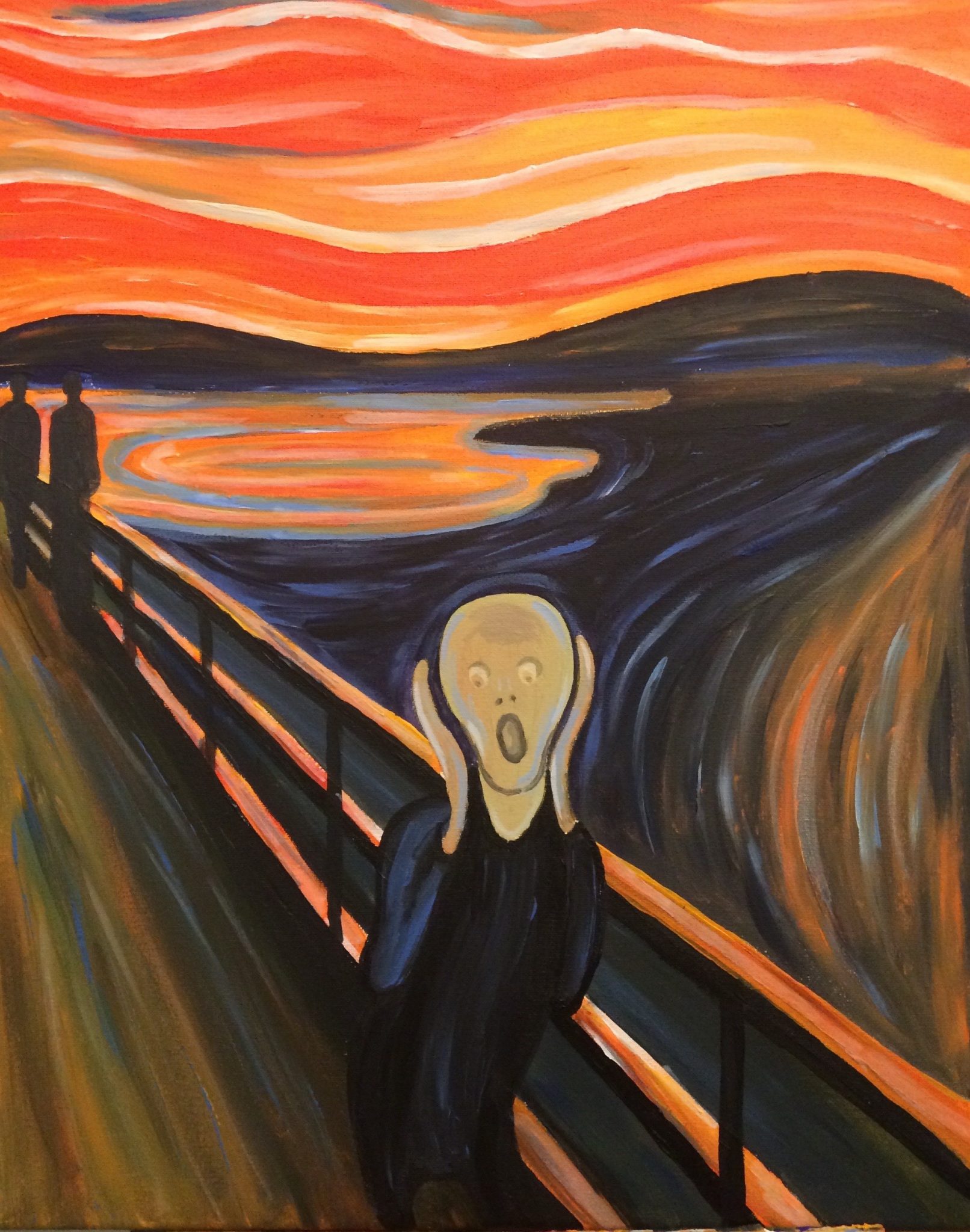
A recent article somewhere listed famous people who were depressive or bipolar (‘manic depressive”).
They could have saved time and energy by simply noting “all famous writers and artists, all famous war leaders, and all famous philosophers.” No mystery, no news: Aristotle pointed this out over two thousand years ago. Problemats XXX: “Why is it that all those men who have become extraordinary in philosophy, politics, poetry, or the arts are obviously melancholic?”
I fear, however, that moderns grab the stick at the wrong end. The assumption seems to be that they did great stuff despite being mentally ill. “High functioning depressives.” Which is absurd, when the highest functioning of us all turn out to be depressives.
“Considered by many to be the greatest English writer in history, Charles Dickens, like many great writers, battled depression for his entire life. It was said that he went through long periods of insomnia whenever he started a new novel.
“To deal with his sleeplessness, Dickens would wander aimlessly around London, once covering 30 miles (48 km) in a single night. On the bright side, it’s been reported that his spirits would lift bit by bit as he made more and more progress on his stories.”
The real story is that Dickens would be driven to write a new novel by the chronic anxiety that caused his insomnia. The act of writing soothed the anxiety and depression.
I am reminded too of Socrates’s comment: “By all means marry. If you marry well, you will have a happy life. If you marry poorly, you will become a philosopher.”
An intolerable home situation, being abused, causes what we call depression.
Depression is principally a sense of loss of purpose and meaning to one’s life. This is the permanently damaging effect of abuse. It can be expressed as sadness or as anxiety, but these are just symptoms: the problem is a lack of meaning and direction. “What is the point of me?”
Art, or philosophy, is an effort to create meaning. One is reaching for the transcendental values, the things that bestow meaning. The artist is reaching for beauty; the philosopher is reaching for truth. And the lawgiver or military leader is reaching for justice, the moral good. With desperation, in such a case, and so with the greatest concentration and energy.
This is salvation for the mentally ill: to stop being "mentally ill" and become an artist, or a teacher, or a shaman.
But don’t many artists end up losing the battle, and committing suicide? Don’t many philosophers?
They do; because art or philosophy is the path, and only the initial path, and not the goal. The quest for meaning begins to yield solid results once it generates and confirms a religious conviction.
Artists who become religious do not commit suicide. Instead, the depression eases and recedes. Religion happens when art or religion achieve their goal.
Wednesday, November 29, 2023
Daily Wire's New Full-Length Comedy May Change the World
There have been no good comedies coming out of Hollywood for years. All superheroes and 3D animations.
As a result, Daily Wire has announced the release of their own new full-length comedy, “Lady Ballers.” Mocking “transgender” participation in women’s sports, and full of cameos by right-wing figures—they say because no conventional Hollywood actors would take the roles.
At the same time, as many enough have noticed, old TV comedy staples like Saturday Night Live or Steven Colbert or the Daily Show are no longer funny. They seem to have abandoned laughs altogether.
Why?
Because comedy works by revealing truths you are not supposed to notice or say. That’s the punch in a punch line—the “reversal of expectations.” It cannot be predictable, or it is not funny. It must be something that is both true, and unexpected.
When society as a whole, or the audience, or those financing a show, have guilty secrets they do not want exposed, comedy becomes too dangerous to their conscience to enjoy or allow. What if someone should hear the beating heart below the floorboards? What if someone should notice it, and say something without thinking?
This is why narcissists never have a sense of humour. This is why those living with narcissists always have the feeling of “walking on eggshells,” having to guard what they say. This fear of saying the wrong thing prevents the spontaneity required for artistic expression, and especially for comedy, which most needs spontaneity.
And this is why European courts used to employ a court jester—to tell the king the truth, to keep it all honest and prevent hubris or delusional thinking.
The decline of comedy, and art generally, is the surest sing our culture is in trouble.
Hollywood films have become unspontaneous and uncreative; new ideas of any kind have come to look dangerous to the powers that be. Safer to recycle old “brands” and “franchises,” swapping races and genders as an excuse for a remake, as a safe and unthreatening novelty.
While making sure they are not “triggering” to the narcissists; deleting anything that might challenge their delusions.
So too with pop music. Pop performers are no longer selected for talent, or for any unique quality. They are selected as safely compliant, visually appealing vehicles; and every song sounds more or less the same. Deficiencies can be fixed in the studio. Soma.
And yet, we are now also seeing the signs of rebirth; and it started with comedy. Many comedians have now come out as “far right,” choosing their art over politics and personal safety: Dave Rubin, Greg Gutfeld, Steven Crowder, Roseanne Barr, John Cleese, Ricky Gervais, Joe Rogan, Dave Chappelle, Norm Macdonald, on and on; a list that seems to grow every week. And we are seeing the traditional role of the court jester being reasserted, in the face of furious censorship, over the Internet.
Daily Wire and Angel Studios have now begun turning out new TV shows and films at a surprising clip, and audiences are eating them up. At least some significant portion of the population is not depraved. When these films and shows start outgrossing Hollywood, we will know the future is won.
Now this full-length comedy, “Lady Ballers.” This may be the most devastating blow yet to woke narcissism. There is nothing a narcissist hates more than being laughed at.
Tuesday, November 21, 2023
The Parable of the Talents

Jesus told his disciples this parable:
“A man going on a journey
called in his servants and entrusted his possessions to them.
To one he gave five talents; to another, two; to a third, one--
to each according to his ability.
Then he went away.
Immediately the one who received five talents went and traded with them,
and made another five.
Likewise, the one who received two made another two.
But the man who received one went off and dug a hole in the ground
and buried his master’s money.
“After a long time
the master of those servants came back
and settled accounts with them.
The one who had received five talents came forward
bringing the additional five.
He said, ‘Master, you gave me five talents.
See, I have made five more.’
His master said to him, ‘Well done, my good and faithful servant.
Since you were faithful in small matters,
I will give you great responsibilities.
Come, share your master's joy.’
Then the one who had received two talents also came forward and said,
‘Master, you gave me two talents.
See, I have made two more.’
His master said to him, ‘Well done, my good and faithful servant.
Since you were faithful in small matters,
I will give you great responsibilities.
Come, share your master's joy.’
Then the one who had received the one talent came forward and said,
‘Master, I knew you were a demanding person,
harvesting where you did not plant
and gathering where you did not scatter;
so out of fear I went off and buried your talent in the ground.
Here it is back.’
His master said to him in reply, ‘You wicked, lazy servant!
So you knew that I harvest where I did not plant
and gather where I did not scatter?
Should you not then have put my money in the bank
so that I could have got it back with interest on my return?
Now then! Take the talent from him and give it to the one with ten.
For to everyone who has,
more will be given and he will grow rich;
but from the one who has not,
even what he has will be taken away.
And throw this useless servant into the darkness outside,
where there will be wailing and grinding of teeth.’”
Like all parables, last Sunday’s gospel reading includes a detail making a literal reading impossible.
For Jews and Christians, usury, lending money at interest, was considered sinful. Yet here the master praises two servants for lending money at interest—a 100% rate of interest.
Obviously, the “talents” being referred to cannot be money. Indeed, the English word “talent” comes from this parable. It means spiritual gifts.
Don’t be misled here by the crass and literalistic “prosperity gospel.” God does not pay cash.
We are given what talents we have by God at birth. We are not all given either equal or equivalent talents; the idea of “multiple intelligences” is a transparent cope. Some are given two talents, some five, some only one. “To each according to his ability”; God knows us before birth, and gives talents to those most likely to use them wisely.
It is our responsibility, then, just as Jesus says in the Sermon on the Mount, not to hide our light under a bushel, not to hide our talents in a hole, but to “let our light shine.” If we do, our talent will increase.
Many do not do this, the parable says, out of fear. It is always frightening to show a drawing or a poem, or to perform on stage. One feels vulnerable. Rightly so: you will be criticized, attacked, meant harm, especially if you’re good.
So those to whom God gives more talent have greater responsibility, and will have a more difficult path through life. The suffering of the artist is axiomatic. The sufferings of the Jews is the paradigm. They are here to be “a light unto the nations.” Evil people fear and hate the light.
Then at the end of life, we will be judged on what we have done with what we have been given.
According to the parable, at this point, when the master returns, those who have used their talents well will be given greater responsibility.
This tells us there will be more important work to do in heaven. We will not just sit around playing video games. This work is the entire point of life.
Why? Because God made us, in the beginning, as a potter, in his image. Meaning, to be, like him, creators, makers. In creating, we collaborate with him in building the intended world, the New Jerusalem. It is a work of art, a city, not the natural world into which we are born naked.
Sunday, September 03, 2023
This Is Just to Say
One of the features of the Saint John Exhibition—formerly the Atlantic National Exhibition—which I attended yesterday, was an art competition featuring entries from across the region.
And the work of these amateurs was remarkably good—a few things worthy of hanging in a genuine art museum.
I have found the same from a Facebook page I follow, “Artists trying to make a living with their art.”
But what do we so often see in art museums? Drek. Sometimes literally. Things like a room filled with actual garbage.
One has to wonder why.
I credit it to the academicization of art. True art needs inspiration, and inspiration does not come on call, or with regular attendance at class. Nor can one be educated into it. So something else must be substituted to fill those classroom seats; something must be taught.
What is taught must not require talent, let alone genius. It must also be counter-intuitive. You cannot teach what everyone already knows.
From the point of view of the professional artist, as well, it is best to find some trick that does not require actual inspiration or even fine craftsmanship--so that you can crank it out. Inspiration is a shaky foundation on which to build anything like a career. And spending too long on any one piece is going to hurt your income.
So stuff must be made up, which would appear to the average person to actually be bad art, to keep out the amateurs, and then those who do not appreciate it can be scorned as the philistines.
The philistines with fat wallets will buy it if told to, because it makes them look sensitive and bohemian and not the philistines they are.
Hence all this conceptual nonsense. Hence the only good art left will be folk art and popular art. The art of amateurs.
It is the same in poetry. I recall a book fair at which I overheard one well-dressed woman pick up and read to another William Carlos Williams’ poem “This Is Just to Say”:
I have eaten
the plums
that were in
the icebox
and which
you were probably
saving
for breakfast
Forgive me
they were delicious
so sweet
and so cold
Ending with “Isn’t it marvellous?”
And her acquaintance was obliged to assent or lose face by admitting she saw nothing in it.
Anyone without talent can write like this, but it conforms to and illustrates an academic theory. By appreciating it, you show you know what “imagism” wants in a poem: essentially, just an image, of something perfectly ordinary and mundane, with no comment or obvious symbolism.
It is anti-art, which is most often these days the point.
Wednesday, April 12, 2023
On Drawing With Strong Lines
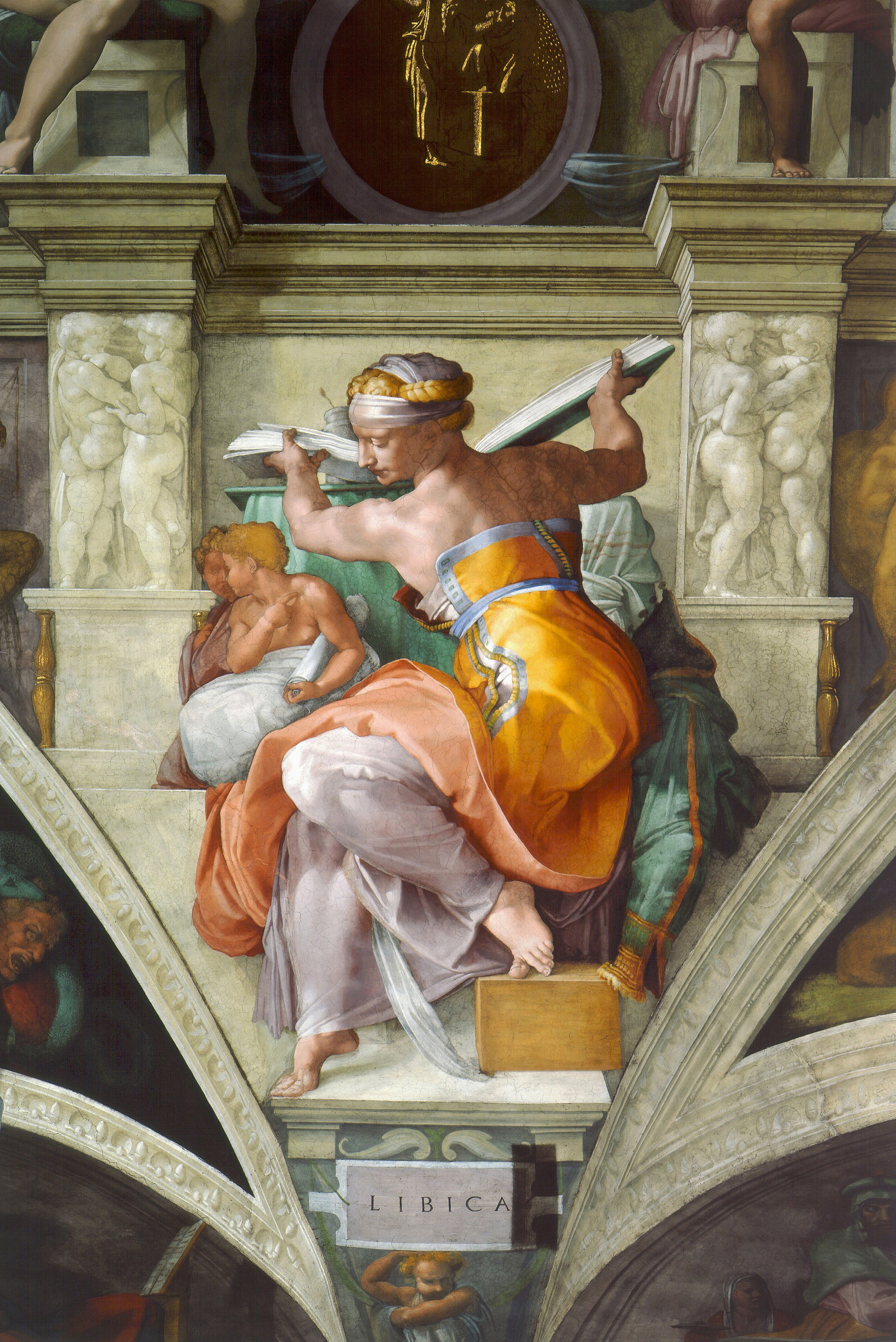 |
| When the Sistine Chapel murals were cleaned some years ago, many complained that the restoration made the images too clear and vivid. They preferred the murkiness of centuries of smoke and oil. |
Teaching a student to write well, one essential piece of advice is to be clear, and avoid qualifiers. The purpose, after all, is to communicate. This is exactly the opposite of what I was told as a grad student, even in the humanities: I used to be criticized for speaking too plainly, for refusing to use them. It got me branded “arrogant.”
Many students struggle to do this, to write clearly, although it seems the simplest possible thing. As Mark Twain put it, “Writing is easy. All you have to do is take out words.”
There are two opposing forces in culture, one trying to make things as clear and simple as possible, and one trying to make things as obscure and difficult as possible. I remember on first reading Milton Friedman, being shocked at how clear and simple his ideas were. Can this be academically legitimate? Can this be right? After all, unlike Keynesianism, it actually makes sense. Yes, breaking windows really does cost money. When you spend money, you no longer have it. The obvious truth had been obscured.
Plato or Descartes are also clear and well-spoken. What a shock to discover, after always being told otherwise, that the best thinkers actually wrote plainly. Yet, in most academic courses, the works of these great thinkers are kept from you, on the claim that they are too difficult, and you are required to read prevaricating commentaries on them instead. Which are far more difficult to understand than the works they are supposedly explaining to you.
How can this be? What is going on here?
The truth is, most of us are in denial. Which means we are in frantic flight from reality. The academic elite—the scribes and Pharisees—are clearly more in denial than most.
But so too even many current poets.
The theme for this year’s National Poetry Month is “joy.”
I don’t think any real poet could have chosen that theme. After all, no prominent poet seems to have written memorably on it. I cannot conceive of Leonard Cohen writing about how happy he is. I cannot imagine T.S. Eliot doing so. William Blake did, it is true. But he followed it with the symbol of the tyger devouring the innocently joyful lamb. Schiller wrote an “Ode to Joy,” which became embarrassingly popular. But he himself disowned it, as “out of contact with reality” and “of no value to either poetry or the world.” Browning seemed to do so with “Pippa Passes,” but later he denied having any idea what the poem meant.
A fraudulent joy is the resting face of all delusion. Happy happy joy joy. Accordingly, it is virtually impossible to write an honest poem about it.
I think of the vacant smiles on the oldest Greek statues: a smiling sphinx about to tear you limb from limb; a smiling soldier about to skewer his enemy through the heart. Perhaps an ironic comment; but chilling. I think of Pogo the Clown, aka John Wayne Gacy.
A student of mine was assigned “coming of age” as his poetic theme. He wrote well of casting off the lines and drifting out to sea. And then, in the final stanza, wrote, “after all, if things go wrong, the reins are still right there by my side.”
A deliberate confusion? But of course, in the metaphor he chose, they are not. Nor are they in real life. You cannot go back to being a child.
When I pointed this out, he froze up. “But that is too sad.”
Denial.
I had to finish the poem for him.
True art must always tell the truth. That is the reason for art. If it does not, it has no purpose, or worse.
This is really the war between good and evil. Those who are committed to good will seek truth, and do everything they can to write or speak or paint clearly. Those who are committed to evil will have things to conceal, and will work hard to be obscure. And to silence those who speak truth.
George Orwell once observed that his real talent was an ability to honestly and unflinchingly face the reality of evil. It is a rare talent.
William Blake insisted that all visual art worthy of the name must have clear lines. He railed against “the Flemish ooze.”
I agree with him. It is immoral. All unnecessary lack of clarity is immoral.
And the greater the general evil in a society, the worse the art.
Subscribe to:
Posts (Atom)