If for any reason you cannot find the paperback version of Playing the Indian Card at your favourite bookstore or online retailer, please ask them to carry it. Protest and picket the store entrance if necessary.
“I've been down on the bottom of the world full of lies I ain't lookin' for nothin' in anyone's eyes.” – Bob Dylan, “Not Dark Yet”
Theodore Sturgeon once said “ninety percent of everything is crap.” He was referring to literature; but perhaps everything really means everything.
One explanation for why the world has seemed recently to go so weird is that, with the improved information flow through the internet, the crap that was always there is becoming more obvious. And the liars more desperate to stop the information flow.
Surely ninety percent of all political speech is lies. “Politics itself is a mass of lies, evasions, folly, hatred and schizophrenia.”—George Orwell. Almost everything spoken by a practicing politician contains a familiar logical fallacy. Nobody is seeking what is best for the community; only angling for power by whatever means necessary. Most government money seems misspent.
Surely too ninety percent of academics is nonsense. When you read almost anything written by a college professor, you realize that it is written as obliquely as possible, to withhold and obscure information, when the entire point of the academy is to discover and convey information. Someone has pointed out that whenever a major new scientific discovery is made, it takes a generation for it to be recognized and accepted by the academy. The current generation of professors has to retire. They will have vested interests in the previous paradigm. There is a reason why Einstein developed the Theory of Relativity as a patent clerk, the Wright Brothers cracked flight from their bicycle shop, and college dropout Steve Jobs created the first personal computers in his parents’ garage.
Probably ninety percent of organized religion is also fake. The Bible itself says so: pharisaism and hypocrisy.
Everyone knows, of course, that business and corporations are greedy and dishonest and trying to sell you junk. The irony is that this is the one place we have the best protection against such lies and fraud.
In sum, we all live in a world full of lies.
This is an argument for the existence of an afterlife; C.S. Lewis made it. We have a yearning for truth. How can we yearn for, or even be aware of, something that does not exist? That must mean it does exist somewhere …
One might suppose that, in the case of science fiction and literature at least, the great mass of crap is due to incompetence. Not everyone can write well.
Perhaps not so. Perhaps everyone can.
Perhaps the artist is really someone who insists on seeing the lies around him, and feels morally driven to speak the truth. Then he will find his medium. He is a prophetic voice crying in the wilderness. He speaks obliquely, in parables, because those in charge are determined to suppress truth. “Tell all the truth, but tell it slant/ Success in circuit lies”—Emily Dickenson.
There are endless stories about how many times this or that famous book or great author was rejected for publication. Why? When it is so obvious to everyone that this is a great book, how can it not have been obvious to all those trained and seasoned acquisitions editors?
Perhaps the trick is to slip by the censors. Pretend it’s just fantasy. Pretend it’s about sex or thrills. But sneak truths in.
So too for visual artists. I see what contemporary drek is shown in the public galleries. Then I see what fine work appears in internet feeds from amateur artists who cannot sell their work. Great artists of the past were also rejected by the academy and the galleries. Van Gogh never sold a painting. How account for that?
The vast bulk of art is bad not because there are not enough talented artists. It is bad because it is not telling the truth. Like Hollywood movies these days, empty formulae without purpose at best, at worst deliberately lying about the world.
Orwell understood this when he said that his one talent was really in simply being able to face truth. Most people run screaming from it.
I am delighted that Bob Dylan has won the Nobel Prize for Literature. It is about time the Nobel Committee did something right.
The resistance to the selection has been strong and predictable. That is a good sign. As Confucius pointed out, if a man has no enemies, he is suspect. If a decision faces no resistance, it is not a good decision.
In National Review, Ian Tuttle writes, “isn’t Bob Dylan a songwriter? To my mind, the achievement of a great song is that words and music are seamlessly integrated, and you’d ruin the thing if you separated one from the other.” Others have called the award a “categorization error,” and japed, “next up: Keith Richard wins the Nobel Prize for Chemistry.”
No. Has Tuttle ever heard of “lyric poetry”? Does he know, then, what a lyre is? Back when we understood and cared for poetry, we understood that it was really a form of music. It was all originally sung, and not just “lyric” poetry, either. We have, inadvisedly, recently separated the one from the other. This has been bad for both music and poetry.
As for the two being seamless, back when we understood poetry, even a hundred years or so ago, as a matter of course, a good poem was soon set to music, often to several different tunes. And a good tune soon got several sets of lyrics. I think I can see the seams there. This is true of most of our best-known folk songs—words and music evolved separately. On might mention, for example, “The Star-Spangled Banner,” or “O Canada.” Or “The Battle Hymn of the Republic,” or “Amazing Grace.” Not great songs?
Even where this is not the case, is it not common practice for different people to write the lyrics and the music? How can that be seamless? Has Tuttle never heard of Gilbert and Sullivan? Weber and Rice? Jagger and Richards? Rogers and Hammerstein? Not great songs?
Tuttle goes on to ask, “Have you ever recited the lyrics of ‘Mr. Tambourine Man’? They need that melody.”
Very well. Challenge accepted. Let’s have a look:
Hey ! Mr Tambourine Man, play a song for me
I'm not sleepy and there is no place I'm going to
Hey ! Mr Tambourine Man, play a song for me
In the jingle jangle morning I'll come followin' you.
Though I know that evenin's empire has returned into sand
Vanished from my hand
Left me blindly here to stand but still not sleeping
My weariness amazes me, I'm branded on my feet
I have no one to meet
And the ancient empty street's too dead for dreaming.
Hey ! Mr Tambourine Man, play a song for me
I'm not sleepy and there is no place I'm going to
Hey ! Mr Tambourine Man, play a song for me
In the jingle jangle morning I'll come followin' you.
Take me on a trip upon your magic swirlin' ship
My senses have been stripped, my hands can't feel to grip
My toes too numb to step, wait only for my boot heels
To be wanderin'
I'm ready to go anywhere, I'm ready for to fade
Into my own parade, cast your dancing spell my way
I promise to go under it.
Hey ! Mr Tambourine Man, play a song for me
I'm not sleepy and there is no place I'm going to
Hey ! Mr Tambourine Man, play a song for me
In the jingle jangle morning I'll come followin' you.
Though you might hear laughin', spinnin' swingin' madly across the sun
It's not aimed at anyone, it's just escapin' on the run
And but for the sky there are no fences facin'
And if you hear vague traces of skippin' reels of rhyme
To your tambourine in time, it's just a ragged clown behind
I wouldn't pay it any mind, it's just a shadow you're
Seein' that he's chasing.
Hey ! Mr Tambourine Man, play a song for me
I'm not sleepy and there is no place I'm going to
Hey ! Mr Tambourine Man, play a song for me
In the jingle jangle morning I'll come followin' you.
Then take me disappearin' through the smoke rings of my mind
Down the foggy ruins of time, far past the frozen leaves
The haunted, frightened trees, out to the windy beach
Far from the twisted reach of crazy sorrow
Yes, to dance beneath the diamond sky with one hand waving free
Silhouetted by the sea, circled by the circus sands
With all memory and fate driven deep beneath the waves
Let me forget about today until tomorrow.
Hey ! Mr Tambourine Man, play a song for me
I'm not sleepy and there is no place I'm going to
Hey ! Mr Tambourine Man, play a song for me
In the jingle jangle morning I'll come followin' you.
I am sorry; I guess there is no disputing taste; but to my ear you have here some of the finest poetry in the English language. Where is there a better line anywhere than “Far from the twisted reach of crazy sorrow”?
Tuttle is not alone here. A highly literate friend recites some more Dylan lyrics, in protest at the prize, claiming them to be notably bad:
Buy me a flute
And a gun that shoots
Tailgates and substitutes
Strap yourself
To the tree with roots
You ain’t goin’ nowhere
Whoo-ee! Ride me high
Tomorrow’s the day
My bride’s gonna come
Oh, oh, are we gonna fly
Down in the easy chair!
and
Mona tried to tell me
To stay away from the train line
She said that all the railroad men
Just drink up your blood like wine
An’ I said, “Oh, I didn’t know that
But then again, there’s only one I’ve met
An’ he just smoked my eyelids
An’ punched my cigarette”
Oh, Mama, can this really be the end
To be stuck inside of Mobile
With the Memphis blues again
Notably bad? I say they’re awfully good. Who has never had the Memphis blues? Who cannot feel here the emotions of a man about to get married?
I think my friend’s problem is that they are “nonsense.” Nobody really smokes anyone’s eyelids. Nobody flies in an easy chair.
Dylan’s writing is impressionistic, stream of consciousness. It cannot be reduced to a simple narrative. But then, if it could be reduced to a simple narrative, why bother writing a lyric? Dylan is conveying emotions, and doing it very well. How is he different in this regard from, say, TS Eliot? James Joyce? Samuel Beckett?
The very superficial disjointedness is part of the point. Dylan is portraying intense emotional states. When we are in an intense emotional state, our experience of our surroundings, and our thoughts, are indeed disjointed. Dylan is giving an accurate depiction of that; not an easy thing to do.
To be honest, though, my friend’s quote from “You Ain’t Going Nowhere” misses its best lines:
Genghis Khan he could not keep
All his kings supplied with sleep
We’ll climb that hill no matter how steep
When we get up to it.
Childish? Childlike? Surely that’s exactly the point.
I think the real problem here is that Dylan is “low” culture. He is too popular. He uses common phrases, common images, common experiences of common men. He did not go to college.
This is just what I love most about the Nobel selection.
There is always an attempt by the social and economic ruling classes, the rich, established, and powerful, to take the best of culture and claim it as their own, and unappreciated by the great unwashed. It tends to justify their rule. This is a lie. It is a damned lie, given that the same class of people usually starves and persecutes when alive the same artists they appropriate to themselves as soon as they are good and safely dead.
Contrary to the mythology, it is not as often the people who reject a really great new artist. It is the academy. Shakespeare was popular entertainment in his day. So was Dickens. The romantics, best of British poets, were in their inception an attempt to keep poetic diction on the level of everyday speech and common experience, to bring art back to the streets and hedgerows. More recently, the Beats tried the very same thing. Whenever art becomes alone the possession of some self-appointed sophisticated cognoscenti, as has modern opera, modern poetry, modern jazz, postmodern anything, it loses all vitality, all reality, and all quality. It becomes dry and academic and wheezingly anemic and, in a word, phony.
That a thing is popular is no proof that it is good, granted. But, equally, that a thing is unpopular is rather worse proof that it is.
The mob may have rejected Jesus, but only at the urging, do recall, of the Sanhedrin.
Recognizing genuinely fine popular culture like Dylan may help revive poetry itself, now hopelessly moribund because it has been co opted by academic and pseudo-intellectual poseurs of the sort that attend classical concerts in tie and tails. Or, as bad or worse, affect torn jeans and Che Guevara T-shirts. And have no idea what poetry is, but know what they are supposed to pretend to like.
In addition to this, to disdain popular art is, right from the opening gun, to disdain American culture specifically. That, as de Tocqueville points out almost two hundred years ago, and as Andy Warhol more recently reminds us, is the essence of America. And in this America is the cutting edge, the avant garde, the artistic future for us all. Not to mention the true Christian option, the moral choice. Art comes from depth of soul, not material or social position.
Another good thing about the Dylan selection is that it flies in the face of the modern mistaken cult of innovation in the arts. Dylan is deeply rooted in tradition, as any good artist ought to be. Cultures are to be built upon, not blasted back to rubble.
And now that I think of it, Keith Richards, too, deserves his Nobel for Chemistry. He obviously knows a lot about chemical substances.
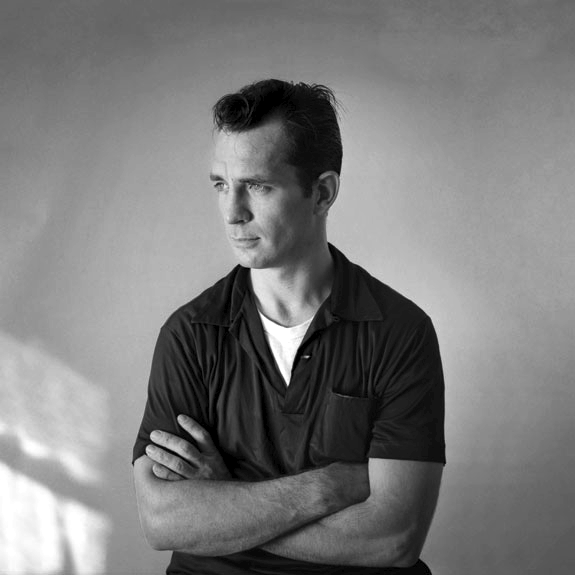
Kerouac was always an avowed Catholic. So was Andy Warhol.
Years ago they ... said I was a prophet. I used to say, "No I'm not a prophet" they say "Yes you are, you're a prophet." I said, "No it's not me." They used to say "You sure are a prophet." They used to convince me I was a prophet. Now I come out and say Jesus Christ is the answer. They say, "Bob Dylan's no prophet." They just can't handle it. – Bob Dylan, 1980.
The end of the Sixties almost became a religious revival. It should have. That was where it was all leading. It was a sudden surge of new hope, triggered by victory for the good guys in the Second World War, the biggest wave of new hope since the Waste Land began with World War I. It might have led to something substantial. Instead, some of us dropped dead, and the rest of us sold out.
You might even remember a moment when it looked as though something else might happen. You might remember the “Jesus Freaks,” the Hare Krishnas, the Moonies, and all the terror about cults, in around the Seventies. That could have been the future. Instead, all but a few chickened out. Drugs, sex, and rock and roll, okay, that the broader society could tolerate. But religion? Please. Be spiritual, okay; buy a few crystals. Listen to Enya. Try some TM. But keep those conventional moralities away from our stash. We’ll take meaninglessness any day.
We were speaking a little back about the Byrds. The Byrds definitively broke up during the recording sessions for their 1967 album The Notorious Byrd Brothers. Michael Clarke left in dissatisfaction, supposedly, with the music being written by the band’s composers. David Crosby left or was fired due to a disagreement over whether to include his song "Triad" or the song "Goin’ Back" on the album.
Hmmm. Let’s parse that. You may recall that, beginning at about this time. Roger McGuinn and Chris Hillman were tentatively rediscovering Christianity. Clarke and Crosby were both on a trajectory that ended with the utter destruction of their livers. I think we can assume that their world views were beginning to pull apart, and this was merely manifested in their song choices.
Clarke was most likely to be upset over one song, “Artificial Energy.” He had scored a rare co-writing credit on it. The title, and therefore the song, seems to have originally been his idea. But it was completed by Hillman and McGuinn. I suspect they altered Clarke’s original concept. The song begins as a description of the experience of being high on amphetamine—which, of course, sounds like a lot of fun. It ends differently: with the lines “I've got a strange feeling,/ I'm going to die before my time/I'm coming down off amphetamine/And I'm in jail 'cause I killed a queen,” and then a note of musical dissonance. Clarke may have seen this as uncool, and a kind of sabotage. McGuinn and Hillman may have sounded as though they were scolding him. Damned self-righteous Bible thumpers.
As for Crosby, he had written the song, “Triad,” and he badly wanted it on the album. It was a celebration of the idea of a ménage a trois. Hillman and McGuinn voted it down in favour of a song written, insultingly enough, by a third party, “Goin’ Ba ck.” This song, interestingly, could not have been more different in tone than “Triad.” It was a call for a return to the innocence of childhood. “I think I’m goin’ back/To the things I learned so well in my youth…” "Triad"’s lyrics include: “Your mother's ghost stands at your shoulder/Got a face like ice just a little bit colder/Saying to you/
Cannot do that it breaks all the rules/You learned in schools.”
It looks as though the lyrics of “Goin' Back” were a direct response to Crosby. McGuinn and Hillman were perhaps personally repelled by “Triad.” Crosby, for his part, perhaps saw them turning the group into something smarmy and definitely uncool. What was this, Sesame Street?
And then there is a yet more famous breakup: the Beatles. They released their last single in 1970. But what was it? McCartney’s “Let It Be.” The song is obviously religious in tone; it is a prayer to the Virgin Mary. Although McCartney will not say (or deny) it, the title is a paraphrase of Mary’s own words in the Bible. “Let it be done according to thy word.” Paul was raised a good Catholic lad.
That, and some other songs Paul was coming up with at the time that sounded religious in tone—“Blackbird,” “Long and Winding Road”—seem to have been too much for John Lennon's atheist sensibilities. They stopped writing together. On the album version, Lennon introduces “Let It Be” in a comic falsetto voice as “Hark, The Angels Come.” In another take, preserved on the album Anthology 3, Lennon is heard asking in the background, “Are we supposed to giggle in the solo?”
It does not sound as if he was comfortable with the tone of the song.
At the same time, of course, George Harrison was composing religious songs like “My Sweet Lord.” Most of which were not allowed on Beatles albums, and surfaced immediately after their breakup (1970). But he was still on comparatively safe ground, since his stuff sounded Hindu, and was not associated in Lennon’s or the popular mind with any particular morality.
So, leaving Harrison more or less aside, Lennon and McCartney seem to have split at least in part on differing religious outlooks. Lennon went on within a year to record his manifesto “Imagine,” which speaks out directly against religion in its opening lyrics: Imagine there's no heaven/It's easy if you try/No hell below us/Above us only sky.”
It is odd that this pretty obvious religious context has not before been stated outright, either by those involved or by the music critics and biographers. It is as though everyone wants to avert their eyes from any consideration of religion. God forbid—er, let me rephrase that…
I think everyone sensed the danger. When Sonny and Cher had merely come out against drugs in the mid-Sixties, it had almost ended their career. When Paul Revere and the Raiders did, it did.
It was Bob Dylan, in the late Seventies, who finally had the nerve to break the taboo and speak openly. Surely, if anyone was big enough and cool enough to get away with it, it was Dylan.
Big mistake. All hell broke loose.
The fan base spoke of Dylan as though he were some kind of traitor. Dylan himself eventually knuckled to the pressure, and stopped showing his faith, although there is evidence he has never wavered in it personally. And everybody else got the message and pulled in their necks. Many indeed became good Christians privately, but they kept quiet about it, and the popular culture mainstream moved on.
Which might explain the exploding popularity, from about that time, of country music. It was the one place in pop culture where the religious could speak openly and freely. The Byrds and Dylan led the way.




 Posts
Posts