Playing the Indian Card

Sunday, November 19, 2023

A New Hope


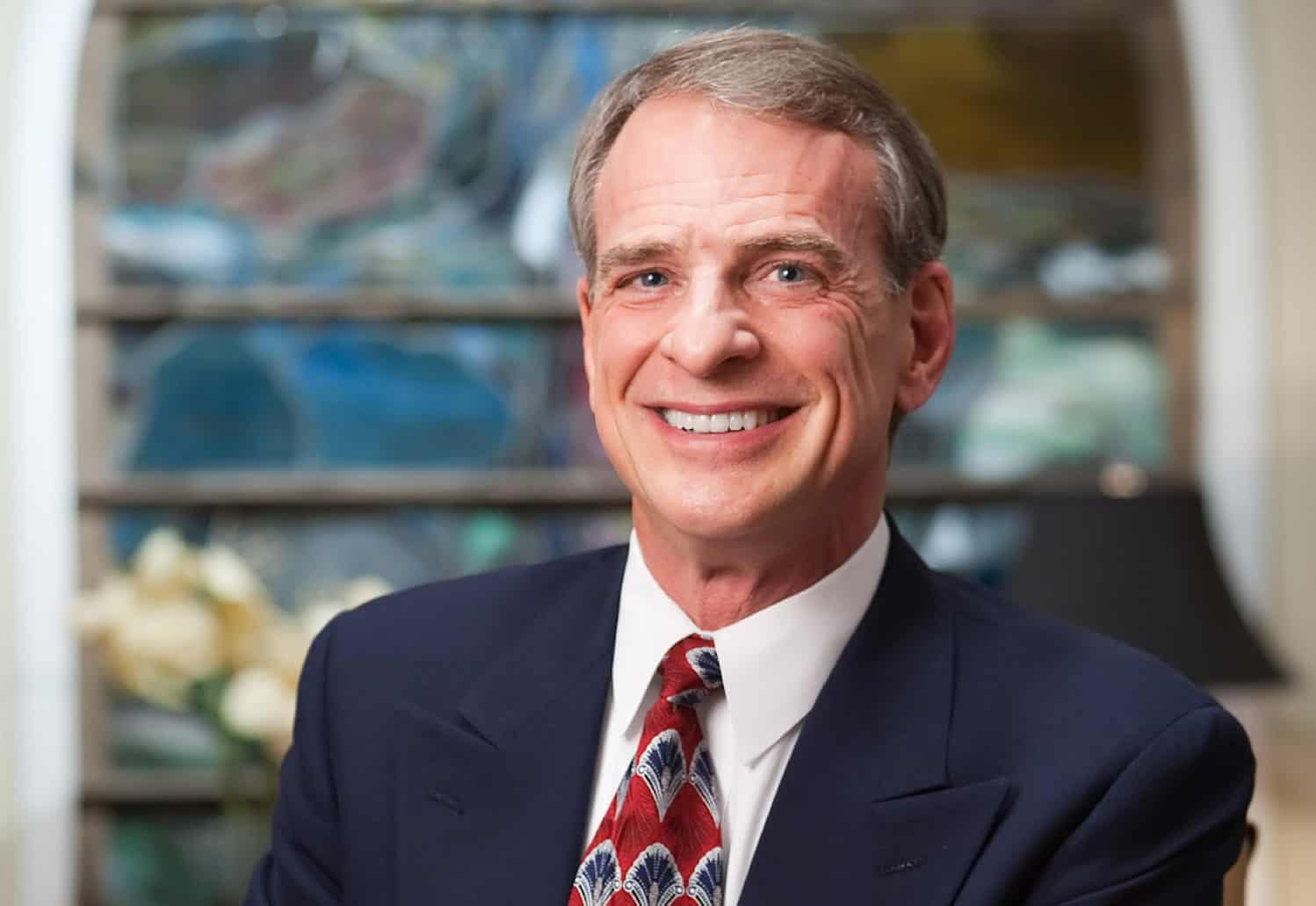
William Lane Craig

Here’s cause for hope. While the postmodern sacred chaos seems all-conquering in the academy, and marching through the culture—something else is happening at the cutting edge of research in departments of philosophy and of physics. There, it looks as though the arguments for atheism have collapsed. The “New Atheism” had a strong popular run recently, but that seems only to have brought the issue, and the true state of affairs, to broader attention. 

And the New Atheism has fizzled. It has fizzled in part under the greater scrutiny all ideas can receive in our information age.

Philosophy is traditionally considered the queen of the sciences: the most advanced academic degree is thus “Doctor of Philosophy.” Similarly, among the materialists, physics rules. And these two, according to William Lane Craig and others, have turned to the “God hypothesis.”

Even neo-Darwinism seems to be in retreat in biology departments. Although the claim was never strong, Darwinism was in the popular mind the main argument against theism. Darwin’s theory, and its proponents, largely kicked off the currently fashionable atheist religion of scientism.

But the intricacies of the genetic code, the need for “multiverses,” a gross violation of Occam’s Razor, to avoid postulating some higher power in physics, and the bizarrely narrow and specific set of circumstances that allow for life in the universe, have forcefully reintroduced the argument from design that the atheists thought Darwin had circumvented.

And if you don’t like that argument for God’s existence, as Craig has quipped, “I have others.”

Thinks move glacially in academics. Once a new truth is established, it takes at least a generation for it to percolate down to undergraduate level—let alone the high school texts, and the general consciousness. I just saw a post on Facebook teasing the revelation that Columbus was not the first European to discover the Americas. There are even still Freudians about. For the direction in any field to change significantly, the current generation of faculty members, who have built their reputations on the prior paradigm, has to die off. People rarely admit mistakes.

But we can perhaps now see the future, and it is divine. 

We must just hope that not too many more churches be burned or torn down from within before we get there.


Saturday, November 18, 2023

Should the West Be Supporting Israel?


I hear some complain that we seem to care too much about the death of Israeli civilians in the October 6 assault. Would we have been so supportive if the same thing had happened in, say, Armenia or Azerbaijan? Why do we care so much more about the Jews?

Subtext: surely it is all about rich Jews in America controlling US foreign policy behind the curtain, right?

I believe the opposite: at the best of times, I see antisemitism always just below the surface, if not openly expressed.

There no doubt is a Jewish lobby in the West. But there also is, and always has been, a powerful Arab lobby, with money, votes, oil, and geopolitical importance.

If a similar attack had occurred in Azerbaijan or Armenia, it is true, the public and government reaction in the West would probably not have been as dramatic. But this is for practical reasons: Azerbaijan and Armenia are in the Russian sphere of influence. We would expect Russia to handle the matter, we would have little logistical ability to help, and doing so would probably provoke Russia.

But Israel is an ally. They have a right to expect support.

There is an obvious comparison: 9/11. When a roughly proportionate terrorist attack hit the US, not only did the rest of the West support the US’s invasion of Afghanistan to hunt down the perpetrators, NATO invoked section 5 of their treaty, and everyone sent in troops in support. 

Compare, more recently, Ukraine. Not a NATO member, not a traditional ally, but all of NATO has been sending support.

Compare Kosovo, or Bosnia. Again, the West mobilized to end the perceived genocide.

When Saddam invaded Kuwait, and there were claims of atrocities, the US mobilized a coalition of the West to intervene.

So, in this case, the expected reaction should be for the other nations of the “Free World” to give Israel full diplomatic support, and supply any help Israel needs to eliminate the threat—up to and including sending their own troops.

Western support for Israel falls short of that. 


Friday, November 17, 2023

Trudeau Lectures Israel


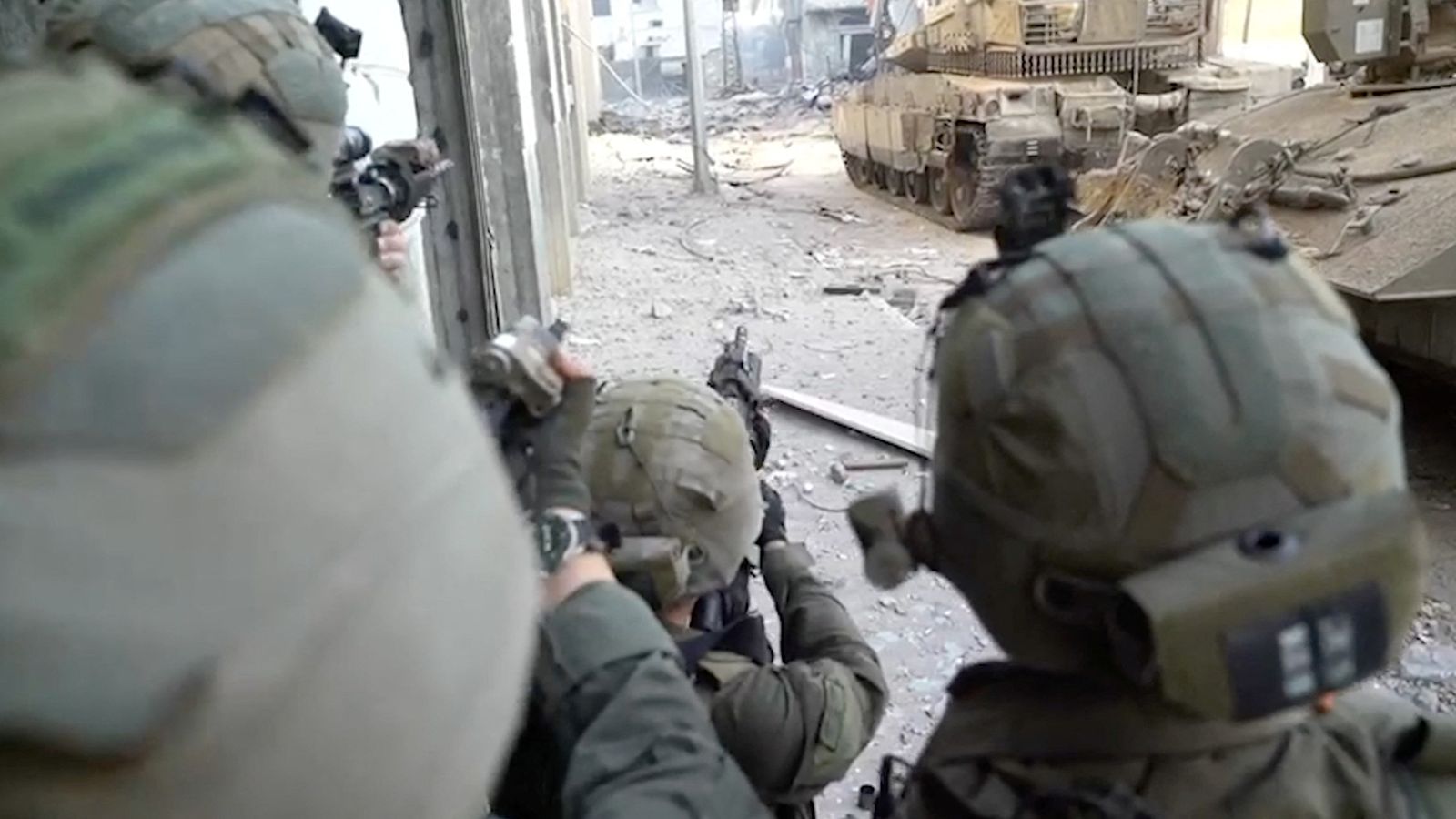
Justin Trudeau has caused another foreign relations lap by publicly demanding Israel exercise “maximum restraint” in Gaza, implying they are responsible for the deaths of many women and children.

Victor David Hanson makes a good point on this: calling for restraint or measured response in war is incoherent. This is to prolong war indefinitely, and perhaps to court defeat. The moral course, if you have overwhelming force, as Israel does here, is to use everything you have to bring the war to an end as soon as possible, and so end the killing. Trudeau’s advice would lead to many more deaths.

Of course, it is morally necessary to avoid any killing, of either soldiers or civilians, not needed to achieve victory. But if Israel is correct to claim Hamas is using “human shields,” the IDF refusing to fire on them for this reason is like paying ransom to kidnappers: if the tactic works for the terrorists, it guarantees more innocent civilians will die in future.


Tuesday, November 14, 2023

Apocalypse Maybe Later


I think it may now be winding down, but for weeks, people have been speaking of the conflict in Gaza as if it were the start of World War III.

I think the opposite. Hamas is not a serious military force; this is nothing like as serious as the Six Day War, or the Yom Kippur War, when substantial Arab armies were arrayed against the Jewish state. The very barbarity of the initial attack smells of desperation: like a tantrum. Knowing they have lost the support of Syria, Jordan, Egypt, Saudi Arabia, Iraq, all that is left is an attempt to, improbably, horrify Israel into surrender. And we can be sure no major Arab state is going to enter the fray.

There is a feeling of apocalypse in the air, and so every hiccup is taken as a cosmic death rattle. The end may be nigh, but not because of events in Gaza.


Monday, November 13, 2023

The Parable of the Foolish Virgins


Jesus told his disciples this parable:
"The kingdom of heaven will be like ten virgins
who took their lamps and went out to meet the bridegroom.
Five of them were foolish and five were wise.
The foolish ones, when taking their lamps,
brought no oil with them,
but the wise brought flasks of oil with their lamps.
Since the bridegroom was long delayed,
they all became drowsy and fell asleep.
At midnight, there was a cry,
'Behold, the bridegroom! Come out to meet him!'
Then all those virgins got up and trimmed their lamps.
The foolish ones said to the wise,
'Give us some of your oil,
for our lamps are going out.'
But the wise ones replied,
'No, for there may not be enough for us and you.
Go instead to the merchants and buy some for yourselves.'
While they went off to buy it,
the bridegroom came
and those who were ready went into the wedding feast with him.
Then the door was locked.
Afterwards the other virgins came and said,
'Lord, Lord, open the door for us!'
But he said in reply,
'Amen, I say to you, I do not know you.'
Therefore, stay awake,
for you know neither the day nor the hour."


As always, this parable, the Mass reading for last Sunday, includes a detail preventing it from being read literally. The bridegroom came at midnight. Where exactly were the foolish virgins going to buy oil for their lamps at midnight? Where did they think they were going?

And does it sound like charity for the wise virgins to refuse to share their oil? Yet they get the seal of approval, being immediately admitted to the “kingdom of heaven.”

Anything well written should alert the reader with such inconsistencies that a passage cannot be read literally, but must be symbolic. Clearly the thing being discussed here is not oil, but something like oil that cannot be shared, or not shared easily.

It is wisdom: “five of them were foolish, and five of them were wise.” Wisdom cannot be passed on, but must be achieved by each as individual—unlike, for example, knowledge. Wisdom is the oil that produces, as needed, the flame of understanding. And one needs wisdom to enter the kingdom of heaven.

That the problem is lack of wisdom is made plainer by the readiness of the foolish virgins to run off in search of oil in the middle of the night. And they were actually barred from the wedding feast not because they had no flame in their lamps, but because they were not there when the doors opened. By folly straight up, not oil.

This might seem unjust. Can one be blamed for being stupid? Yet it is not stupidity that makes a fool, but a lack of common sense. The first reading for the mass, from the Book of Wisdom, makes clear that wisdom is available to all:

Resplendent and unfading is wisdom,
and she is readily perceived by those who love her,
and found by those who seek her.
She hastens to make herself known in anticipation of their desire;
Whoever watches for her at dawn shall not be disappointed,
for he shall find her sitting by his gate.

So why are half of us, by the parable’s estimation fools? 

Because most of us would rather embrace the nearest pleasant fiction than wisdom. Most of us are actively engaged in various self-delusions. We believe what is convenient to believe, what requires the least of us.

This makes us easier, in turn, to fool. We will go for any get-rick-quick scheme, or any sort of snake oil. Notably including false claims about Christianity or what the Bible actually says. We will choose the wrong path, because it is bordered with primroses.

In the parable, the bridegroom says, “I do not know you.” If the bridegroom is God, this too is not literally right. He is omniscient, after all. But “know” means more than this in the Bible, often means the full relationship between man and wife. Rather, the fool and God have never established a personal relationship. There is no marriage, therefore no marriage feast.


Sunday, November 12, 2023

Latest Dispatch from the Western Front


Jill Stein has just announced for the US presidency. This adds to a now-crowded field including Cornell West and RFK Jr. There are rumours of Larry Horan, or Joe Manchin, also coming in. And the Libertarians are always out there too. Stein’s campaign in 2016 was alone significant enough that some say it threw the election to Trump.

Why are we getting so many independent runs in this particular cycle?

It is the latest battle in an ongoing war between the common people and the powerful, the “experts,” those in control of the levers in society. A conflict kicked off in turn by rapidly improving information and communications technology, making the expert class intrinsically less useful and exposing their relative incompetence and venality.

We saw this popular revolt, for example, in the initial election of Trump; in Brexit; in the improbable rise of Bernie Sanders within the Democratic Party; in the Arab Spring. The general public has for some time now, and increasingly, been in the mood to overthrow whomever was in charge. 

In reaction, the powerful have turned against democracy, and become increasingly authoritarian.

The American system traditionally relied on the primary system to allow all voices and concerns to be aired and voted on. The Democratic Party in the US, has now deliberately abandoned this system. This forces the left, at least, into a European model, in which the variety of viewpoints are represented by different candidates and parties in the general election.

On the Republican side, the common people took control three cycles ago. Without popular support, the old party establishment cannot now get traction by going to the people. Does anybody remember Evan McMullin? So long as Trump looks like an outlaw, support for him is solid.

The Democratic Party came close to being similarly taken over by the left-populists under Bernie Sanders. However, they fell short, and the forces of reaction have seized absolute power in response. Left-populism in intrinsically less compelling than right-populism, because the modern left is already allied with the expert class and the bureaucracy. “Vanguard of the proletariat” and all that. They can never appear as plausibly insurgent. 

In Canada, the Conservative Party, the official and perpetual opposition, at first tried to shut the gate against the rabble, fixing leadership races for Andrew Scheer and then Erin O’Toole as controlled opposition. But then, after repeated failure in the general elections, they wisely fixed the next race for Pierre Poilievre, who at least sounds like a populist. The floodgates have opened.

Meantime, the Liberals, the natural governing party, closely allied with the bureaucracy and the professions, has grown openly authoritarian and paranoid about the people.

In the UK, the Labour Party was actually taken over by left-populists under Jeremy Corbin. However, as left-populism has less steam with the general pubic than populism on the right, that wave receded. On the right, the Conservatives, under intense pressure from third parties, were taken over by populists, kicking and screaming though they were, when Johnson got in on a Brexit platform. 

But the brass were not yet done. Despite an overwhelming election win, they soon forced Johnson out, then forced out his popularly elected successor, not to their liking, and parachuted in they guy, Rishi Sunak.

But of course they greatly fear Nigel Farage and Reform, the third party option; so much so that they are trying to drive him out of the country.

I believe the win by the people is inevitable in the longer run. It is driven by the technology, and the technology cannot be turned back. Not to mention the Divine Will. But there may be much more nastiness between now and then.

A similar struggle is going on in the Catholic Church: a war of the Vatican against the common faithful. This is masked, it is true, by Pope Francis as a war against “clericalism,” on behalf of the laity. But this is the typical dodge: Francis is pope, “vanguard of the proletariat,” not laity. This is the old Marxist trick. He himself gets to select the voices he presents as “the laity”; like the old system of soviets. It is actually a concentration of power in the hands of the Vatican bureaucracy. 

The real wishes of the laity are illustrated by the growing popularity of masses in Latin, of traditionalist YouTube channels, of traditionalist seminaries, and growing voices against corrupt priests, bishops, and cardinals.

Francis seems to have been elected to circle the wagons against these unruly Apaches, the people in the pews. The synodal demands to normalize homosexuality come, surely, from within the hierarchy—there are far more practicing homosexuals, proportionately, within their ranks, than among the general public. There is reputedly, a “gay Mafia” at the Vatican. Those calling out financial corruption in the Vatican, like Pell and Vigano, have been cast into the outer darkness. 

It is harder to see how the conflict within the Catholic Church will end.


Saturday, November 11, 2023

Remembrance Day


Today is Remembrance Day. 

It was instituted first, of course, to remember those who died in the First World War.

Since then it has become fashionable to consider their sacrifice pointless. The First World War was all a blunder, a folly. The Great Powers sleepwalked into it. It achieved nothing but the exhaustion of Western civilization, and a bigger war twenty years later.

Some will say that of all war; their only issue is that we must never resort to violence. Some will wear white poppies today, implicitly condemning the choice of those we remember to volunteer and risk their lives. Some will wear purple poppies tomorrow, suggesting that, while their deaths are lamentable, they were no better than dumb animals.

This seems to me an appalling lack of respect or empathy for millions of young men whose lives were cut short.

It is true of course that all war is terrible. It is always mass murder. It is true that the world would be better off today had the First World War never happened. 

That is not to say it was of no consequence, or there was nothing worth fighting for.

Germany in 1914 was already imbued with a racialist, nationalist, modernist and anti-Christian philosophy that later became more fully expressed as Nazism. Austria-Hungary was trying to annex a small neighbour. Germany was in violation of treaty and of international law in invading Belgium. There was, as almost always, a right side, and a wrong side. This is why we have wars; otherwise everything could indeed be settled by negotiation.

Take up our quarrel with the foe
To you from failing hands we throw
The torch; be yours to hold it high
If ye break faith with those who die
We shall not sleep, though poppies grow
In Flanders fields.

Wear the poppy.

Friday, November 10, 2023

Is Hamas Worse than the Nazis?


Douglas Murray makes the argument.

And they garner much support in our own streets,

What can we say about the times we are living in?


The Real Wolf Warrior Diplomacy


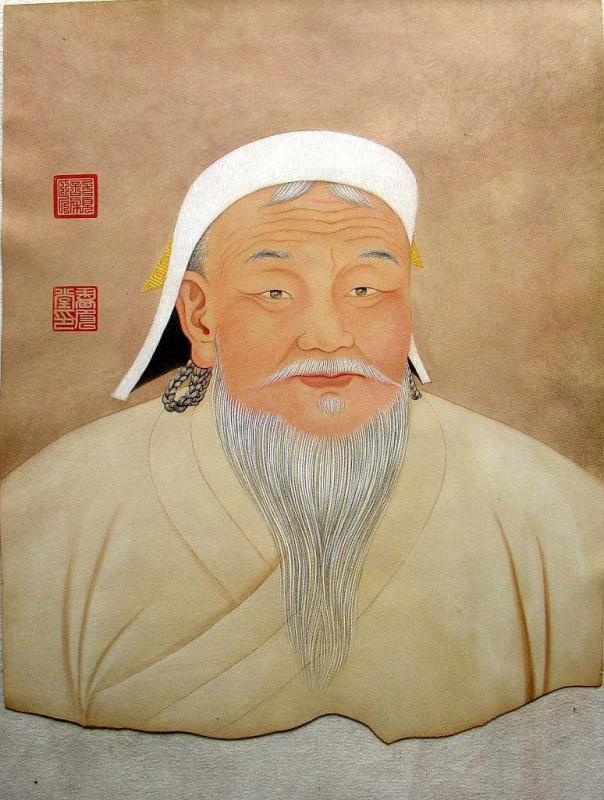
Genghis Khan, founder of the Yuan

A Chinese student of mine, asked to think of a way the Song Dynasty could have saved themselves from their eventual conquest by the Mongols—a historical hypothetical—came up with the obvious solution. The Mongols were militarily superior; but the Song Dynasty was rich. Paying off the Mongols to leave them alone would not work—it just proved the place was worth conquering. That’s “Danegeld.” The obvious trick, he said, was to pay off junior Mongol officers individually, to subvert the Mongol effort.

That’s good Chinese thinking.

It stands to reason that China is doing this now, as part of their asymmetrical “wolf warrior diplomacy.” They are paying off people in foreign governments.

After all, this is what the British did for centuries. This is largely what “foreign aid” has always been—bribes to Third World leaders and elites. This is what China’s public “Belt and Road initiative” is. 

Why wouldn’t the Chinese also be paying off Joe Biden, Justin Trudeau, Jacinta Ardern, Anthony Albanese, Duterte in the Philippines, Moon in South Korea? This would explain their strange but persistent downplaying of the Chinese threat. Even politicians who campaign on anti-Chinese rhetoric, seem to end up not doing anything substantial. Obama’s “pivot to Asia” never happened. Duterte campaigned on military confrontation with China over the South China Sea; in power, he actually floated the idea of the Philippines joining China. 

Rhetoric may vary; but it would be foolish, of course, to bribe only one side. You’re going to buy some Conservative MPs as well.

Note too, as my student saw, that it is even more useful to bribe people lower down, who will have less personal prestige and profit invested the success of the country as a whole. You start by bribing amenable congressmen, senators, vice presidents, MPs. They may or may not then rise higher; with your help. Of course you will also want to bribe prominent members of the press, the security services, and the military. 

Bribery is how business is done in China; certainly including the business of government. Why wouldn’t they do the same overseas? It is not necessarily a matter of cash hand to hand; that is crude and undignified. The money can go to a family member; a fake or ceremonial position can be created with generous pay or a generous honourarium; a personal foundation can be funded.

Bribing prominent businessmen will not even be necessary. So long as it is profitable, they will tag along for the opportunity to do business in China.

The current government of China, as it controls the entire Chinese economy, is sitting on mountains of money. Relatively speaking, it would not be expensive to pay such bribes; cheaper, on the whole, and more effective, than money spent directly on arms. 

One would have to be somewhat discreet. But so long as you are also bribing people in the security service and the media, not all that discreet. 

What is preventing such a thing from happening? 

Only the patriotism and sense of honour of those in power in the West. This was always the West’s great advantage: those in charge sincerely believed in what they were doing, in the march of civilization, the rightness of the cause, and in personal honour and ethics.

This is obviously less the case now than it was. Our elites now seem ager to criticize their own countries, “Western civilization,” and “conventional morality.” Giving them an alibi to opt for self-interest. 

And they often seem to grow wealthy in government service. Is that possible, playing it straight and narrow, on a government salary? 

Of course they are being bribed by Big Business, by Big Pharma, by Big Oil, by Big Tobacco, by the various interest groups. Why not also by foreign governments?

There is no solution to this other than a return to the principles of Judeo-Christian morality. In the end, nations rise and fall on their moral worth.


Thursday, November 09, 2023

What No One Is Saying


For the third election in a row, the Republicans did unexpectedly poorly this week, defying the polls.

Yet, since 2020, nobody seems to be raising the obvious possibility. It looks as though the aggressive prosecution of Trump, his lawyers, and the January 6 protesters for suggesting that election was fixed has cowed everyone into silence. As, of course, it was intended to. It should be obvious that the Democrats would not have responded so aggressively then if they had not indeed fixed that election; and intended to fix elections from then on.

This also explains why the Dems are comfortable sticking with Joe Biden, despite his poor performance, scandals, and mental decline. They are even fixing the primary process to get him the nomination. They apparently calculate they can push him over the finish line no matter what. He just has to stay alive.

It also stands to reason that, if they are prepared to override democracy to fix the primary process, they are going to have no qualms about doing the same in any general election.


As Others See Us


I, for one, want political asylum.

Wednesday, November 08, 2023

The Lonely Hearts Club


It’s not exactly a slow news day; but I have nothing useful to say about the news. So let’s talk culture. The Beatkes are in the culture news, with “Now and Then.” Seems to me it is a comment on how moribund pop music is these days, that the biggest news is a new album by the Rolling Stones and a new single by the Beatles.

The idea behind the Beatles’ “Sergeat Pepper’s Lonely Hearts Club Band” album cover was that the audience standing behind them was meant to represent their ideal audience.

I don’t find the selection that impressive.

Aleister Crowley?
The Vargas Girl?
Karl Marx?
Sonny Liston?

Rather adolescent.

I imagined my own selection. Rules: must be dead, and no fictional characters. Not necessarily the greatest people ever; perceived kindred spirits.

Stephen Leacock
Lucy Maud Montgomery
Leonard Cohen
Dylan Thomas
W.B. Yeats
T.S. Elliot
George Orwell
Sinead O’Connor
Prince
William Blake
Don Bosco
Theresa of Avila
Rene Descartes
Ian Tyson
William Kurelek
Kateri Tekakwitha
J.D. Salinger
Richard Halliburton
Hans Christian Anderson
Fyodor Dostoevsky
Jack Kirby
Maurice Sendak
Thomas D'Arcy McGee
Thomas Jefferson
John Stuart Mill
Edmund Burke
Buster Keaton
Daniel Patrick Moynihan
Daniel O’Connell
William Shakespeare
Confucius
Stanley Kubrick
Alfred Hitchcock
Milton Friedman
Lauren Bacall
Carrie Fisher
Patty Duke
Jack Benny
Lewis Carroll
John Paul II
Benedict XVI
John XXIII
John Locke
Whitney Houston

Readers might enjoy making their own list; or send nominations in the comments.


Tuesday, November 07, 2023

Listening


The main theme of the current “synod on synodality” at the Vatican, which just wrapped up its 2023 session, is listening: it seeks “a Church of sisters and brothers in Christ who listen to one another and who, in so doing, are gradually transformed by the Spirit.”

But this is fundamentally backward. 

The point of a church is not to listen to one another; that’s a social club. One does not need a church to have a chat with a neighbour. Mainstream Protestant denominations have gone down this road, and it leads to irrelevance, then extinction.

And if this is what the seeker wants, why be Catholic? Lots of other churches will offer exactly the same: agreeing with your opinions and endorsing your wants, whatever they might be.

One needs a church to listen to God, and learn what God wants. The revelation we have been given in the gospels, in the Bible, and in the apostolic tradition. Some may have special expertise in this: we listen to them. Just as, if we are ill, we do not discuss it with our neighbours; we go to a doctor.

Granted, we should also listen to the Spirit, as the synod documents aver. 

But that does not mean listening to anyone. That means the prophets, who are, literally, “inspired,” channeling the Holy Spirit. You find them, too, in the Bible, the deposit of faith.

Might that include prophets alive and speaking today? 

Sure; any great artist is also “inspired,” and at least some will be inspired by the Holy Spirit. Martin Luther King Jr., or Gandhi, also probably counted as modern-day prophets. However, such prophets do not lay down new doctrine or alter morals; God would not have concealed truths from us until now. The prophet’s job is to call on us to repent, and to adhere to the established doctrine. Already in the Old Testament, that was their function.

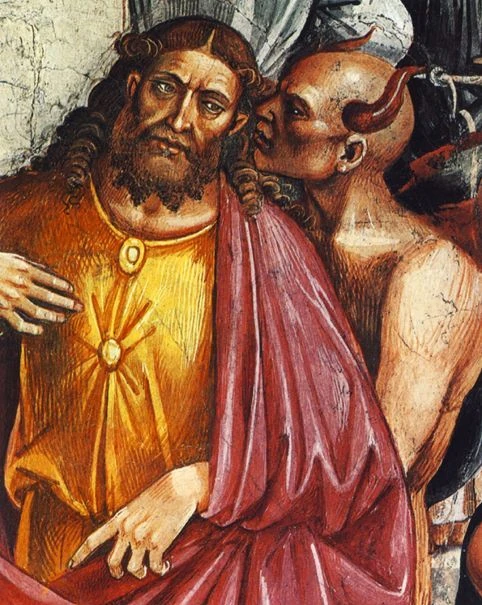
There are, of course, false prophets—those who claim to be inspired, but for ulterior motives. The gospel warns us of this, repeatedly. 

"Beware of false prophets, who come to you in sheep’s clothing but inwardly are ravenous wolves. You will know them by their fruits. Are grapes gathered from thorns, or figs from thistles? So, every sound tree bears good fruit, but the bad tree bears evil fruit. A sound tree cannot bear evil fruit, nor can a bad tree bear good fruit. Every tree that does not bear good fruit is cut down and thrown into the fire. Thus you will know them by their fruits."

I take “good fruits” to mean beauty; the alternative explanation that it means “good deeds” is inconsistent with what Jesus says soon after this, that one must do one’s good deeds in secret.

Accordingly, no doubt the Church, and certainly the individual believer, must respect and attend to the message of great art, of Shakespeare, say, or Dante, or Dostoyevsky; or the beauty of King’s rhetoric. God raises such prophets as the times demand

But one does not listen to the Spirit by breaking into small groups, as the synod proposes. Just the reverse; the artist always works alone. He is out in the desert eating locusts. He needs solitude, precisely to drown out all other voices.

The very voices the synod wants us to listen to instead.


Monday, November 06, 2023

Filial Piety


Yesterday’s mass reading:

“But you are not to be called ‘teacher,’ for you have one Teacher, and you are all brothers. 9 And do not call anyone on earth ‘father,’ for you have one Father, and he is in heaven. 10 Nor are you to be called instructors, for you have one Instructor, the Messiah. 11 The greatest among you will be your servant. 12 For those who exalt themselves will be humbled, and those who humble themselves will be exalted. – Matthew 23:1-12

“Do not call anyone on earth ‘father,’ for you have one Father, and he is in heaven.”

So much for “family values.”

This does not mean we must not use the word “father”; that would be trivial. It means we are all brothers and sisters. If any one of us finds themselves in the role of parent or teacher, we must understand this as a temporary contract between equals. And it brings with it an obligation to act in the best interests of the one temporarily in our charge.


Sunday, November 05, 2023

Gaza


“Have we not all one father? hath not one God created us? why then doth every one of us despise his brother, violating the covenant of our fathers?”

Malachi 1: 10; from today’s Mass reading.

I am wimping out if I do not take a clear stand on the current mess in Gaza. In most conflicts, contrary to the common cowardly and self-interested nostrum, one side is essentially right and the other wrong.

The Palestinians under Hamas began the present conflict, in particularly heinous and unprovoked fashion. Right is on the side of Israel.

One might protest that Israel is a “colonial settler state.” The Palestinian Arabs have a longstanding grievance: that their ancestral lands were taken over by Jews, largely coming from other countries.

I ask myself: How would I feel if I felt myself obliged to move because some other group had made my hometown inhospitable to me?

And I answer, I have had that experience. It causes me grief. I grew up partly in Montreal as an Anglophone. My family had roots there. Over time, Quebec has become inhospitable to Anglophones, and many have felt obliged to leave. It became hard for Anglophones to find a job. It would be difficult to get schooling in English for my children. 

Yet it does not seem to me to justify war or random murder. One picks up stakes and moves on; as have so many immigrants who come to Canada.

I also had to leave Gananoque, my second home town. I did not want to. But I could not complete my education there, and could not get a job.

Most people are used to having to pull up stakes and move on. And that is really all that is being asked of the Arabs. 

The Arabs—a culture actually founded on mobility.

And Palestinian Arabs have many opportunities near to hand; they are not some distinct ethnic group. Lands in which their own language is spoken and their religion established. Moving on to Cairo or the Persian Gulf for opportunities would seem natural in other circumstances. I myself moved to the Persian Gulf for opportunities.

So, other than antisemitism, I do not see the problem.


The End to War All Wars


I am left uneasy by a poetry reading I attended last week. There was no planned theme, but perhaps unsurprisingly, given events in Gaza, poems tended to focus on the horrors of war. My own contribution too, actually. What troubled me was how the moderator, summing up, suggested we were all, by saying war was bad, speaking out boldly to end war and change the world.

That, it seemed to me, was offensive. I cannot go so far as to say everyone agrees war is bad; the Fascists liked it. But it is the opposite of controversial to say so. By saying so, the poet is accomplishing absolutely nothing for anyone but himself, by washing his hands of the affair. Such a stance ought to be condemned, not praised. It is the stance of Pontius Pilate.

It further annoys me that people put such emphasis on killing civilians—as though it is perfectly okay that any number of soldiers die. The average soldier has no more control over war and peace than the average woman or child; killing him is just as wrong. Unless men’s lives don’t matter.

The necessary task is to propose how we might end this war, or war in general. Simply lamenting war is doing more harm than good: it gives succor to the aggressor.

In my defense, my own contribution proposed, in poetic terms, that all life is war until and unless we turn to God.

And that was a problem for those assembled: it violated “the separation of church and state,” one participant observed.

Not that “separation of church and state” is in the Canadian Constitution or Charter of Rights, or for that matter the US Constitution. And certainly not in Britain’s, which recognizes an established church. Not that that is a basic liberal principle that would have been propounded or recognized by John Locke. But all references to God or morality are now excluded from public discussion. Or rather, they are excluded unless you are Muslim.

Which is fatal to social and individual peace, because they are the solution to literally everything. And I mean literal in the literal sense.


Saturday, November 04, 2023

God Only Knows


Would have liked to see Paul McCartney in there.


From the River to the Sea?


Thanks to improved communications, the decline of British influence in the world, and the drive for multiculturalism, Canada has much less sense of self than it did even fifty years ago. Has the justification for Canadian independence of the US gone?

It was originally, of course, loyalty to British traditions and the British crown that drew that boundary. But now the British ties are not just nearly invisible, but generally scoffed at by the Canadian elite. Britain and the British crown are, after all, part of the “patriarchy,” of “white supremacy,” of “colonialism,” and all that evil nonsense.

For a time, thinkers like D’Arcy McGee strove to build our own unique Canadian culture. Now this is also condemned; government funding has been withdrawn from anything uniquely Canadian in favour of supporting foreign cultures resident in Canada. For local Canadian culture is now considered too “white” and a manifestation of “settler colonialism.”

So what rationale is left for not joining the US? Few outside observers would see two cultures on this continent; unless it is Quebec, and then everything else down to the Rio Grande. This is the usual justification for political independence: a distinct ethnic identity. 

Since the US is a democracy and a federation, Canadians would not be losing self-determination or self-government in any substantial sense.

A border is an expensive thing to maintain; having two countries means a huge duplication of effort.

At the same time, with unification Canadians would almost surely achieve a higher standard of living; many more career opportunities; better retirement opportunities. 

It would reduce or eliminate a chronic Canadian problem of things corporate, political, and cultural being controlled by a small cabal: the Family Compact, the “Laurentian elite.” This small elite is the party that benefits from Canadian independence of the US, and consequent restriction on American ownership and participation. Historically, and especially at present, they have not served us well.

Really, unless we are prepared to end multiculturalism, invest in Canadian culture, and bust some social trusts, American assimilation seems inevitable.


Friday, November 03, 2023

Get Thee to a Nunnery


Greg Gutfield and the crew attempt to tackle a growing current problem: what to do about the homeless?

The same issue arises in my current classes on “The Glass Menagerie.” Laura, in that play, is the type: the type who end up homeless. Surely this is her likely fate, once her mother dies. 

How then could she escape her glass menagerie?

Psilocybin is snake oil. I think Gutfield comes closest to the solution when he says, get them out of the cities. Get them out of their current situation, which, as with Laura, is driving them mad. Madness is situational. It is a rational response to an impossible situation.

This would not be a matter of involuntary confinement, a violation of their human rights. You might say, and it would be true, that some people living in tents do not want a proper apartment. Offered shelter, they refuse to move. 

That is because they fear being trapped by “the system.” They want to opt out.

In other words, get them out into the countryside. These tent people are doing their best to simulate that in the city. Give them a bus ticket, and a permanent room in a motel at the edge of some small town, and leave them alone, and they will be delighted.

Consider Tom, in the play. He understands the imperative need to get away—he imagines joining the merchant marine.

Laura, by contrast, seeks to escape into her imagination, with her “glass menagerie.” This is the path to “psychosis”; to imaginary things becoming real. An opting out of the world as a whole.


The immediate need is more specific: generally to escape from a manipulative and narcissistic parent, who views their children as extensions of themself. This, however, develops into a mortal fear of “the system,” as with Tom, or, in Laura’s case, a mortal fear of life in general.

The need is to “get away from it all.”

We used to know this; and we used to have many fewer mentally ill. The original asylums, built at the beginning of the 19th century, were intended to be in tranquil rural settings where the agitated could simply have a restorative rest. In other words, true “asylums.” The New Brunswick Asylum, put up on the 1830s near where I write, was a prime example. It was on a piece of high ground outside the city, within soothing earshot and sight of the scenic Reversing Falls. It had an attached farm which the inmates worked; others did handicrafts. The spot is now a park. In Kingston, the asylum was built along the waterfront, again away from the city. The site is now, again, a park.

These original asylums had a cure rate of something like 80 to 90 percent within a year. Yet they devolved into the supposed “snake pits” that we closed down in the 1960s, in favour of throwing all our Lauras out in the street to freeze or starve.

What happened?

In the mid eighteen hundreds, “scientific” psychiatry began to emerge and to take over the asylums, turning them into “mental hospitals.” Rather than being left alone to sort out their troubles, the inmates of these institutions began to be poked and prodded and ordered about, experimented on and, in effect, tortured, in accordance with the latest “scientific” methods. We got the horrors of hydrotherapy, lobotomy, straightjackets, shock treatments, and the rest. The patients were subjected to the very same sort of bullying, objectification, and manipulation that had driven them mad in the first place. Mental illness became, for the first time in history, incurable. 

Because people stopped getting well, these “hospitals” grew overcrowded, and conditions further deteriorated. As the cities spread to surround and enclose them.

Granted, simply getting people homes out in the countryside is not necessarily going to be enough. This is only removing them from the source of the problem. They will be left with trauma. 

But why did we need to build these large asylums in the 19th century in the first place? What happened to the mentally ill before then?

Before then, we had monasteries and convents in the countryside. A child from an abusive family, or a child rejected by their family, could go there.

Picture Laura again: isn’t this the one plausible happy ending for her? To become a Carmelite nun?

A monastery can replace the faulty programming by a narcissistic milieu with new programming, true programming.

And the postulants are otherwise left alone to sort things out.


Thursday, November 02, 2023

Tumbling Walls


Joshua fought the battle of Jericho; and the walls came tumbling down.

No doubt the Biblical story is not literally true. But it presents a spiritual truth: obstacles that seem insurmountable can and often do suddenly disappear. And when they fall, they fall from moral force. 

We saw it in the Nineties when the Berlin Wall came down. We saw it in the Sixties when the British Empire withdrew from every dune and headland without a war.

We are seeing it now with the Trudeau Liberals. 

A year ago, they seemed frustratingly invincible, no matter what the scandals or incompetence. The Conservatives seemed always to hit a vote ceiling; and the NDP would support the Liberals if they fell short. And the Liberals were taking full advantage of their power to stifle dissent.

Then suddenly this summer, something clicked. Were a vote held tomorrow, Poilievre is projected to win the third-largest majority in Canadian history.

I think we are seeing the same phenomenon with wokery in general, aka postmodernism, DEI, gender ideology, SOGI, etc. We saw the sudden collapse for Bud Light, which was the biggest beer brand in the States. Now a collapse for Disney, which only a few years ago seemed to be buying up everything in entertainment. I think we’re about to see a similar collapse in China, touted for years as the inevitable future world hegemon.

It even seems the biggest, most formidable-looking things are most likely to collapse. 

Marshall McLuhan used to call it the “dinosaur effect”: that a thing reached its apparent largest extent just before collapse.

But the better analogy is, again, in the Bible: the Tower of Babel. Given success, people are prone to become over-confident and over-extend. Prestige and momentum lets them live on fumes for a while. But when it catches up with them, it is sudden.

And I think wokery has been overreaching enormously. Sudden collapse is inevitable. If we are not there yet—the fog of war makes it hard to be sure—we will be there soon.

This segues naturally into a second great truth, that I always repeat to my students: if you never give up, you never lose. No matter how formidable the obstacles, failure is always a choice you make. Sooner or later, every wall falls.

It was this secret that built the Roman Empire. Pyrrhus of Epirus soundly beat them twice; and then, because the Romans refused to accept these defeats, was forced to withdraw. In the Punic Wars, the Romans built a fleet to challenge Carthage at sea; the whole fleet was sunk. They built another fleet. It was sunk. They built a third, and won command of the sea. So Hannibal crossed the Alps on land, and defeated the Roman army repeatedly on their own soil. He wiped out the entire army. The Romans retreated behind their walls, mustered another army, then sallied forth.

But they won because they crossed the sea, landed army, and threatened Carthage. Carthage sued for terms. In the same situation in which the Romans would not surrender.

It was this same secret that built the British Empire. As at Dunkirk, their superpower is retreating in good order. It has been said, “the British lose every battle but the last.” 

The British took Quebec when they should not have, and the French lost Quebec when they should not have; because, when the British lost the Battle of Carillion, and most of the other battles early in that war, they did not give up. When, in their first attempt on the citadel at Quebec, they lost the battle at Montmorency Falls, they did not give up. When, after taking Quebec, they lost the Battle of Ste.-Foy, they did not give up. They just tried again.

 But when the French lost the relatively smaller Battle of the Plains of Abraham, they broke in disorder, surrendering the crucial strongpoint.

This is also how Ulysses S. Grant won the Civil War. At Shiloh, he was defeated on the first day. He counterattacked on the second, and won. On his progress through Virginia, towards the end of the war, he fought battle after battle indecisively at best—and just kept advancing.

It’s a simple trick; and it works. As Woody Allen put it, nine tenths of success is just showing up.

The only problem is, it may not seem or be worth it. Surely it is often not worth it if it is just a matter of getting something for yourself. This is where moral force matters. Rome stuck it out because the Roman method of battle reinforced moral consciousness: each man defended his neighbour, not himself. By contrast, Carthage was fighting under the heavy guilt of ritual child sacrifice. As were the Canaanites in Jericho.

The British were historically buoyed by being relatively democratic and egalitarian; they were therefore able to fight as a team. The Empire faded, in turn, when they began to doubt the rightness of their cause, under the moral force of Gandhi.

Something worth remembering in life; and something worth remembering in these times when the world around us seems to have gone mad.