





 Posts


Showing posts with label atheism. Show all posts
Showing posts with label atheism. Show all posts
Friday, May 08, 2026


Tuesday, October 28, 2025
Atheists in Their Own Words
 |
| Mother Nature: Traditional Indian conception |
Honest atheists often understand that, rather than believing in no god, they worship “Mother Nature,” aka Gaia. They personify nature, imagine it is imbued with a will, and is all-powerful. Ergo, God. But what is the difference between this and the Judeo-Christian God?
A recent correspondent gives us some idea. He neatly if unintentionally refutes the typical atheist argument that the belief in an afterlife is wish fulfillment. He writes that as an atheist, “You don’t have to think about your death, because there is no hell, just like there is no heaven… I don’t think I will fear death as religious people do.” Atheism is wish fulfillment. If there is no God, as Nietzsche pointed out, you can do whatever you want, and need not fear punishment.
The essence of nature is amorality. Animals operate on instinct. The essence of morality is to sometimes resist our natural urges.
But this “atheism” is whistling past the graveyard, the logic of the ostrich with his head in the sand. “If I don’t believe in God, he won’t hurt me.” That’s like saying “gravity doesn’t apply to me if I refuse to believe in it.” And jumping off a cliff.
One form of this “nature-worship” atheism is adulation of an imaginary aboriginal religion of nature worship. Christianity came in and ruined this peaceable kingdom, in which the lion lay down with the lamb. “I believe that the First Nations were correct. They saw the holiness of life in all things - -spirit (Great Spirit) existed in the bear, the wolf, the bison, the tree etc. They didn’t attempt to conquer or manipulate the spirit but worked to live in harmony with the Spirit.”
Of course, this is a fundamentally Christian idea: that of original innocence in the Garden of Eden. It has nothing to do with the actual life of actual Indians. They saw the spirit world as mostly hostile to mankind. And they had no concept of conservation or ecology. It is the Judeo-Christian tradition that sees nature, the physical world, as holy, because God speaks to us through his creation. To most other cultures, including the native Indian, the physical world is ephemeral, only secondarily real. It is not that the spirit exists in the bear; it is that the bear really only exists in the spirit. The physical bear is just food.
Another recent atheist acquaintance avers that it is wrong to “categorize and label.” And this too I have heard before; it is a common sentiment among unbelievers.
An odd sentiment, on its face. There is another word for categorizing and labelling: thinking. Thinking goes beyond this, but it must start with this, with defining terms. Refusing to think is not a good idea.
Consider the analogy of the eye. This is like saying it is wrong to put on your glasses and see things in focus. Best to leave it all fuzzy and vague.
Why and when would this be best? When there is something you are trying hard not to think about. Remember the wisdom of the ostrich.
“This is the verdict: Light has come into the world, but people loved darkness instead of light because their deeds were evil. Everyone who does evil hates the light, and will not come into the light for fear that their deeds will be exposed.”
Another common atheist trope is to see God as some form of impersonal “energy.” “Mysterious, nameless, pure love ‘energy’ inside me and everywhere.”
This, as William Blake pointed out, is an inadequate concept of God. The human mind can conceive of nothing greater than a perfected human being. “Consider a cloud as holy; you cannot love it. But picture a holy man inside the cloud, and love springs up.”
Imagine a source of energy—say a fire, or a battery—next to a human being. Which do you see as more important, more worthy of your interest and attention?
Suppose you had to throw the person into the fire to keep it from going out. Would you do so?
Conceiving God as “energy” running through you is conceiving of him as less than you.
You are thinking of yourself as God.
This is always the bottom line. Welcome to the garden, Eve.
Wednesday, May 28, 2025
The Third Great Awakening?

I think it’s time to declare it: a religious revival is underway. An American Pope could help.
Joe Rogan is the latest big celebrity to cross over. And his influence is great. He joins Jordan Peterson and Stewart Brand in publicly converting from atheism to Christianity. Other recent public converts: Candace Owens, Shia LaBoef, Denzel Washington, Gwen Stefani, Ayaan Hirsi Ali.
Add to this a number of prominent and intellectually able YouTube personalities making the case for religion generally and Christianity in particular: the Daily Wire crew, Ben Shapiro, Andrew Klavan, Michael Knowles, Matt Walsh. Bishop Barron, William Lane Craig, Trent Horn, Matt Fradd, John Lennox. There is a public debate going on; there has been since the rise of the New Atheists. And in that public debate, the atheists are losing.
I note too the growing success of Christian media: “The Chosen,” Angel Studios. Hollywood is withering, pop music is withering, Disney is withering, at the box offices and on the balance sheets, and a Christian counterculture is rising.
9/11 might have been the first move in this current cycle. It inspired the New Atheists, on the premise that religion leads to violence. This then provoked in response the rise of a new Christian apologetics, publicizing and popularizing all the arguments for God. Aided mightily by the existence of the Internet. Meantime, mass immigration and greater familiarity led to a popular perception that the problem was with Islam/Islamism specifically. Islam would not be satisfied with secular humanism; their beef was not with Christianity alone. Both would have to be replaced by Islam. It was thus not possible to be neutral between Christianity and Islam and pretend to be above the fray. Either you believed in Christianity, human equality, and human rights, or you went with Islam and sharia law. There was no secular third option.
Monday, December 23, 2024
The Two Kinds of People

There are, in this world, two kinds of people: those who accept the existence of God, and those who try to deny it. Never the twain shall meet; these are perfectly incompatible views, like humans and zombies. The instant you accept the existence of the absolute, it is necessarily of absolute importance. Those who do not see it are, at charitable best, insane. They are not in the conversation.
Deniers, similarly, cannot tolerate believers. Ultimately, the existence of God is certain and accessible to reason. To deny God is therefore to turn from God, to dodge the truth.
People turn from God because they are conscious of doing wrong, or want to do wrong. They don’t want to accept the existence of divine justice. They want to get away with it; like Adam and Eve hiding in the bushes. Religion is a “religious dictatorship.” Anyone who asserts the existence of God, genuinely claims to believe it, is a threat to them, and must be shut down. Churches burned, Christmas markets attacked.
The most obvious tactic is to infiltrate any convenient religious body themselves, and seek to subvert it. This is the Pharisee gambit; they are common in every religion. I became all too familiar with them studying religion in grad school. Within the department, you gained approval by saying the most outrageously skeptical and irreligious thing. The sincerely religious were mocked as ignorant.
I thank God I escaped that. But it was not easy. Most higher education is cult-like.
Saturday, August 10, 2024
Thursday, June 27, 2024
The Revolution Has Begun
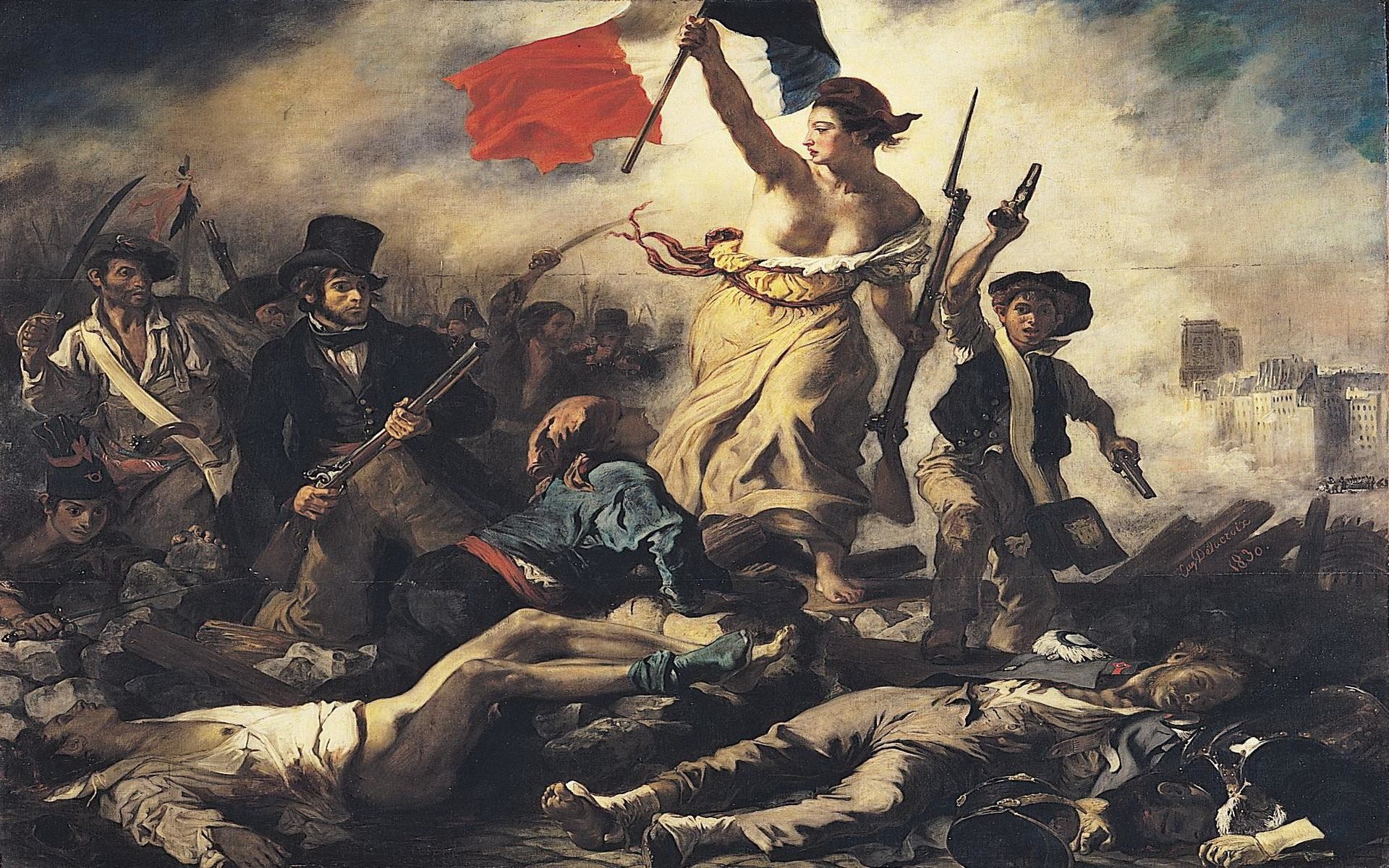
Things are coming unglued for the ruling elites. People no longer trust them. This is largely due to the growth of social media: they can no longer force discussion and information within prescribed bounds. This is of course why they have been censoring so openly recently. But that has always been a rear-guard action.
We saw a somewhat similar ungluing back in the 1960s, prompted I think by the nuclear threat and the Kennedy assassination. People began to suspect that idiots were in charge. Or dark forces.
And that, for those of us who remember, was a time of chaos. Reagan, Thatcher, and Pope John Paul II put things back together.
But this is bigger.
The evidence coming out that the establishment and establishment media lied about everything during the Covid pandemic seems to have been a watershed. Yes, it did leak from a government lab. Yes, it was lab-created. Yes, it was funded in part by the US government. No, wearing masks was not effective. No, social distancing was not effective. No, the vaccines did not stop the spread. No, they were not safe and effective. Yes, ivermectin did work against the virus. Yes, the jump in mortality rates since is due to the vaccine.
Even at the time, the pandemic seemed to me like a flash of lightning showing us all where the zombies were.
Who will ever trust government again?
Now all heck is breaking loose. The woke are waking up.
Mass immigration used to be a third rail issue. Nobody dared object, because they would be called racist. Trump broke the seal with regards to illegal immigration in 2016. Now it has spread to legal immigration as well. It is a key issue in Europe, looking as though it will bring down the governments of the UK and France within the next few weeks. In Canada, Pierre Poilievre has finally calculated it is worth saying, in French and in Quebec, that he will lower immigration levels. Until now, he had been sidestepping the issue.
“It's going to be much lower, especially for temporary immigration. It is impossible to invite 1.2 million new people to Canada every year when you build 200,000 homes. That's impossible. There is no room. Quebec is at the breaking point.”
People are now also speaking openly against multiculturalism, defying the inevitable accusations of racism. Only a few years ago, Don Cherry was fired for saying everyone should wear the poppy. Now Rishi Sunak is being condemned everywhere for leaving D-Day ceremonies early. How could he? That is some measure of how much how quickly the political climate has changed.
Even though, awkwardly, disastrously, multiculturalism is enshrined in the Canadian constitution.
“Climate change” is the next likely pin to fall. It was always an improbable claim. It was always based on “computer modelling,” not scientific evidence. Thirty years ago, when the average member of the public still imagined computers were magical, this sounded compelling. We are more sophisticated about computers now. The general public is also realizing that “fighting climate change” through ever growing taxes and regulations is costing a lot of money with no visible results, in a difficult economic time. It increasingly looks like it always really was: a power and money grab by the government bureaucracy.
I think the edifice of feminism is crumbling fast as well. It is now unfashionable on the left, who want to sacrifice it to trans rights, with which feminism conflicts. Others are seeing the effect of feminism in declining birth rates, declining marriage rates, men opting out of all relationships, and growing legions of bitter middle-aged women feeling deceived. There is worse yet to be uncovered.
Confidence in the public school system is already gone. Confidence in the academy is crumbling. Confidence in the objectivity and reliability of science itself is going. Peer review, we discover, does not work. Only certain areas of investigation get funded. Experiments are never reproduced, and when someone tries, they can’t be. Scientists are no longer looked on as semi-divine beings and moral examplars above suspicion of ulterior motives.
I suspect most importantly, atheism, which had become increasingly fashionable over the past 150 years or so, is crumbling. Darwinism, its modern intellectual underpinning, is crumbling. Freud and scientific psychology, religion’s intended “scientific” replacement, has already been pretty well discredited. This is the biggest and most far-reaching revolution currently underway.
Or maybe it is just me.
Friday, March 29, 2024
The Atheist and the Problem of Evil

I had an interesting conversation today with a thoughtful student in China. His view is not necessarily commonly shared in China; but it is interesting to see how an atheist, without Christian influences, thinks about morality.
His initial premise is that human nature is evil. We are animals. As animals, we are only programmed for survival. The example he uses is this: there is one bottle of water. Two people want it. If necessary, in nature, one will kill the other to take the water. This is evil.
The process of education is the process of making us “good.” Or rather, we do not really become good; our hearts, or desires, are still animal. But we are taught to behave differently in order be able to cooperate with other people, to fit into society. For one thing, this is necessary in order to find a mate and reproduce. It is also necessary so that society as a whole can function, without descending into chaos. The herd them protects each member.
It all makes good sense to me.
Except for this: now by what standard do we judge any action either “good” or “evil”? Why, to begin with, is individual survival good?
Would we agree that it is perfectly moral to steal the bottle of water, so long as nobody sees you? Would we agree that, if one person or group can indeed benefit themselves by destroying another, this is a perfectly righteous thing to do?
It all seems to require an absolute standard of good and evil; and where does that come from?
How can atheists even raise the problem of evil, without any standard for determining what is evil?
Friday, March 15, 2024
Richard Dawkins Is Right
Richard Dawkins, celebrated atheist, makes an important point. If you call yourself a Christian, attend church, and say you believe in Jesus and God simply because you were brought up to do so, it is meaningless. You are not a real Christian. Any more than you can become a real Buddhist simply by being raised in a Buddhist milieu. Salvation is individual.
Salvation comes not from saying the name “Jesus,” but from seeking truth and seeking to do what is right.
Jesus said “I am the way, the truth, and the life.” In other words, to follow Jesus, you must follow truth, and follow his way. Simply mouthing “Lord, Lord” is of little significance.
One must sincerely seek truth wherever that leads.
The real Christian must and will make themselves aware of what Jesus actually said and taught—they must read the gospel. They must make themselves aware of his way and his life.
The Christian claim is that, if anyone sincerely does this, undertakes this study, they will know in their heart that this man was whom he said he was, and his teaching is correct. The words will speak to them.
This is what confirmation is supposed to be about; or adult baptism, in the Protestant tradition, or being “born again.” One must be personally convicted.
A sincere Christian ought also to acquaint themselves with alternative philosophies: with Marxism, Freudianism, feminism, existentialism, Islam, Judaism, Buddhist, Hinduism. One is not seeking truth if one wears blinders. They must honestly consider and judge the plausibility of each. A sincere and ethical atheist is a better Christian than a nominal Catholic. The latter is merely a hypocrite.
And a sincere Christian will recognize a sincere Muslim, or Buddhist, or Hindu, or Jew, as a brother.
Monday, February 19, 2024
They Can't All Be Right
| Bahai Temple, meant to express architecturally the concept that "all religions are one." |
One line of attack beloved by atheists is to point to the multiplicity of religions, and argue that since at a minimum all but one must be false, the obvious and only rational conclusion is that they are all false.
Most people are Christian, they will go on to say, simply because their parents were Christian. They have no better reason. Were they born in India, they would be just as certain that Hinduism was true; born in Japan, they would be Buddhist; in Egypt, Muslim.
Perhaps fair—for those who are only nominally religious. For those who are actually religious, the question is never whether you are Christian or Hindu, but whether you are devout.
But why limit this argument to religion? There are a multiplicity of governmental systems. Aside from liberal democracy, there is absolute monarchy, Communism, Fascism, oligarchy, aristocracy, military junta, anarchy, dictatorship, syndicalism, and so forth. All but one of them must be wrong. So the obvious conclusion is that they are all wrong. Most people in Canada or the US believe in liberal democracy only because they happen to live in a liberal democracy, and do not know any better.
Somehow, when applied to anything other than religion, this argument does not sound convincing. We do, most of us, feel confident that we have all the information necessary to make an objective judgement on any other matter: for example, that liberal democracy is the best of these systems. Others, of course, may opt for one of the others.
The argument works only if you start from the presupposition that religion is false.
And perhaps from the false presupposition that “no religion” is an option. Just as “no government” is not a realistic option, we cannot really live without some rules imposed on our behaviour. That is what “religion” means: a “binding.” We need, in the end, to have a purpose. “Atheists” simply find their purpose in some god they do not call God: “Nature,” or “Science,” or “Psychology,” or Marxism and dialectical materialism, or Freudianism, or Ecology, or Climate Change, or Evolution. Or self.
The question is whether their formulation is better than any of the traditional ones.
There is, after all, far greater consistency among conceptions of God as Yahweh, Allah, Brahman, Gitche Manitou or Ahura Mazda, mostly only the words for “personal supreme being” in different languages, than there is among the various faiths and gods worshipped by atheists.
They can’t all be right.
Sunday, November 19, 2023
A New Hope
 |
| William Lane Craig |
Here’s cause for hope. While the postmodern sacred chaos seems all-conquering in the academy, and marching through the culture—something else is happening at the cutting edge of research in departments of philosophy and of physics. There, it looks as though the arguments for atheism have collapsed. The “New Atheism” had a strong popular run recently, but that seems only to have brought the issue, and the true state of affairs, to broader attention.
And the New Atheism has fizzled. It has fizzled in part under the greater scrutiny all ideas can receive in our information age.
Philosophy is traditionally considered the queen of the sciences: the most advanced academic degree is thus “Doctor of Philosophy.” Similarly, among the materialists, physics rules. And these two, according to William Lane Craig and others, have turned to the “God hypothesis.”
Even neo-Darwinism seems to be in retreat in biology departments. Although the claim was never strong, Darwinism was in the popular mind the main argument against theism. Darwin’s theory, and its proponents, largely kicked off the currently fashionable atheist religion of scientism.
But the intricacies of the genetic code, the need for “multiverses,” a gross violation of Occam’s Razor, to avoid postulating some higher power in physics, and the bizarrely narrow and specific set of circumstances that allow for life in the universe, have forcefully reintroduced the argument from design that the atheists thought Darwin had circumvented.
And if you don’t like that argument for God’s existence, as Craig has quipped, “I have others.”
Thinks move glacially in academics. Once a new truth is established, it takes at least a generation for it to percolate down to undergraduate level—let alone the high school texts, and the general consciousness. I just saw a post on Facebook teasing the revelation that Columbus was not the first European to discover the Americas. There are even still Freudians about. For the direction in any field to change significantly, the current generation of faculty members, who have built their reputations on the prior paradigm, has to die off. People rarely admit mistakes.
But we can perhaps now see the future, and it is divine.
We must just hope that not too many more churches be burned or torn down from within before we get there.
Friday, August 11, 2023
The Devil As a Way to God
J. P. Sears has an interesting take on his conversion to Christianity. He says he started believing in the Devil before he started truly believing in God.
The presence of evil-and Satan, the source of evil, he says, is becoming ever more apparent. Lean away from evil, and where are you leaning?
So for Sears, accepting the reality of the Devil came first. Perhaps recognizing evil is a necessary step to true belief in God. Without it, you may have a nominal, lukewarm belief. But a belief without urgency is not a true belief. In fact, according to the Bible, it is better to be an atheist than a lukewarm Christian. Perhaps because that is more sincere, and shows you care about the issue.
“you are neither cold nor hot. I wish you were either one or the other! So, because you are lukewarm—neither hot nor cold—I am about to spit you out of my mouth.” Revelations 3: 15-16.
But Sears has another revelation.
“Anyone who wants to control you purposely pulls you away from God.”
They do so, he says, because their control is always based on fear. The ultimate fear is fear of death. Sears cites the climate crisis: do this or we’re all going to die! He cites the covid panic being used to justify totalitarian measures.
And those who believe in God, and an afterlife, are less afraid of death, and so harder to control. This is why totalitarian movements always reject religion, even persecute the church and the religious.
But Sears is missing a trick. Christianity and its separation of church and state—thee state, after all, crucified Christ—makes this difficult, but in nations where other religions are dominant, the better tactic is to identify God’s will with that of the totalitarian state. Then the dissident has even greater reason to fear: he goes to hell. This is common in Islam—see Iran. It is arguably why democracy has been unsuccessful in those lands.
It is easier for narcissistic parents. Christianity is not so clear on the separation of church and family. It is there, but the average person actually thinks Christianity and “family values” are more or less synonymous; and that the commandment to “honour thy father and they mother” is without limists and imposes no obligations on the parent.
So it is relatively easy for the controlling narcissistic parent to convince the child, not that there is no God, but that there is, and God hates them.
This explains too why narcissistic parents will invariably put their children into moral dilemmas or encourage them to do immoral things. This explains why they will scapegoat the more moral or dutiful child. They want to convince the child that God is on the side of the parent, and total obedience is essential.
This is again why Jesus, in the Gospels, considers moral misdirection the essential form of child abuse.
“If anyone causes one of these little ones—those who believe in me—to stumble, it would be better for them to have a large millstone hung around their neck and to be drowned in the depths of the sea. Woe to the world because of the things that cause people to stumble! Such things must come, but woe to the person through whom they come.”
“Mental illness,” CPTSD, is the result of this moral misdirection. The way out is first to plainly see evil as evil, as Sears suggests, and pull away. Too many are trapped here by a fear of God, because they have been taught to identify God with the autocratic parent.
In such a case it makes sense to first recognize the devil, the spirit of evil, and pull away from him. And you find God as a result.
Thursday, February 23, 2023
Spirituality without Religion
 |
| Pan: Father Nature |
I fell recently into a Zoom discussion on spirituality among avowed atheists. Their challenge was that they found themselves experiencing odd emotions, when, for example, walking through a forest or seeing a sunset. They were discussing among themselves what words to use to express such things. They called it their “spirituality.”
I was fascinated to listen, since I have never knew what people meant by “spirituality” as distinct from “religion.” I do not think they were expecting anyone else at the meeting to be religious, although I think one other participant was. He had a thick accent which I could not place. Otherwise, surely they were being impolite to discuss things in this way, as though religion were out of the question.
One asked, “can there be negative as well as positive spiritual feelings?”
I offered, innocent at this point of their ground rules, “Obviously yes. People speak both of God and the Devil; of heaven and hell.”
This was immediately rejected. “We have to avoid using religious terms.”
“But why?” I asked. “These terms have been established. Why do you need to reinvent it all from scratch? I take it that you do not want to believe in the existence of any metaphysical beings, but then you can understand it all as symbolic.”
“No, no symbols. We can’t allow any symbols.”
Another participant chimed in soon after, although not immediately after, that panic was a negative spiritual feeling. It came, he noted, from a supposed encounter with the god Pan.
And everyone seemed to accept this.
“Wait,” I inserted. “You broke the rule. Pan is a metaphysical being.”
“No no. I was only using him for explanation.”
My point about symbols exactly. Although I did not pursue it, the problem here was evidently only with the Judeo-Christian God. He who could not even be mentioned. Along with the Devil. Pagan gods were fine. An anthropomorphized and deified Nature or Earth or Ecosystem or Environment was fine.
I asked one participant what their position on religion was more specifically. Why avoid all mention? Did they believe all religion was bunk, or is it that they were not interested, or that they just had not found one that rang true for them--yet?
I got no straight response; only what seemed a deflection. He asked: “How is it that God spoke to us two thousand years ago, then stopped speaking to us; at least, to most people?”
I tried to respond: who thinks God no longer speaks to us? Certainly Pentecostals, Catholics, Mormons, think he still does. But only some of us are listening. The Bible is sufficient for salvation and complete, but that is a different issue. Eternal truth does not change.
At this point another guy cited Dawkins and brought up the problem of evil: “how can you believe in a God who allows children to be born with some genetic defect, then suffer and die young?”
I pointed out that there was thousands of years worth of learned philosophical response to this among the world’s religions; it obviously occurred to everyone. But there was far too much material to go into here in detail. I pointed first to the Christian response: we do not know that physical pain or death is evil. The one thing we know is evil is moral evil; and all moral evil is from man. Eve, meet apple. The sufferings of life, including the physical sufferings, are a result.
Then I cited the Hindu response; the theology of play. Suppose you are playing a baseball game, and the third inning is going very badly. You do not feel good about it. Even so, you win the game, and somehow, you forget the terrible griefs of the third inning, and decide it was actually fun, and you want to play again. Even when you actually lose the game, it is still fun, and you want to play again.
Now suppose you were playing a baseball game in which every pitch was a home run, and you could not lose. Fun? No.
I did not then, but I should have also cited the example of a film or novel. We actually want to see dangers and sorrows. We are not happy with a story in which nothing bad happens.
Pain exists because without it, pleasure would be meaningless to us.
I’m not sure whether anyone got this. It did not seem to provoke a response.
Another guy—I think it was about the problem of evil—started by saying that nature is actually red in tooth and claw, and without this constant strife, we would never have evolved.
And, he concluded, if we all died tomorrow, nature would go on without us. That is the one thing we know for sure.
I’m not sure where he was going with it, but I had to challenge that last statement. It is, at a minimum, not something we know for sure. I suspect it led on to a worship of Nature as some eternal being and ground of the real.
“That is, if you reject Berkeley. And nobody has been able to disprove him.”
“What does Berkeley say?”
“If a tree falls in the forest, and no one hears, did it make a sound? To be is to be perceived by some conscious being. If we did not exist, and God did not exist, nothing else would exist.”
I think that one, too, sailed over their collective heads. It was ignored.
Then someone said something that made me think the real issue was the supposed need to defer to God. The problem was with worship. I cannot recall his words, but that is how I summarized them to him.
Another participant, a woman, spoke up. “If God really is omniscient and omnipotent, and made all things, he should not demand things from us. He doesn’t need anything from us.”
I chipped in: “but what if it is not something he demands, but something he deserves. Do you feel the same way about respecting your parents?”
That seemed to blindside her.
“My parents were terrible.”
“But as a general principle. Not all parents are awful, are they?”
“I can’t answer that unless you define your terms. I don’t know what those words you’re using mean.”
I think I saw here an example of what Scott Adams calls “cognitive dissonance.”
“Which words?”
“God. Parents.”
“I’m using the dictionary definition of parents. I’m using your definition of God. You said it: omniscient, omnipotent, and made all things.”
Someone else said something here in the chat: “That’s a deflection.”
I think they meant the woman I was speaking with, not me.
But the woman I was speaking with disappeared from the Zoom call at this point, without saying goodbye.
I think that means I won my point. I wonder if the topic will come up again next week?
So what have we learned?
I believe there are no atheists. There are only people who do not want to acknowledge any obligations to God or to their fellow man.
Tuesday, December 28, 2021
How Do I Know Which Religion Is True?
There are so many different religions. How do we know which one is true?
This, C.S. Lewis says, prompted his own adolescent atheism. It is a problem still posed by the new atheists: “You don’t believe in Zeus, do you? You yourself are atheist about a thousand gods. So why arbitrarily believe in this particular one?”
It is, in part, Lewis notes, a false problem. Because it is always the case that, on any given topic, only one theory will be true. The rational conclusion is not that they are all false.
What remains is how to decide that X is the correct theory, and not any of the others.
Let’s do the exercise.
Begin with paganism. Dawkins and the like are ignorant to claim that Christians do not believe in Zeus and other pagan gods. We do. But they are amoral and ill-disposed towards mankind. Real pagans will agree. They are, in other words, ambient spirits, daemons, genii. The great thing about our god, Yahweh is that cleaving to him alone takes care of possible harm from them.
And the proof is in the pudding, and was historically: when was the last time you were demonically possessed?
So sticking with paganism when Christianity is on offer is like seeing your house in flames, and refusing a fire extinguisher. Paganism is simply untenable, and melts like the winter snow, wherever Christianity appears.
What about Judaism? A Christian has no reason to argue against Judaism: Jesus didn’t. Judaism is a covenant between Yahweh and the Jews. It remains in force; God does not break promises. But Christianity is the covenant offered to all mankind; there is no Jew nor Greek in Christ. So if you are not born Jewish, why not embrace it instead, while continuing to honour and enjoy your own cultural traditions? Even leaving aside the good news of the incarnation.
What about Buddhism? Buddhism properly has no cosmology, and no dogma. The Buddhist dharma or “truth” is a set of spiritual practices. You do them, and experience reality for yourself. There is no call for a Christian to agree or disagree. One can, as Leonard Cohen demonstrated, be both a devout Jew and an ordained Buddhist monk. Just as anyone in China can be at the same time a Buddhist, a Taoist, and a Confucian.
Hinduism is similar. It is simply a selection of hypotheses about the divine. It has no dogma. A Christian is free to agree with some things and disagree with others, just as is a Hindu. I read the arguments, and come down on the side of the devotional Vaishnavites—the Krishna cycle looks to me like a hypothesis of the Christ. Ramakrishna’s argument for devotional monotheism, “I want to taste sugar, not to be sugar,” I find powerfully persuasive.
Confucianism is a moral code. I can, as a Christian, endorse it completely.
Leaving the pachyderm in the smoking room: Islam. Here there needs to be a straight choice. Either Islam, with its insistence on the indivisibility of God, is right, or Christianity is with its Trinity and incarnation. For Islam arose more or less in direct dissent from Christianity, after it.
A Turkish tour guide volunteered to me that Islam has the best claim to truth, precisely because it arose after all the other major religions. Like science, religion has progressed.
But, as I did not respond, not wanting an argument, by this standard, Islam too must defer to Bahai, or Sikhism, or Mormonism, all of which arose after Islam. And, of course, if truth keeps progressing, this necessarily means we never arrive at truth.
There is something to be said, instead, for the test of time. Most recent is not best in the Humanities generally: Stan Lee is not proven to be better than Shakespeare because he wrote more recently.
If the argument is that these more modern faiths are less likely to be true because they are so much smaller than Islam, then size becomes the standard. And Islam must cede the field to Christianity, which has twice the number of adherents.
It seems reasonable at first thought to suggest that unity is a necessary essence of the godhead; but, as Hindu philosophers too have realized, unity is meaningless without diversity. And a God that did not include both in his own essence, is therefore not a supreme being. He is an incomplete being.
A Muslim will cite the Quran as authority that God is one and indivisible. But that is of course circular: one accepts the Quran’s authority only if you are already a Muslim.
The Muslim will respond, perhaps, that the supernatural beauty of its language, and its ability to accurately prophesy subsequent science, serves as proof of the Quran’s divine origin. I have seen the short monographs repeatedly making this argument.
I cannot judge for myself the beauty of the language, not reading Arabic. While beauty is an aspect of the divine, I think we all accept, including Islam, that the Devil too can use beauty for his purposes. Consider the image of the female “vamp.”
 |
| Lilith, the lovely mother of demons. |
And if its ability to accurately prophesy things it cannot know by natural means is the test, surely it is disproven if it is inaccurate on things it could know. For example, the Quran is under the misapprehension that the Christian Trinity is Father, Son, and Virgin Mary. It further apparently thinks that the mother of Jesus was Mary, the sister of Moses.
William Lane Craig bases his rational Christianity on the empirical evidence for the resurrection. I can agree with him that in historical terms the evidence for the resurrection is strong. But that still feels to me faint praise: the empirical evidence for anything in the ancient world is slight. The last two mass readings, from Luke, speaking of Jesus’s birth and childhood, both include the note “Mary pondered these things in her heart.” This is a reminder that everything we are reading here depends on only one witness, Mary. Not strong evidence in court. While the evidence for the resurrection is much stronger, it is still surely open to forgery over the ages.
My thinking instead is as follows: first, it is undeniable that God exists. This can be proven in a dozen different ways, with a dozen sound logical arguments. Second, God must by definition be all good. Third, an all-good God would not leave us without guidance. He would want to incarnate among us to show himself to us. He would, fourth, not hide the truth: he would make it obvious to anyone who sought sincerely. Accordingly, the best claim to truth is held by the expression of his intent that is most widely geographically distributed and advertised as such.
Which leads us to Christianity, and, more specifically, Catholicism.
At the same time and by the same token, other faiths, such as Islam, Hinduism, Judaism, Buddhism, or Taoism, must have enough of the truth to be sufficient for the sincere seeker, as not everyone will have been exposed to Christianity.
And, as we have seen, they mostly agree.
Sunday, October 10, 2021
The Real Argument for Atheism
The primary atheist argument for the non-existence of God seems to be the problem of evil. If there is a God, how can innocent children suffer? How can children in Africa suffer from parasitical worms in their eye? This seems the whole argument for Christopher Hitchens. If God existed, Hitchens objects, he sounds like a North Korean dictator.
Yet something here makes no sense. There are a dozen good logical arguments—philosophical proofs-- that God does exist. This one counter-argument does not suggest that he does not exist. Rather, it suggests he is not on our side. “Like flies to idle children are we to the gods; they kill us for their sport.” So why do the atheists instead jump to the non sequitur conclusion that he does not exist?
It is not that they are angry at God for evil, either. It makes no sense, after all, to be angry at someone for not existing. Yet they sound angry.
It seems to me that their real problem must be fear. Anger is the natural mask for fear: “fight or flight.” Of what? Of God punishing them. If God exists, and he is a moral being, they will eventually be judged. An evil or malignant God may not judge on moral grounds—but he too will punish, probably even more so. The safe and reassuring assumption is that God does not exist.
Then they project their own sense of having sinned on God, portraying this God, even though non-existent, as evil. This is scapegoating. If there is evil in the world, if evil is natural, if God is evil, and everyone is evil, I have the moral right to do what I want. Then they project the claim that those who believe in God are indulging in “wishful thinking,” while they are the hard-headed realists—an act of misdirection. It reveals their fear of hell. Once you start to lie, you begin to reliably say the opposite of the truth.
It is all classic denial. It all suggests the correctness of the Biblical assumption that atheism is not an innocent intellectual error, but a moral failing. And it means that the level of atheism in our or any society is some measure of how morally depraved it might be. Although wicked people can claim to be religious, the level to which being openly atheist is socially acceptable is a reflection on society as a whole and its values.
But that is rather good news, for North America. In Canada, the current figure declaring themselves atheist is only 8%. In the US, it is 3.1%. In Britain, various surveys put the proportion at 25% or higher.
Monday, October 04, 2021
The Sky Father
 |
| Urizen, Blake's conception of a false god. |
"whoever believes in nature, disbelieves in God – for Nature is the work of the devil" - William Blake
As noted previously in this space, atheists—and perhaps some nominal Christians—have the bizarre belief that Christians think God is an invisible old man on a cloud, a “sky father.”
This concept is not in the Bible. Jesus does address God as “Father”; but the Christian God is a Trinity, Father. Son, and Holy Spirit, and the most correct way to represent him is as the Son, because this is how he chose to reveal himself to us.
And he is not in the sky. “The Kingdom of Heaven” or “The Kingdom of God” is among us, not in the sky. Here’s how perverse that notion is: Ephesians actually refers to the Devil as “the ruler of the kingdom of the air.” (Ephesians 2:2) Demons are “the spirits of the air.” The sky and clouds are the realm of Satan.
Pondering where this notion of a “sky father” comes from, I think it is a confusion in the popular mind of God with the classical polytheistic god Zeus or Jupiter. “Jupiter” comes etymologically from the IndoEuropean “sky father.” As he is the god of thunder, he is naturally imagined as seated in the clouds. He is sometimes referred to as “father of the gods.”
In Christian terms, he is a demon.
Monday, September 27, 2021
Look! Up in the Sky!
 |
| Jupiter |
He took a little child, and set him in the midst of them. Taking him in his arms, he said to them, "Whoever receives one such little child in my name, receives me, and whoever receives me, doesn't receive me, but him who sent me." ( -- Mark 9: 36-7)
Friend Xerxes has mocked the proponents of Intelligent Design for believing in “an invisible God up in the sky.”
Only atheists believe in this God.
The Christian God is not in the sky, but in the Kingdom of Heaven. Where is the Kingdom of Heaven? “Within you,” or “Among you.” At the end of time, it will appear as a city, New Jerusalem. He is not invisible; he is incarnate as Jesus. Even in the Old Testament, he appeared as a burning bush, a pillar of smoke, a pillar of fire, a hand. Moses was not permitted to see his face. In the New Testament, he appears as a dove. Jesus says in the gospel reading, he appears to us at all times: as children, as the poor and those in need. As the shekhinah, he is apparent in all things.
Saturday, May 30, 2020
The Truth of No Truth
 |
| Frank Turek |
It must be tough to be a Christian apologist or professional debater, like William Lane Craig or Ravi Zacharias. You can have your arguments well researched, as Craig certainly does; but even so, sooner or later someone is going to come at you with something you had not thought of. And you can be left flat-footed.
I fear that tends to happen with Frank Turek. He is not that well-versed in the philosophy. He seems to get flummoxed. When he gets flummoxed, he will not admit it, but resorts to rhetorical tricks.
The person who sincerely seeks truth, wherever that search may lead, is a Christian. Only such a person shows true faith in God. The person who does not sincerely seek truth is not a Christian. You don’t get to be a Christian just by saying so. Frank Turek turns out not to be a Christian.
In a YouTube video I watched, an audience member suggested a possible response to the claim that postmodernism is self-contradictory. Instead of saying “all rules have exceptions,” the postmodernist can say, “all rules have exceptions—except this one.” Unfortunately, Turek simply denounced the statement as “too stupid to answer” and suggested calling the postmodernist who proposed it “poopy-pants.”
Thanks for claiming to speak in my behalf as a Christian, Frank Turek.
Let me respond, then.
The phrase “all rules have exceptions, except this one” to begin with, is not really to the point. A theist or other absolutist could assent to it; a rule can be absolute in principle and still have defined exceptions, or a defined context in which it is true. The Law of Gravity, for example, does not apply in dreams.
The real postmodern position that stands in opposition to theism is “there is no truth.” That is why they speak of “narratives,” and “my truth.” They might say instead, “truth is subjective.” Same meaning. So, rephrase the statement as “there is no truth, except this one.” If you prefer, “truth is subjective, except for this truth.”
But using “this” might be a little misleading. What is “this” in this sentence?
Try to replace it with what it refers to and you immediately get an infinite regression.
“There is no truth except that there is no truth except that there is no truth except that there is no truth…”
“Truth is subjective except for the truth that truth is subjective except for the truth that truth is subjective …”
And the statement never comes to an end. Making it logically impossible on two grounds instead of just one.
Thursday, May 14, 2020
The Atheism Delusion

All my life, people have asked “Do you believe in God?” as though it were a meaningful question. I have never felt it was. It seems to me like a dodge to avoid the real question. It seems to me that, to any sincere and thoughtful person, the existence of God is self-evident.
My friends Xerxes or Xanthippe say they do not believe in God. But then they scoff at Him as “an old man with a long white beard living in the clouds.” Obviously, this is not God. Theirs is a perfect straw man argument.
Richard Dawkins argues that everyone is an atheist about all gods but one: Christians do not believe in Zeus or Baal. But by definition, there can be only one God, and it cannot matter what name you give Him, either Zeus or Jesus or Allah. So by Dawkins’ logic, to be a theist one must be an atheist; Aristotle would choke on his retsina. Nor do Christians deny the existence of Zeus or Baal, or any particular pagan god. They only deny that they are God; and the pagans who worshipped Zeus or Baal would agree. They are not God, by definition, because there are many pagan gods. None are claimed to be omnipotent, or omniscient, or all-good. They are simply supernatural beings. Dawkins is intentionally or unintentionally confusing apples and rutabagas.
Aha, you may object; but the pagans did not believe in God, did they? They believed only in gods; they were atheists in the proper sense.
I think they were atheists only in the modern sense: that they were trying to avoid the issue. We do not have sufficient evidence to say much about the original beliefs of hunter-gatherer societies, but when we look at ancient Rome, Greece, China, or India, we see that they did believe in an omnipotent, omniscient, all-good power. The Greeks called it Dike, “Justice.” Even the Gods could not avoid it. Plato and Aristotle were philosophical monotheists. In India, they called it karma, even apart from Brahman, possibly a later concept. In China, “tian,” “heaven.” They simply did not personify it and make it the sole focus of legitimate worship.
Another “atheist” argument is that there is no physical evidence of God. This seems perfectly disingenuous, since God is spirit and prior to matter, which He created; He is not physical by definition. You could just as plausibly argue that there is no physical evidence of consciousness. But just try running the statement “I am not conscious” by Descartes. Conversely, instead of arguing that there is no physical evidence of God, you could argue that everything physical is proof of God, in the same sense that hearing a nightingale’s song and seeing a nightingale’s plumage is evidence there is a nightingale in the woods.
It seems to me people are not arguing here in good faith. It is not that anyone really does not believe in the existence of God. It is more a case of whistling past the graveyard; we all want plausible deniability.
The real question is “Do you believe in evil?” Or you could phrase it as “do you believe in karma?” Or, “do you believe in justice?”
This is what everyone is really trying to avoid; avoid by not even asking the question. We do not want to believe in justice, in right and wrong, because and to the extent that we are aware ourselves of having done evil. We want to avoid admitting it.
We are in the position of Adam and Eve, who, hearing Yahweh approach, absurdly tried to hide in the bushes. Yeah, that ought to work, with an omniscient being.
Another reason why “do you believe in God” is the wrong question, is that it is perfectly common for people to profess to believe in God, yet deny the existence of evil or justice. They will readily say they believe in God; but will they speak of the Devil? This really means they do not accept God at all; they are just mouthing the word in hopes this will serve as cover. Like Adam and Eve with their fig leaves.
They will profess, for example, that the only thing that matters is to accept Jesus Christ as your personal savior. They will say salvation is by faith alone. If you simply say you believe in God, you need not worry about your actions. They will say God loves us all, there is no Hell, or nobody in Hell, and we will all get into Heaven. We are all saints. They will say the only sin is in pointing out a sin.
How common an attitude is that in the Christian world?
Almost the dominant attitude, surely.
As it is in the Muslim world, for that matter.
It seems from this that Hell indeed will not lack occupants. To sin is human; to deny God, to deny the possibility of sin, is diabolical.
Friday, May 08, 2020
That Way Madness Lies
 |
| Christ Pantocrator, Church of the Holy Sepulchre, Jerusalem |
“That’s my truth,” says Stephen Stills.
Scott Adams speaks of “filters.” Reality may be random, but you “filter” for what you want to be true.
The idea that reality can differ person to person, or that you can choose your own, is nonsensical and immoral.
To suppose that truth can differ person to person is to say that two contradictory things can both be true, in the same sense, at the same time. This is a violation of the Law of Non-Contradiction. Dispense with it, and reason is not possible. Anything you say after that is as desperately random as a stray dog howling at the moon.
To suppose that you can choose what is or is not true, is to assume to yourself ultimate power, including power over all other people. It is also the definition of insanity.
Where does this postmodern madness come from? It occurs to me that it has to do with atheism.
Chesterton observed that those who no longer believe in God will believe in anything. We are seeing this concept tested and proven: as people in America and Europe turn away from religion, they turn with utter fervor to psychology, psychiatry, scientism, Marxism, space aliens, multiverses, conspiracy theories, cosmic simulations, and so forth.
We are watching our entire civilization dissolve into pandemonium.
It is time to ask an ancient question:
If a tree falls in the forest, and there is nobody there to hear, does it make a sound?
God hears it, and so it does.
More broadly, the concept of God, or heaven, is necessary to the idea of truth; whether or not we know the truth, God knows. It is not purely subjective.
Descartes demonstrated too that the only way we can have confidence in the reality of any of our perceptions, including our sense perceptions, let alone our memories, was on the premise that God was in command, and God would not deceive.
Pull out that lynchpin, and the cosmic tent collapses.
Without God, there is no truth. For God is Truth, and Truth is God.
Thursday, February 06, 2020
Dutch Catholic Disease

When I was young—my brother thinks I was ten or eleven, but I must have been at least fourteen—I rebelled against the Catholic faith.
I had attended Catholic schools, so I ought to have had some reasonable grounding. But the catechism I had been taught in Montreal, beyond grade 2, had been the spongey, bland stuff about butterflies and rainbows and God creating this beautiful world we live in. The Hallelujah chorus.
I remember little. I remember far better the bits of the Baltimore Catechism I had learned in Grade 2; that made sense. But not this vague happy-happy-joy-joy bunkum.
Knowing too well that the world was hellish, this was hardly solace for me. And it seemed clear that it was not just that these guys had no idea. This was propaganda for the way things were, and for what powers might be. I rebelled against such tripe, just as Jesus did, and against the false God it worshipped, a figure strikingly like Orwell’s Big Brother.
What I needed was Jesus’s teaching; instead, this is what the Pharisees taught.
My father, when I told him of my discontent with it all, forced me to read the “Dutch Catechism.”
Confirming all my misgivings.
The Dutch Catechism is perhaps little remembered now; even though it is sometimes called “the notorious Dutch Catechism.” It was the big bestseller among progressive Catholics in the years after Vatican II. It is no doubt the main reason the faith is now almost dead in the Netherlands.
It doubled down on the feel-good approach. The actual title was “A New Catechism: Catholic Faith for Adults.” Two red flags: “new” and “for adults.” The implication was that the teachings folks were familiar with were outmoded and childish. Whoever wrote it took seriously none of this supernatural Son of God stuff. That was just a lot of double-talk to keep the peasantry quiet. We sophisticates, of course, knew better.
This catechism discounted miracles as products of the imagination. Satan was only “a force endowed with personality.” Angels were forces of good. Demons were merely symbols of evil. Purgatory was sublimated into a vague concept of the need for “purification.” Praying to the saints for intercession was an “old custom whose inspiration through faith must be noted.” Mention of virgin births or transubstantiation was avoided.
It introduced man’s essential nature as questioning, and proceeded to raise questions without giving answers.
Nothing was left but a dull materialism and Rotarian morality.
Clearly, the Catholic Church had positioned itself against the supernatural.
What first turned me back to the church was Humanae Vitae. Being teenaged and preoccupied with sex, I did not like the teaching on birth control; but I had to respect it. Here at last were rules. And the teaching against abortion was like a distant beacon in a tempest at night: at last someone was prepared to stand up for morality and the oppressed instead of just pandering to the well-nourished. At last somebody believed in something.
Next in importance was that phrase in the Nicene Creed, “maker of all things, visible and invisible.” It contradicted the Dutch Catechism, and hinted that the original teaching was something deeper. It was aware that there was more to life than the material.
At seventeen or so, I was reminded by a Pentecostal friend of the Biblical passage “consider the lilies of the field…” I had forgotten it, or overlooked it. This clearly showed that the original Christian moral teaching was not the vapid “work ethic” notion that the point of life was earthly and material success.
It took many more years to recover from the damage done to my spiritual life by the Dutch Catechism and the anti-religious attitude it represented. If I have fully recovered even now.
Appallingly, while the Dutch Catechism itself has faded in influence, similar cynical and irreligious views are visible in the Church today.
I read of a priest omitting the Nicene Creed from his masses, “so as not to offend ecumenical sentiment.”
I read of prelates, even cardinals, using the priesthood as a cover for a homosexual lifestyle.
I now read of the Pope himself lamenting that income inequality is causing the growth of world poverty.
Problem: world poverty is actually declining? Where did the Pope get such a false idea?
It conforms, not with reality, but with Marxist theory. This is what Marx expected to happen.
So it seems that Pope Francis believes in Marxism so strongly that Marxist dogma trumps evidence.
This is not a trivial issue: no sin could be worse than turning the young and questing from religion. Jesus warned that it would be better for such false teachers to be thrown into the sea with a millstone around their necks.
Subscribe to:
Posts (Atom)