Playing the Indian Card

Wednesday, August 19, 2015

The Manchurian Candidate?


We could tell you what film this still is from, but then we'd have to kill you.

There is an aphorism, “never attribute to malice what can be sufficiently explained by ordinary incompetence.” That may be so; there is much incompetence in the world. But I fear, as I grow older, it is too optimistic. There is also a good deal of malice.

Why did Hillary Clinton use a private server during her time as Secretary of State?

Was it pure incompetence? That is her own defense. She says she wanted it so that she could do all her messaging on one device, one smartphone.

However, it is perfectly possible to have two email accounts on one phone. Did she not know this? Did she ask no one? Given that the Clintons, were tech unsavvy, they managed to get someone to set up a private server for them. Could not get someone to set up a cell phone for them?

And didn’t she know about the need for security? Wouldn’t any one of us know? She was no neophyte to the issue—having spent eight years in the White House. Could nobody in the State Department have ever advised her on security? Moreover, if she was so naïve about security, how is it she took the trouble to have her private server scrubbed before it was turned over to Congress?

Nah. We must rule out incompetence. Although this level of incompetence in itself would disqualify her from the presidency.

No, it must have been cunning. Clinton must have had a motive, from the beginning of her tenure as S of S, for keeping her official business off the record. Not simply the matter of sending classified materials in the open. She had no motive for that. That much must have been collateral damage. Whatever her motive was, it must have been so disreputable that she was ready to accept such collateral damage, and even perhaps letting the public know about it, in order to keep the real secret.

Beyond that, we can only speculate.

What was I doing behind the couch? Oh, just looking for spare change...

The most obvious and perhaps least disreputable thing she might have had in mind was the peddling of influence; using her official capacity to enrich herself. Every politician, after all, seems skilled in it. Fundraising is a constant necessity. Most seem to become lobbyists as soon as they leave office. Theoretically, of course, this is not supposed to happen. Theoretically, there is a bridge for sale in Brooklyn.

But, unfortunately, even that does not seem an adequate explanation. By using a private server, Clinton was concealing what she was doing from the American public. But she was probably revealing it to Russia and China. Both, we have long known, have teams of hackers busily at work. They have cracked US government servers. They no doubt would have found a private server a beginner’s exercise. It is hard to believe the State Department, and the Secretary of State, had never been briefed on this issue.

So Hillary was not doing this for secrecy, exactly.

In fact, if Clinton was trading influence in the usual way, with businesses and lobby groups, she was opening herself up to blackmail by foreign powers.

If so, it would be a very bad idea to elect her president. Was she politically suicidal?

Which leaves, I think, only one possibility. Forgive me if I am missing something here, but doesn’t this mean that Russia and China must have been complicit in whatever she planned to do? If so, they could not blow her cover without blowing their own, and losing a valuable asset. They would not blackmail her, because they had no need to.

It all sounds a little paranoid, but what’s the alternative explanation? What am I missing? As I said, mere stupidity seems ruled out.

Oh, Dmitry, you can press my 'reset' button any time!

And now that I think about it, what other thesis better explains the Obama administration’s foreign policy record? Not just Benghazi, which still seems to make no sense on the information we have: there was that line in the sand that Assad crossed in Syria, and then Putin dramatically riding in and saving his ally from US intervention. Could that have been set up, in whole or in part? There was the bizarre inability to come to a SOFA with Iraq, and all the US troops leaving, obviously counter to both US and Iraqi interests. There was Putin’s apparently breathtakingly risky gamble of annexing the Crimea. Did inside information give him the confidence to try it? There was the deal with Cuba, asking virtually nothing of the Castros at a point when Cuba was on the ropes and probably could have been forced to make concessions. There was the failure to back a significant popular uprising in Iran. There is the current nuclear deal with the Ayatollahs. There’s that time Obama’s mic picked him up saying to Russian President Medvedev, off the record, that he would have more freedom to give Russia what it wanted after his re-election. Can it all have been mere American incompetence?

Of course, to explain all these apparent bungles, our conspiracy theory must extend beyond Clinton herself, to include Obama, and probably John Kerry. On the other hand, if she were a particularly effective operator, she might have crippled the American position badly enough that they had few cards left to play.

Perhaps one day we will know. It would certainly not be the first time in history that a foreign minister or other important courtier turned out to be in the pay of a foreign power. All that ever prevents it is personal ethics, fear of exposure, and pure patriotism. For there is obviously a lot of money to be made.

But in the end, we are left with this: either Hillary Clinton is too stupid to be trusted with the presidency, or she is not.

Pray that she is stupid.


Tuesday, August 18, 2015

Colby Cosh on Mike Duffy


I have to agree with Colby Cosh's latest. I can't see why the Duffy affair is getting the press it is, and how it amounts to any kind of issue in the current Canadian election campaign. If this is as bad as it gets for this government, we're pretty lucky in Canada.


Trump on Immigration


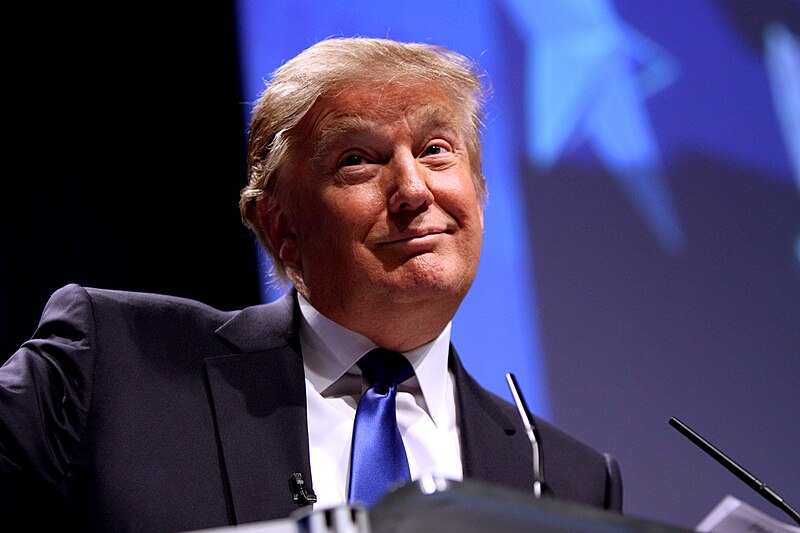
Hair today, gone tomorrow?

I had been on the point of writing a blog entry on Donald Trump’s candidacy being essentially based on his entertainment value, when he went and published as serious, detailed policy proposal. Agree with it or not, his newly revealed immigration policy is not clownish. Trump’s own campaign, at least, apparently believes the root of Trump’s popularity is not his entertainment value, but a popular backlash against immigration.

This may be so. Similar sentiments have proven politically powerful recently in Europe. This is also reminiscent of the Reform Party electoral rebellion in Canada, back in the 1990s.

It is what happens when the political elite leaves the public without an option on an issue they perceive as important. An outsider sees an opening, exploits the free electoral market, and surges into prominence.

In the Canadian example, all the federal political parties closed ranks to deny the public the chance to oppose the Meech Lake Agreement. At the same time, all supported multiculturalism and high levels of immigration. A lot of Canadians felt themselves and their concerns not listened to. The result: Reform came from nowhere to become the official opposition.

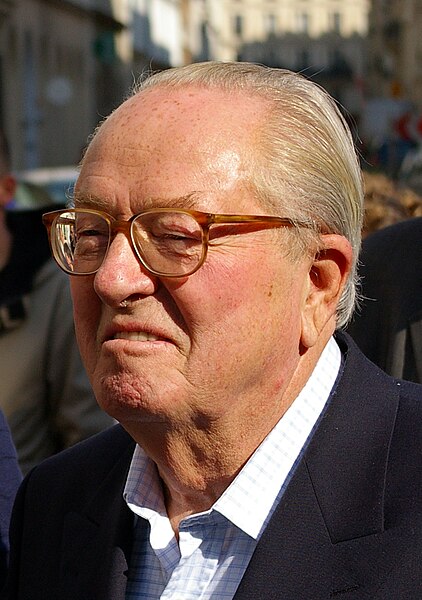
Ou sont les fauves d'autrefois?

In Europe, the issue has been immigration combined with the loss of national sovereignty to the EU. With some, mainly British, exceptions, polite society for many years has unanimously supported both, and seen opposition as beyond the pale. To oppose immigration or EU integration smelt like crypto-Fascism. The Economist regularly, and without fear of contradiction, referred to Jean-Marie LePen as a “thug.” Until LePen demonstrated his popularity by making the final round of the French presidential vote. Then he miraculously metamorphosed, in the editorial columns of The Economist, into “that wily ex-paratrooper.” Nigel Farage has made a similar impact more recently in Britain.

So Trump may be holding a hand worthy of his name. It is not true to say that discussing illegal immigration has been a shibboleth in the US; but the Republican causus in Congress, despite all saying they are against it, have been unwilling to pass legislation. Voters may well suspect a con.

Nobody here but us wily ex-paratroopers.

I do not tend to agree with Trump on immigration. I have scruples about the rights of man, including freedom of movement. However, I also think the attacks on his plan that have immediately begun are over the top.

The Washington Post says it is unthinkable to no longer recognize citizenship by birth, to have twelve million residents who are not, and will never be, citizens. It would be too socially disruptive.

Tell that to Germany, or Japan, who have long had large guest worker populations, but do not recognize citizenship by birth. Tell that to Qatar or the UAE, where the majority of residents are not citizens. Life does seem to go on.

The WaPo also argues that the logistics of finding and deporting all the illegal residents would be hopelessly expensive. But Trump has already answered that objection: he points out that the costs of policing and social services caused by the presence of those illegals are also high.

The Post goes on to say that the mass deportation of twelve million would mean “staggering economic and social havoc.”

Not necessarily. In the spirit of the platform of the Alliance for Canadian Unity Party, I have a suggestion. The problem is undocumented foreign workers taking the jobs of unemployed lower class Americans, right? Yet businesses say they need the workers, or face financial ruin, because Americans will not take the jobs. Hence the idea of economic havoc.

Fair enough. Let the unemployed Americans themselves do the policing. If any American citizen finds an illegal worker performing a job they would like to have, they have the right to turn him in, have him or her deported, and get the job themselves as a reward. If they decline the offer, the illegal immigrant stays.

This would allow illegals to continue to take “the jobs Americans do not want to do,” if and when this is the case. It would allow Americans to protect their jobs, if this is the real issue.

Would there be many takers?

Why not find out?

Monday, August 17, 2015

The Platform of the Alliance for Canadian Unity Party


Were he alive, we feel sure he would want to lead us.

Amidst writs dropping everywhere, Canadians of all possible ridings are heading to the proverbial polls. Maclean’s Magazine has recently outlined the platforms of the various Canadian federal parties.

But for one. They have omitted the platform of the utterly inevitable, albeit not entirely existent, Alliance for Canadian Unity Party (A-CUP). Slogan: Forward into the future with real change you can believe in that makes a new difference.

So let us make up the deficiency here:

Taxes: the other parties miss the essential problem here. They all promise lower taxes, or warn of higher taxes, as if anyone cared. It is not that Canadians hate taxes. It is that they hate doing math. Taxes make you do math. Why is the HST, and before it the GST, a special grievance? Because it makes it so difficult to count change. Why do those on payrolls like bigger government, while the self-employed want government small? Because the former never see their income taxes go—they are taken off at payroll. But the latter have to wrestle with the Revenue Canada forms.

This argues, in the first case, for a simple flat tax at a nice round number: say, 10% sales tax, 25% income tax. No exemptions, no loopholes, just send it in, and thanks. Businesses will be forced to quote prices tax included. And, just to put the cherry on top, everyone gets a little rebate when they submit a return. Say $100. This way, we will soon have the majority of Canadians believing the government is paying taxes to them.

Defense: Canada is in the fortunate position of not actually needing any defense. If anyone but the Americans choose to invade, the Americans would stop them. If the Americans choose to invade, nobody or nothing could stop them.

Unfortunately, it seems we have signed on to NATO. We have done this, no doubt, as Justin Trudeau says, out of CF-18 envy. NATO officially requires us to spend 2% of GDP on defense, even though little that NATO does is relevant to the actual defense of Canada.

The trick is to find some way to spend this money so that it is actually useful to Canada.

Theoretically, our most vulnerable border with a non-NATO nation is in the Arctic. And there are a great number of unemployed Inuit in the area…

Let’s equip them all with weaponized skidoos, and put them on regular patrols. The money we spend on defense could then be more or less directly subtracted from welfare costs. On top of that, the skidoos could all be built right here in Canada, by Bombardier, boosting the Quebec economy. We might even build this into an armaments export industry. Surely Russia will want its own armoured skidoos to contend with our armoured skidoos?

He's already filed his papers.

Immigration: This is a difficult issue, the worst kind, one with two sides. On the one hand, we need new immigrants to sustain our vast social welfare system. On the other, lower-income Canadians worry about immigrants taking their jobs.

We propose a simple solution: we allow only immigrants who will undertake a solemn oath not to take anyone’s job, but go immediately onto the social welfare system. Or just stay at home themselves, and send their families.

Health: We will legalize all drugs, without prescription. As people will then begin to self-medicate, we can save most of the money now spent on health care. And be much happier about it.

Unemployment: We believe that any current problem with unemployment can be easily solved by making it illegal for women to work.

Child Care: See above.

Senate: Granted that the Constitution says we must have a Senate, does it actually say anywhere that we have to pay them? 

Let's not, and see what happens.

Sunday, August 16, 2015

Do Animals Go To Heaven?


Enough for a moment about politics. It is time to deal with something of real, lasting importance: do animals have souls?

The common Catholic answer is that, yes, they do. But animal souls are not immortal. Animals cease to be at death. Dogs do not go to heaven; and cats do not go to hell.

However, this is not definitive Catholic doctrine, and this is not from the Bible. This is from Aristotle, as taken up by Aquinas. It is backed by the latter's great prestige within the church; but Saint Thomas is not always right. He was wrong, for example, on the Immaculate Conception. We are, as Catholics and as Christians, free to have other opinions.

I hold the idea that some animals have immortal souls and do go to heaven. Here’s why.

A week or so ago, the story of Fox, a Pomeranian in Florida, was in the news. His owners let him out to relieve himself. They later found his battered body on their back porch with a note attached: "We beat it 2 death lol HAHAHA!"

Had Fox been human, he could expect to be compensated for this suffering in heaven; and had he been human, he might have deserved it for his sins. But if he died of the blows and ceased to be, this suffering was simply meaningless. Moreover, if Fox was, as Aquinas believed, not a moral agent, this was innocent suffering.

Ergo, this cannot be--unless I am missing something. A good, just, and merciful God cannot allow this sort of thing to happen. Fox, and all other animals who suffer in this life, must be compensated somehow in a way that makes any suffering worthwhile; and this implies an afterlife in some terribly pleasant place for dogs or squirrels or any other animal capable of suffering.

In any case, the idea that the soul dissolves when the body does is arbitrary and unprovable in all cases. Spiritual things, to the contrary, seem by their nature to be immortal. For example, when a pet dies, we still, forever, retain our distinct memory of that animal and its unique personality—the physical pet dies, but the memory lives on, being a spiritual and not a physical thing. Similarly, once we know something, we cannot unknow it. Yes, we do forget things as well, but even then, they are not gone. They can mysteriously reappear later in all their details, jogged into resurrection by the smell of a madeleine. So it is odd to suppose that animal souls die.

Third point: animals sometimes seem to be in contact with the spiritual world, therefore to have a spiritual existence. At the simplest level, we can see this when we hear our dog whimper and twitch its legs as if running while asleep. He is dreaming; he has a spiritual life beyond the mere stimulus-response of the physical sense.

There is a tortoiseshell cat named Oscar who lives in a Rhode Island nursing home. Over the years, the caregivers there have realized that Oscar almost always knows which patient is next going to die. He will slip into their room and curl up next to them on the bed.

The attempted scientific explanation is that he can somehow smell distinctive chemicals emitted by cells about to die. This seems improbable: when he curls up with a patient, they do not seem yet to be actually dying. And in any case, it does not explain why he wants to be with them. The simpler explanation is that this cat is in communication with the spiritual world; which is to say, with eternity.

Saint Francis and the wolf.

There are many tales as well of saints seemingly able to communicate directly with animals, most famously Saint Francis of Assisi. As the animals presumably cannot understand human language, this must involve an ability to communicate in the realm of pure thought—of the spirit. These examples put the lie, surely, to the Aquinian idea that animal souls are tied directly and completely to the physical senses.

Finally, while the Bible is not clear on animals having souls, it does actually say there will be animals in heaven. Isaiah prophesies, of the New Jerusalem:

“The wolf and the lamb will feed together,

and the lion will eat straw like the ox,

and dust will be the serpent’s food.

They will neither harm nor destroy

on all my holy mountain,” (Isaiah 65:25)

So animals, like humans, will dwell in heaven in a perfected state. They also appear in Revelations.

One can argue, and the Aquinians do argue, that these are not previously living animals who have survived death, but new creations. To which I respond that this is a direct violation of Occam's razor, postulating two beings when one would suffice to explain the evidence.

Hosea goes further, and states that God’s final covenant is with animals as well as humans:

In that day I will make a covenant for them
with the beasts of the field, the birds in the sky
and the creatures that move along the ground.
Bow and sword and battle
I will abolish from the land,
so that all may lie down in safety. (Hosea 2:18)
When Jesus was born, who, besides his parents, were the first to witness the incarnation?


First to witness, inevitably, were domestic animals, to whom he was presented just as he later was presented to humans. He was laid in their manger. As spiritual food.

This, perhaps, was the first Eucharist.


Friday, August 07, 2015

Debates Wrapup


Herr Goebbels scores a debating point against Herr Godwin.

Miscellaneous thoughts on yesterday's debates.

First, I confess that I saw only the Canadian leaders' debate. I do not have access to Fox News at the moment, and so have seen only highlights of the American debates. That being so, perhaps my first comment should be on the Canadians.

Having slept on it, I think Mulcair's performance was much worse than I at first thought. The sense of something ominous grows on you. I think the impression he left of insincerity and barely repressed anger could be a big problem: asking people to vote NDP this time, with government in prospect, is asking for a leap of faith, a departure from the familiar. Would you, after all, buy a used car from this man? I see in online comments that others also get this vibe from Mulcair as of last night.

At the same time, as I said, although he was competent, Trudeau really failed to set himself up as an alternative. He was too quiet, grappled, when he did, most memorably with Mulcair rather than Harper, seemed a bit uneasy, ummed a lot, and looked disconcertingly young. Great performance were he running for student council president.

The leader who did set herself up as a credible alternative, unfortunately, was Elizabeth May. Great for May, but also a gift to the Conservatives. A three-way instead of a two-way split in the opposition vote.

All that said, viewership was low and the race has only begun.

On the Americans: everyone agrees that Carly Fiorina won the undercard debate, and I am part of everyone. But the case is rather like that of Elizabeth May: where does this go? She is too politically inexperienced to have a credible claim to the nomination, and even her business resume is spotty. Given that she is a great asset in a campaign, what does the Republican Party do with her?

In the unlikely event that Clinton gets the Democrats' nomination, Fiorina absolutely should be the VP pick. If not, make her ambassador to the UN.

Nobody clearly won the evening debate. However, I think strategically it was a bad night for Trump. Viewership was through the roof: Trump did that with his celebrity. Unfortunately for him, he just drew the rubes in to hear and get to know his competition a little better. He had nowhere to go but down, and they had nowhere to go but up, by sharing the stage. So a draw goes against Trump.

And I think that, for him, it was a bit worse than a draw. I think his veiled threat to Megyn Kelly was beyond the pale. For me, it was a bit of a suck in your breath moment. I don't think most folks are comfortable with addressing a woman in that way. Especially a very pretty one. It might have solidified the suspicion that Trump is in the end just a bully. It should have; there is something morally damaged about the American public, I fear, if it did not.

Robespierre cutting his physically much larger colleague Danton down to size.


Another loser: Rand Paul. He took on Trump almost immediately, and then had a sharp exchange with Christie, albeit one he did not initiate. It might have worked for some, but it did not look good on him. And angry Paul, with tousled hair and bulging eyes, looked like a pipsqueak: one of those short skinny guys who, given a little power, compensate by picking fights and bullying others. A Robespierre, a Goebbels. Being ideological tends to go with the territory.

Mike Huckabee and Marco Rubio probably get a boost in the polls. They are both charismatic, highly talented politicians, good with words, and the exposure helped demonstrate that. Some may now be looking for an alternative to Trump, someone who also seems like an unapologetic straight-talker, and they, based on debate performance, along with Fiorina, most closely fit that bill.

To some extent, Kasich did the same thing, but more plausibly as a substitute for Jeb Bush among more moderate GOPers than for Trump.

Thursday, August 06, 2015

The Canadian Leaders' Debate


Immediate response to the Canadian leaders'debate: Everyone did well, but Harper won the beauty contest. He seemed the most relaxed and friendly. He gave the sense of talking straight.

Mulcair established himself as the chief rival to Harper. He seemed to have a lot of substance to say. He did seem nervous, though. This came across as either insincerity or perhaps repressed anger, either of which are troubling. He flubbed his final statement, leaving with a bad impression,

Trudeau seemed prepped and polished. But he seemed a little callow in interrupting early on. He may have realized this, and pulled back as a result. Unfortunately, this left him looking like he was less engaged in the debate than Mulcair, letting the latter look like the chief alternative to Harper, and so solidified a sense of himself as number three.

American President


Bernie Sanders on the original Hollywood Squares.


I am as unhappy as anyone with the format of this evening's US Republican debate: with, that is, the exclusion of seven viable candidates. This presumably serves the interests of Fox News Network, or perhaps those of the Republican Party, who want to winnow the field quickly. It does not serve the voters, or American democracy.

Polls change like the weather; standing in recent polls is not a valid indicator of who is a viable candidate. Especially so early in the race, when few are paying much attention yet, and much that the polls measure is mere name recognition. Polls come with a margin of error, and all of those excluded are excluded for polling differences within that margin of error. Not only does this make the selection arbitrary; it promotes an unscientific attitude towards polls. In any case, the thing is circular: if you are not already sufficiently popular, the format prevents you from becoming popular. You might as well take the current poll leader, and declare him the nominee; as if the entire campaigning process serves no purpose.

And look at who is being excluded. Rick Perry, the longest serving governor ever of the second largest state. George Pataki, the man who defeated Mario Cuomo to become three-term governor of New York, a position once held by Nelson Rockefeller, Al Smith, and both Teddy and Franklin Roosevelt. Bobby Jindal, whose name has been widely mentioned for both president and vice president for over eight years. Carly Fiorina, who, whatever might be said about her lack of political background, has been probably the most articulate spokesperson for the party thus far in the campaign. Rick Santorum, runner-up in the last go-round. Lindsey Graham, a three-term senator from an early primary state, a foreign policy expert in a cycle in which US foreign policy seems to be in ruins. And some guy named Jim Gilmore, only a former governor of Virginia. Just like Thomas Jefferson, Patrick Henry, and James Monroe.

I understand the problem with time constraints. Still, Fox is already allocating time for everyone: the top ten at nine, the bottom seven at five pm. They apparently just don't want to waste prime time on the lesser lights. Okay, so why not just start the whole thing at nine, give the candidates the chance to choose when they will field their first question based on their initial poll numbers, and let the whole thing run later into the night?


I have also heard the objection that that many candidates will not fit comfortably into one camera angle. I cannot believe this is important to anyone, but if it is, the matter is solved, someone has suggested, by setting them up in two dimensions, as in Hollywood Squares.

But there is an even better option. Fox is seeing a problem where they should see an opportunity. What is hotter than reality television? Ask Donald Trump. What could be more profitable than a reality show in which the participants are largely already celebrities, and downright eager to appear for free?

So make a series out of it. Have the candidates compete in groups of four or five, on the same weeknight over successive weeks. After each debate, let a panel of pundits pronounce, then have the audience vote for the winner electronically, as they do on American Idol. Then host a blockbuster final.

Rinse and repeat.

Wednesday, August 05, 2015

That's Debatable


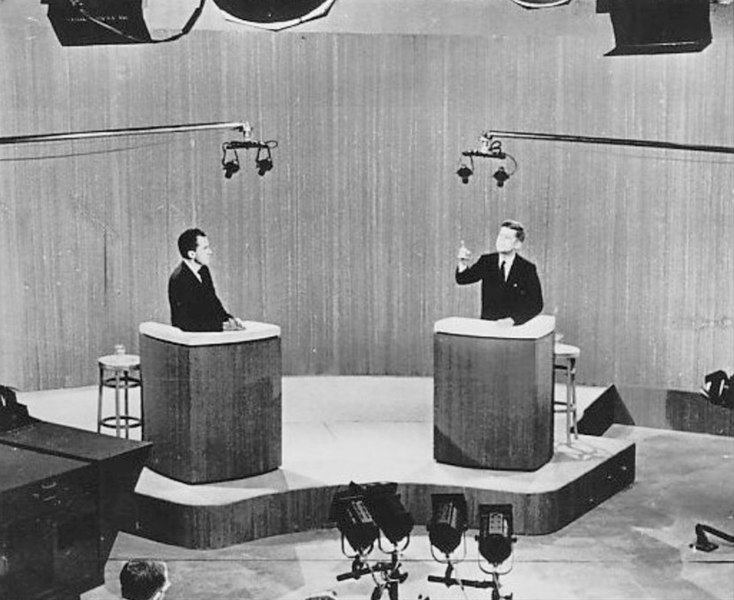
Kennedy vs. Nixon, 1960.

In both Canada and the US, we are about to hear the first candidate debates of the current elections. My great regret, as a political junkie, is that the Canadian and US debates are scheduled, as usual, for the same time. This is done, of course, because were it not so, few in Canada would be watching. They would just switch to some American network for the regular programming.

They are not, of course, really “debates.” There is no topic. Nobody expects to hear a new argument; there is little opportunity to build one. In their debates in 2004, I think John Kerry clearly bested George Bush in terms of debating points. Yet Bush “won,” largely by ignoring any semblance of debate and repeating familiar points. The same thing happened in the Canadian leaders' debates in 2008. Stephane Dion, Jack Layton, Elizabeth May and Gilles Duceppe all piled on Stephen Harper. Harper mostly just sat there and smiled, making his own case, responding to nothing. By debate rules, he lost badly. Yet polls said he won the debate, and he won the election. The others seemed angry; people admired Harper for taking it all calmly.

So these are not so much “debates” as joint press conferences, or, better, beauty contests. We watch and listen not to be persuaded by argument, but for blunders or zingers. It's kind of like watching a stock car race: we're mostly looking for a crack-up. One might see this as unkind and unworthy. Or one might see this as trying to discern something about the candidates' characters.

This was obvious from the very first famous televised candidates' debate, Kennedy-Nixon, in 1960. On points, most agree, Nixon at least held his own. But in political terms, Nixon lost badly, so badly that he refused ever to debate anyone again. His problem was that Kennedy looked relaxed and natural, whereas he looked stiff and uncomfortable.

And so it has been ever since.

The gaffe I remember best personally was Gerald Ford's insistence, against Carter in 1976, that Eastern Europe was not under Soviet domination. Ford confirmed the suspicion that he was in way over his head as President, that he was in the end a local pol with no wider vision than the next Rotary Club luncheon. It was not that Carter or Ford had made any kind of coherent point here; just a revelation of Ford's insufficiency.

In Canada, perhaps the best remembered score in debate is Mulroney's “you had a choice, sir. You could have said no” against Turner in 1984. But this was not argument; it was a simple negation of Turner's immediately prior statement that he “had no choice” (in making a batch of political appointments immediately on becoming prime minister. His larger claim was that this was part of a deal made with his predecessor, Trudeau). Again, this was not debate, not even a point scored by Mulroney, but a self-inflicted wound. It was the claim to have no control that killed Turner; Mulroney merely echoed the obvious. What kind of leader was this, who started out by refusing to take responsibility?

Tuner nailed himself again, at least in my opinion, on his second go-round with Mulroney in 1988, with the phrase most people remember from that debate: “I happen to think that you've sold us out” (speaking of free trade). To me, at least, that phrase, “happen to think,” implied either a misunderstanding of what thought actually entailed, or a lack of principle. As if political positions, in Turner's mind, could honourably be put on or taken off at whim, without any larger body of thought behind them. This was the more striking, to me, because opposition to free trade went against bedrock liberal principles; and Turner was leader of the Liberal Party. I'm not sure anyone but I noticed; but it made it impossible for me to vote for him.

Another famous line from a debate is Lloyd Bentsen's against Dan Quayle in 1988: “I knew Jack Kennedy. Jack Kennedy was a friend of mine. And senator, you're no Jack Kennedy.” But in fact, this was not an argument at all, and was, as Quayle responded at the time, “uncalled for.” First, it was ad hominem, and second, it was non sequitor. Quayle had not said he was like John Kennedy in any sense but his relative lack of experience. It worked, because it suggested Quayle was both inexperienced and callow.

Michael Dukakis blundered badly during the same campaign by taking a debate to actually be a debate. Asked if he would change his mind on opposing the death penalty if someone raped and killed his wife Kitty, he answered, properly, that his position opposing capital punishment was perfectly consistent. But the answer made him come across to the audience as a soulless suit.

Then there's Rick Perry's “oops” in the 2012 Republican debates. Obviously, no debate points scored. Ron Paul, at the next podium, even tried to help jog Perry's memory. It was the kind of memory freeze anyone could have. But it destroyed Perry's hyper-macho image. James Bond is not supposed to slip on the soap.

Reagan's “I paid for this microphone” in 1980 erased the suspicion that he was just too easygoing to be effective as president. His “I will not use my opponent's youth and inexperience against him” was a response to a moderator's question, not to anything raised by Walter Mondale. And, of course, it involved no argument.

Ali vs. Liston, 1965.

Then there's Stockdale's “Why am I here?” in the 1992 VP debates. Okay, that had no legitimate point or purpose, since he had no chance of becoming VP anyway. It was just an awesome car crash.

So what does this mean? First, it is not unreasonable that we judge our candidates this way. Issues come and go over the course of four years. We have other ways of learning our politicians' stands. It makes sense instead to try to grasp their character. If there turns out to be a big disparity between their public and their private character, this is of limited importance. As a leader primarily of people who will only ever see them on TV, their public character is more relevant than their private persona anyway to their ability to lead.

At the same time, these “debates” run the risk of seriously debasing the popular idea of what a debate is or should be. This is important, because the ability to debate properly is a sine qua non of democracy.

Tuesday, August 04, 2015

In God We Trust. All Others Pay Cash.


Perceived levels of corruption by country, 2014, according to Transparency International. The reader will note how cloesly this corresponds with GDP. 

Here's a chilling statistic, from Robert Reich in the Christian Science Monitor: “In 1964, Americans agreed by 64% to 29% that government was run for the benefit of all the people. By 2012, the response had reversed, with voters saying by 79% to 19% that government was 'run by a few big interests looking after themselves.'”Looking at the trend lines here, the first hit seems to have been the Vietnam War, circa 1967-8. The biggest hit seems to have come with Watergate. Since then, the confidence has not returned, but has on the whole slowly continued to slide.

Nor is it just government. Trust in all other social institutions seems also to have fallen over the same period: in the press, the churches, the schools, the professions. What we are seeing here, in sum, is a sense of declining morality within the ruling class.

I fear this lack of confidence is probably justified: those on top have increasingly become immoral and self-seeking over this period. One might hypothesize that they were always this immoral, and the only difference is increased scrutiny. But I don't think the evidence supports this. In 1960, anyone of prominence in the US would at least have given lip service to the truth and importance of morality. Now, much conventional morality, and even at times the very idea of morality, is openly scorned among the gentry.

It is a very bad portent for the health of the US. The single greatest asset any society can have is a general confidence in the social contract; a basic trust, a gentlemen's code of conduct that need not be enforced by law. Losing it is the difference between America and, say, Paraguay.

If gentlemen cannot be counted upon to be gentlemen, no amount of law enforcement can make much difference. For who then can trust the police?

If the majority of people believe those in control are merely out for themselves, this justifies them in turn in ignoring any rules that do not seem to be for their own personal benefit.

Society collapses into the primordial war of all against all.

In the meantime, any rival society that can do better than this is certain to conquer.

Perhaps the only thing that preserves America in its preeminence now is the equal or greater decadence of all visible competition.

Monday, August 03, 2015

Federal Election in Canada


Last time.


Okay, so we now have a Canadian federal election.

Things can change quickly in Canuckistan; present polls are not necessarily going to reflect the final outcome. But let's assume they hold.

That would probably result in a Conservative minority government, with the Liberals running third.

Given what recently happened to Britain's Liberal Democrats, I doubt the NDP and Liberals would then try to form a coalition. If the NDP came out as the senior partner, to do so would probably be the end of the Liberal Party. More likely, Justin Trudeau would then resign, and the Liberals would not want to force an election until they had a new leader in place. Harper would have at least a little breathing room, and then face a new vote.

Canadians know Harper pretty well. Trudeau certainly has name recognition, and has been very much in the spotlight for the last year. Opinions are probably mostly formed by now. Mulcair, facing his first election, is probably least well known, and so has the best breakout potential. If he is impressive in the campaign, he has the best shot at a majority government. If he really does poorly as a campaigner, support moves to the Liberals, but odds are, not strongly enough to jump two spaces: it would simply be a Conservative minority with a Liberal instead of an NDP official opposition. If Mulcair neither excels nor chokes, we are probably left with roughly the poll figures we have now.

Ergo:
Likeliest result: Conservative minority, new election within a year or two.
Next most likely result: NDP majority.

Sunday, August 02, 2015

The Stripped Gears of Social Science


Photographed in an antique shop window. Is it live, or Memorex?

There are only two kinds of discoveries in the social sciences: those that do no more than confirm common sense, and those that are wrong. The latter is more common.

This study is probably correct. It suggests that bullies have high self esteem than the average person and are less likely than others to experience depression. So much, indeed, is common sense. Unfortunately, it goes directly against everything social science have been telling us for a generation or two. For at least that long, we have been told that bullies and abusers act as they do because they were themselves abused in the past, and because they have low self-esteem.

Teaching and parenting practice has, of course, been altered, sometimes forcibly altered, to reflect this for that same two generations, always sparing the rod in hopes of more perfectly spoiling the child. Everything a child does is now awesome. Nothing a child does can be punished in any meaningful way.

No surprise if we now have a much bigger problem with bullying in schools. We of a certainty also have it in the wider world of work, in society, in marriages, in life in general.

And we paid large sums to get screwed in this way.

What's worse, we've been told for about the same time to work on our and our children's “emotional intelligence.” Sounds good, put in that way, but it really means learning to falsify your own true feelings while manipulating those of others. In other words, training to be a proper psychopath.

Here's another instance of this academic game at work. Some time ago, a prominent paper came to the conclusion that there was never any significant discrimination against the Irish in America, and few if any “No Irish Need Apply” signs or ads. The Irish had simply imagined the whole thing. Now, a high school student—a high school student—has managed to disprove the claim comprehensively, simply with a bit of web searching.

A bit of web searching.

How, you might ask, is this possible? How can an academic paper become so widely accepted while making such extremely improbable claims, and on the basis of so little evidence?

It is really quite simple. Academia is set up to make this happen. Imagine if the original paper by the reputable history professor with the Yale Ph. D. had researched the record thoroughly and discovered that, yes, as everyone had always assumed to be true, discrimination against the Irish in America was widespread in past generations, and there were a good number of signs denying them employment. Would there then be a publishable paper, simply confirming what everybody already knew? Probably not. But if you can put out a paper that seems to show that what everybody thought was wrong—then you get it published, get tenure, get a lot of attention. You have discovered something!

All that really prevents this is the sheer honesty of individual academics. Unfortunately, morality has become unfashionable in such circles. Indeed, academics as a group, as a class, have a vested interest in promoting this kind of behaviour, rather than censuring or preventing it. If a field as a whole seems to produce no new discoveries, can produce nothing the general public doesn't already know, it is hard to justify its very existence. Why take a Ph.D. in it, if you learn nothing? Why pay someone to teach it, if he has nothing to teach? Thus, it becomes important for any field to consistently violate common sense. This is probably, on the whole, not a good thing.

Yes, there is the risk that someone will try to reproduce your results and find them wrong; as happened here. But the same problem applies: merely repeating and confirming someone else's study is not generally publishable. So others rarely do it. The high school student's paper made waves because the original paper, arguing that the Irish had not been discriminated against, had become so widespread among academics to have become, itself, a new received wisdom. At this point, “revisionism” begins to pay dividends. And the cycle begins again.

Just as a clock that has stopped dead will still be accurate about twice a day, so all these crazy ideas emerging from the academy probably get disproven eventually. However, what we are witnessing is not a quest for truth or knowledge, and alarmingly little get added year by year to the store of human knowledge. In the meantime, a great deal of damage gets done.

It is worst in the social sciences, because they are based on incoherent premises—primarily, an insurmountable observer paradox. But the same also applies in the humanities and in the hard sciences. The difference is that the social sciences emit nothing but this static; humanities and hard sciences do also sometimes produce valid results.


Even so, anyone who has lived long enough and made some effort over their lives to follow medical advice will surely have noticed the pattern. Sugar will kill you. It will make you fat. You must take artificial sweeteners. No, wait, artificial sweeteners will kill you and make you fat; you must take sugar. No, they are quite safe; sugar is bad and will make you fat. You must get more sunlight for vitamin D. You must stay out of the sun or get skin cancer. You must get more sunlight for vitamin D. You fools! Why have you not been listening to us experts? Cholesterol is bad for your heart; cholesterol is good for you. Eggs are healthy; eggs are unhealthy; eggs are healthy. Aspirin is dangerous; safer to take acetaminophen. Acetaminophen is dangerous; safer to take aspirin. Statistics at least tell us medicine does make some progress; technology proves that hard sciences make some progress; but there is obviously still a huge amount of static involved.

This is one reason why I love the Catholic Church. Of all human institutions with intellectual pretensions, it seems uniquely immune from this disease. All other human “knowledge” seems built on sand; it alone is built on rock.

Friday, July 24, 2015

The Planned Parenthood Videos


Up the close and doun the stair,
But and ben wi' Burke and Hare.
Burke's the butcher, Hare's the thief,
Knox the boy that buys the beef.


I am surprised to hear the White House, Nancy Pelosi, Hillary Clinton, the New York Times and many others on the left, insisting that the recent videos of Planned Parenthood executives discussing the sale of infant body parts indicate nothing wrong. Perhaps showing the wisdom of age, Bernie Sanders had the raw common sense to break ranks on this and admit to being disturbed by the tone of the conversation he saw.

As I see it, there is clear evidence of three federal crimes:

1. Altering the abortion procedure in order to increase the chance of getting intact organs. A “less crunchy approach,” as Gatter puts it. “Crushing above and below.”

2. Charging more than their own expenses for the organs. Gatter is negotiating for a price. Obviously, she is not just recouping expenses, which would dictate a firm number, but trying to establish a market value.

3. Performing “partial birth” abortions. This seems to be what Nucatola describes at one point.

Given all that, and the sheer ghoulishness of the thing, I feel that those on the left who insist that there is simply nothing wrong here are overreaching. They risk destroying their credibility and their moral standing. This may be the beginning of the end for the concept of abortion on demand.


Thursday, July 23, 2015

Bernie Sanders -- You're Fired!

It has been said that, since the advent of the television era, the winner in US presidential elections has almost always been the candidate who seemed most cheerful. The one exception is 1968, when Humphrey's “politics of joy” was beaten by a dour Nixon. In that case, Humphrey's joy just seemed callous in light of the circumstances.

I think the truth is a bit more complicated. Cheerfulness helps a good deal, but I think what it is really about is likability. Americans are voting for someone they are going to then see a lot of over the next few years. That said, it seems so. Reagan's politics might have been out of step with the popular will in his day, but his ability to seem upbeat and non-threatening on TV made him the “Teflon president.” Bill Clinton weathered scandals that would have taken down many politicians, because he looked and acted such a likeable rogue. George W. Bush might have been blundering, but he always came across as having a good heart, as a guy you could sit down and have a beer with.

This factor is overwhelmingly overlooked in political analysis. Political analysts, being deeply interested themselves in policy, naturally suppose we choose our leaders on their policy stands. I doubt that most of us do. We are too smart to. For one thing, politicians really cannot be trusted on this; they usually choose the policies they think will get them elected, and rarely honour their commitments in office. For another, we cannot guess what issues will arise over the next few years, and therefore cannot know their positions in advance, or which of their positions will be most important.

It is simply logical, then, to vote on our sense of their character.

This is one big reason why I believe Hillary Clinton will not be the next president. Clinton fundamentally lacks likeability. She seems stiff and artificial, when she does not seem slightly deranged: both insincere and out of touch. She is lost in the uncanny valley. By contrast, there is something undeniably lovable about Bernie Sanders, everybody's indulgent uncle, who, in trying to still appear hip, will let you get away with anything.

Martin O'Malley, despite his efforts, suffers from being too good looking. Being too good looking is not loveable; it is enviable.

Among the Republicans, Mike Huckabee has the likeability factor in barrels. It pulled him from nowhere into the thick of the race in 2008, and could catch fire again. I think John Kasich has it; and he has had the smarts to key his campaign so far on a note of hope and optimism. Ben Carson has it. Marco Rubio has it. I think Jeb Bush has it. Rick Perry has it. For him, it is obscured by the memory of his debate flub last run. But someone with likeability can get past that sort of thing; he could catch fire.

Bobby Jindal, given his record of accomplishment, ought to be doing much better in the polls than he. He has a problem harder than Perry's to overcome: his robotic performance when delivering the Republican response to Obama's address to Congress in 2009. Incompetence or venality are easier to overcome in the mind of the American public than an impression of soullessness. Ted Cruz suffers, in my mind, from an irritating voice. Scott Walker, despite his surging poll numbers, seems to me too bland to pull it off in the end. Dull ordinariness, with competence, works in Canada, but not, I think, in the USA. Harry Truman might have been ordinary, but he was not dull. For this reason, of the two current leading Republican candidates, I give the edge to Bush. Rubio, as well, is not quite there, because he is a bit too good looking.

Now for the candidates who are weakest on the likeability factor: Donald Trump, Rick Santorum, Carly Fiorina and Chris Christie have the strongest current unlikeability to likeability factors (http://morningconsult.com/2015/07/trump-leads-gop-field-no-slump-after-attacks-on-mccain/). It follows that it would be a bad idea for the Republicans to nominate any of them. Unfortunately for them, it is entirely possible for this to happen. The most cheerful candidate does not necessarily win his party's nomination. At this stage of the process, there is a greater premium on voicing the base's discontents, or the party's ideological concerns; the people voting in the primaries tend to be more issues-oriented. In the general, just about everyone is voting a second choice.

On the other hand, the very characteristics that make such candidates a bad choice as party nominee can make them a good choice for the vp slot. Here, if they have charisma, they can play bad cop and fire up the base.

Carly Fiorina is doing a very good job of auditioning for vice president: avoiding criticising other candidates, and making very effective points against Hillary Clinton. Chris Christie would be a good match for the role as well, if the nominee happened to be on the right of the party. Santorum simple lacks charisma. He has a good run when he could consolidate the Christian right behind him on ideology, in 2012, but this time he has competition for that support.

And then there's Donald Trump. I still expect him to implode soon. However, if he does not, yet still does not get the Republican nomination himself (a disaster for the party) he should probably be every other candidates first choice for the vp slot. He'd be great in the role, a natural attack dog, and it would pre-empt both any further criticism of fellow Republicans, and any third-party run. If Trump is not on the team, he has the money to go it on his own, and the split in the Republicans' natural base could lose them the election.

Wednesday, July 22, 2015

1812 Boat Tours


A Danish gunboat of the period

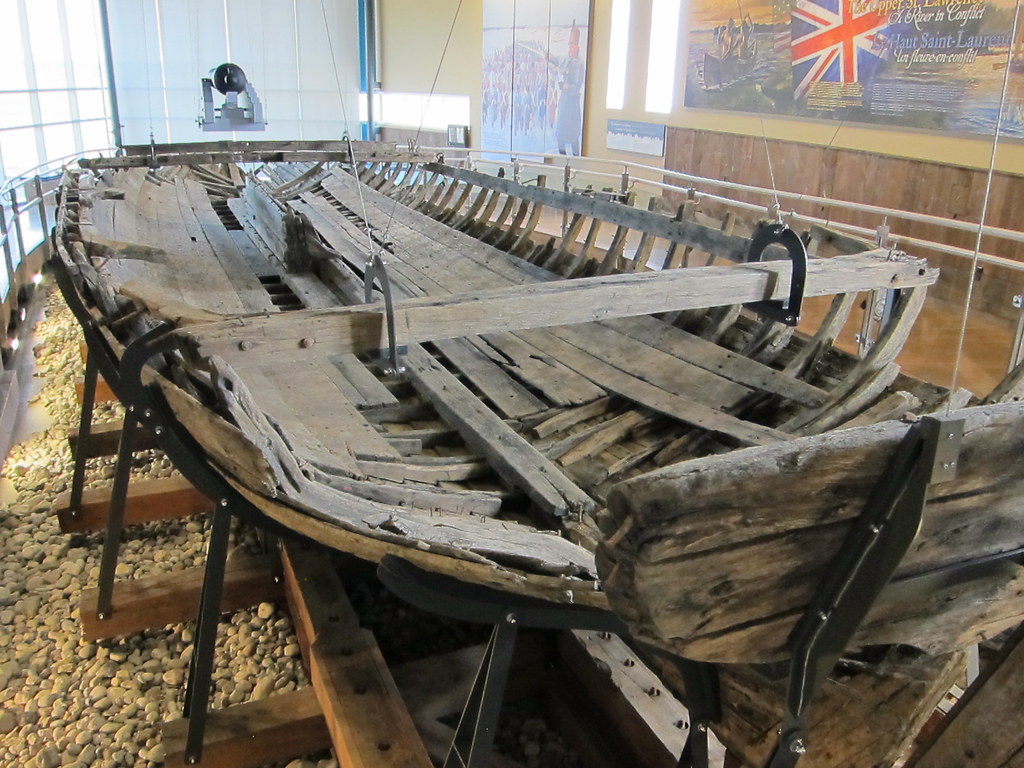
Some years ago, at Brown's Bay, Ontario, archaeologists salvaged what they believe to be the only surviving example of a British gunboat from the War of 1812. More recently, a new team went over the wreck with a fine tooth comb, and published a detailed description of the hull's structure.

I see a business opportunity for someone here.

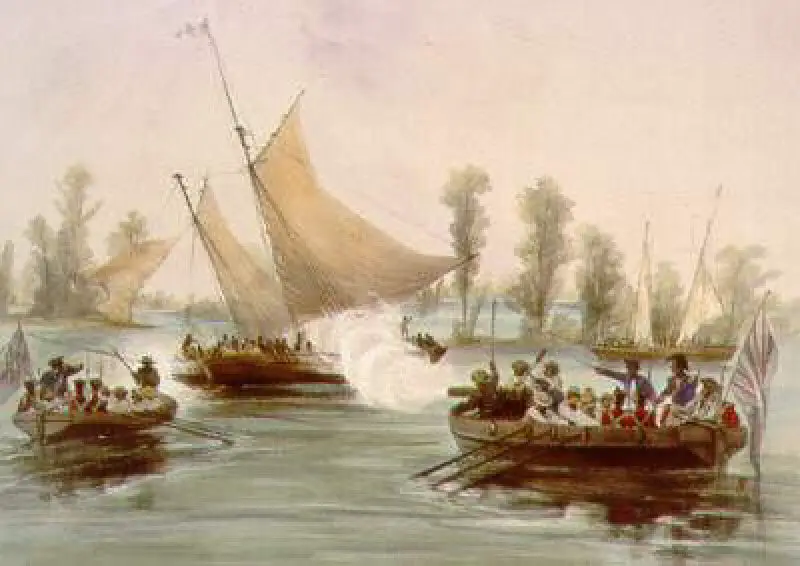
During the War of 1812, the Thousand Islands area was critical: it was along the only supply route between Upper and Lower Canada, and the many islands made it ideal for sneak attacks on shipping, for privateering and even piracy. As a result, Gananoque, “The Canadian Gateway to the Thousand Islands,” was then a station for these gunboats.

"Gunboat engagement in the Thousand Islands"

Today, the Thousand Islands make Gananoque a major tourism destination. And the single most popular draw, as verified by TripAdvisor, as if every resident did not know it, is the boat tours of the islands.

Now imagine an island tour in a reconstructed War of 1812 gunboat, complete with costumed guides and a cannon on the foredeck that fired mid-voyage.

Indeed, why stop there? Why not include a dramatic re-enactment of a skirmish with river pirates, American shore batteries, and/or an American gunboat of the period?

Brown's Bay wreck

Monday, July 20, 2015

Canada's Walk of Honour


James FitzGibbon


Joni Mitchell has remarked that Canada is no good at honouring our heroes. I think she is absolutely right. I grew to maturity with the cockeyed notion that Canada did not really have any heroes, or not many—even though I had read with great interest, as a child, the exploits of Billy Bishop, Bill Barker, Raymond Collishaw, and Madeleine de Vercheres. This crazy notion can only have come from the fact that we do not honour them properly.

Sure, we do have our memorials and our place names for Brock and Wolfe, Frontenac and Vancouver and Simcoe and the like. Worthy chaps, for the most part. The only problem is that they are not Canadians. That and the usual fact that they achieved their place in history largely from being born into the right class, a thought that ought to be anathema in democratic, egalitarian Canada.

Then we have things like the Canadian Walk of Fame in Toronto. Here, the problem is that the metric is mere fame, not merit. This becomes a self-reinforcing loop: if Canadian heroes are not sufficiently publicized, they never will be by such a project, which relies on prior publicity. Those most likely to be honoured here are, inevitably, those who have made their mark not in and for Canada and Canadian culture, but abroad, where individual achievements are more openly honoured. You want to be on the Canadian Walk of Fame, you'd better leave early for Hollywood.

We need, somewhere, something like a Canadian Westminster Abbey, which would honour genuine contributions to the Canadian nation, in whatever field. My choice of venue, largely no doubt since it is my home town, is Gananoque, Ontario's modest sculpture park. It is conveniently equidistant, more or less, between Montreal, Ottawa, and Toronto. It is already a tourist destination. And it already has a sculpture park. Sadly, the current sculpture park, I fear, is a failure, because it is all modern, and most modern sculpture is deadly boring. It looks more like a scrap metal yard at present.

Proposed selection criteria:

1. avoid the well-born. It is part of the essence of Canada that Canada is of and for ordinary people living ordinary lives. These should be figures the average Canadian child can aspire to emulate.

2. no foreigners. One may of course be foreign born and become a Canadian, but Canada is not, and must stop seeing itself as, a hotel. That is the colonial mentality.

3. subjects must be creators of Canada, as opposed to merely famous. Their accomplishments must have had this effect. Again, a colonial mentality tends to make us favour people who become famous somewhere else, for doing something mostly irrelevant to Canada: no Norman Bethune, no Mary Pickford.

4. by the same token, subjects should be advocates for and defenders of Canada as a united country and culture, not just for this or that special interest group. So, no Nellie McClungs, Louis Riels, William Lyon Mackenzies or Tecumsehs. This means all politicians are at least questionable, as they are partisan figures. In any case, they tend to get their memorials elsewhere.

5. in general, subjects should not be famous for one single act; their lives as a whole ought to be exemplary. So, no Laura Secords or VC's. These folks are admirable, but less useful as a model for the young.

6. in the sculptures themselves, faces must be recognizable; we do not want abstraction. Part of the point is that Canadian kids feel themselves in the presence of a person much like themselves.

7. no high pedestals or outsize proportions. Poses should be relatively casual and inviting. We want honour, but we want no idolatry or civil religion. Part of our point is that heroes are human.

8. To avoid momentary passions and fads, no subject should be honoured here during their own lifetime. We don't want to have to later write off the cost of a Bill Cosby statue, either.

And now, of course, I inevitably have my own list of favourite nominees.

The first guy I think of is James FitzGibbon. Almost bloodless victor at Beaver Dams. Almost single-handedly responsible for preventing Toronto from falling to the rebels during the Upper Canada Rebellion in 1837. In between, he did a tremendous job keeping peace among Protestant and Catholic settlers, setting the tone and standard of tolerance that has characterised Canada ever since. The lack of recognition has has suffered before and after death is a national scandal.

My second thought is Lucy Maude Montgomery. Author, of course, of the Anne books. Her influence on subsequent Canadian literature cannot be overstated. Every subsequent Canadian literary heroine, and to a large extent Canadian hero, has been a type of Anne. She made children a special focus of Canadian culture generally, and the story of Anne is our national epic.

Three: Stephen Leacock. The second great founder of Canadian literature, Leacock gave Canadian culture its special focus on humour and on everyday small town life. I see him portrayed in a good suit, a “fantasie,” with a straw hat in his lap: another summer in Mariposa.

Fourth: Robert W. Service. The third great founder of Canadian popular literature. The inventor of the Canadian West. In a buckskin shirt that is caked with dirt.

Fifth, in order to represent Canadian literature in French, I nominate Emile Nelligan. Besides often being considered the father of Canadian poetry in French, the tragedy of his life cries out for some remembrance. I would prefer him portrayed in his later years, with that haunted stare of someone who sees the other world.

Emile Nelligan

So far, I am obviously favouring literature, which is my pet interest. What about the visual arts? I'm less qualified here, but one thing I do feel strongly: no Group of Seven or Emily Carr. First, far from representing anything original, they paint pretty much like European landscape artists of their time. The only thing that is different is the Canadian landscape. Second, their subjects—the northern wilderness—tend to have been accessible only to the rich and well-born of their time. Third, their interest in the landscape without the human smacks of European tourism rather than a deep human connection to this place.

Among the artists, then, I would rather honour William Kurelek. Kurelek captures the feel of ordinary life among ordinary people, the visual equivalent of Leacock. This is the true Canadian idiom.

Next, and by no means in order of merit, I'd love a statue of Alex Colville at his easel, painting a picture of the sculpture park in which he is placed. He too speaks of ordinary life, and shows its mysteries.

Our third representative of the true Canadian visual medium ought, I think, to be Duncan Macpherson, the longtime political cartoonist. Political cartooning is a real Canadian speciality, part of the wider Canadian tradition of humour. There is nothing anywhere else in art more brilliant than Macpherson's depictions of John Diefenbaker.


For music, I think preference has to go to those who wrote songs with Canadian topics, as opposed to pure musicians. Not only is this more obviously Canadian in nature, but it also expresses Canada's folksy soul, the interest in the common man. Purely instrumental music tends to be for the upper classes.

First up, Stan Rogers. He always wrote and sang about Canadians, and he always wrote about the common working man. Second, Stompin' Tom Connors. Third, Mary Travers, La Baldoc, who largely founded Franco-Canadian folk music as we know it, a blending of French and Celtic strands.

When we think of culture, it is wrong to leave out religious culture. No doubt this is controversial, but excluding religion from the mix is hardly a neutral stance. We need to include saints. First, I think of Kateri Tekakwitha, the first native-born North American saint of the Catholic Church. Her spiritual influence has been enormous on Canadian Catholics, and not just on Catholics: Leonard Cohen, though Jewish, has been deeply inspired by her story. She represents a cultural bridge, between Mohawk, Algonquin, and French, that represents Canada as a whole as a union of cultures. Her ability to consecrate and make great an ordinary life of daily affairs is a model of the Canadian ideal. And she needs to be portrayed, for once, accurately. Statues and pictures of her are always romanticised into a treacly Pocahontas stereotype. She ought to be portrayed as she was, with scars from smallpox on her face, and with a blanket over her head. She always wore a blanket, either out of modesty or to cover the scars on her face. Our one portrait from life seems to show her in a white buckskin dress.

barf

We can balance Kateri for Protestants with Barbara Heck, commonly credited with co-founding Methodism, traditionally Canada's largest Protestant denomination, in both the US and Canada. She is also almost a local hero, having settled in nearby Prescott.

Also a saint, but worthy of inclusion even on other grounds, is Marguerite Bourgeoys. She deserves recognition as Montreal's and perhaps Canada's first teacher, and for championing the common man. Who is more important in sustaining a living culture than teachers?

Although a politician, I think we need to include Thomas D'Arcy McGee. We know him as a Father of Confederation; but more than that, he was the ideologue of Confederation, and the great ideologue of Canada as an independent and distinct country, with its own culture. Not incidentally, he was also very largely responsible for turning Canadian Irish away from thoughts of revolution and towards committing fully to the building of a new nationality on this continent. And he seems to have done this, in the end, at great personal cost. Without him, the Fenian raids, for example, might have had a very different result.

Also up (no doubt with groans from those who consider themselves sophisticated) is Pierre Burton. Yes, he is a popular historian, not an academic. But cultures are built on popular histories, not articles in academic journals.

The reader is welcome to add his or her own suggestions in the comments.

Sunday, July 19, 2015

The Crazy Season


All heck is busting loose in the US presidential race right now on both the right and on the left, a rebellion of voters comparable in its own small way to events like the Arab Spring. On the left, there is a groundswell in favour of Bernie Sanders, to the horror of most of the Democratic establishment. On the right, there is a groundswell in favour of Donald Trump, to the horror of most of the Republican establishment.

This may be the way of the future. Ordinary voters are not inclined to listen to their betters any more.

Of the two, the Sanders candidacy is the more credible. Sanders has a reasonable resume for the presidency. I have said for some time that Hillary Clinton was unlikely to get the nomination. Certainly, she does not deserve a coronation. Has she really ever done anything other than to marry well? A dark horse was needed, and the darker the better. Sanders is great: too old for the race, and looks old. He is a self-declared socialist, a proverbially impossible sell in America. I expect he will be the nominee, a nice poke in the eye to everyone.

But not nearly so crazy as the Trump boom. The Republicans already had a wide field to choose from, with a wide range of views represented. And Trump has a weird resume for the presidency. But who cares? The great thing about Trump is that every single member of the political establishment hates him, Republicans just as much as Democrats. Wshat could be a better recommendation?

Unlike Sanders, Trump is likely to light a fuse to his toes and blow himself up. It is all very well to enjoy his straight-talking, but there is a reason politicians are circumspect. He is bound to say something beyond the pale soon, if he hasn't already. He may have the money to stay in regardless, but in the end, money does not buy votes.

His presence in the race should actually help the more electable of the Republican candidates. He is running to the right, and, because of his celebrity, is likely to draw votes and press coverage away from other candidates in the early going. That makes it difficult for any other right-wing candidate to survive the early going and be there later to coalesce around. Leaving the nomination to someone running toward the centre.

Most likely matchup at this point: Jeb Bush vs. Bernie Sanders. Who will win? Conventional wisdom says the Republicans.

I wouldn't count on it.