Playing the Indian Card

Showing posts with label Marxism. Show all posts

Friday, June 26, 2026

True Believers

Ew, Canada!


I recently recorded a radio show for Canada Day, on historic patriotic poems. One participant said he would have to bow out unless we allowed him to read poems critical of Canada. Pressed, he was not prepared to say that Canada itself was a good thing; he was content to live here because there was no war.

It seems to me that we have come to a dangerous point when we cannot all agree on the essential idea of Canada. What then do we have in common? How can we function as a society?

Islam and the woke, neoMarxist left pose a grave and increasing danger to our democracies; and it is really in both cases the same problem. These two organized groups have substituted politics for religion. They have made their politics their religion, or vice versa.

Religion is at its core the assertion of supposed ultimate truth. Seeking truth is admirable; it is what we are here for. In response to these perceived truths, you bind yourself to a set of rules. They govern your actions. But the common sense of the matter, in liberal democracies, is that you do not impose these rules on others: religion must be entirely voluntary.

When politics is your religion, or your religion is political, that no longer holds. Politics is the exercise of power over others. So this means imposing your religion on others.

Can this actually ever be avoided? Since religion is definitionally the assertion of a perceived ultimate truth, mustn’t what is ultimately true automatically be the basis of all decisions, including all political decisions? Our current concept of religious liberty and the separation of church and state may be an illusion: it has been apparently possible because our true religion, over the past few centuries, has become liberal democracy rather than Christianity.

Granted that this is so, Christianity, Judaism, Buddhism, and Hinduism have found themselves capable of continuing within this liberal framework. They are at their core, perhaps for different reasons, “mystical” faiths. They do not expect to achieve a paradise in this world, and so they are generally content to leave this world to its own devices.

Political matters can therefore be discussed politely, in liberal terms. 

But Islam and woke neoMarxism, because they involve a specific political agenda, are not reconcilable with liberal principles.

This happens whenever a creed emerges that believes that heaven, a state of perfection, can be achieved by specific human political action here on earth; what might be called “millenial” movements. It then becomes a matter of ultimate importance to impose those specific political measures as soon as possible, a whatever possible cost.

Nazism is an obvious example: it believed it was creating a new species, the “superman.”

Marxism similarly believes that by following its precepts, we can achieve an Edenic state where there is no restriction on our natural desires, and we can all do whatever we want.

Islamism believes that we have an obligation to bring the entire world under the laws of Islam, which come from God himself.

Wokery, apart from Marx, is influenced by the postmodern idea that we create our own reality. Therefore the task of life is to force everyone else to accept our own reality.

I similarly fear Christian movements that focus on the “end times” and the apocalypse; at least as something dependent on any political action.

How to deal with such groups is an existential problem for a liberal democracy: for they reject the principles on which a liberal democracy functions. 

Such movements can be tolerated so long as there is no chance of them coming into power and ending liberal democracy. But I fear we are past that point, and the danger is clear and present.


Tuesday, June 16, 2026

The Real Ruling Class May Not be Whom You Think

Con artist, or just dumb?


Marx misidentified the ruling class. He claimed the bourgeois were in control, and before them the landed gentry. Neither were ever in charge. They were just the wealthy class. The ruling class, the class that governed, and had the highest social authority, was always the educated class—the clerisy. The aristocrats and the bourgeois were subject to the law; even the king, since Magna Carta. And while kings might sometimes issue edicts, for the most part, who made the laws and stood in judgement? The clerisy—that is, the lawyers and the judges and the bureaucrats. Even the aristocrats were under their control. The bureaucrats always run the government—any government. If anyone else has power, either in an aristocracy or a democracy or a monarchy, they act only as a partial check on the clerisy, who manage most things day by day.

In pre-revolutionary France, when Louis XVI was required to summon the Estates General—required by the law, which he too had to obey-- who was the First Estate? Who was acknowledged as the top of the social scale? Marx’s bourgeoisie was jumbled in with the peasants in the Third Estate. The landed aristocracy was the Second Estate. The First Estate was the clerics, the clerisy, the educated class. 

Do not assume this meant just priests in the modern sense. Anyone who graduated university, in those days, was ordained. Cleric = clergy, but also clerk. Most of them spent little of their time in church. They held all the desk jobs; they were the civil service. They were the ones who knew how to read and write, how to keep accounts, how the system worked. Cardinal Richelieu, Cardinal Mazarin, Cardinal Wolseley, Thomas More, Cardinal Cromwell, and so on down.

In India, with its rigid caste system, who was the highest caste? Same as in France. Not the bourgeoisie; they were Vaishyas, third rank, above the Sudras, who were the manual labourers. Not the aristocracy, the Kshatriyas. As in Europe, they were second class. Highest caste was the Brahmins, the priestly, the educated class. They ran everything, and had to be deferred to by everyone else.

In pre-revolutionary China, the aristocracy was barely a thing. They were usually looked down on as uneducated boors. It was the Mandarins who ran the show.

This educated clerisy is the same group that form the backbone of the “progressive” movement in North America, which emerged in the early 20th century—the core “progressive” idea was rule by “experts.” The clerisy formed the backbone of the Nazis and the Fascists in Europe—it was the universities and the civil service, promoting state power: meaning power to the bureaucracy. In Russia the clerisy formed the Bolsheviks, as a supposed “vanguard of the proletariat”: like Marx, mostly well-educated pencil pushers. 

The continuing program of the clerisy in modern times is to consolidate power, to suppress any rival authority. For power is their coinage; telling others what to do, controlling them, governing them. By contrast, the capitalists are mostly only interested in making money. 


Monday, March 10, 2025

Onward to the Marxist Paradise


Seen in the wild:

“Object is to make True Marxism - Not Russian Collectivism - Nor Chinese and North Korean Communism.”

So what is this “true Marxism,” that is not anything we have yet seen?

I assume it is the Marxist utopia: everyone does what they like and gets what they want.

That is a worthy goal. 

Moreover, we seem to be moving toward it. 

It is broadly the result of improving technology: we get more for less work. 

There is less hard manual labour than there ever was, work hours are shorter, and increasingly,  we have less boring, repetitive office labour.

The question is, how to hasten this process?

By eliminating “Marxism” as a political movement.

The free market and financial incentives are best at fostering improved technology.


Thursday, February 27, 2025

Why Artists Lean Left


Cultural workers of the world unite!

Why are artists and writers always on the left?

I just figured it out. It’s the hope of no longer having to work at some pedestrian job like plucking chickens or negotiating contracts for a living. In the Marxist dream, the socialist/communist state, artists expect they will be supported while doing the work they choose.

For another this might be laziness. Not so for writers and artists. They are driven to do a job for which there is little demand. They already work without pay. And they would be happy living on a minimal salary, so long as they could do their work.

It is sadly a fantasy. Artists and writers do not do well in actual socialist economies. If they are good, they seem to find themselves in prison. Governments cannot understand art, but they know it is a danger to them. It looks subversive. Plato wanted to ban poets from his Republic.


Monday, June 17, 2024

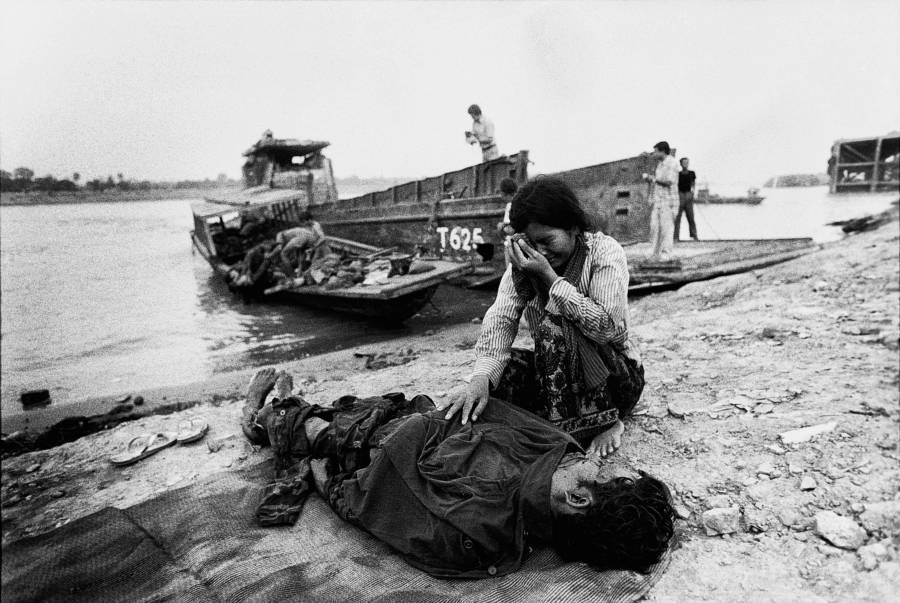
Why Did the Killing Fields Happen?


Friend Xerxes has rfecently returned from a trip to Cambodia, in which he visited the “Killing Fields.” He expresses deep puzzlement over how such brutality could have happened. He notes that the executioners were mostly young men, and credits it all to male aggression. Then he shifts to portraying the Khmer Rouge as “ultra-nationalists,” and draws parallels to Trump.

He oddly—or perhaps predictably—does not mention the name “Khmer Rouge.” That “rouge” is the elephant in the room that he is determined not to see. That isn’t garden-variety nationalism.

As for the executioners generally being young males, that can most easily be accounted for by the fact that the task of killing without guns required hard manual labour and physical strength. It follows that the executioners would be young men. Their own individual motivations were pretty much beside the point in any case: what motivated those giving the orders?

The Khmer Rouge were in practice nationalistic. But so was the Lon Nol regime they overthrew: nationalism cannot have been the essential ingredient in their secret sauce nor in their rise to power. They were Marxists, communists, Rouge, and their official ideology was actually, in contrast to the regime they replaced, internationalist.

The clue to what caused the mass killings was that, when they came to power, they declared it to be “year zero.” They were a millenarian movement. Millenarianism (Wikipedia): “the belief by a religious, social, or political group or movement in a coming fundamental transformation of society, after which ‘all things will be changed.’" 

This is the heart of Marxism. True communism will be a time of total equality and plenty, and nobody will need to work or do anything they do not want to do. There will be no government, for the lion will lie down with the lamb. One can achieve heaven on earth by political action. But in order to do this, obviously, all evil on earth must be tracked down and completely eliminated. So the mass killings begin.

This is what motivated the leaders of the Khmer Rouge, and no doubt most of their acolytes: the dream that they were achieving paradise. Here, now, imminently.

To do so, of course, everything about the current social, political, economic systems must be smashed; they are tainted with evil. They brought evil into the world. “All things will be changed.” Nobody must read. Statues and monuments must be pulled down. Money must be abolished; religion must be abolished; the family must be abolished. Any might reintroduce bad influences. 

Xenophobia, let alone nationalism, was therefore not the main impetus. The problem was that the outside world was, as yet, beyond Khmer Rouge government control, and so a source of possible bad influences.

So too Maoist China, or Stalinist Russia, or Kim’s North Korea, or Castro’s Cuba. In principle, these too were internationalist movements. But they had to draw an iron curtain around the territory they controlled to prevent evil influences. As with Cambodia, in China, Mao actually overthrew and supplanted the Nationalists.

Millenarianism in politics always leads to holocaust. Nazism was another millenarian movement. It was committed to creating the new race, the “superman,” and a “thousand-year reich.” This too would be a paradise on earth—for this new species. They too had to exclude and eliminate polluting elements. The French Revolution went down the same path, under the Jacobins. They too declared a year zero, a new age of reason. This led inevitably to fear and suppression of all dissent, of foreign influences, and to mass executions.

In all these cases, the longer term agenda was not nationalism, but world conquest by their millenarian ideology. 

This includes the Khmer Rouge. They actually started the war with Vietnam that ended in their downfall.

It is not Trump, nor the rising Euro-nationalists, but the modern “woke” left and the Eurocrats, that resemble the Khmer Rouge.


Friday, March 08, 2024

Gatsby as Marx Sees Him


Literature classes in these times are endlessly complicated, indeed rendered pointless, by our refusal to see the  religious context of Western (or Eastern) culture. All great art deals with ultimate questions, which means that all great art is necessarily religious. Unless we are prepared to go there, we cannot understand great art.

Yet instead, at all academic levels, we go down interpretive rabbit holes leading nowhere: Freudian interpretations, Jungian interpretations, Marxist interpretations, feminist interpretations, structuralist interpretations, deconstructions, and other such meaningless races with our tails.

A student in China was asked by his English literature teacher to interpret a segment from the film “The Great Gatsby.” I can’t show the entire sequence here, for copyright reasons; but I attach roughly the second half of it from YouTube.

It shows Nick, the narrator, on his way by train with friend Tom, who is wealthy, to a lunch at Tom’s apartment in the “golden city” of New York, coming from the exurbs of Long Island. But Tom has them jump off the train in an intermediate “valley of ashes,” a “dumping ground” for the coal dust from the metropolis. The scene is presided over, as in the book, by an old billboard advertising a long-gone oculist, two huge eyes. Tom takes Nick to a garage, where he meets Tom’s mistress, Myrtle, made up and dressed in red. Tom arranges a rendez-vous that afternoon in his Manhattan apartment, almost under the eyes of Myrtle’s mechanic husband, and urges Myrtle, despite Nick’s protestations, to bring along a sister for Nick.

And my student was dutifully trying to make sense of it in Marxist terms: the valley of ashes was the working class, exploited by the rich capitalists. The huge eyes were the eyes of capitalism. He felt there was some special significance to a brief scene in which a boy in the valley was feeding a dog a bun; then at the end of the sequence, a Scotty was feeding on red velvet cushions. These were images, he felt, of the working and upper classes. His teacher had made the cuts to end with the Scotty, suggesting it was supposed to be a kind of summation of the scene.

But he was well aware that things were just not fitting together. What point, then, was the clip trying to make? 

It did seem as though rich Tom was doing wrong by working-class Myrtle’s husband, for his pleasure. But if so, he was equally betraying his wife, who was upper class like him. Because he was rich, he could do as he wanted? But then, it seems, so could working-class Myrtle; while Tom’s rich wife was helpless. 

So where was he supposed to go from there?

It was all immediately sensible in Christian terms. The “golden city,” a term used in the narration, is the New Jerusalem, a Biblical image of heaven. It is our rightful destination; but we are led astray, as Nick is by Tom, into carnal pleasures. This takes us to some dark valley: a “dumping ground,” the phrase used in the movie’s narration. This actually translates to Hebrew as Gehenna, that is, to use the Anglo-Saxon word, “Hell.” 

The eyes of the oculist on the billboard are the all-seeing eyes of God, of conscience. The narration, clubbing us over the head with it, actually says “like the eyes of God.” 

“But God doesn’t exist,” the student protests weakly. “He can’t do anything.” 

Doesn’t matter. You cannot impose your own beliefs on the text. You have to go with what it is saying. 

Identifying these fictional eyes as the eyes of capitalism does not work. Capitalism is just an abstract concept, not some entity that can think, observe, or judge. Moreover, an out-of-business oculist is not a capitalist except in an incidental sense. You could have chosen better if you’d wanted a symbol of capitalism. If this is capitalism, it is now, by implication, out of business: the vision of hell we see is socialism. 

Interpreting the dark valley as the realm of the working class also leads to the awkward conclusion that the poor are poor because they have sinned, done wrong—for this is also clearly the place of temptation, from the point of view of the narrator, Nick. And the soundtrack sings “let’s misbehave,” over a closeup of his face looking perturbed. Not a proper Marxist message, then, let alone a Christian message: the rich deserve to be rich, because of their higher morality, and the poor deserve to be poor.

This place, the valley of ashes, is not primarily where manual labour is done. There are images of men swinging picks, which happens to be a form of manual labour. In the book, the relevant passage is “the ash-grey men swarm up with leaden spades and stir up an impenetrable cloud which screens their obscure operations from your sight.” Sounds more symbolic than a description of the real life of an average working man. This is not productive labour: Sisyphean labour, that accomplishes nothing visible, as in the classical concept of Tantalus, the Greek Hell.

As to the two dogs: granted that the first dog is a working-class dog, and the second is an upper-class dog--what point is being made? That the poor are kind to dogs—and so are the rich? The only visible contrast is that the poor dog eats standing in the street, and being petted, while the rich dog is shown alone, and on velvet cushions. Does this suggest that the rich have it better than the poor?

What difference does it make to a dog whether he is eating on velvet cushions? Probably none. 

The point, I assume, is either that we too should not care whether we are rich and high in social status or poor; or else that dogs do not face moral issues. In contrast to us.

Either works well as a Christian message. Neither works well as a Marxist message.


Tuesday, October 25, 2022

Lean to the Left, Lean to the Right


Stephen LeDrew argues, intending to be provocative, that Justin Trudeau is a right-winger compared to Pierre Poilievre. 

He is right, based on the traditional meaning of the term. Traditionally, since the French Revolution, the left was for liberty, for the individual, for free choice, free markets, and smaller government; and against established elites. The right was for the corporate state, for paternalistic government, for more social control, was respectful of elites and authority, and for bigger government.

That puts our modern right on the left, and our modern left on the right.

This is indeed more philosophically coherent than our common current understanding, which is scrambled by Marxism. This puts Marxism, Trudeau, the NDP, and the US Democrats, on the right-wing. Stalin, Castro and Mao were right wingers. Pierre Poilievre, Maxime Bernier, Milton Friedman, Rand Paul, Tim Poole, the Koch Brothers, and more or less the US Republicans, are the left. As am I. 

We have stood everything on its head when we suggest the US is politically to the right of Canada or Europe. From its inception, by those who rejected the American revolution to stick with king and tradition, Canada has always been conservative to its core. America wants life, liberty, and the pursuit of happiness. Canada wants peace, order, and good government. A decent summary of liberalism and conservatism, left and right.

But the problem is that many get confused and, I suspect like LeDrew, vote Liberal and support Democrats imagining they are left-wing in the true sense. And imagining the right stands for autocracy. Indeed, I think the reason we have gotten these terms garbled is that the Liberals and Democrats have been trying to trick people into believing this. Marxism is less popular. So instead of identifying as Marxist, they began calling their ideas “liberal.”


Saturday, October 01, 2022

The Real Problem of Poverty


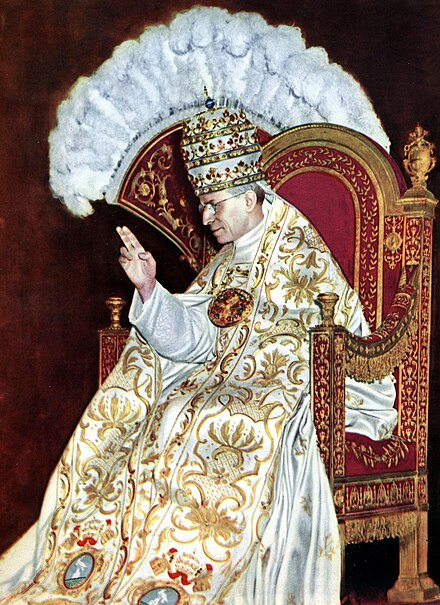
Pius XII in the sedia gestatoria

Just attended a poetry reading on the theme of poverty. Unfortunately, after a dozen poets had read their poems, the meeting devolved into a political meeting, with the hosts insisting that the problem was systemic, that it was about intersectionality and some having special privilege, and—revealing quote—“the real problem is not poverty, but abundance.”

It is not that the left wants to help the poor; it envies the rich.

Perhaps a dozen poets read. Only four were “white.” Only two spoke of personal experiences of poverty. Both were white. 

Despite this, as if deaf, the hosts asserted afterwards in their political speech that poverty exists because white people, along with straights, and men, have a systemic advantage.

In fact, the Canadian immigration system favours the wealthy and well-educated among immigrant groups. We are importing the upper classes. And being rich in a poor country means far more privilege than being rich in Canada. Once they arrive, these non-white immigrants are systematically given privileges over those, primarily “white” who have been here for generations; in the name of “affirmative action” and “equity,” they are systematically favoured in hiring and promotion.

I once challenged a Pakistani immigrant of my acquaintance, a grad student at U of T. 

“Why do you say you are discriminated against?”

“Because I’m not yet a member of the Granite Club.”

Another claimed oppression becuase he was not yet a full partner at his accounting firm.

So it is no surprise that it is the “whites” in any random group of Canadians who have known poverty. The usual claims we hear about “intersectionality” are the opposite of the truth. 

In the same way, gays are privileged over “straights,” not just now, but throughout our history. A gay man has no wife and kids to support. A gay couple generates double incomes with no children. In the traditional sex-segregated workplace of days gone by, a gay man or woman could trade sexual favours for advancement.

Women are traditionally privileged over men, and always were. In a conventional family, they got to spend 80% of the family’s shared wealth. They had a legal right to support if they chose not to work. They had more free time--demonstrated by their much higher purchase of magazines and books, and that the vast majority of TV programming was aimed at them. Men have always been the working class; and expendable in war or in dangerous jobs.

In other words, the modern social hierarchy called “intersectionality” systematically asserts the opposite of the  truth.

One of the participants at the poetry reading, citing the recent royal funeral, went on about how wrong it was for the British royal family to possess so much wealth. Why couldn’t it be distributed to the poor?

But distributing it to the poor is not the point. Were it distributed to the poor, it would help a bit perhaps, a few pounds more for a month or a year, and then be gone forever. It would be very little per capita. On the other hand, the crown jewels, for example, are not of any great personal benefit to the Queen. She gets to wear them once, at her coronation, and then they are stored behind glass at the Tower of London for tourists to look at.

The pomp of a royal funeral, or the crown jewels, are major tourist attractions. They generate wealth. Including more wealth for the poor than a one-time distribution of state wealth would.

So the problem is not that some people are poor. The problem is that the royals are rich. The problem is envy. The relatively rich always envy the richer. The poor have no such ambitions. They only want enough. The poor delight in the chance for a celebration now and then, to pull them out of their sordid daily lives; just as it is the poor who will invest in a lottery. To them, it is worth the penny for the fantasy.

One participant in the political discussion was similarly shocked by a scene she said she saw in the Vatican. Women were tearing off their jewellery and throwing it at the pope in his chair.

I have some doubts she actually saw this. The pope has not promenaded in a chair since John XXIII. But if she did see it, what was she seeing? Not the accumulation of wealth, but relatively wealthy people—wealthy enough to own valuable jewellery—surrendering their wealth. The pope was not going to wear that jewellery, was he? The pope does not get to live a particularly luxurious life. The jewellery, if it was collected, was more likely to go to the poor, through Catholic charities. And if not to the poor, to the church rather to any individual. To churches, open for anyone to enjoy.

People who are up to no good will always assert the opposite of the truth. And, if anyone corrects them, will set up an ungodly howl.

Accordingly, I bit my tongue. Such is the price of life in society. The most I dared do was post in the comments section "the real underlying problem is poverty of meaning."

Instead, I go home and post on my blog.


Sunday, March 22, 2020

Another Pandemic Altogether


It is hard, in the midst of a historic pandemic, to write about anything other than the coronavirus. About which, unfortunately, I have no expertise to offer. But there is another virus, more dangerous, to which I have recently been exposed.

The subject my student is studying in her grad program, “Critical Pedagogy,” is a Marxist take on “constructivism.” It is the dominant philosophy now in all branches of “education,” from kindergarten through the ed schools, up to doctoral level, and far enough afield from there to include the language schools.

The basic premise is that knowledge is “constructed,” as opposed to discovered. Learning is, in the words of the present paper, “a process of collaboratively constructed knowledge.”

It follows that the teacher cannot actually teach anything. The paper criticizes traditional education for seeing students as “empty agents who receive knowledge from teachers.” An image often used is of the learner as a passive empty glass that the teacher, in the bad, old way, is filling up with knowledge.

This sounds good. But that is not how traditional education worked at all. Genuinely traditional education means the Socratic method—that is, asking questions to provoke the student to think, rather than feeding him facts. And Bacon’s scientific method: don’t take anyone’s word for it, do the experiment. Nor is this true only of the West. Confucius said, “I show a student one corner of the problem. If he cannot discover the other three corners himself, I have no more I can do for him.” His collected sayings, which we call “The Analects,” model this method. Nothing is said plainly; they all require consideration and interpretation. They are hints.

Jesus did the same, of course, with parables. He might well be ranked as a third great teacher.
Traditional education used this method precisely because they did not see truth or reality as an arbitrary construct. Plato, our source for Socrates, understood all knowledge as innate; we are born with it, or we could not recognize it in the sensory world. Accordingly, all the teacher need really do is jar the memory.

But even without this “Platonic” view, which Confucius clearly shared, so long as objective reality exists in any form, the teacher’s job remains to teach the student how to reason, how to learn, how to discover things for himself.

Traditional education, accordingly, taught debate, logic, rhetoric, parliamentary procedure, mathematics, and the scientific method: ways to think, ways to arrive at knowledge.

Constructivism yanks this rug right out from under the enterprise. If, as it asserts, all truth is arbitrary, there is nothing at all to teach or to learn. One simply decides what one wants to be true. No role here for education at all. No role for anything but pouring things into empty vessels—indoctrination.
For of course, in a classroom, each individual student cannot be allowed to make their own reality; those realities will conflict. So what is one to do?

Here’s where the “collaborative” bit comes in. The stock constructivist response is that everyone in class must agree on the same reality.

This is at best a stopgap—the students will, sooner or later, need to leave the classroom, and their shared reality will not conform with the equally arbitrary shared reality of any given larger group.
But even within the class, on what basis, given that all realities are arbitrary, is one proposed reality to be preferred to another? On what basis does one come to a consensus?

Critical pedagogy, and constructivism generally, masks this with an implicit appeal to democracy: it is decided by majority vote. This is, in philosophical terms, the ad populum fallacy: majority opinion is no indication of truth. But even that is irrelevant; if truth itself is arbitrary, the only basis for preferring majority over minority truth in the first place is might makes right: the majority has the power to suppress the minority if it dissents.

It is significant that constructivism never gives any thought to parliamentary procedure or to how consensus is to be arrived at. For after all, if all realities are arbitrary, there is simply no room for debate. The biggest bully gets their way.

Of course, in a real constructivist classroom, it is the teacher who has ultimate power. It is the teacher’s chosen reality that will prevail, under the guise of “consensus.”

One begins to see why constructivism in various forms has become so popular among teachers. It gives them the most absolute power possible over the students in their class, and imposes no actual obligations on them to do anything they do not choose to do. It makes the classroom model a totalitarian dictatorship of Orwellian dimensions.

It is interesting, and alarming, that the essay my student was assigned was actually authored by two professors at the Islamic Azad University in Iran. That suggests how pervasive this ideology is: it dominates even in a supposedly Islamist university in a supposedly theocratic state.


Sunday, March 08, 2020

The Political Spectrum


I put my stock in Locke

I have never referred to myself as a “conservative.” I am not. I am a lifelong liberal.

That used to put me on the left of the political spectrum. But now, everything that is not Marxist is considered “right-wing.”

Since Marx has been positively disproven, that more or less means that anyone who is simply lucid is now “right-wing.” Our politics have become that distorted. 

Marx brothers.


There is something deeply symbolic here about the US Democrats rushing to nominate for their presidential candidate someone who is obviously suffering dementia. There is something symbolic about their almost phobic reaction to a seemingly sincere candidate like Tulsi Gabbard or Bernie Sanders in favour of an obvious huckster. Honesty and sanity are clear and present dangers.

But liberalism and conservatism are different philosophies, which used to represent the opposite ends of the political spectrum.

Liberalism believes in the political philosophy of John Locke: democracy, equality, human rights. It wants definite limits on government power. It advocates free trade and free markets. The core idea is free choice: man exists to make moral choices, and human dignity accordingly demands that free individual choice must be wherever possible respected. It is generally opposed to foreign entanglements; it does not like the discipline of military culture on principle, and given human equality, other nations need to be free to settle their own affairs. 

Perhaps the founding philosopher of modern conservatism: Edmund Burke.

While not in opposition to this, conservatism has no special interest in democracy, equality, or human rights. It sees the state as an organic entity, like a family. Like a family, it is the duty of the more capable to look after the less capable, as parents might look after children. This rejects equality intrinsically; it means democracy may well also need to be set aside, and human rights. The rights of a child are limited, even if there are more children than adults in the family.

Conservatism sees no formal limits to the power or involvement of the state. The state is there to help as needed, and should do whatever is required. Nevertheless, it would generally prefer non-state solutions. The state is there to preserve and support the culture, and if the culture is healthy, the state has less need to intervene. A healthy culture means a balance of interests, with respect for traditional institutions which have developed organically.

Conservatism believes in an active foreign policy, on the premise that the state has a duty to do its part to preserve international peace, just as neighbours have the duty to look after neighbours. Again, not believing in human equality, it holds that a healthy and a wealthy nation may have a moral obligation to intervene elsewhere to help a less-advantaged population. It prefers favouring local producers over free trade, and sees no problem with government intervening in the market to pursue national interests.

Sometimes modern liberals brand themselves “libertarian.” I do not use this term for myself, because it implies a rigid adherence to liberal principles, and I see good arguments on both sides. In a given situation, I can be persuaded that the conservative policy is better. And there is something intrinsically wrong with being doctrinaire, rather than debating and considering each situation on its merits.

But what does the modern “left” believe? Like conservatives, the Marxist left has no natural interest in either democracy or human rights. Nominally, it sacrifices both to equality. Yet the Marxist concept of “equality” is actually the conservative idea of class difference: that the capable must care for the less capable as if they were children. The “capable” for Marxists meaning the bureaucrats, the professions, or the “vanguard” of intellectuals.

Classical Marxism would and did oppose foreign entanglements, and modern leftists most often do, although inconsistently. Wars exist, in their minds, only to benefit the ruling class. They are supposedly always about “oil,” by which they seem to mean, more specifically, more profits for some oil company. Apparently ordinary people do not need oil, and are oppressed by it.

Marxists not only see no natural limits on the power of the state; Marxists want the state to aggressively appropriate power from all other traditional institutions. This dramatically distinguishes them from either conservatives or liberals. The premise is that all existing traditions exist to perpetuate inequality and buttress the ruling class. Marxists want the state to aggressively destroy the culture as a whole, on the same premise. The classical idea is, of course, that on the rubble a government-free, truly equal society will spontaneously emerge.

This is all rather like a farmer imagining that, if he kills all his livestock and burns all his crops, infinitely better crops and better livestock will spontaneously appear.

Modern Marxists, or at least the modern left, oppose free trade as well. The premise is that free trade helps the rich and harms the poor. This premise seems perfectly arbitrary in Marxist terms, since foreign workers are working class too, and poor people benefit from cheaper manufactures more than the rich, but this is where it stands currently.

And they are aggressively in support of open borders and large-scale immigration, which seems to directly contradict their stance on free trade.

Nevertheless, this contradiction seems less important than the hope that a large influx of people from elsewhere will degrade traditional non-government institutions and traditions, like church, neighbourhood, manners, or family.

I said at the beginning that Marxism has been positively disproven. I do not only mean the conventional argument that everywhere it has been tried it has led to eventual economic stagnation or collapse, and genocide. It has, but that experiment need never have been tried even once. It was already disproven on its own terms before Lenin detrained at the Finland Station.

Marx claimed a scientific basis for his theories. That means they are falsifiable: Marx made certain definite predictions, and if they did not come true, the theory was wrong.

They have not come true.

Marx predicted that over time, a smaller and smaller group of “capitalists” would become wealthier and wealthier, while more and more people would descend to the proletariat, living on wages for manual labour, and this large mass of the population would become poorer and poorer. 


Despite all the Marx-inspired current talk of “income inequality” in the US, this has not happened. The class of people owning the means of production has instead steadily grown, fewer and fewer people are members of the proletariat, and the proletariat itself has become steadily better off.

Marx predicted that the revolution, and the transition to socialism, was a natural evolution, and so would come first to the most industrialized and developed countries. Instead, Marxist revolutions have consistently been in poorer and less developed areas: Russia, China, Vietnam, Cambodia, here and there in Latin America or Africa. And they have tended to collapse into “capitalism” over time. While Marxist parties have had some electoral success in the developed world, it has been hit and miss, and no evolutionary trend seems evident. If anything, their proportion of the popular vote seems in decline. At the same time that Marxism has been growing in influence on the left, the left as a whole seems to have been shrinking. Two words: Jeremy Corbyn.

Marx predicted that, given the intrinsic structural problems in capitalism, over time periodic recessions and depressions would become worse, until the system collapsed. Instead, touching wood, our recessions and depressions have become less severe since the 1930s.

That being so, why is it that Marxism still holds such power over the left, seemingly growing year over year?

I think Marxism thrives as an amoral alternate explanation of society; a trait it shares with that other amoral asteroid-challenged theoretical dinosaur that refuses to lie down and die, Freudianism. If you embrace Marxism, you are free to reject all “bourgeois” moral restraints.

Put it all together, and modern leftism is both a serious mental illness and a dangerous social disease.


Sunday, January 05, 2020

Nowt So Queer as Marxist Folk


A leftist columnist friend of mine who shall remain nameless, but whose name begins with an “X,” has raised the alarm. Apparently “Amerika” is an empire seeking to control regimes around the world.

I guess I agree with the general premise. It is no secret to anyone that the US government has sought to change the regimes of many countries, and seeks to influence their politics as a matter of course.

After all, that is what a diplomatic service, let alone an intelligence service, is for. What nation, by this definition, is not an empire? What nation has ever not been?

Granted, the matter is given false currency by the recent furor about Russia “interfering” in the 2016 US election. As if this were some new or surprising thing.

You cannot do business with the American government without setting up a lobbying and PR operation.

Seeing such things as too significant itself promotes an imperialist/colonialist mentality. If, say, Evo Morales is driven to resign in Bolivia, after serving only four of a constitutionally limited two terms (irony alert), and you blame it on the Americans, as the mysterious Mr. X_ does, that is in effect denying all agency to the Bolivian people, or Evo Morales, and denying all legitimacy to the Bolivian institutions that forced him out. When you blame the CIA for Ghaddafi’s fall, you are denying that the Libyan people could have wanted or done such a thing for themselves. You are seeing the Americans as equivalent to a parent dealing with very young children.

In other words, assuming American control of everything is implicitly saying it is proper for America to control everything. It is demanding American control. Nobody, after all, can do anything without the Americans.

On to details: X repeats the shopworn claim that the US “invented stockpiles of chemical, biological, and nuclear ‘weapons of mass destruction’” in Iraq. But a variety of intelligence agencies believed that Saddam had WMDs. So, apparently, did Saddam. The fact that he mostly did not does not prove that the US had secret knowledge of this fact. You can only assume this if you begin by assuming America is omniscient. Again, if they really are all knowing, they know best. You are justifying American control.

How did we miss this? It's right on the US dollar bill. America sees all. American knows all.

“A matching falsehood “ Xerxes says, again repeating a leftist commonplace, “was the claim that Hussein had links to Osama bin Laden’s Al Qaeda terrorist network, which -- at least according to official reports -- engineered the World Trade Centre bombings on September 11, 2001.”

What the Bush administration actually said at the time, according to Wikipedia, was “there might have been a cooperative relationship, but that Saddam was not supportive of the 9/11 attacks.”

That is no more than expressing a reasonable suspicion.

Yet Xerxes—oops, did I just Doxx someone?--seems in the same sentence to be expressing the suspicion that Al Qaeda was not responsible for the WTC bombings. This seems a far less reasonable premise, given that Al Qaeda and Bin Laden publicly claimed responsibility.

But this is not the end of Amerika’s accomplishments worldwide. Xerxes blames the American invasion of Iraq in 2003 for the rise of ISIS. But the founding of ISIS happened a decade later, in 2013. If you are going to blame it on any American action, it seems more plausible to blame it on the American pullout, which occurred only two years before, than on the American invasion.

But then Amerika is damned if they do, and damned if they don’t. It is again odd to suppose that the Iraqis had no control over their own actions—that it was up to the Americans to cause or prevent an Iraqi uprising.

These damned puppets keep tangling their strings!

And speaking of damned if you do, or damned if you don’t, Xerxes even blames the US for seeking to overthrow Assad in Syria—where they have made a supreme effort to stay out, leaving it all, for better or worse, to the Russians, Iranians, and Turks.

All of whom, along with the Syrians, seem to have no capacity for independent thought or action.

Of course, Ghaddafi comes up:

“Read the CIA’s own Fact Book -- under Muammar Gaddafi’s 40-year rule, Libya had improved gender equality, education, life expectancy, literacy, and health services. It had reduced poverty. It was debt-free. All had access to safe drinking water.”

I checked the World Fact Book. None of this information is there, so far as I can see. There is mention that the economic situation in Libya has declined since Ghaddafi was overthrown; no more. But isn’t it interesting that Xerxes relies on the CIA as his ultimate authority?

I don’t think any of the NATO countries imposed their no-fly zone because they thought Ghaddafi had been mismanaging the Libyan economy. It had to do with ending the carnage during an ongoing civil war; and perhaps his financing of terrorism abroad. And his aborted attempt to develop nuclear weapons.

Actually, Xerxes himself suggests that the reason the US overthrew Ghaddafi—denying any agency to the Libyan people who actually fought, let alone the Europeans—is that he nationalized the oil industry.

This is not credible. Saudi Arabia, Mexico, and Canada have also nationalized their oil industry, and their governments have not similarly been overthrown. Most of the world’s oil has been nationalized.

And he then gets to Chile’s Allende. One begins to think Amerika’s record of regime change must be fairly sparse, if he is relying on an example from Nixon’s regime, almost 50 years ago. But then, he also complains of the overthrow of Mosaddegh in Iran in 1953. Under Eisenhower. 

 Breaking News: Chile's Allende commits suicide with a machine gun round to the back.
East German commemorative stamp.

Xerxes writes that “Allende sealed his fate by nationalizing U.S.-owned copper mines.”

This seems unlikely to have been the critical factor, since the nationalization of the copper industry began under the previous administration. And in the election Allende won, all three candidates supported nationalization of the copper industry. Yet the US had been heavily subsidizing the previous administration and Allende’s opponents.

Obviously, Xerxes is working from a tiresome, wildly ahistorical, list of Marxist talking points that has somehow outlasted the Soviet Union.

He also blames the Americans for the fall of the Shah of Iran, despite the fact that he was a US ally—and the regime that replaced him held American diplomats in Iran hostage.

Still, he finds the overthrow of the Shah mostly a good thing, because he was “corrupt” and “ruthless.”

“Ruthless”? Reza Pahlavi is not above criticism, but he arguably fell because he was not ruthless. He refused to give the order to fire on protesters, and resigned instead.

The current Iranian regime is firing on protesters. They remain in power.

As are other autocratic leaders around the world: China, Syria, Venezuela.

The more obvious cause for the Shah’s fall is that he offended traditionalist Muslims with his drive for modernization and Westernization. Who led the opposition that eventually replaced him?

I recall Iranian fellow grad students at the time claiming, improbably, that the Shah planned to eliminate Islam and revive Zoroastrianism.

The world is indeed mad. People in groups can apparently believe impossible things.

But few are as crazy as Marxists.


Sunday, May 05, 2019

Why Marxism Survives in the Academy


Right: Marxism. Left: the proletariat.


Why, given the obvious evidence that it simply does not work, despite the revelations about Stalin, the collapse of the Soviet Bloc, Tiananmen, and China’s abandonment of Marxist economics, does Marxism continue to dominate the Humanities and Social Sciences in university, the academy generally, the education world down to pre-school, journalism, publishing, and to a lesser extent all the professions?

Here’s one possible reason: because it is so clearly wrong.

This can make it useful for the same reason the educational theories taught in teacher’s colleges are always wrong.

Nobody could arrive at the support of Marxism based on either evidence, logic, or common sense. You therefore must be “educated” into it. Like some secret handshake, it justifies the education, and certifies that you have it.

More than that, by systematically embracing something any reasonably bright person can see is wrong, you are proving your loyalty to the group. They can be confident, if anything untoward is going on in your sight, in that profession, that you will not be one to blow whistles, lose then their sweet positions, and get them all in trouble. If you can swallow Marxism without flinching, you will swallow anything you are asked or told to do for the good of your class. You are a good German.

This leads to a further conclusion that may be useful: the more Marxism dominates a particular field, the more corrupt it is. This is strong evidence that whatever else that profession or school or brand is selling, is snake oil. To survive, they need to enforce some code of silence and loyalty.

And a further conclusion: those fields that are most Marxist currently are those most likely to be disrupted by new technology. It strongly suggests they are serving no useful purpose, are only preying on their fellows, and so can easily be bettered by laypeople or machines, or by nothing at all.


Epic Fail


NASA image of the two Koreas at night.

Ben Burgis, in Quillette, offers one point in defending Marxism from the charge that capitalism/free markets is just a more efficient way to help the poor rise out of poverty, which I did not have time to consider in my last post. The school bell was about to ring, and I had to run to teach a class. 

“If one of the primary drivers of the global decline of extreme poverty,” he writes, “is its decline in the People’s Republic, is this a success story for ‘free market’ capitalism or for a modified and liberalized form of state socialism?”

Interesting point. But note that, for all its recent growth, the GDP per capita of China is still below the world average: $10,999 vs. $11,673. It is not that whatever China is doing now is any great success, but that whatever China had been doing before must have been truly awful. And, of course, the difference is that before, they were adhering to Marxist theory, whereas since Deng Xiao Ping they have pushed free-market reforms. Then the growth began, and it has now allowed them to claw their way back to the middle.

Perhaps it will continue. But for a true comparison of systems, the test would be two jurisdictions, similar in culture, which differ as much as possible only on whether their government/economy has been Marxist or capitalist.

Happily, China offers us several comparisons of this sort: how has “Mainland” China done in comparison to Taiwan, resolutely free-market Hong Kong, Macau, or Singapore? Answer: GDP per capita for Taiwan is $26,518; for Hong Kong, $50,567; for Singapore $62,984; for Macau $86,339. It looks as though the choice of Marxist economics has cost China dearly.

There are similar comparisons available elsewhere: for example, North versus South Korea. South Korea $32,766. Statistics for North Korea are not reliable, but even the government figures show it as $1,300. Current news reports are that the nation is again experiencing a severe famine.

We might also compare Venezuela to Colombia. But that would not be an entirely uncontroversial comparison. After all, Venezuela has the world’s largest oil reserves. And Colombia has only recently emerged from a decades-long civil war. Even so, GDP per capita in Colombia stands at just over $7,000, in Venezuela $3,000. Nobody seems to be starving in Colombia.

Regrettably, we have lost some other possible test cases in Eastern Europe: East with West Germany would have been a good one. But then, there was a reason why the Eastern Bloc collapsed, wasn’t there? And in the absence of either war or revolution? They imploded for economic reasons.

It is hard to imagine where else in the social sciences you could get data that could be clearer.


Friday, May 03, 2019

The Great Peterson-Zizek Marxism-Capitalism Debate


Before actually watching it, I read two reviews of the recent Toronto debate between Jordan Peterson and Salzov Zizek on Marxism vs. Capitalism, in Quillette and in Maclean’s. From both, I got the clear idea that Peterson had embarrassed himself, revealing that his understanding of Marxism was superficial.

This sounded plausible. What business did Peterson really have debating economic systems? He’s a psychologist. No doubt he has overextended himself.

But then I watched the debate. Granted that it failed as a debate. But this was in no way Peterson’s fault. It was entirely due to Zizek.

Peterson started proceedings by giving an account of ten fallacies he found in The Communist Manifesto.

The commentators had criticized him for sticking to The Communist Manifesto, as if this showed a lack of knowledge. They say that this suggests only a superficial study of Marxism. But I think this is quite wrong. The way to understand anything is to go to the original text, and this is Marx and Engels’ statement of their core message. (Das Kapital is way too abstract and theoretical here.) It seems to me a matter of focus, vital in a debate. Straying further afield in opening a one-hour debate is likely to introduce confusion and red herrings. Just as the most legitimate way to introduce Christianity is to go back to the actual Gospels. If you start instead with Augustine or Aquinas or the Church Fathers, you can quickly sneak in some pretty debatable assertions. They are better reserved if needed to illuminate the core text.

In any case, whatever Marx or other “Marxists” have written elsewhere, if there are indeed ten basic fallacies embedded in The Communist Manifesto, Marxists need to address them.

Zizek did not address this argument. In his response, he simply ignored what Peterson had said—he was, in fact, reading a prepared text. He was failing to engage. Hardly Peterson’s fault.

And what Zizek said had little or anything to do with the topic for the debate. He did not directly address either Marxism, Capitalism, or happiness. Instead, he brought up personal observations seemingly at random, not even building them into a coherent argument.

The term “word salad” fits.

This is a familiar tactic among academics. He read sentence after sentence roughly on the model: “Ocelots are undoubtedly orange. But here we unnecessarily confuse ourselves. The orange of ocelots can be of any colour.”

It is all perfect nonsense, designed only to make you sound as though you have some superior insight in comparison to the common view. Yet at the same time you are careful not to really have made any assertion at all. Not having said anything, you can never be shown to have said anything wrong.

It is all a tiresome academic careerist game that subtracts from rather than adds to the sum of human knowledge. Such academics are purely parasites on society.

Listening to Zizek drone on like this for ten minutes, never saying anything, I puzzled over how Peterson could possibly respond. Trying to “debate” anything from Zizek would be like boxing with a balloon. Take him up on anything, and he could simply respond, “No I did not mean that. I was really saying the opposite.” But if you say he said the opposite, he can give the same response. Failing all else, he could say he meant anything “ironically.”

It is an old and tired game, similar to Calvinball.

I think Peterson did as well as anyone could under the circumstances to try to make the debate meaningful or worthwhile for the audience. He with painful politeness prefaced his next remarks with the suggestion that Zizek’s thoughts were too “complex” to respond to in detail. Many commentators seem to have inanely taken it as an admission that Zizek was outclassing him, and he had no good response.

Yet Peterson also then pointed out, in excruciatingly polite fashion, that what Zizek said seemed to have nothing to do with the topic of the debate. He had listed various things he considered wrong with the world or with most people’s thinking today, in no particular order; but in what way was this a criticism of capitalism? Moreover, since he seemed to have no interest in Marx or any tendency to refer to his ideas, why did he call himself a Marxist?

Which seems to me just about all Peterson could do, short of publicly calling Zizek an academic fraud. Which perhaps he should have done, for everyone’s sake. I’m not sure I could have bitten my tongue so well. That’s probably why Peterson has managed an academic career, and I haven’t.

Since he could not determine, let alone examine, any opinions of Zizek’s, all Peterson could finally do, if he was not to declare Zizek a fraud, was to declare that they did not really seem to disagree on anything. Which is what he then did, making the debate a bust as debate. They lamely agreed on the trite and irrelevant proposition that money did not buy happiness.

To make anything useful out of the debate, it is easier to examine claims made by commentators in the reviews, than to try to distill anything coherent from what Zizek said.

OK. Ben Burgis writes, in Quillette:

“Unlike Žižek, Peterson apparently believes that attempts to carry out a political program inspired by Marx’s writings can only go wrong.”

Burgis does not explain why this should be a criticism of Peterson. That, of course, is why he zeroed in on The Communist Manifesto, the core text, and showed it to be founded on fallacies. Are we obliged to believe that Marxism must be right a priori?

Burgis also objects to Peterson’s equation of postmodernism with “cultural Marxism,” on the grounds that “Marxism is, after all, precisely the sort of ‘grand narrative’ decried by poststructuralist thinkers.” But here he is not raising any insightful objection to Peterson, but ignoring his argument. He is quoting here almost verbatim from Peterson during the debate: Peterson pointed this out, before explaining why he thought the connection nevertheless held. Peterson’s reason for linking the two, he explained, is that postmodernism seems based on the Marxist concept of society being necessarily based on power and exploitation, and on oppression of one class by another. With the “oppressing” class intrinsically morally evil, and the “oppressed” being incapable of doing any wrong.

If this does not come from Marx, where does it come from?

Moreover, why doesn’t the point that postmodernism itself claims to reject all “grand narratives” simply demonstrate that postmodernism is being self-contradictory? In fact, postmodernism seems to me to be just another example, on a grand scale, of the kind of word salad and intellectual scam Zizek was using in the debate. Postmodernism is intrinsically self-contradictory; and this disproves it. It is itself a meta-narrative, and it declares all meta-narratives to be wrong. QED.

Burgis’s objection holds once again only if we start by assuming the desired conclusion, that postmodernism, like Marxism, is necessarily correct, and it is up to external reality, and any dissenting debaters, to fall into line with this truth as and when it seems required.

Which, indeed, expresses the very core of postmodernism in a nutshell: truth is whatever I want to be true. And you must conform to my wishes in this as in all things.

Burgis also makes an argument against Peterson’s equation of Marxism with “equality of outcome.” And, to be fair to Zizek, Zizek also brought this up in the debate. I have heard the same in the past from another Marxist of my acquaintance. No, they insist, Marx was against welfare and a social safety net. Everyone must work hard.

“But what has been less widely appreciated is that Marx was far from an advocate of strict ‘equality of outcome.’ In his 1875 Critique of the Gotha Program, Marx argued that in the earliest stages of a post-capitalist society, individual workers would have to be compensated unequally for a variety of reasons.”

I’m not sure how this ends up being flattering to Marx or to Marxism. Do we not want a social safety net?

But notice how carefully Burgis has to phrase this: “In the earliest stages.” As Peterson responded to the same point during the debate, this claim simply cannot be reconciled with Marx’s view of the ideal communist society, which does indeed promise equality of outcome: no more social classes, and “from each according to his abilities to each according to their needs.” If not strict equality of income, that means income is equal so long as all human individuals have, in principle, the same needs. Presumably it only means that a family gets more than an individual, and someone who needs a special medicine or medical treatment, say, gets it. In other words, just as Peterson alleges, and just like modern Marxists, Marx is promising equality of outcome. And, just as Peterson alleges, and just like modern Marxists, he intends to do this by treating people unequally in the here and now, “in the earliest stages.”

And, as someone once wryly said, Marxism is here the opiate of the intellectuals: inequality now for some pie-in-the-sky future.

Burgis writes:

“In his opening statement in the debate with Žižek, Peterson said that Marx’s solution to the ills of capitalism was ‘bloody violent revolution.’ That’s not quite right. Marx advocated revolution against the hereditary monarchs who ruled most of Europe when The Communist Manifesto was published. But I know of no passage in his and his collaborator Engels’s voluminous writings in which either man said that socialists would need to resort to a violent seizure of power in an advanced parliamentary democracy where the franchise had been extended to the working class.”

That’s not quite right. Whether Marxism requires violent revolution indeed reflects an ancient debate within Marxism. And perhaps Bernstein and his social democrats are right that it does not. But Peterson was explicitly criticizing The Communist Manifesto, and in The Communist Manifesto, Marx himself, Burgis later reminds us, points to the Paris Commune as his model of communism. And, as a matter of historical fact, the Paris Commune involved a violent revolution against a just-elected parliamentary democracy where the franchise had been extended to the working class. Accordingly, Marx was here indeed literally calling for violent revolution against democratic governments, in the absence of king or emperor.

A barrricade set up by the Paris Commune


Peterson’s description might possibly be wrong if applied to Marx’s thought as a whole. But Peterson made it clear that he was referring to The Communist Manifesto.

And, if Marx contradicted himself or was later ambiguous on this point, what is canonical for “Marxism,” if not the Manifesto? It seems a little cultish, after all, to instead hold every word uttered by some founder figure as received dogma. And unsurprising if this practice results in endless contradictions.

In his opening criticism of The Communist Manifesto, Peterson objected to the call for a “dictatorship of the proletariat,” not merely on the grounds that it is undemocratic, but that it is self-contradictory in practice. If, Peterson pointed out, you simply take the means of production out of the hands of the current proprietors, on the grounds that they are “bourgeois,” and give control to any given other group, on the grounds that they are “proletarians,” how have you changed anything systemic? Have you not just replaced one group of oppressors with another? Without assuming there is something innately evil in the current group, whatever caused them to abuse this power is simply going to equally tempt the new group.

Burgis ignores this argument, and focuses only on insisting that Peterson is wrong to consider a “dictatorship of the proletarian” undemocratic. Not Peterson’s point.

Burgis cites the Paris Commune, again, as an example of how it is all supposed to work. “All elected officials in the Commune could be recalled by their constituents at any time and for any reason.” Hey, what could be more democratic than that?

But, to begin with, the Paris commune itself was not democratically elected, any more than Lenin’s “Soviets” in the October Russian Revolution. The majority of Parisians ignored or boycotted the elections that formed the Commune—they being, of course, illegal. There was already a government in place, newly elected. Only the radical elements voted, inevitably returning a radical result, not one that reflected the popular will.

And, of course, the Commune then energetically suppressed free speech and the free press, shutting down the major newspapers, and held all their deliberations in strict secrecy—making it impossible for any electorate to hold individual members to account.

The supposed right to recall was therefore moot. And there was no process in place to do this anyway. None were recalled during the brief life of the commune. It was only theoretical.

It was indeed a dictatorship, by a small in-group who pretty much simply called themselves “the proletariat.” Had the commune survived, would the draconian measures have persisted? Who knows? But at the same time, whatever residual freedom Parisians felt and exercised under the Commune might equally have had to do with the general chaos of war, and the inability of any government to impose its will.

Regardless, having been formed undemocratically and in defiance of a democratic government, the Commune’s dictatorship of the proletariat is hardly a model of democracy.

 Burgis claims that Peterson mischaracterises Marx, saying the success of capitalism in raising people out of poverty disproves him.

"Why should it, though? One of the reasons Marx thought that the transition from feudalism to capitalism was progress is that it allowed the 'forces of production' to develop in a way they couldn’t when they were fettered by feudal social structures. "

This either misunderstands or misrepresents Peterson's point. It was not that the success of capitalism disproves Marxism. How could it be? It was that, given that capitalism has demonstrably, as Marx himself admits, so rapidly given the world dramatically better material conditions than anything else that has ever been tried over the millennia, how is this an argument now for tossing it over for any new and untried system?

Burgis goes on, 

"Some of this is disputed territory. Is $2 a day or $5 a day a better indication of 'extreme' poverty? Should we care about raw numbers or about the percentage of the population that is desperately poor?"

This ignores again Peterson's argument. Peterson pointed out that it does not matter what figure you choose: $1.90 a day, or $3.00 a day, or $5.00 a day. Whichever figure you pick, the rise out of poverty at the bottom end is equally dramatic. And Peterson was explicitly talking about the percentage of the population as well as the raw numbers.

Andray Domise in Maclean’s:

“When confronted by Žižek as to which particular academics could be considered cultural Marxists—‘Give me some names,’ he demanded, and even threw a couple of bones—Peterson simply could not come up with an answer.”

This is nothing more than a lie. When Zizek asked him, Peterson replied quite promptly that, according to survey, 25% of social science profs self-identify as Marxists. He then also mentioned two names: Foucault and Derrida. He could have given many more: Chomsky, Hobsbawn, Zinn, Butler, Sartre, Lyotard, Marcuse, Adorno, and so on. But that would have been pedantic. Two should suffice.

Zizek, it is true, objected to calling Foucault a Marxist. But this is bogus. Peterson did not call Foucault a Marxist. He called him a “cultural Marxist.” This no more implies a strict adherence to Marxism as a political or economic philosophy than calling someone a “cultural Catholic” implies their strict adherence to all Church doctrines. Foucault was, in fact, for some time a member of the French Communist Party. “Madness and Civilization” is obviously based on some Marxist assumptions: it declares the insane an oppressed class, oppressed because they are poor—proletarian, more or less.

I am left scratching my noggin here. How can these commentators get it so wrong? Are folks so dumb that they sincerely get it all so wrong, are they cynical and lying, or are they stark mad?

I think it’s door number two.


Monday, July 02, 2018

Solidarity Forever


Marx Brother?


I am a Democratic Socialist.

I might not have known that, had I not watched an interview last night with Alexandria Ocasio-Cortez, the congressional candidate who just scored an upset win in the NY Democratic primary. She identified herself as a Democratic Socialist, and, when asked by Stephen Colbert what that means, said it meant three things: everyone should have access to health care, regardless of income; everyone should have access to post-secondary education, regardless of income; and everyone should have a roof over their heads, regardless of income.

I wholeheartedly agree with all three of those assertions, and never knew they had anything to do with socialism. Milton Friedman, too, felt that post-secondary education should be at no cost to the student: an obvious matter of equality of opportunity. Richard Nixon was the first to attempt universal health care in the US. It is the right in Canada, notably Hugh Segal, who are advocating a Guaranteed Annual Income. As to the very idea of a “social safety net”―you can trace that back to that wild-eyed radical, Bismark. A Marxist friend of mine claims that Marx himself was opposed to welfare.

There seems to be some sort of miscommunication here. If this is what Democratic Socialism is, we are all or almost all Democratic Socialists. Except possibly for the Marxists. What we disagree about is only what we can afford, and how most efficiently to achieve it. Surely I am missing something here?

I think Ocasio-Cortez must be deliberately falsifying her position, rather than expressing ignorance. There are obvious issues like abortion, free speech, and freedom of religion, that really do divide the contemporary right and left, which she does not mention.


Friday, November 24, 2017

Marx and the Marks


A Nazi image of the traditional "greedy capitalist."

Why is cultural Marxism a thing? Objectively, it seems mad. Marx was effectively disproved by 1917, the time of the Bolshevik Revolution. It was supposed, after all, to be an uprising by an impoverished and oppressed proletariat. Instead, it was the intellectuals, and it still is. In a country that had almost no proletariat; and this is now generally true in the West. Nothing since 1917 has done anything to restore anyone else's faith in Marx's notions. Yet the intellectuals generally, especially in the Humanities and Social Sciences at just about every university across the developed world, still all enforce this crackpot theory as a sort of orthodox dogma.

There are several reasons. One is that you actually need an ideology in education; without a goal, you cannot meaningfully do anything. When they cast out theology as the queen of the sciences, in favour of “scientific” materialism, the non-science subjects needed some new ideology that justified them in scientific terms. Marxism and Freudianism, pseudo-sciences working with the same subject matter, seemed to fit the bill.

But there is another reason.

Any profession is a cartel in restraint of trade; and Adam Smith's wisdom holds here. Whenever two or more men engaged in the same trade meet and talk, for any reason, even purely socially, the conversation will inevitably turn to how to improve their own position at the expense of the general public.

In creating and assigning special rights to professions, we are enabling and encouraging this. Our only protection against it is the naive confidence that people in the professions are moral paragons, who will naturally put the general interest above their own.

Every profession has a vested interest in failing to do what they are supposed to be there to do. Try the thought experiment: suppose some psychiatrist found a simple, inexpensive way to cure all mental illness. It might be in his own interest to publicize it; if he were an independent entrepreneur; but it certainly would not be in the interests of the profession. They would all swiftly be out of work: out of a job and a career they have invested hugely in, and that gives them immense rewards and prestige. How confident can we be that given the chance, this or any profession would wheel into action to destroy itself?

Dentistry stands apart as one profession that genuinely seems to act to reduce the problems dentists face. But this, I think, is due to the peculiar circumstances of that profession. Most dentists hate their job. The problem is that everyone hates to go to the dentist. This has to wear you down after a while. The suicide rate among dentists is high. So they are driven to justify themselves; and not that upset at perhaps being required to switch profession.

But look at lawyers. It is in that trade's vested interests to have more and more laws, and to make them harder and harder to understand. Then there is more and more need to hire lawyers. And so we have lawyers gravitating to government, where they pass more and more laws. And so we have the problem of legalese, odd lawyerly language designed so that non-lawyers cannot read it.

Look at government bureaucrats. It is in their vested interests, similarly, to have more and more regulations, and make them more difficult to understand. And so we have reams more, year by year, proposed and implemented by bureaucrats.

It is in the vested interest of academics to make their fields sound more difficult than they are. Just read and try to make sense out of the standard academic paper.

It is in the vested interest of teachers not to teach efficiently. I have dealt with this in detail elsewhere. Since we have allowed teachers to organize as a self-regulating profession, the cost of schools has shot up, while student results on standardized tests have flatlined or declined.

Since we have allowed journalists to organize as a profession, the quality of the media has declined in most folk's estimation—as demonstrated by falling readerships and viewerships.

Professionalizing a field is a lousy idea, and ought to be avoided whenever possible.

It is all predictable. In fact, it is all there in the New Testament. The professions are the people Jesus called “scribes and Pharisees”; scribe and Pharisee were the two learned professions of his day. They are the villains of the piece.

Already then, before, and ever since, the learned professions, scribes, priests, physicians, lawyers, clerks, and so on, have held all real power in society. The nominal rulers, kings and nobles and Roman procurators, got to live in great comfort and to go about hunting or doing whatever they like, but they were not the ones directly exercising power over others. Those were their estate agents, their clerks, their chancellors, their rent collectors and bailiffs, their tax collectors, their gamekeepers. The professionals. Such positions naturally attract the power-hungry: the bullies and the abusers.

It is no different in a democracy. The nominal rulers, the general public, vote once every four years, to appoint the highest ranks of the managers. But the bureaucrats and the professions are the ones exercising all real power over others daily.

The true value of Marxism to this class is that it distracts attention from the actual state of affairs. It sets up a cartoon villain, “the greedy capitalists,” or “the corporations,” and assigns to them all the supposed power and all the blame for anything wrong. “The Jews” works too, or used to, until Hitler overplayed his hand. “Americans” still works in most parts of the world. And “straight white men.” All these groups are conveniently identified by Marxists with the imaginary “greedy capitalists.”

By pointing fingers elsewhere, we are encouraged to overlook the power held by the professions, or how it might be abused. They can represent themselves as the great defenders of the poor and ordinary folks against their oppressors. And demand more power for this imaginary fight. Great con job, and it has worked for millennia.

It has always worked better in Europe than in America, of course. Better in Europe, because Europeans have a longer and deeper tradition of always deferring to their “betters.” The American working class is not so prepared to let others think or speak for them. Bunch of rednecks!

Fortunately, with the growth of the Internet, the power of the professions is probably declining. Much of what they once held as a private preserve—knowledge--is now readily available. Better access to media is shining light into dark corners. The recent taping of an inquisition at Wilfrid Laurier University is a case of this. We are starting to see the little men pulling the levers behind the curtain, and are not inclined to be awed.

We are also beginning to see what looks like a crackup. We witness the professions—broadly, “the left”--become extreme and violent, as they no longer seem to be able to get and do what they want. It begins to look hysterical; or like a tantrum. Let's all scream at the sky, shall we? Antifa, for example, seems to be composed of professionals on their days off wearing masks. They are making it all too clear now that they are not in any kind of solidarity with the rest of us.