Playing the Indian Card

Showing posts with label envy. Show all posts

Wednesday, November 26, 2025

Emotional Intelligence

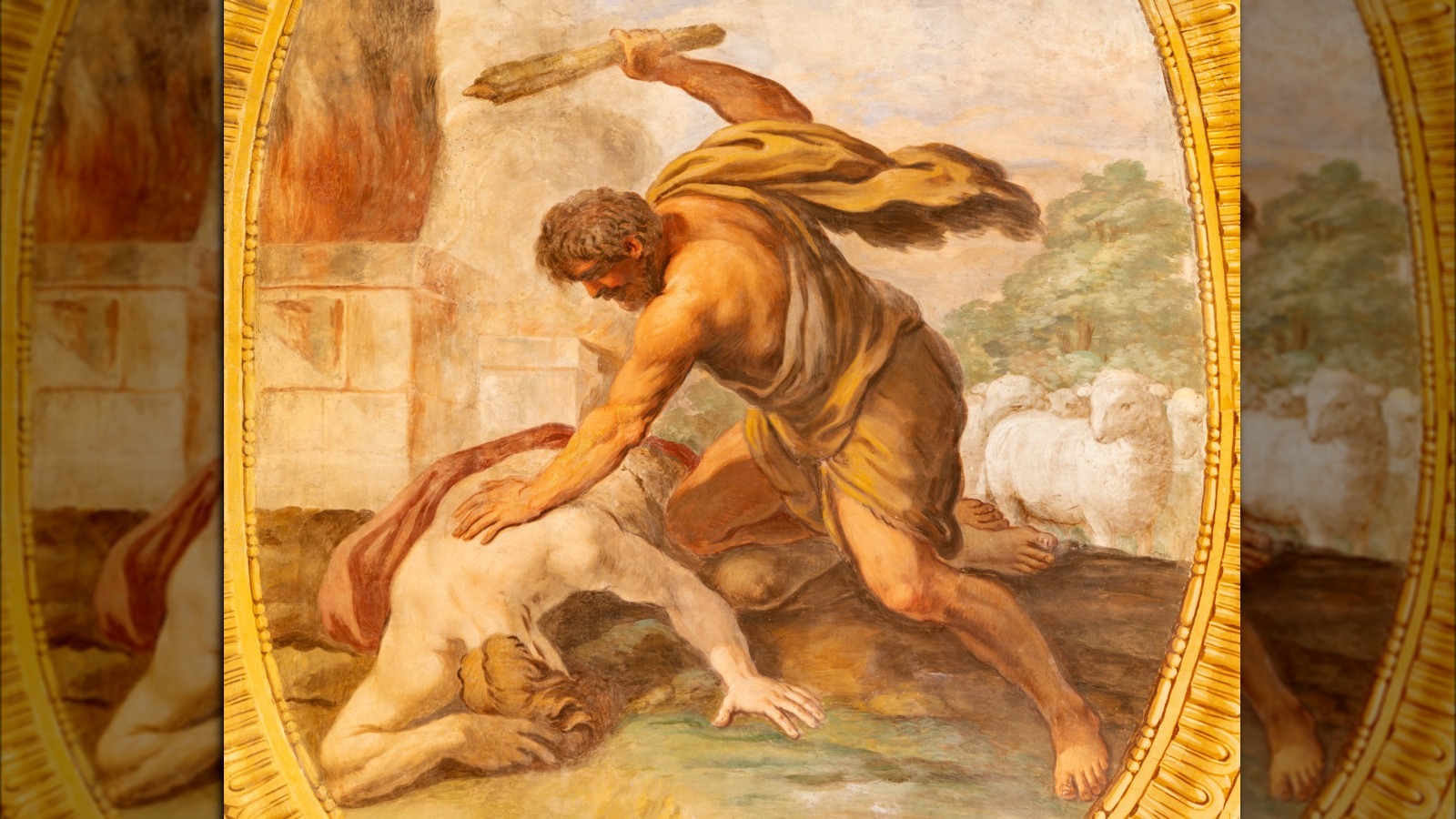
Abel lacked emotional intelligence

It is the common view that highly intelligent people are socially awkward. They lack “emotional intelligence.” Often they are “on the spectrum.” 

This is obviously wrong. There is no reason why having high intelligence would make you less sensitive to the emotional tone of what you say, or its effects on others. The reverse is surely true: if you are intelligent, you will be intelligent in this way as well. You will be more sensitive than average to emotional tones. Studies consistently show that intelligence is general, and applies in all situations.

Nevertheless, highly intelligent people invariably do not work well in groups. They often prefer to be alone. Highly intelligent people are almost inevitably “introverted.” And lonely.

The reason is simple. It is not that they are awkward around others, or do not like other people. It is that other people are awkward around them, and do not like them. 

Think about it. Everyone resents someone more intelligent than they are. Everyone wants to be the smartest person in the room. The person who actually is smartest will have a target on his back.

Imagine being much smarter than everyone else in a group. Everyone else gets to express themselves freely. Most of what they say is wrong. But you, uniquely, cannot say anything. Because people hate being corrected. You must constantly bite your tongue, constantly repress yourself. 

If you say anything, however diplomatically you phrase it, it will be immediately attacked by other members of the group. Others are not attacked for what they say; but you are. Because someone else will want to prove they are smarter than you are. By merely speaking, you will always just get into an argument; and if you defend yourself and win it, this will make them hate you more. It is Catch-22.

As a result, anyone highly intelligent cannot get anything done in a group. To be in a group is more or less always torture. To think and act freely, the very intelligent must act alone, and suffer eternal loneliness. But bad as this is, it is better than the incessant stabs in the front and in the back.

And of course, your inability to work in a group will then be held against you. It proves you lack “emotional intelligence,” and are a failure as a human being. Because anything that can be used against you will be. Others are aways wanting to convince themselves and everyone in earshot that they are a better person than you are.

To see the syndrome writ large, look at the history of the Jews. Look at the ongoing tendency to topple statues and rename streets. The mob resents greatness in others.

Most people are emotionally twisted in this way. Most people are Cain when they encounter Abel.


Sunday, August 03, 2025

Jesus Was No Socialist

Why are haunted houses never small or modest?


First Reading: Ecclesiastes 1: 2; 2: 21-23

Vanity of vanities, says Qoheleth, vanity of vanities!  All things are vanity!Here is one who has labored with wisdom and knowledge and skill, and yet to another who has not labored over it, he must leave property. This also is vanity and a great evil.

For what profit comes to man from all the toil and anxiety of heart with which he has labored under the sun?

All his days sorrow and grief are his occupation; even at night his mind is not at rest.

This also is vanity.

Second Reading: Colossians 3: 1-5, 9-11

1 Therefore, if you be risen with Christ, seek the things that are above; where Christ is sitting at the right hand of God:

2 Mind the things that are above, not the things that are upon the earth.

3 For you are dead; and your life is hid with Christ in God.

4 When Christ shall appear, who is your life, then you also shall appear with him in glory.

5 Mortify therefore your members which are upon the earth; fornication, uncleanness, lust, evil concupiscence, and covetousness, which is the service of idols.

9 Lie not one to another: stripping yourselves of the old man with his deeds,

10 And putting on the new, him who is renewed unto knowledge, according to the image of him that created him.

11 Where there is neither Gentile nor Jew, circumcision nor uncircumcision, Barbarian nor Scythian, bond nor free. But Christ is all, and in all.

Gospel: Luke 12: 13-21

13 And one of the multitude said to him: Master, speak to my brother that he divide the inheritance with me.

14 But he said to him: Man, who hath appointed me judge, or divider, over you?

15 And he said to them: Take heed and beware of all covetousness; for a man’s life doth not consist in the abundance of things which he possesseth.

16 And he spoke a similitude to them, saying: The land of a certain rich man brought forth plenty of fruits.

17 And he thought within himself, saying: What shall I do, because I have no room where to bestow my fruits?

18 And he said: This will I do: I will pull down my barns, and will build greater; and into them will I gather all things that are grown to me, and my goods.

19 And I will say to my soul: Soul, thou hast much goods laid up for many years take thy rest; eat, drink, make good cheer.

20 But God said to him: Thou fool, this night do they require thy soul of thee: and whose shall those things be which thou hast provided?

21 So is he that layeth up treasure for himself, and is not rich towards God.


These mass readings for this Sunday amount to a clear rejection of the left-wing idea of “equity.” Justice, Ecclesiastes asserts, requires that a man keep what he has earned from his labour. Not just his physical labour, but also what he has earned from his wisdom, and knowledge, and care. No doubt it is legitimate for government to take some in return for services rendered. No doubt it makes sense to provide a “social safety net” as group insurance. But for a government to get into the business of wealth redistribution is, in the words of Ecclesiastes, “a great evil.” That should settle the matter.

If not, the Gospel conveys the same message. Someone comes to Jesus demanding that his brother divide their inheritance equally. And Jesus refuses.  So much for Marxist equity.

Jesus says “who hath appointed me judge over you?” This is odd, and commands our attention, because Jesus is the rightful judge of the deeds of all. No one has to appoint him. How is it he has no authority in this case?

Because there is no moral issue involved. In an inheritance, neither party has earned the money. Neither has a moral right to it. So it is an administrative issue, a matter for king or Caesar: what does the law say? 

Jesus then goes on to address the moral issue: demanding equity is the sin of covetousness. 

This is not to let the rich off the hook. This is not to praise the rich. As the second, epistolatory reading tells us, their pursuit of riches is idolatry.

I worked for some years in Toronto with and among the “mentally ill.” Some of the names of these street people might surprise you. You might recognize some of the family names. A striking proportion of the severely mentally ill come from prominent families. Few seem to emerge from wealthy families with psyches fully healthy and intact. Most large old houses are haunted, and have closets full of skeletons. We know this, as a folk truth.

Thoe who are rich are likely to be covetous; for those who are covetous are likely to grow rich. This is obvious on the simple and self-evident principle that when we try to get something, we are more likely to get it. The same will be true for those who strive for social prominence. They are almost inevitably idolators.

Mental illness is spiritual illness. Mental illness naturally comes of growing up in a family with values askew. And the sins of the fathers are visited upon the sons, unto the third and fourth generation.

The rich are not to be praised or admired; at the same time, it is folly to envy the rich. 


Tuesday, May 28, 2024

Bellevue House Decolonized


In a recent discussion among the hosts at Daily Wire, Andrew Klavan rightly argued that antisemitism is not like other forms of racism or discrimination. It is something special, and infinitely worse. The other hosts, even Ben Shapiro, the orthodox Jew, did not see this. 

As Ben Shapiro did point out, however, it is the form of discrimination most likely to end in genocide—arguably the only one.

In other forms of racism, the outsider group is considered inferior. Jews are hated, however, because they are perceived to be superior: “too powerful.”

You do not hate people you think are inferior to you. You are likely to feel sorry for them, and to reach out with. That is the actual experience of blacks or indigenous people. Granted, you don’t want them marrying your daughter. But you don’t hate them, and otherwise wish them well.

You only hate those you think are better than you. These are the people you want to harm or kill.

It is the story of Cain and Abel, repeated endlessly; the second sin of man. God seems to favour this people. Left alone, they always seem to succeed. They seem more intelligent and talented than you. 

Therefore, they must be kept down, or killed. 

To want to harm or kill another because they are more talented or intelligent than you is uniquely and gravely, as Klavan points out, a sin against God himself. God bestows talents. Antisemitism is perhaps the purest proof that someone is a bad person.

Not only Jews, to be fair, are Jews. While they are the obvious historical example, other groups are similarly hated for their accomplishments and talents. The Hakka Chinese in Southeast Asia. The Armenians in the Middle East. I suspect—I may be prejudiced—that this is behind the longstanding English determination to wipe out the Irish. It is clearly behind the current hatred of “straight white males.”

It is behind the Marxist/ socialist hartred for the rich, and ascription of all ills to “rich capitalists” and “greedy corporaions.”

And it directs hatred towards any unusually intelligent or talented or successful individual. Such as Sir John A. Macdonald.

The current frenzy of tearing down statues, renaming streets, and desecrating museums is the same impulse. Sir John A. Macdonald is hated not for any crime, but precisely for his accomplishments. It is worth pointing out that he was one of the greatest advocates in his day for Canada’s native people. As was Egerton Ryerson, another man whose statues have been torn down. Yet those who, like George Brown, actually opposed aboriginal interests, do not receive criticism. Their buildings are not renamed. Macdonald is actually envied for his greater moral goodness. Henry Dundas, similarly, was a leading abolitionist in England; yet he, and not the slavers, is condemned for slavery, and his name erased.

We live in an evil age. What is happening to day is what we will later have to apologize for, and will shamefacedly want to erase from our history books. Like the Cultural Revolution in China, or the Nazi period in Germany.


Wednesday, May 01, 2024

Might Makes Wrong?


This tweet by Elon Musk caught my attention:

“The axiomatic error undermining much of Western Civilization is ‘weak makes right’. 

If someone accepts, explicitly or implicitly, that the oppressed are always the good guys, then the natural conclusion is that the strong are the bad guys.”

This seems to explain how so many are currently supporting Hamas, and its terrorist tactics, against Israel. 

But given this example, it is not exactly “might makes wrong.” Israel is not that mighty: pitched against Hamas alone, it is more powerful, but the broader reality is that Israel is a small state surrounded by much larger enemies. Hamas sought to provoke a larger conflagration, and simply lost that gamble, so far.

So it is mot quite that Israel is more powerful. The precise formula seems rather “success makes wrong,” and “failure makes right.”

One persecutes the Jews, for example, not because they are powerful. They are still always and everywhere a vulnerable minority. It is because they are, individually, more successful. 

Such a formula is obviously destructive to the common good. If all success is condemned and punished, everything will fail in time.

There is a kernel of righteousness in the “weak makes right” argument. Those who crave power are more likely to achieve power. Those who crave wealth are more likely to achieve wealth. And these are vices. Accordingly, it stands to reason that the rich and powerful are more likely to be immoral, as a group, than the poor. Hence the Beatitudes: “blessed are the poor in spirit…”

However, assuming that someone is immoral because they are rich and powerful, or moral because they are poor and weak, is prejudice. As Musk goes on to say, this is no substitute for making moral judgements.

Cain killed Abel because he was more successful. God did not exempt the poor in Sodom and Gomorrah, or Nineveh, or Canaan. 

Those supporting without question the notion that “weak makes right” are simply possessed by the vice of envy.


Monday, October 30, 2023

Envy


It is a curious fact, in need of explanation, that much of the world is currently cursed by awful leadership at once. Justin Trudeau, I would argue, is the worst prime minister Canada has ever had. Joe Biden is certainly in the running for worst US president. Francis is so historically awful as pope some Catholics wonder if he is a sign of the end times. Rishi Sunak in Britain is, at best, a technocratic cipher.

And why is it that, not so long ago, the US, Britain, and the Catholic church all had outstanding leaders at once: Ronald Reagan, Margaret Thatcher, John Paul II?

I am reminded of the adage, “hard times produce good men. Good man produce easy times. Easy times produce weak men, Weak men produce hard times.” This may be the cycle.

Reagan followed the appallingly pusillanimous Jimmy Carter and his time of “malaise.” Thatcher followed a period of labour chaos presided over by the forgettable Jim Callaghan. John Paul II followed the notoriously prevaricating Pope Paul VI, the “Hamlet pope,” who seemed not to know his own mind.

Conversely, Justin Trudeau came in following a period of tranquility and prosperity, thanks to the fiscal discipline of Stephen Harper and, to some extent, Paul Martin and Jean Chretien before him. Although Trump’s presidency was superficially chaotic, Joe Biden followed a period of unusual peace and prosperity under Obama and Trump. Francis was elected after JPII and the intellectually impressive Benedict XVI.

I think this tendency to elect medicrities can be put down to envy. In ordinary times, people do not want to vote for someone better than they are. They will actually prefer a mediocrity. They turn to impressive leaders only in an emergency.

This is especially a problem in the US Democratic party. The party starts out representing the bottom half of the US IQ range: there is truth to the old saying that anyone who is not a socialist in youth has no heart, but anyone who is not a conservative once they grow up has no brain. And it is positively founded on envy as its chief principle. So this coalition is going to want to elect people with a lower than average intelligence. This explains a lot.

Winston Churchill is the perfect example  of this envy principle. He had been in government for decades—but he was not popular with his colleagues. They preferred to give the premiership to Neville Chamberlain, a dull mediocrity, perfectly suited, as someone remarked, to be mayor of Birmingham. He blew with the wind.

Only once in the most desperate crisis, did his country turn to Churchill. As soon as the crisis passed, they turned away again, in favour of another cipher, Clement Atlee, “a modest man,” as Churchill described him, “with much to be modest about.”

The sin of envy is all-powerful; it holds us all back. it tears down statues of the great. It holds human civilization back in uncountable ways.


Saturday, October 01, 2022

The Real Problem of Poverty


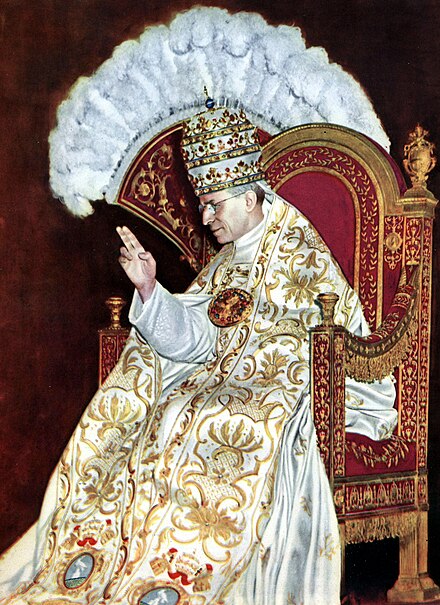
Pius XII in the sedia gestatoria

Just attended a poetry reading on the theme of poverty. Unfortunately, after a dozen poets had read their poems, the meeting devolved into a political meeting, with the hosts insisting that the problem was systemic, that it was about intersectionality and some having special privilege, and—revealing quote—“the real problem is not poverty, but abundance.”

It is not that the left wants to help the poor; it envies the rich.

Perhaps a dozen poets read. Only four were “white.” Only two spoke of personal experiences of poverty. Both were white. 

Despite this, as if deaf, the hosts asserted afterwards in their political speech that poverty exists because white people, along with straights, and men, have a systemic advantage.

In fact, the Canadian immigration system favours the wealthy and well-educated among immigrant groups. We are importing the upper classes. And being rich in a poor country means far more privilege than being rich in Canada. Once they arrive, these non-white immigrants are systematically given privileges over those, primarily “white” who have been here for generations; in the name of “affirmative action” and “equity,” they are systematically favoured in hiring and promotion.

I once challenged a Pakistani immigrant of my acquaintance, a grad student at U of T. 

“Why do you say you are discriminated against?”

“Because I’m not yet a member of the Granite Club.”

Another claimed oppression becuase he was not yet a full partner at his accounting firm.

So it is no surprise that it is the “whites” in any random group of Canadians who have known poverty. The usual claims we hear about “intersectionality” are the opposite of the truth. 

In the same way, gays are privileged over “straights,” not just now, but throughout our history. A gay man has no wife and kids to support. A gay couple generates double incomes with no children. In the traditional sex-segregated workplace of days gone by, a gay man or woman could trade sexual favours for advancement.

Women are traditionally privileged over men, and always were. In a conventional family, they got to spend 80% of the family’s shared wealth. They had a legal right to support if they chose not to work. They had more free time--demonstrated by their much higher purchase of magazines and books, and that the vast majority of TV programming was aimed at them. Men have always been the working class; and expendable in war or in dangerous jobs.

In other words, the modern social hierarchy called “intersectionality” systematically asserts the opposite of the  truth.

One of the participants at the poetry reading, citing the recent royal funeral, went on about how wrong it was for the British royal family to possess so much wealth. Why couldn’t it be distributed to the poor?

But distributing it to the poor is not the point. Were it distributed to the poor, it would help a bit perhaps, a few pounds more for a month or a year, and then be gone forever. It would be very little per capita. On the other hand, the crown jewels, for example, are not of any great personal benefit to the Queen. She gets to wear them once, at her coronation, and then they are stored behind glass at the Tower of London for tourists to look at.

The pomp of a royal funeral, or the crown jewels, are major tourist attractions. They generate wealth. Including more wealth for the poor than a one-time distribution of state wealth would.

So the problem is not that some people are poor. The problem is that the royals are rich. The problem is envy. The relatively rich always envy the richer. The poor have no such ambitions. They only want enough. The poor delight in the chance for a celebration now and then, to pull them out of their sordid daily lives; just as it is the poor who will invest in a lottery. To them, it is worth the penny for the fantasy.

One participant in the political discussion was similarly shocked by a scene she said she saw in the Vatican. Women were tearing off their jewellery and throwing it at the pope in his chair.

I have some doubts she actually saw this. The pope has not promenaded in a chair since John XXIII. But if she did see it, what was she seeing? Not the accumulation of wealth, but relatively wealthy people—wealthy enough to own valuable jewellery—surrendering their wealth. The pope was not going to wear that jewellery, was he? The pope does not get to live a particularly luxurious life. The jewellery, if it was collected, was more likely to go to the poor, through Catholic charities. And if not to the poor, to the church rather to any individual. To churches, open for anyone to enjoy.

People who are up to no good will always assert the opposite of the truth. And, if anyone corrects them, will set up an ungodly howl.

Accordingly, I bit my tongue. Such is the price of life in society. The most I dared do was post in the comments section "the real underlying problem is poverty of meaning."

Instead, I go home and post on my blog.


Friday, October 23, 2020

The Real Roots of Racism


Scott Adams made a vital and often misunderstood point in his latest YouTube video: he makes the necessary distinction between “white supremacist” and “white racist” by observing that people are never racist because they think they are inferior to the group they hate. Racism comes from thinking you are inferior, or at least threatened.

I think the same may go for hatred and discrimination in general.

Hitler and the Nazis and the Germans who supported them hated the Jews because the Jews seemed to run everything; they did not really think the Jews were inferior, although that might have been their alibi. The South African whites, in the days of apartheid, hated the blacks because they were vastly outnumbered. Moreover, the Zulus were famously fierce and effective warriors, who had not long ago “broken the British square.” 

Black slavery in the US South was probably nothing personal, and not really about racism. It was about money, and cheap labour. The hostility to blacks after the Civil War probably had to do with the fact that freed slaves constituted half the population; and they had, at first, the aggressive support of the federal government. They looked like a constant danger; whites no doubt feared being raped or murdered in their beds.


Sunday, June 21, 2020

Down with Everyone and Their Mother


Turkish talisman against the evil eye

In all the rapidly rising fever of bust-busting, I see nobody speaking of the real reason it is happening.

This is important, because the true cause is arguably the deadliest of the Seven Deadly Sins. Envy is the one sin that never dare speak its name; making it especially difficult to root out. For this reason, it is vitally important to see and name it when it appears. It is sinister that nobody is in this case. And it is fantastically common. Most folk cultures worldwide are vitally concerned with the “Evil Eye.” It is envy they are talking about.

The nominal reasons these statues are being torn down are obviously spurious: they differ statue by statue. Nor is there any sense that the statues torn down represent the worst offenders, of whatever crime they are charged with. It is perhaps worth mentioning that there is a mural of Benito Mussolini still displayed inside a Montreal church. Nobody has called for its removal. Not even during the World War.

Benny Muscles visits Little Italy.

It goes without saying that any possible mortal could be accused of some moral depravity. It is always possible to find such a reason to tear down a statue. Mobs have now torn down effigies of Mahatma Gandhi, Francis Scott Key, Ulysses S. Grant, Saint Junipero Serra. It is not that we are not all saints—there is not even a saint without sin. Moses murdered a man. St. Paul probably murdered many. If sinlessness is suddenly the standard, all statues must come down.

No, this pandemic of statue-tipping is because of envy. Nobody paints over Mussolini, because nobody envies him. The fact of a statue proclaims that someone has done something worth notice with their life. That is intolerable to any narcissist who has not. The same motive is behind assassination: you want to kill John Lennon or John Kennedy not because of their politics, but because they are famous and you are not. The same motive is behind our hysterical cancel culture. It is an epidemic of envy.

But statues, for the narcissist, are especially seductive: one is not only attacking the person commemorated, but the sculptor, his talent, his achievement. Destroy it all!

The instinct toward envy necessarily ends in the ruin of all good things. It is always easier to pull down than to build.

This is the way we are now headed: the deadliest sins running wild in the streets


Monday, April 22, 2019

The Resurrection of the Left


My left-wing friend Xerxes has chosen the occasion of Easter to declare his belief that our civilization is in need of a resurrection.

I find it fascinating that we both think our civilization or culture is in crisis, both left and right think so, but for completely different reasons.

What alarms me is an apparent growing lack of faith, values, morals, growing totalitarianism, and an aggressive attempt to shut down civil discourse. What frightens him is growing income inequality and global warming. Both of which strike me as non-issues.

As for income inequality, it is inevitable, if everyone is getting richer, that income inequality is going to grow. If, for example, everyone’s income goes up by 20%, the result will be greater income inequality. Income inequality is reduced, conversely, so long as everyone is getting poorer. And an economy that is not growing is almost surely shrinking. So you really have only two choices: either growing income inequality, or growing poverty.

In addition, if any new advancement is found, improving prosperity generally, those who invent, discover, or first adopt it will see their incomes shoot ahead. It will take time for this to spread to everyone. By that time, with any luck, something  else new has been invented. Accordingly, the better everyone’s life is getting, the more income inequality you will get.

And what exactly is the problem with income inequality? So long as everyone is getting enough to meet their needs, how does it harm A if B is doing better? To object is surely simply the sin of envy: I am coveting my neighbour’s goods. This is sometimes presented as the worst of all sins. It was the sin of Cain, that brought murder into the world. Some make it the sin of Eve, and of Lucifer as well; the Quran does.

As for global warming, the full proposition we are required to accept is not just that the earth is getting warmer. To avoid “denying,” you must embrace a sequence of assertions: 1. That the earth is getting warmer. 2. That this will not be corrected by any natural processes or upcoming technological improvements, without conscious large-scale human intervention. 3. That the earth getting warmer is, on balance, a bad rather than a good thing. 4. That we can meaningfully do something about it, and 5. That the costs of doing something about it are less than the costs of letting it happen.

Each of these proposition is clearly in dispute, including the first, that the earth is getting warmer. Just do a web search. Some say it is getting colder. The computer models that assert global warming have so far been consistently wrong whenever they have made a prediction specific enough to be tested. Given that we do not know whom to believe, and have no personal expertise in the area, we should rationally take them all at 50/50 odds. Each requires the previous one to be true, so this is cumulative. We end up with a 3.1275% chance of the “global warming” dogma being true and large-scale government action being justified. That’s not good odds for putting down a lot of money. And that is without factoring in whether the given solution proposed is going to be the proper one, if there is more than one option, and whether you can convince all the governments of the world to adopt it.


Thursday, August 24, 2017

The Human Urge to Destroy


Calvinist "iconoclastic" riot, 1566

Foreigners get noticed in a homogenous place like Korea.

Once, visiting a temple in winter, full of weekend visitors from the town nearby, I saw an exquisite tiny snow sculpture on the temple platform. Someone, out of sheer love of beuty, had created this wonderful thing that soon would melt away. I had to get a picture. Unfortunately, the film in my camera had run out. I had to step away for a minute to reload.

When I had returned, someone had smashed the snow sculpture.

Why?

For the same reason people are suddenly in a fever to destroy statues and memorials of the past everywhere.

I think they noticed the foreigner admiring it, and, because they had not built it, found this intolerable.

This has happened before, many times before.

It famously happened in the seventh century, from whence we get the term “iconoclasm.” Priceless art was destroyed throughout the Byzantine Empire. It happened in the Reformation, with the looting of churches and smashing of images. It happened in the French Revolution, the Mexican Revolution, the Spanish Revolution. It happened in the Cultural Revolution. The Taliban did it in Afghanistan, and Isis is doing it now in Syria and Iraq: going into museums and destroying everything they can.

It is one of the great dangers, perhaps the greatest danger, that civilization faces.

Obviously, there is some basic human instinct at work here.

There is a simple and pretty much absolute principle involved: Creation good. Destruction bad.

This is pure evil. It is the same drive that leads, in most of the same upheavals, to mass murders.

It is also the instinct that prompts assassinations. It is the same instinct that killed Gandhi, Martin Luther King, the Kennedys, Lincoln, or John Lennon.

A victim of European Reformation iconoclasm.


This instinct is most properly referred to as “envy.” See the story of Cain and Abel for the classic example.

Creating something significant or beautiful or good is hard work. Few can do it. Destroying something, or killing someone, on the other hand, is dead easy. Anyone can do it. And by doing it to something or someone good, significant, or beautiful, one takes to oneself, in a perverse way, some of the fame of the original creator.

Take down a statue of Robert E. Lee, and you are declaring to the world, if not proving to anyone but yourself, that you are a better and a greater man than that snivelling little Robert E. Lee. And better than the artist who created the statue as well, or the people who organized and supported its creation, I suppose.

All else is alibi.

An interviewer once went to prison to interview Sirhan Sirhan, the murderer of Bobby Kennedy. Sirhan had been working out. When the reporter appeared, he struck a bodybuilder pose, flexed his muscles, and said “So now what do you think of Sirhan Sirhan?”

That, I think, is a window on the soul of an assassin. 

Bamiyan Buddha, destroyed by Taliban.

They want to be someone important. They want to do something big, and they think tearing down something big is their main chance.

God help us, but we are at a time in history when the assassins are being given free rein. There are a lot of them around, given a chance. Hitler had no problem finding willing executioners. They are constrained at most times only by legal sanction.

Quickly, more quickly than many might have imagined, the call to tear down all traces of Confederate memorials in the US is metastasizing, feeding on this basic and base instinct like a fire on gasoline. The oldest American memorial to Columbus has just been destroyed by some vandals in Baltimore. A city in Ohio has banned celebration of Columbus Day.

This could be awkward. If we now have to remove all references to Columbus, we will need, for starters, to rename British Columbia, the nation of Colombia, Columbia University, and Columbus Ohio. And God help us if they twig to Amerigo Vespucci being a colonizer. We will have to rename the USA, plus two continents. But that is the direction we are heading, at warp speed.

In Canada, among the victims so far are poor defenseless Hector Langevin, Egerton Ryerson, Lord Cornwallis, and Sir John A. Macdonald. The teachers of Ontario—teachers!--have just demanded that any schools named after Macdonald be renamed.

But they had better be careful what new name they choose. There is no telling who or what is next. In Ghana, a university has just removed a statue of the racist Mahatma Gandhi.


Saturday, October 10, 2015

That's Debatable


William James Sidis

An odd little item in the news, little noted and no doubt not long remembered: a debate team composed of inmates from the Eastern New York Correctional Facility just defeated the Harvard debate team in a judged contest. The Harvard team had just won the national championship. Apparently, the inmates also did this without having access to the Internet for research—it's against prison rules. Even books for research had to be pre-approved, and such approval could take weeks. Nor, of course, did they have anything like Harvard's library facilities.

There are various possible explanations for this anomaly. Perhaps the Harvard team did not take the competition seriously enough. Then again, the prison team had previously beaten University of New Hampshire and West Point. Perhaps the lack of distractions in a prison is a huge advantage. Perhaps the judges were biased.

But the simplest explanation is this: the smartest people in the US are not in Harvard. They are in the prisons.

And this might well be so.

Consider William James Sidis, the man said to have the highest IQ on record. He did go to Harvard—it was a family tradition. However, he left when the other students threatened violence towards him, and took up a teaching post in math at Rice. Here he was fired. He signed up for law school, but quit. Then he was arrested, and sentenced to eighteen months in prison, for demonstrating against the World War I draft.

He might, in those days, have been enlisted for a prison debate team. Who knows?

Sidis then spent time in a mental asylum, and emerged to a life of low-level clerical work with adding machines. He wrote and published anonymously in his free time.

So much for high intelligence leading to worldly success.

The vast majority of people are, of course, average. There is that bell curve thing. The world and all its systems are therefore built by and for more or less average people. They are not going to function well when they encounter an exceptionally smart person, Firstly, the systems themselves will almost certainly have been designed by people of average intelligence. They will seem pretty dumb and risible to a smart kid. They will not command his respect nor commitment; and they are likely to return the favour. Secondly, these systems and personnel will have had little or no experience dealing with the exceptionally intelligent. Imagine being ten feet tall: everything is built for people six feet or less. Your height will be a major disability. Thirdly, according to those who work with IQ, people are generally incapable of understanding another when their IQs vary by more than about 15 points. A person of average intelligence is not going to be able to understand how a person of really high intelligence thinks. Just as a cat, never able to grasp how a human walks, always seems, with the best intentions, to be underfoot.

It must be maddening to a Sidis.

Public enemy number one.

But there is worse. It is human nature to want to believe we are personally very smart—the smartest person in any group, if not secretly the smartest person who ever lived. As a result, unless we have a keen self-awareness and a healthy conscience, or have experienced enough humbling hard knocks, we are going to resent and envy anyone who makes us feel this is not true. By being smart, they are making us feel very bad. Rather than admit inferiority in this crucial matter, we are going to tell ourselves and anyone else around us that the offending genius is not really smart, but cheating in some way, or arrogant, or impolite, or unbalanced, lacking in some other quality, like empathy, or flat out insane. We are going to want to hurt them, if we can. At a minimum, they must submit to our complete control, to demonstrate to ourselves, to them, and to anyone else looking that we are really the superior party intellectually. They will owe that to us.

Leaving aside the alternative example of the Jews, this is just what obviously happened to William James Sidis. For survival, he was forced to completely estrange himself from his family, who sought to control him, and had locked him in an asylum. His fellow students at Harvard wanted to kill him. His professorial colleagues and students at Rice could not stand him, and drove him out.

Yet, everyone who knew him as a simple clerk, after he in effect went underground, loved him, and testify that he was a great friend.

It makes sense, then, if the most intelligent among us, especially if facing all this trouble already in childhood, before we are likely to be able to figure out for ourselves what is really going on, are going to become deeply alienated from society; perhaps especially from the educational enterprise. The message is clear: the rest of the world is out to get us. Why wouldn't we turn to crime?

Up to about fifteen points smarter than average, granted, we are going to do well. Beyond that, each additional IQ point probably brings with it more social hostility than advantage, so that with each the odds increase that we will end up in prison or in a mental health facility instead of the Ivy League.

Public emeny number two.
Besides the terrible injustice, the cruelty, and the waste of lives, this problem is properly a great problem for every one of us. If this is true, we are imprisoning or drugging into semi-consciousness the majority of people who could further general human well-being. We are punishing and suppressing the very people who could produce a cure to cancer, or end poverty, or compose the next great symphony, and so on.

It seems likely to be so. And, not incidentally, it is one clear message of the New Testament as well.