
Playing the Indian Card

Showing posts with label conservatism. Show all posts

Friday, June 21, 2024

Reform UK and Reform Canada


Mr. Charisma

Summer is usually slow for news. Not this summer. We have epochal elections underway in both France and the UK. In the UK, many people are pointing to the “Canadian example.” Kind of flattering to get noticed. 

They mean the election of 1993, in which Kim Campbell led the Tories from a majority, 168 seats, to just two seats in total. The suggestion is that something similar could happen to the British Tories in two weeks’ time. In both cases, supposedly, it was because of the emergence of a new party on the right, in both cases named “Reform.” 

(The original “Reform” was actually a US movement, under Ross Perot; but that perhaps takes us too far afield.)

Are the situations really similar?

Campbell in 1993 was actually facing two insurgent parties, Reform and the Bloc Quebecois, a regional separatist party. The BQ actually did better than Reform in that election, and so was a more significant factor. The BQ was formed by former Conservatives, and mostly cut into their vote. In the UK, there is a comparable regional separatist party, the Scottish Nationalists. But they naturally cut into the Labour vote, not the Conservatives. 

Based on this difference, it seems the British Tories have less to fear.

On the other hand, the leader of Canadian Reform at the time, Preston Manning, was not charismatic. Nigel Farage, the UK Reform leader, is uniquely charismatic. 

Based on this difference, it seems the British Tories have much to worry about.

On the other other hand, Canadian Reform was also fuelled by regional resentments, whih gave them a natural base generating seats in Parliament. UK Reform does not have this.

In either case, the reason for the insurgency is the same: no federal party was addressing an issue, or issues, of vital concern to the general public. People felt they were being ignored. In Canada, it was about changing the constitution; although immigration levels were already also a concern. In the UK today it is mass immigration.

More broadly, there is a natural schism in “Conservative” parties. Because the left has gone Marxist since at least the 1930s, perhaps since the “Progressive” era of the 1920s, “conservative” parties have become coalitions of everyone else, of both actual conservatives and classical liberals. 

These philosophies are not compatible. 

In the UK, conservative Conservatives are referred to as “one nation” Conservatives, or sometimes as “wets.” In Canada, they are called Red Tories. They believe in paternalistic, government, as did Disraeli or Burke. Classic liberals want a smaller government and respect for individual rights and freedoms, like Gladstone or Jefferson.

Tension between the two is inevitable. If one faction suppresses the other, you get a revolt. Yet it seems that a coalition of both has been needed to overcome the Marxists.

This may no longer be true. 

Monday, May 27, 2024

Pope Francis Lays It Out


Pope Francis has condemned “conservatism” as “wanting to cling to something, and not seeing beyond it.” “It is a suicidal attitude.” “Being closed up inside a dogmatic box.”

Merriam-Webster defines conservative as “support of established institutions”; “tending or disposed to maintain existing views, conditions, or institutions”; “marked by moderation or caution.”

Francis is misdefining “conservative” to mean “obsessive.”

But he obviously intends to malign real conservatives. 

He is, therefore,  objecting to and condemning support of established institutions, existing views, and conditions. And he objects to moderation and caution.

This means the pope stands in opposition to the Catholic Church: there is no more established institution. He stands against the “deposit of faith.” The reason for the church to exist is to preserve and spread dogma, this set of revealed truths. He calls it a “dogmatic box.” And he stands against the virtue of prudence, aka moderation or caution, which both Aquinas and the ancient Greeks considered the mother of all virtues.

"Prudence is the foundation of all these things and is the greatest good. Thus it is more valuable than philosophy and is the source of every other excellence.” It is “the cause, measure, and form of all virtues.”

So the pope stands against the Catholic church as an institution, against Catholicism as a faith or set of beliefs, and against virtue. 

Is the pope Catholic?

Clearly not.


Sunday, July 04, 2021

A Window on the Leftist Mindset


Adam Smith's ungraved marker.

A long communication from a left-listing acquaintance gives insight into gauche thinking.

He writes: “I lead safaris in Kenya. There, I do not walk about in major centres alone. White privilege is seen around the world.” 

His evidence here for white privilege is exactly the evidence used to prove black discrimination in America. In America, it is supposed to be white privilege that whites can walk the streets without being stopped or harassed. Yet the need for whites to be careful when walking around in Kenya, or Harlem, is, equally, white privilege. 

This illustrates that “white privilege” is simply assumed. It is non-falsifiable.

Our correspondent then points out that we have actually known for a long time about the unmarked gravesites near residential schools that have recently been probed by radar. To his mind, the scandal is that “individual graves and the person buried has been disrespected and families not treated justly.”

But not treated justly by whom?

Whom do we usually consider responsible for marking and tending graves? In the first instance, the family. Why in this case are they not held responsible, but instead seen as victims?

If no family can be located, or the family is too poor, then it is the government’s responsibility. But this ordinarily means the local government, and certainly would have in the 19th or early 20th century. “The city where the person has died pays for the funeral, and will employ a local funeral home to manage the burial.” (talkdeath.com) 

These gravesites are on Indian reserves. The local government is the band council—indeed, they claim more than municipal sovereignty. So why are they the victims here? Why have they not tended their gravesites?

This illustrates the problem aboriginal people face; it is the same problem we saw in MP Qaqqaq’s recent farewell speech. It is learned dependency. What other Canadians do for themselves as a matter of course, aboriginal people have come to expect a distant government to do for them. This is never an efficient system: this is the way you create a permanent underclass; or a Third World nation. The chronic poverty and despair on reserves is the result.

Which brings us to our correspondent’s description of the Conservative Party: it “has a fundamental principle that small government and lower taxes is the best way forward and the private sector will use their wealth to the benefit of society.”

Which thought he dismisses out of hand. Why would they?

His description is at least partially true: Adam Smith’s “invisible hand” argues that, in a free market, even though everyone is pursuing their self-interest, the actions of all participants will tend towards the general benefit. Goods and services will be as abundant and as cheap as possible. In this sense, each individual participant is using their “wealth,” such as it is, to the benefit of society. 

If Bob, or someone else, finds Smith’s reasoning here flawed, they need to address it; not dismiss it out of hand.

But the simpler calculation, for liberals (currently often, as here, called “conservatives”), is simply that each of us has a better idea of our own needs than some distant government official, however well-intentioned. Therefore, it is less efficient and more expensive to transfer your property to him, and then let him look after us. Even assuming that no government officials take any salaries or have any self- or class interest.

If one is poor enough, granted, one may personally benefit financially. Money is taken from the relatively rich, and given to you. But this is selfish; it is at the cost of the general good.

And the example of the Indians (used here as the correct legal term) suggests where this leads. 


Tuesday, April 27, 2021

The Conservative Liberal Budget


Friend Xerxes summarizes the highlights of the new Canadian federal budget as “child care, a green economy, pandemic relief, increases to old age pensions, funding for improving the health of indigenous communities.”

Although introduced by the “Liberal Party,” this is a strikingly conservative set of priorities—conservative in the true sense.

The OED defines “liberalism” thus: “Support for or advocacy of individual rights, civil liberties, and reform tending towards individual freedom, democracy, or social equality; a political and social philosophy based on these principles.”

That is more or less what they call “libertarianism” in the US now. The Koch brothers are liberals. Maxime Bernier is a liberal, or was when he ran for the Conservative leadership.

“Conservatism” or “Toryism” sees this approach as soulless. The state, instead, is like a family. Equality is not the point; the point is everyone having responsibilities to everyone else.

Let’s go down the list of what the Liberal government wants:

Government-funded child care is classically conservative. The government as parent: this is an almost perfect expression of that concept.

A green economy: this is conservation, preservation of what is, conservatism by both definition and etymology.

Pandemic relief: Conservatives, seeing government as a parent, would of course issue relief. I assume, however, that any government would see this as their responsibility in an emergency. And all governments have, worldwide, in this pandemic.

Increases in old age pensions: in Canada or the UK, the old age pension was originally brought in by a Liberal government, but less as a matter of ideology than to co-opt the Marxist left. In world terms, the first old age pension was introduced by Bismarck in Germany, under a conservative regime. It can probably be justified by either ideology: as paternal care for a vulnerable group, or as just reward for labour.

Funding indigenous communities: a classic conservative position. Liberalism calls for social equality. Treating indigenous people differently is an obvious violation of that principle. Conservatism is more inclined to endorse such things; it sees the indigenous people as wards of the state, like children. Liberals would consider this an affront to human dignity.

Perhaps the most important distinction between the two philosophies is that conservatism seeks to preserve the status quo, with those in power preserved in power, while liberalism wants to open things up and, broadly, democratize. 

In this ultimate sense, too, the modern Canadian Liberal Party is conservative. It is the “natural governing party,” which represents and is supported by the big corporations, the government bureaucracy itself, the professions. It sees “populism,” unrestrained democracy, as its enemy.

Each philosophy might have an argument, but the important thing is to keep our terminology consistent. There is a danger is political speech to deceive by falsifying the meaning of terms. The general intent of much political language, Orwell warned, is “to make lies sound truthful and murder respectable, and to give an appearance of solidity to pure wind.”


Saturday, September 19, 2020

A Conservative Approach to Teaching Global Issues


A question comes over the transom from a professional publication, for inclusion in an upcoming feature: 

We would like to know what you think about the following question: "Is it possible to teach global issues in conservative context?" 

This is encouraging. It is new to see an educational field acknowledging that there might be such a thing as a legitimate conservative viewpoint. 

“Global issues,” for the uninitiated, usually means class time taken up preaching about climate change or pollution, “gender equity” (sexual politics), or “decolonization.” 

I leapt at the opportunity to insert a conservative voice. Although, to be frank, I may be taking a career risk. My response:

I think it is strictly speaking not possible to “teach” global issues in a “conservative” context. “Conservatism” means respect for the learner’s autonomy and for the host culture. Those who teach “global issues” tend to presuppose there is a “right” answer and a “right” opinion on these issues, and it is generally the opinion of the political left wing in their home countries. This approach is of course not conservative. Respect for learner autonomy and for cultural differences would mean the teacher should listen rather than teach—not imposing their own values. In most ESL contexts, the students know more about the host culture than the teacher does; and they may easily know more about global issues and global culture than the teacher does. Qualifications in TESL do not grant knowledge of global issues.


Sunday, March 08, 2020

The Political Spectrum


I put my stock in Locke

I have never referred to myself as a “conservative.” I am not. I am a lifelong liberal.

That used to put me on the left of the political spectrum. But now, everything that is not Marxist is considered “right-wing.”

Since Marx has been positively disproven, that more or less means that anyone who is simply lucid is now “right-wing.” Our politics have become that distorted. 

Marx brothers.


There is something deeply symbolic here about the US Democrats rushing to nominate for their presidential candidate someone who is obviously suffering dementia. There is something symbolic about their almost phobic reaction to a seemingly sincere candidate like Tulsi Gabbard or Bernie Sanders in favour of an obvious huckster. Honesty and sanity are clear and present dangers.

But liberalism and conservatism are different philosophies, which used to represent the opposite ends of the political spectrum.

Liberalism believes in the political philosophy of John Locke: democracy, equality, human rights. It wants definite limits on government power. It advocates free trade and free markets. The core idea is free choice: man exists to make moral choices, and human dignity accordingly demands that free individual choice must be wherever possible respected. It is generally opposed to foreign entanglements; it does not like the discipline of military culture on principle, and given human equality, other nations need to be free to settle their own affairs. 

Perhaps the founding philosopher of modern conservatism: Edmund Burke.

While not in opposition to this, conservatism has no special interest in democracy, equality, or human rights. It sees the state as an organic entity, like a family. Like a family, it is the duty of the more capable to look after the less capable, as parents might look after children. This rejects equality intrinsically; it means democracy may well also need to be set aside, and human rights. The rights of a child are limited, even if there are more children than adults in the family.

Conservatism sees no formal limits to the power or involvement of the state. The state is there to help as needed, and should do whatever is required. Nevertheless, it would generally prefer non-state solutions. The state is there to preserve and support the culture, and if the culture is healthy, the state has less need to intervene. A healthy culture means a balance of interests, with respect for traditional institutions which have developed organically.

Conservatism believes in an active foreign policy, on the premise that the state has a duty to do its part to preserve international peace, just as neighbours have the duty to look after neighbours. Again, not believing in human equality, it holds that a healthy and a wealthy nation may have a moral obligation to intervene elsewhere to help a less-advantaged population. It prefers favouring local producers over free trade, and sees no problem with government intervening in the market to pursue national interests.

Sometimes modern liberals brand themselves “libertarian.” I do not use this term for myself, because it implies a rigid adherence to liberal principles, and I see good arguments on both sides. In a given situation, I can be persuaded that the conservative policy is better. And there is something intrinsically wrong with being doctrinaire, rather than debating and considering each situation on its merits.

But what does the modern “left” believe? Like conservatives, the Marxist left has no natural interest in either democracy or human rights. Nominally, it sacrifices both to equality. Yet the Marxist concept of “equality” is actually the conservative idea of class difference: that the capable must care for the less capable as if they were children. The “capable” for Marxists meaning the bureaucrats, the professions, or the “vanguard” of intellectuals.

Classical Marxism would and did oppose foreign entanglements, and modern leftists most often do, although inconsistently. Wars exist, in their minds, only to benefit the ruling class. They are supposedly always about “oil,” by which they seem to mean, more specifically, more profits for some oil company. Apparently ordinary people do not need oil, and are oppressed by it.

Marxists not only see no natural limits on the power of the state; Marxists want the state to aggressively appropriate power from all other traditional institutions. This dramatically distinguishes them from either conservatives or liberals. The premise is that all existing traditions exist to perpetuate inequality and buttress the ruling class. Marxists want the state to aggressively destroy the culture as a whole, on the same premise. The classical idea is, of course, that on the rubble a government-free, truly equal society will spontaneously emerge.

This is all rather like a farmer imagining that, if he kills all his livestock and burns all his crops, infinitely better crops and better livestock will spontaneously appear.

Modern Marxists, or at least the modern left, oppose free trade as well. The premise is that free trade helps the rich and harms the poor. This premise seems perfectly arbitrary in Marxist terms, since foreign workers are working class too, and poor people benefit from cheaper manufactures more than the rich, but this is where it stands currently.

And they are aggressively in support of open borders and large-scale immigration, which seems to directly contradict their stance on free trade.

Nevertheless, this contradiction seems less important than the hope that a large influx of people from elsewhere will degrade traditional non-government institutions and traditions, like church, neighbourhood, manners, or family.

I said at the beginning that Marxism has been positively disproven. I do not only mean the conventional argument that everywhere it has been tried it has led to eventual economic stagnation or collapse, and genocide. It has, but that experiment need never have been tried even once. It was already disproven on its own terms before Lenin detrained at the Finland Station.

Marx claimed a scientific basis for his theories. That means they are falsifiable: Marx made certain definite predictions, and if they did not come true, the theory was wrong.

They have not come true.

Marx predicted that over time, a smaller and smaller group of “capitalists” would become wealthier and wealthier, while more and more people would descend to the proletariat, living on wages for manual labour, and this large mass of the population would become poorer and poorer. 


Despite all the Marx-inspired current talk of “income inequality” in the US, this has not happened. The class of people owning the means of production has instead steadily grown, fewer and fewer people are members of the proletariat, and the proletariat itself has become steadily better off.

Marx predicted that the revolution, and the transition to socialism, was a natural evolution, and so would come first to the most industrialized and developed countries. Instead, Marxist revolutions have consistently been in poorer and less developed areas: Russia, China, Vietnam, Cambodia, here and there in Latin America or Africa. And they have tended to collapse into “capitalism” over time. While Marxist parties have had some electoral success in the developed world, it has been hit and miss, and no evolutionary trend seems evident. If anything, their proportion of the popular vote seems in decline. At the same time that Marxism has been growing in influence on the left, the left as a whole seems to have been shrinking. Two words: Jeremy Corbyn.

Marx predicted that, given the intrinsic structural problems in capitalism, over time periodic recessions and depressions would become worse, until the system collapsed. Instead, touching wood, our recessions and depressions have become less severe since the 1930s.

That being so, why is it that Marxism still holds such power over the left, seemingly growing year over year?

I think Marxism thrives as an amoral alternate explanation of society; a trait it shares with that other amoral asteroid-challenged theoretical dinosaur that refuses to lie down and die, Freudianism. If you embrace Marxism, you are free to reject all “bourgeois” moral restraints.

Put it all together, and modern leftism is both a serious mental illness and a dangerous social disease.


Wednesday, April 30, 2014

On the Drift Right with Age


A man of heart and mind.

It is a commonplace that people grow more politically conservative as they get older.

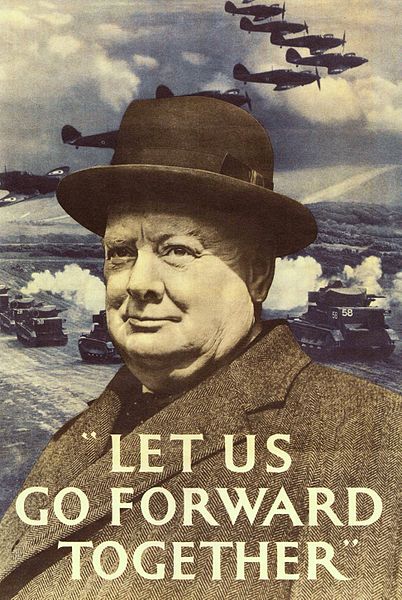
Some say this is the result of growing wisdom. This quote is often falsely attributed to Churchill: "If you're not a liberal when you're 25, you have no heart. If you're not a conservative by the time you're 35, you have no brain." Or, as Irving Kristol really did say, “A conservative is a liberal who has been mugged by reality.”

This is one reason why right-wingers do not hate leftists the way leftists have right-wingers. Leftists assume rightists are either stupid or immoral. Rightists assume leftists are simply naïve.

However, it occurs to me that there may be another explanation for this rightward drift with age. The CEO of Mozilla, Brendan Eich, was recently forced to resign for holding a position on gay marriage, six years ago, that the President of the United States still held two years ago, without any visible consequences.

"The Radicals' Coat of Arms," Cruikshank, 1819.

It seems to me that this illustrates the great difficulty of remaining a leftist over time. The revolution devours its own children. Many of the same views that were considered vaguely leftist in, say, the 1960s would now be considered so right wing as to be well beyond the pale of polite society. Conversely, many ideas that are now accepted left-wing positions would have, in the 1960s, been considered flatly insane. Accordingly, in order to remain on the left, you must have no abiding principles. If you have any abiding principles whatsoever, and are, moreover, sane, you inevitably end up on the right over time.

Tuesday, February 18, 2014

Conservatives Are Anti-Science?


The progressive world view.

 In recent times, it has been fashionable for liberals in the US and Canada to accuse conservatives of being “anti-science,” mostly for opposing initiatives to prevent the dread global warming. Also cited are their opposition to contraception (?), and, of course, the dispute over Darwinian evolution versus creationism and intelligent design.

However, this recent survey seems to belie the claim. Which seems weird to begin with to any of us familiar with postmodernism, feminism, and post-colonialism, important elements of the left who promote the belief that science varies with sex, race, and personal preference. Not to mention the left's seemingly instinctive opposition to all material progress. Now it turns out that liberals are far more likely than conservatives to believe that astrology is scientific, and far less likely to know that the earth goes around the sun. Pretty basic stuff.

Here’s the distinction: liberals are more respectful of scientific authorities. This is because, to them, science is something magical and mysterious. Conservatives are more informed about science. For this very reason, they are less inclined to rely upon scientific authorities.

Authority and science are competing sources of knowledge; the concept of "scientific authority" is a bit of an oxymoron.