Playing the Indian Card

Wednesday, March 23, 2016

Again the Terpsichorean Bear Does Not Run off with the Circus


When I imagine man a captive bear
Shuffling rhythmical unknowing feet to feet
Caught in the dumb trance polka of the street;
I think of Blake, struck face-down on the Felpham path,
Lightning burning through his skull;
Of Shakespeare, self-surprising ancient conjuror;
And of that one once hammered
Like a lily to a splintered cross.

If we could do as they do,
Send to wrack this lack of trembling, swim the flame,
Then, forked and poxed and wobbling though we are,
We could uprise and solitary storm the passes,
Thundering wonder.

We might be lightning; be the song Dodonic birds have sung
From age to age to age to evermore:

Failing this, I humbly remain,
A hum of wire, too taut to sing, too rigid to unbow;
A voice whining in static;
An upturned pot of ink.
A dumb paw shuffling tunelessly over this letter.

-- Stephen K. Roney


Nazis and Neo-Nazis


Ernst Zundel
A Jewish friend once worked with Ernst Zundel. Zundel is the most famous Canadian “neo-Nazi.” Aside from prison time in Canada for "spreading false news," he spent five years in German prison for Holocause denial, and time in detention in Canada for supposedly being a threat to national security. Zundel was a professional graphic designer before his notoriety, and a successful one until his politics were discovered. My friend, an editor, was shaken that Zundel once refused, for a client, to airbrush effluent coming out of a pipe from a photograph, on the grounds that this was misleading and hence immoral.

From this, my friend concluded, uncomfortably, that Hitler and the Nazis might have been entirely upright by their own lights. They were just working from different assumptions.

This is, to my mind, necessarily false. Begin with the example that gives him pause, the photograph showing pollution. If morality were really up for grabs, he would not know that Zundel was exhibiting morality in this instance. Instead, he, my friend, instantly recognized morality when he saw it, and was moved by it. Immorality should be just as recognizable in principle. Either killing Jews is wrong, or it is not.

The idea of crimes against humanity affirms the same idea. Right is right regardless of the local laws of the country, or such a category of crime could not exist. Slavery does not become okay because the laws of the US once supported it; killing Jews was not moral because the laws allowed it. If this is not so, we have no business condemning Hitler or Himmler, the Nuremberg Trials were illegitimate, and it was all just a case of the victors imposing their will. If Hitler had won, it would have been as proper and objectively moral to hang the followers of de Gaulle or Churchill.

One wonders why anyone gave their lives for the difference.

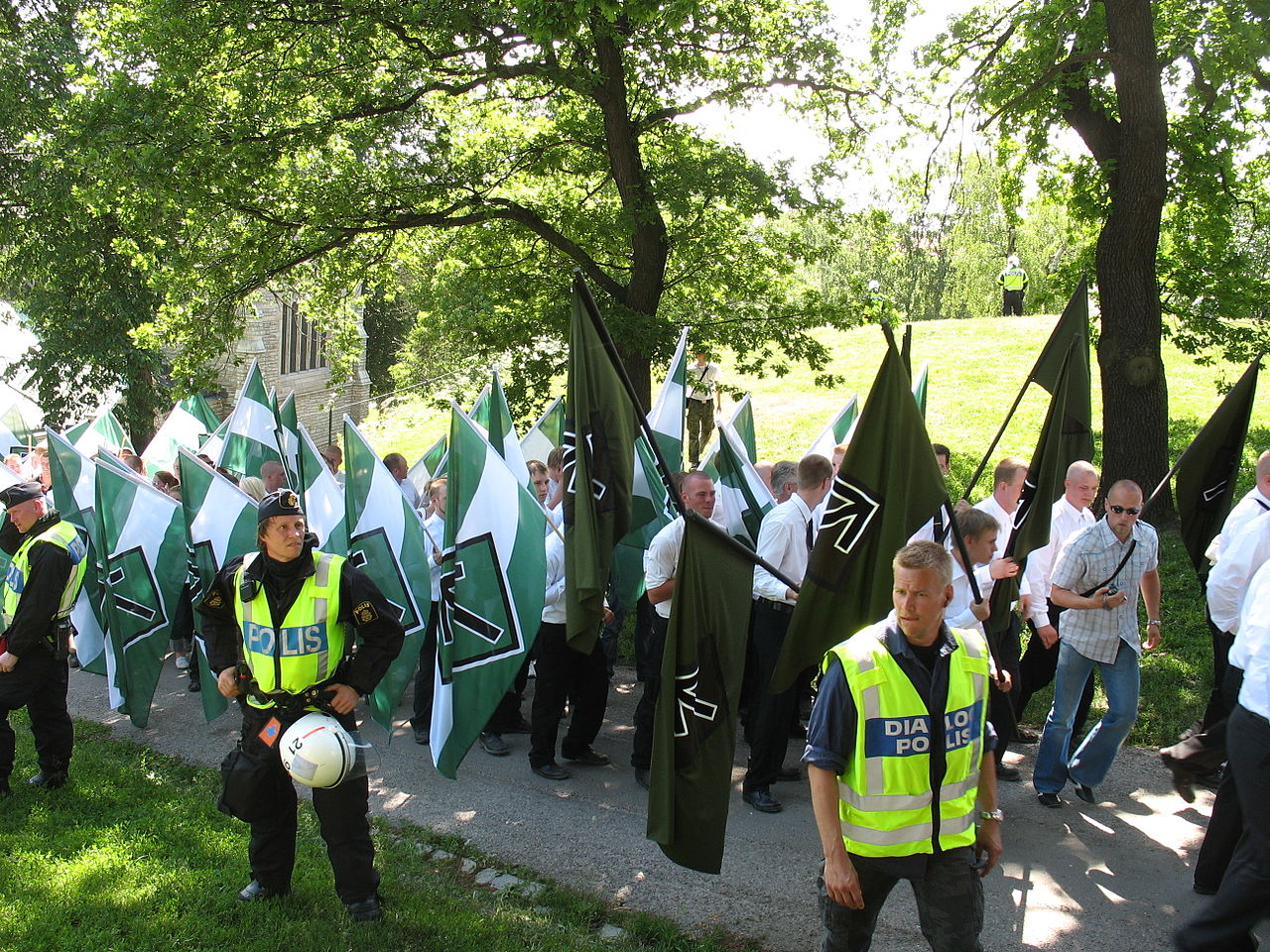
Swedish neo-Nazis march

No; morality is objective. We all have a conscience, an internal compass that tells us what is right and wrong. We do, of course, have the choice not to follow it. Sometimes it is not in our own best interests to do so. That does not mean it is not there.

Hitler therefore cannot have been sincere. Nor does the evidence suggest that he was. Nazi ideology was philosophically incoherent. Was it a doctrine of the left, right, or centre? The debate continues. Did the Nazis intend to abolish private property? Nobody was or is sure. Did they intend to abolish Christianity? The same. The Nazi programme was highly adaptable and ambiguous depending, it seemed, on what Hitler thought would gain public support, or the support of the group he was currently addressing. This was his great talent as an orator, as William L. Shirer has pointed out. Hitler's standard technique in diplomatic negotiations was to make promises of any sort, then immediately break them when it was in his interest to do so. This is not a man of principle. Mein Kampf devotes itself almost entirely to tactics, not bothering much with principles. The principle, such as it is, is simple: personal and group power. Far from being some kind of ideologue, fanatic, or true believer, Hitler was the ultimate opportunist.

This leads to some uncomfortable conclusions. Hitler came to power democratically. He tailored his policies to what was popular and politically expedient. This means he would not have attempted the Holocaust if he did not believe the majority of Germans supported it. Granted, there was a financial reason as well: Nazi budgets were a Ponzi scheme, and the Jews were rich. Confiscating their property delayed the day af reckoning, at least perhaps until the next nation could be conquered and looted. It is doubtful whether Hitler ever allowed himself the emotional indulgence of hating Jews; the point is that the average German did.

Certainly Hitler was a very bad man, the worst of men, but he has also been made a scapegoat to avoid assigning due blame to Germans (not to say this could not have happened elsewhere; people are people) generally. He is referred to as a “madman.” This is nonsense. People do not take orders from madmen. Nor could a madman be nearly so calculating. Hitler, with his cunning, was spectacularly sane. He was a bad man, not a mad man, and to pretend the latter is a terrible slander against the insane.

Bad, not mad.

The second uncomfortable conclusion to be drawn here is that those we call "neo-Nazis," like Zundel, are really the opposite of Nazis. They are certainly not opportunists. There is no personal advantage to be gained anywhere by claiming to be a fan of Hitler. Zundel himself lost his career, his freedom, his residency in Canada; vandals did $400,000 worth of damage to his home, and were not prosecuted. He has to have been motivated by a strong sense of principle. He believed, and believes, that Hitler has been scapegoated, and in part he is indeed certainly right. Nor does he endorse the killing of Jews, which would be objectively immoral; instead, he believes that Jews were not killed, which is a quite different matter.

We do nothing to prevent the rise of another Hitler by persecuting the neo-Nazis. We certainly do nothing to prevent it, and indeed give Hitler a kind of legitimacy, with laws against "hate" or "Holocaust denial." It makes the intelligent and morally sensitive suspect we have something to hide. Which of course we do--our own guilt, not, as they suppose, Hitler's innocence. Instead, by such laws and such prosecutions we are harassing the very people most likely to stand up and resist should another figure like Hitler arise. At the same time, we are training the great bulk of the population to stay good Germans in any eventuality.

Cat. After all, this is the Internet.


Monday, March 21, 2016

On Heaven and on Having Heart's Desire


A frog-march through Babylon
In gaudy day.
How much more beautiful its gardens and its towers
By hush and candlelight.

-- Stephen K. Roney


Sir John A. Macdonald and Hitler


The old worthy, Kingston city park.
Recently, a proposed sculpture park project to include bronze statues of all of Canada's prime ministers (with funding raised privately) was cancelled by Waterloo's Wilfrid Laurier University. The first statue, of Sir John A. Macdonald, had already been installed. The project had previously been rejected, at public insistence, by the city of Kitchener. One marvels, when public money is wasted on such unattractive and absurd art installations as it is, that this is the one that stuck in everyone's craw.

The stated reason is that it was “politically insensitive (if not offensive) to celebrate and memorialize all Canadian prime ministers … on land that traditionally belongs to the … Anishnaube and Haudenausanee peoples...” The city of Kitchener backed out on the grounds that it did not reflect the “diversity”of the region.

As defaced.

Tellingly, the online petition opposing the installation refers readers to a web page outlining similar protests in the US, against statues of Southern Civil War figures. This helps to explain the otherwise seeming non sequitor of statues of our prime ministers being somehow offensive to aboriginals: if something is happening in the US, we have to imitate it in Canada, whether the case is comparable or not. A recent example is the current push to put a woman on the banknotes. There is an online call for nominations. This follows the current American push to put a woman on the banknotes—there is an online call for nominations. It repeatedly and studiously ignores the awkward fact that, very unlike the case in the US, there has almost always been at least one woman on the Canadian banknotes, and more often women than men.

In the Waterloo statue case, most and probably all Canadian prime ministers have been pretty easygoing and ethnically inclusive in their attitudes and policies. This is part of the bedrock of Canadian history, if only due to the circumstance of being a half Anglophone, half Francophone, half Catholic, half Protestant nation run as a democracy. While politicians are by their trade not entirely to be admired, it is absurd to see Kim Campbell or John Turner as some kind of war criminals. This is beyond anything Godwin foresaw. But then, it is absurd to blame Sir John A. Macdonald. These are not the sort of people who went to war to defend slavery. 

WLU statue

Let's take Sir John A. He, after all, seems to be singled out for special condemnation by the social justice league of Canada. In Waterloo, it was his statue alone that was physically removed. In Kingston, last January 11, Macdonald's 201st birthday, somebody working in the night slashed the tires of the man organizing a commemorative ceremony, as well as splashing his car with red paint. Presumably symbolizing blood. They also apparently, in eerie if unintentional echo of KKK traditions, burned a Canadian flag on his lawn. One of the local “activists” (what would you prefer to call them?) is quoted by the papers referring to Macdonald as a “genocidal maniac.” In previous recent years, the anniversary had been celebrated by nocturnal spraypainting—again with red paint—of the John A. statue in Kingston's city park with the phrases “This is stolen land,” “murderer,” and “colonizer.” An Idle No More protester explained: “Would people commemorate the crimes that Hitler did? Because this is basically the same principle.”

No wonder this sort of thing happens again every year. Those who do not learn history are condemned to repeat it.

An oddly suitable memorial


Macdonald's unspeakable crimes are apparently these: 1. as per the Kingston graffito, that he stole Indian land; 2. that he killed Indians by deliberate starvation, 3. that he was responsible, as longtime Superintendent of Indian Affairs, for the setup of the residential schools system, which constituted “cultural genocide” as well as enabling widespread child abuse 4. (per Timothy J. Stanley at Active History) that he made war against the Indians in 1885. That seems to be the basic bill of indictment. Lets deal with the charges in turn.

One: he stole Indian land. This seems to be another case of apishly following trends in the US. The truth is, the history of aboriginal-government relations is very different in Canada and the US. Which is why the US-Canada border was known among plains Indians as the Medicine Line. Which is why, in both the Revolutionary War and the War of 1812, aboriginals flocked to British/Canadian colours in great numbers. The favourable treatment of Indians, in fact, protecting them from wildcat European settlement beyond the Appalachians, was one of the causes of the Revolution, cited obliquely in the Declaration of Independence. Here was no Trail of Tears. Here was no Wounded Knee. Here, negotiated settlements, notably the numbered treaties that began under Macdonald, preceded any incoming settlement, along with the NWMP/RCMP to ensure peace and order—another initiative of Sir John A.'s. Their first mandate was to protect the natives against the predations of dubious non-aboriginal traders.

NWMP officers, 1898
This insistence on proper treaties and native compensation for any lands deeded to non-native Canadians was largely due as well to Sir John A. Not everyone at the time felt it necessary. After all, Indians held and used land in a manner very foreign to European norms. They were nomadic, in a sense never more than visitors, and their use of and therefore natural claim on any particular parcel of land was ephemeral. Boundaries between tribes were constantly shifting. Oliver Mowat, premier of Ontario for much of Macdonald's tenure, held that the Indians had no strictly legal rights in the matter, and their claims were purely moral. A celebrated Ontario court judgment of the time held the same. Macdonald and his governments instead insisted on earlier British policies, respecting native ownership, setting a precedent honoured by future Canadian governments, and future Canadian prime ministers, without exception.

If someone sells you his house, you did not steal it. If he comes back a few years later and demands more money, he is not a moral fellow. He certainly has no say if you choose to put a statue of anyone on your lawn.

Some natives have recently insisted that the Indian oral understanding of the original treaties was different from the government's written documents, that they, being non-literate, were lied to and conned by the government agents. They had intended to cede ownership of the land "only to the depth of a plough blade.” Their fellow Canadians therefore owed them trillions in past resource revenue.

Idle No More protestor. Oddly not considered hate speech.

There are several problems with such claims. First, there is a reason for the invention of writing. The original reason was to keep accurate records in case of dispute. Oral records can be quite reliable, if it is in everyone's interest to preserve them intact. But they can also be altered at any time by either party, and therefore are not of great evidentiary value. Written evidence preserves the matter beyond dispute. As a result, there is every reason to give written records absolute priority. Second, this claim goes emphatically against the written text. In the words of Treaty Three, which become legal boilerplate for subsequent agreements: “[the Indian signatories] do hereby cede, release, surrender and yield up to the Government of the Dominion of Canada for Her Majesty the Queen and Her successors forever, all their rights, titles and privileges whatsoever, to the lands included.” There is no ambiguity there. To accuse the government agents of misleading the natives on this point requires accusing them of a truly breathtaking act of mendacity. Third, a large part of the very point of the treaties from the government's point of view was to allow for unhindered mineral extraction. To go back on that now would be unfair to that signing party. Fourth, the native cultures were still in the stone age. They did not mine any metals. They would have had little idea of value of any sort buried below ground, little use for it, and little reason to even think what was down there. It seems unlikely they would have made any such reservation, even in their own minds. Fifth, this being so, the government agents would have gained nothing by having lied on this point. It would have done nothing to improve their bargaining position. Sixth, the intrinsic unlikeliness of the native claims is itself evidence that their “oral understanding”of the agreements has been altered for their benefit, and is indeed not to be trusted.

Two: Macdonald killed Indians by deliberate starvation. The essential piece of evidence here is Macdonald's boast in the Commons, “[We] are doing all we can by refusing food until the Indians are on the verge of starvation...” Note this: “on the verge.” At worst possible interpretation, Macdonald is saying that to the best of his knowledge, nobody is starving. Nevertheless, Dennis Gruending, writing for Rabble, accuses Kingston's favourite son of creating “the conditions for a tuberculosis epidemic in aboriginal communities.” This is a bit of a stretch, since tuberculosis has been a major problem in aboriginal communities both before and after Macdonald. It is currently 31 times the rate among the general Canadian population. In any case, how can Macdonald's food policies be to blame? Everyone knows it is the residential schools that are at fault here.

Medal struck by Canadian government to commemmorate the signing of Treaties 3-7

Now, the words immediately before that “on the verge” are significant. A fuller quote is “We cannot allow them to die for want of food. We are doing all we can, by refusing food until the Indians are on the verge of starvation, to reduce the expense.”

That gives a little context. Simply on the face of it, there was no policy to starve the Indians, no genocide. Canada was in recession, and the opposition was challenging the government policy of sending food aid to the Indians as extravagant. Macdonald was defending against this attack, and perhaps using hyperbole in the effort. Politicians have been known to do this. Note that Canada at this time had no social safety net, no welfare, no disability, no child allowance, no old age pension. Other Canadians were left to sink or swim, as far as the government was involved. Yet this group was being helped out, in part by taking funds from fellow Canadians who might have needed it badly themselves. Note too that there was no actual obligation on the government to send food. Treaty One, Two, Three, Four, Five, and Seven say nothing about the government being responsible for sending aid in any circumstances. Aboriginals were given seed, large tracts of land, and farm implements, and expected thenceforth to look after themselves, like every other Canadian. Integration was the aim. The wording of Treaty Six alone, of all the treaties in effect during Macdonald's time, gives a mandate, but is ambiguous and leaves lots of wiggle room:

That in the event hereafter of the Indians comprised within this treaty being overtaken by any pestilence, or by a general famine, the Queen, on being satisfied and certified thereof by Her Indian Agent or Agents, will grant to the Indians assistance of such character and to such extent as Her Chief Superintendent of Indian Affairs shall deem necessary and sufficient to relieve the Indians from the calamity that shall have befallen them. (Treaty Six)

Very much at the discretion of the government, although it would have violated the spirit of Treaty Six to have done nothing. Treaty Six covered a large chunk of central Saskatchewan and Alberta.

The Qu'Appelle Residential School

Three: Macdonald was guilty of “cultural genocide” for founding the residential schools system.

All of the numbered treaties included the requirement that the government set up schools and pay for teachers.

And further, Her Majesty agrees to maintain a school on each reserve hereby made whenever the Indians of the reserve should desire it. (Treaty One, Treaty Two)

And further, Her Majesty agrees to maintain schools for instruction in such reserves hereby made as to Her Government of Her Dominion of Canada may seem advisable whenever the Indians of the reserve shall desire it. (Treaty Three)

Further, Her Majesty agrees to maintain a school in the reserve allotted to each band as soon as they settle on said reserve and are prepared for a teacher. (Treaty Four)

And further, Her Majesty agrees to maintain schools for instruction in such reserves hereby made as to Her Government of the Dominion of Canada may seem advisable, whenever the Indians of the reserve shall desire it. (Treaty Five, Treaty Six)

Further, Her Majesty agrees to pay the salary of such teachers to instruct the children of said Indians as to Her Government of Canada may seem advisable, when said Indians are settled on their Reserves and shall desire teachers. (Treaty Seven)

Classroom, Fort Albany Residential Scvhool

At whose insistence? Not the government's. Their priority was to spare expense, and this was an added expense. It was at native insistence, and was one of their chief goals in signing the treaties. They could see that their traditional way of life was unsustainable and far less desirable than that of the European settlers. They wanted the next generation to learn to farm or follow a trade, and to integrate. The treaties specified that schools would be built only where and when the Indians wanted; the vast majority of aboriginal children were always educated at day schools. The residential schools were for children whose homes were too remote to support a local school. The government did not want to pay for a residential school if they did not have to: it greatly increased their costs per student. The fact that only a small proportion of native children were ever educated in residential schools makes ludicrous the claim, often heard, that the residential schools are to blame for all the ills of Indian society even today.

The basic idea of the residential schools, from the start and at native insistence, was to promote integration. Objectively, the government probably did not particularly care: integration or segregation was all the same to them. It was, in fact, and transparently, the same programme advocated by Martin Luther King and the civil rights movement of the US South. If this was “cultural genocide,” King is a leading criminal against humanity.

Not his natural skin colour. Which was red.

As for child abuse in the schools, it is a tragic certainty that those inclined to bully are inevitably going to have an incentive to choose careers, like teacher or palliative care nurse, which make this avocation easier to pursue. They will seek defenseless prey. They will, if possible, sign up for locations, like remote residential schools, where supervision is minimal. More remote day schools might have been worse. Pedophiles are going to look for jobs that put them in close contact with children, ideally without much supervision, for long periods of the day or night, ideally with the pedophiles in some kind of formal relationship of control. There are few ways to protect against this tendency; probably the best is to turn such positions over to those who have an apparent and stated religious or moral reason for being there, as this may explain their presence instead of predatory instincts. Better still if they have some sort of moral supervision by a religious society and superior. Probably a vow of celibacy is even better.

But this is exactly the path the residential schools took. It was not one hundred percent efffective, but nothing is. In recent years, we have been coming to a growing realization that this problem is pandemic to schools of all sorts; there is nothing special, and certainly nothing intentional in the design of residential schools, in this regard. Ironically, the very richest strata of society have traditionally insisted on paying great sums for the privilege of sending their children into the same circumstances considered abusive when the students are aboriginal. Heads you win, tails we lose.


In 2006-2007, a settlement of $2 billion was mandated by the courts--the largest class action settlement in Canadian history--to anyone who had gone to a residential school. Not just those who could demonstrate abuse. Anyone. This was a huge transfer of wealth to a privileged group from fellow Canadians. Who obviously had nothing to do with the residential schools, whether the latter were good or bad.

Discipline in the residential schools, they say, was strict. No doubt. It was strict everywhere. Some of it, there as elsewhere, was surely bullying. Welcome to school. On the other hand, there is an entirely forgotten reason for the good old hickory stick, quite apart even from discipline, and in the best interests of the students. For thousands of years, in essentially all cultures, it has been realized that our ability to remember is tied to some sort of emotional association with the thing remembered—Aristotle, for example, wrote that every memory involved an emotion. It follows that the ever-present fear of punishment helps us remember. “[P]hysical methods were thought to ensure that knowledge was securely impressed into the memories of schoolchildren” (Mary Carruthers and Jan Ziolkowski, The Medieval Craft of Memory, p. 21). What we do not remember, we have not learned.

Battle of Fish Creek.
Four: Macdonald made war on the Indians, in 1885.

He did not. This seems to be another slavish imitation of American models. Macdonald is perhaps being confused with Andrew Jackson. The reference is to the Northwest Rebellion. The Indians, or rather a very small group of Indians, made war on him, in violation of treaty. They may have had real grievances, they may not, but this was not the way to address them. He had the natural right of self defense, as well as the public duty to keep the country together and in full possession of its territory.

It was all a comic opera affair, and few actually got killed. After a conventional trial and benefit of law, eight aboriginal ringleaders were hanged, along with Louis Riel. Maybe they did not deserve it; but it was not really Macdonald's call. Poundmaker went to prison for less than a year. The chief government response in the aftermath—which was Macdonald's call--was to send more food aid to the Western reserves.

If this is the worst that can be brought against any of Canada's leaders, Canada stands alone as the most tolerant of nations,  We ought to be celebrating this.

How about a sculpture park?


Thursday, March 10, 2016

Vatican: Number of Catholics Increasing at Faster Rate Than Rest of the Population | Daily News | NCRegister.com

Number of Catholics growing worldwide.


Vatican: Number of Catholics Increasing at Faster Rate Than Rest of the Population | Daily News | NCRegister.com:


'via Blog this'

Aunt-Estelle-Who-Never-Married


Ed Sullivan with Topo Gigio

Aunt-Estelle-Who-Never-Married
Spent her long and quiet maidenhood
Folding small bits of paper.
As you spoke to her
Or in the blueness of Ed Sullivan
She would fold and fold again
Until the paper grew so small the last fold
Required a fingernail.

Mother remembered her sister as pretty in youth.
There had been a Young Man once;
And he had written often
From the War;
But he had stopped writing before Hiroshima.
Perhaps, Mother said, Aunt-Estelle-Who-Never-Married
Was folding secret letters to him
Without knowing what to say
Or where to send them.

Aunt-Estelle-Who-Never-Married died.
We cleaned her room.
We found drawers full, desks full, closets full
Of little folded papers.
We sprinkled them like confetti on her casket
As they lowered her.
Then we turned back to life
And thought little of Aunt Estelle
Whose name was Who-Never-Married.

-- Stephen K. Roney


The State of the Union


Nelson Rockefeller speaks (and is booed), Republican convention, 1964

We have been told that a contested Republican convention is quite unlikely, but in fact, it is looking like the most probable result of the primary season. Trump so far has won about 40% of the delegates. To win on the first ballot in Cleveland, he needs to win about 60% of the remaining delegates. This is obviously unlikely. Even if Trump has not started to decline—analysis suggests Cruz's unexpectedly strong showings recently have more to do with a collapse in Rubio's support, while Trump's has held fairly steady—something new would presumably be needed to boost him this much. In the meantime, the Republican “establishment” and its big donors are gathering to stop Trump. If Rubio wins Florida, and Kasich wins Ohio, Trump realistically cannot get the delegates to win. The fact that both Rubio and Kasich are still in the race is strong evidence they and their teams think the convention will be contested—they cannot now win outright, but arriving at the convention with a healthy block of delegates gives them bargaining power.

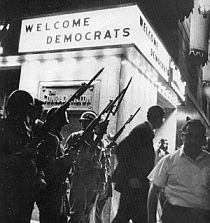
Democratic convention, 1968

Cruz has said there would be a general voter revolt if there were a contested convention. I doubt it. Conventions in the US used always to be contested, they still are in the UK or Canada, and the excitement of it, to my mind, is far preferable to the current boring pantomime performance. Of course, you do not want strife like there was at the Cow Palace in 1964, or Chicago in 1968. But most contested conventions are still fairly mannerly affairs. They always are, in Canada. The worst was perhaps the Tory convention in 1967, but even then, when Diefenbaker put his name in contention at the last moment, after a speech in which he scolded the entire party, another candidate (I think it was Donald Fleming) lent Dief his marching band for the latter's grand entrance.

PC convention 1967

On the Democratic side, things also seem pretty dramatic. A lot of people are saying Clinton has it all sewn up, because of the huge number or Democratic “superdelegates.” who automatically get to go to the convention without being elected. This includes all elected Democratic politicians at the federal level, plus all members of the Democratic National Committee. Together, they constitute almost one quarter of the delegates. They are reputedly heavily committed to Clinton. The strong evidence of this is how the DNC has bent the rules so far to favour Clinton's candidacy in any way they could.

This is, in sum, the “party establishment” against which the Republicans are in open revolt. As it turns out, the establishment is far more powerful in the other party. Yet Democrats seem more sanguine about it, for now.

However, a piece in the Huffington Post contests this notion. Its argument, in brief: 1) these are politicians. 2) If Sanders wins the primaries, they would be seen going against their constituents' wishes. 3) polls in any case show Sanders running stronger than Clinton against Republican opponents. 4) these guys want to keep their jobs, and do not have a suicide wish.

The article goes on to say that Sanders has a very good chance of outperforming Clinton in the remaining primaries. Clinton has so far racked up big wins in the Southern states, and so far has done little better than Sanders. Almost all of the Southern states have now voted. From here on in, it should be better Sanders territory.

In sum, this could be the most interesting political season in the US for at least the past forty years

.

Wednesday, March 09, 2016

Separation


The roses from our dinner two nights ago
Begin to wilt.
I know nothing of cut flowers.
The peaches are blackening in spots.
And I have dined three times on leftovers.

Yesterday was overcast,
Today it rained.
Today it is raining.
I must go to the bank.

I phoned you last night
From a pay phone on Queen Street beside a Brazilian restaurant.
You seemed happy.
I seemed happy.

Why are you not here with me tonight?

-- Stephen K. Roney


Super Twos-day


The big news from the primaries last night is Sanders's win in Michigan. This, I read, is one of the biggest polling errors in history. It suggests Sanders may still beat Clinton. She racks up huge majorities among blacks in the South, but Sanders has now demonstrated an ability to attract the votes of northern blacks.

Next most important news is the lousy showing of Marco Rubio. I really like Rubio, but then, I really liked Jeb Bush. Apparently, being fingered as the establishment candidate is death in this election cycles. It also seems clear that Rubio's no-holds-barred attacks on Trump backfired on him. Totally unfair. Trump started it, and Trump gets away with it. He toook down Trump, and Cruz gets the benefit. Kasich also underwhelmed, coming in behind Cruz in Michigan. Whether they stay in or drop out, the race is resolving itself into a two-man contest, Trump vs. Cruz. And Cruz is staying within striking distance in the delegate count. If I were Rubio or Kasich, I would stay in until their home states vote, if only for influence at what may be a contested convention. In the days when these things were the standard, “favourite sons” were also numerous. State delegations would often go pledged to a favourite son, the local governor or a senator, for the first ballot, preserving their bargaining position for later ballots. Rubio or Kasich could bargain for the VP slot, or for their favoured issues in the party platform.

Hawaii results still to come at time of writing.


Tuesday, March 08, 2016

On Starting Late


Sometimes at night I listen to you breathe,
And dream of what you were at seventeen.
My foolish eyes, Miranda-wide, must prise
A mooncalf in the backdrop to the scene.

Not that I could love you, younger, more
Than in the majesty of adult pride;
But every day that cuts off then from now,
I would, and know I was not, at your side.

We meet at last, halfway from dust to dust;
No nearer journey's start than journey's end;
Yet let us swear, as fingered souls entwine,
Our journeys shall not be alone again.

Yet let us swear, with failing tongues and talk,
As camels pant in weary caravan
Along the lonely silk road of the heart;
Our journeys shall not be alone again.

Yet let us swear, with stinging, sand-wet eyes,
Nor whether wealth or ruin be road's end,
Through lips gone dry and after love's mirage:
Our journeys shall not be alone again.
-- Stephen K. Roney

The Ancestral Cree Lands of Northeastern Ontario


Map of the various Indian groups of Ontario and their traditional hunting ranges. Note that at first European settlement, there were an estimated 1,800 aboriginals actually living in Ontario. Note also the blank area in Northeastern Ontario.

Interesting. The Cree nation is seeking $495 million in damages from their fellow Ontario taxpayers, AND in addition claiming ownership to 48,000 square kilometers of land in Northeastern Ontario. “[O]ur rights in these lands have never been addressed in any treaty,” complains Grand Chief Matthew Coon Come. Among his laments is that the Ontario-Quebec border cute rigth through the Cree ancetral lands.

This no doubt causes great suffering. To someone. Somehow.

This case is interesting, not to say odd, because so far as I can tell the Cree signed away title to these lands in Treaty Number 9 back in 1905. Maybe I missed something. Read it yourself.

One begins to see how the phrase “Indian giver” entered the language. It appears that no deal is final if the various tribes see a way to shake more money out of someone.

One is reminded of the current behavious of North Korea. Every couple of years, for as long as I can remember, they shake their sabres and threaten war. Then after a time they offer negotiations. The Americans rush to the table, and sign a deal, which inevitably involves more money going to North Korea in return for their standing down. Two years or so later, the cycle repeats.

Have you ever heard of Danegeld?

It is always a temptation for a rich and lazy nation,
To puff and look important and to say: --
"Though we know we should defeat you, we have not the time to meet you.
We will therefore pay you cash to go away."

And that is called paying the Dane-geld;
But we've proved it again and again,
That if once you have paid him the Dane-geld
You never get rid of the Dane.
- Rudyard Kipling


The Curse of the High IQ


The world is designed by and for average people. Beung abnormally intelligent is like being ten feet tall. You are alsways tooping, and never comfortable.


Monday, March 07, 2016

A Letter Left on the Kitchen Table


Last night I danced with you
That slow, naked dance
And for a moment understood
Spinning out across the mirrored floor of galaxies
As the camera tracked around us and away
What it is, or what it need not be.

Things fit: the cogs and pulleys
Of the whole great catalytic calculating engine
Locked in trine, three cherries red ascendant.

And the Milky Way was something thrown between,
A paradigm of rainbows,
That we walked across, innocent as dewdrops
Ending God knows where, some garden world
Beneath some garden star
Where kryptonite never comes.

Midnight flowed; somewhere in floodlit forest
A thousand wild things died.

You will understand my disappointment this morning,
At seeing dawn still come.

-- Stephen K. Roney


Bernie Sanders in the Ghetto


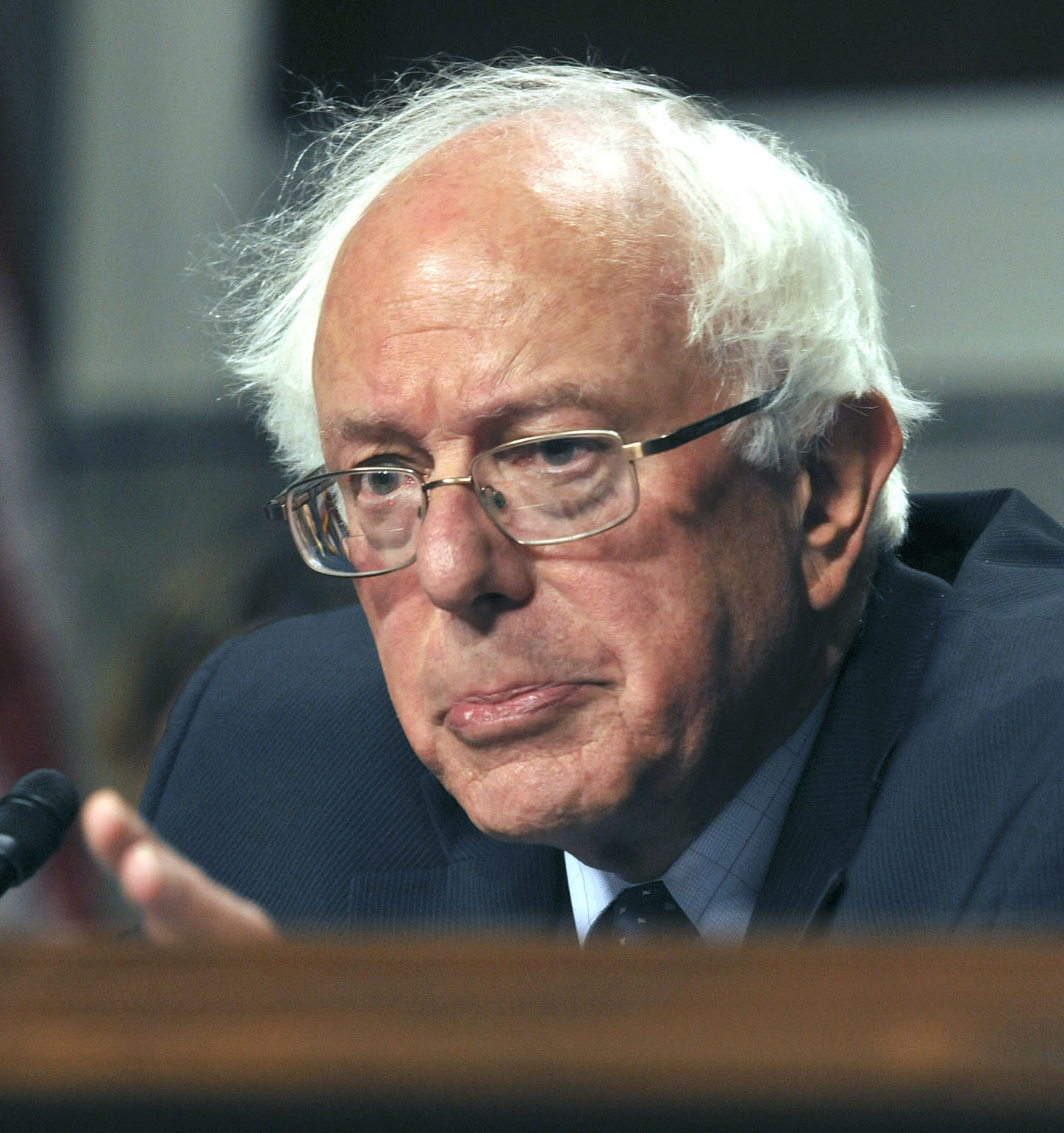
I have not seen last night's Democratic debate yet, but during it, Bernie Sanders apparently said “When you’re white, you don’t know what it’s like to be living in a ghetto. You don’t know what it’s like to be poor.”

Er, no. How has Sanders lived for over seventy years without ever meeting any poor white people? Are there no poor white people in Vermont?

As funny is the reference to whites never experiencing the ghetto, considering that Sanders is Jewish, and “ghetto” originally meant the Jewish part of town. Aren't Jews white? Isn't Bernie Sanders white? Does he know nothing of his own history?

Speaking of which, there is widespread misunderstanding of the true nature of “ghettos” in general. The term, as Sanders' quote demonstrates, has a very unfavourable connotation. I think this is wrong.

The original “ghetto” was the Jewish neighbourhood in Venice. In fact, it was one of Venice's most prosperous neighbourhoods. Ghettos have recently gotten a bad rap because of the Nazis and the civil rights movement in the US South. The Nazis herded all the Jews into the old ghettos, which most of them had long left, as a prelude to shipping them off to be executed. These ghettos were as a result extremely overcrowded, and short of food and water. The Nazi ghettos were guarded, and Jews were not allowed to leave them under penalty of death.” These conditions have since been wrongly applied to ghettos in general, and there has been a general supposition that this was the case with ghettos before Nazi times. But before Hitler, the term “ghetto” had no clearly negative connotations. It was just the Jewish neighbourhood. Like TMR or Hampstead in Montreal. Forest Hill or Bathurst/Lawrence in Toronto. Nice places to live. Largely because by then it had developed the negative connotations, the term was transferred to the US during the civil rights movement in the US South to suggest there was something wrong with blacks living together in black neighbourhoods. After all, the main thrust of the movement was to promote integration over segregation, to disprove the claim that it was possible to be “separate but equal.” At the same time, the denigration of the traditional Jewish ghetto served the agenda of many who wanted to see anti-Semitism as endemic to European and Christian culture.

Jews being herded into the Krakow ghetto by the Nazis.

Wikipedia writes, inter alia, “Jewish ghettos in Europe existed because Jews were viewed as alien due to their non-Christian beliefs in a Christian environment.[citation needed] As a result, Jews were placed under strict regulations throughout many European cities.[7].” Note that there is no citation for the first claim. The second reference is to a paper which in fact points out that ghettos involved no negative connotation until the Nazis.

There may have been laws is some places requiring Jews to live in the ghetto. Nevertheless, these laws had little or no effect. For the simple reason that Jewish ghettos would have existed more or less exactly as they did whether such laws existed or not.

To begin with, people of shared ethnicity, as a matter of course, want to live together. This is obvious to anyone who has seen a North American city populated by waves of immigrants. Toronto has its Little Italy, Little Portugal, Little India, Chinatown, Greektown, and on and on. Every big city between Montreal and Detroit even has a Corktown, where immigrants from this particular Irish city settled in the 1840s. It stands to reason. Live together, and your local school has heritage language classes for your kids; the local community centre has your traditional games and pastimes; your church or other house of worship is nearby; after work, you can spend time with others who speak your language and share your memories. Walk down the Danforth in the late afternoon and see all the old men playing backgammon in the coffee shops. Here in Saudi Arabia, foreigners almost always live in gated compounds, just like the Jewish ghettos. Do we feel deprived? No; we pay extra for the privilege.

Typical Saudi ghetto.


Krakow ghetto gate

Why would Jews or blacks or Hispanics feel any different? Indeed, TMR in Montreal chose to build a fence just a few decades ago.

In the old Jewish ghettos, Talmudic law even applied. They were largely self-governing entities. Kind of like some ethnic groups would die for today.

The streets were often relatively crowded, people lived within a small area, and they were surrounded by walls. You can see that the old ghetto in Barcelona, for example, is built to a different scale than other nearby areas. There is a reason for this. You may read this was because the wider civic authorities did not want Jews wandering abroad at night: They were forced to live together in the ghetto to prevent their roaming about at night,” explains the aforementioned Wikipedia reference. But this is not the real story. The real story is this: why would Jews want to be wandering abroad at night?

The issue is Jewish Sabbath observance. According to Talmudic law, an observant Jew could not leave his home during the Sabbath with anything, including money, in his pockets, and could not go anywhere he could not walk to on his own two feet. But an observant Jew had to go to the Synagogue for prayer on the evening of the Sabbath. This presented a technical difficulty, especially for the aged and infirm, unless Jews all lived quite close to the synagogue—in other words, in a tightly packed, enclosed community. Moreover, large groups of Jews walking after dark with nothing in their pockets, and with everybody knowing this fact, were very vulnerable. For their own safety, therefore, not for that of neighbouring Christians, Jews would naturally want to live in their own community safely separated from the rest of the city by walls. In addition, according to some legal interpretations, the wall made the entire ghetto “indoors,” greatly increasing the freedom of movement of those who lived within it.

So too, the black ghettos of the US were probably mostly voluntary at all times, and not necessarily a bad thing. “Until the 1970s, black ghettos were often seen by many African Americans as sites of thriving, bustling black business, stable black institutions, and neat, well-kept homes,” notes Wikipedia's reference. One notes the “Harlem Renaissance.” The close proximity of black cultural influences apparently produced a cultural flowering in this largest of black ghettos that has not been matched since. Arguably, the drive for desegregation since the Sixties, which has broken up many of the largest ghettos, has been a net loss for black culture. Which has not been in very good shape since.

Now don't get me started on “sweat shops.”

Sunday, March 06, 2016

Vaneza, with Eyes Open


Hanri Rousseau, "Le Reve," detail


There are moments in every love perhaps,
But certainly in my love of you
When I look in my love's eyes and know
With a heart-stopping blow as from tubas on parade
That I am married to a kind of perfection.

And I am owned by what I once imagined I possessed,
And I would die to be your sycophant down shivering gates of dawn
To a still remembered garden
Where we walk hand in hand, adamant-naked,
Spelling vegetables.

I see it when your eyes grow tender wild
And your smile sideways slow
And your movements dancing calm
And your voice pitches low
And I feel rippling water in my soul, dancing soul
Springing four ways to the winds in every joy.
Something deep, fostering orchards;
Feeding placid lions with eyes too wide for tears.

-- Stephen K. Roney


Looks Like Science

You've Probably Seen This


Getting a lot of attention. Even CNN airing here in Saudii Arabia did a mini-travelogue of Cape Breton at a result.

Maybe we need to build a wall along the southern border. Maybe we can get the US to pay for it.


Trump's Fade: Super Saturday


Super Saturday is further proof that Trump has reached and passed his high water mark. He underperformed the recent polls by quite a bit. Folks are saying Rubio did remarkably badly and probably should drop out. I'm not so sure. Trump says he wants hum to drop out. That is a good clue that he should not. He is naturally the biggest challenge to Trump in his home state of Florida. But there are also a bunch of big northern states coming up that are winner-take-all. These do not look like good prospects for Cruz. They might be more fertile ground for Rubio. Without Rubio in, they are likely to go to Trump.

It seems to me that Rubio's strong attacks on Trump badly hurt Trump, but also hurt Rubio. Cruz was the beneficiary. He split the four states ith Trump 50/50, but he barely lost Louisiana and Kentucky, while he crushed Trump in Kansas and won handily in Maine, a state that did not look like Cruz country. And these states award their delegates proportionately.

In any case, I think it's all downhill from here for Trump.


Saturday, March 05, 2016

To Vogel in Stockholm


Vogel, I must have loved you
Without knowing.
For now and then
I meet a girl
Who looks a bit like you.
And I love her
Without knowing.

-- Stephen K. Roney


The Hand of God?


Next, I think I'll write Hamlet.

Apparently there is a big scandal going on in the academic word, involving a paper published in a minor scientific journal, PLOS One. The problem is that the paper, by three Chinese and one American scientists, refers to the Creator as the reason for the remarkable abilities of the human hand.

The comments were pretty scathing. One, a fellow editor with the same journal, wrote “The article should be retracted and the handling editor should be dismissed.” An Associate professor at Duke wrote: “This is outrageous. If PLOS ONE does not do something about it, i.e., ask the authors to retract the paper, and in any case, if the paper isn't retracted, my students, collaborators and I will have no choice but to refrain from considering (i..e, reading, reviewing and citing) papers published in PLOS ONE.” Another reader writes “I find the use of religious language in a scietific [sic] paper totally unacceptable.” The authors have backed down, claiming it was all a problem in translation, that they meant to say not “Creator” but “Nature.” Nevertheless, the scandal was such that the paper has since been retracted by the journal. And the authors have not been allowed the chance to resubmit the paper in any amended form.

The journal's retraction notice reads, in part:

“... [T]he PLOS ONE editors ... apologize to readers for the inappropriate language in the article and the errors during the evaluation process.”
To a reader comment, they responded: “A number of readers have concerns about sentences in the article that make references to a 'Creator'. The PLOS ONE editors apologize that this language was not addressed internally or by the Academic Editor during the evaluation of the manuscript.”

For a time, the paper was pulled from the website. Now they have put it back up, without their imprimatur, no doubt by popular demand. They are clearly scrambling, and things are changing minute by minute.

Something is very wrong here. Anyone who is religious believes, as a matter of logical necessity, that the human hand was designed by God. Moreover, the argument from design is a time-honoured means of proving God's existence. The reaction of the scientific community and the journal seems to imply that this sort of statement, regardless of the evidence, is not permitted. This is simple religious discrimination, at the expense not just of religion but of science, which ought to be an open inquiry.

The authors' explanation that they meant “Nature” is bogus. The conclusion makes it clear that they are referring to an entity separate from and guiding natural selection: “the proper design by the Creator for dexterous performance of numerous functions following the evolutionary remodeling of the ancestral hand for millions of years.” The authors' response to one of the first comments objecting to the paper also made this clear. Interestingly, this comment seems to have been deleted. It essentially used the “watchmaker” analogy, pointing out that no human device has yet matched the dexterity of the human hand.

In any case, changing “Creator” to “Nature” does not change anything substantial. If you are going to attribute a design and a will to “Nature,” “Nature” is simply the word you use for God. Interestingly, almost everyone who speaks of the biological sphere without using the term “God” in fact does this. When we speak of evolution moving from simple to complex, or to greater consciousness, or of “the balance of nature,” we are assuming a deity and a design. It is almost impossible not to. The only difference is that if you use the term “Nature,” (or “Earth,” or “Gaea,” or “science”), you are appealing to a pagan formulation of God. You are, specifically, excluding Christ and the concept of redemption. And as an article of faith.

Some argue that the Creator has no part in a scientific argument because God's existence is not itself a matter that is scientifically testable. But it is—the point of the reference in the present article is precisely that the evidence weighs in favour of the existence of God. Moreover, elements of the opposing Darwinian theory are genuinely untestable. How do you demonstrate that something (e.g., “random mutation”) is truly “random.”

William of Okham (i.e., Occam)
Of course, the answer is that neither Darwin nor Wallace meant “random” to be taken in this sense, in the sense that modern anti-religious bigotry seems to take it. They meant, specifically, random with regard to the survival value of the mutation. They did not mean that there was no larger or divine design involved. Wallace expressly believed that there was.

Intelligent design really ought to be a no-brainer. Is a giraffe, say, plausibly, a random collection of molecules? Would Occam accept that shave?


Trump and the Case for the Republican Establishment


The latest national poll on the Republican field shows Trump at 49%. It was taken on February 29; his results in the Super Tuesday primaries just the day after do not bear this out. I hope this means the Trump bubble is at last popping.

Still, the fact that Trump has come so far does not speak well of the average American voter or for democracy. For all that folks, including commentators, are critical these days of the Republican establishment, I think on balance this shows that a sense of civic responsibility in the establishment generally has been all that has been keeping the US from disaster. Otherwise, why have we not seen campaigns like Trump's before? Even previous populists—William Jennings Bryan, for example—had a strong core of principle that they would not violate. This may have been the difference between the US and, say, the Weimar Republic.

In another sense, though, we are indeed seeing the failure of the ruling classes. In part, they have grown much less principled since the Sixties or so, and so they have lost their moral authority. As happened in the Weimar Republic, where the elite became sexually libertine, and were in any case blamed for the German failure of the First World War and the postwar economic chaos. In part, I suspect, the vastly improved communication technology over the past few years—internet, social media, smart phones—has exposed their flaws to the rest of us and rendered their leadership less necessary. A Trump and his followers can now organize without them.

Apparently, there is a case to be made for elites.


Friday, March 04, 2016

On Rhyme in Poetry


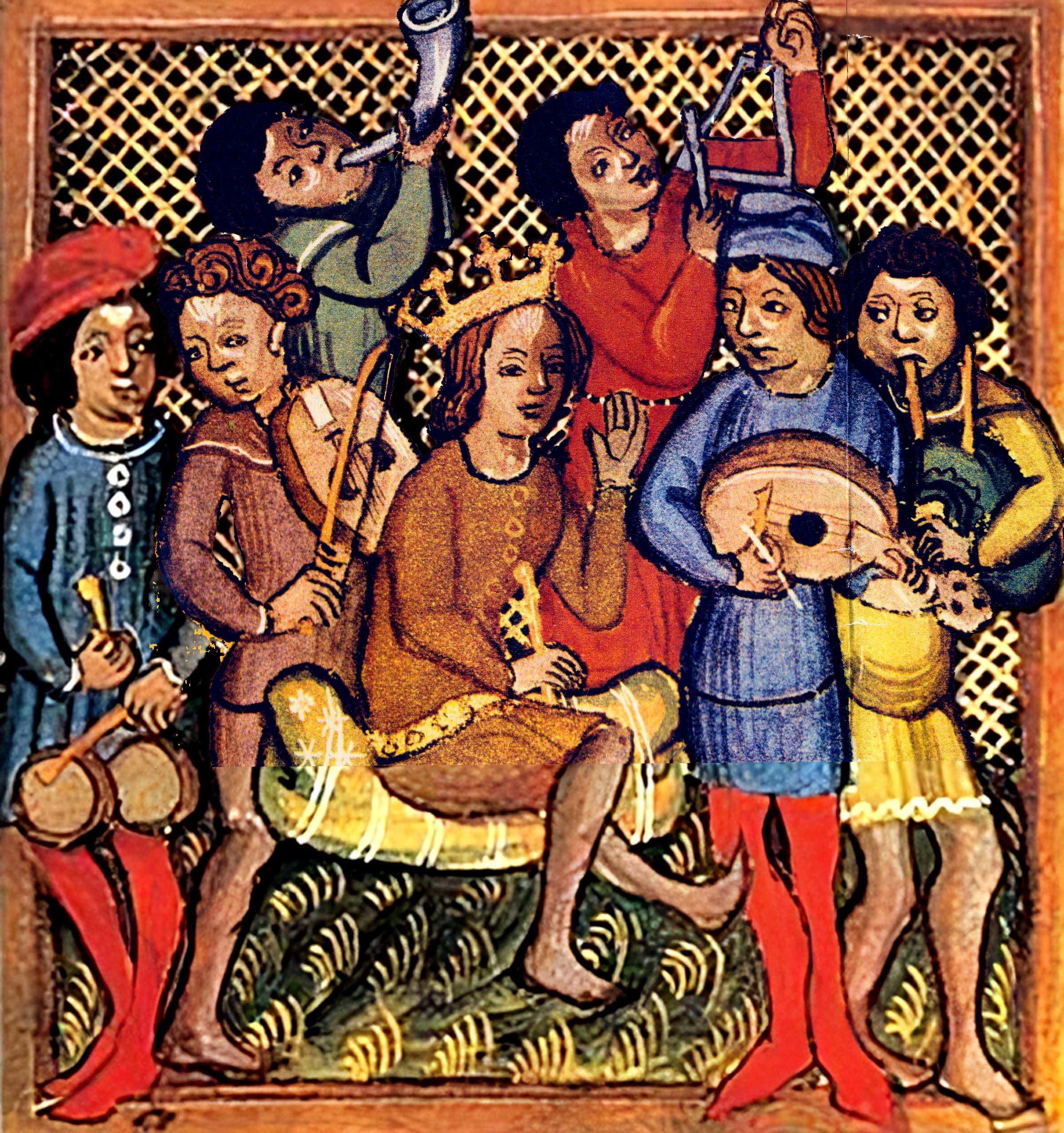
Minnesinger

As you no doubt have noticed, I am featuring a new poem here about every day. A reader writes that he prefers the ones that rhyme, on the grounds that “that is the challenge on poetry.”

Not really. A poem is not a word puzzle, not a test of technical virtuosity with the language. Nor do good poems need to rhyme. Yeats, Eliot, Donne, and Shakespeare have written some of the best poems in the English language without rhyme.

What then is the point of rhyme? Why has it been so dominant in poetry, if less so these days?

Poetry is sometimes called “spoken word.” This is wrong. If you want the art of the spoken word, you want the play. Prose, on the other hand, is the art of the written word. What about poetry? The proper medium of poetry is not writing, and not speech. It is memory. A good poem is written to be memorized, and reveals itself fully only when memorized.

This is why every word must count: because they are going to be endlessly repeated in memory.

Poetry is originally a pre-literate form. The ancient bards and original minnesingers were memory artists. Homer and those who performed his Iliad and Odyssey, or Valmiki's Ramayana or the Mahabharata, had to go on reciting word-for-word for days. Their audiences would hear it, word-for-word, at regular intervals. The epics and lyrics lived first in memory.

Troubador

There is, it is true, an aesthetic aspect to rhyme. It is semi-musical. But rhyme primarily gives a reason for each word to be exactly where it is, and so provides hooks that help the memory. The repetition with variation also helps memorize. But there is no essential need for rhyme; it is secondary to the primary task of making the passage memorable. In “The Second Coming,” Yeats does as well by linking vivid images. Repetition of the same words can accomplish the job, as Donne does in “No Man Is an Island.” Shakespeare can do it with meter alone.

The memory is magical and is closely allied with the imagination. The imagination is the window on the spirit world. We currently seriously undervalue the memory. Aristotle, Aquinas, Plato, and Augustine did not. They considered it the essence of the human spirit. Without it, we would know nothing. To remember nothing is to know nothing; essentially, all of our experience beyond a Euclidian point is mediated by memory.

This is why poetry is, with music, the highest of the arts.


A Memoir of Lost Love


I'm feeling poorly since you're gone;
The days are grey, the nights drag on and on;
My sleep is fitful, dreams are passing strange--
I guess I don't adjust too well to change.

And when I rise, and walk the street,
I stumble, on some stranger's feet;
Some stranger, whom you do not love,
As if in dreamscapes then or now I moved.

And there is worse--far worse there is--
Than just that what was mine is his,
But what is his has gone away;
I'd see you his if I could only see you every day.

I dreamt of love in innocence;
Thought I, a toad, might turn a prince
From love, from once upon a time,
But I have loved, and now am left
In spots and warty shame and my own slime.

-- Stephen K. Roney


Eleventh Republican Debate


The latest Republican debate was as exciting as the last one. This time it was Cruz's chance to shine. Rubio still got off the bet line of the night, worrying about Trump breaking into yoga because he was so flexible. It was also extempore, not a pre-planned sound bite. Rubio is obviously a bright guy with a really good sense of humour. He was not nearly as aggressive as last time—no doubt his own polls tell him it is not helping him for all it may hurt Trump. This gave Cruz the chance to take centre stage. He adopted a prosecutorial manner, which may work better for him.

Kasich also did well. He reversed his disturbing answer on religious freedom from last debate. Someone must have sat him down and pointed out what was really at stake. Still, that he seems to have been ill-informed on the issue suggests that he is not the serious Christian he says he is.

I cannot imagine how anyone continues to support Trump. He was awful. His insults, his avoidance of positions and his waffling were too obvious, and to clearly pointed to by the other candidates and the moderators. He was playing the voters for suckers, and surely the voters in general should see this by now. I think it may still take time, maybe two weeks, for it all to sink in, but I suspect this dragon is finally slain.


Thursday, March 03, 2016

University of Manitobe Fac ulty of Education Reserves Almost Half of New Slots for Minorities


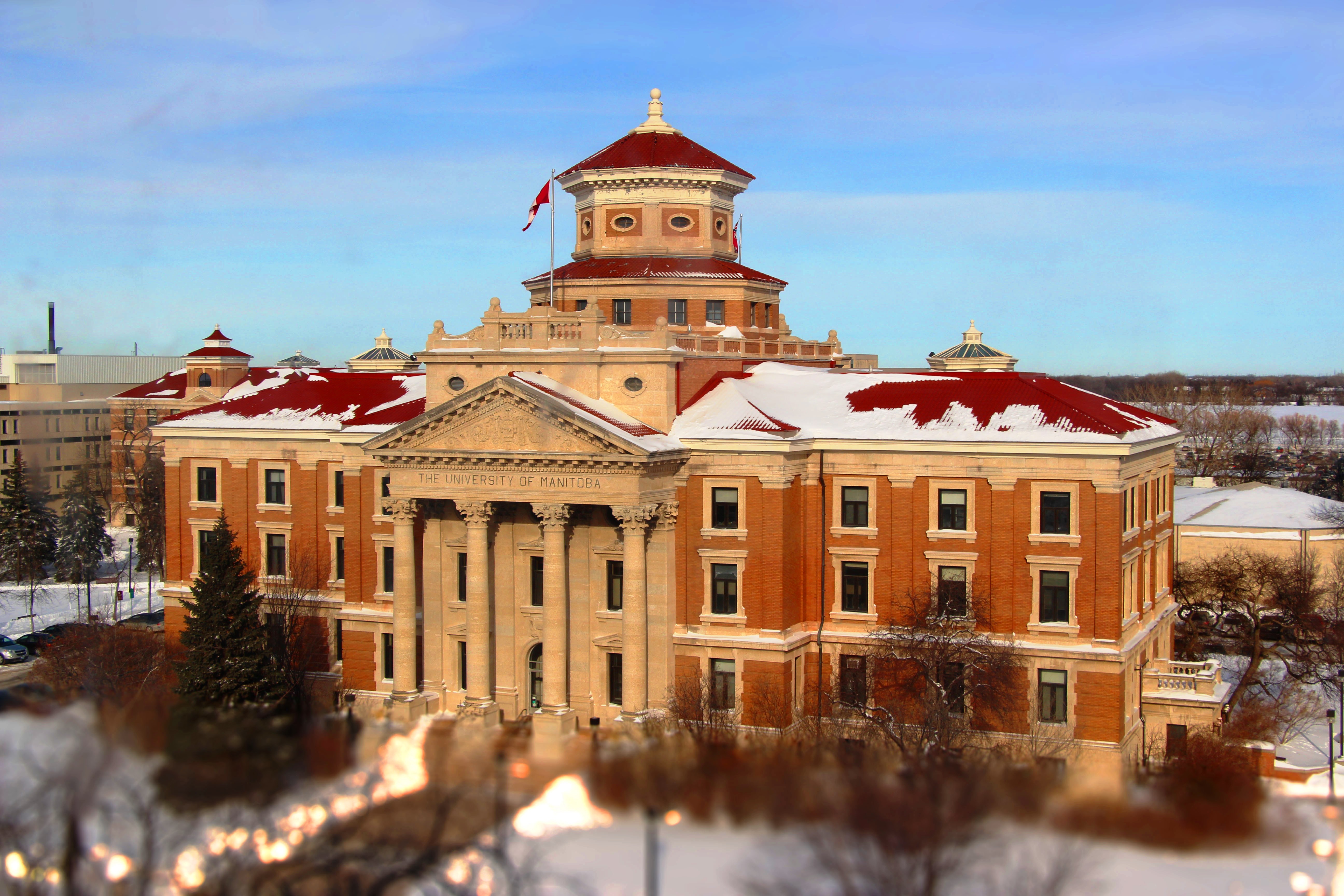
University of Manitoba

A reader alerts me to a piece by Peter Shawn Taylor in the National Post regarding the University of Manitoba faculty of education. Beginning next year, the school will admit 45% of students not on their academic record, but on the basis of minority quotas.

This is profoundly discriminatory, but not really new. I talked to Queen's faculty of education when I graduated with my BA, and was shocked to discover that my high marks mattered nothing to them. The academic entrance qualification then, at a posh university like Queen's, was exactly what it is now at the U of M: a C+ average. If I recall correctly, this was also the minimum required to graduate with an honours B.A. In every course, not overall. Beyond that, it was simply first come, first served.

I asked why. The administrator said that no studies had ever shown that higher academic achievement led to better teaching. What is striking about this is how untrue it is. A lot of studies, notably those by Teach for America, based on a huge amount of data, show the opposite: that a high SAT, and graduation from a highly competitive university with good marks, is perhaps the most accurate predictor of future teaching quality. It is also just common sense: you cannot teach what you do not know. The basic requirements for a good teacher are therefore 1) subject knowledge, and 2) knowledge of how to learn, or at least how to do well at academics. Good university students with strong degrees are the experts in both.

Unfortunately, as with the almost universal prejudice against the Jews, people hate through envy anyone who is smarter or more accomplished than they. Once, up until the Sixties, teaching school was a viable option for very bright young people early in their career. At that point, as noted in the piece on John Taylor Gatto posted here recently, the teaching trade, and especially the educational administration trade, came to be dominated by weak students of relatively low intelligence:

… [O]f twenty occupational groups measured, public school teachers score seventeenth on the GRE. Who scores lower? School administrators, who score 51 or 80 points lower, depending whether you are measuring them against elementary or secondary teachers (p. 21).

This, I think, was directly related to the push to establish teaching as a “profession.” The “professionals” were those who never moved on. Drudges. Many if not most elementary school teachers, did not, at that time, even hold a university degree. I have seen this in other fields once they professionalize. Pay goes up as quality goes down. Relevant is Adam Smith's famous comment, “People of the same trade seldom meet together, even for merriment and diversion, but the conversation ends in a conspiracy against the public, or in some contrivance to raise prices.” See also this piece from The American Interest for an angle on the problem.

Once the drudges got control, disaster. They hated anyone who had genuine intelligence or academic ability as anti-Semites hate Jews. Not least of those who suffered and suffer: bright students. Of course the professionals were not going to give any new places to bright people or those with posh degrees, no matter what was in the interests of the students.

First, come first served is, however, still rather embarrassing. It makes school teaching look pretty Mickey Mouse. The U of M has hit upon a better alternative: make it look like “progressive” politics. Of course, as Taylor points out, if they were really concerned with employment equity, half the new places would be reserved for men, who are grossly underrepresented in the "profession."


Sang-ja: Sijo


Sang Ja loves another.
No tears, no. I cannot cry.
Watering eyes see her less.
-- Stephen K. Roney


Scalia Was Anti-Science


He made somebody's friend feel bad. Maybe.

Salon features another hatchet job on Antonin Scalia. This one accuses Scalia of being anti-science, almost entirely on the basis that his judgments on constitutionality were discouraging to a friend of the author who studied physics. Not because of physics, but because he/she identified him/herself as “transgender.” It doesn't get much crazier than that. First, of course, Scalia is not responsible for not finding any right to transgenderism in the US constitution; it is not his fault that such matters are reserved to the states. His job is not to make up what ought to be in the constitution, but to determine what is. Second, the undeniable fact that transgenderism is not in the constitution does nothing to prevent state legislatures from passing what laws they will on the matter. It does nothing to prevent them from legalizing it, only does not invalidate any attempt to illegalize it. Third, transgenderism is in fact perfectly legal; the author's complaints are limited to the trivial inconvenience of which washroom they are entitled to use. Fourth, US states have actually been accommodating of transgenderism. All but six states allow sex to be changed on birth certificates, for example. All allow it on drivers' licenses.

Fifth, the author is guilty of a particularly bad example of the post hoc ergo propter hoc fallacy. He notes that his friend, soon after he/she “came out” as transgender, fell into a deep depression, and quit physics as a result. He implicitly rules out the possibility that either physics or postgraduate work were responsible for his/her depression, by giving the statistic that 40% of transgendered individuals have attempted suicide. But he blames this on Antonin Scalia? Far more likely, as per Occam's Razor, that this is not caused by “discrimination,” but that either 1) transgenderism is a symptom of depression, or 2) a transgender lifestyle makes you depressed.

I'm so proud. Now excuse me while I kill myself.

“So that,” the article concludes, “is Antonin Scalia's contribution to physics.... He died as he lived, gun at hand, dreaming of killing helpless prey from a position of safety and comfort. May his successor on the Court have a loftier vision of law, and of life.”

If one is judged by the quality of one's enemies, this is positively embarrassing for Scalia. This is all they've got? This is it?


Wednesday, March 02, 2016

St. John's Day


On the Rideau Canal
By the River Tay
I met a dark-haired girl
On St. John's Day.

Her eyes were blue
As an angel's gown;
She bound for Perth,
I for Portland town.

Her skin was so fair
My heart did ache;
She shone like the moon
When the owls awake.

She smiled a sudden smile,
Fingers twisted in her hair.
One mad thought:
Of my own hand there.

Then, like the West wind
As it ripples the lake,
She left; I was alone
By a moving willow brake.

Above the waters’ fall
I heard a loon's song;
But she left no footprints
When she'd gone.

I might have asked;
She might have said no;
I might have built a dam
Where the Tay waters flow.

Still wildflowers bloom
On the banks of the Tay
But never one so fair
As on St. John's Day.

-- Stephen K. Roney

Super Tuesday


Cruzing to victory in Texas and Oklahome
Donald Trump won a lot of primaries, but what stands out to me is that he underperformed the latest polls. It may be that people are finally seeing through the Trump phenomenon, and we may have seen his high water mark. The second story is that Cruz seems to be benefiting more than Rubio. It was always going to be Cruz's night rather than Rubio's, but there was no great Rubio surge. Rubio is the guy who went after Trump, most recently and most impressively, but unless you are Trump and the rules do not apply, going negative tends to blow up both candidates, aggressor and victim. People may buy it, but they do not want to reward anyone they perceive as nasty.

The good news is that Trump's numbers were low enough to make him look quite beatable by a united opposition. His vote was consistently in the thirties percentagewise, with Rubio and Cruz in the twenties. The bad news is that the results made that united opposition look less likely. Cruz edged up to challenge Rubio more definitively for second place. Which one would drop out?


Bernie? Is that your street name?

On the Democratic side, the most marked result is that the Democratic party is split, on racial lines. Blacks are overwhelmingly backing Clinton, by 70 to 90 percent. Whites are backing Sanders. It makes no sense on the face of it, since Sanders has since his youth been a prominent fighter for civil rights, while Clinton comes late to that game, and only when it was in her own interests. This demands an explanation, and nobody has breathed one that might come to the forefront immediately if the racial roles were different. It may have a lot to do with Sanders being Jewish. It may be an endemic black anti-Semitism,

Jews tend to see blacks as fellow sufferers, as like them in being discriminated against. But really, the cases are opposite. Blacks are generally considered inferior. Jews are generally considered superior, and discriminated against out of envy. They are, as a group, significantly wealthier and better educated than the norm for almost any society they are a part of, including the US. For blacks, extra spaces need to be given to them at universities to boost their numbers to their share of the general population. For Jews, quotas have always been the problem, spaces denied them to reduce their numbers to their share of the general population. This sort of thing being so, blacks and Jews really have opposite interests. And, if the average white guy tends to resent the success of the Jews, the average black guy is liable to resent it that much more so.