Playing the Indian Card

Showing posts with label Hitler. Show all posts

Thursday, April 09, 2026

My Trump Derangement Syndrome


Tim Pool is scorning Megyn Kelly, MTG, and Alex Jones for recently contracting Trump derangement syndrome. The rest of us know how to tame Trump, right? Seriously, but not literally. It is all rhetoric and deal-making.

I’d scorn these turncoats too, except I think I could easily contract Trump Derangement Syndrome myself. Trump has always worried me. I did not support him for the Republican nomination in 2016 or in 2024. 

The left had and has been breaking all the rules and conventions of civil life. They have, quite literally, been denying being bound by reality itself. It became necessary to bring in someone tough enough to crack a few skulls in hopes of restoring order. Once one side in the discourse ignores the rules, the other side must as well, or be steamrolled. I remember saying to a leftist friend in 2016, that they on the left were primarily responsible for Trump. 

The danger is obvious. Once the rules are lost, and you have elected someone with a mandate to break the rules, there is nothing restraining this leader from going too far, from imposing his own will instead of the old rules. There is no predicting where he will stop. I therefore watch Trump warily.

Unfortunately, the parallel with Hitler is obvious. As in the woke postmodern West, things got out of hand in the Weimar Republic in the 1920s. It was social, economic, and moral chaos. A lot of German voters turned to Hitler because he seemed to have the strength of will to sort it all out, and some vague plan to do so. At first, like Trump, it seemed he was doing a great job. But that same strong will, unsurprisingly, turned out to know no bounds.

Trump is obviously interested in leaving a personal legacy. Harmless when it involves building a new White House East Wing, or a victory arch across the river in Arlington. Venezuela might have been reckless, but it turned out well. ICE may be acting a bit fast and loose, but something had to be done. Iran seems justified, but is a bigger gamble. I fear that Trump is just going to keep taking on bigger challenges and rolling the dice until he loses. And it may turn out to be costly for the US and the world.

We’re all between a rock and a hard place.


Sunday, October 16, 2022

The Problem of Overpopulation in Hell


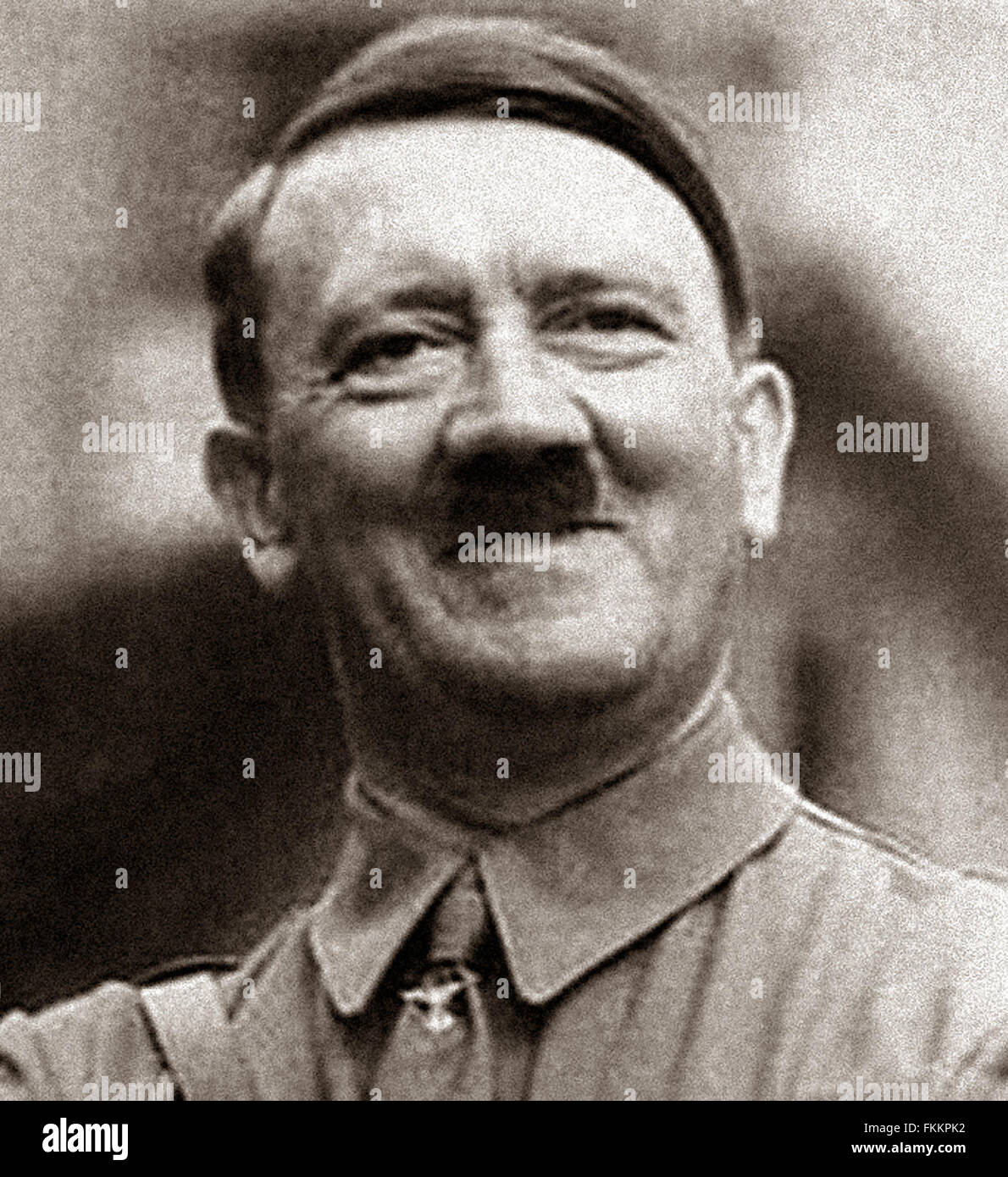
Hitler's smirk

My daughter asks the obvious question.

“Since we all know Hitler was such a terrible person, why did the Germans vote for him?”

We usually dishonestly conceal the problem with the absurd claim that Hitler was mad. It was all one guy. Everyone else is innocent.

But people do not accept orders from a madman. Ask King George III.

And Hitler is not the worst example. Mao did not start a word war, but he killed perhaps 30 million Chinese with his policies. And Mao is still revered. His face is on the Chinese banknotes. While in China in the early nineties, I saw an altar to him at a Buddhist temple, and a woman kowtowing to him.

Hitler’s great fault was only that he failed. That is what he cannot be forgiven for.

Such is the way of the world. Most people do not resist evil; they are not troubled by it. Most people will embrace it, so long as they think they can get away with it and there is something in it for them.

Hitler promised the Germans prosperity: better pensions, free vacations, higher education for all, the riches of the Jews, and the booty of conquered lands. Mao promised the mass of average folks the booty of the rich; as do socialists in general, justifying invariably bloody means. So did Idi Amin. And most of the people backed each of them enthusiastically; at least so long as they thought they would benefit.

Similarly, the current Canadian or American regime of unrestricted and free abortion promises sexual pleasure at will. So the average person is perfectly happy to kill any number of children.

At the Banff Publishing Workshops, challenged to come up with book ideas, I was warned: nothing will sell that asks the reader to make any sort of personal sacrifice. If a problem is to be addressed, others must always be scapegoated.

We must not ignore the guilt of the average person.

The average person is immoral. Morality is exceptional. This is also why, with remarkable consistency, the general and accepted position on any contentious issue is a lie.

All evil needs is a suitable bribe, sand a promise of impunity, and it's off to the races.

 It is a fallen world.


Monday, March 22, 2021

Literally Worse than Hitler


The Devil incarnate? Or a lesser demon?

Modern history has left us Hitler as our image of ultimate evil.

He may not be up to the task. 

Awful as he was, he is not the worst possible human. He was just theatrical about it.

None of the Seven Deadly Sins requires a victim. You could regularly indulge all of them, wrath, envy, pride, lust, gluttony, acedia (spiritual, not physical sloth), and avarice, without coming to the attention of many others. Our society even tends to celebrate some of them. 

The same could be said for seven or eight of the Ten Commandments: you could get away with coveting your neighbour’s goods, or his wife, without anyone even knowing. You could fail to keep holy the Sabbath day; you could take the name of God in vain. Many do. You could commit adultery without much social blowback. Some would cheer you on. 

Hitler was guilty of mass murder—thou shalt not kill—but murder is actually not the worst sin. It is the worst crime. There is scant evidence he indulged in lust. He lived a celibate life; he had few and discreet liaisons, so far as is visible. Or gluttony: he was a teetotaler and a vegetarian. Or avarice: he lived on the royalties from Mein Kampf, which he had the state buy in quantity, but did not loot as he might have; like his lieutenant Goering. Hitler was preoccupied with power. This is pride, the worst of the Seven Deadly Sins. And he clearly indulged his wrath. But at least he did not submit to all of them.

Hitler also had one signal virtue: courage. A worse man would lack it. 

A thoroughly bad man, precisely because he lacked courage, would not so publicly sin. He would remain an upstanding member of your community. People might feel, personally, there was more than a little “off” about him, but they would not find anything they could openly condemn.

The Devil, they say, is a gentleman. You are more likely to encounter him at your next social gathering, than in the history books.


Saturday, November 30, 2019

The Devil Is a Gentleman


Our age views Adolf Hitler as the embodiment of human evil.

That is wrong, and dangerously misleading. Hitler was a very bad man; but there are worse men.

It is not just that Stalin or Mao or Pol Pot were guilty of Holocausts as awful. We damn Hitler in large part because it is safe to do so, because he lost the war and has no living followers. This does not make him a worse man; only an easier target.

But Hitler also lacks some possible vices, and had at least one virtue. There must be others who actually have all the vices, and none of the virtues.

Even among his coterie, compare Goering. Goering endorsed all that Hitler did. But Goering was more avaricious. Goering indulged the vice of gluttony: Hitler was a teetotaler and more or less a vegetarian. Nor was Hitler visibly lustful. Stalin’s henchman Beria was far worse on this score, or Hitler’s henchmen Ernst Rohm or Reinhard Heydrich.

And Hitler possessed, in more than usual measure, the virtue of courage or fortitude. Throughout his career, he dared to take risks and do dangerous things.

A worse person would be too timid to go around killing everyone. Their gluttony and sloth would produce addiction and inaction, not the energetic destruction of Hitler. They would actually be capable of less harm. And a worse man would do all his evil by stealth.

The worst person living or the worst person who ever lived could easily be among us now, in our neighbourhood, unsuspected, living an outwardly unexceptional life.


Saturday, May 26, 2018

Latest Polls Show National Socialists on the Verge of Taking Power


Riaz's actual Facebook post, 2013.

Doug Ford’s PCs are stumbling in the current Ontario election. When the election was called, they looked inevitable. Last analysis I saw, last night, they would still win a majority government—and the Liberals would be down to one seat!—if the election were held yesterday. But all the momentum has leaked over to Horwath’s NDP. That’s the danger when you start out with a big lead, and then try to nurse it by being cautious. Somebody else, who has nothing to lose, starts to look more exciting and dynamic.

But now, Providence seems to have intervened. Or perhaps this was inevitable. It was just a matter of time before someone found something like this on the NDP. Two PC candidates have presented a Facebook post by one NDP candidate, Tasleem Riaz in Scarborough-Agincourt, from as recently as 2013, making a blanket endorsement of Adolf Hitler. Complete with a photo of him giving the Nazi salute to troops marching in review.

It is hard to imagine anything, short of showing up with a loaded machine gun in Nathan Phillips Square, and starting to fire with enthusiasm, that could more clearly and immediately disqualify someone from public office.

More amazingly, in her first reaction to the revelation, Andrea Horwath did not seem to grasp its seriousness. She expressed continued support of the candidate and said the matter would be looked into. Boilerplate, and no sense of urgency.

The candidate’s own response was yet less reassuring. She did not deny posting it. She just says she does not recall, and does not endorse the sentiment. Anyone can always say that; even if caught red handed, videoed live in the act of posting it, you can still never be proven to have lied. Yes, you really may not recall. But you resort to that line if you posted it, know you posted it, and suppose there is a decent chance someone out there can prove you posted it. And by saying you do not recall, you avoid having to explain or defend it. First and automatic line of defense when you cannot think of any defense. If there were some context around the original quote that would justify or even partly justify it—and if she did not recall, Riaz could just as easily as anyone else have gone back and looked at the post to check context and other posts around the same time—this is where it would have appeared. She had nothing to offer. She probably has no defense. She did it, and she meant it just as it appears she meant it.

Any attempted defense that someone else hacked her account is kind of precluded by the fact that another incendiary post fairly widely separated in time has also been found, calling Canada’s military in Afghanistan a machine for slaughtering innocent men, women, and children and urging all Muslims to vote NDP. Okay, not another open declaration of Nazi allegiance, but demonstrating that she is pretty outspoken and racist.

Now, it is not just a good election tactic for the Tories to hammer away at this issue. It is a civic duty. We are actually talking now about electing an open Nazi to government in Ontario, with the endorsement of the rest of her party and the rest of the government. I could not have imagined we had become that depraved.

Almost as alarming, people seem to be talking about this as if it were an issue of “antisemitism.” Hitler was about one hell of a lot more than antisemitism. There was that little matter of the Second World War. You might recall; it was in all the papers. And that odd bit about enslaving the entire population of Eastern Europe. Yeah, and ruling the world. There was that dictatorship bit, endorsed in detail here by referring to Adolf as “The Ruler,” Der Fuhrer. And that inconvenient absence of all human rights, or norms of government, and personal rule without regard to morality of any sort. And Germany itself left in rubble. At the end, Hitler literally wanted to have them all killed—all Germans.

Riaz was openly endorsing all of this. Up to and including an image of lines of marching men.

At the same time, she was implicitly at least--actually, pretty explicitly--declaring a disregard towards any democratic restraints on her or restraints of parliamentary tradition or law. Her core idea as expressed is that, like the Nazis, whatever she says or does to get power, once given power, she will do with it just as she pleases.

But hey, everyone is cool with that bit.

We are all doomed if the NDP gets into power, with her still a candidate.

In fact, it looks as though we are all doomed if the NDP gets into power, with or without her. Because they obviously do not see this all as terribly problematic. This is the true face of the modern left.

No, strike that. Whether or not the NDP gets into power, we are all doomed. Because nobody now seems to see this as a big deal.

I tremble for my old province when I consider that the Lord is just.


Wednesday, November 01, 2017

Fascism and Atheism


There is controversy over Hitler’s religion. Some say he was Catholic, since he was baptized Catholic. Some say he was pagan, since the Nazi Party’s ideologues were openly pagan. Some say he was an atheist, based on what he said in private as recorded in Hitler’s Table Talk.

I think that last is conclusive. What Hitler said in public speeches was surely calculated for public appeal, not a reflection of his own views. What he aid in private wold be his real opinion.

But even if Hitler cannot be decisively identified as an atheist, Mussolini can. He even published a pamphlet titled “God Does Not Exist.” Religion, he wrote, was a mental illness to be dealt with by psychiatrists.


Monday, February 06, 2017

The Post in Which I Apparently Deny the Holocaust


One complaint going around against Trump is that he did not mention the Jews in his official message on Holocaust Memorial Day. This has even been called “Holocaust denial.”

But this is why Trump was elected: no special interest politics. No preference for one group over another. No racism, in short.

If he had mentioned the Jews, to be fair, unless the point was to give them some special privilege over others, he should have also mentioned the Roma (gypsies), and the Freemasons, and the Jehovah’s Witnesses, and the Poles, and the Serbs, and the disabled, … It might, indeed, have been a useful reminder to have done so. I fear much of the current controversy is based on an ignorant belief that the Holocaust targeted only Jews.

But it is hard to do this kind of a list without inadvertently leaving someone out. And without distracting from the main point. Should one mention the various specific political persuasions murdered? The gays? But then there is controversy: some top Nazis were gay. Being gay was illegal before the Nazis showed up. Some say the gay law was applied only to political opponents. So was it gays who were targeted, or political opponents? It all becomes a tangle.

The only intelligent and fair thing is to lament and commemorate the deaths of all who were persecuted by the Nazis, without any special consideration for any one group of victims. All lives matter. Even if Jews were the single largest group.


Calling this “Holocaust Denial” makes it hard for any decent and moral person not to deny the Holocaust.

Is that the plan?


Wednesday, March 23, 2016

Nazis and Neo-Nazis


Ernst Zundel
A Jewish friend once worked with Ernst Zundel. Zundel is the most famous Canadian “neo-Nazi.” Aside from prison time in Canada for "spreading false news," he spent five years in German prison for Holocause denial, and time in detention in Canada for supposedly being a threat to national security. Zundel was a professional graphic designer before his notoriety, and a successful one until his politics were discovered. My friend, an editor, was shaken that Zundel once refused, for a client, to airbrush effluent coming out of a pipe from a photograph, on the grounds that this was misleading and hence immoral.

From this, my friend concluded, uncomfortably, that Hitler and the Nazis might have been entirely upright by their own lights. They were just working from different assumptions.

This is, to my mind, necessarily false. Begin with the example that gives him pause, the photograph showing pollution. If morality were really up for grabs, he would not know that Zundel was exhibiting morality in this instance. Instead, he, my friend, instantly recognized morality when he saw it, and was moved by it. Immorality should be just as recognizable in principle. Either killing Jews is wrong, or it is not.

The idea of crimes against humanity affirms the same idea. Right is right regardless of the local laws of the country, or such a category of crime could not exist. Slavery does not become okay because the laws of the US once supported it; killing Jews was not moral because the laws allowed it. If this is not so, we have no business condemning Hitler or Himmler, the Nuremberg Trials were illegitimate, and it was all just a case of the victors imposing their will. If Hitler had won, it would have been as proper and objectively moral to hang the followers of de Gaulle or Churchill.

One wonders why anyone gave their lives for the difference.

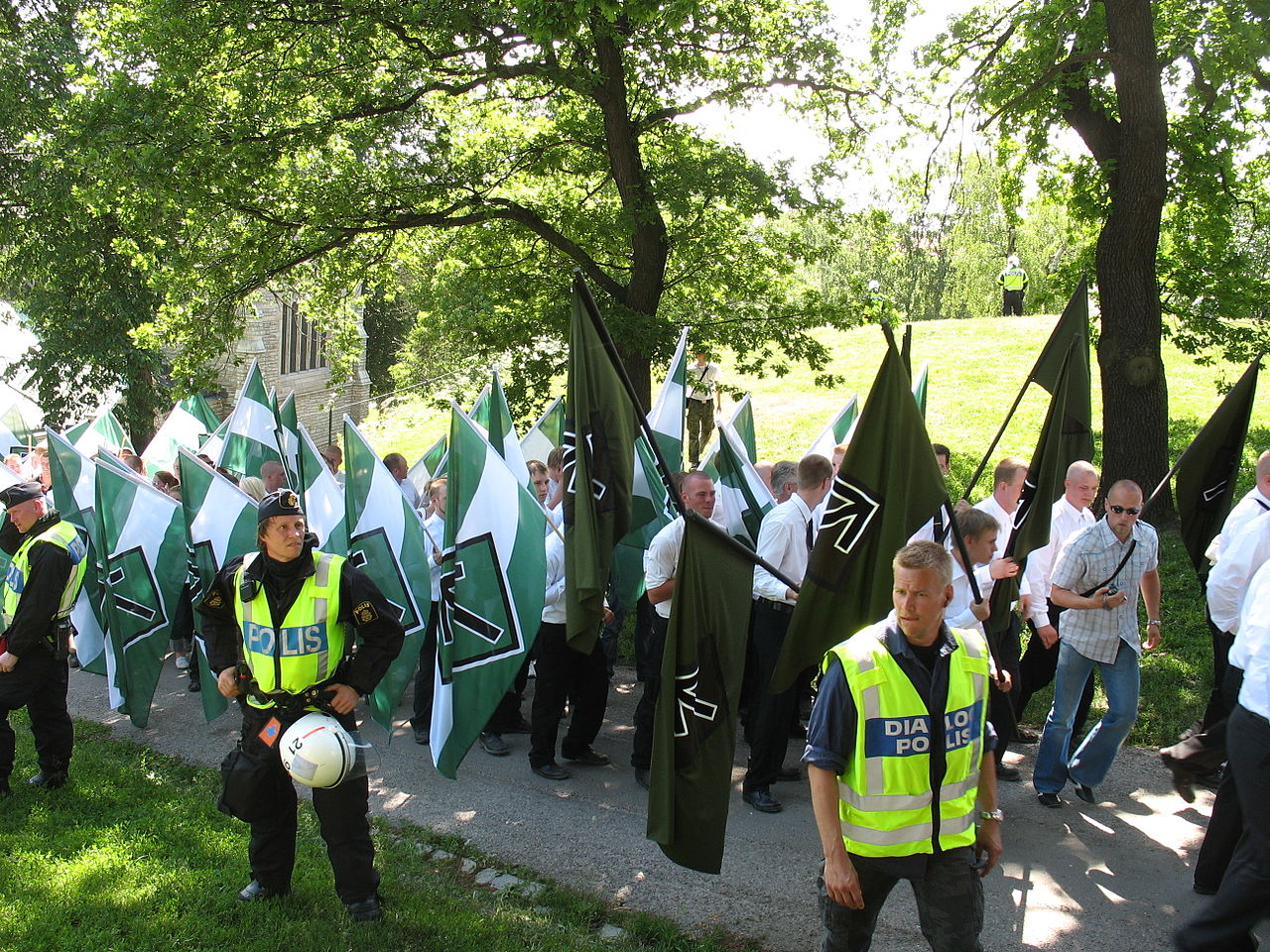
Swedish neo-Nazis march

No; morality is objective. We all have a conscience, an internal compass that tells us what is right and wrong. We do, of course, have the choice not to follow it. Sometimes it is not in our own best interests to do so. That does not mean it is not there.

Hitler therefore cannot have been sincere. Nor does the evidence suggest that he was. Nazi ideology was philosophically incoherent. Was it a doctrine of the left, right, or centre? The debate continues. Did the Nazis intend to abolish private property? Nobody was or is sure. Did they intend to abolish Christianity? The same. The Nazi programme was highly adaptable and ambiguous depending, it seemed, on what Hitler thought would gain public support, or the support of the group he was currently addressing. This was his great talent as an orator, as William L. Shirer has pointed out. Hitler's standard technique in diplomatic negotiations was to make promises of any sort, then immediately break them when it was in his interest to do so. This is not a man of principle. Mein Kampf devotes itself almost entirely to tactics, not bothering much with principles. The principle, such as it is, is simple: personal and group power. Far from being some kind of ideologue, fanatic, or true believer, Hitler was the ultimate opportunist.

This leads to some uncomfortable conclusions. Hitler came to power democratically. He tailored his policies to what was popular and politically expedient. This means he would not have attempted the Holocaust if he did not believe the majority of Germans supported it. Granted, there was a financial reason as well: Nazi budgets were a Ponzi scheme, and the Jews were rich. Confiscating their property delayed the day af reckoning, at least perhaps until the next nation could be conquered and looted. It is doubtful whether Hitler ever allowed himself the emotional indulgence of hating Jews; the point is that the average German did.

Certainly Hitler was a very bad man, the worst of men, but he has also been made a scapegoat to avoid assigning due blame to Germans (not to say this could not have happened elsewhere; people are people) generally. He is referred to as a “madman.” This is nonsense. People do not take orders from madmen. Nor could a madman be nearly so calculating. Hitler, with his cunning, was spectacularly sane. He was a bad man, not a mad man, and to pretend the latter is a terrible slander against the insane.

Bad, not mad.

The second uncomfortable conclusion to be drawn here is that those we call "neo-Nazis," like Zundel, are really the opposite of Nazis. They are certainly not opportunists. There is no personal advantage to be gained anywhere by claiming to be a fan of Hitler. Zundel himself lost his career, his freedom, his residency in Canada; vandals did $400,000 worth of damage to his home, and were not prosecuted. He has to have been motivated by a strong sense of principle. He believed, and believes, that Hitler has been scapegoated, and in part he is indeed certainly right. Nor does he endorse the killing of Jews, which would be objectively immoral; instead, he believes that Jews were not killed, which is a quite different matter.

We do nothing to prevent the rise of another Hitler by persecuting the neo-Nazis. We certainly do nothing to prevent it, and indeed give Hitler a kind of legitimacy, with laws against "hate" or "Holocaust denial." It makes the intelligent and morally sensitive suspect we have something to hide. Which of course we do--our own guilt, not, as they suppose, Hitler's innocence. Instead, by such laws and such prosecutions we are harassing the very people most likely to stand up and resist should another figure like Hitler arise. At the same time, we are training the great bulk of the population to stay good Germans in any eventuality.

Cat. After all, this is the Internet.


Thursday, March 26, 2015

Artists as Political Leaders


A painting by Winston Churchill. Not a painter: a writer.
The great Glenn Reynolds, of Instapundit, has recently suggested it may be a bad idea to put artists into positions of political power. He notes that Hitler (painting, architecture), Mao (poetry),

Saddam Hussein (novels) and Stalin (poetry) were all failed artists. He might have added Mussolini, who used to write short stories. Or Henry VIII, who reputedly dabbled in musical composition.

That may be so. But on the other hand, one can think of artists who have done rather well in the same position: Churchill (Nobel Prize for Literature), Disraeli (popular novelist), Vaclav Havel (playwright), Ronald Reagan (actor), Paderewski (pianist), Vajpayee (poet) and perhaps Frederick the Great of Prussia (besides wanting to be a musician when young, wrote the popular tract “Anti-Machiavel”). These, by contrast, surely did significantly well at statecraft.

Can we make a distinction between the first group and the second, as artists? I think we can. The first is a group of failed artists. The second is a group of artists with genuine accomplishments.

A painting by Adolph Hitler. Not a painter: a politician.
Bad guys, narcissists, egotists, are commonly going to want to be recognized as artists. Because, after all, they want to be the centre of attention in everything. They are generally not going to be able to pull it off. Indeed, I suspect that the gifts of the spirit needed to be a good artist are incompatible with true egotism. They may use their political power to try to change the perception of their art.

But in the latter group, we generally find people who made a name for themselves as artists before they came to power. More generally, I believe I have found, in my years of hobnobbing around the periphery of the art world, that there are two very distinct and different populations found there: the poseurs, and the real artists. These two are opposite types.

Others have noted the same.

Friday, October 17, 2014

Was Hitler Catholic?

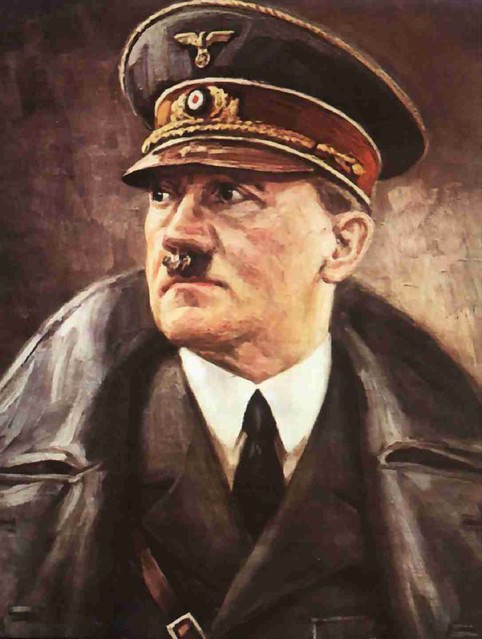
No introduction necessary

There is a rumour going around that Hitler was Catholic. But then, there is a rumour going around that he was Jewish, and another that the Holocaust never really happened.

It is true that Hitler was baptized and confirmed as a Catholic. His mother, after all, was Catholic, though his father seems to have been atheist.

His later public statements can also be quoted to imply some sort of theistic faith.

But there is, in the end, conclusive proof that he was not Catholic:

  1. As an adult, he never attended mass or took the sacraments. That would have meant automatic self-excommunication after one year. 
  2. In the early 1830's, the German bishops excommunicated everyone who joined the Nazi Party, or even flew the Nazi flag. At this time, Hitler was the leader of the Nazi Party. Accordingly, he was publicly excommunicated. He made no effort after this to reconcile with the church. 
  3. The official doctrine of the Nazi Party was paganism. This was by Hitler's choice: he appointed Alfred Rosenberg as official party ideologue, and Rosenberg was a vocal anti-Catholic. 
  4. Hitler's plans for a postwar new German capital allowed no churches. 
  5. Hitler actively persecuted the church when in power. Wikipedia gives chapter and verse. 
  6. While his public statements are unclear—he speaks often of “divine providence”--Hitler's private conversation seems to have been resolutely anti-Catholic. Many of his actual comments are preserved in Hitler's Table Talk. Speer, Shirer, Goering, Goebbels all understood him to be anti-Catholic. Hitler was a politician, and a completely unscrupulous one. His public statements were calculated for political advantage. His private talk reveals his true views. 
  7. Hitler killed himself, without taking last rites, and had his body burned. All three acts were against church teaching and would, in the mind of a believing Catholic, have guaranteed him a warm reception in Hell. It follows that he cannot have been a Catholic at the time of his death.

Saturday, August 24, 2013

Israel: Just a Bigger Ghetto


Sofia's Grand Synagogue

I was walking along a street in downtown Sofia one Friday evening several years ago. Gradually, through the dusk, I realized I was surrounded by a small gang of elderly people. All the men were wearing yarmulkes. I had stumbled upon the last remnants of Sofia's Jewish community heading for synagogue for the beginning of the Sabbath. Perhaps a score of aged men and women.

In 1944, Jews made up one quarter of the city's population.

What happened to them all? No, they were not sent to Hitler's death camps. Bulgaria never permitted that. Instead, they all emigrated to Israel after the war.

Sofia synagogue interior
I am not at all sure this was a good idea. I am not at all sure that Israel is a good idea. And I do not mean that it is bad for the Arabs, although no doubt it is. I mean it is bad for the Jews.

In fact, it has done Hitler's work for him: it has achieved his vision. Early plans and directives suggest that Hitler had no special interest in killing Jews. His original idea was to exile them—he thought to Madagascar, or somewhere else in Africa. This was also, not coincidentally, the original plan of Theodor Herzl, the founder of Zionism. Palestine would have done nicely had the British allowed it. Hitler just wanted them out of Europe, so that they could not contaminate Europe's Aryan purity. Just as Herzl wanted an independent state to prevent Jewish assimilation.

Theodor Herzl

Hitler, in other words, was a Zionist. Israel has done exactly what he sought to do, but was unable to do. Is this a good thing?

And is it a wise strategy in terms of Jewry's ultimate survival to huddle into one small nation state? Isn't this a case of putting all one's eggs in one basket? Wasn't Jewry's previous strategy, of dispersion throughout the nations, in fact an unusually successful one? Where, by contrast, are the Assyrians, the Carthaginians, or the Visigoths today? It allowed them an escape hatch in all circumstances: suppress them in Spain, and they had connections and relations in Turkey; in the Netherlands, and they had contacts in Poland. Hitler, though he controlled all of Europe, was unable to eliminate them. In ten years, he managed to kill six million. By contrast, now two well-placed Iranian bombs could wipe out seven million Jews in an instant.

A passionate Zionist


Just as keeping all the Jews of a city in one ghetto made it easier to find them when a pogrom started, so concentrating all the Jews of the world into one twelve-mile-wide country seems on the face of it like herding them all into one big cattle train.

And it is, of course, apartheid, segregation. This has not always turned out well elsewhere. Nor did we ultimately find shipping all the blacks of America back to Liberia an entirely satisfactory solution for that minority group.

Moreover, if the Jews are really determined to set up shop permanently in one location, Israel is actually a remarkably bad choice. There is a reason why the Israelites have, historically, kept being thrown off this land. As have the Canaanites, the Philistines, and the crusading Franks. It is a natural thoroughfare, the only land route between Africa and Asia, the carrying point between the Mediterranean and the Persian Gulf, wedged in between the two larger entities of Egypt and Mesopotamia. Trying to establish and hold an independent nation in this little corridor is rather like building your house in the middle of a highway, and hoping nobody will trespass. Not to mention, of course, that the place is a desert, a natural wasteland. The Zionists could have done far better by settling Argentina, Oklahoma, or the interior of BC. All of which were still more or less available.

A sheep among wolves.


At the same time, the loss of so much of its Jewish population, I suspect, has greatly impoverished Europe. I had this sense in Sofia, and it seems, on reflection, self-evidently so. Jews are responsible for a staggering proportion of European, as well as American, culture. It is the mission of the Jews, after all, according to the covenant, to be a light unto the nations. By retreating to Israel, they are abandoning this mission, and this religious duty. Is it any wonder that European culture now seems moribund and listless? The light has departed from it. If American culture seems still more vital, it is perhaps because fewer of its Jews have been tempted to leave for Israel. And abandoning their historic mission is likely to have the same enervating effect on Judaism.

Now, of course, as a result of Israel's existence, the Jewish witness has been stripped from the Muslim world as well. Distinct communities and subcultures all over the world, with their millennia of traditions, are being wiped out, as in Sofia, in a generation. Bahrain's synagogue stands idle. The Jewish community of Cochin, of over two thousand years' duration, older than France or England, is no more.

The abandoned Manama synagogue.

One suspects that, when the histories are written a hundred years from now, the State of Israel will be seen as a greater calamity for the Jewish people than the Holocaust itself.

Interior of Cochin synagogue.

Sunday, August 05, 2012

Nazism and the Catholic Church

I keep a copy of William L. Shirer's massive The Rise and Fall of the Third Reich on my bookshelf for reference. It is an antidote to the persistent current attempt to falsify the nature of the Nazi phenomenon. Shirer may not have had access to all the documents we do now, but he was writing before ideology tried to make off with the record. He writes as an honest reporter, without a whetstone before him.


Pius XII


Let's look, for example, at the position of the Catholic Church in Shirer's account. No trace here of any “Hitler's pope” nonsense. In a section titled “The Persecution of the Christian Churches,” Shirer notes that although the Nazi platform offered religious toleration, “Hitler...had inveighed against political Catholicism in Mein Kampf” (p. 234). According to Mein Kampf, he offered toleration only because he thought it was tactically impossible to defeat the Catholic Church head-on. Five days after the signing of the famous Koncordat with the Church—simply standard practice with any relatively hostile national government from the Church's point of view—Hitler promulgated a sterilization law, anathema to the Church then as now. Five days after that, he dissolved the Catholic Youth League. “During the next years, thousands of Catholic priests, nuns, and lay leaders were arrested.” (p. 235). The leader of Catholic Action was assassinated by the party. Catholic publications were suppressed.

This is strikingly more hostile than the party's attitude towards, say, gays. The Koncordat, in turn, suggested nothing like the level of friendship and cooperation Hitler officially extended to the Communists in the Hitler-Stalin Pact; not to mention that Stalin came close to formally joining the Axis. By contrast, the significance of the Koncordat was nothing more, on the Church's side, than recognizing that the Nazis were the de facto government of Germany.

The long-term Nazi plans were even clearer. There was no space allocated to churches in Hitler's redesigned postwar Berlin. “...Under the leadership of Rosenberg, Bormann and Himmler, who were backed by Hitler, the Nazi regime intended eventually to destroy Christianity in Germany, if it could, and substitute the old paganism of the early tribal Germanic gods and the new paganism of the Nazi extremists. As Bormann, one of the men closest to Hitler, said publicly in 1941, 'National Socialism and Christianity are irreconcilable.'” (p. 240). QED. When Hitler took Poland, according to Admiral Canaris's diary from the time, orders went out that “the nobility and the clergy were to be exterminated.”At one point, Hitler planned to kidnap the Pope.

After the war, the Nazis planned to set up a “National Church,” based on thirty articles, including:

5. The National Church is determined to exterminate irrevocably ... the strange and foreign Christian faiths imported into Germany in the ill-omened year 800.

13. The National Church demands immediate cessation of the publishing and dissemination of the Bible in Germany.

19. On the altars three must be nothing but Mein Kampf (p. 240).

This “National Church” was obviously not a Christian Church; it was the religion of German nationalism.

Martin Niemoeller.

The Protestant record was less honourable than the Catholic; odd too that they get off scot-free. “The Protestant clergy—Niemoeller was typical—quite openly supported the Nationalist and even the Nazi enemies of the Republic. Like Niemoeller, most of the pastors welcomed the advent of Adolf Hitler to the chancellorship in 1933” (p. 237). They shared the common disease of the intellectuals, embracing Hitler early. While there was a Protestant resistance, it was a minority. Even Boenhoeffer, famous for his anti-Nazi stance and his execution by Hitler, opposed the Nazis in the name, not of democracy, but of a return to the older Prussian nobility. In Norway, the head of the Lutheran Church, Bishop Berggrav, agreed to serve in Hitler's Quisling government of occupation (p. 709).

Von Stauffenberg

Shirer reports that the Pope took an active role in a plot, early on in the war, to overthrow Hitler (p. 693), by “intervening with Britain for reasonable peace terms” with any new non-Nazi government. The famous “Valkyrie” plot to assassinate Hitler, again, was largely a Catholic enterprise. Von Stauffenberg was a devout Catholic, from a prominent Catholic family. He wrestled with the theological justification for tyrannicide before framing his plans.

To say that the Catholic Church is in any way responsible for, or collaborated with, Hitler, is rather like saying the Jews were, or did.

Wednesday, June 27, 2012

How Hitler Lost the War


You will forgive me, I hope, for yet another post on the Second Word War. Yes, I know it's over. But for my generation, the Baby Boomers, the Second Word War was like a creation myth. With Hitler as Satan and Churchill as St. Michael the Archangel.

This blog has argued in the past that Hitler could not, as some have suggested, have won the war had he concentrated his forces in North Africa to take out the British Empire—grabbing the Suez Canal and the British oilfields in Iraq by land. This would have left Hitler's supply lines too long and too exposed to attack by a sea power. He never could have made it.

Unless... with diplomacy, there could have been a way. Briefly, after the blitzkrieg had taken out France in the Spring of 1940. Imagine if Hitler had persuaded Spain and Turkey to join the Axis at that point, as he had persuaded Italy. Why not? Both had governments that were ideologically at least semi-Fascist. Turkey had been at Germany's side in the first war, had historic German sympathies and a desire for a counterbalance to neighbouring Russia. Spain wanted Gibraltar; Turkey had every reason to seek recovery of those Iraqi oilfields, taken from her in the first war.

Hypothetical map of Axis in 1940. Red: full Axis members. Pink: Axis influence or control.


Suez is gravy. If, on its own or with the help of German troops, Spain had managed to take Gibraltar by land or air, the British Navy would have been cut off from the Mediterranean on the west side. Malta would then have been a bit of a sitting duck in its turn. This might have been enough, combined with Italian naval strength, to have made it feasible to supply German troops from Libya as far as the Suez canal—cutting off Britain's other entrance, and turning the Mediterranean into a safe, sealed Axis lake. No danger to Axis supply lines running though it. In the meantime, a problem for Britain maintaining its supply lines east of Aden. Had Hitler been able to convince Petain too to join the fight, the weight of the Vichy French Navy, along with Italy's and Spain's, could have made the matter certain. The Med could have become a wolf pen for forays into the Atlantic. No North African landings.

In the meantime, with Turkey in the war, there would not even be a need for Germany to throw long supply lines along the North African coast in order to capture the Royal Navy's oil supply, and take it for itself. Iraq could be taken from Turkey by land, coming down from the north. With an important German presence there, Iran could probably also have been held in the Axis camp.

It seems to me this could very well have knocked Britain out of the war. If not, it would have weakened her so much she might no longer have been a major military factor.

And not just Britain. If Hitler had still felt it necessary to invade Russia, he would then have had a considerable advantage—instead of having to drive thousands of miles into Russia to reach the Russian oilfields in the Caucasus, Germany and Turkey would have had to fight a much shorter distance north—the Turkish-Russian border is already almost on the Caucasus. In fact, with Iran in the equation, the Axis lines start out already well to the east of Stalingrad. Turkey, stripped in the past of a good deal of territory by Russia, would probably be delighted to cooperate. Together with a drive east from the German border, this could have been a pincer movement, as if Hitler's first year and second-year Russian offensives occurred together. Meantime, with Iran holding for the Axis, Russia would have been cut off from much of its supply from the Western Allies, if they still counted.

Add to that the potential for Japan to attack from the East, far more tempting to Japan in this scenario—it seems an incredible failure of German diplomacy that Japan did not join in the attack on Russia. Surely there is a good chance this would have made the difference in that campaign, and sealed Stalin's fate.

Why did this not happen? I have heard it suggested that Hitler did not really try hard to gain more support from Spain or Japan or Vichy—though he did try. The theory is that he was confident Germany could do it on its own, and did not want to strengthen any other powers on Germany's dime. But if so, this seems to be a departure from his attitude up to this point: he showed a deep concern for diplomatic manoeuvre in gaining Italy's support, and in achieving the pact with Stalin.

It may have been overconfidence; it may have been chickens coming home to roost. How reliable was a pact with Hitler going to seem after Munich?

Sunday, December 23, 2007

The Princess and the Pea

In the official version of Stalin’s life story, his father was a drunkard who beat him regularly. In fact, according to Simon Rees, writing in Military History (“Historians are still trying to sort out the dark private life and strange death of Josef Stalin,” October, 2003, p. 18), “his home life as no worse than that of the other poor people of Gori.”

In the official version of Hitler’s life story, his father was a drunkard who beat him regularly. In fact, according to Karl Dietrich Bracher, in his detailed study The German Dictatorship (NY: Praeger, 1970, p. 58), “The father was not a chronic alcoholic, but, rather, a comparatively progressive man with a good job.”

Rather, there is reason to suppose that both Hitler and Stalin were pampered by their mothers. Stalin was an only child, his three older siblings all having died in infancy. One might expect he was especially valued by his mother for this reason. His father was largely absent during his childhood, having moved to another city for better work—leaving little counterbalance to an over-indulgent mother.

Hitler was supported by his mother throughout his early adulthood, with apparently no need to work for a living. “After the death of his father,” Bracher writes, “his mother afforded [him] … two-and-a-half years of idleness.” (p. 59). Bracher refers to her as “over-indulgent.”

Of course, no one can know for certain; but this may shed some light on the current naïve faith among social workers that the abused go on to abuse, and the bullied go on to bully. For such claims are always based on asking questions of current abusers, or of current bullies. If one has a fixed habit of blaming others for everything, and pushing one’s bad feelings off onto others, isn’t one likely to do exactly the same thing here? Isn’t a bully or a psychopath automatically going to claim to have been bullied or abused themselves?

Yet the truth is likely to be the opposite—when one is accustomed to being treated very well, one expects it. Receive anything less, and one is liable to consider oneself hard done by. The traditional fairy tale of the Princess and the Pea contains a great deal of folk wisdom. When one is pampered for long enough, any inevitable ill feeling is liable to be interpreted as oppression. The truly oppressed, on the other hand, are more likely to remain silent—through long habit.

This also explains feminism. Women have traditionally been pampered, not oppressed. Men have traditionally been told to buck up and shut up.

Monday, November 12, 2007

Poison Ivy

Karl Dietrich Bracher, in his study of Hitler’s rise, The German Dictatorship, notes that the Nazis’ first and fiercest converts, aside from “food faddists, vegetarians, and nature worshippers” (p. 39), were university students and faculty. He explains this by suggesting that universities are by their nature undemocratic: “Professors and students felt … their status and prestige threatened by democratic ideas of government and society” (p. 165). So they preferred any alternative to the Weimar Republic.

Exactly: the university by its nature is the opposite of a democracy, and is antithetical to it. It is a rigid hierarchy, a self-selected elite.

This is not necessarily a bad thing—for untrammeled democracy is not necessarily a good thing. It can serve as a check and balance against popular excesses.

However, it is well to remember that the university is by its nature opposed to democracy, by its nature reactionary, and by its nature represents an upper class jealous of its “status and prestige.” Universities are, among society’s institutions, one of those most resistant to change.

Long after Marx and Freud have been discredited, for example, they remain dominant in the universities. Long after the rest of the world had migrated to desktops, universities were still working and teaching on mainframes. Any university becomes a repository for ancient traditions, passed down generation to generation. Any university seeks the ivy-covered walls that imply stability and long duration. To be able to go to university, by and large, implies that your parents are relatively rich—it is an important way in which a ruling class can perpetuate itself. It is conservatism personified.

More: the prestige and livelihood of a university or a faculty member depends upon the premise that he or she possesses some special, privileged knowledge. Change makes any such repository of knowledge relatively obsolete. Suddenly anyone can play. So progress and the university are not friends.

All well and good—there is a beauty in the changelessness of it all, in preserving the ancient verities.

But the most disturbing thing about the modern university is this: rather than acknowledging this truth, this inevitable bias, the typical university and the typical faculty member nowadays seeks to conceal it. They seek to masquerade instead as agents of change—especially of social change. This is suspect—this is hypocrisy. This strongly implies a ruling class that has grown corrupt and self-indulgent, and is doing something of which it is ashamed. It is a cover-up.