Playing the Indian Card

Showing posts with label evil. Show all posts

Thursday, November 13, 2025

Speak of the Devil


Guess who's coming to dinner?


Last evening, I attended a Christian discussion group. Nominally, it was a group for those thinking about becoming Christian; but in reality, all but one were practicing Catholics.

The topic for the day, based on a video we had all just watched, was “how to resist evil.”

Striking to me, nobody seemed to have much concept of evil. They seemingly had not thought about it, and did not want to think about it. How is this healthy Christianity?

Challenged at one point with the question “what is evil?” there was general silence. Eventually one participant looked up the dictionary definition on her smart phone. 

When someone brought up demonic possession, the facilitator visibly balked. I pressed in with Biblical references; otherwise I think he was about to scoff at the idea. As if demons were anything more than an antiquated superstition!

This is the “happy happy joy joy” motivational speaker Christianity. It is lame, and goes in circles, because it lacks one leg. You cannot believe in God, and not the Devil. Otherwise you are lying to yourself.

Refusing to see evil does not make it go away. It ensures that evil thrives. 

“All that is needed for evil to succeed is for good men to do nothing.”

“The Devil’s greatest trick is convincing people that he does not exist.” The Devil loves the darkness.

Deny his existence, and you not only stop resisting evil around you, and in you. You begin to believe in all kinds of scapegoating and mad conspiracy theories involving the “other.”


Monday, October 16, 2023

Devil Cults


Friend Xerxes, the left-wing commentator, for some reason this week hearkens back to the Satanic child abuse scares in Saskatchewan back in the eighties and nineties. And his conclusion seems to be that the fatal error that led us astray was believing in the Devil.

“Unfortunately, there’s no tab in the corner of our mental screens to ‘Hide Satan.’”

Wanting a tab on your mental browser to “hide Satan” sounds like whistling past the graveyard: “if I don’t look, he can’t see me.” Denying evil exists is not a wise strategy; but a sadly common one.

The Saskatchewan hysteria, and the paranoia all around the world for a couple of decades over imaginary child abuse cults, was founded on two gross fallacies: a belief in repressed memories, and the claim that “children never lie.” (Unfortunately echoed more recently with the mantra that “women never lie about rape.”) These two obviously false claims led people into the hysteria. I remember, circa 1984, proposing in a Banff workshop a book arguing against the idea of repressed childhood memories, and getting shock and horror from a female member of our group. Didn’t I care about child abuse? Was I such a monster?

This was also the first time I ever heard of a speaker being shouted down on a Canadian college campus: some speaker at McGill pointing out that there was no evidence for repressed memories. I would not have thought such a thing possible; now it is the norm.

People only want to shout things down when they are true: never when they are false…

But the idea of repressed memories obviously defied common sense. If something genuinely traumatic happens to us, we do not forget it. Just the reverse: the memory haunts us, and we find it hard to turn away from it.

And nobody who has been around children can honestly believe kids never make things up. Ask them who took a cookie from the cookie jar. Small children even start out having difficulty distinguishing imagination from reality.

Why did people want so badly to believe in ritual child abuse rings? So badly that they would rid themselves of basic reason to do so, and refuse to listen to argument? I suspect it was projected guilt over abortion, fully legalized at almost the same time. People needed a scapegoat, some other, so they could still think of themselves as loving and defending children despite supporting abortion. 

Significantly, the pedophilia hysteria broke out at about the same time: the panic about pedophile priests, pedophilic orphanages, the idea that pedophiles once convicted must be identified to all neighbours whenever they moved, the idea that they must be either chemically or physically castrated, and can never be rehabilitated. 

Of course, pedophilia is a problem; but I can recall how much more casually it was thought of and dealt with in my youth. Something had changed, and it was not the pedophilia.

So too, I suspect, how much more protective we have become of our children in general, not allowing them to do anything without supervision. Giving them “safe spaces” wherever they go, never letting them be “triggered.” It is all overcompensation for abortion. Although the moment our own interests are impacted, the kids are a ready sacrifice: get them all vaccinated, shut down the schools, although the vaccine is more dangerous to them than the virus, and the hiatus in their education is liable to harm their future. After all, otherwise they might infect adults. 

The residential schools hysteria is a continuation, a culmination, of this same mass psychosis. The accusations are all the same as the Satanic cult panic: sexual abuse, torture, children being secretly buried in mass graves, and so forth. The projection is perfect: the guilt over abortion gets assigned to those who object to abortion. Most notably the Catholic Church, which ran most of the schools.

No surprise that no bodies turned up in any mass graves.

The residential schools charges rely on the same evidence as the earlier satanic cult legends: the tacit assumption that Indians, being childlike innocents, can never lie—the romantic myth of the “noble savage.” That childhood memories are reliable—memories from childhood are much of the “evidence.” And that indigenous “oral history” is reliable—in any other context, the term for this would be “urban legend.” Many of the charges can indeed be found elsewhere as urban legends.

And of course, it is about the children. That hints at its origin in guilt over abortion. Although Indian children on reserve are being driven to suicide, and young Indian women keep going missing, and we continue to allow that to happen instead of dealing with the problems of the Indian family.

Whether the Devil actually exists is not relevant here. It will not do to doubt there actually are such things as Satanic cults. That is a matter of record: the Hellfire Clubs of the 18th century, Aleister Crowley and the Golden Dawn, Anton LaVey and the Church of Satan, Gnosticism tracing back to the early centuries AD, Hindu Shakti cults, Haitian voodoo, and so on. To shift the question from the existence of child abuse to the existence of Satan is a red herring.

Of course, child abuse really does happen, more often than we want to admit. So does child sexual abuse, sadism, and pedophilia. So does evil in general. To recognize as much is not hysteria. Refusing to recognize it is hysteria. Nor is it hysteria to believe in Satan as a personal spirit, with an independent will; as have most of the greatest minds of history. 

The hysteria, the paranoia, is in what we accept as evidence.


Saturday, September 16, 2023

On Evil People


This video seems to me to be pretty accurate. And the best thing about it is that it does not fudge the issue with terms like "narcissist." "Evil" is more accurate.


Friday, August 11, 2023

The Devil As a Way to God


J. P. Sears has an interesting take on his conversion to Christianity. He says he started believing in the Devil before he started truly believing in God.

The presence of evil-and Satan, the source of evil, he says, is becoming ever more apparent. Lean away from evil, and where are you leaning?

So for Sears, accepting the reality of the Devil came first. Perhaps recognizing evil is a necessary step to true belief in God. Without it, you may have a nominal, lukewarm belief. But a belief without urgency is not a true belief. In fact, according to the Bible, it is better to be an atheist than a lukewarm Christian. Perhaps because that is more sincere, and shows you care about the issue.

“you are neither cold nor hot. I wish you were either one or the other! So, because you are lukewarm—neither hot nor cold—I am about to spit you out of my mouth.” Revelations 3: 15-16.

But Sears has another revelation.

“Anyone who wants to control you purposely pulls you away from God.”

They do so, he says, because their control is always based on fear. The ultimate fear is fear of death. Sears cites the climate crisis: do this or we’re all going to die! He cites the covid panic being used to justify totalitarian measures.

And those who believe in God, and an afterlife, are less afraid of death, and so harder to control. This is why totalitarian movements always reject religion, even persecute the church and the religious. 

But Sears is missing a trick. Christianity and its separation of church and state—thee state, after all, crucified Christ—makes this difficult, but in nations where other religions are dominant, the better tactic is to identify God’s will with that of the totalitarian state. Then the dissident has even greater reason to fear: he goes to hell. This is common in Islam—see Iran. It is arguably why democracy has been unsuccessful in those lands.

It is easier for narcissistic parents. Christianity is not so clear on the separation of church and family. It is there, but the average person actually thinks Christianity and “family values” are more or less synonymous; and that the commandment to “honour thy father and they mother” is without limists and imposes no obligations on the parent. 

So it is relatively easy for the controlling narcissistic parent to convince the child, not that there is no God, but that there is, and God hates them. 

This explains too why narcissistic parents will invariably put their children into moral dilemmas or encourage them to do immoral things. This explains why they will scapegoat the more moral or dutiful child. They want to convince the child that God is on the side of the parent, and total obedience is essential.

This is again why Jesus, in the Gospels, considers moral misdirection the essential form of child abuse.

“If anyone causes one of these little ones—those who believe in me—to stumble, it would be better for them to have a large millstone hung around their neck and to be drowned in the depths of the sea. Woe to the world because of the things that cause people to stumble! Such things must come, but woe to the person through whom they come.”

“Mental illness,” CPTSD, is the result of this moral misdirection. The way out is first to plainly see evil as evil, as Sears suggests, and pull away. Too many are trapped here by a fear of God, because they have been taught to identify God with the autocratic parent.

In such a case it makes sense to first recognize the devil, the spirit of evil, and pull away from him. And you find God as a result.


Wednesday, August 02, 2023

Why There Is an Indelible Stigma around Mental Illness


Peek-a-boo!

There is a reason for the stigma around “mental illness.” There is a reason why the stigma cannot be gotten rid of, despite official efforts. Insist that depression and the other forms of PTSD are an illness, no more a matter of moral weakness than, say, breaking a leg, and “you’re sick” simply becomes an insult.

There is a reason we commonly insist that the mentally ill are violent and dangerous, when the statistics show they plainly are not.

The way we treat the “mentally ill” is actually strikingly like the way we once treated lepers, as Michel Foucault has documented.

It is because we fear the mentally ill. It is because mental illness is contagious; and we fear becoming mentally ill.

The problem is that those suffering “mental illness,” or CPTSD, chronic post-traumatic stress disorder, as it is now often called, have some intimate experience of evil, and are utterly sincere. That is their trauma. The rest of us are delusional about evil, generally pretending it does not exist. We whistle past the graveyard. Because otherwise, we ourselves would experience the trauma. We shield ourselves in denial. 

As Winston Churchill, himself depressive, perhaps “bipolar,” observed: “Men occasionally stumble over truth, but most of them pick themselves up and hurry off as if nothing had happened.” Churchill credited his depression for his ability to see the genuine danger of Adolph Hitler, when all the wise heads of his time were for appeasement: Germany had been treated shabbily at Versailles, Hitler was not as extreme as his rhetoric, his demands were not so unreasonable. Churchill was for years condemned as a warmonger.

George Orwell similarly credited his chronic depression for his critical ability, as he saw it, to confront unpleasant truths that other people could not.

General Sherman went mad for a spell at the beginning of the American Civil War. He could see the horrors ahead, when the general public were streaming to the hillsides at Bull Run to enjoy the battle. He, and General Grant, were both depressive—as are most great generals. A military leader cannot afford delusions.

So the mentally ill alone confront the truth, and the mentally ill, being utterly sincere, cannot be relied on to shut up about it. So calling them insane—literally, “dirty”—and discounting anything they say is the necessary attitude among the general run of us in order to preserve our common delusions.

In earlier times, this tendency of the “mentally ill” to speak truth was put to use in the institution of the court jester—some artistic type declared to be insane, who then had special warrant to speak the truth to the king without punishment. After all, the poor fool could not control himself.

And this is the one way the king could ever know the truth about the state of his reign. Courtiers would always have motive to flatter instead.

This is also the point of the cultural institution of “the artist” generally. Artists are broadly loopy in the eyes of the world, and so, if obliquely, if they re true artists, can get away with speaking the truth. Emily Dickinson summarized the artistic task: “Tell all the truth, but tell it slant/Success in circuit lies.” As with Jesus’s parables, those who have ears to hear can take away what they are ready to accept. The rest can just imagine it is some idle entertainment, or that Leonard Cohen is singing about sex.

But for the general run of the “mentally ill,” those with no or little talent to entertain, shunning, contempt, and torture are the usual lot.

This is to be expected in this world. It is exactly what Jesus warned about—and showed in his own person.


Wednesday, July 12, 2023

PTSD: What It Really Is


The experts currently trace all depression back to PTSD, and PTSD usually developed from abuse in childhood. Not just depression, either, but also chronic anxiety, obesity, high blood pressure, allergies, and so forth.

The concept of PTSD comes from war—it used to be called “Shell shock.” And because of this, it has been falsely associated with fear of getting hurt. Soldiers suffering PTSD used to be suspected of cowardice.

But PTSD is not caused by fear, or physical abuse, or for that matter sexual abuse.

When Tim Ballard, whose story is told in the new film “The Sound of Freedom,” began the work of rescuing trafficked children, he suffered PTSD. When three helicopter crewmen tried to save some of the civilians being massacred at My Lai, they suffered severe PTSD. None of these people were in significant danger of being harmed themselves. Nor is PTSD a reaction to guilt over anything they had done; none of the soldiers who actually massacred civilians at My Lai are reported to have developed PTSD.

PTSD is a healthy moral reaction to an encounter with evil.

Evil is so disturbing that most of us deny it even exists; we whistle past the graveyard. If we encounter someone genuinely evil, we tend to idolize rather than condemn them—the Stockholm syndrome. Their perspective must be right, and we must somehow have it wrong. They must then be beings with superior knowledge. I remember in China seeing an older woman bowing and praying to a picture of Chairman Mao in a Buddhist temple. She must have lived through the Great Leap Forward and the Cultural Revolution herself. And in fiction, there is the clownish Russian neighbour who extolls to Marlow the exceptional wisdom of his neighbour Kurtz; he knows Kurtz is massacring the native people.

This is a reason psychopaths and narcissists often rise to the top in society. Knowing no moral restraint looks like leadership.

War is of course intrinsically evil. It is intrinsically evil to try to kill other humans, who as far as you can know have done no wrong; yet that is what war requires. A decent, moral human is liable to be deeply traumatized. (This is not to say that it is evil to go to war, or to be a soldier; fighting a war is often the best way to prevent war. But war is at best a necessary evil.)

So too of one’s experience in a family, as a child. If a parent is immoral, a morally sensitive child will be deeply traumatized, apart from any physical or sexual abuse. This moral abuse is more permanently damaging than either of those other two forms of abuse. Although, in the natural course of things, the parent who abuses morally will probably also abuse physically and sexually; if they are not smart. If they are not smart: someone who abuses their child physically or sexually is likely to be found out; an intelligent narcissist will not commonly risk it.

They can enjoy destroying their morally sensitive child mentally instead.


Tuesday, January 10, 2023

The Vampires of China


These claims about the Chinese Communist Party are hard to credit. I have heard them from more than one source; but one source may be getting them from the other. They sound like enemy propaganda. On the other hand, we are discovering these days that most conspiracy theories are real.

It would explain the longevity of top Chinese leaders. It would explain why so many are dying now. And it would explain the Chinese zero Covid policy, which otherwise seemed mad. They kept it in place because the top leadership generally was immunocompromised due to multiple organ transplants, and so especially vulnerable to the virus.

If true, the CCP leaders have been killing young people in large numbers to give themselves a few years more of life. And not life of a high quality; life in extreme old age, with all of its frustrations, aches, and pains. Do they have no conscience? Having grown up in a Buddhist-influenced culture, do they have no fear of karma?

I suspect they do have a conscience, and do believe in karma. That is really the only explanation why they would go so far to extend their lives. They are desperate to eke out only a few more miserable years because they are aware of what they have already done, and know they face retribution after they die. It is typical psychopathic behaviour that, rather than take the easier and happier route of repentance or apology, they double down. As Himmler once explained, once they had started killing Jews, the Nazis dared not stop, for fear of retribution.

Elizabeth I, not at all the “good queen” she is often claimed to be, in her last years was terrified of falling asleep, because she feared she would not wake up. She would remain standing each night, to stay awake, until after perhaps fifteen hours in this position, she eventually collapsed. Her last words were supposedly “All my possessions for one moment of time.”

We ought not to envy such people. But we must also understand what they are.

Only the good die young.


Wednesday, December 14, 2022

One Explanation for Cancel Culture


Just saw Jordan Peterson give his explanation for the mysterious growth of narcissistic and psychopathic behaviour online—not just things like the Canadian blue whale euthanasia ad, or the Balenciaga child bondage and child sacrifice ad. Also the whole edifice of “cancel culture.”

Peterson’s premise is that “virtuality enables narcissism.” Put simply, and without the psychological terms, some people are evil, selfish, and delight in doing others harm. Peterson puts the figure at 5%. In ordinary society, they are restrained purely by the fear of punishment—“external constraints.” Online, they can often operate in the shadows, anonymously. They can dip in to a chat group, then dip out, and nobody knows who they were. Or they can back-door manipulate at a hosting site like Twitter. Power! Torment the weak!

It makes sense. A narcissist or a psychopath will not fare well in a small town. Everyone quickly gets their number. They will become a pariah—or rather, they will soon move out, to the big city. The likelihood of getting robbed or shot or raped or seduced into an abusive relationship goes up significantly once you move to a big city—where people can remain anonymous, and keep encountering strangers.

The Internet is a city the size of the world itself. There are few or no constraints on narcissists and psychopaths. And the harm they can do can be amplified—rather than only devastating the lives of a few close relatives, say, they can possibly devastate the lives of millions. Which they will tend to do for enjoyment.

If there is a solution, Peterson cannot think of it. And neither, for now, can I.


Sunday, October 16, 2022

The Problem of Overpopulation in Hell


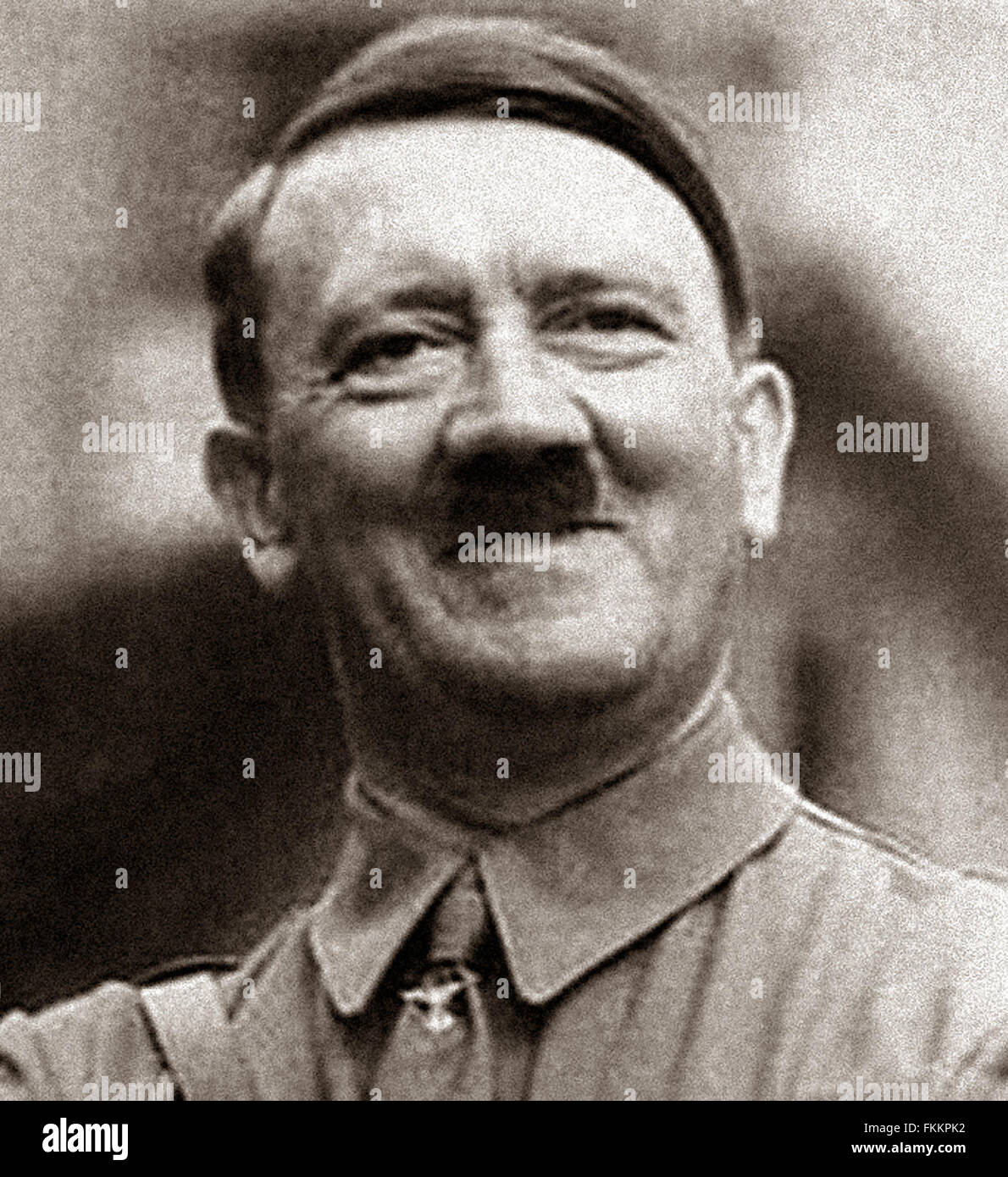
Hitler's smirk

My daughter asks the obvious question.

“Since we all know Hitler was such a terrible person, why did the Germans vote for him?”

We usually dishonestly conceal the problem with the absurd claim that Hitler was mad. It was all one guy. Everyone else is innocent.

But people do not accept orders from a madman. Ask King George III.

And Hitler is not the worst example. Mao did not start a word war, but he killed perhaps 30 million Chinese with his policies. And Mao is still revered. His face is on the Chinese banknotes. While in China in the early nineties, I saw an altar to him at a Buddhist temple, and a woman kowtowing to him.

Hitler’s great fault was only that he failed. That is what he cannot be forgiven for.

Such is the way of the world. Most people do not resist evil; they are not troubled by it. Most people will embrace it, so long as they think they can get away with it and there is something in it for them.

Hitler promised the Germans prosperity: better pensions, free vacations, higher education for all, the riches of the Jews, and the booty of conquered lands. Mao promised the mass of average folks the booty of the rich; as do socialists in general, justifying invariably bloody means. So did Idi Amin. And most of the people backed each of them enthusiastically; at least so long as they thought they would benefit.

Similarly, the current Canadian or American regime of unrestricted and free abortion promises sexual pleasure at will. So the average person is perfectly happy to kill any number of children.

At the Banff Publishing Workshops, challenged to come up with book ideas, I was warned: nothing will sell that asks the reader to make any sort of personal sacrifice. If a problem is to be addressed, others must always be scapegoated.

We must not ignore the guilt of the average person.

The average person is immoral. Morality is exceptional. This is also why, with remarkable consistency, the general and accepted position on any contentious issue is a lie.

All evil needs is a suitable bribe, sand a promise of impunity, and it's off to the races.

 It is a fallen world.


Thursday, August 11, 2022

The Devil and Annie Wilkes


Kathy Bates won an Oscar for her portrayal of Annie Wilkes. She laments in an interview of her difficulties with the role. Stephen King left her no “backstory.” She and director Rob Reiner had to make one up. They agreed that Wilkes must have been abused by her father.

In fact, through the device of a scrapbook, King gives an extensive backstory for Annie Wilkes: details of her career as a nurse, a former marriage, previous homes, and a series of murders. What more could any reader ask?

Backstory here is a euphemism. What Bates means is that she needed some moral justification for Wilkes’s narcissistic behaviour. Some reason it wasn’t her fault.

I think any perceptive reader can immediately see why King did not include this idea of having been abused by her father. To any perceptive reader it would not have rung true.

King should not have included a justification for Wilkes’s narcissism, because there is none. King, at least, understands human psychology. Narcissism is a choice. It is the choice Lucifer made in the Biblical account. He would make himself God. It is the choice Eve made in eating the apple: she and Adam might become “as gods, knowing good and evil.”

To suppose instead that Annie Wilkes was “mentally ill,” through no fault of her own, and had no choice but to behave as she did, is untenable for several reasons. 

First, it introduces an infinite regression, a logical impossibility. Then why did her father behave as he did? Because of his parents? Why did they behave as they did? And so on to infinity. Occam’s Razor: someone must be responsible for their own actions, and if anyone is, all are.

Second, it is self-evident to all of us that we have free will. We could not function for a moment without this understanding. This is a prime example of a self-evident truth. Therefore, if she is human, Annie Wilkes too has free will.

To assume that Annie Wilkes or anyone else—including Hitler or Charles Manson—killed because they were mentally ill is to dehumanize them. It reduces them to robots.

Finally, to ascribe evil to mental illness is the worst sort of slander against the genuinely mentally ill. It is like ascribing evil to someone because they have a hunchback.

Why the desperate need, not just on the part of Kathy Bates and Rob Reiner, but of so many people, to turn their faces away and refuse to admit the existence of human evil? Often, to actually blame and punish anyone who points it out—as, for example, “judgmental”?

It is transparently to avoid their own consciences. They are aware of sins of their own, and do not want to think about it. It is in effect an admission of guilt, and, worse, a refusal to take responsibility and repent.

This looks like the sin against the Holy Spirit. 

If so, such people—it looks like a good many, perhaps most, people—are hellbent and hellbound.

A sobering thought. But hardly an unbiblical one, or one that violates the traditional religious understanding of the world.


Sunday, April 17, 2022

Advice for Seiko


Mother

 As introduced previously, correspondent Seiko is a forty-five-year-old man who has suffered lifelong  anxiety and depression.


You describe your parents as impulsive and not thinking of the consequences of their actions. This fits with the diagnosis of narcissism. Narcissists tend to act on their immediate desires, because nothing else is so important to them, and because they believe themselves of ultimate importance, they can often expect the universe itself to conform to their desires. They are often surprised and angry when it does not. To an extent, they are delusional. 

My father inherited the family company when my grandfather died. He promptly bought a mansion in the most expensive part of Montreal, and joined an exclusive golf club. None of these were luxuries my grandfather, when he built and ran the company, would have treated himself to. He lived in a modest home on the edge of a small town.

Within six years, the company was bankrupt. My father treated it like a toy to satisfy his immediate desires. 

I once bought a model helicopter for my wife’s little brothers and nephews, on a visit to her home. Her father grabbed and ran around with it until he had broken it. The kids never had a chance to play with it.

You say that your parents seem stupid, childish, not evil. 

This is what evil looks like. 

Being evil means thinking only or at least primarily of yourself and your desires. Small children are like this, because they have not yet figured out there are other consciousnesses in the world, like them. We find it cute in a small child, because they do not know any better. Narcissists do. Narcissists act the same way, because they still reject the existence of any other consciousnesses in the universe. It is no longer cute or innocent, but it may look cute to us because it looks childlike.

Being good means seeing others as moral equals.

But surely, you will say, your parents are not as evil as, say, Hitler, or Charles Manson. After all, they haven’t murdered anybody.

In reality, they are more purely evil than Hitler. Hitler was capable of denying himself his immediate desires. This is how he was able to rise to a position in which he could kill so many people. He was brave—bravery is a form of self-denial. A more fully evil person is not capable of bravery. This is likely the only reason they are not, themselves, murderers. The evil is in the intent, not the act.

Hannah Arendt coined the phrase “the banality of evil.” There is an older saying, “the devil is a gentleman.” The most evil people will not stand out publicly as evil. Standing out as evil would require both courage and honesty; the very worst people will lack both, and will act timidly in the comfort of their own home.

But what could be more evil than tormenting a small child? A child you brought into existence?

You complain that your parents favour your younger brother. This also fits the diagnosis of narcissism. Narcissists always favour one child over another. This gives them power and makes them the centre of attention. 

They will always favour the child who is least impressive, the runt of the litter, and will reject or oppress the more impressive siblings. The more impressive child looks to them like a rival, while they can conceivably claim all credit for anything the weaker child accomplishes—supposedly entirely through their help.

If your parents consistently favour your younger brother, you can take this as confirmation that they are more impressed by you.

Have you ever read the story of Snow White, or Cinderella?


Friday, December 03, 2021

Happily Ever After?


Do you recognize the person in this picture?

Nobody seems to get fairy tales.

A text from which I am currently teaching uses Cinderella as a hook. “Almost everyone knows how the story of Cinderella ends, but do people actually think about how she spent her days before she met the prince?”

Suprisingly, at least to me, few students seem to find the answer obvious. Even though without it, without Cinderella’s initial state of neglect and abuse, there is no story. Even though it is made her and the story’s defining characteristic: “Ella-in-the-cinders.” Everyone seems to think of her only as the happily-ever-after princess, in a princess gown.

But my text itself seems not to get it. It goes on to comment, “If someone had asked Cinderella what chores she did not particularly like, she probably would have answered, ‘Why none, of course. Housework is my duty.’” As though she was perfectly content with sleeping in the cinders while her sisters went to the ball. 

Why this weird blindness to what is, primarily, a tale of child abuse?

So, indeed, are most fairy tales. Snow White’s mother wants to kill her and eat her. Beauty’s father allows her to do all the work, while her two sisters abuse her relentlessly. Then he expects her to give up her life for his. Hansel and Gretel’s parents abandon them twice to be eaten by wolves. Rapunzel’s parents trade her for a mess of potage, then her stepmother locks her in an exitless tower.

Yet nobody seems to notice. Over time, most fairy tales have been sanitized, supposedly to remove anything that would upset small children. The violence is taken out, and any sexual innuendo. Witches or trolls may be too scary. Yet the abuse tends to remain, as though no one notices it—although, to be fair, it is so central to the stories that they would probably be meaningless without it.

It is not just child abuse which seems to be invisible in storyland. Jesus’s parables, too, are invariably misinterpreted. For example, nobody seems to notice the critical point of “The Good Samaritan”—although it is also apparent in its common title. It is not just the obvious point that it is good to do good; it is that the one person who did good was a Samaritan. After thieves had done evil, and a priest and a Levite ignored it.

The parable of the Prodigal Son I have seen similarly misinterpreted, even though the point is again in the standard title. Some apparently think that it is all about condemning the one son for wanting to leave the family farm.

In the Parable of the Talents, nobody seems to notice that the servant who is praised for good stewardship has made the money by lending at interest—prohibited by the Mosaic Law.

Although not a parable, the story of the woman taken in adultery is a similar case. Everybody seems to insist that Jesus overlooks the sin of the woman caught in adultery. He does not; he calls her out for it, and tells her to go and sin no more. The point is that he is not prepared to stone her to death, to give up on her.

My friend Xerxes, quoting some Protestant theologian, recently asserted that Jesus’s parables on the Kingdom of Heaven were really about the value of friendship. Heaven was being a friend to all. None of this nonsense about sheep and goats.

It occurs to me that there is a common thread here. It is a general denial of evil. We refuse to see evils committed in front of us; we pretend they do not exist.

To do so, to wash our hands and ask, with Pilate, “what is truth?” is itself the ultimate evil. Anyone might do an evil act. But to categorically deny the existence of evil is to crucify Christ in the flesh.


Wednesday, November 10, 2021

Rittenhouse Breaks Down on the Stand


Watching Kyle Rittenhouse break into tears on the witness stand today impressed me once again with the reality of evil. It looks like pure evil that the prosecutors brought this case to trial. It was obvious from the beginning that it was self-defense, and Rittenhouse, although just a kid, behaved admirably. It is grossly unjust that he must nevertheless stand in peril of his life once again in court. The prosecutors knew this, and they went to trial for political reasons. 

Go Fund Me was even worse. They did what they could to prevent Rittenhouse from raising funds to defend himself.

The experience of the pandemic has also opened my eyes. I thought that, faced with this crisis, we would put aside personal ambitions and pull together. My assumption, although I should have known better, was that we were all, or at least those in power were, basically good people who sometimes give in to temptations. This is clearly not so. To the contrary, the average person in power is apparently depraved. It seems obvious that the politicians, several drug companies, the deep state, saw instead an opportunity to exploit.

Was this always the case? Or have we, in recent generations, failed to inculcate our ruling class with the basics of morality? I think the latter.


Sunday, May 23, 2021

Too Many People


Friend Xerxes notes that he finds individuals almost invariably kind, while society as a whole is systemically at least nearsighted.

I am completely in agreement with his claim that individuals are more trustworthy than people in groups. What he presumably does not see is that this, if true, is a powerful argument for free markets and individual liberty, as opposed to government control and group identity. In other words, for the right and not the left.

Xerxes, on the other hand, is probably trying to argue for original blessedness; for the idea that people are innately, naturally good, and will always do good if they just follow their instincts—a romantic notion, in the proper sense of the word. Therefore, impositions on instinct from “society”—formal ethics—are the source of all evil.

But the basic claim, that individuals are usually more trustworthy than groups, is in accord with what we all can observe: mobs are irresponsible and dangerous. 

The problem is with identifying the mechanism to explain this. If you assume that people are all individually good, yet corrupted by society, you have a classic “problem of evil.” Society is a human creation. If people are good, yet society is evil, where did the evil come from?

Xerxes’s theory is that people are good only in moderation. The evil comes somehow from there being too many in one place. He uses, among others, the analogy of a campfire versus a forest fire. Too much fire is bad; too many people are bad.

But the difference between a campfire and a forest fire is not quite that. It is that the campfire is under control, and the forest fire is not. A fire in a waste paper basket is probably smaller than a campfire, but it is still bad. A controlled burnoff of a field is a common agricultural practice, and it might easily be larger than a forest fire. A nuclear reactor is a rather bigger fire in a sense than a forest fire, but can be useful.

So with people. The problem is not more or fewer of them, but whether they are controlling their animal instincts and their selfishness. As individuals, we are obliged to take responsibility for our acts, so our conscience is engaged. If we pass our individual responsibility over to the group, we can more easily shirk our conscience. We can let our sinister tendencies “run riot,” to use the familiar phrase. This is most evident in a mob, but a clear danger in any group. “I was only following orders.”

This is because, like fire, we already have those sinister tendencies. This cannot support a romantic idea of original blessedness. The bad tendency must already exist at the individual level; but be held in check.

Trying to find an analogy that might work better to justify Xerxes’s concept of innate human goodness, I thought of locusts. According to at least some theories, they change from relatively benign to humans to a plague due to overcrowding—due, then, to sheer numbers, more or less. But again, this does not really work in support of his concept of humans, because each individual locust also transforms in nature. In Xerxes’s human model, the individual remains good even as the society in which he or she participates misbehaves.

I have read that lab rats, if overcrowded, begin to bite one another. Perhaps this is more apt, but it still does not work. Each bite is an individual, not a group, action. The individual does not remain moral while the group imposes immorality.

Given the correct observation that people behave better individually than in groups, we are left needing to acknowledge the concept of original sin. The tendency to evil as well as good must be innate at the level of the individual.

There is also something troublesome, surely, in the very concept of “too many” humans. Too many for what? If your measure is what is good for humans, surely existing is the most fundamental of goods. If your standard is not what is good for humans, what is your standard? The obvious suspicion is that it is what is good for yourself…


Monday, March 22, 2021

Literally Worse than Hitler


The Devil incarnate? Or a lesser demon?

Modern history has left us Hitler as our image of ultimate evil.

He may not be up to the task. 

Awful as he was, he is not the worst possible human. He was just theatrical about it.

None of the Seven Deadly Sins requires a victim. You could regularly indulge all of them, wrath, envy, pride, lust, gluttony, acedia (spiritual, not physical sloth), and avarice, without coming to the attention of many others. Our society even tends to celebrate some of them. 

The same could be said for seven or eight of the Ten Commandments: you could get away with coveting your neighbour’s goods, or his wife, without anyone even knowing. You could fail to keep holy the Sabbath day; you could take the name of God in vain. Many do. You could commit adultery without much social blowback. Some would cheer you on. 

Hitler was guilty of mass murder—thou shalt not kill—but murder is actually not the worst sin. It is the worst crime. There is scant evidence he indulged in lust. He lived a celibate life; he had few and discreet liaisons, so far as is visible. Or gluttony: he was a teetotaler and a vegetarian. Or avarice: he lived on the royalties from Mein Kampf, which he had the state buy in quantity, but did not loot as he might have; like his lieutenant Goering. Hitler was preoccupied with power. This is pride, the worst of the Seven Deadly Sins. And he clearly indulged his wrath. But at least he did not submit to all of them.

Hitler also had one signal virtue: courage. A worse man would lack it. 

A thoroughly bad man, precisely because he lacked courage, would not so publicly sin. He would remain an upstanding member of your community. People might feel, personally, there was more than a little “off” about him, but they would not find anything they could openly condemn.

The Devil, they say, is a gentleman. You are more likely to encounter him at your next social gathering, than in the history books.


Sunday, January 24, 2021

Desecration of a Catholic Mass


Both right and left condemned the recent invasion of the US Capitol building. So can we expect the condemnation from all sides of this?

It does seem to me worse. Those who stormed the capitol might have reasoned it was their own property, as taxpayers and citizens. Some seem to have been invited in by guards. Here the intent was to deprive others--Catholics--of their civil rights. 

Worth noticing too here how vice typically says the opposite of the truth, and scapegoats the innocent for their own crimes. They claim the Catholic mass is "teaching hate" and violence. They are asserting hatred of Catholics and demanding the right to kill.

All evil is delusional.


Sunday, November 15, 2020

The Year That Was


This past year has been absolute hell. I have no more patience, if I ever did, for the Hallelujah chorus Christians with their happy happy joy joy attitude. There is, as Ecclesiastes says, a time for joy, but it must not be unrelenting. There is also a time to mourn.

Suppose God has indeed been good to you. Can you ignore the millions who died in Hitler's camps, or on Pol Pot’s killing fields? Will you dance on the unmarked graves of the millions of unborn? Can you ignore those two little abandoned leper girls living in a makeshift tent in the Liloan churchyard? 

I'm not saying you should rush off a cheque or join a protest. That sort of thing is fine too, but you know perfectly well, if you are an adult, that it does not change much. It just makes you feel a little better, and perhaps you shouldn’t. It hardly feels moral to declare this world relentlessly wonderful in front of two little leper girls. It seems callous. Truth must be our aim, not comfortable dishonesty.

A few years ago, young and innocent, my daughter wrote a Mother's Day card thanking her mom for, among other things, not aborting her. Canadian friends, all pro-abortion, were alarmed. What a thing to think! Has she not been sufficiently assured she was loved and wanted? 

They miss the point; perhaps deliberately. Abortion is not okay simply because it turns out I was not aborted. Others were; I might have been. There but for the grace of God …

Evil is real, evil is evil, and evil is powerful. It is the more powerful the more we pretend it is not there.

Blessed are those who mourn. There is something wrong with anyone who does not. Our hope is in a better world. 

Do we have assurance of a better world? There is no proof of heaven. There is no historical proof that Jesus even existed, let alone was God incarnate. Even great saints like Mother Teresa or St. Therese have admitted doubt. And even if it is all true, we have no right to expect that we will achieve the goal.

Yet we know that things ought to be better. We are aware that they are deeply wrong. That is our warrant that something more is possible. That in itself seems adequate to explain evil in the world. Were we never to experience darkness, we could not be aware of the light. Were we never to experience ugliness, we could not conceive of beauty. Were we never to experience evil, we could not know heaven.

Lose our sense of discontent, that hunger and thirst after righteousness, and all is lost.


Tuesday, July 07, 2020

Ever Dance with the Devil in the Pale Moonlight?


Here’s a flash of insight I had today.

Probably self-evident, and obvious to everyone. I might have even thought it myself, before. But it felt like a flash of insight today.

The real value of the present uncanny complex of crises, perhaps the divine point, is that it reveals emphatically who the bad guys are. It seems as though, quite consistently, the bad guys are reacting to the crisis by becoming more blatantly evil. It is as though the zombie hordes have suddenly become illuminated by a flash of lightning, and we see them plainly.

There’s a virus spreading, killing the old and infirm? Great. Now’s our opportunity to pour into the streets. Let’s spread the virus, break things, loot, tear down statues, and demand the elimination of the police. That’s clear enough, isn’t it?

There’s a virus spreading? It’s time for the whole world to come together against this common enemy? Great. Now’s our opportunity to really subjugate Hong Kong. Why not invade India? Let’s threaten Australia, and make claims on Vladivostok.

We have a health emergency? People are dying? Great. Now’s our chance to make big profits by suppressing information on any inexpensive measures and drugs that would combat the virus. Instead, we’ll promote new drugs that are under patent. The more people get sick, the more money we make.

Evil has turned and looked us straight in the face, leering. It no longer allows you the luxury of deniability. If you do not stand against it, you have signed the Devil’s own bargain, and by now you must know you have. As does everyone else.


Wednesday, May 27, 2020

Crisis in Ontario Nursing Homes


Nursing home, Braeside, Ontario, 1947

The military had to be called in to Ontario nursing homes when the regular staff walked out in fear of coronavirus. Now, unsurprisingly, they are reporting terrible conditions.

We are, as a society, dangerously ignorant, if not in deliberate denial, of the fact that there are people in the world who get satisfaction out of controlling other people and making other people suffer. These are, more or less, in modern psychological terminology, “narcissists,” those who wish to feel superior to others. The problem is common, because it is a common, indeed inevitable human impulse: to be as gods, as the serpent promised Eve. It is, simply, the impulse to evil.

Because we are ignorant of, or in denial of, the reality of evil, we no longer put up any barriers against them.

Anyone who gets satisfaction out of making others suffer will naturally gravitate to jobs in which they get to deal with especially vulnerable people, ideally people under their full, unsupervised control. Nursing homes are perfect for such purposes. Unless we set up a system to prevent it, we should expect that anyone in a nursing home is being abused.

Other obvious opportunities for such predators are, of course, orphanages, hospitals, mental hospitals, or schools. Especially residential schools.

We are in the habit of blaming the eternal scandals around orphanages and residential schools on the religious groups that had been running them. But religious groups cannot be blamed in the present case. The media narrative instead seems to be that the problem is with their being “private” and “for profit.” The problem will be solved, then, by having the government run them.

This will, of course, make the problem worse. Just as secularizing the schools and hospitals made the problem worse. It will reduce supervision, improve job security, and raise the pay, rewarding the predators and making the job more attractive to them. Private employers must please the customers: family members, if not the residents themselves. Bureaucrats get to do as they want.

We used to prevent or minimize such abuse by making such jobs part of a religious vocation. The churches ran the hospitals, the nursing homes, the orphanages, the asylums, and the schools. This was so obvious a strategy that it was followed, not just in North America and Europe, but everywhere, in Buddhist lands or Muslim lands as much as in Christian lands.

This approach meant staff were selected and vetted from the outset for their moral character. They were closely supervised at all times; not just on the job, but outside the job.

We have systematically removed all such protections.

Now the vulnerable everywhere must pay a heavy price.