Playing the Indian Card

Showing posts with label anxiety. Show all posts

Tuesday, August 23, 2022

"New" Treatments for Depression


With the collapse of popular trust in the SSRI antidepressants, Dr. John Campbell, who has himself suffered from the black dog, reviews the recent literature suggesting that small doses of hallucinogenic drugs like psilocybin may be an effective treatment.


This should be no surprise. But it has nothing to do with chemical interactions or the lack of certain chemicals in the brain. It has to do with consciousness.

Depression and chronic anxiety are caused by having been indoctrinated with a false world view and false self-image. In the natural course, this is most likely to have been by a malicious or narcissistic parent. It can also afflict an entire society. This is why mental illness is increasing rapidly in our own.

More directly, depression, which is really to say, a sense of meaninglessness, and chronic, omnidirectional anxiety, is caused by a dissonance between the world view and one’s own sense experience, conscience, and common sense. This is deeply disorienting.

Second premise: what we call the imagination is an organ of perception that reveals, if only in small part, the world of universals, of ideal forms as defined by Plato. That is, what we perceive through imagination is not random or “made up,” but universal truths. Jung called them “archetypes.” But he falsely thought they represented something else, something physical. They are simply the real world.

Therefore, the proper and necessary cure for the distorted world view that causes depression and anxiety is the exercise of the imagination. This can and ideally will restore a sound basis to our thought.

Shakespeare, great psychologist that he was, presented this as a “green world” in which his characters’ problems, generally caused by an error in self-image, were resolved.

Traditionally, this reorientation or reprogramming is done through the arts, through prayer, and through meditation, “mindfulness.” Pagan societies might treat mental illness with a masked dance. It has also long been noted that mental distress can be soothed by travel, by “getting away from it all.” As a result, “ships of fools” reputedly used to sail constantly up and down the Rhine.

All these are ways to develop the imagination and open channels to the eternal world.

This also happens spontaneously through psychosis. Rather than a disease, psychosis, like a fever, is a healthy corrective response to some critical bit of false programming. Tragically, we no longer let it run its course, making mental illness incurable.

The same effect can also be stimulated artificially by psychotropics. We have known this well enough since the 60s. They can force open the inner eye. People often claim to “see God,” and so forth.

Therefore they can cure depression.

The problem is that psychotropics are undirected. There are more things in heaven and earth than are dreamed of in your philosophy. There are demons and new darknesses as well as fairies and rainbows. Using psychotropics is like letting psychosis run its course. Most often, it will cure; but some will only get more deeply trapped. Just as some psychotics stay psychotic indefinitely.

One needs a spiritual guide, who will reliably direct towards the light.

Some materialist in a white coat has no idea how or where to spiritually guide.


The best treatment for depression and anxiety remains the best of the arts, meditation, and prayer. For these are guided, tested and reliable. Small doses of psilocybin or other chemical substances might assist in this process.

Friday, April 22, 2022

The Moral Imperative


Edvard Munch, Melancholy

Seiko, a 45-year-old man living with depression and chronic anxiety, insists his parent are stupid, not evil. And how can it be their fault if they are evil?

Od’s response:

You puzzle over how you could blame your parents for being stupid. “I doubt if stupid people can make themselves less stupid.”

Those raised in a dysfunctional family will go to almost any lengths not to blame their parents. Accepting that your parents are at fault is the essence of the cure.

It is possible for people to be deliberately stupid, and many people choose to be stupid.

Here’s how.

Have you ever watched a movie? You know that what you saw was not really happening. It was just light playing on a screen. Even the story was all made up. You even knew that nothing bad would happen to the hero, because most movies have a happy ending. Yet you got engrossed in the story and kept watching, forgetting where you were and your real life, for an hour or two. You imagined it was all really happening.

This is what narcissists do all the time. They decide what they want to be true, and then simply choose to believe it. They live in a movie they are writing, directing, and starring in.

It follows that a commitment to truth no matter where it leads is the antidote to being raised by narcissists. It is necessary to break through a series of delusions and denials with which you have been raised. Especially about your parents.

So narcissists are not born stupid. They usually choose to be stupid, to turn away from truth, in early adolescence.

Seiko thinks the modern world and all its technology is too complicated for him. He yearns to live in the jungle, or like Canada’s First Nations.

Od:

I understand your concern, but I don’t think you have the real problem pinpointed. It is not with technology, but with society. Our society has its values wrong; most people are to some degree delusional, in denial. Your instincts are right to want to get away from it.

This is also a projection of the fact that the society in which you grew up, your family, had its values wrong. You need to get away from all society to think things through, and you know this by instinct. You need, not nature, but solitude.

The antidote to being raised with false values is a commitment to true values—to the good--wherever it leads.

I think it is unwise to jump quickly into some new “community,” even if one is available. You are vulnerable to being exploited by some new dysfunctional community or individual narcissist who spins you a comfortable new delusion. Without a grounding in reality, you are unable to detect this. This is how cults develop. You need first to establish a solid sense of what is true and false, right and wrong.

In the old Christian monasteries, when you joined, you were required to observe a period of enforced isolation and silence.

Cults do the opposite: they never want you to be alone. They fear independent thought.

Edvard Munch, Anxiety

Seiko persists in denying the existence of God, and, like all atheists, inconsistently also blaming him for all evil. 

Od:

There is no need here to discuss the existence of God. I think this has become a distraction. What is important is to accept the existence of right and wrong. Whether or not God exists, surely you agree that it would be wrong to rape the next woman you meet? That it would be wrong to kill the next person who annoys you?

No?

Then would it be wrong for the next person you meet to kill you? Or to rape you? Perhaps if he is homosexual?

No objections?

Can you agree that the world should be better than it is?

Immediately, then, you are accepting the reality of right and wrong. That is all that matters: right is right and wrong is wrong, and people are capable of doing either.

I think you want to introduce God as a scapegoat. Then perhaps you can blame him, and avoid blaming your parents.

Forget God, then: your parents are fully responsible for their own actions.

But supposing, on the other hand, that God does exist. It does not follow that he is responsible for the actions of your parents, any more than a parent is responsible if he lets his son drive the car, and the son gets into an accident. Nor is the car manufacturer responsible. Humans have moral agency. We know this, because we know we do. We know we make conscious choices. Why that is so is irrelevant. We cannot blame God for our own choices; or those of our parents.

Why did God allow us to make choices? Because he does not see us as objects, mere toys to play with. Martin Buber speaks of an “I-thou” relationship, far more meaningful than an “I-it” relationship. No doubt you can understand that I love my wife in a different and more important sense than I might love a good meal, or a soft couch, or a gadget.

To suppose your parents themselves had no choice in how they raised you, that it was all God’s fault, or the fault of some genetic flaw they were born with, or the fault of their own upbringing, is to reduce them to robots, without moral agency. Is that respectful?

You ask, what purpose does hell serve? The answer is one word: justice.


Sunday, April 17, 2022

Advice for Seiko


Mother

 As introduced previously, correspondent Seiko is a forty-five-year-old man who has suffered lifelong  anxiety and depression.


You describe your parents as impulsive and not thinking of the consequences of their actions. This fits with the diagnosis of narcissism. Narcissists tend to act on their immediate desires, because nothing else is so important to them, and because they believe themselves of ultimate importance, they can often expect the universe itself to conform to their desires. They are often surprised and angry when it does not. To an extent, they are delusional. 

My father inherited the family company when my grandfather died. He promptly bought a mansion in the most expensive part of Montreal, and joined an exclusive golf club. None of these were luxuries my grandfather, when he built and ran the company, would have treated himself to. He lived in a modest home on the edge of a small town.

Within six years, the company was bankrupt. My father treated it like a toy to satisfy his immediate desires. 

I once bought a model helicopter for my wife’s little brothers and nephews, on a visit to her home. Her father grabbed and ran around with it until he had broken it. The kids never had a chance to play with it.

You say that your parents seem stupid, childish, not evil. 

This is what evil looks like. 

Being evil means thinking only or at least primarily of yourself and your desires. Small children are like this, because they have not yet figured out there are other consciousnesses in the world, like them. We find it cute in a small child, because they do not know any better. Narcissists do. Narcissists act the same way, because they still reject the existence of any other consciousnesses in the universe. It is no longer cute or innocent, but it may look cute to us because it looks childlike.

Being good means seeing others as moral equals.

But surely, you will say, your parents are not as evil as, say, Hitler, or Charles Manson. After all, they haven’t murdered anybody.

In reality, they are more purely evil than Hitler. Hitler was capable of denying himself his immediate desires. This is how he was able to rise to a position in which he could kill so many people. He was brave—bravery is a form of self-denial. A more fully evil person is not capable of bravery. This is likely the only reason they are not, themselves, murderers. The evil is in the intent, not the act.

Hannah Arendt coined the phrase “the banality of evil.” There is an older saying, “the devil is a gentleman.” The most evil people will not stand out publicly as evil. Standing out as evil would require both courage and honesty; the very worst people will lack both, and will act timidly in the comfort of their own home.

But what could be more evil than tormenting a small child? A child you brought into existence?

You complain that your parents favour your younger brother. This also fits the diagnosis of narcissism. Narcissists always favour one child over another. This gives them power and makes them the centre of attention. 

They will always favour the child who is least impressive, the runt of the litter, and will reject or oppress the more impressive siblings. The more impressive child looks to them like a rival, while they can conceivably claim all credit for anything the weaker child accomplishes—supposedly entirely through their help.

If your parents consistently favour your younger brother, you can take this as confirmation that they are more impressed by you.

Have you ever read the story of Snow White, or Cinderella?


Wednesday, April 13, 2022

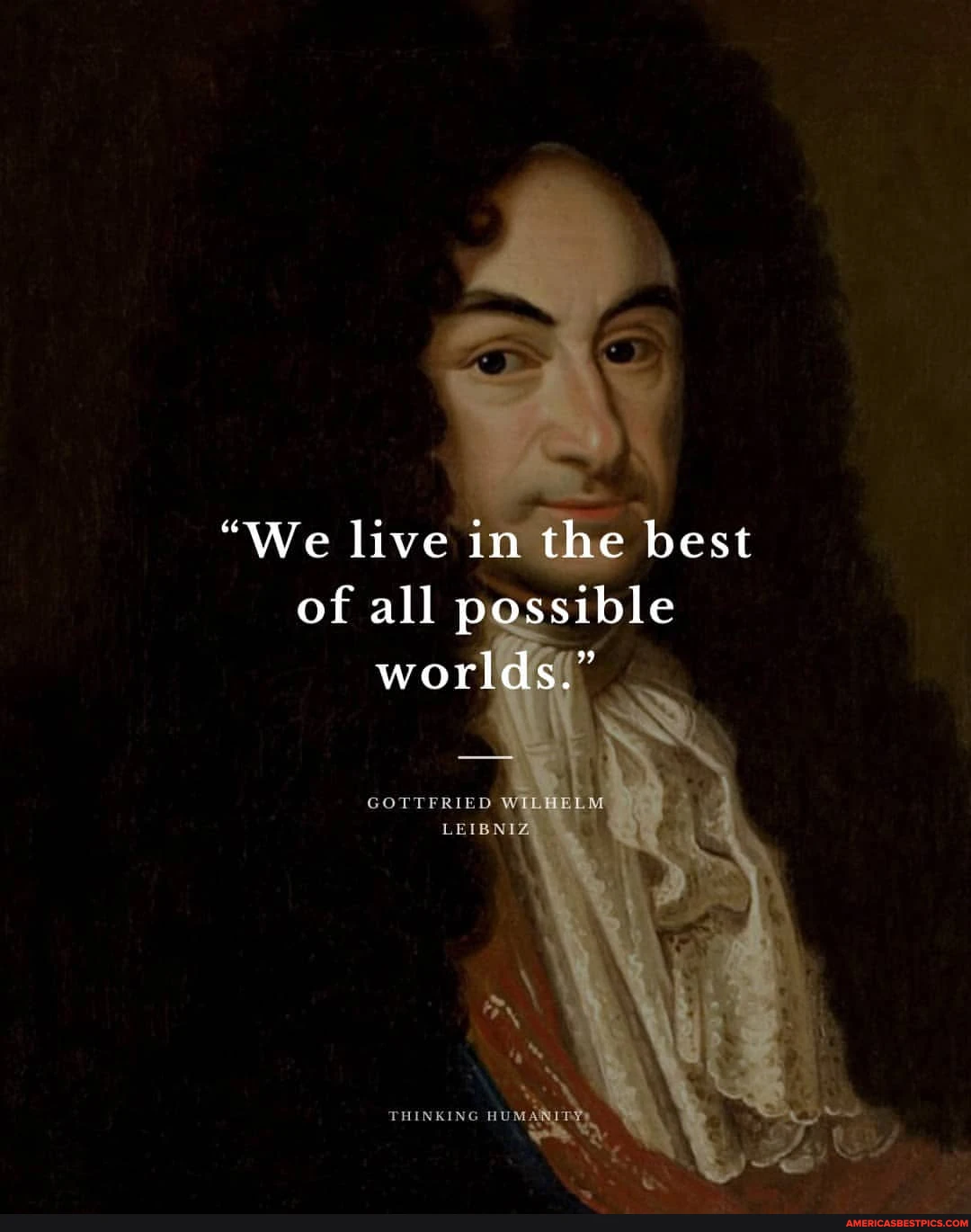
Justifying God's Ways to Seiko


Leibniz

A letter to Seiko, who, at 45, has lived his entire life with anxiety and depression, and who does not believe in God:

You may not be good at evaluating your own parents’ character. There is an English saying, “It’s a wise child who knows his own father.” It is extremely difficult to be objective about your parents. It takes a lot of quiet meditation over your childhood memories, ideally without having to deal with your parents regularly at the same time.

Although I identified my father as profoundly selfish at a fairly early age, I did not realize my mother was as well until after her death. There is usually a dominant and a submissive narcissist. The submissive narcissist is likely to present themselves as a victim.

You ask if I have ever confronted my parents. Never really my mother, since I did not recognize her narcissism until after her death. My father, yes. 

It is usually advised that you do not confront the narcissist. They will not change―all you can do is get away. I do not agree. I have heard, at least, of narcissists reforming once confronted. 

The problem, I think, is that it does not work to confront them with being a narcissist. The psychological approach is designed to allow them to deny responsibility. It is most likely to roll off them like water off a duck’s anterior. They may even happily accept the label. After all, it makes them special, and then if you criticize them for anything, you are being cruel to the disabled. They can play the victim.

I gather you have confronted your parents with something, and they have apologized and even offered compensation. This is surprising. This does not sound like narcissists. Narcissists cannot admit moral fault. But here’s what might be happening. By declaring yourself mentally ill, you usefully discredit your testimony as a witness. I suspect this is why the concept of “mental illness” exists. It allows the victim to relatively freely express himself, and the parents and society to freely ignore them. Yes, they might seem to accept your criticism, but in their own minds they they are just humouring poor crazy Seiko.

It is a survival mechanism. But it traps you.

I believe the trick to genuinely calling out the narcissist is, first, to clearly establish the moral high ground. You must confront your conscience and have no doubts that you are in the right. Then you must call them out in expressly moral terms. Do not talk psychology, but about right and wrong.

What happens then? I have testimony that some narcissists will reform. But more likely, they will die. The problem is that they have made their self the centre of their universe. Admitting their self has been wrong feels like death to them, death of the entire universe.

For both you and the narcissist, this is a matter of life and death. I am not speaking metaphorically.

As for escaping your parents financially, I know very well how hard this is, with them probably in hot pursuit, and all while suffering from extreme depression and anxiety.

In earlier days, it was easier—when monasteries were a live option. Perhaps Buddhist monasteries still are, in Japan, but Christian monasteries now expressly refuse refuge to anyone suffering from mental illness. 

And then they wonder why nobody becomes a monk or nun anymore.

As to the moral universe, you write, “when we observe the world as is, then one must admit that one can't observe justice or fairness or anything that kind of stuff.”

This is not really the issue. Whether the universe, or the people around us, are moral, has no bearing on whether we have a duty to be moral. This is the “is-ought” fallacy.

But I would also argue that the universe as a whole is moral.

Imagine you are God, and you design the universe so that only good and pleasant things ever happen. Nobody is ever tempted to do anything wrong; or those who do wrong are quickly and obviously punished, and those who do right are quickly and obviously rewarded.

This would actually be a world in which no good could exist. 

For anyone doing “right” would simply be acting out of self-interest. No morality is involved.

The world in which good is maximized is one in which good and evil are not obviously rewarded, but eventually are—behind a veil, where we cannot witness it. For example, in an afterlife.

Still, God would probably want to make sure that “the arc of the moral universe is long,” as Martin Luther King put it, “but bends toward justice.” I think this is so, shown both by logic and the evidence of history. For example, lying is effective for evil people only because and so long as enough people tell the truth that we tend to take everyone’s claims at face value. If a majority of people start lying, lying no longer becomes possible or useful. Similarly, if a majority of people start stealing, stealing things is no longer meaningful, since the thief himself would never have secure possession. And so on, for every sin. The universe seems to be structured so that good, in the end, must dominate and must win.

Why couldn’t God have just made us all passive animals, with full bellies and without tough moral choices?

Think about it. Aside from the moral good being of self-evident value, would you really want that life? For a simple comparison, what fun is it to play a game or sport, if it is always predetermined that you win and get a prize. And, if you play a sport, or a game, isn’t the enjoyment in large part because of the effort expended, and the difficulties met and overcome?

The good will win out in the end.


Tuesday, March 15, 2022

A Guide for the Perplexed


Herewith, answers give to a man who has experienced lifelong depression. We will call him Seiko. We will call me Od. I think the conversation gives insights into the nature of depression, and also how to get out of it.

Seiko: It seems as though we cannot know anything. Basically I'm not able (as if a disability) to believe anything.

Od: I think we do have certain knowledge: 2 + 2 = 4, murder is wrong, and so forth. I think we can go pretty far by building on things we know with certainty.

Seiko: I think these are just words, just concepts. I’m not sure these things really exist.

Od: Have you read Descartes’ Meditations? He starts out doubting everything he finds it possible to doubt, and then re-orients himself from first principles. I find his conclusions very satisfying.


He thinks, therefore he is. He thinks.

Start putting self-evident truths together, and you can build a lot of conclusions.

Perhaps, you say, these are just concepts in the human mind. But this is materialism. Concepts in the human mind are real. It is the material world that is doubtful. Berkeley makes this point convincingly.

Plato maintains that concepts are not abstracted from our experience of the material world, but exist independently of it. Without these eternal concepts, we could never make any sense of our sense experience (“the material world”) in the first place.

Seiko: Who am I? I dream I am an old fisherman. I dream I am a Buddhist monk who dies in the snow. Do we exist as individuals? In my case, I think I have only little self-identity.

I cannot find a soul in me, what part of me is soul, which is the core of myself, something eternal or indestructible? This is one of my biggest problems in my life. Because when I cannot believe I have this something important and valuable soul, a self, an individual life becomes nothing. When there is only oneness, and no individuality, as Buddhism and other religions think, it means an individual's life is almost nothing, because after all only wholeness matters, and an individual is only a temporary superficial phenomenon in their view. And this problem has been troubling me, an existential crisis, because I cannot believe my life is valuable and meaningful.

Od: I believe people, and all things, are individual in the end; I do not believe we all dissolve into one consciousness. But when we try to understand what “self” is, we find it has no content. In that sense, it does not exist. The “I” persists and is indestructible, but it has no particular characteristics. It can therefore comfortably assume the circumstances of an old fisherman, or a Buddhist monk. This contentlessness allows us to imagine; Keats called it “negative capability.” It is the divine creative power in man.

You ask what part of you is soul. To me, the answer is simple: consciousness. This computer on which I type has no consciousness; it has no soul. I am self-aware, can choose things, can want things or not want things.

I have noted that self, or consciousness, the “I”, has no features. Because this is true, all “I “’s are of equal value. You could argue infinite value, in that all exists only if and as it is experienced by some “I.” Therefore, each “I” is equal in value to the entire universe. This is why the Quran says, if you kill one man, you have killed the universe. And the Puranas describe a mother looking in her baby’s mouth, and when she does, she sees countless stars and planets, and eventually earth, and her own village, and then herself looking into her baby’s mouth. And this repeats forever.


Seiko: I think free will is only partial. Because there is some fate or destiny for each individual. Any individual is born with various conditions and in various situations. Also there's personality. For example, with my personality, I can't make a decision or choose an option which another person can make or choose.

It seems to me there are so many things I can't change by my will, I can't change what I like and prefer, it's more like something natural than free will.

Od: People do have different lots in life. The Christian idea is that this is compensated for in the next world. The Buddhist or Hindu view is that it is compensated for in the next incarnation, or is punishment for the last.

Everybody thinks the universe is just in the end. Maybe this is a self-evident truth, part of our programming. But I also think we see justice in the world around us—Barack Obama says “the arc of history bends slowly, but it bends toward justice.” I think he might have gotten it from Martin Luther King. Aggressors seem to usually lose the war, for example. The problem is that it often takes longer than a human lifetime for justice to prevail.

I agree that we are to some extent limited by our personality, but not absolutely. A personal trait is like a habit. It is hard to break a habit, but we often have to. It is like being addicted to alcohol.

I disagree that we cannot change what we like or want. It is a core concept in Buddhism that you can lessen or eliminate your desires. It is a very modern idea that you cannot.

Seiko: I can agree that some people might want to be depressed subconsciously. But most of them at least on a conscious level want to be cured, spending resources on medications and therapy. I think the cause of depression varies from individual to individual. Sometimes experiences like war give you PTSD, and a depressive state can appear. And sometimes it's your childhood trauma. It's a trauma deep in your subconscious, and to heal this kind of thing is not easy. Some researchers researched on social fairness, and found out that social unfairness makes you prone to depression.

Od: I do not think that anyone wants to be depressed, but that they (we) see it as the lesser of two evils. We find in it a protection against something worse. Something more troubling or frightening. (Can you think what that might be?)

Spending resources on medication and therapy are safe for the depressed, because medication and therapy do not cure depression. They only reduce symptoms.

I agree that depression is related to PTSD. Psychology in general now seems to believe this; probably because we have seen a lot of PTSD from recent wars. The similarities in symptoms are obvious, and both respond to antidepressants.

But what is the trauma that produces these symptoms? The common view is that PTSD comes from fear of being killed; so depression, we suppose, is caused by fear of physical harm in childhood.

But many soldiers go to war, are wounded, and do not get PTSD. Many children are beaten, or raped, and do not develop depression. So the connection is not so direct.

When I was a child, my mother once made a batch of peanut brittle, a popular candy. My brothers and sister and I ate a lot of it. Then my mother discovered the candy thermometer had broken, and the mercury in it—a poison—had leaked into the candy. So our parents told us we all had to stick our fingers down our throats and try to throw up, or we were going to die.

And I was not scared at all. Not scared enough to stick my fingers down my throat.

My parents then phoned the doctor, and the doctor explained that mercury was not used in candy thermometers.

Another time in childhood, my brother and I decided to dig a hole to China. When that turned out to take too long, we decided to just make a small tunnel and a second entrance. My brother, smaller than I, went through it; so I had to as well.

I got stuck midway. And then I had a panic attack.

There was no risk of dying. The trauma was from feeling trapped, and not knowing the right thing to do. Should I push forward, or pull back? Either way might make things worse.

This is the trauma that produces depression; indeed, this is the trauma that IS depression. Not knowing what is the right thing to do. In war, for example, you know it is wrong to kill another human being; yet it is also your duty to kill another human being. The trauma is the dilemma.

Experiencing injustice can be similar; as in the experiment you mention. The problem is not injustice itself, but those around you refusing to acknowledge injustice. Again, mixed signals.

Lifetime depression comes if, in your upbringing, you were forced into one or more moral conflicts, and they remain unresolved. This will most likely have been caused by parents. You lost your sense of direction. This results in a moral paralysis and a paralysis of the will.

Depression is a rational response to a specific environment. It is not a character type, and it is not an “illness” in the usual sense. There is an element of habit in depression, but it is not the key.

There’s a useful little formula for dealing with habitual negative thoughts. Perhaps you know it.

1. What is the problem?

2. What is the worst that can happen?

3. How likely is it to happen?

Seiko: High technology advancement, what is it for? Materialistic wealth, what is it for? What is the point of striving for these things? They all seem meaningless in the end.

Od: There are only three things of value, and they are of absolute value: the truth, the moral good, and beauty.

Seeking them is what life is about.

I did not make this up; it has been known to philosophy since Plato or before.

I do think technology contributes to truth and good and beauty. Isn’t there more beauty in the world thanks to the work of an artist like Michelangelo? Isn’t there more truth, thanks to the work of a philosopher like Confucius? Isn’t there more good, thanks to the works of good people? The deeds of men, if they are sincerely seeking the truth, the good, and the beautiful, are making the world better. “Technology” is simply the deeds of men. This includes things like bridges to make daily travel easier, or medicines to ease physical suffering.

Seiko: Once I read a book about an American philosopher. The gist of his argument is, Socrates and Plato and many others assumed the concepts first. In his view, those concepts were created by them, and philosophy is not about looking for the truth which no one knows, but create worldviews just like literary works. 

Od: Your philosopher is wrong in saying that Plato and Socrates simply assumed the existence of ideal forms. There is a famous passage in Plato’s dialogue Meno in which Socrates demonstrates that an uneducated slave already knows how to determine the area of a triangle.

The ideas that we “create worldviews just like literary works” is postmodernist. Postmodernism is easily refuted. If “no one knows the truth,” then he cannot claim to know that no one knows the truth. Can you see the contradiction? He is asserting this as a truth. All he can actually say is that HE does not know the truth.

Seiko: To my eye, materialistic things are causing more harm than benefit: mass destruction and pollution

Od: When I was speaking of “technology,” I did not mean only material technology, but all the works of man.

Nevertheless, I disagree that material technology causes pollution. Buckminster Fuller explained this at a lecture I attended long ago. Material technology is, by definition, doing more with less material. Therefore, the better the technology, the less pollution. Material technology does not make us more ethical, but it can make our lives more comfortable, and give us more time to attend to the important things in life.

I also disagree that material technology causes mass destruction. It makes harm possible, but does not cause it. Fire can harm people; would we be better off without knowing how to make fire?

Stephen Pinker has argued, with I think good evidence, that as military technology has developed, wars have become less deadly. 

Seiko: But in reality, they say the environment of the Earth has been getting worse year by year. And I can't see how wars could have actually become less deadly over time. Does this mean, thanks to modern equipment, fewer soldiers die at war compared to ancient times?

Od: The problem here is perhaps how you define “worse.” First you have to decide what you think the environment ought to be like, and then you can determine whether we are moving away or moving towards this. An environment able to sustain more human lives in greater physical comfort would, I submit, be a better environment from the human perspective. History is certainly moving in that direction.

I don’t think it is surprising that wars become less deadly over time. While offensive technology advances, defensive technology ought also to be advancing. So that’s probably a draw. But as our social systems become better, they will become better able to prevent violence, which is intrinsically undesirable to all men.

I hope these thoughts improve your mood.

And yours too, gentle reader.


Monday, July 26, 2021

The Scream


Original title: "The Scream of Nature"


Edvard Munch’s “The Scream” is a portrait of his own anxiety disorder. He describes the experience it represents:

I was walking along the road with two 

friends – then the sun went down 

Suddenly the sky turned blood-red 

– and I felt 

a breath of melancholy 

– an exhausting pain 

under my heart – I paused, leaning against the fence, tired to death – above the blue-black fjord and city there was blood ‹in› tongues of fire 

My friends went on and I stood

there trembling

with anxiety –

and I felt that a great infinite scream went through nature

(Diary, 22 January, 1892)

It is not Munch screaming, not the distressed face in the picture. It is the cosmos around him, the very sky, that is screaming.

This is how real depressive anxiety feels. The real “disorder” is not in the individual soul, but in their environment.


Saturday, May 02, 2020

The Perils of Vegetarianism--And Social Science


Pythagoras advocating vegetarianism

Recent pieces in the Toronto Sun and Daily Mail report “Study links vegetarian and vegan diets to increased likelihood of depression (Sun) and “Eating meat may improve mental health and one in three vegetarians are depressed” (Daily Mail).

This is an interesting illustration of the problems with social science research.

Several studies have shown the opposite: that a Mediterranean or traditionally Japanese diet, essentially a vegetarian diet allowing seafood, reduce the risk of depression by about a third.

How is this possible?

Compare this: suppose you did a study of the depressed that uncovered the shocking fact that an actual majority of the depressed have visited psychiatrists? One could then produce the equivalent headline: “Study links psychiatry to depression”; “Avoiding psychiatrists may improve mental health.”

It is entirely possible that depressives gravitate to vegetarianism because it eases their symptoms.

Correlation is not causation; because it is not, one can easily make a social science study arrive at opposite conclusions, depending on what you want it to say.

Accordingly, our current “scientific” approach to “mental health,” relying as it does on such statistical correlations, has only a fifty percent chance of giving a helpful instead of a harmful suggestion on any given point.

In other words, avoiding psychiatrists may improve mental health.


Tuesday, November 19, 2019

Podcast Now on iTunes


The new "Truth about Dragons" podcast is now featured on iTunes, so you can easily download episodes for your iPhone or iPod.

https://podcasts.apple.com/qa/podcast/the-truth-about-dragons/id1488233987

Now the challenge for me will be to keep three podcasts supplied with new episodes. Wish me luck.


Friday, March 22, 2019

Confront the Beast


In the period 1880-1920, the art of book illustration had what is generally agreed to be its "Golden Age." Incredibly talented artsts like Arthur Rackham devoted their skills mostly to depicting legendary and mythical subjects.

For my money, this is what art should be all about: guiding us, as with an icon, to imagine more vividly. If I am right, the very act of doing so is healing for those who suffer either depression or anxiety. Confront the beast!

Suitable for meditation, than: Rackham dragons.