Playing the Indian Card

Wednesday, September 18, 2013

Camel. Needle's Eye. Got It?


Timothy Eaton: A Saint of the Church of Prosperity

Let’s not, after all, eat the rich, shall we? The linked infographic is not, as advertised, proof that rich people are unethical; any more than crime stats prove that black people are unethical, or IQ stats that they are stupid. It is proof that on average a rich person is somewhat less likely to behave ethically than a poor person. It says nothing about individuals, let alone individual acts.

But the statistical correlations should come as no surprise. It’s all in the Bible, after all: blessed are the poor. It simply stands to reason that, if you are more interested in your own welfare and less in that of others, you are more likely to get ahead than someone who is less interested in his own welfare and more in that of others. You are obviously more inclined to take the necessary steps to make this intention a reality.

It follows, though, that in ethical terms, and in the social and material world, the cream does not rise to the top. Contrary to Calvin and the “gospel of prosperity,” behaving morally and maintaining strict personal principles is not going to reward you either materially or socially—though the reputation for these, as opposed to the reality, might.

Nor should it. If by doing the right thing you were always doing right by yourself, there would be no opportunity to be moral in the first place. The best man and the worst scoundrel would always do the same.

Why TV is Getting Better


If the prison is no longer secure, perhaps Rick and the others could consider relocating here.

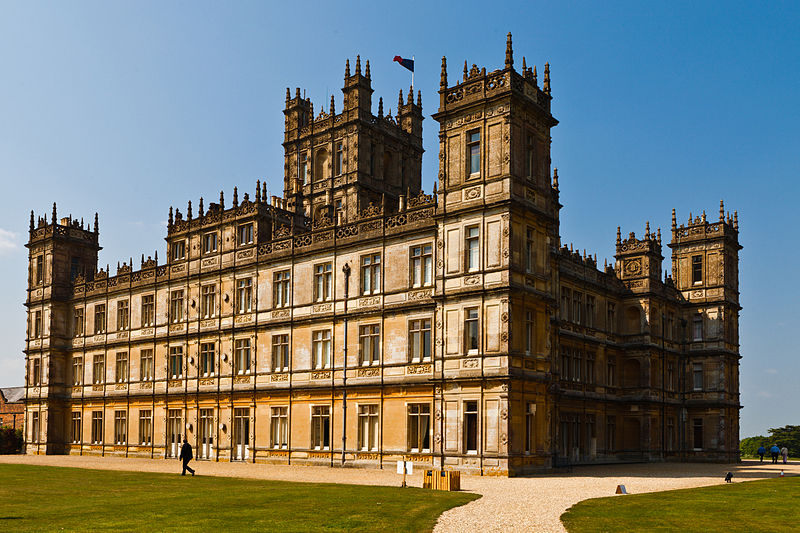
Not everything is going to hell in a handcart. Currently, I am eagerly anticipating the new seasons of Downton Abbey and the Walking Dead. Television is getting much more interesting than it used to be, and far better than movies currently are.

So it goes; these things come in renaissances. Suddenly one medium or another will be fermenting. Popular music and comic books had amazing runs in the 1950s and 1960s. Films were really good in the 60s and 70s. Poetry was strong in the 50s. A variety of arts seemed relatively strong in the 60s, and now most seem relatively weak.

One cause, as I have previously lamented here, and as such worthies as TS Eliot and Samuel Beckett have lamented long before me, is that art has become increasingly dissociated from religion. Do that, and art dies. But within this general trend, the sudden lunges forward of specific media seem to fit an old observation by Marshall McLuhan: when a medium becomes obsolete, it become art. This makes sense: it has lost its practical use, and so, if it is going to continue at all, it will be for aesthetic reasons, among those who love the medium for aesthetic reasons.

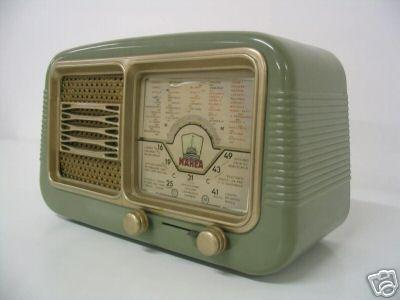
Radio became obsolete in the 1950s, with the advent of TV. Hence the rise of popular music, specifically rock and roll, as new message for that medium. Film faced a less immediate threat of obsolescence from TV, and so reacted less dramatically and over a more extended period of time: we had a good run of artistic film-making beginning in the fifties and running through the seventies, with Hitchcock, Kubrick, the French auteurs, Scorsese’s Godfathers, and so on. Look at a list of great films of the Seventies, and you will marvel at how much that is memorable came out in such a short period. Comic books in turn can be understood as print’s reaction to TV—more specifically, pulp fiction’s reaction. There had been an earlier wave of comics, of course, the “Golden Age” of Superman and Batman, which was pulp’s reaction to radio.


He was right about everything. He just spoke fifty years too soon.

One can go back in time for other examples. The printing press gave us Shakespeare: the great Elizabethan age of drama came just when people started to be able to read, and to no longer need public performance for any practical purpose.

TV seems to be at that point now, beaten out of its prior position as primary medium by the Internet. It is no longer the main source of news and entertainment. It is no longer for everyman, or for the biggest profits from the greatest number. Hence we get interesting drama like Downton Abbey and the Walking Dead, appealing to a more discerning audience.

Meanwhile, radio and comic books, as their obsolescence deepens, have lost their ability to sustain a large enough audience for pop art purposes. They have had to become yet more specialized in their appeal. No more top forty, and no more cheap, mass-produced comics. They are moving from pop art, like rock and roll, in the direction of “high art.” Which is to say, really, either old art in rerun, or, if new, relatively lifeless, gloomy, and academic art. Generally living on charity from the public purse.

There is a fine line here: if a medium is the most efficient available, you get trashy entertainment for the masses. But on the other hand, you need a large enough audience to sustain real art, or artists cannot afford to create. They go into politics or academics or accountancy instead.


It died to give the world rock and roll.

Film is an interesting case in this regard. TV made it obsolete in the 50s. Then computer-generated special effects made it rise from the dead—courtesy of Spielberg, Lucas, and Pixar. FX were too expensive and time-consuming for TV, and did not play nearly as well on the small screen, including the computer monitor.

For now, all there is to do is to enjoy TV; along with a predictable renaissance in traditional, 2-D animation, notably from Japan. And wait for the next media technology to again reshuffle the playing pieces.

Mark Steyn on Canadian Self-Hate. Or Something

Tuesday, September 17, 2013

For Everyone Who Loves Montreal

Here, from the archives of the National Film Board of Canada, is a montage of images of a unique city.

Fort McMurray's Ugly Tar Sands

Neil Young has recently complained about the Athabasca Tar Sands, saying that the mining operations there make Fort McMurray look like "Hiroshima."

As I have noted before, musicians like Young are really political innocents. They are the classic "low information voters." So there is no reason to get upset about such comments. Moreover, as an artist, Young is going to be more sensitive than most of us to purely aesthetic considerations, as opposed to the hard realities of getting and keeping a job.

Interesting terrace effects, though.


That said, how bad are the aesthetics of Fort McMurray's oil sands? Granted, they are not lovely as they stand; and strip mining companies are normally required to refill once they have finished mining, to address any possible concerns. But what would happen if the mines were just left as they are? Would they continue to be an eyesore forever?

I think we can answer that question. Here is a panoramic view of an old strip coal mine in Russia, where, under Communism, such aesthetic considerations were never addressed.

What you get is, in short, a lake.

My advice: buy an abandoned strip mine now. Subdivide for cottages later.

Monday, September 16, 2013

Quebec's Charter of Values


Absolutely everybody is against Quebec’s proposed new Charter of Values, which makes me suspect it must be a good idea.

Mind you, it is ridiculous if its intent is, as stated, to make the provincial government religiously “neutral.” Firstly, banning religious expression does not make the government neutral; it makes it anti-religion. Secondly, this, if seriously enforced, would drive a wrecking ball through the width and depth of Quebec culture. It is not just the matter of the large crucifix in the National Assembly. There is the cross on Mount Royal, recently refurbished with $2 million in provincial funds. There is the cross in the French version of “O Canada.” There is the cross on the provincial flag, originally flown in honour of Mary. Not to mention holidays for Christmas, Easter, and St. Jean Baptiste Day, or the Christian customs of dividing the week into seven days, or numbering years from the birth of Christ. Need I continue?


Possibly too large?

But the bill does not really foresee banning religious expression. It expressly grants exemptions to religious symbols that are part of Quebec’s “cultural heritage.” The real problem with the bill, perhaps, is the hypocrisy of this. It leaves the bill wide open to criticism, indeed ridicule.

But suppose the bill were slightly reframed to instead explicitly enshrine Catholicism as the cultural heritage of Quebec, and prohibit very public displays of other religious commitments? Is that so awful?

Just as Quebec has some real reason to feel culturally vulnerable as a small island of Francophones surrounded in North America by a vast English sea, it is also and equally a small island of Catholics surrounded in North America by a vast sea of Protestants. This experience, at least as much as language, is what makes Quebec culture distinct. Witness, indeed, the cross on Mount Royal, the provincial flag in honour of Mary, St. Jean Baptiste Day, and so on.


"Car ton bras sait porter l'épée,
Il sait porter la croix."

Moreover, the religion, if measured by church attendance, seems to be under greater threat currently than the language. If it is permissible to protect the language, in part by prohibiting large public displays of other languages, why is it not permissible to protect the religion too—say, by prohibiting large public displays of other religions?

We in North America might be inclined to see this as a violation of human rights. But there has long been an established church much like this in the United Kingdom, which does not do particularly badly, overall, in the human rights tables. Similar customs are found in Germany, Norway, Greece, Finland, Denmark, Sweden, Iceland, and Israel. Also not among the most repressive countries one could name.

Let it be said, however, that any such law would not, in fact, legitimately prohibit the burqa. It is not a part of Muslim religion; it is simply an expression of feminine modesty. Just like the Catholic ban—still in force—on women uncovering their heads in church.

Saturday, September 14, 2013

Schizophrenia from the Inside

A marvelous description of what it feels like to be schizophrenic, in particular from the first writer.

I get the general impression that schizophrenics are in fact more aware, more conscious, than the rest of. us: as one writer puts it, they are watching five TV channels while we are receiving only one.

It is also not obviously a "disease": i.e., it is not unpleasant. Rather, it has extreme highs and extreme lows. On the whole, a schizophrenic certainly seems to have more meaning in his life than the rest of us.

Of course, he cannot work or function in society. Nevertheless, this could be a problem with society rather than schizophrenia. I suspect that in hunter-gatherer societies, schizophrenics find ready employment: as shamans. And this is a useful function: their sensitivity to patterns and symbols should, as the first writer suggests, make them able to see underlying problems and solutions.

One writer suggests he is better able to handle his schizophrenia because of his spiritual nature. I suspect that is true. Materialists are caught in a false alternative: either the voices are real in the physical sense or should be ignored as hallucinations. Anyone who believes in the reality of the spiritual world can understand, and deal with, these experiences as real, but on the spiritual plane, and deal with them accordingly, without letting them interfere with their understanding of what is going on in the physical world. For example, a movement in the Netherlands has found that schizophrenics can do very well if they learn to actually negotiate with the voices, find out what they want and cut deals.

Exactly as a shaman does...

Most web sites defining schizophrenia begin with the usual historical approach, remarking that in the old days we ignorantly saw schizophrenia as a case of demonic possession; whereas now we know it is a biochemical illness.

In fact, there is no evidence that it is a biochemical illness, and lots of evidence that it is demonic possession. The only problem is that the dominant religion, scientism, will not permit this--one reason why the insane are persona non grata in modern life.

Perhaps more importantly, with the latter thesis, people actually get better.

The Smartest Woman in the World Can't Get a Date?

Men: ask yourself. Would you want a relationship with this woman? I doubt it.

Is it because she is smarter than you? I doubt it.

It is because she thinks of other people as furniture.

Men are attracted to intelligent women. Evolution makes it so.

Family Values

Wednesday, September 11, 2013

Putin's Intervention in the Syrian Crisis


Nobody's puppet.

A lot of commentators are unhappy about Vladimir Putin’s proposal to have Syria hand over its chemical weapons. But it seems to me that this is a good solution for everyone, and Putin is to be congratulated for playing a useful role. If this ends up boosting Russia’s prestige, it is deserved.

Let’s suppose things had gone as they were going before Putin’s intervention. There seems a good chance Obama would have lost his vote in Congress for action against Syria. Result: disaster for US diplomacy, and so much for the international ban on chemical weapons. If, on the other hand, Obama won the congressional vote, he would have either lobbed a few missiles at Syria, or done more extensive bombing. Either would have killed a lot of people. This is not good. Would it, despite this, have had worthwhile results? It is hard to say. An assault that did too little damage would do nothing to deter the use of chemical weapons the next time. It might even boost Assad’s prestige. An assault that did too much damage might throw the Syrian civil war to a rebel faction that is hostile to the West. It’s a choice even Hobson might not wish to make. A full-scale US ground assault might have been the ideal response, as I have argued, but that was not in the cards this time. It looked as though any possible congressional resolution was going to explicitly rule that out.

By contrast, Putin’s proposal, if it pans out, obliges Assad to accept and sign on for the international prohibition on chemical weapons. The ban is confirmed and upheld. One could argue that this is all a sham, that Assad is not really going to give up all his chemical weapons, and there is no way of confirming that he has. All fair enough, but beside the point. With Putin’s proposal, he cannot use them again. If he does, he is caught in a big lie; he has very clearly his own treaty obligations; and, not least, he has embarrassed Russia and Putin.


At the G8 summit.

In such an event, Obama should have far less trouble in getting Congress, the UN, and other governments to sign on to firm action against Syria—something he cannot seem to get now. The more so since he has demonstrated his good faith and reluctance to take the military option.

Will Assad, in the meantime, be able to strengthen his position? It seems unlikely. The element of surprise had already been lost; signing on to the Putin deal now can only give the US an opportunity to recover it. The use of chemical weapons on the outskirts of Damascus, in the first place, looked like desperation, and Assad’s willingness to seize this deal looks like desperation again. His days look numbered in any event. It may well be in everyone’s interest not to let his fall be too abrupt.

Okay, I’m struggling, but I just can’t see a downside to Putin’s deal. At the same time, Russia deserves credit for putting its prestige on the line here; this is not without risk.

And how much is this all going to cost the US, in blood or money?

Nothing.

If you need a laugh...

There is some great comedy writing here: Amazon customers' reviews.

Monday, September 09, 2013

Ronald Reagan for Governor-General?


Did we choose the wrong brother?

When Ronald Reagan ran for US president, a lot of folks thought he had the wrong background. What does an actor know about governing?

Yet I think it is arguable that Reagan had the most successful presidency since Washington.

Okay, you want to hear the argument? It is universally agreed that he had a successful presidency. But apart from him, and Washington, all the presidents generally lauded by historians share one characteristic: that they expended government. This is the easy way to look like a big man. Only Reagan managed to look impressive while actually trying to shrink his own power.

How did he pull it off? Perhaps because he was an actor. In fact, a good actor has a lot of the qualities needed in a good chief executive. He can make people like him, and he can inspire them. Compare the success of Pope John Paul II—another experienced actor, though an amateur.

Being a good actor is not enough, it seems. Joseph Estrada was not successful as president of the Philippines. One must also have brains and principles. But it does seem to be a very good preparation for the job.

All of which brings me around to the matter of Canada’s Governor-General. In the recent past, there has been a tendency to fill the post, purely ceremonial, with a retired journalist or politician. Failing that, there is an older tradition of wedging in a businessman. All bad choices. A politician will struggle to bite his tongue on the issues of the day, and will necessarily come with partisan baggage. Giving government rewards to journalists compromises the objectivity and independence of the Fourth Estate. Business executives are generally boring and difficult for the average Canadian to identify with. Except for entrepreneurs, who are loose cannons.

Here, surely, an experienced actor would be the ideal choice. First, the post is ceremonial; this is to say, it is an acting job. Second, an actor above anyone else will have the skill to stay in character. He or she will probably not blunder into controversial comments or unconstitutional overreach. Thirdly, he or she would be or have been an active contributor to Canadian culture, and so a suitable symbol of the nation, promoting both culture and cultural unity. Fourthly, he would, as an actor, have a special talent to inspire, as demonstrated by Reagan and John Paul II.

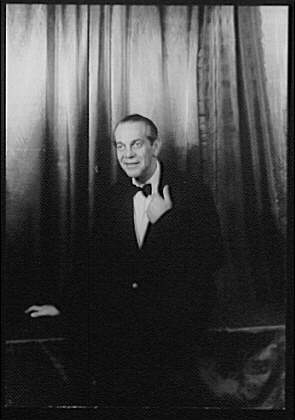
We’ve produced quite a few actors who would have been perfect for the role. In fact, the Governor General type, the man of substance and dignity, seems to be a Canadian acting specialty. Raymond Burr; Raymond Massey; Lorne Greene; Christopher Plummer; Michael J. Fox; Colm Feore; Glenn Ford; Chief Dan George; Graham Greene; Catherine O’Hara; Genevieve Bujold; Donald Sutherland. Leslie Nielsen and William Shatner would also have been ideal in their “man of substance” days, before they both turned comedian. Comedians, another Canadian specialty, are probably not suitable for the job.