Playing the Indian Card

Showing posts with label media. Show all posts

Sunday, June 14, 2026

Why the Media is Left-wing

Rich Capitalist


 A left-wing friend asked me recently how it was that the media could have a left-wing when they are owned by rich capitalists.

Here is a relatively systematic answer, concentrating on the Canadian situation:

1. The media are not usually owned by rich capitalists. In Canada, they are generally owned by government (CBC) or large publicly-traded corporations: Bell, Rogers, Corus, Postmedia. Ownership is diverse—do you own any mutual funds? Are you a rich capitalist? Lots of shots are called by government bureaucrats, on the one hand, and by hedge fund managers, on the other. These folks are all from the same class: the managerial-professional class or clerisy. The managerial class or clerisy is strongly left-wing; it always wants more management, which is to say, more government. More government means more money, more status, and more power for them. It is the same class that became the “vanguard of the proletariat” and ran everything in the old Soviet Union. In Canada, it is the base of the Liberals and NDP.

2. Rich capitalists, even when they do own or control a media outlet, are no more likely to be right wing than left wing. Bill Gates is left wing. Mark Zuckerberg aggressively supported the left wing with Facebook and his other social media holdings. Jack Dorsey aggressively supported the left wing when he ran Twitter. George Soros is far left. And so on. Self-interest commonly drives rich capitalists to the left, because the left calls for more government regulation, and more government regulation reduces competition. Government regulation is almost necessarily written in collusion with big business, so big business is on the left. If you are on top, you want lots of hoops and restrictions any start-up must jump through, to keep you on top: the rich get richer, and the poor can’t move up.

3. Some rich people, generally entrepreneurs who built their own businesses, are constitutionally right wing and resent government interference and control. But even when media are owned by rich capitalists, and the rich capitalists are themselves right-wing, rich capitalists are generally most interested in making money. That’s why they became rich. They are not likely to spend their time closely managing the details of their business. They hire people to do that, and let them do as they like with the politics so long as the business generates good profits. So even in this case, the editorial tone of the medium is likely to be set by the clerisy, the managerial class, the guys who graduate from journalism school, not the people who own shares. You pretty much cannot graduate from journalism school without at least pretending to be left wing.

4. Media generally depend for most of their revenue on advertising. And the single biggest advertiser in media is .... government. Next to that, of course, is publicly-traded corporations. Therefore, the bottom line in media, if they want to stay in business, is that they have to keep government and the bureaucratic clerisy happy—meaning a left-wing, pro-big government bias. And on top of this, we have in Canada massive direct government subsidies to approved media. 


Saturday, November 23, 2024

MSNBC or Not to Be?


Much buzz now about Elon Musk buying MSNBC. I hope he doesn’t.

I think Fox is highly vulnerable to a competitor on the right side of the spectrum. I think they have too much power, and the US and US right would be well served to have someone else in that space—so that Fox could not suddenly dump extremely popular presenters, or inordinately influence Republican candidate selection. 

However, or Musk’s sake, I think it would be a bad investment. Cable news is on its way out; it cannot compete with vloggers, who have no restrictions on their speech and much lower overheads. There are big names dumped by Fox whom Musk could scoop up and put on his revamped MSNBC: Megyn Kelly, Tucker Carlson, Bill O’Reilly, and on and on . But if they have an audience, they are now well-established on podcast. Would they want to go back to the restrictions of being an employee?

And I think it is time to be concerned about concentration of ownership by Musk. It is troubling for one man to be in control of so much of the media landscape, and indeed the economy.

If, however, someone were to buy MSNBC and turn it into a competitor to Fox… they could so some nice things with it. There is a general tiresome sameness about both Fox and MSNBC now: all just talking heads making the same political points on every issue. What is the point of watching Hannity, then Ingraham, then Pirro all say the same thing?

I’d like to see a show like the old Hannity and Combs, or Point-Counterpoint. Have competent spokespeople for left and right sound off on the issues of the day. This is the way to know both sides of the issue, and we are losing that. We do get panels with a single embattled spokesperson for the other side, but that is still not balanced. 

I’d also like to see a formal debate program, on the lines of Oxford Union, addressing wider and deeper questions. 

I’d like to see something on the upstream culture, beyond mere politics, featuring those right-wing artists and creators who have been blacklisted for so many years. This could be a late-night talk show like the old Carson Tonight Show; but featuring the counter-culture. Huckabee has been doing something like this. 

Do a soft interview show, like Rogan, Larry King. One guest, one hour. We could have two shows like this, one for more political figures, one for cultural figures.

Do a regular town hall show, with different guests answering questions from a live audience—to hear the real concerns of the people. The intention would be to break through the screen of a professional journalism class setting the agenda.

I’d like to see a “Libs of TikTok,” showcasing the most absurd expressions of the woke. This or a separate show could also do Matt Walsh, Steven Crowder, or Candid Camera-style intrusions into woke spaces.

And how about a program on the DOGE theme, just investigating examples of supposed government waste, and arguments for and against the expenditure?

These are among the TV shows I would still be interested in watching.


Friday, September 16, 2022

The Sins of Pierre Poilievre


Watching CBC’s “At Issue” panel and Eric Gernier’s “The Writ” podcast, I learn that the heckling at Pierre Poilievre’s first press conference was actually all Poilievre’s fault. He should somehow mysteriously not have reacted, or something. He somehow invisibly lost his composure and showed aggression and weakness. He is also at fault for MP Alain Rayes leaving caucus just days after Poilievre was elected leader. Although both of these look like attacks on Poilievre, they are actually attacks on Rayes and David Aiken, the journalist, by Poilievre, who is intolerant and violent.

This is what cognitive dissonance, or narcissistic rage, looks like.

The argument in either case is the same: “I know Rayes/Aiken personally. We all do. Everyone does. He is a decent guy. He should be given the benefit of the doubt. Any criticism of Rayes/Aiken is illegitimate.”

The talking heads are here simply confirming the perception that there is a “Laurentian elite,” a Family Compact, running the country. They all know one other, speak only to one another, never to the general public. They live by different rules, and will close ranks, like the Freemasons, against outsiders. They are a ruling class.

One of Grenier’s panelists actually said, of Poilievre calling Rayes a “Liberal heckler,” “It shows you’re losing when you criticize the referee.” This means she thinks the established media are the proper government, as referees are in a sports competition, and ought to be immune from criticism.

Not how democracy is supposed to work.

The Rayes case is a bit complicated. Rayes announced he was leaving the Conservative caucus to sit as an independent, because he could not accept Poilievre as leader. Conservative HQ then sent a text message to party members in his riding suggesting that they contact his office and urge him to resign his seat. Rayes went to the media and complained that his constituency office was being flooded by calls. He called this “intimidation.” The Conservative Party then quickly issued a terse apology: “The Conservative Party of Canada apologizes for an automated text message sent out earlier today to party members in the riding of Richmond-Arthabaska.”

It is generally considered an act of disloyalty for a party member to refuse to back the new leader of their party immediately after a leadership contest. It is also true that voters generally vote primarily for the party, not the local candidate, when they go to the polls in a general election. It is therefore more honourable, although not required, when a member voluntarily leaves their party, to resign the seat and run again to take it in their own name. All the more so in this case, since the majority of Conservative members in Rayes’s own constituency backed Poilievre in the recent leadership vote. So Rayes was acting dishonourably, and the Conservative HQ was acting honourably. Calling on him to resign, now that he had declared himself an opponent, should be no more controversial than calling on Trudeau and the Liberal government to resign.

Moreover, there is something obviously wrong with objecting to a call for a popular vote. There is something obviously wrong with calling the expressed opinions of his constituents “intimidation.” Rayes does not hold his seat by divine right. 

The only problem was that the party quickly apologized. That, too, was an honourable thing to do, if done to soothe any hurt feelings. It was a peace offering. But, predictably, the Laurentian elite simply exploited this as proof that the party was in the wrong. After all, they admitted it!

This is in turn a dishonourable response to an apology. 

Those in power are without honour and without ethics. The only possible justification for a ruling class is a higher code of ethics. With this ruling group, we have the opposite. They must fall.

The media are demanding right out of the gate that Poilievre show proper deference to them, show he is going to play by their rules, or they will go all out to destroy him. 

The problem is, however, that if he plays the game by their rules, those rules dictate that he must always lose. He must surrender his principles, betray his voters, and still lose the election. Witness O’Toole, Romney, McCain—or Boris Johnson in the end. 

One hopes Poilievre is smart enough to see this, to battle the establishment media and rely on the new media to get his message out. It will take nerves of steel. It will take a true leader.

Looking forward, one of Grenier’s panelists saw the future as being “simply bad.” Unnamed parties lacking maturity—they keep talking about maturity, the subtext being that most people other than themselves are and should be treated like children--working in tandem with the Conservative Party, would now be spreading irresponsible falsehoods (or did she say “misinformation”) that the public should not be allowed to hear.

In a democracy, of course, there is nothing the public should not be allowed to hear. It is up to them to decide what is false.

These talking heads so casually say outrageous things, and then all nod their heads in agreement. They are never challenged, in their small bubble.

That bubble must be popped. It will be, sooner or later.


Monday, December 13, 2021

A Very Public Suicide


Like the media and big tech, Hollywood seems intent on committing suicide. Steven Spielberg’s West Side Story is reputedly opening to disastrously small audiences; soon after Seth Rogan’s TV series Santa Inc. crashed and burned. Following the Star Wars franchise.

Any reasonable person should have seen this coming. Yet Hollywood is shovelling hundreds of millions of dollars into these projects.

West Side Story apparently features a fair bit of dialogue in Spanish; yet Spielberg refused to allow subtitles. As a result, he intentionally restricted his audience to those who are bilingual in English and Spanish.

He also insisted on casting, as Latinos only actors who were actually Latino. This reduced his talent pool, the film’s star power, and it is a measure rarely taken for other ethnic groups. Brad Pitt, Leonardo Di Caprio, John Wayne, Robert Mitchum, for example, have all played Irish leads. The point of being an actor is that you act; you pretend to be somebody else. Of course, a Swede would have trouble being convincing as a Zulu, or an African as Anne Boleyn (ahem), but Latinos are a racially mixed group who do not look different, on average, from Southern Europeans generally.

As for Santa Inc., who could have thought that an animation criticizing the world’s most popular holiday would pull in enthusiastic family audiences at Christmastime? Do adults want to watch a Christmas animation without their kids? Who exactly is the intended audience? Did anyone think of the intended audience?

Similarly, space opera, the Star Wars genre, is most appealing to younger males. As is the concept of Ghostbusters. A great idea, then, to suffuse it with female leads and feminist messages?

The traditional news media are similarly self-immolating by violating all the standards of journalism in order to push a political agenda. And the high-tech oligarchs, Zuckerberg, Dorsey, and Google, seem to be forcing customers to competing platforms with censorship of political opinions they disagree with.

What can explain this? Why are hitherto competent and successful businessmen throwing money away like this?

One possible theory is that they are terminally deluded by the postmodern fantasy that one can create one’s own reality. A lot of businessmen buy into the Power of Positive Thinking idea; this is just a few steps further.

Another possibility is that they see their power to influence, such as it is, slipping away, and they are reacting hysterically. Those who covet money are also liable to be people who covet power.

But the clearest element of it all is what looks like deliberate contempt for the possible audience; a contempt for the general public. A contempt so powerful that it cannot be restrained even by obvious self-interest.


Monday, May 18, 2020

Meet the Press


I can’t stand to watch Justin Trudeau’s coronavirus briefings. There is something about the quality of his voice… feigned concern. He is too obviously an actor, and not a good actor. I feel my intelligence insulted every time.

Doug Ford is a little better, but still hard to take, for the same reason.

Trump was knocked for his apparent lack of compassion at his virus briefings. But I vastly preferred his approach, which was to give encouragement and hard information.

His new press secretary, Kayleigh McEnany, seems to have taken over the task. She is immensely entertaining to watch. But mostly for her takedowns of the press.

The media are behaving outrageously throughout this; they have become the last place to go for reliable news. Given the technological pressures they face from the new media, it looks like deliberate mass suicide on the level of Jonestown, Guyana. But then, it looks as though the Democratic Party is doing the same, with their nomination and resolute support of Biden and the House’s passivity and obstruction.

I wonder if this is all connected. Trudeau, and Ford, speak to the voters like children; and the left apparently likes this. The legacy media, and the Democratic Party establishment, are indeed acting like children, refusing to deal with unpleasant realities. They are instead throwing tantrums and making demands.

They are spoiled adult children: narcissists.

And one secret about narcissists is that they actually always want someone else to take charge. They do not want adult responsibility.

As a result, they are actually doing everything they can to re-elect Trump.


Thursday, January 18, 2018

Fake Fake News News


National Post has published a piece from Bloomberg News taking umbrage over Trump's “Fake News” Awards.

The piece is, alarmingly, presented not as opinion, but straight news. But get this for a nice, balanced, objective lede: “President Donald Trump announced the recipients of his so-called Fake News Awards, on Wednesday, his latest attack on the press that has drawn objections from within his own party.”

Near the top, it notes “Trump’s announcement came as two senators from his own party excoriated him for his incessant attacks on the free press.”

“The free press”? Why this qualifying adjective? Is there another press in the US, well-known to readers, large and worthy of mention, that is not free?

No. Surely the implication is that any criticism of the press, or any part of the press, is an attack on press freedom.

If you think so, and want to argue so, you do not believe in mere freedom of the press. You believe in dictatorship of the press.

It then complains that Trump has called on journalists to be fired for “minor” mistakes.

Doesn't calling the unspecified mistakes “minor” there sound like an expression of opinion more than objective reporting? Shouldn't it be substantiated in some way?

The article then asks:
The “Fake News Awards” announced on the Republican National Committee website and touted by President Donald Trump pose a conundrum: Does it really count if the news organization admits error?

Everyone makes mistakes – and the point is not to play gotcha. News organizations operate in a competitive arena and mistakes are bound to be made. The key test is whether an error is acknowledged and corrected.
Since they ask, yes, it does count. It would be worse, no doubt, if the error were never acknowledged. But people rely on the media, the press, to be authoritative. They are supposed to have layers of editors and fact-checkers to ensure that it is. That is what the people are paying their quarter, or their dollar, for—that reliability. Otherwise they could get all their news on the streetcorner. If an error nevertheless gets printed, that is certainly worthy of condemnation, just as if GM put out a car that burst into flames when the brake was applied. A later recall does not erase the fault.

Moreover, if the error is something that any layperson would expect to have been caught by even a cursory fact-check before publication, we have the right to suspect it was a deliberate case of fake news. The danger is that, at best, the papers no longer check the factuality of assertions they agree with. Then they will run a correction if (and only if) they are caught out. Oops. But no matter—the damage is often already done.

The National Post piece then gets down to specifics. It objects that the story of Trump removing a bust of Dr. Martin Luther King from the Oval Office—an event that never happened—was not fake news, because “This is is reference to a tweet by a reporter – which was quickly corrected. Do tweets really count as ‘news’? This did not appear as a news article.”

This rebuttal is itself fake news. The assertion was not only in a tweet; it was included in a pool report at the time, and in Time magazine's own news article. Time's own website writes: “A TIME story that included the error was corrected.” And here is the actual correction:

Correction: An earlier version of the story said that a bust of Martin Luther King had been moved. It is still in the Oval Office.

So let's see: how did the present author manage to know something that was just not true? How did Bloomberg never fact-check? How did the National Post, in turn, never fact-check? One begins to get suspicious.

The notorious koi story is a similar case. CNN released a video showing Trump dumping food into a koi pond, and this was widely reported as boorish behaviour. The video did not show that Trump was simply following the lead of Japanese PM Abe.

The NatPost piece's defense, again, is that this was “just a tweet.”

However, a quick trip to Snopes shows that actual news stories were indeed filed with this fake news:

The Guardian: “Trump dump: president throws entire box of fish food into precious koi carp pond.”

Jezebel: “Big Stupid Baby Dumps Load Of Fish Food On Japanese Koi Pond.”

CNN's one headline was “Trump feeds fish, winds up pouring entire box of food into koi pond.”

It certainly sounds as though they are making dumping the entire box the focus of the story.

The NatPost commentator insists CNN is off the hook because they added, down in the fifth paragraph, “Abe, who actually appeared to dump out his box of food ahead of Trump.” But buried this deep, and contradicting their own lede, it looks like it was only there to cover butt if necessary.

And the CNN news story includes the deceptively edited clip. It was not just a tweet; it was both a tweet and a full news story.

Evidently the legacy media have no thought to reform. They are determined to go down with all hands on deck and with all guns blazing.

It is a magnificent thing to watch.


Monday, August 28, 2017

Foxhunt News Network


Rumours are percolating of a new news network being formed in the US. Some say Steve Bannon is not simply going back to Breitbart, but that he has backing to launch a Breitbart News Network. Gavin McInnis, in leaving Rebel Media, says he will soon be able to announce something big, somethingh multimedia, “including television.”

I would be surprised in these rumours are not true. There is a huge business opportunity for someone here, and someone with money, surely, is smart enough to take it.

Fox News has demonstrated that there is a huge otherwise unmet appetite for news coverage and commentary on the right. They have been able to regularly dominate all other channels in viewership.

But recently, Fox has left themselves hugely vulnerable to competition on their right. Concerned about losing advertisers, they have been tacking left and dropping some of their most popular TV faces and most experienced executives.

Leaving them free agents for anyone else to scoop up who wants to challenge Fox for their audience.

In management, aside from Bannon, they could grab Bill Shine. Dropped by Fox May 1.

Bill O’Reilly, the network’s top star, is available. They dropped him over claims of sexual harassment. I suspect his fan base is still there. It was the advertisers who dropped him. Taking him on despite the allegations would, to a certain audience, cement the new network’s bona fides as the voice of the right. Bob Beckel is similarly free, for similar reasons. Sean Hannity has said on air that he was not sure he could stat with Fox if they fired Bill Shine. They fired Bill Shine. Judge Andrew Napolitano has reason to feel the network has not been loyal to him; they pulled him off the air.

Were a new network to snag all of these, they would immediately set themselves up as the “new Fox,” and probably snag a huge proportion of the established network’s viewership.

It seems reasonable to assume that, given the viewers, sooner or later the advertisers would follow.

There are also a lot of female stars that Fox has let go. But there the new network probably faces a choice: if they go with O’Reilly, they probably forfeit the female stars, who generally say they left because of a climate of sexual harassment.

Leaving aside the rights and wrongs, O’Reilly is far more valuable.

Up north, the recent troubles of The Rebel have shaken free some figures with appeal below the border. Gavin McInnis most notably: he was The Rebel’s star attraction. But aside from him, there are a couple of female stars shaken loose from the firmament who could well supply this need to emulate Fox: Lauren Southern and Faith Goldy are also free agents. They have the sort of visual appeal, shall we say, that worked so well for Fox for years.

Glenn Beck was dropped long ago, but was wildly popular when he left. He has been running his own little media empire, The Blaze, but it seems to have had its problems recently. He might be persuaded to climb aboard. I think he has a huge constituency on the religious right.

Mark Steyn is all set up with a studio, and has been using it freelance. Perhaps that is what he prefers. But he could make a huge addition.

There is also, of course, Milo Yiannopoulos. He is a big draw, and he, like Bannon, is vaguely associated with the alt-right. They were old colleagues at Breitbart. He could be the poster boy for the proposition that this new network spoke to a constituency that considered Fox too hidebound and establishmentarian.

Granted, he was too hot for even Breitbart to handle when he left a few months ago. But that was a Bretibart without Bannon; his view may differ. Yiannopoulos has apologized for what seems to have been a slip. I could see him working out for them, so long as they kept him cordoned off from the rest of the lineup.

There are a huge number of lesser-known figures who have made a mark on YouTube, and so have built up a constituency, which they could now bring to such a new network. Pewdiepie, most notably. He is not a political figure, but he nevertheless was pilloried in the media and fired by Disney for political reasons. He is the number one most popular YouTuber, and has cause now to want to join a new network to take his persecutors down. And then there are a batch of YouTube commentators: Steve Crowder, Sargon of Akkad, Stefan Molyneaux, and so forth. These are the folks the alt-right, and, more broadly, younger conservatives, listen to. Bringing on board a selection of them in addition to Yiannopoulos could establish the new network as the up and coming thing, and tar Fox with being old and sclerotic by comparison.

Surely someone is smart enough to seize the opportunity.

Nothing necessarily political about it. It would just be good business.

Even this is just the beginning of the opportunity. What Fox News has demonstrated to be true of television is also true of almost every other medium. Book publishing, YouTube, Facebook, Twitter, are all vulnerable at the moment to being quickly destroyed by new competition building from a customer base on the political right. New ventures in each of these fields could be built out from the TV venture.

Multimedia indeed.

Wednesday, November 02, 2016

The Media Cocoon around Trump


Trump supporter with cocoon.


I have now seen a couple of times, from those who list to the left, the argument that the rise of Donald Trump is due to the collapse of mainstream media. Now, they say, it is possible to read the news only from sites sympathetic to Trump, and never hear a counter-argument. We are all in our little news cocoons.

This is wrong. They can only think so because they get all their news from sites sympathetic to Clinton.

The truth is that the mainstream media is coordinating with the Clinton campaign—we know that from the Wikileaks material. Any alternative media on the left is likewise anti-Trump. But only those who never see the right-wing media could think that it is pro-Trump. Many of the established voices on the right are anti-Trump as well: the National Review, the Weekly Standard, Megyn Kelly on Fox. Nobody is giving him a free pass, it seems.

It might be possible, by careful selection, to avoid all news sources that are anti-Trump. But to do so would require a prior knowledge of who is pro or anti-Trump. And the only way to know that would be by listening to everything. It is not predictable by political ideology. You would have to know all about the matter you are supposed to be ignorant of.

In any case, if you stop and think for only a moment, the argument is saying that a generally wider access to information and to differing opinions, thanks to the improved technology of the Internet, is causing people to become more ignorant. That is like assuming that rain falls up.

Why are the old mainstream media dying? Surely it is not because nobody has discovered them, and many have not heard what they have to say. It is because they have heard, and made up their own minds that the product is biased and unreliable. They have flown the cocoon, not spun one.


Monday, August 25, 2014

The New Broadsheets


I am currently reading a lot of Canadian history. It reminds me of how much newspapering and journalism has changed, in my own lifetime. How much it has declined.

In the old days, right up to the generation just before my own, newspapering was a working class occupation. Nobody in the newsroom had a degree of any kind. Peter Gzowski did, a B.A., and was thought of as a real egghead as a result.

This was a very good arrangement for several reasons. Probably most importantly, it meant that journalizing was by its nature anti-establishment. You got the unofficial view, a contrast from the view you got from the government, the schools, the professions, the academy. Which is the reason for having a fourth estate.

Second, people got into newspapering, and rose in the trade, because they wrote well. This is not something that can be taught. And because they had an interesting, unconventional turn of mind—that’s what news is, the interesting and the unexpected. Again, this is not something that can be taught.

Third, under this system, journalism was an outlet for very bright working class kids, who otherwise have nowhere to go and no chance to make good.

Contemporary journalism, as in “the mainstream media” or “the legacy media” has lost its way and is no longer worth watching or reading, because none of this is any longer the case. Back in about the 1960s, newspapermen decided to join the establishment, and become a “profession.” This just does not work. If they are just going to parrot the establishment view, there is no longer any reason to read a newspaper or to watch the news. Worse, by requiring j-school instead of sinking or swimming on the job, we have ended up with a lot of journalists who have no ability to write and no nose for news. And we have priced the job beyond the means of those bright working class kids.

From this perspective, all the “new media” are really doing is restoring journalism as it always was: a non-establishment, ordinary-citizen voice.

It seems to me no coincidence that the very best Canadian political blogs, Kathy Shaidle’s Five Feet of Fury and Kate McMillan’s Small Dead Animals, are both put out by working-class women. I am not working class by any definition I can think of, but that is certainly what I want to read. There is no reason to read what you already know.

Thursday, May 22, 2014

Why the Kids Ain't Got No Respect for the Law Today


A friend muses on the decline in popular support for institutions of all kinds since the 1960s. He feels that, for him, the trigger was Rachel Carson’s Silent Spring and the fight with the tobacco companies, which convinced him and others that corporations could not be trusted.

That may have been true for him, but I don’t think it explains the 60s generally. After all, corporations and capitalists had been popular villains since at least the Muckrakers of the early 20th century, if not since Marx and Engels. Nothing new there.

What seemed to me to change in the 1960s was a growing lack of respect not for Wall Street or Madison Avenue, but for Washington and government. It was the police force and the army we complained of in the day, not General Electric. Granted, government was not always highly respected in the Dirty Thirties either; but then it was the lower classes complaining, and often demanding more government, just not this government. Now it was the rich kids, and that was more significant.

To my memory, there were three obvious triggers for this:

Don't know where, don't know when...

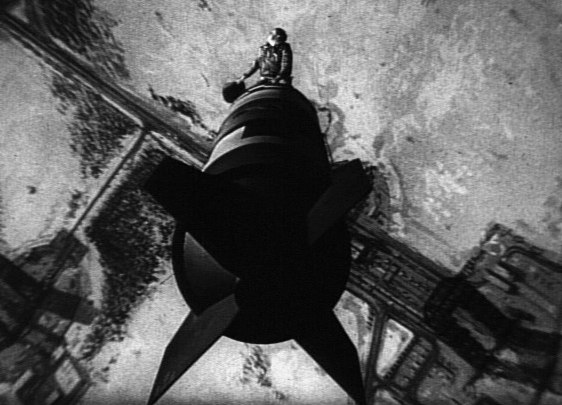
1. Nuclear weapons and the doctrine of “mutual assured destruction.” This state of affairs seemed to many, as the acronym suggested, “MAD.” Kubrick portrayed the growing suspicion, in “Dr. Strangelove,” that the people who had brought us to this precipice must be nuts. This is where the “peace symbol” came from originally: the “Ban the Bomb” movement.

2. The endless little wars without victory: Korea, then Vietnam. Again, this seemed insane: sending kids off to kill and die without any clear objective. Worse, the people in charge did not seem to understand that this was a problem. I remember Humphrey referring to the “politics of joy” while Vietnam was going on, and referring to Nixon refusing to debate as “our Vietnam.” As if this war was a normal state of affairs. It was as Orwell predicted in 1948: the endless wars without result, among shifting alliances. Eastasia had always been fighting Oceania. Due to the danger of being drafted, this in particular bothered the rich college kids. For the poor, it was probably more like an opportunity.

The process of education as conceived by BF Skinner.


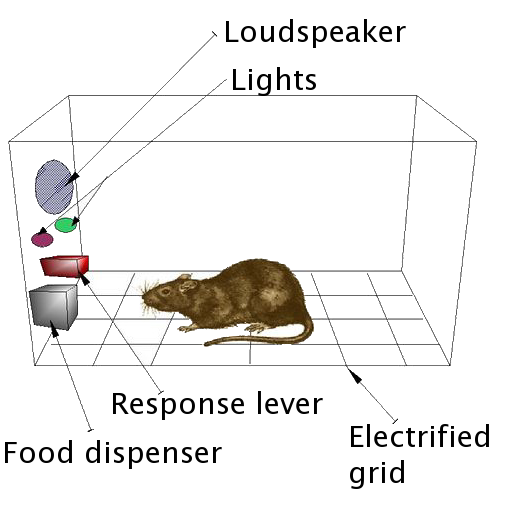
3. Behaviourism. Perhaps this was just me, but I don’t think so. Scientism had run amok, and was seeing the average human being as an object, no more than cattle. It was all too revealing of what those in power really thought of the rest of us; confirmed again later by the tales of the CIA experiments with hallucinogens. Orwell and Huxley saw this early, and it resonated. We forget that a lot of what was happening in the 60s was a rejection of science—“plastics”; “back to the land.”

So the primary enemy was big government, with authority of all kinds under question, notably including science and technology. That is where Rachel Carson and environmentalism comes in: not as some new distrust of corporations or capitalism—pollution was and is worse in Communist countries—but a new (albeit revived from the Romantic era) distrust of science and technology. Which everyone had loved at least since the 1920s.

It is terribly ironic, then, that those who see themselves as the inheritors of the 60’s counterculture also see themselves as the supporters and defenders of big government, on the one hand, and science, on the other. Conversely, it is ironic that those on the right, the real inheritors of the 60’s, still despise the counterculture of those days.

Those who formed the counterculture then often saw themselves as on the left. Not always, though: Kerouac liked Taft, and Dylan liked Goldwater. More basically, they were against big government.


Humphrey, Johnson, to the left, Reagan to the right.

And in those days, it was not a clear choice between big government on the left and small government on the right. Lyndon B. Johnson was the biggest advocate of big government ever to sit in the White House. Humphrey was from the same mold. These were the bad guys. Goldwater was obviously an advocate of smaller government. But so—we seem to forget-- were George McGovern, Jimmy Carter, and Jerry Brown. It wasn’t until Walter Mondale in 1988 that the Democrats clearly chose the path of big government again.

Richard Nixon, on the other hand, was a big government conservative, as were the Ontario PCs of that day. He introduced what was then called “the Imperial Presidency,” tried for his own version of Obamacare, and imposed wage and price controls, an interference with the market that seems shocking now. It was not until Reagan in 1980 that the Republican Party clearly chose the path of small government.

So it has only been since about the 1980s that the left has become consistently big government, and the right has become consistently small government.

And what has happened over the same time to the relatively rich college kids who were the hippies, or at least what we used to call “weekend hippies”? Over time—in fact, circa about the 1980s, their forties, they became yuppies, then dinkys, and then the political (and business) establishment. Once they were themselves in control of the levers of power, their conviction that those in control of the levers of power were corrupt began to waver. There was no longer any constituency for a small-government but left-wing candidate.

Which is understandable; but I wish they’d at least admit the sell-out.

In the meantime, though, the realization that the emperor had no clothes that began with rich kids back in the 60’s has remained and grown. This is what my friend was noting, the decline in public trust for all kinds of authorities since the 1960s.

Leaving aside the specific triggers of the 60’s, this has to do with the rapidly growing access to information of all kinds, bypassing “authorities” in general, which began with TV in the 60s.

The richest and best educated were, naturally enough, the first to take advantage of the greater information flow to think for themselves. Hence middle-class kids began to “question authority” and “question everything.” But that process has now moved down the power and money chain.

Now that we have the Web, it is easy to underestimate the importance of TV when it was young. In the day, it really did seem significant that the Viet Nam War was the first televised conflict: the sordid face of war was now seen in every living room. It was suddenly important that Kennedy looked better than Nixon on TV. Despite its dross, TV was a huge new information medium. It was vastly more important than radio, because we are primarily visual creatures. For us, seeing is believing. Radio at least felt as controlled as print. Television at least gave us the illusion of being able to see things for ourselves. And things turned out to look different from the way they had been described. First politicians, then wars, then other things.

At the same time, the advent of TV left the cheaper radio spectrum available to the young. Hence rock and roll, and the 60s music culture that became in large part the communications medium for its political culture.

The computer, the Internet, the cell phone, the tablet, have one by one expanded that circle again and again. There is no end in sight. So a growing suspicion of social authorities of all kinds is only to be expected. Just as happened, in a smaller way, with the invention of movable type. That led to such things as representative government (i.e., democracy), the Reformation, and modern science, the last a reaction against accepting the authority of the ancients over present experience.

It is interesting to ponder what the current media revolution, far more dramatic in nature, is likely to produce in social and political terms.

Wednesday, September 18, 2013

Why TV is Getting Better


If the prison is no longer secure, perhaps Rick and the others could consider relocating here.

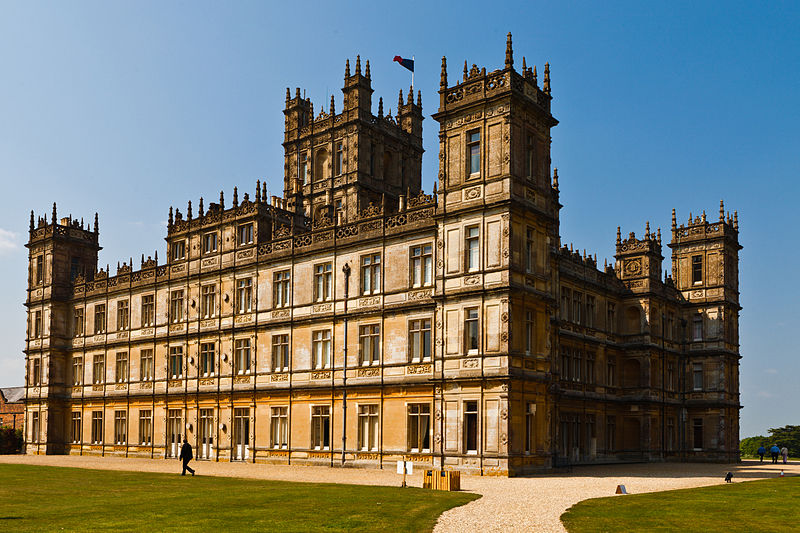
Not everything is going to hell in a handcart. Currently, I am eagerly anticipating the new seasons of Downton Abbey and the Walking Dead. Television is getting much more interesting than it used to be, and far better than movies currently are.

So it goes; these things come in renaissances. Suddenly one medium or another will be fermenting. Popular music and comic books had amazing runs in the 1950s and 1960s. Films were really good in the 60s and 70s. Poetry was strong in the 50s. A variety of arts seemed relatively strong in the 60s, and now most seem relatively weak.

One cause, as I have previously lamented here, and as such worthies as TS Eliot and Samuel Beckett have lamented long before me, is that art has become increasingly dissociated from religion. Do that, and art dies. But within this general trend, the sudden lunges forward of specific media seem to fit an old observation by Marshall McLuhan: when a medium becomes obsolete, it become art. This makes sense: it has lost its practical use, and so, if it is going to continue at all, it will be for aesthetic reasons, among those who love the medium for aesthetic reasons.

Radio became obsolete in the 1950s, with the advent of TV. Hence the rise of popular music, specifically rock and roll, as new message for that medium. Film faced a less immediate threat of obsolescence from TV, and so reacted less dramatically and over a more extended period of time: we had a good run of artistic film-making beginning in the fifties and running through the seventies, with Hitchcock, Kubrick, the French auteurs, Scorsese’s Godfathers, and so on. Look at a list of great films of the Seventies, and you will marvel at how much that is memorable came out in such a short period. Comic books in turn can be understood as print’s reaction to TV—more specifically, pulp fiction’s reaction. There had been an earlier wave of comics, of course, the “Golden Age” of Superman and Batman, which was pulp’s reaction to radio.


He was right about everything. He just spoke fifty years too soon.

One can go back in time for other examples. The printing press gave us Shakespeare: the great Elizabethan age of drama came just when people started to be able to read, and to no longer need public performance for any practical purpose.

TV seems to be at that point now, beaten out of its prior position as primary medium by the Internet. It is no longer the main source of news and entertainment. It is no longer for everyman, or for the biggest profits from the greatest number. Hence we get interesting drama like Downton Abbey and the Walking Dead, appealing to a more discerning audience.

Meanwhile, radio and comic books, as their obsolescence deepens, have lost their ability to sustain a large enough audience for pop art purposes. They have had to become yet more specialized in their appeal. No more top forty, and no more cheap, mass-produced comics. They are moving from pop art, like rock and roll, in the direction of “high art.” Which is to say, really, either old art in rerun, or, if new, relatively lifeless, gloomy, and academic art. Generally living on charity from the public purse.

There is a fine line here: if a medium is the most efficient available, you get trashy entertainment for the masses. But on the other hand, you need a large enough audience to sustain real art, or artists cannot afford to create. They go into politics or academics or accountancy instead.


It died to give the world rock and roll.

Film is an interesting case in this regard. TV made it obsolete in the 50s. Then computer-generated special effects made it rise from the dead—courtesy of Spielberg, Lucas, and Pixar. FX were too expensive and time-consuming for TV, and did not play nearly as well on the small screen, including the computer monitor.

For now, all there is to do is to enjoy TV; along with a predictable renaissance in traditional, 2-D animation, notably from Japan. And wait for the next media technology to again reshuffle the playing pieces.

Wednesday, March 13, 2013

More Media Malpractice

From an NBC story on the conclave:

"But such a selection might disappoint Catholics who are hoping for a reformer after a papacy marked by a sexual abuse scandal, other missteps and shrinking membership in the United States and Europe."

Awkwardly, the Catholic Church's membership is actually growing in both the US (1.5% per annum) and Europe (1% per annum).

Wednesday, February 13, 2013

Why the Traditional Media Are Dying


News reports surrounding the resignation of Pope Benedict have been predictably horrid. The profound ignorance of all things religious among the journalists is one thing, but why do they not have editors to check even basic facts? This looks not just like incompetence, but idiocy.

Watching Al-Jazeera English service; in announcing the resignation, they refer to Benedict’s pontificate, gratuitously, as “one of the shortest and most turbulent in history.”

One of the shortest? He’s been pope for almost eight years. Average reign of all popes: 7.2 years.

One of the most turbulent? Try the popes of the Great Schism, the Avignon Captivity, or the Reformation. Benedict’s reign was not even one of the more turbulent of the last century, which has seen two world wars, Nazism, Communism, Vatican II and the SSPX.

More such media failures here. I especially love the NYT's cited evidence that Benedict's reign was "contentious":
When he took office, Pope Benedict’s well-known stands included the assertion that Catholicism is “true” and other religions are “deficient;” that the modern, secular world, especially in Europe, is spiritually weak; and that Catholicism is in competition with Islam.