Playing the Indian Card

Showing posts with label chemical weapons. Show all posts

Sunday, April 15, 2018

Bombing Syria


I see folks on Facebook lamenting that Syria was recently hit by US/UK/French missiles.

I don’t get it. Why the grief now, and not about everything else that has happened in Syria since 2011? War is only wrong if the US, Britain, or France get involved?

Many are saying that the casus belli, the Syrian government gas attack on its own civilians, seems likely to be bogus. The US had just announced it was pulling out. It was entirely in the Syrian government’s interest to lie low for a while.

I accept that Machiavellian logic. Regimes do sometimes do stupid things that are not in their own self-interest. But that would suggest some breakdown in command, so that local players are operating in their own behalf. It was more likely staged, a false flag, by the opposition.

I’m not sure that is important. Whether or not he was responsible for this attack, it is plain that Assad has been continuing to manufacture and to use chemical weapons. This is in violation of the deal by which the US did not intervene under Obama. Such things cannot be ignored. It is just fortunate to have a clear violation now in order to make the point. Now, I trust, chemical weapons are less likely to be used, and not only because the strike targeted Syria’s chemical weapons facilities.

Russia has of course protested, on the reasonable grounds that this was a plain violation of Syria’s national sovereignty. Not long ago, I would have agreed. It used to be accepted international law that one country did not intervene in another’s affairs without a formal request from the government, and this seemed wise. Until Rwanda. Everyone felt pretty bad afterwards about not intervening, and a new international standard emerged in time for the wars in Bosnia and Kosovo: foreign intervention was justified and called for if any government was violating basic human rights with regards to their own citizens. Gas attacks would fall under this rule.

Given that Russian military was on site, does it all risk starting some wider war? Yeah. By the same token, so does the US sitting on its hands. On balance, by convincing Putin to tread more softly, this looks to me more likely to prevent than to provoke a wider war. Russia has been throwing its weight around, here and elsewhere. The more it does so, the more it risks inadvertently provoking a big war. Rather like the German Kaiser sticking his finger in everywhere leading up to World War I. Putin has been swashbuckling for the sake of prestige. Suddenly it looks as though the big boys have come to play. Now this adventure begins to feel like bit of a humiliation. That may make him less eager to undertake the next one. If he risks a wider war in Syria, he is an idiot: there is no way Russia can match the US, Britain and France in any overseas theatre.

His own position depends on sleight of hand. Russia is in bad shape; worse with the collapse in the price of oil. He may need foreign policy successes to stay in power; but, by the same token, a serious humiliation could topple him.

A third issue is the presence of Iran in Syria, in support of Assad. Apparently John Bolton was previously opposed to any US intervention, but now backs it because he fears the growing influence of Iran. If the US leaves a vacuum here, and it is filled by Iran as a regional power, this is troublesome for allies like Saudi Arabia, Qatar, the UAE, Israel, and Kuwait.


Wednesday, September 11, 2013

Putin's Intervention in the Syrian Crisis


Nobody's puppet.

A lot of commentators are unhappy about Vladimir Putin’s proposal to have Syria hand over its chemical weapons. But it seems to me that this is a good solution for everyone, and Putin is to be congratulated for playing a useful role. If this ends up boosting Russia’s prestige, it is deserved.

Let’s suppose things had gone as they were going before Putin’s intervention. There seems a good chance Obama would have lost his vote in Congress for action against Syria. Result: disaster for US diplomacy, and so much for the international ban on chemical weapons. If, on the other hand, Obama won the congressional vote, he would have either lobbed a few missiles at Syria, or done more extensive bombing. Either would have killed a lot of people. This is not good. Would it, despite this, have had worthwhile results? It is hard to say. An assault that did too little damage would do nothing to deter the use of chemical weapons the next time. It might even boost Assad’s prestige. An assault that did too much damage might throw the Syrian civil war to a rebel faction that is hostile to the West. It’s a choice even Hobson might not wish to make. A full-scale US ground assault might have been the ideal response, as I have argued, but that was not in the cards this time. It looked as though any possible congressional resolution was going to explicitly rule that out.

By contrast, Putin’s proposal, if it pans out, obliges Assad to accept and sign on for the international prohibition on chemical weapons. The ban is confirmed and upheld. One could argue that this is all a sham, that Assad is not really going to give up all his chemical weapons, and there is no way of confirming that he has. All fair enough, but beside the point. With Putin’s proposal, he cannot use them again. If he does, he is caught in a big lie; he has very clearly his own treaty obligations; and, not least, he has embarrassed Russia and Putin.


At the G8 summit.

In such an event, Obama should have far less trouble in getting Congress, the UN, and other governments to sign on to firm action against Syria—something he cannot seem to get now. The more so since he has demonstrated his good faith and reluctance to take the military option.

Will Assad, in the meantime, be able to strengthen his position? It seems unlikely. The element of surprise had already been lost; signing on to the Putin deal now can only give the US an opportunity to recover it. The use of chemical weapons on the outskirts of Damascus, in the first place, looked like desperation, and Assad’s willingness to seize this deal looks like desperation again. His days look numbered in any event. It may well be in everyone’s interest not to let his fall be too abrupt.

Okay, I’m struggling, but I just can’t see a downside to Putin’s deal. At the same time, Russia deserves credit for putting its prestige on the line here; this is not without risk.

And how much is this all going to cost the US, in blood or money?

Nothing.

Wednesday, September 04, 2013

One Point about Syria

...that I have not seen made, and perhaps it should be made:

I think we know now where Saddam's missing chemical and biological weapons ended up.


Sunday, September 01, 2013

Obama and Syria


It's just hard to take someone seriously as a villain who looks so much like a turtle.

I believe Obama is absolutely right to ask Congress for permission before taking action on Syria. It is the legal requirement, and he needs this kind of political backing in order to take the action that is really needed. He needs to do more than just lob a few missiles. He also needs the backing of the Arab League—which he does not yet have.

If he gets this support, however, he needs to take advantage of this formal mandate to do something substantive. Unless there is a clearly-defined and meaningful military target, firing missiles at Assad while leaving him in power is only likely to enhance his prestige and his position. And the debate has given him ample time to protect any meaningful military targets from such a strike. So this approach seems worse than useless—really an admission of American weakness. Sanctions invariably hurt the poor, not the regime. Even doing something that would topple the Assad regime might be counterproductive from the American perspective: the strongest element of the opposition is Islamist.

Accordingly, if Obama is going to do anything, he has to do the full monty. The only useful alternative is a full-scale invasion to overthrow the government.

No doubt this sounds crazy. The US is stretched financially and militarily and in recession. There is no stomach for more Middle Eastern adventures. Interventions in Iraq and Afghanistan have bogged them down for years.

This is one reason why a full invasion is necessary: to prove American resolve. To prove that America cannot be scared off, as the Japanese hoped Pearl Harbor would.

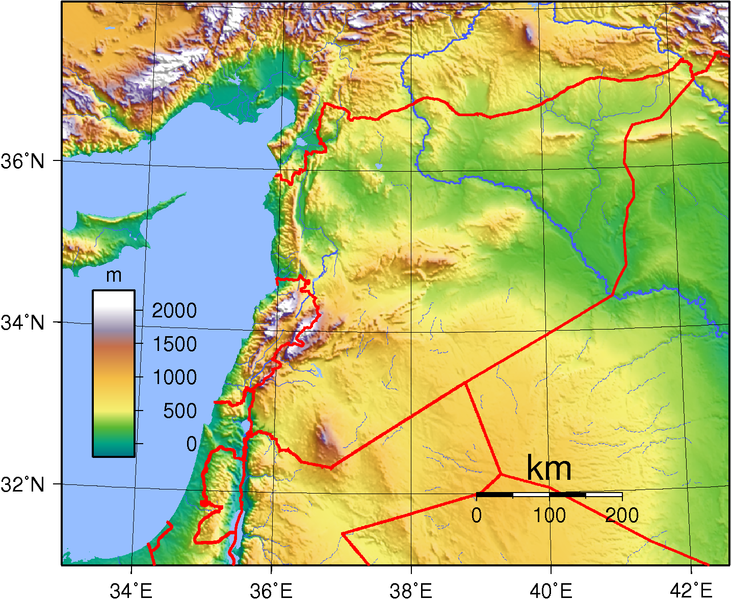
Invading Syria need not be the expensive proposition Iraq and Afghanistan have turned out to be. Iraq and Afghanistan involved one fundamental and obvious mistake, that need not be repeated: there need be no nation-building. Go in, take out the regime, get out. If you recall, the matter of overthrowing the regime was, in both prior cases, extremely easy. Syria would be easier. It is a smaller piece of land, more accessible from the sea, and it has almost no natural defenses. It is ideal tank country. Moreover, the Syrian military is already fully engaged in fighting the rebels; the use of chemical weapons suggests that their position is desperate already. The US has a strong ally in Turkey, with a long border to the north; and another ally in Jordan, to the south, close to the Syrian capital. One fast pincer movement.


Boots. Ground. Deal with it.

If the US then just pulls out, I see no problem. By going in and taking out a regime easily and efficiently, it automatically ensures that any succeeding regime will be sensitive to US pressures. What it did easily once, it can do easily again.

But if it really must mess around with democratizing and all that, there is a simple solution available here that was not available in Iraq or Afghanistan: let Turkey do it. Turkey is interested these days in extending its influence in the Arab world. Syria was, not so long ago, Turkish/Ottoman territory, so it is a natural sphere of influence. Turkey has the manpower to do it, and the supply problems would be minimal. Turkey is a fellow Muslim country, so it would look less like “western interference.” And Turkey is a functioning democracy.

Can the US afford it? Maybe they don't have to. Saudi Arabia and Qatar have declared against Assad; they are concerned with the fate of the Sunni majority in Syria. Very well—their own militaries are not large, but their contribution can be to help fund the invasion.


Absolutely. No. Natural. Borders.

The result: the Syrian people would be free of a dictator; the next dictator would think long and hard before using chemical weapons; American prestige in the Middle East would be restored, and US concerns would be heeded; Turkish prestige in the Middle East, as a functioning democracy, would be enhanced; Syria would have a decent chance at democracy; and Iran would lose its only ally in the region.

Of course, if Obama loses the vote in Congress, as he is likely to, it’s all off. For now. But he can still do two things. First, arm any factions he can identify in Syria who are genuinely pro-Western, if any. Second, start beating the war drums. It took a long time to build up a coalition and popular opinion against Saddam. This administration has barely begun to do the same against Assad. It was not long ago that Hillary Clinton was characterizing him as “a reformer.”