Playing the Indian Card

Sunday, November 10, 2013

Reasons Canada is Not Ready for Self-Government #2: The Progressive Conservatives


Not a Conservative
In most democratic nations, since the French Revolution and all that, the people get an opportunity to vote for at least two clear alternatives: generally, a party of the left, and a party of the right.

In Canada, allowing the general population such troublesome choice has apparently always been seen as unnecessarily disruptive. It might lead to fisticuffs in the street, or something.

So, for the most part, there has been no conservative party.

Oh, sure, I know what you’re thinking. You’re thinking that John Diefenbaker, recently cited here, was the leader of the “Conservative Party.” And you’re wrong. He led the “Progressive Conservative Party.” The name was chosen when John Bracken took over leadership of the Conservatives in 1942. The idea was that the former Conservative Party was to become instead a home for people of all ideological persuasions, like Bracken’s provincial government in Manitoba, which combined the Conservative, CCF (Socialist), and Social Credit (don’t ask) parties.

Improbable? They held on to the conceit, and the name, until 2003. For 60 years, nobody in Canada got to vote for a Conservative Party.

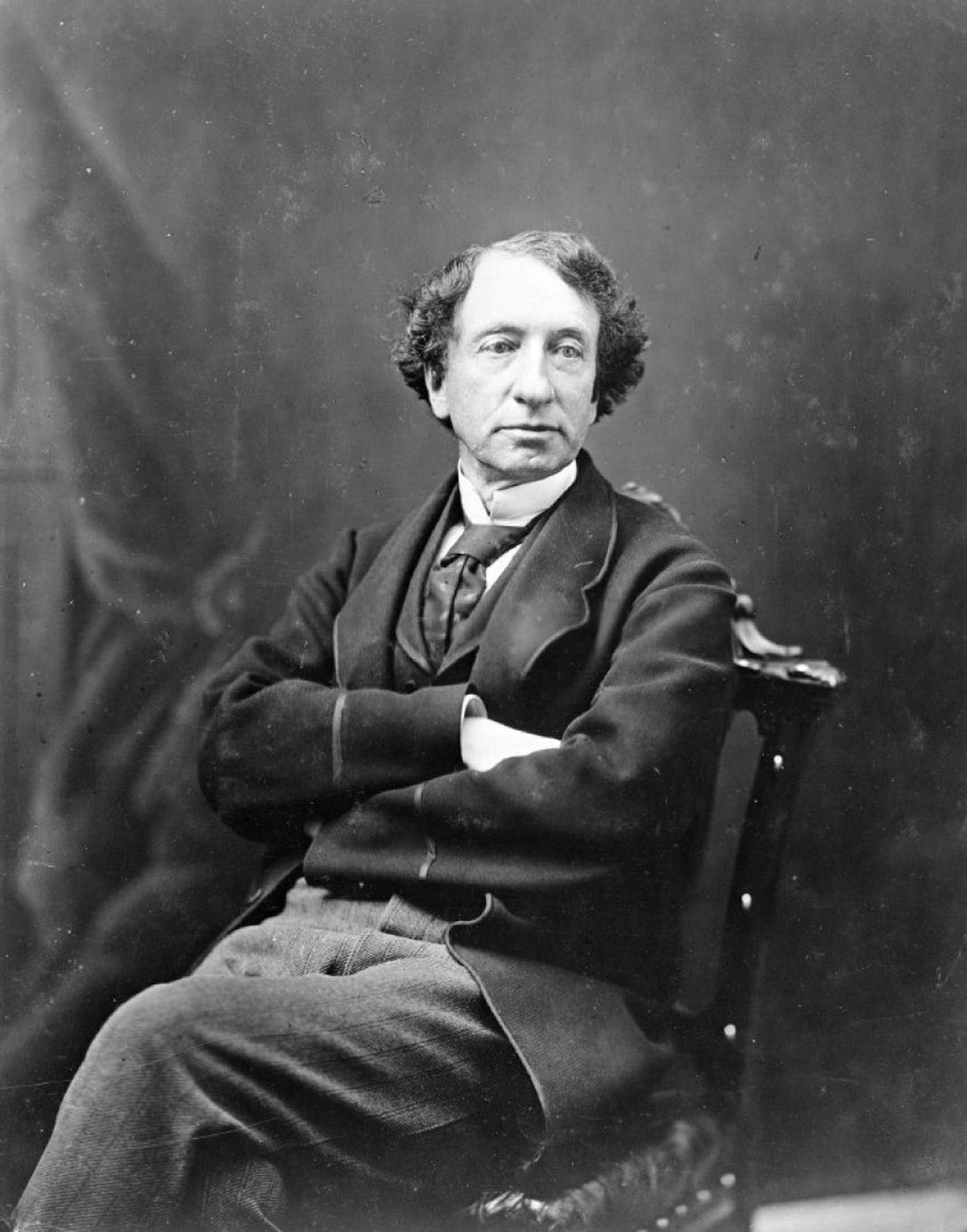
Now, silly you, you will counter that Sir John A. Macdonald, our first Prime Minister and founder of our mighty nation, was in fact a Conservative, and led a longstanding Conservative regime.

Wrong again. You could look it up. Macdonald led the Liberal-Conservative Party. In the US, they have elephants and donkeys as mascots. In Canada, we have oxymorons, or pushmi-pullyus. What’s your choice? Either Conservative Liberal, or Liberal-Conservative. The Liberal-Conservatives only finally faded out during the First World War. That covers another 40 years’ worth of elections.

But, you will say, what’s that you just said about the First World War? When that happened, Borden was prime minister. Then he was a Conservative prime minister, right?


Not a Conservative.

Nope. Borden’s government was officially “Unionist,” not Conservative. It was supposed to be a union, yet again, of liberals and conservatives. It was “Unionists,” not “Conservatives,” who contested the Liberals for every election from then until 1925.

Finally, given the chance, in 1925, Canadians actually voted for an honest-to-God Conservative party. And they won the election. But they were not allowed to govern. Instead, Mackenzie King, turning out to be even better at obscuring his ideology, pulled together a coalition of Liberals and Progressives, and stayed on. Roughly the same thing happened in 1926: the Conservatives ran as Conservatives, won the popular vote, and were not able to form a government.

After an awkward period of success under R.B. Bennett, in 1940 the Conservatives decided again not to run as Conservatives, but as a “National Government,” a coalition of left and right.

They held the Yukon.

And that brings us to the “Progressive Conservatives.”

Of course, some true conservatives became upset at lacking any good voting alternative. This, they say, was behind the rise of the “Reform” party in the late 1980s—eventually to second-party status.

But as soon as Reform had established itself as the main opposition to the Liberals, what did it do? It decided it needed to broaden its base. It renamed itself the “Canadian Alliance.”

Not a Conservative. Not even close.
Since 2003, the Conservative Party has re-emerged as just "The Conservative Party of Canada." And has promptly begun, at long last, winning elections.

So let’s see: the Conservative Party has only officially run as the Conservative Party in eight of Canada’s 45 federal elections to date. When it has, it has usually won the popular vote. When it has run cleverly disguised, it has usually lost.

Moral: Canadians want to vote for a Conservative Party, but their betters have decided this is not a good idea. Their betters will insist that the people must not have their way on this even when it is against their own interests. And Canadians in general are okay with that.

This is not how a grown-up democracy works.

Saturday, November 09, 2013

The Geopolitical Importance of Depression


This is what depression looks like.

Just saw this interesting map of depression rates by country.

It could be wildly misleading, because depression is an invisible thing, and so rates of diagnosis could be very different from actual rates of occurrence. For example, I do not buy the extremely low rate of depression the map shows for East Asia—China, Japan, Korea. I have lived in some of those countries, and my impression is that the real rate of depression is very high. The difference is that suicide is culturally accepted: instead of seeking therapy, people just go off and kill themselves.

The map seems to disprove the claim, sometimes heard, that depression is a disease of prosperity, or of modernity, or a kind of spoiled malingering of the rich. Even though you would expect reported depression to be higher in richer countries simply because the medical infrastructure is better, this turns out not to be the case. Western Europe and North America do well on the depression scale; sub-Saharan Africa does poorly.

But I was struck by the rather consistently high rate of reported depression across what is sometimes called the MENA region—Middle East and North Africa, aka the Muslim world. As if to prove the point, Israel and Lebanon, Jewish and semi-Christian enclaves within the Middle East, do not conform to the overall trend.

I think this illustrates my own thesis that depression is caused by being caught in a double bind, a situation in which you are wrong no matter what you do—the kind of situation commonly caused by emotional abuse. Specifically, the Muslim world is caught in a double bind of conflicting values, pulled in two different ways. Traditional Muslim law says one thing, and the liberal secular doctrine of the West says another, and the two are not compatible. So what's the point of anything?

The same problem is surely at the root of “Islamist terrorism.” People feel a natural rage at being told to do two contradictory things at the same time, and the obvious solution is to go with the one and reject the other as oppressive. This would be why Islamic terrorism invariably arises among the ranks of Muslims who have had the greatest exposure to the West and Western ideas.

This problem would not be as acute in South Asia, among Hindus, or in East Asia, because Hinduism, Buddhism, and Chinese folk religions are not ethically prescriptive. They do not lay out any strict moral requirements, any strict doctrine of right and wrong. Accordingly, there is less conflict with modern secularism.

In general, too, there is less conflict with Christianity, because, although it, like Islam, is an ethical religion, modernism has emerged from it, and it has had many more years to adjust to the moral conflict. In this connection, however, it is worth noticing that the Netherlands is a standout among European nations for having high levels of depression. Why? Perhaps because the Netherlands has put itself in the forefront of secularization, with things like free and open prostitution and free and open drug use, so boosting the sense of conflict with more traditional values.

Thursday, November 07, 2013

Reasons Canada is Not Ready for Self-Government: #1. John Diefenbaker


Just look deeply in those eyes, and tell me you believe he is sane.

We gave this guy the biggest majority in Canadian electoral history. Does anyone think he was a great prime minister? No; he was a disaster. Even at the time, did we really take his “Northern Vision” seriously? Yet so long as we were given the chance, even after we had seen what he was like in power, we never voted for anyone else in sufficient numbers to clearly defeat him. Let him out on the hustings, and he could always close any gap in the polls.

Why?

Because we loved him. We still love him. I still love him. Just as we love Don Cherry, and for all the same reasons. We voted for him because we found his so entertaining. He was fun to watch.


Giving Pearson the finger.

This seems to be a common thing in Canada. We are a nation of comedians, and we see politics primarily as a source of entertainment. It is not Just Diefenbaker. It is a lot of prominent politicians, all the way back to Sir John A. Macdonald, our founding figure. We loved him largely because he was a drunk, and we didn’t know what he might do next to embarrass himself in public. We actually built a country on it.


So, when the video of Rob Ford smoking a crack pipe recently turned up online, his poll ratings-- jumped. We love to watch Rob Ford. Just as we loved Amor de Cosmos, BC’s Father of Confederation, ultimately judged insane; Ralph Klein; Joey Smallwood; John Crosbie; Brian Tobin; Mitch Hepburn; Bill VanderZalm; Real Caouette; Charlotte Whitten; Bryce Mackasey; … there is a pattern emerging here.

This is not how a grown-up nation chooses its leaders. A grown up nation does not elect the funniest guy to be its leader. Especially when he does not know he is being funny.

Wednesday, November 06, 2013

Slavery and the Bible


Joseph being sold into bondage.

A friend who claims she is an atheist has linked on Facebook to a poster with the caption: “If the bible got the easiest moral question humanity has ever faced wrong, and that was slavery, then what are the odds that it is wrong on something as complex as human sexuality?” – Dan Savage.

Let’s respond: both major premise and minor premise are wrong. Therefore, the conclusion does not follow.

First, slavery is not the easiest moral question humanity has ever faced. It is a complex issue. Second, it is not clear what the Bible’s position is on slavery (whereas its positions on human sexuality are generally straightforward).

What is “the easiest moral question humanity has ever faced”? Surely murder, not slavery; is enslaving someone worse than murdering them? Is life less important than liberty?

So, murder is the easiest moral question. But to be clear, there are degrees of murder. Surely mass murder is worse than individual murder: killing a million people is worse than killing one. So, mass murder is the easiest moral question. In addition, surely killing someone who is absolutely blameless is worse than killing someone whose own deeds are dark—there are various shades of gray on the path to what becomes justifiable homicide. Moreover, surely killing someone who is about to die the next day of natural causes is not as bad as killing a young person with their whole life before them. The net natural lifespan remaining enters into the equation.

Therefore, being precise, the easiest moral question mankind has ever faced is, in fact, not slavery, but abortion on demand: the mass murder of innocents at the very beginning of life.

I think you will find that the Bible is against this. The evil of killing children is a central theme throughout the book.

Slavery, by contrast? While an evil in itself, it may easily be preferable to the alternatives available.

First, let’s define our terms. Merriam-Webster defines slavery as “the state of a person who is a chattel of another.” This I find unsatisfying, because what a “chattel” means can vary greatly; what ownership entails may vary greatly depending on the laws in force. Moreover, being owned is not necessarily an unpleasant thing: when my kids refer to me as “my Dad,” or my wife as “my husband,” I tend to feel proud, not oppressed. Yet this is, literally an assertion of ownership.


William Wilberforce, Evangelical Christian, the man who ended slavery throughout the British Empire.

Wikipedia says slavery is when “one human being is legally the property of another, can be bought or sold, is not allowed to escape and must work for the owner without any choice involved.” Again, let’s skip that “legally the property of another” as too vague. Let’s say a slave “can be bought or sold, is not allowed to escape, and must work for the owner without any choice involved.”

Notice that that comes close to a definition of what happens when you are sent to prison. It is also pretty close to what happens when a divorced father is ordered to pay child support. The only thing missing is the “bought or sold” bit. Which does not really seem to be the most oppressive part, does it? Athletes have long been “bought and sold” by their teams, but we don’t think of them as suffering too much because of it.

So, are you willing to insist that these arrangements, prison for crime and mandatory child support, are obviously immoral? Not even the “easiest moral question humanity has ever faced,” but just obviously immoral? What’s your alternative?

Think carefully, because the obvious and historical answer is, in fact, “slavery.” Until fairly recently, societies were not strong or rich enough to support police forces and prison systems, to track down debtors, or to tend abandoned children. These necessarily had to be farmed out to individuals, and that means slavery. Recall that there were not even any organized police forces in Europe until the early 19th century—Robert Peel and his “Bobbies” being a famous early example.

Not coincidentally, this is the same time slavery started to fade out. At the beginning of the 19th century, three-quarters of the world’s population was still held in slavery of some sort. By the end, slavery in all forms was banned throughout Europe, America, and most of the rest of the world.

From the beginning of recorded history, slavery has been used to address four problems: 1. Punishment for crime; 2. Inability to repay debts; 3. Poverty, and 4. Conquered people.

Punishment for crime seems obvious: if you do not have a prison system, what do you do? Either you execute for every crime, or you torture, or you exact fines for everything, or … you enslave them. None of these sound good, but you must have some punishment for crime. Especially in the case of theft, but also assault and any other form of personal harm, enslaving them seems an obvious solution: the criminal’s labour can actually pay the victim back. Is our present system, in which the victim usually gets nothing, obviously better?

By extension, slavery also works as a way to pay back debts. Is our present system, of declaring bankruptcy and walking away, obviously more just? Although it brings economic benefits, it is surely not as fair to the creditors.

Poverty explains the bit in the Bible about selling your daughter. When there is no welfare system, what do you do? Is selling yourself or your child into slavery worse than leaving them and you to die slowly of starvation in the street? Is it even fairer than forcing others to pay for your upkeep without recompense, as we do at present?

Enslaving conquered people seems less fair than these other forms of slavery. But here, too, there was a practical necessity. Prisoners of war require a prison system. Without one, what do you do with a defeated enemy to prevent him from just running home, re-arming, and coming at you again tomorrow? Okay, you could kill him and eat him. It’s been done. Slavery seems a bit better. It takes a very high level of trust for both sides to sign a paper promising not to take up arms again right away, and let that suffice.

The Bible does not clearly take a stand either for or against slavery; it accepts it as a fact of life. Joseph being sold into slavery by his brothers, or the Hebrews being in bondage in Egypt, are hardly presented as good things. And that, given the alternatives, seems to be the morally proper position. A comparable case is that of usury. In the Bible, charging any interest on a loan is considered a sin. This is no longer held to be so, by most Christians and Jews, because the danger of usury has been eliminated by the bankruptcy laws. Now it is only excessive interest that is condemned. Another is capital punishment. This is obviously permitted in the Bible; that does not mean it is presented as something good. It was a practical necessity. Now, on the other hand, when almost all nations have dependable prison systems, the Catholic Church holds that the underlying principles of the Bible make it immoral.

It seems likely, too, that the Bible would have been opposed to the particular form of slavery practiced in the US South up until the middle of the 19th century, which is probably what most of us think of when we hear the word “slavery.” In fact, it was Christianity that ended it.


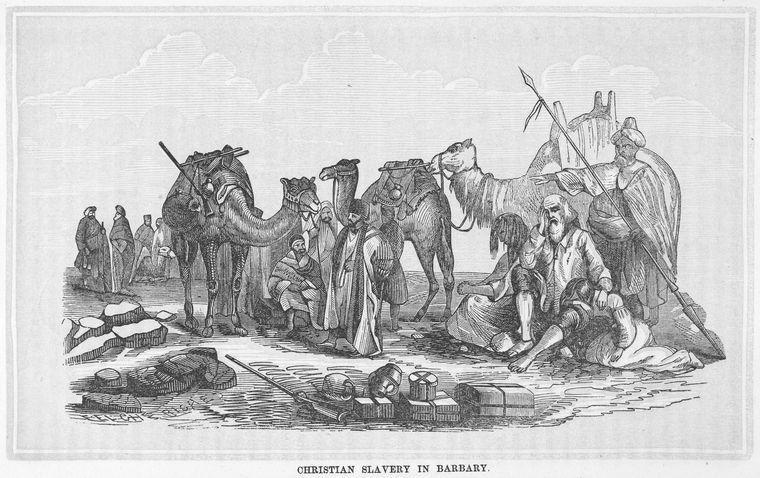
European Christians enslaved in Barbary.

The biggest problem with US slavery was that it assumed human inequality: it saw Africans as an inferior race who were better off as slaves. The Bible insists on the moral equality of all human beings, as children of God. Locke took this religious assertion, and from it developed his political ideas, later enshrined in the US Declaration of Independence: that all men are created equal, and that they are endowed by their Creator with certain inalienable rights, among which are a right to liberty.

This “right to liberty” was the doctrine that eventually ended slavery, and it came, says Locke, from the equality of man as asserted in the Bible.

Tuesday, November 05, 2013

Chelsea Hotel


Okay, so two Canadians walk into the Chelsea Hotel in New York City. They're both great songwriters, and in particular great lyricists. In fact, they both seriously vie for the title of best lyricist ever. Remarkably, they are both staying in the Chelsea Hotel at the same time, are lovers, and they both, at about the same time, write a song expressing their experience of the place.

So who's the greatest? Leonard Cohen?


Or Joni Mitchell?


You decide...

Personally, although Joni Mitchell's lyrics are wonderful, I have to go with Leonard Cohen. While brilliantly evocative, her words are mostly ornamental. Nice picture. Cohen's strike through, as they always seem to do, to touch the central mystery of life.

As a bonus, here's the never-officially-recorded original version of Cohen's song: Chelsea Hotel #1:


I Am Canadian


Madeleine de Vercheres

I wish, right here and now, to officially claim my heritage. As a Canadian, I am, and insist on my right to assert that I am, part French and part Indian. I do not mean by blood, although I happen to be so by blood; I mean by cultural assimilation. When I read the story of New France, I identify with the habitants, and I believe I have a natural right to. Their history is my history. When I read stories of the American Revolution, say, or the War of 1812, I identify with the Mohawks and the Wyandotte, and I believe I have a right to. Their history is my history.

Our problems as a nation are caused in part by too many of us failing to identify with this part of our heritage, and in part by those who want to claim this heritage only for themselves. Both positions are racist and wrong.

Joseph Brant, by George Romney

Monday, November 04, 2013

The Best English Poets


For my money, the best poet in the English language is W. B. Yeats. I think I have read all of his published poems, and most of his prose. He is not read or celebrated nearly as much as he should be because his politics and religion are so foreign to so many. But I think Yeats in the end made it pretty clear that he was a poet above all, and both his politics and his religion were simply what seemed useful at the time to his poetry. The great thing about Yeats is his versatility. He can do it elaborate or simple, romantic or hard-edged, traditional or experimental, and be the best each time.


The best living poet is Leonard Cohen. He might be the second-best of all time. Like Yeats, his politics and his religion seem rather arbitrary, although in this I think he has tended, unlike Yeats, to mature over time. Like Yeats, and unlike most poets, his writing has remained vital into old age. Poetry is more often a young man’s game. But in this, he and Yeats have had an advantage over most poets: a steady income that allowed them to pursue poetry even after they had family responsibilities. The most wonderful thing about Cohen is his minimalism. He can write a poem so simple it is flawless. This is a quality rarely seen since the very beginnings of English poetry.


William Blake has been very important to me, but not so much as a poet: as a thinker. For Yeats and Cohen, the poetry came first; for Blake, the philosophy came first, and the poetry had to bow to fit it. In this, Blake was right and Yeats and Cohen wrong, but the result is that his poetry is not as good, as poetry. Blake’s greatest contribution is his feeling for symbol.


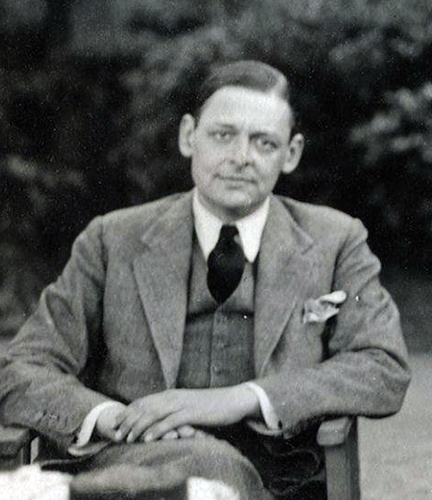
T.S. Eliot is a towering figure. But he is, like Blake, greater as a thinker than as a poet. He had modernism cold before it even began: he invented it, then solved the problem it presented, before anyone else got to the starting gate. Like Blake, he was a great literary critic. His poems lack beauty in the classical sense, which in the end keep them from being the very best poems written. But there is a reason for this. For Eliot, truth came before beauty, and that is to his credit.


Samuel Taylor Coleridge has a numinous quality in his best writing that almost nobody else can match. His prose is also outstanding. The problem is that he wrote so little.


John Donne was the best before the Romantics. Quite breathtaking.

These guys form a club, a school, a tradition. Yeats is very largely responsible for Blake’s reputation today; he promoted him aggressively. Eliot is largely responsible for Donne’s current reputation. Cohen cites Yeats as, after Lorca, his strongest influence. Eliot declared Yeats the best poet who ever lived.

There are other very good poets, but this is the first string. No mean accomplishment to be here: of all man's creations, nothing is as difficult as language. It is almost coterminous with conscious thought itself. In language, writing is the most difficult skill. And in writing, the poem is the most difficult form.