Playing the Indian Card

Showing posts with label aborigines. Show all posts

Friday, January 05, 2018

The Red Green Show


As is long overdue, we seem to be seeing a falling out between Canadian First Nations and the ecology corps.

The general public has long imagined that First Nations opposition to development near their lands had to do with a concern for the environment. Silly rabbits. It has nothing to do with the environment. It has to do with wanting a payout. Claiming concern for the environment is only a means to this end.

Accordingly, the First Nations and the environmentalists are ultimately working at cross purposes. If a project is actually cancelled, as the ecological advocates generally prefer, it is a disaster for the Indians. They get nothing: no payout, and no jobs.

But they are really acting at cross purposes well before that. The more money the developer needs to spend to meet environmental regulations, the less it has to hand over to the nearby band leadership, while still keeping the project viable and big enough to provide the maximum jobs.

And so we begin to hear the grumbling. Projects are being cancelled!


Thursday, June 22, 2017

Of Romeo Saganash and Absurdity

Front page of the missionary-produced Kamloops Wawa newspaper.

NDP MP Romeo Saganash is currently irate that the House of Commons could not provide simultaneous translation when he chose to speak to the House in Cree. Not, of course, as he ably demonstrated to eager reporters later, that he is incapable of expressing himself in English or French.

“Hearing this ruling from the Speaker,” he told the House, “was the most terrible thing I have heard in this chamber in the six years that I have been sitting in this place.” 
“This is frustrating, not to say insulting, because my language has been spoken for 7,000 years.”

Let us be clear on what Saganish is asking for here. But first, let us be clear that Cree as he understands it has not been spoken for 7,000 years. Were this relevant. Even English, with a fixed written form, is unrecognizable to modern speakers from as recently as 1,000 years ago. Have a go at this passage:

An. M.LXVI. On þyssum geare man halgode þet mynster æt Westmynstre on Cyldamæsse dæg 7 se cyng Eadward forðferde on Twelfts mæsse æfen 7 hine mann bebyrgede on Twelftan mæssedæg innan þære niwa halgodre circean on Westmyntre 7 Harold eorl feng to Englalandes cynerice swa swa se cyng hit him geuðe 7 eac men hine þærto gecuron 7 wæs gebletsod to cynge on Twelftan mæssedæg 7 þa ylcan geare þe he cyng wæs he for ut mid sciphere togeanes Willelme ... 7 þa hwile com Willelm eorl upp æt Hestingan on Sce Michaeles mæssedæg 7 Harold com norðan 7 him wið gefeaht ear þan þe his here com eall 7 þær he feoll 7 his twægen gebroðra Gyrð 7 Leofwine and Willelm þis land geeode 7 com to Westmynstre 7 Ealdred arceb hine to cynge gehalgode 7 menn guldon him gyld 7 gislas sealdon 7 syððan heora land bohtan

How did that work out for you?

Having a written form prevents languages from changing. If entirely oral, they are untethered.

Cree had no written form until one was created by missionaries in the 9th century—1840s, if I recall correctly. Like any dialect, it would have been, up to that point, as fluid as mercury running through your fingers. It probably changed dramatically generation to generation, and would have been a different language three or four hundred years ago, incomprehensible to Saganish. But of course, we can really have little or no idea what it was like: no written records.

So that “7,000 years” is nonsense.

But that is not the real problem with Saganish’s demand. There is more than one aboriginal language in Canada. Although just about all Canadian Indians can speak English or French, most cannot speak Cree. Surely Saganish does not want simultaneous translation only for Cree. Why would Cree deserve some special privilege?

There are 54 Indian dialects in Canada today, plus 20 Inuit dialects. We are not speaking of minor variations: they are often linguistically unrelated, as different as Turkish and Chinese. That’s 76 official languages in the House of Commons, all requiring a simultaneous translator to be on duty at all times the House is sitting; the translators would almost crowd out the sitting members.

The Lord's Prayer in Micmac, using the ideograms invented by Father LeClerq

This would still not quite be simultaneous translation. Everything would still have to be translated at least twice: first from X into English (or French), then from English into Y. Otherwise, the number of translators grows exponentially: it is 72 to the second power. If my math is right—a big if—that comes to 5,776 nice cushy government jobs for some lucky aboriginal speakers.

To benefit how many? Dividing the number of languages by the number of aboriginals, Indian languages in Canada have on average fewer than 4,000 speakers.

That’s not “native speakers,” mind you. That includes all those able to speak them. And virtually all Canadian Indians, and certainly any sitting in the Commons, probably also know English or French.

So there is, in sum, no actual benefit to anyone from this massive expense.

But then, it could not properly end there. How would that be fair to speakers of other languages? Are they all second-class citizens? How many of the languages or dialects spoken on Earth don’t have at least a few hundred speakers in Canada?

We would also need simultaneous translation for Maltese, Sinhalese, Punjabi, and Visayan.

Saganash cites the United Nations, and says, if the UN can do it, Canada can too. But in fact, they don’t do it. The UN recognizes only six official languages. That is nothing to what Saganash is demanding.

Are there really no more pressing needs for Canadian taxpayers’ money?

Are there really no more pressing needs among Canadian First Nations?

If so, they must be doing remarkably well.


Tuesday, June 20, 2017

Aboriginals and Immigrants


Canadian Governor-General David Johnston

So now I hear our Governor-General, no less, is in trouble for speaking an obvious truth, and one meant to bring Canadians together: that we are all, including the “indigenous” people, immigrants.

I hear that some commentators have since been demanding his resignation.

Even though he is obviously right. Our best science tells us nobody is indigenous to Canada. Some of us simply came before others. What on Earth can be valid grounds for objecting?

In a Tweeted apology, Johnston said “I want to clarify a miscommunication. Our Indigenous peoples are not immigrants. They are the original peoples of this land.”

This makes no sense. The dictionary definition of immigrant does not exclude the “original” inhabitants of a place. Merriam-Webster: “a person who comes to a country to take up permanent residence.”

So what can possibly be the problem?

But even if the term did exclude the original inhabitants of a place, it is quite unlikely that any Indian groups qualify as anything but immigrants on these grounds. Just about everyone supplanted somebody else, even, for the most part, during historical times—which is to say, since the first Europeans have been here.

Let’s put that another way, to make it clear: some European groups, notably the French, the English, the Scandinavians, and the Irish, are more genuinely aboriginal to Canada than most “First Nations.”

Some of us, it seems, have become confused by a euphemism. What we really mean, here and elsewhere around the world, when we refer to a specific group as “aboriginal” or “indigenous,” is “primitive.” That is, “aboriginals” are people whose culture has not advanced over time in material or organizational terms, and is well behind those around them technologically.

In about the Sixties, people decided this term sounded pejorative and unpleasantly “judgmental,” as we said then, and so they substituted the nicer-sounding “aboriginal.” The latter term was never literally true, and nobody thought it was.

It still isn’t.


Tuesday, May 16, 2017

A Hundred Solitudes


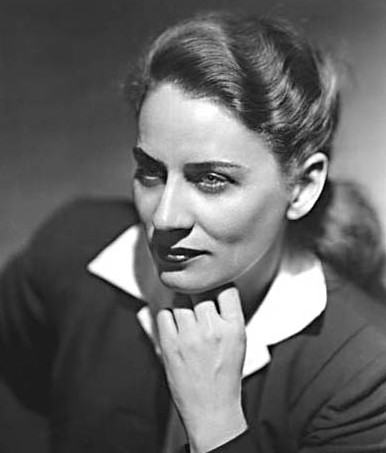
Gabrielle Roy

Amid all the current fuss over cultural appropriation, there is a blatant case of cultural appropriation happening right now in Ontario Schools. And it is getting worse.

According to the National Post, Grade Eleven students in the Lambton Kent School Board are all being required to take an English course focusing on aboriginal writers only.

I protest this imperialist exploitation!

Obviously, for most of these kids, Indian culture is not their own culture. So, by the logic of the day, they have no right to these books.

But then again, if we ask aboriginal students to read books written by non-aboriginals, of for that matter to write in French or English, it is also not cultural appropriation.

Instead, they are being subjected to cultural genocide.

Yet it is not cultural genocide if the books are Indian, and the students not.

If there is logic here, rather than pure prejudice, it escapes me.

The local authorities, of course, make their case.

Why, the authorities argue, should Ontario kids be studying Shakespeare?

“Hey, I love Lord of the Flies. I love Shakespeare,” Sherman said. “But really, we’re talking about 15th century Veronese landlords (Romeo and Juliet) or something like that. Does that resonate with Canadian kids? Or the British schoolboy class structure?”

So, by that logic, does it occur to you as well that what they should be reading, what they can truly relate to, is Canadian Indian novels?

Isn’t there another, more obvious, option?

Have they never heard of Canadian literature?

Not, I suppose, if they to have gone to Canadian schools.

I recently came across a discussion thread in which fellow Canadians found they could not name an actual Canadian book that they had studied in high school.

Me neither.

It may have changed recently, but when I went through, we got some Canadian poems, some Canadian short stories, but nothing so long as a novel.

As a result, I fear, the typical Canadian thinks and knows too little of Canadian culture. I think a lot of us were shocked when Alice Monroe won the Nobel Prize. Alice Monroe? Have foreigners heard of her? Do foreigners actually read her? Who the heck is she, anyway?

This strikes me as a spectacular failing on the part of Canadian governments. In what other country is the literature better known by foreigners than by the locals? It is as though Canada’s governments are deliberately undermining both Canadian culture and Canadians’ sense of being a nation.

It is the duty of a government, and of public schools, to promote national unity and a sense of national identity. That is what government schools are there for: to imbue good citizenship.

For as long as anyone can remember, Canadian governments have actually been doing the reverse. Most Canadians grow up with a sense that there is no Canadian culture. And none other than the current Canadian prime minister has actually made this claim.

If a Canadian kid wants to be a writer, in turn, he is given no models. He or she grows up, as I did, believing literature is something that happens only elsewhere.

This leads to a reflection: what books should be taught in Canadian high schools? What are the essential chronicles of the Canadian experience?

Obviously, not Canadian Indian literature, as such, and only Canadian Indian literature. This is the colonial mentality perpetuated: now, instead of being colonized by the British and Americans, we who are not Indian—the vast majority of Canadians-- get to be colonized by the Indians. No improvement.

As of the 2011 census, 4.17% of Canadians saw themselves as of native ancestry. More said English, French, Irish, Scottish, German, Italian, or Chinese. The largest group, bless them, said Canadian. The native population in Ontario, where these schools are, is even smaller. And, we are often told, different native cultures are not interchangeable: an Iroquois has no more in common with a Cree than an Italian does with a Finn. So virtually nobody here is reading about their own culture.

Recent Canadian literature has been caught up in the same Canadaphobia. Instead of presenting something universally Canadian it tends to focus on some other cultural group, portraying it as separate or even alienated from the Canadian mainstream. Case in point: Canadian Indian literature, presented and considered as a separate entity. Hardly a way to built Canadian identity and solidarity.

The books studied in Canadian schools should promote Canadian unity. This does the exact opposite.

This does not mean the novels chosen should ignore the experience of minorities. The Canadian experience is largely the immigrant experience. But said minority experiences ought to be about the attempt to integrate, not to separate.

I have a few suggestions:

Sunshine Sketches of a Little Town

Anne of Green Gables

The Tin Flute

The Wars

The Apprenticeship of Duddy Kravitz

The Luck of Ginger Coffey

Fifth Business

Roughing It in the Bush

Two Solitudes

Who Has Seen the Wind?


The reader may have others.

It is time we started thinking, and writing, for ourselves.