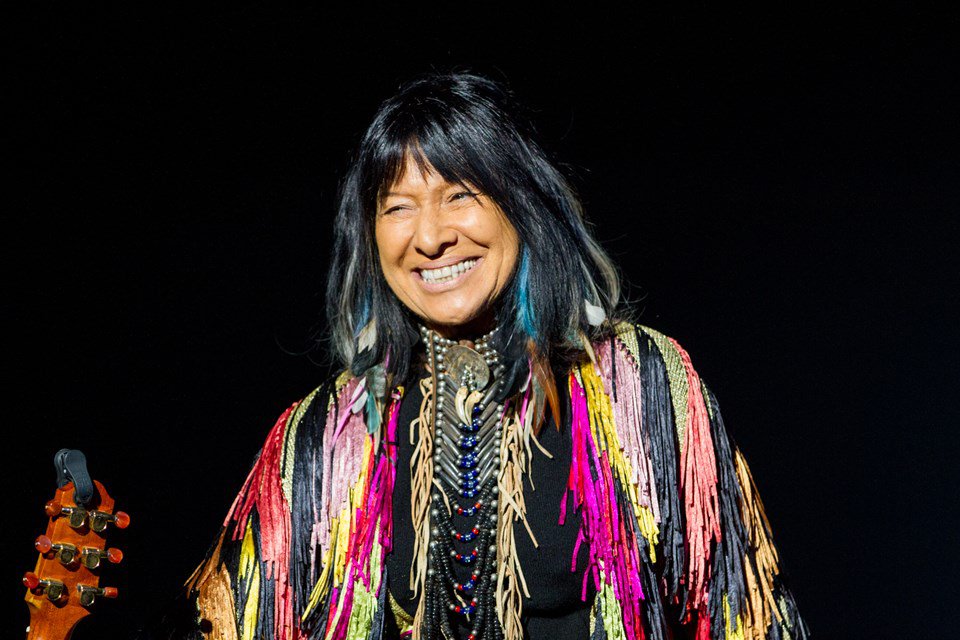
Playing the Indian Card

Showing posts with label Indians. Show all posts

Friday, December 05, 2025

The Thomas King Affair


Thomas King


Thomas King has just joined a long list of “pretendians”: people who have become famous because of their “First Nations” ancestry, who then are revealed not to be native at all.

Here’s a partial list: King, Buffy Sainte-Marie, “Iron-Eyes” Cody, “Grey Owl,” Elizabeth Warren, Ben Nighthorse Campbell, Ward Churchill, Sacheen Littlefeather, who famously accepted Marlon Brando’s Oscar, Mary Ellen Turpel-Lafond, Chief Thundercloud, Joseph Boyden.

There is something odd here. Firstly, the prevalence of pretendians shows clearly that many of European ancestry can easily pass as an Indian: Thomas King is actually German and Greek, Sainte-Marie and “Iron-Eyes Cody” were both Italian, Sacheen Littlefeather was Hispanic, Archie Belaney, “Grey Owl,” was English. By appearance, no one can tell.

 And it is not just non-Indians who cannot tell the difference. Indians cannot tell the difference either. There is clearly nothing in physical appearance that consistently distinguishes Indians from Europeans.

My cousins have their Indian cards. Half of them are blonde and blue-eyed.

How can this be? Native Canadians supposedly developed in complete isolation from Europe, far more so that, say, sub-Saharan blacks, or East Asians. Yet in those latter cases physical differences are plain to see.

The obvious explanation is that, over the past few centuries, there has been a thorough integration of blood lines. In genetic terms, there is no separate Indian “race.” 

But the second question is why so many people want to be thought to be Indians, and why it is such a problem for others if they do. It is also pretty easy for any European to pretend to be Irish, say, or Jewish, but few seem to, and if they do, nobody thinks it is a problem.

People do not want to be considered Irish or Jewish, by and large, because they risk being discriminated against. And if they choose to identify as Irish or Jewish regardless, they are greeted with open arms by those communities. So “pretend Jews” are not a problem.

If, by contrast, people want to be considered Indian, and the Indian community considers this a problem, it is the strongest evidence that Indians are actually advantaged by that identity: there is discrimination, and it is entirely in their favour.

As ought to be obvious. In Canada, they get many benefits by treaty. There are many “DEI” or “affirmative action” programs favouring them, in just about any field.

But apart from this, Indians always command great social prestige. In New England, people claim rank by boasting that their ancestors came on the Mayflower. To which Will Rogers was able to boast that his ancestors were already there to greet them. Logically, this trumps in terms of social class. In Virginia, the equivalent boast by the upper classes is that they can trace descent from Pocahontas.

And every Indian woman is traditionally thought to be an “Indian princess.”

Patent medicine firms used to hire Indians to sell their products—"snake oil.” It gained them credibility. Everybody trusted an endorsement by an Indian. It is a bit of an exaggeration to draw a parallel with the British tradition of claiming “By appointment to His Majesty,” but it is on the same spectrum.

It has always been to one’s advantage, therefore, to claim Indian ancestry. It bought respect, sympathy, and attention. And everyone traditionally wants to claim some.

More recently, Canadian “First Nations” seem to be evolving into a legally recognized upper class, with proprietary claims on all the land, just as in old Europe, and the right to be consulted and to veto measures they do not like, just like the House of Lords.


Friday, September 19, 2025

On Calling an Indian an Indian


Can you spot the racial slur?

A correspondent asserts that the term “Indian” is derogatory. This is indeed a common view; but I hold it is arbitrary and nonsensical.

If, after all, the term is derogatory, it should be offensive to use it to refer to the natives of the Indian subcontinent. Which nobody holds it to be.  If you consider the same term offensive when used on or by one group, but not offensive when used on or by another group, the problem is not with the term. It is with you: you are treating people differently on the basis of race. You are a racist.

The original concern with the term is that it is supposedly inaccurate—Columbus supposedly mistakenly thought he had reached India, and declared the land the “West Indies.” This does not make it derogatory, any more than mistakenly calling an Australian an Austrian would cause offense.

But even this objection to the term is actually wrong. The very term “West Indies” shows Columbus did not think he was in the subcontinent—that was the East. The people of the Philippines were also referred to in Columbus’s time as “Indians.” So were Malaysians, and Indonesians, the Arabs in the Middle East, and the people of sub-Saharan Africa. “Indian” meant roughly what we currently mean by “native.” If “Indian” is offensive, then so is “native,” or “aboriginal,” or “indigenous.” Or “First Nations.”

Another objection is that it presents the misleading impression that all Indian cultures were similar, when in fact they were widely diverse. One should instead say “Innu,” or “Dogrib,” and so on. But if this objection is valid, it applies equally to the terms “white,” “Caucasian,” “Asian,” “European,” or “African,” all of which are common and not considered derogatory.

Is it objectionable because it is a term from English, and not from a native Indian language? But this is the same for all other  groups, and all other languages. “Irish” is not the term in Irish for the Irish: “Greek” is not the term in Greek for the Greeks; “English” is not the term in Korean for the English; and so on. English, like any language, has its own terms for various groups.

So what are we to call this group of people?

As it happens, “Indian” is, in both the US and Canada, the proper legal term. Unlike any other term, it has a clear legal definition. It is therefore the correct and precise term; who or what counts as “First Nation,” or “aboriginal,” or the like, is ambiguous and open to dispute. “Indian” is also commonly and historically used by Indians themselves, as in the “American Indian Movement.”

So why does anyone object to the term “Indian”? It is only a bit of academic snobbery, of cant or jargon, showing you are a member of an in-group who “knows better” than to use the common and familiar term.

A good writer and a good editor should resist and discourage all such cant and jargon. Given that writing is communication, we should always prefer the common and the most accurate term.

Sunday, August 17, 2025

The Myth of the Dying Indian


Hills and Angry Waters-- an old poem about Saint John, New Brunswick

Where bold the hills outjutting to the reef rough swept with spray,
And Whygoody's swirling water meets the tides of Fundy Bay,
An Indian Chieftain with his tribe had camped upon a day
By the coves and purling brooks of Managuashe.

Straight stood the chief outgazing o'er the billows flecked with foam,
Where the broken sunbeams wander and the shapeless shadows roam.
The south wind brought its message of the salmon speeding home,
To their river haunts beyond bold Managuashe.
 
Then blazed the bonfires brightly on the hills from bay to bay,
And the Indian braves and maidens danced and sang in wild array.
The Indian Chieftain and his tribe feasted 'till dawn of day,
On the old and loyal resorts of Managuashe.

Again gazed Panamseguis o'er the deep on rushing tide;
Now, his eyes were strained in wonder, low he bowed his head and sighed,
And to his people thus he spoke, humbled his voice and pride.
On the forest camping ground of Managuashe.
 
My brothers, braves and children of the noble Malicete,
Your hearts will burn with anger at the sight your eyes shall meet.
Behold! Upon you swelling flood the vanguard of a fleet
Which shall take from us our rugged Managuashe.
 
Many moons ago a vision by the great Manitou sent,
Appalled mine eyes and spirit, and I heard my tribe's lament.
I saw a wondrous great canoe with glistening wings intent,
On harbour making here at Managuashe.
 
Braves of some mighty nation strange, and of a feature white,
With thunderous magic weapons which blazed upon the night;
My people, like the falling leaves, sadly in hopeless plight,
Were scattered from the glens of Managuashe.
 
The vision changed and clearly I saw with wondering eyes,
Habitations, huge and strange, of a mighty race arise,
People of marvellous ways, and deft of hand, and wise,
Swarming great trails o'er Managuashe.
 
Then came to on the spirit of the "Hills and Angry Waves,"
His footfall like the trampling of swift and countless braves,
His voice like surging breakers in the deep and rocky caves.
Along the shore of lofty Managuashe.
 
His features stern, yet kindly, were wreathed in vapor cold,
His garment as pine needles, woven with ferns of gold,
He took my hand and sadly, and now our fate is told,
He led me from beloved Managuashe.
 
LH.W.


This poem is a nearly perfect expression of the myth of the Dying Indian. You’ve seen it many times in movies. Everyone thinks it is true. Indians are always dead or dying. It is like the similar myth of the Magic Negro.

The Indians are not dead and not gone. They are living in Saint John. I see them on the public transit and in the mall. And I, and many of the other riders or shoppers, probably have Indian blood, even if they do not know this, or look Indian or identify as Indian. There are many more Indians in Canada now than there were when the first modern Europeans were sighted.

They have not moved anywhere. The truth is more the reverse. Before the Europeans came, they were always moving. Now they generally stay in one place. Maliseet (Wolastoqay) Indians moved their village about every two years; the Cree every two weeks.

Their lands were never taken from them. Eighty percent of New Brunswick, and ninety percent of Canada, is still wild, unsettled, and available for hunting and foraging. The rest was sold by treaty. There are simply better ways for modern Indians to make a living, less vulnerable to famine and starvation in a bad season.

Their eyes did not burn with anger at the coming of the Europeans. The local Indians, here as in most other places, welcomed the Europeans and urged them to stay for the opportunity to trade, for access to their better technology and system of government, and for protection against their enemies. There were no “Indian wars” here—wars in which one side was Indian, and the other European. There were wars between European powers, and between Indian groups, and they might have intersected, but not Indian versus European wars. The political divide was not Indian versus European.

And there was no vanguard of a fleet here in Acadia or the Maritimes. Starting at or before Estevan Gomes in 1535, there were occasional visits by one or two ships at a time, fishermen or explorers, for a couple of centuries. Gradually there were trading posts, and a few French families came to farm the marshes. The French were not here for land; they were here for trade and to spread the gospel. Only at the end of the eighteenth century did you get the first fleet of Europeans seeking to settle—the Loyalist refugees (some of them Indians) driven out of the US.

Why are we determined to believe the Indians are gone?

Because Indians represent to us the innocence of our own childhood. We see a trace of this in the poem: as the Europeans appear, the Indians are dancing and singing—just having fun. And then the annoying adults show up, and tell them it is bedtime.

Since our childhood is irretrievably gone, we must also understand the happy carefree innocent Indians to be gone. Since we miss our childhood, we also lament the supposed disappearance of the Indians. It is ourselves we are feeling sorry for.

The pre-Columbian life of the native peoples was of course not at all the idyll we imagine.

And neither was our childhood.

We all need to grow up.

Friday, July 18, 2025

An Honest Land Acknowlegement

Spanish and Portuguese possessions according to the Treaty of Tordesillas


In May of this year, Catherine Kronas, an elected member of the school council at Ancaster Secondary School in the Hamilton-Wentworth District School Board (HWDSB), was suspended from her position by the school board because she lodged a formal objection, following proper parliamentary procedure, to the board’s requirement to make a “land acknowledgement” at every council meeting. Her concern was that this was a political statement, and compelled speech.

This was equivalent to a coup by the bureaucracy overthrowing the elected government. The school board is supposed to be subject to the elected parents’ councils, not the other way around. It is also an extreme violation of human rights: of freedom of speech, of the right to petition the government, of parental rights over their children’s education.

Why would the school board act in such a dictatorial fashion over this particular issue?

In part, this is a sign of desperation. The various bureaucracies are aware they are losing control. The natural reaction is to lash out in narcissistic rage; just as Islamic terrorism is a symptom of the collapse of Muslim confidence. We have seen blatant attempts by the “deep state” to subvert democracy in the US, in France, in the UK, in Germany, recently. Canada is probably no worse.

The reason the school board is enforcing this “land acknowledgement” in the first place is, of course, that it is a lie. Forcing people to repeat a lie is an exercise in control for its own sake.

Nobody feels the need to enforce a truth. Truth can look after itself.

The various “land acknowledgements” are also violations of the principle of human equality; they imply that some citizens have, by birth, some claim to the land above that of other citizens. 

One might counter that they are meant merely as a matter of historical interest. However, if so, they are still discriminatory in mentioning only approved “First Nations” groups who fought over this land, and not also historic claims to the land by the French, the British, and, by Treaty of Tordesillas, the  Spanish.

Especially obnoxious is the common claims that some part of Canada is “the unceded territory” of this or that tribe. This is a plain lie. Sovereignty was expressly ceded by treaty across the Prairies and the north, throughout Ontario, and in the Peace and Friendship treaties in the Atlantic Provinces. Note, for example, this text from the “Articles of Submission,” 1725: “We, the … delegates from the … tribes inhabiting within His Majesty's said territories of Nova Scotia or Acadia and New England, do, in the name and behalf of the said tribes we represent, acknowledge His said Majesty King George's jurisdiction and dominion over the territories of the said Province of Nova Scotia or Acadia, and make our submission to His said Majesty in as ample a manner as we have formerly done to the Most Christian King.” 

This is a clear surrender of sovereignty. Their land was ceded, in the same sense the French Acadian lands were ceded to Britain in 1713, or the North-West Territories were ceded to Canada by the Hudson’s Bay Company in 1870. This does not, of course, directly address the matter of individual ownership of given plots of land. That would be subject to the laws of England: “We Submitting ourselves to be ruled and governed by His Majesty's Laws and desiring to have the benefit of the same.”

Interestingly, by contrast, Spain actually never has formally ceded sovereignty over North America. So that “land acknowledgement” is the only one that might be vaguely legitimate. For what it might be worth.


Monday, June 23, 2025

Indian Land Claims Are Illegitimate


Lord Biggar writes in the National Post, seeking to justify the European conquest of Australia and the Americas, displacing the aboriginal people. He argues that the First Nations did not own the land: “Rules or laws, supported by social authority and the threat of punishment, create rights to own things —rights to property.” So the native people had no rights. Too bad.

This is wrong. Rights are not created by government. They are self-evident and inalienable, given by God. Our essential human dignity gives us rights. We are not animals; we are not things. We are in the image of God. Governments are merely formed to protect these rights.

The three principal human rights, according to Locke, are “life, liberty, and property.” 

“Property” has always been a little controversial; Jefferson regrettably changed it to “pursuit of happiness.” 

After all, how can anyone have an inherent and inalienable right to ownership of property? Property is so obviously separate from the person.

Simple, according to Locke: you own what you make. You own the products of your own labour, intellectual or physical.

However, because they had no functioning government, the aboriginal people in Canada or Australia could not protect their rights, although they had them as a moral imperative. They were regularly killing, enslaving, and stealing from each other. 

This is why they were so culturally backward—let’s be honest—they had not even invented the wheel. They were still in the Stone Age. 

There is no point in putting out any effort to make or invent anything if someone else can just take it. Nor is there time for such things if you must always be watching for  sudden attack.

So the best thing that could have happened to aboriginals was the coming of the Europeans. It is simply racism to say it mattered that Europeans brought law and order to the Americas instead of Indians themselves. 

Now, in doing this, did the Europeans steal the Indians’ land? No.

Firstly, Biggar is wrong to suggest that contact between Canadian First Nations and Europeans was mostly “friction, conflict, defeat and conquest.” You might say that about parts of the USA, but not Canada. In most places, local tribes welcomed the Europeans. Trading made the Indians rich and powerful against their enemies, and the Europeans generally protected them from their enemies as well—defended their rights. 

Before the Europeans came, the stone-age Khoi people of South Africa (the Bushmen) would go to the nearest Bantu tribe to resolve their disputes—because they had no legal system of their own. The alternative was endless vendetta. The Europeans did that for the warring tribes of Canada. When the Canadian government proposed permanent treaties, native groups flocked to petition in hopes of getting one. It was a matter of signing on to the social contract and getting the protection of the law. It was not about land. Treaties were signed with tribes newly arrived from the US, who had no conceivable land claims.

That said, throughout most of Canada, the treaties did have the Indians surrendering any theoretical property rights, including mineral rights. In this sense, too, the land was not stolen or conquered: it was sold, in exchange for something the Indians found more valuable: life, liberty, and the secure possession of property.

And even then, the Indians had not actually given up a square inch of land. They retained the same right as any European settler to take up land under the new system and farm it. As Canadians, they still owned it.

Now recall the basic principle: the right to property is a right to what you have made. The Indians had not made the land; they only hunted over it. They had a right to the game they killed, or the berries they picked, but not to the land itself. God made that. Any more than anyone can own the air or the sea: it is there for all mankind to use. 

One establishes land ownership when one’s labour is somehow invested in it and cannot be easily separated from it: if, for example, you have built a structure on it, or cleared, ploughed, fertilized, and planted a field, or dug a mine. This is the basis for squatters’ rights in common law. If the supposed owner is not using the land, and you start using it, it properly becomes yours.

So as hunter-gatherers, the First Nations by and large owned no land until the Europeans came.

Didn’t the coming of the European settlers at least force the Indians to change their way of life? Isn’t there an injustice in that, at least?

No; not in Canada. Even today, 89% of Canada is Crown Land. The Indians are still free to hunt and scavenge through it as they always have. It’s just that they now have better opportunities.

But I end with the same conclusion as Lord Biggar: to give this or that band eternal payments, and then royalties because resources are being extracted in the general vicinity of their reservation, is unjustifiable. It violates the principle of human equality, of equal rights.


Saturday, May 24, 2025

History Should Not Be a Mystery


In 1984, George Orwell wrote, “Who controls the past controls the future. Who controls the present controls the past.” 

As so often, he was prophetic. There has been a systematic movement, in our schools and in the media, to suppress history. Things disappear down the memory hole. This allows those currently in power to control the future.

A clear and present example is the public opposition by some First Nations officials to Alberta’s talk of an independence referendum. They claim that Alberta cannot separate because they are sovereign over the land. Such things are purely their decision. If Danielle Smith doesn’t like it, she should just move off their land.

Grand Chief Greg Desjarlais of the Confederacy of Treaty Six First Nations stated that treaties, which encompass most of central Alberta, cannot be dismissed by separatist ambitions, declaring, “Our nations do not and will never consent to the separation of our treaty territories. These lands were never ceded, nor surrendered.” Chief Sheldon Sunshine of Sturgeon Lake Cree Nation and Chief Billy-Joe Tuccaro of Mikisew Cree Nation accused Premier Danielle Smith of breaching Treaties No. 6, 7, and 8, asserting that Alberta lacks authority to interfere with these agreements. They demanded she cease separatist rhetoric, stating, “The province has no authority to supersede or interfere with our Treaties, even indirectly by passing the buck to a ‘citizen’ referendum.” Chief Troy Knowlton of Piikani Nation emphasized that separation requires First Nations' consent, saying, “Alberta lacks the authority to interfere with or negate those Treaties. Proceeding down a path toward separation cannot be undertaken without the consent of Alberta’s First Nations.” Chief Roy Whitney of Tsuut’ina Nation warned, “The province has no authority to try and separate.”

This is false. In the plain language of the treaties, the Indians (the legal term) surrendered all sovereignty and property rights to the Crown, its heirs and assigns, in perpetuity. Should Alberta separate, the treaties are simply transferred to the government of Alberta as the king’s assign, just as earlier treaties with Britain were transferred to Canada when Canada separated.

According to the treaties, Indians/First Nations have no more say regarding the future of Alberta than any other citizens. As, of course, human equality and equal rights demands. Unfortunately, it is useful to the powers that be to perpetuate the myth that the First Nations, and aboriginal people generally, have some important residual right to control the land. This means those in power can pay off a small group to block the will of the people and leave them to do as they wish. In this case, of course, they do not want to lose control of Alberta’s mineral resources.

Other than their leaders being paid off, there is really no plausible reason for First Nations to object to Alberta separation. It does not affect them any more than any other citizen.

Those in power would not be able to get away with this if history was properly taught in high school. But when it comes to aboriginal matters, the real history has been systematically, almost hysterically suppressed. One must not bring up the fact, for example, that no mass graves of missing Indian students have actually been found on the grounds of the old residential schools—a claim that was outlandish on its face. It has come to the point at which one NDP Member of Parliament introduced a bill making any claim that the residential schools were not genocidal punishable by a prison term.

Examples of the memory hols and its consequences could readily be multiplied. We need to teach and study history.


Sunday, October 29, 2023

Vampire the Buffy Slayer


An officially “indigenous” commentator is excoriating the CBC for breaking the news that Buffy Sainte-Marie is not indigenous. This, he or she (they claim to be “two-spirit”) argues, violates the obligation of all non-Indians towards reconciliation, because it traumatizes aboriginal people. 

It is not entirely clear what the CBC should have done instead; the author seems to say that aboriginals should have been given more time to digest the news. 

How do you report the news more slowly? Note the meaning of the word “news.” 

Leaving aside the implied assumption that Indians are helpless forest creatures unable to look after themselves or deal with the real world, necessarily, what both spirits really meant is that the CBC should have kept it secret. In other words, suppress rather than report the news.

This seems an unreasonable deman.

I think the real reason some indigenous people are upset is that the Buffy Sainte-Marie story, following so closely after the revelation that there were no mass graves at residential schools, is getting dangerously close to exposing the whole “First Nations” and “reconciliation” industry as a fraud.


Thursday, October 26, 2023

Playing the Indian Card


A lot of famous Indians turn out not to be. Grey Owl; Iron Eyes Cody; Elizabeth Warren; Sacheen Littlefeather, the “Indian” who rejected Brando’s Oscar.

And Buffy Sainte-Marie?

A current CBC investigation points out that she cannot establish Indian ancestry. She was raised in a rather unexotic adoptive middle-class home in Maine. And they did not know who her real parents were. They might have been Sicilian, or Lebanese, or Sephardic Jews, for all anyone knows.

She looks Indian to me; but does it matter what her genetics are? She had the same upbringing, the same cultural influences, as any “white” child growing up in North America in the forties and fifties. She is ethnically simply American.

The broader point: any pretense that North American Indians, “First Nations,” have a distinct and separate culture is a romantic fantasy. “Indians” get what knowledge they have of traditional “Indian” culture the same place the rest of us get it: from movies, TV, comic book and dime novels. If they are more learned, from the accounts of missionaries.


And “Indians” have never been discriminated against. It was essential to Sainte-Marie’ career success to play the Indian card. She sold herself, in her own words, as “Pocahontas”; and the public loved it. Following in the footsteps of the performers in Buffalo Bill’s Wild West shows, and the Kickapoo Medicine shows; of Grey Owl, Pauline Johnson, and many another performer in buckskin. The general public of North America loves Indians, has always loved Indians, wants to cheer for them—which is why Indian references are popular names for sports teams—and will always give them the benefit of the doubt.

That said, to be clear: Buffy Sainte-Marie deserves every bit of her fame, and more. I don’t deride her marketing tactics, any more than I scorn Elvis Presley for performing in white jumpsuits with sequins. I’m proud she is an Indian like me.


Tuesday, March 28, 2023

The Real Genocide


Moloch: the pagan attitude towards children.

I can’t locate the clip, but Stephen LeDrew recently did a three-minute interview with Brian Lilley in which they lamented a teacher who was fired for questioning whether the Indian residential schools were so bad. I suspect it has actually been pulled. Too controversial?

Both Lilley and LeDrew took care to make clear in the interview that they themselves thought residential schools were bad—but why can’t we discuss the matter?

They ought to know why. When an opinion or viewpoint is suppressed, it is usually because it is right. Because those who oppose it, and are in power, do not believe they can convincingly argue against it. Nobody cares to silence claims that the earth is flat, or that the US never went to the moon.

Lilley does point out that he has interviewed many “survivors” who remembered the schools fondly. This despite the fact that anyone who attended has a financial incentive to say they were as bad as possible: compensation is being offered. Lilley also notes that he has read the historical documents, and knows that, when they were set up, they were the “progressive” option. They were intended, if mistakenly, to help the Indians. There was no genocide in mind.

Most of them were mostly orphanages: refuges for kids whose parents had died, or who came from a profoundly dysfunctional family, or whose parents were too poor to properly care for them. And the Indian family is still broken. Simply closing them, without offering an alternative, is in callous disregard of the interests of Indian children. This is the real ethnic genocide, and it is happening now. Scapegoating the residential schools looks like a cover to get away with it.

We pretend we have no idea why there is this problem of “missing and murdered indigenous women.” We keep demanding more investigation and more commissions. The answer is obvious: most of them are adolescent women fleeing some intolerable situation at home. We pretend we have no idea why there are so many suicide pacts among young people at remote reservations. The answer is obvious.

We don’t give a damn about Indians. We don’t give a damn about young people in general. Whether consciously or not, we want to kill them all. We abort them, we surgically mutilate them, we mock mothers who spend their time raising them, we will not give them a proper education, but force them into factory schools and indoctrination centres, we declare them “mentally ill” and refuse to listen if they say they are abused at home.

To most of us, in our post-Christian society, the young seem only to be an unwanted consequence of our sexual pleasures. Just a damnable inconvenience, and to be punished for it.


Friday, January 13, 2023

Breaking News: A Child Died 125 Years Ago


LeBret Indian Residential School, Saskatchewan

A human jawbone has been found at the site of the former LeBret Indian Residential School in Saskatchewan. Coroners say it is the jaw of a child 4-6 years old, and he or she died somewhere around 125 years ago.

This is being played as big news in the media, as proof that children were subject to genocide at the residential schools and were buried in mass graves. However, one cannot help but notice that, after loudly and internationally declaring there were mass graves, and after a year and a half of searching since across the Canadian West, this is all the solid evidence anyone has produced. One child’s jawbone.

Was it ever in an unmarked grave? Perhaps the grave marker has been lost. Perhaps the remains were inadvertently exhumed from a marked grave by gophers or ground squirrels or the spring rains.

Did he or she die of unnatural causes? Child mortality 125 years ago was high. “One third of all children born in 1830 [in Canada] did not make it to their fifth birthday. Child mortality remained above 25 percent for the remainder of the nineteenth century, before falling at a much faster rate throughout the 1900s.” (Statista, https://www.statista.com/statistics/1041751/canada-all-time-child-mortality-rate/#:~:text=Child%20mortality%20in%20Canada%2C%201830%2D2020&text=This%20means%20that%20one%20third,faster%20rate%20throughout%20the%201900s.) Tuberculosis was common among native children, in the schools or on the reserves.

Was he or she a student at the school? School starts at six; they didn’t do kindergarten back then. This skeleton is just within possible range. The school sits in a reserve; this might have been any child living on the reserve.

Finally, if this was a student at the school, and there was foul play, murders happen everywhere. Why does this reflect on the school, and not on the government of the reserve?

A child died about 125 years ago. For those who care deeply, there is a more immediate problem. One word. Abortion.


Tuesday, May 24, 2022

Some Facts on the Residential Schools


Note that attendance was never mandatory.

It follows that,m if treatment was bad, students would have been pulled from the schools by their parents.

There are apparently no or almost no "missing children" either. The records are available.

It was all urban legend.

\


Monday, April 11, 2022

Another Statue Down in Toronto


File this one under "no good deed goes unpunished." It further demonstrates that the true impetus behind all the recent statue toppling is simply the sin of envy. There is a sort of person who hates anyone better than themselves. https://nationalpost.com/opinion/adam-zivo-removal-of-alexander-wood-statue-from-torontos-gay-village-ignores-indigenous-history


Wednesday, April 06, 2022

Great Indian Explorers


The text from which I am currently teaching has a short model passage on tr he topic of “great explorers on land, in space, and under the sea.” Neil Armstrong for space, Jacques Cousteau for sea, and, for the land—Sacajawea.

So far as we know, Sacajawea was not an explorer. She accompanied Lewis and Clark on their expedition, and sometimes acted as an interpreter. Her main value was as an indication that they were not a war party.

An ugly example of affirmative action history.


Wednesday, February 02, 2022

Lauren Southern on the Canadian Mass Graves


I think Southern gives too much credit to the story that the residential schools were oppressive or malicious generally. There, she has not done the research.


Tuesday, November 02, 2021

Turtle Island


Turtle Island (the cosmos) as traditionally depicted in India. The Chinese use a similar turtle image.


Contrary to popular belief, Canada’s “First Nations” did not themselves traditionally claim to be aboriginal to the lands where they currently live. No doubt many do now, but probably only for political reasons.

Origins, a Canadian history textbook, justifies the claim with a Blackfoot creation myth, that has mankind created by the god Napi on Turtle Island.

The problem here is the common modern misinterpretation of “Turtle Island” to mean North America.

If the myth is ancient, those who composed it would not have such knowledge of geography. They would not understand “Turtle Island” to mean one of seven existing continents. To them, it meant “the cosmos,” the ordered universe. The story means only that man appeared in the physical world.  The waters surrounding it are, just as for the Chinese or the ancient Greeks, the waters of chaos.

Vine Deloria, the celebrated Sioux historian, mocks the idea that Indians had no recollection of coming from elsewhere: of some tribes, he claims, “they remember that we came across the Atlantic as refugees from some struggle, then came down the St. Lawrence River, and so forth.” Father LeClercq discovered such a legend among the Micmac. Alexander Mackenzie discovered a legend among the Chipewyan (Dene) that they had come from afar across a “vast lake.” And of course the Inuit/Eskimo retain ties across the Arctic.

In any case, virtually no aboriginal group, excluding those in the Pacific Northwest, has remained in the same general area even since the beginning of European settlement. They were, after all, nomadic cultures. The Blackfeet, who have the Napi creation legend cited above, are known to have arrived on the prairies in the 18th century, coming from an earlier home in the northeastern United States. They are less aboriginal to Canada than the French or English.

Almost certainly, all Indians are, like all European Canadians, originally immigrants from somewhere else. And in recent times.