Playing the Indian Card

Showing posts with label aboriginal people. Show all posts

Friday, December 05, 2025

The Thomas King Affair


Thomas King


Thomas King has just joined a long list of “pretendians”: people who have become famous because of their “First Nations” ancestry, who then are revealed not to be native at all.

Here’s a partial list: King, Buffy Sainte-Marie, “Iron-Eyes” Cody, “Grey Owl,” Elizabeth Warren, Ben Nighthorse Campbell, Ward Churchill, Sacheen Littlefeather, who famously accepted Marlon Brando’s Oscar, Mary Ellen Turpel-Lafond, Chief Thundercloud, Joseph Boyden.

There is something odd here. Firstly, the prevalence of pretendians shows clearly that many of European ancestry can easily pass as an Indian: Thomas King is actually German and Greek, Sainte-Marie and “Iron-Eyes Cody” were both Italian, Sacheen Littlefeather was Hispanic, Archie Belaney, “Grey Owl,” was English. By appearance, no one can tell.

 And it is not just non-Indians who cannot tell the difference. Indians cannot tell the difference either. There is clearly nothing in physical appearance that consistently distinguishes Indians from Europeans.

My cousins have their Indian cards. Half of them are blonde and blue-eyed.

How can this be? Native Canadians supposedly developed in complete isolation from Europe, far more so that, say, sub-Saharan blacks, or East Asians. Yet in those latter cases physical differences are plain to see.

The obvious explanation is that, over the past few centuries, there has been a thorough integration of blood lines. In genetic terms, there is no separate Indian “race.” 

But the second question is why so many people want to be thought to be Indians, and why it is such a problem for others if they do. It is also pretty easy for any European to pretend to be Irish, say, or Jewish, but few seem to, and if they do, nobody thinks it is a problem.

People do not want to be considered Irish or Jewish, by and large, because they risk being discriminated against. And if they choose to identify as Irish or Jewish regardless, they are greeted with open arms by those communities. So “pretend Jews” are not a problem.

If, by contrast, people want to be considered Indian, and the Indian community considers this a problem, it is the strongest evidence that Indians are actually advantaged by that identity: there is discrimination, and it is entirely in their favour.

As ought to be obvious. In Canada, they get many benefits by treaty. There are many “DEI” or “affirmative action” programs favouring them, in just about any field.

But apart from this, Indians always command great social prestige. In New England, people claim rank by boasting that their ancestors came on the Mayflower. To which Will Rogers was able to boast that his ancestors were already there to greet them. Logically, this trumps in terms of social class. In Virginia, the equivalent boast by the upper classes is that they can trace descent from Pocahontas.

And every Indian woman is traditionally thought to be an “Indian princess.”

Patent medicine firms used to hire Indians to sell their products—"snake oil.” It gained them credibility. Everybody trusted an endorsement by an Indian. It is a bit of an exaggeration to draw a parallel with the British tradition of claiming “By appointment to His Majesty,” but it is on the same spectrum.

It has always been to one’s advantage, therefore, to claim Indian ancestry. It bought respect, sympathy, and attention. And everyone traditionally wants to claim some.

More recently, Canadian “First Nations” seem to be evolving into a legally recognized upper class, with proprietary claims on all the land, just as in old Europe, and the right to be consulted and to veto measures they do not like, just like the House of Lords.


Sunday, August 17, 2025

The Myth of the Dying Indian


Hills and Angry Waters-- an old poem about Saint John, New Brunswick

Where bold the hills outjutting to the reef rough swept with spray,
And Whygoody's swirling water meets the tides of Fundy Bay,
An Indian Chieftain with his tribe had camped upon a day
By the coves and purling brooks of Managuashe.

Straight stood the chief outgazing o'er the billows flecked with foam,
Where the broken sunbeams wander and the shapeless shadows roam.
The south wind brought its message of the salmon speeding home,
To their river haunts beyond bold Managuashe.
 
Then blazed the bonfires brightly on the hills from bay to bay,
And the Indian braves and maidens danced and sang in wild array.
The Indian Chieftain and his tribe feasted 'till dawn of day,
On the old and loyal resorts of Managuashe.

Again gazed Panamseguis o'er the deep on rushing tide;
Now, his eyes were strained in wonder, low he bowed his head and sighed,
And to his people thus he spoke, humbled his voice and pride.
On the forest camping ground of Managuashe.
 
My brothers, braves and children of the noble Malicete,
Your hearts will burn with anger at the sight your eyes shall meet.
Behold! Upon you swelling flood the vanguard of a fleet
Which shall take from us our rugged Managuashe.
 
Many moons ago a vision by the great Manitou sent,
Appalled mine eyes and spirit, and I heard my tribe's lament.
I saw a wondrous great canoe with glistening wings intent,
On harbour making here at Managuashe.
 
Braves of some mighty nation strange, and of a feature white,
With thunderous magic weapons which blazed upon the night;
My people, like the falling leaves, sadly in hopeless plight,
Were scattered from the glens of Managuashe.
 
The vision changed and clearly I saw with wondering eyes,
Habitations, huge and strange, of a mighty race arise,
People of marvellous ways, and deft of hand, and wise,
Swarming great trails o'er Managuashe.
 
Then came to on the spirit of the "Hills and Angry Waves,"
His footfall like the trampling of swift and countless braves,
His voice like surging breakers in the deep and rocky caves.
Along the shore of lofty Managuashe.
 
His features stern, yet kindly, were wreathed in vapor cold,
His garment as pine needles, woven with ferns of gold,
He took my hand and sadly, and now our fate is told,
He led me from beloved Managuashe.
 
LH.W.


This poem is a nearly perfect expression of the myth of the Dying Indian. You’ve seen it many times in movies. Everyone thinks it is true. Indians are always dead or dying. It is like the similar myth of the Magic Negro.

The Indians are not dead and not gone. They are living in Saint John. I see them on the public transit and in the mall. And I, and many of the other riders or shoppers, probably have Indian blood, even if they do not know this, or look Indian or identify as Indian. There are many more Indians in Canada now than there were when the first modern Europeans were sighted.

They have not moved anywhere. The truth is more the reverse. Before the Europeans came, they were always moving. Now they generally stay in one place. Maliseet (Wolastoqay) Indians moved their village about every two years; the Cree every two weeks.

Their lands were never taken from them. Eighty percent of New Brunswick, and ninety percent of Canada, is still wild, unsettled, and available for hunting and foraging. The rest was sold by treaty. There are simply better ways for modern Indians to make a living, less vulnerable to famine and starvation in a bad season.

Their eyes did not burn with anger at the coming of the Europeans. The local Indians, here as in most other places, welcomed the Europeans and urged them to stay for the opportunity to trade, for access to their better technology and system of government, and for protection against their enemies. There were no “Indian wars” here—wars in which one side was Indian, and the other European. There were wars between European powers, and between Indian groups, and they might have intersected, but not Indian versus European wars. The political divide was not Indian versus European.

And there was no vanguard of a fleet here in Acadia or the Maritimes. Starting at or before Estevan Gomes in 1535, there were occasional visits by one or two ships at a time, fishermen or explorers, for a couple of centuries. Gradually there were trading posts, and a few French families came to farm the marshes. The French were not here for land; they were here for trade and to spread the gospel. Only at the end of the eighteenth century did you get the first fleet of Europeans seeking to settle—the Loyalist refugees (some of them Indians) driven out of the US.

Why are we determined to believe the Indians are gone?

Because Indians represent to us the innocence of our own childhood. We see a trace of this in the poem: as the Europeans appear, the Indians are dancing and singing—just having fun. And then the annoying adults show up, and tell them it is bedtime.

Since our childhood is irretrievably gone, we must also understand the happy carefree innocent Indians to be gone. Since we miss our childhood, we also lament the supposed disappearance of the Indians. It is ourselves we are feeling sorry for.

The pre-Columbian life of the native peoples was of course not at all the idyll we imagine.

And neither was our childhood.

We all need to grow up.

Wednesday, June 04, 2025

The Essential Truth of the Residential Schools


Greg Piasetzki writes today in the National Post: “in 1946, decades after the first residential schools were built, the Globe and Mail reported that, ‘Of the 128,000 Indians in this country, only 16,000 last year received formal schooling. Of this number, few stayed more than a year and only 71 … reached Grade 9.’”

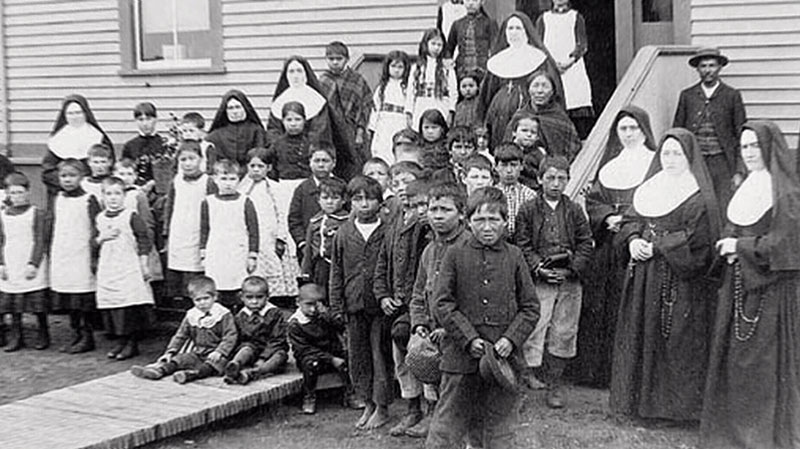
This simple fact explodes the myth of the residential schools. Attendance was not compulsory--even though school attendance was compulsory for non-native children. Had mistreatment occurred, or “cultural genocide” been on the table, parents could simply withdraw their children. The government, and the churches, were offering a service: education in useful trades, plus, in the case of the residential schools, free room and board.

Eventually, the truth will come out. But we will never be able to recover all the historic churches burned down, the statues pulled down, the heritage lost.


Saturday, May 24, 2025

History Should Not Be a Mystery


In 1984, George Orwell wrote, “Who controls the past controls the future. Who controls the present controls the past.” 

As so often, he was prophetic. There has been a systematic movement, in our schools and in the media, to suppress history. Things disappear down the memory hole. This allows those currently in power to control the future.

A clear and present example is the public opposition by some First Nations officials to Alberta’s talk of an independence referendum. They claim that Alberta cannot separate because they are sovereign over the land. Such things are purely their decision. If Danielle Smith doesn’t like it, she should just move off their land.

Grand Chief Greg Desjarlais of the Confederacy of Treaty Six First Nations stated that treaties, which encompass most of central Alberta, cannot be dismissed by separatist ambitions, declaring, “Our nations do not and will never consent to the separation of our treaty territories. These lands were never ceded, nor surrendered.” Chief Sheldon Sunshine of Sturgeon Lake Cree Nation and Chief Billy-Joe Tuccaro of Mikisew Cree Nation accused Premier Danielle Smith of breaching Treaties No. 6, 7, and 8, asserting that Alberta lacks authority to interfere with these agreements. They demanded she cease separatist rhetoric, stating, “The province has no authority to supersede or interfere with our Treaties, even indirectly by passing the buck to a ‘citizen’ referendum.” Chief Troy Knowlton of Piikani Nation emphasized that separation requires First Nations' consent, saying, “Alberta lacks the authority to interfere with or negate those Treaties. Proceeding down a path toward separation cannot be undertaken without the consent of Alberta’s First Nations.” Chief Roy Whitney of Tsuut’ina Nation warned, “The province has no authority to try and separate.”

This is false. In the plain language of the treaties, the Indians (the legal term) surrendered all sovereignty and property rights to the Crown, its heirs and assigns, in perpetuity. Should Alberta separate, the treaties are simply transferred to the government of Alberta as the king’s assign, just as earlier treaties with Britain were transferred to Canada when Canada separated.

According to the treaties, Indians/First Nations have no more say regarding the future of Alberta than any other citizens. As, of course, human equality and equal rights demands. Unfortunately, it is useful to the powers that be to perpetuate the myth that the First Nations, and aboriginal people generally, have some important residual right to control the land. This means those in power can pay off a small group to block the will of the people and leave them to do as they wish. In this case, of course, they do not want to lose control of Alberta’s mineral resources.

Other than their leaders being paid off, there is really no plausible reason for First Nations to object to Alberta separation. It does not affect them any more than any other citizen.

Those in power would not be able to get away with this if history was properly taught in high school. But when it comes to aboriginal matters, the real history has been systematically, almost hysterically suppressed. One must not bring up the fact, for example, that no mass graves of missing Indian students have actually been found on the grounds of the old residential schools—a claim that was outlandish on its face. It has come to the point at which one NDP Member of Parliament introduced a bill making any claim that the residential schools were not genocidal punishable by a prison term.

Examples of the memory hols and its consequences could readily be multiplied. We need to teach and study history.


Monday, May 19, 2025

Loyalist Day


Loyalist Day used to be an important annual celebration here in Saint John, New Brunswick. The city traces its founding to the summer of 1783 when 17 ships arrived from New York and Boston harbour, unloading the losers in the American Revolution. They found themselves on a small rocky peninsula, an island at high tide. There was nothing here but rocks and trees, and the winters were severe. That first winter, most built tents insulated by spruce boughs. Someone had to stay awake at all hours to keep the fire going. There was an average of one death each day among them.

Only two years later, they had a royal charter for the first official city in British North America. Saint John, as we know it, had begun.

But in recent years, the city has refused to fund any special activities to commemorate Loyalist Day, the day the first ships landed. The memorial plaque and stone marking where the Loyalists came ashore, was pulled up and abandoned in a quarry on the west side.

When local historians complained, they were told by city council, “We don’t care about those English people.” And someone remarked “I wonder what the native people thought, when they came to steal their land?”

I find this callous, racist, and willfully ignorant. The whole reason Canada exists apart from the United States, is loyalty to the crown and the British connection. If we reject that, if we reject the Loyalists, we reject Canada. And there is no good response to Trump’s proposal for assimilation.

The people who waded ashore that summer were not, of course, English. They were American. Even then, America was something of a melting pot. Among them were 500 freed blacks who had made it to the British lines, for Britain refused to recognize slavery. Although not among the group that landed at Saint John, a significant number were native people, notably the Iroquois of upstate New York. There were Dutch from New York, which had been New Amsterdam. There were many Germans, including discharged Hessian soldiers. There were Jews among the group that landed in Saint John; and of course Scots, Welsh, and Irish. Don’t ever tall a Scot or an Irishman he is English.

But ethnicity should not matter. People are people. Suffering people deserve our sympathy regardless of their skin colour or language or race, and brave people deserve our admiration regardless of where they were born.

Especially when we are their inheritors. This is a question of filial piety: honour thy father and thy mother. We owe them a lot. They laid out the streets, established our forms of government, our first social institutions, many of our sports and pastimes, our cuisine, our arts, our folkways; although of course other groups have contributed since. And the city and nation they bequeathed us is, most certainly, one of the finest we could hope for in this fallen world. Travel a bit and you will see. People want to move here from most other places.

As for the local native populations, the matter is complex. Groups and individuals fought on both sides during the American Revolution; as they had in the French and Indian Wars. They were not passive victims, but participants, in these conflicts. Some lost, just as some Europeans lost. 

Broadly speaking, however, European settlers did not steal their land, at least in Canada. Everything was done by treaty, in principle by mutual agreement and with compensation. And the end result: Canada is still 89% unsettled Crown Land—over which, by treaty, today’s native people are free to roam, hunt, and forage as they always did. Only eleven percent of their prior lands have been given over to settlement—and of course, native people have been as free as any other citizens to take up these lands too. They own that eleven percent still in the same sense all other Canadians do.

Back in the day, in 1783, the presence of the European settlers was generally welcomed. It granted the native people security in possession and use of their lands—before this, before treaties and redcoats, warfare was more or less constant. If you encountered a member of a different tribe in the forest, you feared violence. You feared violence at home in your sleep. The presence of Europeans, especially in a place like Saint John, at the mouth of a long river, offered opportunities for trade that made native groups located near a European settlement rich. It gave them military advantages over distant rivals: not just through alliance with the Europeans, but by trading for iron knives and hatchets, guns, horses. And perhaps most importantly, having Europeans nearby protected native people from the ever-present danger of famine: crops, crop storage, and ships arriving with cargo from overseas were far more reliable food sources than the rivers or forest.

Not such a bad deal.

I have not a drop of English blood, so far as I know. I do not believe any of my ancestors were UE Loyalists, But happy Loyalist Day.


Thursday, December 19, 2024

How Far We Have Come in our Treatment of the Indigenous Peoples


The traditional image of Tecumseh

One standard element of the wider myth of the North American Indian is the standard claim that, until recently, indigenous Canadians were despised and discriminated against. And they and their contribution was supposedly omitted from the history books.

As fate would have it, I inherited my grandmother’s high school history book, published by the Ontario Ministry of Education in 1914. Ontario High School History of Canada. Price 19 cents. So let’s have a look. Are the Indians left out? Are they treated with contempt as an inferior race?

The first chapter is about the land, the geography. But the second chapter is all about “The Aborigines.” Not “Indians”; “Aborigines.” “Indians,” it is explained, is a misnomer. Sounds pretty woke. 

They are described on introduction as “Men of good features and athletic build.” There is a detailed description of the various tribes or nations and where they lived at first contact. They are referred to a couple of times as “savages.” Our author does not hold the modern prejudice that all cultures must be considered equal on all points. But note, this is an issue of culture, not race. And he goes on to say that the Iroquois, however, “had done something … wonderful,” in forming the Iroquois Confederacy, “and had solved many of the most difficult questions of government.” “Each member of the tribe had great individual liberty.” “No state ever more fully realized Napoleon’s ideal of ‘a career open to talent.’” The author refers to their “political genius.”

That’s at worst, condemning the culture itself with loud praise. 

There may seem to be some criticism of their methods of war: “usually the only fate in store for the captive was torture and death.” But this is no more than a statement of historic fact, as recorded in all the contemporary accounts. And that sentence is immediately followed by this: “Yet, they did not disdain the arts of peace, and all the tribes had lifted themselves more or less above primitive barbarism.” 

Details are then given of Indian arts and culture. Things were done “with great skill”; “with real skill; “well-tilled fields.” The potlatch is praised as promoting hospitality. “To the Coast Indians the potlatch fulfilled the three objects performed for us by a dinner party, a general store, and a bank.”

To sum up, “Freedom marked the life of the Indian from his earliest days…. Nothing was done under compulsion.”

When it comes to Indian spirituality, there is some clear criticism. “His love of inflicting torture was only one sign that his nature was really nervous and hysterical. This we see clearly in his religion.” “Hysterical,” however, to this author, means it involved a lot of dancing and making noise. Presumably he would have the same problem with a Methodist tent meeting or Pentecostal service. This smacks of the Anglican unease with “religious enthusiasm.” A prejudice, perhaps, but not a racial one. 

Of the Inuit, treated separately, our author opines that under the influence of the Moravian missionaries, “They cast their cruelty and love of war aside, and became the peaceful race we know today.”

The story of the indigenous people is then woven through the following two chapters, on the European discovers and the early years of New France: the war between the French/Huron/Algonquin alliance and the Iroquois is described. 

Chapter Five is again wholly about the Indians, “Missionaries and Indians.” The aim of the missionaries, it is explained, “was to establish a native Christianity. They learned the language of their flocks, and made little or no attempt to teach them French. …In order to preserve their flocks from the many vices of European culture,  “They wished to keep their Indian charges in absolute seclusion from all white influence save their own.” So much for the modern claim that the intent was to impose European culture and assimilate the Indians. But this is the historical reality, borne out by the extensive Jesuit Relations.

In subsequent chapters, Iroquois are featured in the “Half Century of Conflict” between England and France. “Renewed Iroquois Attacks” on New France; “The Massacre of Lachine”; “The Three War Parties.” 

A chapter or two later, we read of “Pontiac’s War,” which was “a struggle against the white invader.” No guilt is attributed to the Indians for the uprising.

A chapter on the War of 1812 tells of Tecumseh, “a brave and chivalrous warrior and a far-seeing statesman.” The Indian role in that war and in its significant battles is covered.

The tale of the Red River Rebellion and North West Rebellion are told in terms sympathetic to Riel and the “half-breed” rebels. It was all down to insensitivity and blunders by the federal government. “It would have been better to give them want they wanted than to drive them into rebellion. Others of their requests, such as those for schools and hospitals, were still more reasonable.”

In sum, while a few of the terms used would, for arbitrary reasons, be considered politi9cally incorrect in acurrent text, the indigenous people are fully reported on and treated sympathetically.  When they clash with Europeans, the story is generally told from the indigenous point of view.

Canadians, and Americans, have always loved Indians, and have always been inclined to give them special treatment.


Tuesday, July 09, 2024

The Statue of Aboriginality


In 1909, there was a serious proposal to build a monument to the American Indian in New York Harbour, fifteen feet higher than the Statue of Liberty. It was serious enough that construction began; with much public support. It ultimately fizzled out when WWI came, causing a bronze shortage. 

I mention this because it shows how fallacious the idea is that American Indians have been historically discriminated against. The truth is the exact reverse: they have always been idealized and idolized. But this has not been good for them. It is rather like what happens when you spoil a child: they become dependent.

It is true that, in the US, encroaching settlement made their traditional way of life obsolete. This has never been true in Canada—only a small  fraction of the actual land mass or hunting area has ever been settled. But even in the case of the US, they face a common dilemma: there is no call for coopers or blacksmiths or telegraph operators any more either. One retrains.


Tuesday, May 14, 2024

Land Acknowledgements


It seems most public gatherings in Canada now open with a “land acknowledgement.” Here are two that showed up recently in my email, prefacing messages:

“The Writers’ Federation of New Brunswick acknowledges that the land on which we live, work and gather is the traditional unceded territory of the Wolastoqiyik (Maliseet) and Mi’kmaq Peoples, and we honour the spirit of our ancestors’ Treaties of Peace and Friendship.”

“I respectfully and humbly acknowledge that I live and create on land traditionally inhabited and traversed for centuries by the Piikani, Siksika, Kainai, Tsuut'ina and Nakota peoples, their antecedents and their descendants.”

I understand this is also common in Australia; but not in the US.

I find these “land acknowledgements” offensive and ahistorical. I must always bite my tongue. I fear that, sooner or later, I will myself be forced to read one out, violating my conscience.

They are racist. They assert some special privilege for one racial group over others. That’s especially harmful in a multi-ethnic nation like Canada. They further imply a ruling class, an atistocracy by right of birth. We should all be equal, and advance on merit.

If the point is merely to recall the history of the place, how can they, in the case of New Brunswick, exclude mention of the Acadiens, or the French and British crowns, both of which also declared this their territory at different times.

Is it the claim that the territory was never ceded that makes a difference? 

Granted, the French and British did formally cede their claims to sovereignty by treaty. But so did the indigenous groups: in the same way, by treaty. 

Is the claim that sovereignty was ceded, but not the land itself? That the indigenous groups still  hold property rights, as individual Acadiens might still own their farms under Canadian or British sovereignty? 

But wait. Notice that multiple groups always need to be mentioned. This is because no one aboriginal group had secure possession of any territory; each might pass through. Accordingly, for none of them was it ever “their” land in the legal sense: property ownership requires secure possession, not merely passing through a place, even at regular intervals. Hence the legal doctrine of “squatter’s rights.” 

In fact, the land acknowledgements are inevitably discriminatory among indigenous groups themselves. In the NB acknowledgement, the Passamaquoddy are not mentioned: they too claim NB land as their traditional homeland. There were Iroquois in the Rocky Mountain foothills; yet the Alberta acknowledgement ignores them. Members of almost any tribe might have been almost anywhere at any given time. You can’t tell whom you should name.

Is it about who was here first? We do not know who was here first. All we know is that the named indigenous groups were the ones here at first contact with Europeans. That is an arbitrary point in time. Go back a few centuries further, and we have no idea who was here. We know that indigenous groups moved, expanded, contracted, and disappeared continually. They were, after all, nomadic.

And if being here before some other group establishes special rights or privileges, how does that work for more recent immigrants? Should those of English ancestry be shown similar deference by Italians or Hispanics? And is that second-class or third-class status eternal, generation after generation?


Stop it, Canada.


Wednesday, April 03, 2024

Cornwallis


In Halifax, they are busily erasing all traces of their founder, Lord Charles Cornwallis. The rap against him is that he put a bounty on local Indians, payable on submission of either the Indian or his scalp. So he is responsible for genocide.

Except that this was in time of war. In a war, it is rather part of the process to kill enemy soldiers. The bounty was supposed to be payable only for killing or capturing Indian warriors. If the means of mustering men to arms was irregular, this was a guerilla war, with no front lines, in a sparsely-settled territory. Every man might need to defend his home. 

It is also worth noting that the Indians initiated the conflict, in violation of treaties; and that the French at Louisburg were offering bounties for British scalps. 

So if Cornwallis is unmentionable, despite his accomplishments, for such an edict, surely so is, say, Sir Robert Borden, given that Canada used poison gas in World War I in response to German use. In war, if your enemy starts using some irregular or unethical means of combat, you must respond in kind or simply surrender.

But the real reason Cornwallis, with so many others, is being erased, is because of the unworthy human instinct for envy. The great are resented by the small for their accomplishments. For every Kennedy, there are a hundred Oswalds.


Saturday, March 23, 2024

The Real Genocide


In a recent article, unfortunately behind a paywall, Greg Piasetzki, himself legally considered Metis, writes for the Epoch Times that a federal government commission back in 1944, and again in 1948, wanted to close the Indian residential schools. “Wherever and whenever possible Indian children should be educated in association with other children.”

The federal government had never wanted the schools: they were expensive. They were, in the first place, required by treaty. The Indians wanted them. Since some Indian families were transient, and some loving in extremely remote locations, boarding was often necessary.

However, they soon realized they could not close the schools for an additional reason—because too many Indian children had nowhere else to go. The residential schools were in effect orphanages for kids whose parents were unable or unwilling to care for them. “A census taken by Indian Affairs in 1953 found that 43 percent of the 10,112 indigenous children in residential schools nationwide were listed as neglected or living in homes that were unfit because of parental problems.” For others, their parents could not feed them as well as the schools would. The Truth and Reconciliation report cites this as a consideration: if the schools did not feed the children better than at home, the parents would not send them.

The Epoch Times article also notes that there was no drive to force Indian families to send their children to a residential school. School attendance became compulsory for non-native children in Ontario in 1871. It became compulsory for Indian children only in 1920, and even then the law was rarely enforced. “About half of all students who attended between the 1880s and 1950s dropped out after Grade 1, and few students made it as far as Grade 5.” Obviously, they were not being compelled to attend, and if they or their families did not find conditions satisfactory, they left. Those who stayed were largely those who had no place else to go.

The Epoch Times traces the problems of the Indian family to alcoholism and fetal alcohol syndrome (FASD), which the recent Truth and Reconciliation Commission Report admits is still an epidemic on reserves. “Studies suggest FASD occurs among indigenous children on and off reserves at rates between 10 and 100 times greater than in the rest of Canada.” “Tragically, these problems follow them into adult life and are reflected in high rates of family violence (including spousal and sexual abuse), suicide, and addiction, and often repeat down through subsequent generations.”

Alcoholism is not the real problem, though. It is a symptom. This is due to a general collapse of morale, a shared depression due to culture shock. Charles Darwin recognized in the nineteenth century that whenever Europeans came into contact with a significantly more primitive culture, the primitive culture tends to collapse into a sense of pointlessness, very much like depression on an individual level. Men stopped working; women stopped looking after the children.

The cure, as everyone knows who has gone through culture shock, is to get out there and assimilate. Learn what your new surroundings have to offer. This is now being discouraged as “cultural genocide.” And the, better, ultimate cure is to get a new grounding in the eternal verities and the ultimate purpose of life. In other words, to get religion. And this option too is being systematically removed from the reserves and from modern Indian life, with churches actually being burned down.

In order to shut down the residential schools, officials turned to adoption for at-risk Indian children: the “Sixties scoop.” This is now condemned as another attempt at “cultural genocide.” Still today, “Nationwide, according to the 2021 Census, native children under 14 account for 53.8 percent of children in care, despite representing less than 8 percent of children that age in Canada.” They are simply now no longer adopted, but must remain in long-term care.

And we pretend to wonder why there are suicide pacts among young people on reserves. And why there are so many “missing and murdered (young) indigenous women.”

We have systematically prevented and then punished any efforts to help them.


Saturday, December 02, 2023

Get "Playing the Indian Card" at a Bargain Price


I’m excited to announce my book, Playing the Indian Card, will be promoted on @Smashwords as part of their End of Year Sale starting on December 15th! Be sure to follow me for more updates and links to the promotion for my books and many more! #SmashwordsEoYSale

Playing the Indian Card (smashwords.com)


Thursday, November 30, 2023

Indian Identity


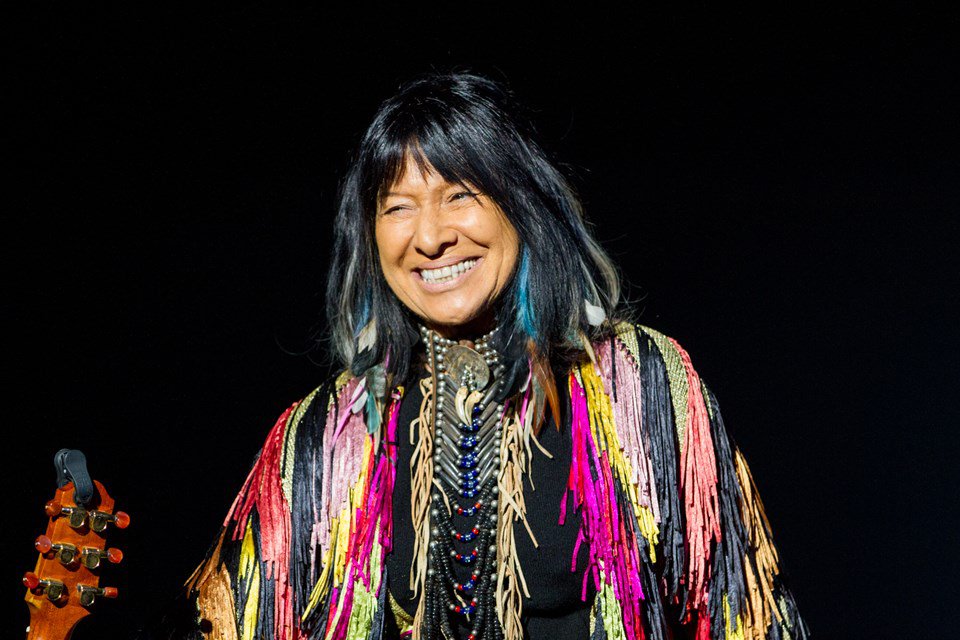
The leader of the Piapot Natin has called on Buffy Sainte-Marie to take a DNA test to see if she really is or is not an Indian. Although she has had contact with that nation for many years.

Question: if you can't tell whether someone is an Indian by looking at them, an you can't tell someone is an Indian by talking to them, how is it possible to discriminate against Indians? You can still discriminate in their favour, yes, but not against. They could always just deny their ethnicity.


Sunday, October 29, 2023

Vampire the Buffy Slayer


An officially “indigenous” commentator is excoriating the CBC for breaking the news that Buffy Sainte-Marie is not indigenous. This, he or she (they claim to be “two-spirit”) argues, violates the obligation of all non-Indians towards reconciliation, because it traumatizes aboriginal people. 

It is not entirely clear what the CBC should have done instead; the author seems to say that aboriginals should have been given more time to digest the news. 

How do you report the news more slowly? Note the meaning of the word “news.” 

Leaving aside the implied assumption that Indians are helpless forest creatures unable to look after themselves or deal with the real world, necessarily, what both spirits really meant is that the CBC should have kept it secret. In other words, suppress rather than report the news.

This seems an unreasonable deman.

I think the real reason some indigenous people are upset is that the Buffy Sainte-Marie story, following so closely after the revelation that there were no mass graves at residential schools, is getting dangerously close to exposing the whole “First Nations” and “reconciliation” industry as a fraud.


Thursday, October 26, 2023

Playing the Indian Card


A lot of famous Indians turn out not to be. Grey Owl; Iron Eyes Cody; Elizabeth Warren; Sacheen Littlefeather, the “Indian” who rejected Brando’s Oscar.

And Buffy Sainte-Marie?

A current CBC investigation points out that she cannot establish Indian ancestry. She was raised in a rather unexotic adoptive middle-class home in Maine. And they did not know who her real parents were. They might have been Sicilian, or Lebanese, or Sephardic Jews, for all anyone knows.

She looks Indian to me; but does it matter what her genetics are? She had the same upbringing, the same cultural influences, as any “white” child growing up in North America in the forties and fifties. She is ethnically simply American.

The broader point: any pretense that North American Indians, “First Nations,” have a distinct and separate culture is a romantic fantasy. “Indians” get what knowledge they have of traditional “Indian” culture the same place the rest of us get it: from movies, TV, comic book and dime novels. If they are more learned, from the accounts of missionaries.


And “Indians” have never been discriminated against. It was essential to Sainte-Marie’ career success to play the Indian card. She sold herself, in her own words, as “Pocahontas”; and the public loved it. Following in the footsteps of the performers in Buffalo Bill’s Wild West shows, and the Kickapoo Medicine shows; of Grey Owl, Pauline Johnson, and many another performer in buckskin. The general public of North America loves Indians, has always loved Indians, wants to cheer for them—which is why Indian references are popular names for sports teams—and will always give them the benefit of the doubt.

That said, to be clear: Buffy Sainte-Marie deserves every bit of her fame, and more. I don’t deride her marketing tactics, any more than I scorn Elvis Presley for performing in white jumpsuits with sequins. I’m proud she is an Indian like me.