Playing the Indian Card

Showing posts with label CanLit. Show all posts

Saturday, January 21, 2023

The Politics of Poetry


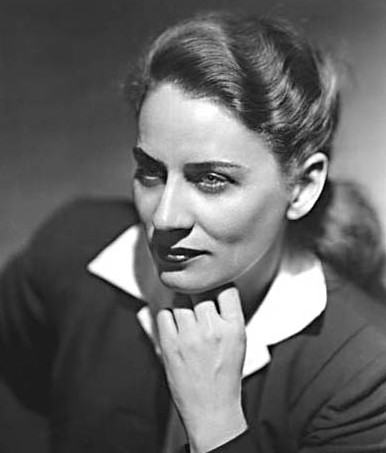
Pauline Johnson in recital

Scouting publishers to whom to submit a poetry manuscript, I note that almost all, in their submission guidelines, include a phrase similar to the following:

“[we] also encourage poets from the LGBT community, Indigenous and racialized poets, as well as poets with disabilities.”

This almost looks like boilerplate.

Properly, this is against the law. And it is immoral. This is discrimination on prohibited grounds of unalterable characteristics. Unfortunately, as Jordan Peterson has said recently, the Canadian Charter of Rights and Freedoms has become a bitter joke. Governments and courts in Canada treat it with contempt.

The official justification for this discrimination is that these groups are “historically underrepresented communities,” to quote from one other example of boilerplate.

If these groups are historically underrepresented, they are obviously being overrepresented now. Everyone wants their manuscripts. 

Producing a rather boring sameness for readers. So much for diversity.

Is it even true that they have been “historically” underrepresented? 

As to “racialized” poets, that is, poets with skin colours other than pink, until the expansion of the British Empire in the nineteenth century, and indeed until some years after that, there would have been rather few “racialized” folk who spoke English fluently. Were they really underrepresented in the English literature and publishing of the 19th and 20th centuries in proportion to their actual numbers? That is not obvious. That case must be made. Rabindranath Tagore, writing in English, took the Nobel Prize for Literature in 1913. The US had the Harlem Renaissance. 

There is an automatic reader interest in the exotic. Contrary to what leftists insist, people do not want to read about their own boring lives, but about lives different from their own. Witness Star Wars, or Gulliver’s Travels. As a result, anything purportedly written by someone from another culture has always had an advantage in getting published. In the 19th century, the Rubaiyat of Omar Khayyam made quite a splash even in translation.

As to indigenous poets, again, there has always been an advantage, that of exoticism. There is reason to believe they have been historically overrepresented, not underrepresented, in proportion to their population. Pauline Johnson made a splash in her day by reciting in supposedly Indian costume, and claiming to be an Indian princess. I have found imitators, less well remembered, on Internet Archive. Archie Belaney called himself “Grey Owl” and pretended to be aboriginal in order to have a literary career.

And were the LGBT community ever underrepresented? We cannot really know, because few would have been out of the closet back when sodomy was a crime; but gays themselves regularly claim that almost every prominent author of the past was actually gay. That’s impressive, given that they were only 1-3% of the population.

Perhaps the issue is that specifically gay concerns were not aired. That may be so; but necessarily, specifically gay concerns are only of much interest to about 1-3% of the population. So there’s that. 

Were those with disabilities underrepresented until recently?

Like, say, Milton, who was blind? Cervantes, who had lost the use of one arm? 

Does depression count? Almost every decent poet suffers from depression, according to surveys done at the Iowa Writers’ Workshop. At a minimum, those suffering from mental illness are certainly overrepresented among successful poets; and always have been. After all, Aristotle comments on this over two thousand years ago.

Another group that used to be favoured in the same way in publishers’ calls for submissions, but from whom favour has recently been withdrawn, is white women. It certainly used to be claimed that they were historically underrepresented. 

This too was probably wrong. Female poets were common in the 19th century. Like homosexuals, women had the advantage over men, in the old days, of not having to support a family. As a result, they were more often able to turn their attention to less lucrative pursuits, like poetry.

So what’s behind this fiction that these groups are underrepresented? Indeed, that historically overrepresented groups are underrepresented?

Is it ignorance, or conscious prejudice? Does everyone else hate straight white men just as everyone used to hate the Jews? Indeed, used to hate the Jews as “overrepresented.” 

The one group that actually is historically underrepresented in poetry is Canadians. That is, in the sense that Canada, as a young country, has not had enough of its geography and culture consecrated by poetry. As a result, we all live drabber and uglier lives than we should.

If we publish poets who focus only on LGBT issues, or black issues, or Asian issues, or issues faced by aboriginals, or the disabled, we are, at the same time, withholding poetry from the majority of Canadians.

It is a philistine move.

It also explains why poetry is far less popular than it used to be in Canada. It has deliberately stopped speaking to Canadians.


Sunday, June 20, 2021

A Quickie CanLit Canon


A Kiwi friend has asked me what the essential canon of Canadian literature is, for the sake of teaching a Chinese high schooler.

These are the pillars of Canadian literature, which are the foundation for everything else. 

1. Lucy Maud Montgomery, Anne of Green Gables. The character of Anne reappears constantly in Canadian literature. And this book established children’s literature as the most Canadian genre.

2. Stephen Leacock, Sunshine Sketches of a Little Town. This established humour as the essential Canadian tone. And, with Anne, the small town as the essential Canadian setting.

3. Robert W. Service, Songs of a Sourdough. Especially the two poems “The Shooting of Dan McGrew” and “The Cremation of Sam McGee.” The essential Canadian experience of the north, and the theme of survival in the face of an overwhelming climate and geography. And a focus on ordinary working people and their problems. Canadian culture is a folk culture, not “high art.” 

4. John McCrae, “In Flanders Fields.” The First World War was Canada’s coming of age.

5. Roch Carrier, “The Hockey Sweater,” aka “The Sweater.” Although more recent than other selections, a universally beloved, lighthearted analysis of Canada’s culturally binary nature.

Not that much to read, and not hard reading, but this is what anyone needs to understand Canadian literature.

Other important books worth considering, if and when you get through these:

Al Purdy, “The Country North of Belleville.” That one contains a lot of the Canadian experience.

Mordecai Richler, The Apprenticeship of Duddy Kravitz. Richler’s short story “The Street” would be a good shorter alternative. The essential Canadian immigrant experience.

Gabrielle Roy, The Tin Flute.

W.O. Mitchell, Who Has Seen the Wind?

Brian Moore, The Luck of Ginger Coffey.

Alice Munro is a good choice too. First Canadian to win the Nobel for Literature, and her “small town gothic” is a deep expression of the Canadian soul.


Friday, May 15, 2020

Leacock


Mr. Smith in front of Smith's Hotel

When I was a kid, I was crazy about Stephen Leacock. I borrowed and read every book they had by him at the Fraser-Hickson Library. They were in the adult section, so I had to smuggle them out using my mother’s library card. 

I recently re-read some of his stuff. No, it was not as funny as I remembered. I found the beginning of his “My Discovery of England” still laugh-out-loud funny. Sunshine Sketches is still wonderful. But a lot of the rest seemed a swing and a miss.

When I was a kid, I also thought Wayne and Schuster were brilliant. But when I see their stuff on YouTube now, they’re mostly not good at all. Corny. Hammy.

The problem is that comedy relies on a reversal of expectations. It requires surprise. This makes it more easily and quickly dated than other forms. Everything that is really good is going to look corny in a few years, because you heard it before, and because, if it is really good, it has been imitated. And so there is no longer any reversal of expectations.

There have to be periodic revolutions in humour to overcome this. Leacock looks stiff and predictable post-Python.

A friend complains that Leacock uses too many American references; as though he’s pandering for the wider audience.

I don’t have any problems with Leacock’s American references, and I don’t think he was selling out. There is a lot of that in My Discovery of England, and he was not writing for an American audience, but a British one. The truth is, we ARE Americans, indistinguishable from other North Americans to Europeans or Asians or South Americans, barely distinguishable to Yanks. It is artificial to ignore the similarities and stress the differences. I like Neil Young’s attitude, in his album “Americana.” Which he ends with “God Save the Queen.” We are British North America. This is the cultural background we legitimately grew up with, mostly the same as the US, cowboys and Indians and the frontier and the gold rush, with a few more things on top.

One thing we share with our southern neighbours is a heritage of innumerable small towns. But here Leacock illustrates the vital difference. I’ve read the classic US small town novels: Lewis’s Main Street and Anderson’s Winesberg, Ohio. Very unlike Leacock’s Mariposa. The Mi-guk literary small town is a place of despair, a place you feel trapped and alienated, a dead end. The Canadian small town is remembered fondly, as real life as it ought to be lived; in Sunshine Sketches, in Munro’s short stories, in Anne’s Avonlea. The city is the place of exile.

Have you ever read Al Purdy’s “The Country North of Belleville”?


Friday, March 08, 2019

Canadian Culture


Anne attacks Gilbert.

Canadian culture is fundamentally unserious.

Seriously.

Humor and kidlit are the two Canadian specialties. There is a reason for this.

It has to do with our democratic instincts. You start getting serious about things, and the Canadian instinct is to say “Get off your high horse!”

I recall that the rather good British 1960s series The Avengers tried to reboot as a British-Canadian co-production, featuring the intrepid Bond-like agents of Interpol operating from the environs of Toronto.

Perhaps it played well to a UK audience, but to a Canadian, it was unintentionally wildly comic. High intrigue in Mariposa? Get off your high horse!

Canadian culture is always about ordinary people in their ordinary lives, for the good and simple reason that this is all that really matters. Anything else is comic in its pretension.

And the most important events in life, as any sane person knows, take place in childhood.


Tuesday, May 16, 2017

A Hundred Solitudes


Gabrielle Roy

Amid all the current fuss over cultural appropriation, there is a blatant case of cultural appropriation happening right now in Ontario Schools. And it is getting worse.

According to the National Post, Grade Eleven students in the Lambton Kent School Board are all being required to take an English course focusing on aboriginal writers only.

I protest this imperialist exploitation!

Obviously, for most of these kids, Indian culture is not their own culture. So, by the logic of the day, they have no right to these books.

But then again, if we ask aboriginal students to read books written by non-aboriginals, of for that matter to write in French or English, it is also not cultural appropriation.

Instead, they are being subjected to cultural genocide.

Yet it is not cultural genocide if the books are Indian, and the students not.

If there is logic here, rather than pure prejudice, it escapes me.

The local authorities, of course, make their case.

Why, the authorities argue, should Ontario kids be studying Shakespeare?

“Hey, I love Lord of the Flies. I love Shakespeare,” Sherman said. “But really, we’re talking about 15th century Veronese landlords (Romeo and Juliet) or something like that. Does that resonate with Canadian kids? Or the British schoolboy class structure?”

So, by that logic, does it occur to you as well that what they should be reading, what they can truly relate to, is Canadian Indian novels?

Isn’t there another, more obvious, option?

Have they never heard of Canadian literature?

Not, I suppose, if they to have gone to Canadian schools.

I recently came across a discussion thread in which fellow Canadians found they could not name an actual Canadian book that they had studied in high school.

Me neither.

It may have changed recently, but when I went through, we got some Canadian poems, some Canadian short stories, but nothing so long as a novel.

As a result, I fear, the typical Canadian thinks and knows too little of Canadian culture. I think a lot of us were shocked when Alice Monroe won the Nobel Prize. Alice Monroe? Have foreigners heard of her? Do foreigners actually read her? Who the heck is she, anyway?

This strikes me as a spectacular failing on the part of Canadian governments. In what other country is the literature better known by foreigners than by the locals? It is as though Canada’s governments are deliberately undermining both Canadian culture and Canadians’ sense of being a nation.

It is the duty of a government, and of public schools, to promote national unity and a sense of national identity. That is what government schools are there for: to imbue good citizenship.

For as long as anyone can remember, Canadian governments have actually been doing the reverse. Most Canadians grow up with a sense that there is no Canadian culture. And none other than the current Canadian prime minister has actually made this claim.

If a Canadian kid wants to be a writer, in turn, he is given no models. He or she grows up, as I did, believing literature is something that happens only elsewhere.

This leads to a reflection: what books should be taught in Canadian high schools? What are the essential chronicles of the Canadian experience?

Obviously, not Canadian Indian literature, as such, and only Canadian Indian literature. This is the colonial mentality perpetuated: now, instead of being colonized by the British and Americans, we who are not Indian—the vast majority of Canadians-- get to be colonized by the Indians. No improvement.

As of the 2011 census, 4.17% of Canadians saw themselves as of native ancestry. More said English, French, Irish, Scottish, German, Italian, or Chinese. The largest group, bless them, said Canadian. The native population in Ontario, where these schools are, is even smaller. And, we are often told, different native cultures are not interchangeable: an Iroquois has no more in common with a Cree than an Italian does with a Finn. So virtually nobody here is reading about their own culture.

Recent Canadian literature has been caught up in the same Canadaphobia. Instead of presenting something universally Canadian it tends to focus on some other cultural group, portraying it as separate or even alienated from the Canadian mainstream. Case in point: Canadian Indian literature, presented and considered as a separate entity. Hardly a way to built Canadian identity and solidarity.

The books studied in Canadian schools should promote Canadian unity. This does the exact opposite.

This does not mean the novels chosen should ignore the experience of minorities. The Canadian experience is largely the immigrant experience. But said minority experiences ought to be about the attempt to integrate, not to separate.

I have a few suggestions:

Sunshine Sketches of a Little Town

Anne of Green Gables

The Tin Flute

The Wars

The Apprenticeship of Duddy Kravitz

The Luck of Ginger Coffey

Fifth Business

Roughing It in the Bush

Two Solitudes

Who Has Seen the Wind?


The reader may have others.

It is time we started thinking, and writing, for ourselves.