Playing the Indian Card

Showing posts with label Barack Obama. Show all posts

Thursday, November 14, 2013

The Trudeau Meltdown

The current meltdown of press and media respect for Justin Trudeau has everything, I think, to do with the current meltdown of press and media respect for Barack Obama in the US. Canadian politics has a persistent tendency to follow US politics at a lag of 5-7 years. The US got Roosevelt, so we got King. The US got Eisenhower, so we got Diefenbaker. The US got Kennedy, so we got Trudeau. And so forth.

Justin rose as an Obama-like figure. But during the time lag, Canadians have the opportunity for second thoughts if the new phenomenon south of the border does not turn out so well. Canada never went for a Carter or a Nixon.

It looks to me as though Obama's tanking is going to kill the Trudeau boom before the next election.

Saturday, October 06, 2012

You Read it Here First

Now other commentators are beginning to twig to what we've been saying for some time--Obama doesn't really want to be president any longer.

No doubt they've all been reading Od's Blog.

Friday, September 21, 2012

"You Can't Change Washington from the Inside"

Official White House photo (hence public domain): Obama interviews Captain Kidd.

“You can't change Washington from the inside.”

This was Obama's comment in his recent interview with Univision—and isn't it a remarkable thing for him to say? After all, he was elected four years ago on the promise of “Change.”

It sounds a bit like sour grapes. As if he expects to lose this election, and is telling himself and his followers that he can do more good outside Washington.

Indeed, here is a recent story claiming that Obama's internal polls show him losing, and that his backers have already picked out a nice retirement home in Hawaii for him, Michelle, and the kids, ready for occupancy in January, 2013.

Can it be true? It sounds improbable on the face of it. The polls generally show Obama slightly ahead, and doing better than Romney in the electoral college vote.

Right-wing partisans point to an apparent over-sampling of Democrats, and claim the polls are rigged in Obama's favour. As here.

But aren't pollsters who do public political polls largely advertising their wares for corporate clients? If their polls turn out tobe wrong, isn't that lousy advertising? Don't they have a vested interest in getting it right? Sure—but what they could do is skew the numbers now, and correct them for the last few pollings just before the election, so that they look okay when the reality check comes due.

But this still assumes the existence of something like a left-wing conspiracy among pollsters.

If you check the betting market, the odds there still favour Obama; and these futures markets tend to be pretty accurate. Why? Because if anyone has any inside information, there is a huge incentive to put a lot of money against the spread. And so the spread will close.

The spread in favour of Obama is growing.

In any case, it seems senseless for either Obama or Romney to toss in the towel with six weeks to go. As someone once rightly said, a week is a long time in politics. Nobody can possibly have it won or lost at this point.

I think the explanation for Obama's unscripted comment and new home in Hawaii lie elsewhere. I think they are further evidence of something I have suspected for some time, and noted here. Obama may not really want to be president any longer.

People who are not president apparently find this so improbable that they never consider it. But it seems to me the most healthy reaction to the job. Calvin Coolidge, for one, was sensible enough to walk away from the job.

Don't you, too, just feel this to be true of Obama? Isn't this why Eastwood's empty chair image strikes home? Isn't this why Obama is avoiding the tough interviews and the tough meetings in favour of posing with someone in a pirate suit to mark “Talk Like a Pirate Day”? Sure, it might be good strategy—making Obama look folksy to contrast with Romney's stiffness. Or it may be that Obama is sick of the stress and strain of being president, and his handlers feel he needs to relax.

This, in turn, could indeed mean that he loses. His backers may fear that he won't put in the necessary effort to win the crucial upcoming debates. They may fear that, in a serious interview or unscripted speech, he may say something revealing, because he consciously or semi-consciously wants to lose. Something, indeed, like “You can't change Washington from inside.”

But, win or lose, they may have had to do something for the presidential morale to keep him focused on the race. Something like promising him, at the end of the tunnel, a nice, quiet retirement in Hawaii. And even buying him the mansion now, so he knows it's real. A retirement in Hawaii, note, not in Chicago. This suggests a retirement of playing golf and walking the beach, not one of corporate lawyering or sitting on boards in Chicago. His fantasy, if all this is true, looks more like perfect rest.

It's the fantasy of an exhausted man.

Saturday, September 08, 2012

Does Obama Want to be President?


Most commentators seem to think Obama’s acceptance speech was underwhelming. This is surprising, and interesting, because Obama’s reputation is built above all on his skills as an orator.

Which makes me wonder: does Obama still want to be president?

It almost goes without saying that at some level he does not; otherwise he could have generated more enthusiasm, more of his special skills, for this speech. It is in the end the only possible hypothesis here.

This is not surprising, given the stresses of the presidency. And it has happened before. Just last cycle, a lot of people complained of John McCain that he was not ready to do what it took to get elected. Others made the same complaint, in the primaries, about Fred Thompson. The same has been said in the past of Ted Kennedy, running against Jimmy Carter; Bob Dole, running against Bill Clinton; Bill Bradley, running against Al Gore. Candidates and politicians can lack enthusiasm for the job, just like anyone else.

Obama does not really have the personality to enjoy politics over the long term. You need to be the perfect extravert, always ready to chat up a stranger. You have to enjoy schmoozing, and cutting deals. Obama is not that type at all, as confirmed by many rumours around Washington, and now by Bob Woodward’s new book, The Price of Politics. He is not a natural negotiator, and he needs a lot of time to himself. His choice of Joe Biden, the ultimate ward pol (and not the more obvious choice, Hilary Clinton), as running mate may reflect his own awareness of his weakness in this regard.

Of course, given the chance to be America’s first black president, he was able to muster the enthusiasm he needed. But for a second term? The emotional payoff may no longer be sufficient. He has even stated, publicly, that he would not mind being a one-term president, if he got the right things done. If he loses now, his legacy is secure: he will always be the first black president. He will always be the one who gave the US universal health care, something presidents have been trying to do, and failing to do, since Nixon. He will always be the president who got Osama Bin Laden, and the president who ended the war in Iraq. In a second term, he probably faces a Republican-dominated congress, a bad economy, and an intractable debt problem, a “fiscal cliff”; frustrations are likely to multiply and accomplishments will not be so easy to come by.

Those around him, and the party, will of course have been pressuring him heavily all along to stay on; it is the done thing. Incumbency is not something to give up lightly. Now—at the moment of accepting the nomination—it is really too late to change his mind. Although it was really too late at least a year ago; he needed to give any successor proper notice to gear up a campaign.

An awareness that Obama’s heart is not really in it may explain the odd sense of panic that seems to be emanating from the Democratic campaign, which does not make sense based on either the polls or the electoral college vote. They may be worried, not only about Obama’s performance in speeches like this, but in the upcoming candidate debates. They have been trying to make the campaign about Romney and Ryan. This does not make much sense in a re-election campaign, but it may make some instinctive sense if you want to move the spotlight off your candidate. They may also fear Obama going off-script and his frustrations showing through.

The decision to move the acceptance speech from Panther/Bank of America stadium to a smaller venue suggests the organizers themselves feared the speech would not be very strong (although, of course, there are other possible reasons). The foul-up over the platform suggests again that Obama was, in the first place, not engaged, and in the second, not entirely prepared to be a team player. He had not taken an active interest in the platform to begin with, and, once a problem was suggested, he demanded changes overruling both the platform committee and the convention.


The happy golfer.

He was looking for excuses, perhaps, not to try.

All pure speculation, of course. God knows what chaos might be going on behind the scenes in the Obama campaign. I don’t.

Tuesday, August 28, 2012

Is Obama Throwing It Away?


Here it is, almost 24 hours later, and the Romney-Ryan momentum seems to be holding. Another thought as to why: perhaps Obama has damaged his own vital likability factor by telling too many whoppers recently about the opposition. These tactics, of course, call his personal ethics into question, and that matters. Because of his background, he is in danger of recasting himself as a Chicago machine-style pol. But, perhaps more importantly, they speak of contempt for the average voter; of an assumption that we can all be manipulated, lied to without being smart enough to know different.

Richard J. Daley Sr., the archetypal Chicago politician. Last machine in America. 


A modern spiritual heir.


Obama has always appeared at least a little contemptuous and elitist. His speaking style somehow implies it; he does not appear to feel what he says. There was his “clinging to their guns and religion” comment in 2008. He has made suspicion on that score worse with his “you didn’t build that” comment earlier this summer. People don’t like being talked down to.


And who can hear the world "Chicago" without thinking of ...

More, his 2008 “Hope and Change” campaign, in being ridiculously over the top in what it seemed to promise—“this is the day the oceans stopped rising…”—almost demanded a cynical reaction now. Just as George Bush Sr.’s “no new taxes” and Carter’s “I’ll never lie to you,” while winning strategies in one election, led to an inevitable backlash in the next. I have a friend, quite to the left politically in general, who mentioned in passing yesterday that, while he supported Obama enthusiastically last time, he would never vote for him now—because he felt he had been swindled.


"Read my lips. Hope you can't recognize the 'f' sound."


"I'll never lie to you. Sucker."

So the Democratic campaign takes big risks now by doing anything that looks clever, manipulative, or cynical. And they are blind to it—they are acting very clever, manipulative, and cynical. They are killing Obama's winning card, his likability.

Granted, Romney is not the ideal candidate to run against Obama on this score. He too seems remote from the everyday guy, God knows, unfeeling, and he has been ruthless and unprincipled in his politics throughout the primaries, both this time and four years ago. But what might do it for him is having previous Obama voters stay home in disillusionment, rather than switching their vote to Romney.

Moreover, Ryan, and the selection of Ryan, may have helped Romney out a lot on that score. It now looks as though he really does have a principled reason for wanting to be president, and an actual programme. Ryan, if not Romney, seems terribly sincere. If Ryan stays prominent in the campaign, it could make the difference.

Friday, February 17, 2012

A Bitter Pill

The Jewelled Gates of the New Jerusalem.


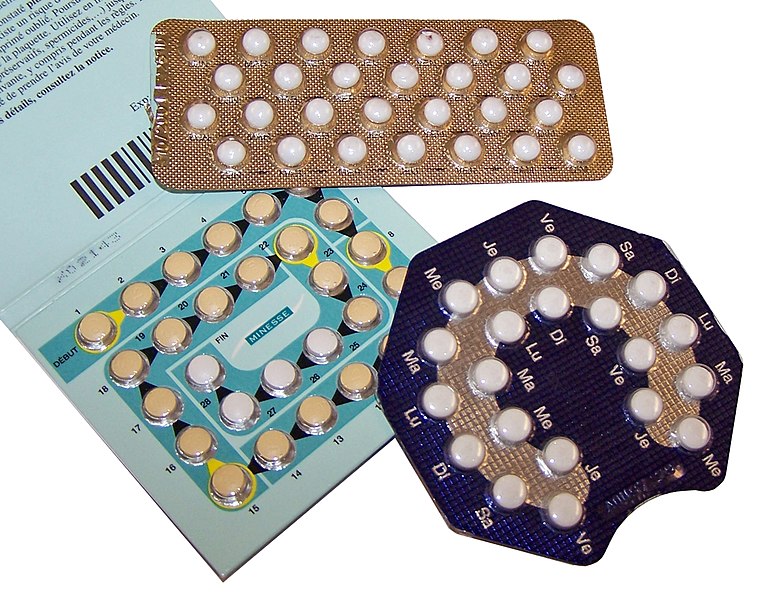
I am amazed by the sheer folly of the Obama administration's requirement for religious organizations to provide medical insurance for their employees that includes free contraception. It looks like a deliberate attempt to pick a fight with the Catholic Church in an election year, which all the polls suggest will be tight and hard-fought. How can this make sense? Catholics are 27% of the US population; no small voting bloc. In 2008, 54% of them voted for Obama. Even that was much lower than historical averages; before Reagan, in the days of Al Smith and John F. Kennedy, the Democratic Party could count on the solid backing of Catholics in every election. Yet instead of luring them back, Obama's administration seems to be driving them away, or at least forcing them to choose: it's us or their Catholicism.

It's more remarkable when you consider that the administration, if their objective was to ensure that contraceptives were free, could easily achieve this without forcing the churches to pay for it or provide it—as their “accommodation” or “compromise” really still does. They could, for example, issue separate government vouchers for contraceptives. One is forced to assume that the entire point of this policy was simply to pick a fight with the Catholic Church.

Why? Apparently, they thought they could harm the Catholic Church with this, and felt this was worth doing even if it cost them support—even if it cost them this election, or even many elections to come. The Church's stance on contraception is not popular, even among Catholics. They figured that, by forcing a fight on this ground, they could diminish the popularity of the Catholic Church. Even if it's crazy to think this would raise instead of lower their Catholic vote overall. Or indeed, that such an assault on the First Amendment and freedom of conscience would raise instead of lower their support among the religious generally.

For them, clearly, this was a matter of principle, above all electoral politics. Religion, and especially Catholicism, is bad.

Thomas Nast's most famous anti-Catholic cartoon.


That's also, I suspect, the reason for the prominence of the issue of homosexuality over the last few decades. A conservative columnist a few years ago openly pondered how it is possible that such a small portion of the population, only 1-3%, had pushed its concerns to the top of the social agenda. They didn't; they're only being used. The answer, I think, is that those who hate the Catholic Church saw the Church's stand on homosexuality as an issue with which they could accuse the Church of prejudice--as if homosexuals were an ethnic group like blacks or Jews. It also goes a long way to account for the current near-hysteria about child molestation. It was not perceived as all that fundamental in its evil—witness the once-burgeoning NAMBLA--until the moment Catholic priests were accused of it. Then it was unspeakable.

If it can hurt the Catholic Church, it seems, it is worth doing, even if it sacrifices other principles, even if it leads to dangerous consequences for others. Why? Because, for many on the left, the Catholic Church is the very essence of evil.

It makes sense, in a backwards way. When “the pill” was introduced in the early 1960s, a lot of us, especially on the left, believed the millennium had arrived. Because sex had supposedly been untethered from procreation, a whole lot of new pleasure became permissible. All moral objections to unrestrained sex had disappeared. Whoopie!

The Catholic Church, almost alone at first, held out against this. It was this that confirmed me, personally, as a Catholic, because the premise was obviously wrong from the start. It is just that people wanted it so much to be true, that they refused to see the reality. And the Church's refusal to be swayed proved that it alone cared about the truth. But I also feared, at the time, that the Church was being very brave, and would inevitably pay a heavy price.

By a twisted logic typical of human beings, when they do wrong, far from facing up to it, they are far more inclined to see evil in their victims, and then in anyone who breathes a hint that what they did might have been wrong. Hence the Catholic Church is evil, and all religion is evil; if they could only be made to shut up, the rest of us could do what they want. Never mind that they in fact have no power, that the real and only reason that their words seem to hurt so much is our own conscience. And that means that, really, shutting them up would do nothing for us.

We can all see clearly enough now that “the pill” did not really change anything. Even aside from the emerging health dangers of the pill, women still kept getting pregnant without intending to. So we had to decide abortion was okay too—and unrestricted abortion. Another bit we forgot was venereal disease: old venereal diseases getting a new lease on life, old diseases developing immunities, and indeed new opportunistic venereal diseases like AIDS. All entirely predictable. So was the rise in broken marriages, with all the pain and suffering by children and adults they entail—who'd have thunk that sex actually had something to do with emotion? Other, that is, than every sane human being?

He was right.


But instead of admitting we were wrong, perversely, we hate the Catholic Church all the more for being right. So the tone of anti-Catholicism ratchets up as all this becomes more and more apparent. Nobody on the left would care much what the Catholic Church said if it were clear that the Church is wrong.

It cannot work, of course. Over time, any attempt to silence the conscience becomes self-destructive. This is what we are seeing now, with the left actually running the clear risk of sacrificing their electability and their future to the cause. It is a mark of their desperation, and a sign that the end, at least in America, is coming soon.

The end, that is, of the anti-religious left.

Wednesday, January 21, 2009

Obama. Barack Obama.

I missed the Obama inauguration on television. Everybody, I hear, is expecting wonderful things. But I was busy watching old reruns of The Prisoner. I was hit hard by the recent death of Patrick McGoohan, and may have more to say about him soon. But in the meantime, I have gained from this an insight into what the James Bond phenomenon and fascination with secret agents back in the 1960s was all about.

On its face, it was nonsense. A secret agent is essentially a government bureaucrat. Who can believe that any real government bureaucrats are that clever, or work that hard? But it all spoke to something important to many in the 60s—one bit of evidence is how easy it was for everyone to believe that the Kennedy assassination must have been the result of some sort of conspiracy.

The opening sequence to The Prisoner series, I think, gives a clue. It shows the agent, played by McGoohan, offering his resignation. He bursts through the doors of some underground control centre to confront his boss. And there, behind his boss, sitting at his huge desk, is a map of the world, with all the bits of the British Empire and Commonwealth still coloured pink, and little lights flashing in places like Capetown, Wellington, Montreal and Sydney.

It was the world as it no longer was in 1968, when the series was made, even though in other matters it strove to be high-tech for the time, full of scientists, gadgets, and secret weapons.

The Second World War was, in 1968, still not that long ago. It changed the world drastically, and I think for many in Britain in particular, the changes were one hell of a shock, even if Britain won. For Britain, it was a classic Pyrrhic victory. The expense of it blew away their empire.

I think their fascination with secret agents and the technological gizmos of the Ms of the screen was wish fulfillment. They wanted to believe that, although this visible empire seemed to be gone, there was still a secret network below ground that held together—that all appearances were deceiving and Britain really still was a major player. Moreover, they were working on a secret weapon or weapons that would, some day soon, make this all apparent, and see everything revert back to the way it was and ought to be.

I think the wish was strongest in Britain, but reverberated also through most other nations. For Germany, it was the end of its quest for greatness; for France, a great humiliation; for the US, an end to supposed innocence. The James Bonds were figures of reassurance that somewhere there were people in command who understood all that had happened and were making sure it was all going to work out okay. People of infinite savoir faire, working in secret, full of a sense of the irony of it all. All a big joke, really.

Which brings us to the Inauguration. For the cult of Barack Obama is rather reminiscent, to me, of the cult of James Bond. A man on a white horse who will somehow pull or hold it all together.

But what is it that is so in need of saving? The USA? I don't think so. The US may be in bad shape right now, but so is everyone; I see no fair comparison with the condition of Britain post war.

But times more generally are changing, and we may be going through a similar shock. The Soviet Empire, one half the old equation, fell; China and India rise. Many old liberal verities have been proven hollow. It may be liberalism, the liberalism that found its touchstone in the human rights movement of the 1960s, that needs a black man of infinite savoir faire who seems to know what is really going on.

Just as Britain in 1960 needed a man of the old imperial upper class.

Real change?

Everyone needs a cover story.

Friday, January 09, 2009

On Magic Negroes

If you can get past the cussing, here's a really fine piece of writing. Best thing yet on the "Obama the Magic Negro" controversy.

Saturday, December 13, 2008

The Burning Times

Cinders are falling everywhere. We are at a time of massive change, in North American society.

What if Obama is implicated in the current Illinois scandals?

True, there is no evidence of this yet; but the flames are lapping closer now than they were a day or two ago. It looks like Rahm Emanuel has some involvement. And, frankly, I personally became suspicious when Obama went on record saying he had had no contact at all with Blagojevich about the appointment of his successor to the Senate. Surely he had; and why wouldn't he? Why lie? It is as Shakespeare had it: “Methinks the lady doth protest too much.”

It's going to be messy for the US if this is so. No honeymoon, and already the handicap of inexperience. Will he be able to govern effectively? With a Democratic majority in Congress, will there be any hope of removing him by impeachment? Not for two years, at least. While the US economy is already in a tailspin; and, as Joe Biden himself pointed out, America's enemies will be waiting to test the new, unknown leader.


Things are scarcely less lively back in Canada. Stephane Dion went in one week from prime-minister-in-waiting to private member. He is an honourable man, has served Canada well with his Clarity Act, and deserves a better legacy. I hope one day he is appointed to the Senate, where we could benefit from his constitutional insights.

I doubt Michael Ignatieff will do any better for the Liberals. Polls already show that the coalition plan hurt the Liberal brand terribly. It made them look like an elite out only for themselves, feeling entitled to power in disregard of the popular vote or even the interests of the country. This is a view of the Liberal Party many have already been nursing for years; so it strikes home. Dumping Dion and appointing Ignatieff without a full leadership vote now only underlines that perception. It will be even worse if Ignatieff, as a leader unelected even by his own party, goes on to assume prime ministership under the coalition agreement. And, with or without the coalition, as an academic, a Harvard prof, an expatriate, and a genuine blue-blooded noble, he is highly vulnerable personally to the charge of being elitist and out of touch.

In any case, the whole ad hoc nature of the past two weeks has made the Liberals look pretty amaterish. It hasn't helped the Conservatives or the NDP either, but the Liberals look worst, and stand to suffer worst, as the traditional party of the Canadian establishment.

These are bad times to be part of either the Canadian or the American establishment.

Friday, November 07, 2008

The Right Stuff

Events are against him: the economic trouble, his own inexperience. He may have come to power too soon. But to be honest, Barack Obama has in him what makes a great president.

He is a great communicator. A great speaker, and, if he indeed wrote his own books, a great writer.

Many different types of people become president, but surely the most successful presidents have been those who shared this talent. Without it, being president hardly matters. Only with it can one really make a difference.

Reagan, of course, with his experience as an actor and, before and after it, as a journalist, was known as “The Great Communicator.” This also made him “the Teflon President.” FDR, with his fireside chats, was another. So was Lincoln—witness the Gettysburg Address.

In Canada, Ralph Klein is a classic example. He was virtually invicible politically, thanks to his journalistic talents. So was Rene Levesque, another former journalist. In Britain, both Disraeli and Churchill were also trained communicators, distinguished authors apart from politics.

That is what it takes.

McCain was a fine candidate, but he arguably lost to Obama in the end because he did less well at communicating a vision, a theme, to Americans. Obama had “Real Change.” McCain had “end pork barrel spending”; or, more charitably, “Country First.” It sounds worthy, but it doesn't have the same ring, invoke the same images of a better future, as, say, “The Square Deal,” “The New Frontier,” or “Compassionate Conservatism.” McCain was a great communicator in town hall meetings or at the back of the bus, but not directly to the general public: not on TV or in set speeches. He inspired by his deeds, but not his words.

So who on the right has the right stuff for 2012?

Fred Thompson is talented. When he's on his game, he rolls like thunder. But he apparently, to his credit, lacks the desire. And he will be a bit old to be a candidate by 2012—though not as old as McCain today. He spends too much time clearing his throat.

And there's Mike Huckabee. Preaching also teaches one to communicate, and certainly to inspire. Obama's own rhetoric owes a lot to a pracher's cadences. William Jennings Bryan, Tommy Douglas, Martin Luther King, Bible Bill Aberhart, and many more rose to political prominence from this training. Now Huckabee is also learning the ropes as a TV journalist. He should be in devastating form by the time 2012 rolls around. There is one concern, however: the preacherly tone seems to lead more often to prominence in opposition than to power. We honour prophets; but the role of prophet is very different from, and generally runs in counterpoint, to that of king.

Who's left? Surprise—Sarah Palin. It seems to have escaped general notice that her academic training is in journalism. She was a TV reporter before she went into politics. That's why she knows how to project through that screen. Give her a few more years of executive experience, and she may be not just political dynamite, as she is now, but a political hydrogen bomb.

Friday, October 31, 2008

Wednesday, October 29, 2008

Obama's Still Going Down

By this time, I expected John McCain to have left Barack Obama choking in the dust in the US Presidential election campaign.

I expected that, as an untried candidate, the odds were good that Obama by now would have been brought low by either gaffes or unfortunate discoveries about his past. And the press, having glorified him unreasonably in the past, would then, by now, have turned on him.

I was right about embarassing things turning up in his past: Rev. Wright, Tony Rezko, ACORN, the New Party, old quotes about wanting Supreme Court judges to transcend the intentions of the founders, Bill Ayers, illegal campaign donations from Mickey Mouse, and on and on. I was right about the gaffes, too: Joe the Plumber, nost notably, and a loose Roman candle by Joe Biden saying electing his running mate would lead to an international trial of Obama's mettle. Come to think of it, Joe Biden himself is a gaffe.

But I was wrong about the press. They have not yet turned on Obama. Just the reverse: they have become more blatantly partisan in his favour week by week, and far more than ever before. Instead of covering them, they have basically done their best to suppress all these stories. They have as much as already declared Obama elected.

Some have theorized an unspoken pact at work: in return for getting Barack elected with a Democratic majority in both houses, the old mainstream media types expect a renewed “fairness doctrine,” applying not just to radio and TV but also the Internet. This, they hope, will suppress the new voices that are swiftly robbing them of their viewers, listeners, readers, advertisers, and livelihoods.

I doubt this. For several reasons:

1.Such a new law would be unlikely to survive a Supreme Court challenge.

2.You can't control the Internet, because you can't control foreign sites. A suppression of free speech on American blogs would only be a boon for Canadian (and Qatari?) bloggers; and Canadian Internet-based talk radio.

3.It would be too unlikely to work; instead, the blatant partisanship seems likely to hasten their decline, driving readers to those new voices to get the real news.

4.The left is not smart enough to pull off something this coordinated.

No, I think the failure to turn on Obama is based on something else.

It might still have something to do with news sense. Yes, the media are long overdue to find out he's not the Messiah. Even so, the bigger they build him, the better the eventual news when he blows. So there is no compelling reason to pop the bubble now. And, if he does actually get elected, it is intrinsically more newsworthy than if McCain does--”First Black American President.” Not to mention the most leftist president ever, with the legislative majority to try something dramatic. That could generate lots of news. Then there will be lots of time to destroy him later.

Unfortunately, this instinctive attitude, while good for the news business, would of course be very bad for America. If Obama is discredited only after he is elected, the cost will be a failed presidency, and a rough four years for everyone.

I think there may be another reason—a bit of wisdom as old as Aeschylus. In “Prometheus Bound,” Heaphaestos explains Zeus's cruelty with the observation, “his rule is always harsh whose rule is new.” A tyrant who most fears being toppled is most inclined to harsh measures.

Just so, the mainstream media, once so powerful, seeing their power slip so swiftly away, may be up for one last mad fling: seeing if they can actually skew the news enough to elect their favoured candidate. Flexing their power to the maximum before it's all gone.

Afgter all, if you're going down with the Titanic anyway, you might as well finish the champagne.

However, I still don't think they are going to pull it off. First, the press bias is too blatant. People are beginning to talk. It is losing its intended effect. It may now even start to generate a backlash, against both Obama as well as the MSM. McCain has at last started to rise quickly in the polls, perhaps just in time to pull off a victory.

Second, even if it is effctive, such press bias is likely to create of increase a “Bradley effect.” If everything they read and see on TV says Obama is going to win, and should win, people will be that much shyer of saying to a stranger that they still want to vote for McCain. If the Bradley effect has in the past typically been in the range of ten percentage points, with this kind of media push against the pricks, it should this time be, if anything, something higher than that. Obama is now leading by 5.9% in the poll of polls, with that gap closing.

I say he still loses.

Friday, October 10, 2008

Who is Obama?

Pundits are wondering why in Ohio, where early voting has begun, turnout has actually been historically low. This is odd, in an election that is highly competitive, of historic importance, that has attracted record-breaking audiences for TV debates, convention coverage, and rallies, in which Ohio is considered a crucial swing state where every vote counts. Moreover, Obama is supposed to have a historically well-funded, well-oiled turn-out-the-vote machine. What gives?

I submit the simple answer is this: people have genuinely not yet made up their minds. They want to hold off until the last minute, because they are not comfortable yet that they know enough to make a decision.

Given that McCain is already pretty well known, I think that can only mean one thing: they feel they do not know enough about Obama.

Which means the central question of the election now is “Who is Obama?”

The Republicans should hit this theme, and hit it hard, by bringing up Obama's questionable past. The press too should examine it closely.--it is what the public wants to know. They should be featuring, and digging carefully into, Obama's connections with former terrorist Ayers and his wife. They should be featuring Obama's connections to Fannie Mae and Freddie Mac, and their contributions to his campagins. They should be featuring Obama's associations with shady Chicago businessmen like Rezko—Chicago has a peculiar political culture, the last big city machine in America, and it might be important. They should be taking a close look at ACORN, Obama's first employer, and just what kind of activities it pursues—voter fraud? Lobbying for sub-prime lending? They should be looking carefully at who is donating to Obama's campaign, and who has donated in the past. A Mr. “Good Will” of “Loving,” Texas? Donations from points overseas? They should be noting that Obama was endorsed in his early elections by the American socialist party (the New Party—not that radical, in Canadian or European terms, but it means that Obama can be legitimately called a “socialist”), and that his voting record is far to the left. This is the information the American public wants and needs.

They fear they do not know Obama yet—and they are right. The issue is not so much “Is he ready to lead?”, but “Is he a Manchurian candidate?”

Saturday, September 27, 2008

Debate Notes

My take on the presidential debate: McCain won.

Of course, I start out being biased. And yes, Obama was very smooth, very well-spoken, and sounded knowledgeable. I was even prepared to think he was matching McCain point for point, until what seems to me the defining point of the debate: the moment he seemed to look at his wrist bracelet to get the name of the soldier he was supposed to be commemorating with it. And that crystallized something for me; perhaps for others as well. It was the thought that OBAMA DOESN'T CARE. He doesn't care about ordinary soldiers. He doesn't care about ordinary people. He quite possibly doesn't care what happens to America.

Maybe I'm wrong, but that gesture seemed to telegraph this. And, in the light of that insight, his very coolness and smoothness seemed to work against him. It too said he did not care. By contrast, McCain seemed passionate; he seemed to care very much. His voice at times seemed to break with passion.

McLuhan used to say that television was a cool medium, and everyone thinks Kennedy beat Nixon by seeming calm. If so, Obama won. He was perfectly cool. But that is not how it came across to me. I actually stopped hearing what he had to say; it seemed to be just words. I ended with a feeling of real fear over the consequences of putting such great power in the hands of someone who seemed to care so little about others and about the country.

Other notes: McCain wrongly identified Iran's Revolutionary Guard as the “Republican Guard.” Obama could have had a slam dunk there, correcting him, given that McCain is supposed to be the foreign policy expert. Instead, he immediately repeated the mistake, showing not only that he does not know any better than McCain, but that he instinctively defers to McCain on foreign policy. It also suggests that his instincts are those of a follower, not a leader.

Obama said that some had called him “naive” for wanting to talk directly with hostile leaders. McCain repeated the charge, but missed a good comeback there—he could have pointed out that among them was Joe Biden.

At one point, Obama interrupted McCain, so that you could not hear McCain's answer. I found that cringingly rude, disrespectful, especially since McCain is much older. It seemed to me to fit with the theme that Obama does not care about others.

Obama made the point repeatedly that al Qaeda is resurgent. McCain never disagreed, but I think he is quite wrong. Yes, they've been bombing recently, in Yemen, in Karachi, and in Islamabad. But this seems to me a sign of weakness, not strength. They used to be able to bomb in London and New York. Is this now the best they can do? They are bombing in their own back yards: Yemen is where the bin Ladens originally came from, and has almost no effective government. Pakistan is where bin Laden is thought to currently reside, and has also for the last few years been in a state of near-chaos.

It is bad politics to bomb your neighbours. It does little to increase your popular support. This is evident in a sharp drop in support for al Qaeda in opinion polls across the Muslim world.

We may be watching their death agony.

Saturday, September 13, 2008

Read My Lipstick!


Now it looks as though the Obama campaign is getting a knack for making horrible blunders. That's the risk when you must try anything. Following the “lipstick on a pig” bit, they've now put out an ad claiming John McCain is out of touch because he cannot send an email.

Bad move. It turns out he cannot use a keyboard because of the results of torture.

It's probably not good politics to mock someone for his war injuries. Fellow Canadians might recall the fallout from Kim Campbell's ads mocking Jean Chretien for his partial facial paralysis.


By the way, the McCain campaign should put out a version of those ubiquitous arty posters of Obama with lipstick added to his lips, and the tag line “lipstick on a (male chauvinist) pig.” Or just “Sweetie!”

Above are my own humble attempts, courtesy of the free GIMP software.

Friday, September 12, 2008

Who Ran for the Democrats in 2008?

I'm glad I'm not Obama's campaign manager.

This commentator has taken the trouble to try to rank all US presidents, plus the current contenders, for relevant experience.


John McCain would, by his calculation, be the second-most-experienced president in US history, after John Quincy Adams and just ahed of George Washington. Obama would rank 37 out of 44—notably underqualified. He would still be ahead of Sarah Palin, who would be less qualified than all but two presidents, Chester A. Arthur and Grover Cleveland. But she in turn is still ahead of Hillary Clinton.

Either Obama's or Palin's election would plainly be a case of affirmative action. Palin is where she is because she is a woman. Obama is where he is because he is black.

I fear that Palin's inexperience came through in her recent interview with Charles Gibson, and it was slightly sobering. Still, she is running for VP, not president.

Obama's campaign is saddled with a plainly unqualified candidate. He was a one-trick pony, and the Republicans learned the trick. “Change” was all he had. As a theme, that is too easily trumped. It was inevitably beaten by a fresher face than Obama's. Obama is now yesterday's fad, and suddenly boring.

Now what does the Democratic campaign have left? No surprise if they are thrashing about. They have tried to attack the Republican ticket for inexperience, or for corruption, or for flip-flopping, or for extremism, or for being “out of touch with ordinary Americans”—but this cannot work. Obama is probably more vulnerable than McCain on any of those points, and raising any of them is against his interests.

The latest idea the Obama campaign has come up with is that McCain-Palin would not be “real change,” because they are still, like the incumbent president, Republicans. Hence the infamous “lipstick on a pig” comment.

Two problems:

1.Ideological change is not the change the public really wants. Republicans probably score better than Democrats on the issues, and most people actually vote, quite reasonably, not on issues or ideology, but on personalities.

2.Obama is more vulnerable than McCain on that charge, too—of being cosmetic rather than real change. What evidence can Obama offer that he will deliver real change? What change has he ever delivered? Only his choice of running mate. On the one big opportuinity, Obama chose continuity over change. McCain's choice of Palin throws that fact into stark relief.

What can Obama's campaign come back with? Darned if I know.

The one thing that might still happen is a serious gaffe by the inexperienced Palin. The Gibson interview reminds me of that possibility. But who cares? Even if it did happen, would it hurt McCain? Or would it remind us all that Obama, too, is terribly inexperienced to be president? All Palin needs to do is to show that she can learn quickly.

It looks like game, set, and match. It looks like it is the Obama campaign that is stuck trying to put lipstick on a pig. It looks like Obama who is fit now for nothing but wrapping fish.

He is yesterday's news.

Thursday, September 11, 2008

Quotes of the Day

"Each class or course in comprehensive sex education offered in any of grades K through 12 shall include instruction on the prevention of sexually transmitted infections, including the prevention, transmission and spread of HIV."

--line from an item of legislation voted for by Barack Obama.


“The hags of the Hamptons speak as one on this issue. Snow White Palin must be stopped. Anybody got a poisoned apple?”

- Howie Carr, Boston Herald.

Saturday, September 06, 2008

It's Over

Frankly, I don't think this US presidential election is even going to be close.

Bottom line: people vote for candidates they warm to personally—at least, the voters who swing elections do. Who do you want appearing on your TV screens for the next four years? That's what really matters, and it is reasonable that it should—in the US system, a president is a symbol of the nation, and his primary power is the “bully pulpit.”

In the likeability stakes, Obama looked good at first, but he does not seem to wear well. “Where's the beef?” applies more aptly to him than it ever did to Gary Hart. He has now run out of interesting things to say. Biden was never there—amiable in a way, but audibly full of helium.

McCain is hard not to like. Because of his ability to improvise, used so effectively in town hall meetings, he remains interesting to listen to more or less indefinitely. Television is, in the end, an intimate medium, and this works better for him than for a set-piece orator like Obama.

And Palin? Sorry, but every magazine editor knows that both men and women would rather look at an attractive woman than any man. Not any woman, perhaps, but a babe, certainly. Who isn't going to want to see her on their TV screens for the next four years? Sexist, perhaps, but true, and it will work for her. At this point, everybody wants to see more Palin.

Friday, September 05, 2008

Organize This

The Democrats are taking offense at what they consider slams against “community organizers” in both Rudy Giuliani's and Sarah Palin's speeches at the RNC. MoveOn.org sent out an email saying Palin “told us that she can be condescending and dismissive of the real work Barack Obama did helping real people on the South Side of Chicago." Obama himself sent out an email of protest. The Democrats feel strongly that community organizers do not deserve jibes like “a mayor is kind of like a community organizer—but with responsibilities,” or Giuliani's “he was nothing, nada, zero. He was a community organizer—what's that?”

I can't speak for others here. I imagine community organizers are really a huge constituency who would, otherwise, have voted solidly Republican. But nothing could be more perfectly calculated to make me want to support the Republicans. What the hell, after all, is a community organizer, but a social worker? When has a social worker ever done anything but harm?

A professional community organizer, as opposed to a volunteer, an elected official, or a pastor, is alomst necessarily a Pharisee. They pretend to be doing out of the goodness of their heart what they are really doing for money; or for ego; or for a political agenda. By not being elected, they avoid the ordinary scrutiny. But a professional community organizer is a person, an outsider, who thinks he knows better than the people of the community itself what is good for them, and believes they need not be consulted on this.

What could be more profoundly anti-democratic? It has to mean that the community organizer considers himself or herself intrinsically superior to the people around him. He or she wades in uninvited to “improve” them.

All the best and biggest empires were built on the basic principle of community organizing.

Good intentions may well mix here with huge ego—but it is the huge ego, not the good intentions, that is certain. Ego might as easily be mixed with a bullying instinct, an instinct to control, or an instinct to make money off the less fortunate. Condescending and dismissive indeed.

Having been a professional community organizer ought to disqualify anyone from the Presidency.

Saturday, August 30, 2008

Who Has More Experience?

You decide--remembering too that Barack Obama is auditioning for the lead role, Sarah Palin for understudy:

Sarah Palin – born 1964

1992 -first elected to public office—Wasilla City Council
1996 -after two terms on council, elected mayor of Wasilla. Serves for maximum two terms.
2002 -first statewide campaign. Loses race for lieutenant governor.
2002 -named chair of the Alaska Oil and Gas Conservation Commission.
2004 -resigns from Alaska Oil and Gas Conservation Commission to blow whistle on corruption.
2006 -elected Alaska governor, defeating both an incumbent and a former governor.
2008 -named John McCain's running mate as Republican VP candidate.

Barack Obama -born 1961

1996 -first elected to public office—Illinois State Senate
2002 -reelected to state senate, in an uncontested election.
2004 -first statewide campaign. Wins race for Senate, defeating last-minute candidate Alan Keyes.
2006 -unofficially kicks off presidential bid with first visit to New Hampshire.
2008 -secures nomination as Democratic presidential candidate.