


But it is interesting as a reflection of popular opinion of Trudeau now even in a supposedly left-leaning place like downtown Toronto.

Catholic comments on the passing parade.


 Posts
All Comments
Posts
All Comments

But it is interesting as a reflection of popular opinion of Trudeau now even in a supposedly left-leaning place like downtown Toronto.
 |
| Randy Hillier |
For the survival of Canadian democracy, the government’s pressing of charges against Ontario MPP Randy Hillier is extremely dangerous. I cannot believe any longer they are simply being reckless. The Canadian government, in the broadest sense, is either hysterical, incompetent, or genuinely trying to destroy Canadian democracy.
It is a grave matter to charge an opposition politician with a crime related to his political activity. That obviously looks like an attempt to intimidate opposition. Democracy functions only so long as we all observe a gentleman’s agreement that those in power will not go after those out of power. If and when that agreement is violated, opposition and peaceful alternation in power becomes no longer possible. You have a dictatorship.
As far as I have heard so far, the charges are not even plausible. Hillier is being charged when an ordinary citizen would not be. This is a politically-motivated prosecution. And timed to silence him, by the bail conditions, for the next Ontario election.
Canada has been a model democracy. We have never had to earn this through any great struggle or suffering, as other nations have. As Ukraine is now. It was all bequeathed to us by the British.
I wonder if, put to the test, we have the mettle to defend it.
I just had the immense pleasure of going through Joni Mitchell's lyrics for "Urge for Going" with a student.
Mitchell is an excruciatingly good poet. I think it is possible "Urge for Going" is actually the best poem ever written in Canada. And the most Canadian.
I awoke today and found the frost perched on the town
It hovered in a frozen sky, then it gobbled summer down
When the sun turns traitor cold
And all the trees are shivering in a naked row
I get the urge for going but I never seem to go
I get the urge for going
When the meadow grass is turning brown
Summertime is falling down and winter is closing in
I had me a man in summertime
He had summer-colored skin
And not another girl in town
My darling's heart could win
But when the leaves fell on the ground
And bully winds came around pushed them face down in the snow
He got the urge for going and I had to let him go
He got the urge for going
When the meadow grass was turning brown
And summertime was falling down and winter was closing in
Now the warriors of winter they gave a cold triumphant shout
And all that stays is dying and all that lives is getting out
See the geese in chevron flight flapping and racing on before the snow
They've got the urge for going and they've got the wings so they can go
They get the urge for going
When the meadow grass is turning brown
Summertime is falling down and winter is closing in
I'll ply the fire with kindling and pull the blankets to my chin
I'll lock the vagrant winter out and I'll bolt my wandering in
I'd like to call back summertime and have her stay for just another month or so
But she's got the urge for going so I guess she'll have to go
She gets the urge for going when the meadow grass is turning brown
And all her empires are falling down
And winter's closing in
And I get the urge for going when the meadow grass is turning brown
And summertime is falling down
And winter closing in.
 |
| The proverbial thieving magpie |
Friend Xerxes believes magpies can teach humans a thing or two. In an Australian experiment, magpies fitted with tracking devices pecked them off one another. This, to Xerxes, was a display of altruism, shaming humans, who fetishize competition instead. We ought, like the magpies, to learn to cooperate.
He blames the human love of competition, surprisingly, on Darwin, not on Adam Smith.
What the magpies did was cooperation, but not true altruism. Cooperation is not altruistic, as it implies a quid pro quo. As Darwin himself could no doubt point out, herd animals derive a survival benefit through cooperation. By cooperating, they increase each individual’s chance of survival.
Altruism: OED: “Behaviour of an animal that benefits one or more others (typically of its own species), but which carries a cost for the individual concerned.”
True altruism would therefore be conduct that actually reduces the ability of an individual organism to survive, while increasing the ability of another organism to survive. Such cases have been found in nature, but the Australian magpies do not qualify. A magpie incurs no significant cost by pecking something off a fellow. He might do as much out of curiosity.
Xerxes’s larger point is to claim that cooperation, which he identifies with collectivism, is more moral than individualism, which he identifies with competition.
This does not work when you realize that, in microeconomics, cooperation or collectivism means a cartel in restraint of trade.
Sometimes cooperation is more moral than competition; sometimes competition is more moral than cooperation. Do you cooperate with a rapist? With a bully?
On the other hand, individualism, which can involve either cooperation or competition as circumstances require, is reliably more moral than collectivism. Collectivism is the central premise of fascism, expressed in the fasces itself. A lynch mob is a collective endeavor.
.svg/1024px-Flag_of_the_National_Fascist_Party_(PNF).svg.png) |
| Flag of the Italian Fascist Party |
The problem is that only individuals have a conscience; groups or collectives do not. The pull of the group—peer pressure—is a force operating against conscience. Altruism, when it occurs, almost necessarily occurs at the individual level. Even if a moral leader leads a group to act for the greater benefit, he or she is not acting morally: it is not moral to demand self-sacrifice of others.
Apparently that was a real flamethrower, courtesy of Elon Musk.
The new world is coming together.
This video from the National Post is wrong.
First, it misrepresents the Canadian Charter of Rights and Freedoms. It admits that the Charter cites the right to freedom of expression, but then says it can be abrogated on any reasonable grounds. That is not what the charter says. It says this and other rights are “subject only to such reasonable limits prescribed by law as can be demonstrably justified in a free and democratic society.”
This is necessary to allow for laws against slander, for example, or fraud.
Such limits must be “demonstrably justified”: a legal appeal may be made, and the courts can deny it.
The right to freedom of speech has not been honoured by our legislatures or in the Canadian courts. That is a scandal.
The provinces and the feds can also invoke the “notwithstanding” clause, as our narrator points out, but this is not as straightforward as he implies. When that clause is used, the law can remain in force for no more than five years. This seems a reasonable exception to cover emergency situations or judicial overreach. It has rarely been invoked.
Our narrator neglects to mention that freedom of speech is also separately guaranteed in the Canadian Bill of Rights, 1960; although this applies only to the federal government. Freedom of speech is recognized in and required by common law.
Canadians are also separately guaranteed freedom of expression under article 19 of the United Nations’ Universal Declaration of Human Rights, to which Canada is a signatory. It is therefore also a treaty right and a right in international law.
But above and beyond any of that, human rights are not given by government, nor can they be withheld. They are given by God and by being human. If any government infringes a human right, regardless what their constitution says, that government is acting illlicitly.
It is scandalous that a prominent Canadian newspaper would promote the fiction that Canadians do not have freedom of speech. It suggests how corrupt our elite has become. Including all branches of the legacy media.

I was taken by surprise by the formal parliamentary alliance between the Liberals and the NDP. This sort of thing does not generally happen so long after an election. My first thought is that it looked like circling the wagons.
It seemed to make no sense particularly for the NDP. Minority partners almost always get crushed at the next election, because now they are unable to distinguish themselves from the larger alternative. So why vote for a sure loser?
Worse, the Liberals will have been in power for three cycles. By the nature of things, next election, Canadians will be tired of them and want a change. Not a great time to identify yourself with them: to lash yourself to a dying animal.
Andrew Coyne seems to have it figured out.
While up in the polls, the NDP is busted, financially. Maybe their traditional sources of revenue are drying up; maybe they’ve been overspending. But they cannot afford to fight an election in the near future.
As a result, with the other parties mad as hell and hot for a fight, they are stuck supporting the Liberals anyway, to avoid a snap election. They recently had to support the imposition of the Emergency Act, a reversal of their historic position and an attack on their own traditional working class base. It is humiliating and makes them look sycophantic anyway.
The current agreement saves them from that happening repeatedly; if they have to support the Liberals, now they can claim to be getting something for it.
The Liberals for their part are down in the polls, probably realize they will go down further, and the other opposition parties are eager to vote them out. Probably their own caucus is restless. This gives Trudeau some protection against suddenly being thrown to the wolves.
It is entirely likely, and probably in the NDP’s interest, that they break the pact before its natural expiry. That way, they can put some distance between themselves and an unpopular government in time for an election. The delicate dance for the Liberals is to do just exactly what the pact requires, so as not to give Singh any legitimate-sounding reason for going back on it.
The surest sign this was all done cynically, expecting to double-cross, is the way the two leaders, and especially Singh, keep stressing how the pact requires trust.
But this will be tricky; as soon as the NDP pulls out, an election will probably be forced. And the NDP is likely to get slaughtered along with the Liberals. This will be a change election, and most likely this leaves the Conservatives in majority territory.

Friend Xerxes has revealed himself to be a pantheist; or, more precisely, a panentheist. That is, the created universe is divine and a part of God himself.
I pointed out to him that this leaves us with a God who is evil; or, put another way, with evil as divine.
To which he responded that “evil is a concept invented by humans.”
This does not address the problem: God is still evil. The more so since Xerxes holds that man, creator of the concept, is divine. So I assume he really means to say that evil is an arbitrary concept with no real content.
This is a common idea nowadays. This is “cultural relativism”; this is constructivism; this is postmodernism.
Kant demonstrated, though the categorical imperative, that the moral good was unconditional and absolute. The Bible shows creation itself, from beginning to end, as a struggle of good against evil. And if you accept the “morality is relative” claim, you are implicitly accepting that Hitler or Charles Manson did nothing wrong, that we only persecuted them for holding different opinions.
The Christian believes that all men have a conscience, an internal compass that tells right from wrong. This is reinforced by the often-noted fact that all major religions contain, somewhere in their scriptures, a near-identical phrase: “do unto others as you would have them do unto you.”
Friend Seiko suggests that Buddhism does not concern itself with morals. Yet Buddhism too has its five precepts, binding on all men, which correlate well with the Ten Commandments. In the legend of the historical Buddha, his ultimate enemy, Mara, is a figure of personified evil. Making the struggle of good and evil as central to Buddhism as to Judaism or Christianity.
There is an obvious reason why so many want to deny the moral good, despite it being so universal and so certain.
It is because they are conscious of having done wrong. They do not WANT there to be a good and evil.
This is, perhaps, the sin Jesus called the one unforgivable sin, the sin against the Holy Spirit. One cannot be forgiven if one refuses to admit one has sinned.
Canadian poets are reading online in support of Ukraine, FWIW.
https://youtube.com/playlist?list=PLDARA01MjoyW7WccH9j6yGtI3XZhcE0BD
 |
| Irish settlers. |
 |
| The Black Rock, honouring cholera victims, Montreal. |
 |
| Cross, Grosse Ile. |
 |
| Irish children, Goose Village, Montreal |
 |
| Grey nuns and cholera victims, Montreal. |
 |
| Fever sheds, Point St. Charles, Montreal |
 |
| Irish neighbourhood, Quebec City. |

This seems to reinforce my suspicion that Ukraine was planned as part of a one-two punch, although I sawthe second blow in April.
I also suggested that the Russian lack of success in Ukraine would now deter the Chinese.

By now any residual support for Putin’s Russia in its invasion of Ukraine should be gone.
Most conflicts are between good and evil. In most conflicts, there is a right and wrong. When we refuse to take sides, it is generally immoral. It is always easier and safer not to take a side. It’s not use being invaded, is it?
None so guilty as the innocent bystander.
One argument made early on was that Russia was showing admirable restraint. They had not sent in their best troops. They had not taken out infrastructure. They were only applying measured pressure to get the Ukrainians to the negotiating table.
They are now bombing and shelling civilian targets. This seems to prove that, instead, they were simply overconfident and weak. Unable to achieve their objectives militarily, they are shifting to terror tactics, like Germany’s Luftwaffe in the Battle of Britain.
Another argument was that Ukraine was oppressing its Russian-speaking citizens. Putin even used the term “genocide.” The Russians were coming in to protect the weak.
There is now an obvious problem with this claim. The Russians have faced hard fighting, and have been unable to advance, in those areas of Eastern Ukraine that are Russian-speaking. It seems that the local populations are attached to Ukraine. Kharkiv, predominantly Russian-speaking, has been holding out. Mariaupol, which I believe is also predominantly Russian-speaking, has been holding out against a historic siege. As of the 12th, the Russians were not even able to take all of the two supposed breakaway regions, Doenetsk and Luhansk.
And they have been indiscriminately shelling both Kharkiv and Mariupol.
Another argument was that NATO was trying to “encircle” Russia, by considering Ukrainian membership. This was in violation of promises made in 1991; the Russians had a right to fear for their national security.
Apparently there was no promise by NATO not to advance further eastward. NATO did not view itself, and was not viewed in 1991, as an anti-Russian alliance. With the dissolution of the Warsaw Pact, it was there as a way to ensure peace in Europe, similarly to the EU. Russia itself is officially a “Partner for Peace.” If Russia is now hostile to NATO, this is apparently Russia’s choice. It is no threat to Russia unless Russia wants to invade.
Another argument was that the Ukrainian government was controlled by Nazi or neo-Nazi elements.
Putin’s government is itself close to the Fascist model, of tight government control with collusion between government and corporations. It is the typical game of Fascists calling themselves Antifascists, and calling the non-fascists Fascists. It was first played by Hitler himself, in claiming to be defending Germany from Bolshevism.
The Kremlin apologists point to the Azov Battalion of the Ukrainian forces. The Azov Battalion is tiny, 900 to 2,000 members. It denies being neo-Nazi. It includes Jews among its members; and the president of Ukraine is a Jew. The actual Nazis considered Slavs, including Ukrainians, an inferior race, fit only for servitude.
So, okay, at least the Azov Battalion is “ultra-nationalist,” right?
But it also includes fifty Russian members, and its language of command is Russian, not Ukrainian. So if this is nationalism, it is apparently not a nationalism based on either race or ethnicity. It seems to be based solely on Ukrainian national unity and independence. Is this such a toxic concept?
Symbols that reminiscent of Nazism may be for shock value, to look tough and scary to opponents. Rather like the Gadsden flag, doing a hakka dance, or painting shark jaws on your airplane’s fuselage. Nazi symbols would be particularly frightening in Russia-Ukraine. But it seems juvenile to get upset over this or that symbol.
At the same time, there seems to be an equal and opposite immorality emerging too: scapegoating Russia and Russians. Ordinary Russians have little say over their government. Ordinary Russians were not consulted, and are not responsible for what is happening in the Ukraine. It is cowardly and evil to attack or harm innocent Russians. Which is apparently happening in Western countries.
Herewith, answers give to a man who has experienced lifelong depression. We will call him Seiko. We will call me Od. I think the conversation gives insights into the nature of depression, and also how to get out of it.
Seiko: It seems as though we cannot know anything. Basically I'm not able (as if a disability) to believe anything.
Od: I think we do have certain knowledge: 2 + 2 = 4, murder is wrong, and so forth. I think we can go pretty far by building on things we know with certainty.
Seiko: I think these are just words, just concepts. I’m not sure these things really exist.
Od: Have you read Descartes’ Meditations? He starts out doubting everything he finds it possible to doubt, and then re-orients himself from first principles. I find his conclusions very satisfying.
 |
| He thinks, therefore he is. He thinks. |
Start putting self-evident truths together, and you can build a lot of conclusions.
Perhaps, you say, these are just concepts in the human mind. But this is materialism. Concepts in the human mind are real. It is the material world that is doubtful. Berkeley makes this point convincingly.
Plato maintains that concepts are not abstracted from our experience of the material world, but exist independently of it. Without these eternal concepts, we could never make any sense of our sense experience (“the material world”) in the first place.
Seiko: Who am I? I dream I am an old fisherman. I dream I am a Buddhist monk who dies in the snow. Do we exist as individuals? In my case, I think I have only little self-identity.
I cannot find a soul in me, what part of me is soul, which is the core of myself, something eternal or indestructible? This is one of my biggest problems in my life. Because when I cannot believe I have this something important and valuable soul, a self, an individual life becomes nothing. When there is only oneness, and no individuality, as Buddhism and other religions think, it means an individual's life is almost nothing, because after all only wholeness matters, and an individual is only a temporary superficial phenomenon in their view. And this problem has been troubling me, an existential crisis, because I cannot believe my life is valuable and meaningful.
Od: I believe people, and all things, are individual in the end; I do not believe we all dissolve into one consciousness. But when we try to understand what “self” is, we find it has no content. In that sense, it does not exist. The “I” persists and is indestructible, but it has no particular characteristics. It can therefore comfortably assume the circumstances of an old fisherman, or a Buddhist monk. This contentlessness allows us to imagine; Keats called it “negative capability.” It is the divine creative power in man.
You ask what part of you is soul. To me, the answer is simple: consciousness. This computer on which I type has no consciousness; it has no soul. I am self-aware, can choose things, can want things or not want things.
I have noted that self, or consciousness, the “I”, has no features. Because this is true, all “I “’s are of equal value. You could argue infinite value, in that all exists only if and as it is experienced by some “I.” Therefore, each “I” is equal in value to the entire universe. This is why the Quran says, if you kill one man, you have killed the universe. And the Puranas describe a mother looking in her baby’s mouth, and when she does, she sees countless stars and planets, and eventually earth, and her own village, and then herself looking into her baby’s mouth. And this repeats forever.

Seiko: I think free will is only partial. Because there is some fate or destiny for each individual. Any individual is born with various conditions and in various situations. Also there's personality. For example, with my personality, I can't make a decision or choose an option which another person can make or choose.
It seems to me there are so many things I can't change by my will, I can't change what I like and prefer, it's more like something natural than free will.
Od: People do have different lots in life. The Christian idea is that this is compensated for in the next world. The Buddhist or Hindu view is that it is compensated for in the next incarnation, or is punishment for the last.
Everybody thinks the universe is just in the end. Maybe this is a self-evident truth, part of our programming. But I also think we see justice in the world around us—Barack Obama says “the arc of history bends slowly, but it bends toward justice.” I think he might have gotten it from Martin Luther King. Aggressors seem to usually lose the war, for example. The problem is that it often takes longer than a human lifetime for justice to prevail.
I agree that we are to some extent limited by our personality, but not absolutely. A personal trait is like a habit. It is hard to break a habit, but we often have to. It is like being addicted to alcohol.
I disagree that we cannot change what we like or want. It is a core concept in Buddhism that you can lessen or eliminate your desires. It is a very modern idea that you cannot.
Seiko: I can agree that some people might want to be depressed subconsciously. But most of them at least on a conscious level want to be cured, spending resources on medications and therapy. I think the cause of depression varies from individual to individual. Sometimes experiences like war give you PTSD, and a depressive state can appear. And sometimes it's your childhood trauma. It's a trauma deep in your subconscious, and to heal this kind of thing is not easy. Some researchers researched on social fairness, and found out that social unfairness makes you prone to depression.
Od: I do not think that anyone wants to be depressed, but that they (we) see it as the lesser of two evils. We find in it a protection against something worse. Something more troubling or frightening. (Can you think what that might be?)
Spending resources on medication and therapy are safe for the depressed, because medication and therapy do not cure depression. They only reduce symptoms.
I agree that depression is related to PTSD. Psychology in general now seems to believe this; probably because we have seen a lot of PTSD from recent wars. The similarities in symptoms are obvious, and both respond to antidepressants.
But what is the trauma that produces these symptoms? The common view is that PTSD comes from fear of being killed; so depression, we suppose, is caused by fear of physical harm in childhood.
But many soldiers go to war, are wounded, and do not get PTSD. Many children are beaten, or raped, and do not develop depression. So the connection is not so direct.
When I was a child, my mother once made a batch of peanut brittle, a popular candy. My brothers and sister and I ate a lot of it. Then my mother discovered the candy thermometer had broken, and the mercury in it—a poison—had leaked into the candy. So our parents told us we all had to stick our fingers down our throats and try to throw up, or we were going to die.
And I was not scared at all. Not scared enough to stick my fingers down my throat.
My parents then phoned the doctor, and the doctor explained that mercury was not used in candy thermometers.
Another time in childhood, my brother and I decided to dig a hole to China. When that turned out to take too long, we decided to just make a small tunnel and a second entrance. My brother, smaller than I, went through it; so I had to as well.
I got stuck midway. And then I had a panic attack.
There was no risk of dying. The trauma was from feeling trapped, and not knowing the right thing to do. Should I push forward, or pull back? Either way might make things worse.
This is the trauma that produces depression; indeed, this is the trauma that IS depression. Not knowing what is the right thing to do. In war, for example, you know it is wrong to kill another human being; yet it is also your duty to kill another human being. The trauma is the dilemma.
Experiencing injustice can be similar; as in the experiment you mention. The problem is not injustice itself, but those around you refusing to acknowledge injustice. Again, mixed signals.
Lifetime depression comes if, in your upbringing, you were forced into one or more moral conflicts, and they remain unresolved. This will most likely have been caused by parents. You lost your sense of direction. This results in a moral paralysis and a paralysis of the will.
Depression is a rational response to a specific environment. It is not a character type, and it is not an “illness” in the usual sense. There is an element of habit in depression, but it is not the key.
There’s a useful little formula for dealing with habitual negative thoughts. Perhaps you know it.
1. What is the problem?
2. What is the worst that can happen?
3. How likely is it to happen?
Seiko: High technology advancement, what is it for? Materialistic wealth, what is it for? What is the point of striving for these things? They all seem meaningless in the end.
Od: There are only three things of value, and they are of absolute value: the truth, the moral good, and beauty.
Seeking them is what life is about.
I did not make this up; it has been known to philosophy since Plato or before.
I do think technology contributes to truth and good and beauty. Isn’t there more beauty in the world thanks to the work of an artist like Michelangelo? Isn’t there more truth, thanks to the work of a philosopher like Confucius? Isn’t there more good, thanks to the works of good people? The deeds of men, if they are sincerely seeking the truth, the good, and the beautiful, are making the world better. “Technology” is simply the deeds of men. This includes things like bridges to make daily travel easier, or medicines to ease physical suffering.
Seiko: Once I read a book about an American philosopher. The gist of his argument is, Socrates and Plato and many others assumed the concepts first. In his view, those concepts were created by them, and philosophy is not about looking for the truth which no one knows, but create worldviews just like literary works.
Od: Your philosopher is wrong in saying that Plato and Socrates simply assumed the existence of ideal forms. There is a famous passage in Plato’s dialogue Meno in which Socrates demonstrates that an uneducated slave already knows how to determine the area of a triangle.
The ideas that we “create worldviews just like literary works” is postmodernist. Postmodernism is easily refuted. If “no one knows the truth,” then he cannot claim to know that no one knows the truth. Can you see the contradiction? He is asserting this as a truth. All he can actually say is that HE does not know the truth.
Seiko: To my eye, materialistic things are causing more harm than benefit: mass destruction and pollution
Od: When I was speaking of “technology,” I did not mean only material technology, but all the works of man.
Nevertheless, I disagree that material technology causes pollution. Buckminster Fuller explained this at a lecture I attended long ago. Material technology is, by definition, doing more with less material. Therefore, the better the technology, the less pollution. Material technology does not make us more ethical, but it can make our lives more comfortable, and give us more time to attend to the important things in life.
I also disagree that material technology causes mass destruction. It makes harm possible, but does not cause it. Fire can harm people; would we be better off without knowing how to make fire?
Stephen Pinker has argued, with I think good evidence, that as military technology has developed, wars have become less deadly.
Seiko: But in reality, they say the environment of the Earth has been getting worse year by year. And I can't see how wars could have actually become less deadly over time. Does this mean, thanks to modern equipment, fewer soldiers die at war compared to ancient times?
Od: The problem here is perhaps how you define “worse.” First you have to decide what you think the environment ought to be like, and then you can determine whether we are moving away or moving towards this. An environment able to sustain more human lives in greater physical comfort would, I submit, be a better environment from the human perspective. History is certainly moving in that direction.
I don’t think it is surprising that wars become less deadly over time. While offensive technology advances, defensive technology ought also to be advancing. So that’s probably a draw. But as our social systems become better, they will become better able to prevent violence, which is intrinsically undesirable to all men.
I hope these thoughts improve your mood.
And yours too, gentle reader.
This seems real: reported by a neutral source, the Hindustan Times, and confirmed by the National Post and La Press in Canada and the Sun in the UK. The Canadian sniper "Wali," from the VanDoos, has joined the fight in the Ukrainian side.
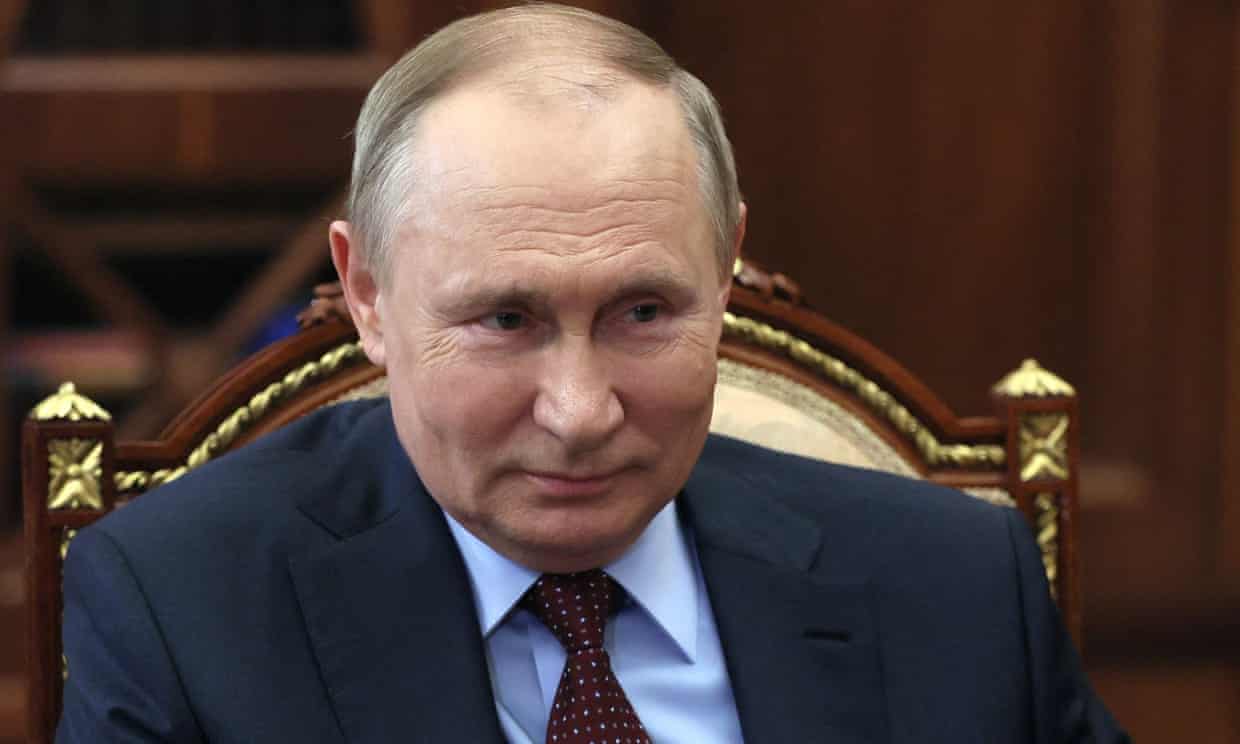
An interesting piece by Francis Fukuyama on what is going on in Ukraine.
He thinks Russia is going to lose, and dramatically. He says “collapse.” He also thinks Putin has no off-ramp. He thinks Putin will not survive in power. He expects this to herald a “new birth of freedom.”
Unfortunately, Fukuyama has a track record of being over-optimistic.
He thinks the US decision not to send in the MIGS is right. Aside from any risk of escalation, they are not needed, and Putin’s defeat could then be blamed on NATO. It looks worse for Putin if he is beaten by Ukraine seemingly acting alone.
Fukuyama also thinks this war is discrediting populist movements in the West, because they have been sympathetic to Putin. Perhaps so, but I think he is off base here. I see populist figures insisting we in the West stay out of the war, but not because they support Putin. Because they oppose foreign entanglements generally, and distrust the reports they are getting from the legacy media and the various governments as probably propaganda. This goes for Ukraine, and the US, but equally for Russia.
We shall see.

