Playing the Indian Card

Tuesday, August 27, 2013

Unschooling

There are many studies that show that the average parent can teach far more effectively than the average teacher. This article from Salon goes further. It argues that doing nothing produces at least as good a result as sending a kid to a public school.


"the more scientists have learned about how children naturally learn, the more we have come to realize that children learn most deeply and fully, and with greatest enthusiasm, in conditions that are almost opposite to those of school."
"with each successive grade, students develop increasingly negative attitudes toward the subjects taught, especially math and science."

Female Teachers Discriminate


Don't even think about it.

I might have posted this before. It is worrisome. Not just for what it says about the schools and their effect on boys, but about the probable objectivity of women in authority generally, and of their probable discrimination on other grounds than sex as well.

Women are by their nature partisan--as Rudyard Kipling famously pointed out in his poem, "The Female of the Species is More Deadly than the Male." They are bred by evolution to be, because of their primary task of nurturing and protecting children. You do not want to disturb a female bear with cubs.

It follows that women placed in positions of authority will be partisan, which is to say, unjust. They will have favourites. They will discriminate. It follows that it is generally a bad idea to employ women as teachers, judges, managers, CEOs, or legislators. 


Monday, August 26, 2013

More Salinger to Come?

Here, if true, is exceptionally good news: new Salinger stories and novels are going to appear soon.

I strongly suspect this is true, and have been waiting for it. Most writers write as a matter of compulsion. So it seems to me unlikely that JD Salinger was not writing all those years since "Hapworth."

Of course, the writing might be drek. But I think the odds are that it is good. By ceasing publication and waiting until his death, Salinger seems to have been trying to free himself to write with absolute sincerity and without any distracting ulterior considerations.

The history of posthumous publication is an encouraging one. It includes the Aeneid, Emily Dickenson's entire production, Wordsword's Prelude, Kafka's The Trial, The Canterbury Tales, Doctor Faustus, Faust, and The Dream of the Red Chamber.

I should write so well after I'm dead.


The Wolfe Island Apocalypse


And was Jerusalem builded here? Wolfe Island, Ontario.

Revisiting Wolfe Island, Ontario after many years, I discover it is now one huge “wind farm.” The flat terrain and the surrounding lake are apparently ideal for wind turbines.

Approaching in the Wolfe Island Ferry, my six year-old say the turbines, and spontaneously remarked, “It’s the end of the world.” My first thought was William Blake’s reference to “dark satanic mills,” in “Preface to Jerusalem.”

Apart from the noise pollution of the turbines, and the fact that they kill birds, and generate little power, I think the visual damage to the landscape is an important consideration. This falls under the heading of feng shui, the Chinese art and science of ergonomics. Symbolically, wind turbines or wind mills are very dark. They represent an attempt to harness the spirit (the root word and image here is “wind”) for materialist purposes. This is the definition of black magic, of conjuring.

This may seem trivial in in itself to a materialistic mind set. But, whether we are conscious of it or not, such symbolic implications register emotionally, and can generate an overall feeling of unease or disquiet, which can build up over time and have a serious effect on our quality of life. The intelligent awareness of such subconscious messages is why a Chinese or Japanese tea garden can seem so restful.


Old mill stream. Upper Canada Village, Ontario.

Interestingly, by contrast, a water mill or water wheel is symbolically pleasant and peaceful. Water is emotion, time, and change. Symbolically harnessing and regulating it in such a way suggests tranquility, like the regular turning of the seasons.

We ought to engineer with these considerations in mind.

Sunday, August 25, 2013

Reflection on Visiting the Montreal Museum of Fine Arts

Barnett Newman's floor-to-ceiling "Voice of Fire."


A basic principle of modern art: the larger the canvas, the smaller the talent. It is a simple thing to achieve impact just by drawing something very large. Everybody is doing it these days. It is fantastically tedious.

A similar principle applies in rock music: the greater the volume, the lesser the talent. As Keith Richards has noted, the essential trick of rock is to achieve an impression of power without resorting to volume.

Saturday, August 24, 2013

Israel: Just a Bigger Ghetto


Sofia's Grand Synagogue

I was walking along a street in downtown Sofia one Friday evening several years ago. Gradually, through the dusk, I realized I was surrounded by a small gang of elderly people. All the men were wearing yarmulkes. I had stumbled upon the last remnants of Sofia's Jewish community heading for synagogue for the beginning of the Sabbath. Perhaps a score of aged men and women.

In 1944, Jews made up one quarter of the city's population.

What happened to them all? No, they were not sent to Hitler's death camps. Bulgaria never permitted that. Instead, they all emigrated to Israel after the war.

Sofia synagogue interior
I am not at all sure this was a good idea. I am not at all sure that Israel is a good idea. And I do not mean that it is bad for the Arabs, although no doubt it is. I mean it is bad for the Jews.

In fact, it has done Hitler's work for him: it has achieved his vision. Early plans and directives suggest that Hitler had no special interest in killing Jews. His original idea was to exile them—he thought to Madagascar, or somewhere else in Africa. This was also, not coincidentally, the original plan of Theodor Herzl, the founder of Zionism. Palestine would have done nicely had the British allowed it. Hitler just wanted them out of Europe, so that they could not contaminate Europe's Aryan purity. Just as Herzl wanted an independent state to prevent Jewish assimilation.

Theodor Herzl

Hitler, in other words, was a Zionist. Israel has done exactly what he sought to do, but was unable to do. Is this a good thing?

And is it a wise strategy in terms of Jewry's ultimate survival to huddle into one small nation state? Isn't this a case of putting all one's eggs in one basket? Wasn't Jewry's previous strategy, of dispersion throughout the nations, in fact an unusually successful one? Where, by contrast, are the Assyrians, the Carthaginians, or the Visigoths today? It allowed them an escape hatch in all circumstances: suppress them in Spain, and they had connections and relations in Turkey; in the Netherlands, and they had contacts in Poland. Hitler, though he controlled all of Europe, was unable to eliminate them. In ten years, he managed to kill six million. By contrast, now two well-placed Iranian bombs could wipe out seven million Jews in an instant.

A passionate Zionist


Just as keeping all the Jews of a city in one ghetto made it easier to find them when a pogrom started, so concentrating all the Jews of the world into one twelve-mile-wide country seems on the face of it like herding them all into one big cattle train.

And it is, of course, apartheid, segregation. This has not always turned out well elsewhere. Nor did we ultimately find shipping all the blacks of America back to Liberia an entirely satisfactory solution for that minority group.

Moreover, if the Jews are really determined to set up shop permanently in one location, Israel is actually a remarkably bad choice. There is a reason why the Israelites have, historically, kept being thrown off this land. As have the Canaanites, the Philistines, and the crusading Franks. It is a natural thoroughfare, the only land route between Africa and Asia, the carrying point between the Mediterranean and the Persian Gulf, wedged in between the two larger entities of Egypt and Mesopotamia. Trying to establish and hold an independent nation in this little corridor is rather like building your house in the middle of a highway, and hoping nobody will trespass. Not to mention, of course, that the place is a desert, a natural wasteland. The Zionists could have done far better by settling Argentina, Oklahoma, or the interior of BC. All of which were still more or less available.

A sheep among wolves.


At the same time, the loss of so much of its Jewish population, I suspect, has greatly impoverished Europe. I had this sense in Sofia, and it seems, on reflection, self-evidently so. Jews are responsible for a staggering proportion of European, as well as American, culture. It is the mission of the Jews, after all, according to the covenant, to be a light unto the nations. By retreating to Israel, they are abandoning this mission, and this religious duty. Is it any wonder that European culture now seems moribund and listless? The light has departed from it. If American culture seems still more vital, it is perhaps because fewer of its Jews have been tempted to leave for Israel. And abandoning their historic mission is likely to have the same enervating effect on Judaism.

Now, of course, as a result of Israel's existence, the Jewish witness has been stripped from the Muslim world as well. Distinct communities and subcultures all over the world, with their millennia of traditions, are being wiped out, as in Sofia, in a generation. Bahrain's synagogue stands idle. The Jewish community of Cochin, of over two thousand years' duration, older than France or England, is no more.

The abandoned Manama synagogue.

One suspects that, when the histories are written a hundred years from now, the State of Israel will be seen as a greater calamity for the Jewish people than the Holocaust itself.

Interior of Cochin synagogue.

Tuesday, August 20, 2013

The Rightful Capital of Canada


It is obvious that Montreal should be, as it once was, the capital of Canada. This seems foreordained by God: all the natural communications and transportation routes funnel through. Most of Canadian history has also funnelled through.

There is another reason: making Montreal the capital would complicate the enterprise of Quebec separation. First, it would reduce the incentive: it would, by honouring Quebec, presumably make it feel a more integral part of Canada. It would split Montrealers' loyalties—suddenly, the federal government would be closer than the provincial one, away in rival Quebec City. As a purely practical matter, it would introduce a population of about one million—the present population of Ottawa—directly or indirectly dependent on the presence of the federal government in the province. That should skew any future referenda towards the federalist option. If Quebec nevertheless did vote to separate, it would make the split harder to arrange and harder to contemplate: might there not then be a case for retaining Montreal in the federal union?


For the Anglophone minority, the presence of the federal government in Montreal could be the ultimate guarantor of their rights. For the Francophone minority in Canada, the presence of the federal government in Montreal, a francophone city, would equally be the ultimate guarantee of their rights. It would show a confidence in the unity of Canada, and would be a symbol of that unity. As a practical matter, again, it would make it easier for the federal government to be fully bilingual, being able in Montreal to draw on a larger pool of bilingual workers for all levels of the bureaucracy.

In addition, frankly, Montreal is a far more prestigious location for a capital than Ottawa. As a more interesting and cosmopolitan place to live, it would attract better civil servants, better politicians, and better foreign diplomats. It would be a better showcase for Canada to the world.

The arrow roughly indicates the best feng shui for a capital.

The addition of the federal machinery should create synergies which will make Montreal that much more interesting and cosmopolitan in turn—boosting Canadian art and culture.

On top of all else, Montreal, unlike Ottawa, has good feng shui, a far more inspiring geographical and topographical setting for a capital, thanks to Mount Royal and the surrounding rivers. Properly, a parliament building belongs at the base of Mount Royal, facing roughly south—the location of the Royal Vic Hospital, or just south of Saint Joseph's Oratory, with the nation's patron saint overlooking from above, would do nicely.

Friday, August 16, 2013

Clowns and "Real" Clowns


Stand back, folks! I'm a trained professional!


The most depressing part of this piece is the assertion that clowning, too, is a profession--if you haven't done the proper "training, money, and a lot of time" you a not a "real" clown. Complete with its own absurd professional cant--groups of clowns are to be properly referred to as "alleys," and when you are performing, the proper term is "in clown."

It is certain that this will kill clowning--sorry, "in clown." Because there is a total lack of humour involved. The author has no ear, it is clear, for how absurd she sounds. She does not realize that, in referring to herself as a "real" clown, in quotation marks, she is actually contradicting herself. If you are "real," you are not real.

One wishes it were really done tongue in cheek, as the ultimate send-up of the pretensions of the professional class.

How the Family Court System Encourages Abuse

Friday, August 09, 2013

Why Can't We Talk About IQ?

Best Album Titles of All Time


Ian Tyson, And Stood There Amazed
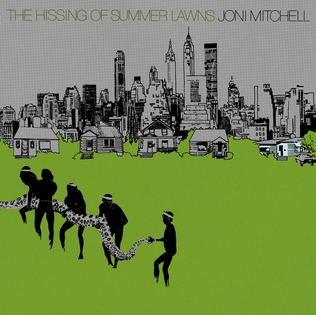
Joni Mitchell, The Hissing of Summer Lawns
Joni Mitchell, Chalk Mark in a Rain Storm
Joni Mitchell, Turbulent Indigo
Bob Dylan, Blood on the Tracks
Bob Dylan, Slow Train Coming
Neil Young, Rust Never Sleeps


Missing any?

The amazing thing is that Rolling Stone chose "The Hissing of Summer Lawns" as the worst album title of the year in which it was issued.

Thursday, August 08, 2013

More on Morality and Rock and Roll

Please allow me to introduce myself ...
We have discussed here whether rock musicians are leftist: no. We have discussed whether rock music is immoral: no. But are rock musicians immoral?

This is the common perception. “Sex, drugs, and rock and roll.” Is it correct?

Concerning drugs, Keith Richards explains this quite simply: musicians feel they need them to keep going. Without them, performing on a stage and he fishbowl life of being famous can be too intimidating and too emotionally exhausting. You take one drug to get the energy for the performance, then you need another drug to calm down afterwards and get some sleep. So drugs are everywhere. Then, of course, many get hooked.

Is this sinful? No, perhaps just foolish. Perhaps just unfortunate.

Then there's the sex. Here, I think it is difficult for a non-performer to cast stones, because we face nothing like the same temptations. it is just the way of things that women will throw themselves at anyone they see on stage. How many of us could say no every time?

Keith Richards:

Nothing like a good ten, fifteen minutes of pubescent female shrieking to cover up all your mistakes. Or three thousand teenage chicks throwing themselves at you. Or being carried out on stretchers. All the bouffants awry, skirts up to their waists, sweating, red, eyes rolling.

,,, And I remember walking back out onto the stage after the show, and they'd cleaned up all of the underwear and everything, and there was one old janitor, night watchman, and he said, "Very good show. Not a dry seat in the house."
... You stand as much chance as in a pool full of piranhas.


On the other hand, there is something else quite noticeable about rock stars once you start to read the autobiographies. They are, almost invariably, models of the virtue of forgiveness. Somebody will have messed them over pretty badly, and they will not seem to hold it against them. They will be back playing with them a couple of years later.

Keith Richards, in his autobiography, revealed affairs with the paramours of Mick Jagger, claiming that they preferred him because Jagger's penis was too small. Hard to imagine anything more perfectly calculated to break up a friendship. Yet two years later, they are back on a big tour together, giving joint interviews.

Ian Tyson has absolutely nothing bad to say about his ex-wife and ex-partner Sylvia. Neil Young and Steve Stills reputedly fought endlessly in Buffalo Springfield and Crosby, Stills, Nash, and Young; Young has walked out on Stills, at great financial cost, at least twice. Yet they still are best friends, and Stills says he still trusts Young more than anyone in the world. They still perform together often. Eric Clapton famously stole George Harrison's wife. Still best of friends. Half of the Byrds sued the other half over use of the name. Careers were at stake. Still best of friends. Bob Dylan slept with Liam Clancy's wife while he was on tour. Still best of friends. There seems to be no guile there, and no grudges.

What virtue is more important than the virtue of forgiveness?

I think that music—art in general—fosters that virtue.

It takes a Pharisee not to see that.

Met him at the crossroads ...

Nothing Special - Just Another Miracle

Wednesday, August 07, 2013

Censorship and the World Yesterday


Does anyone else remember Garner Ted Armstrong, Herbert W. Armstrong, Plain Truth Magazine, and the Worldwide Church of God? At one time, they dominated evangelical radio, with an audience far larger than pikers like Oral Roberts, Jimmy Swaggart, or Pat Robertson. But, as seems to be the fate of such preachers, once they faded, they faded pretty completely. The spirit moves on.

I used to listen to Garner Ted regularly. I did not have much choice. I was working as a night watchman in a small town, and at a certain time every night, he was the only thing on. His main theme was reading the end times into current events—hence the title of his broadcast, “The World Tomorrow.” The idea was that he was prophesying tomorrow's news, instead of reporting today's.

I did not agree with his views. I was Catholic, and he considered the Catholic Church to be the Antichrist. Nevertheless, I found him entertaining. Partly, he was a brilliant rhetorician. Partly, it was fun to toy with ideas one did not hear elsewhere, things that you had never thought about before.

He had many ideas that were unorthodox to me. He believed that Saturday was the proper Sabbath, that there was no Trinity, that the European Common Market was the reincarnation of the Roman Empire. He opposed the celebration of Easter or Christmas and advocated a kosher diet. He thought women should not wear makeup.

Among these other ideas, he believed that England and the US were remnants of the Ten Lost Tribes of Israel. This idea was once common among Protestants, and is apparently called “British Israelism.”

I'm not sure I even noticed this bit at the time, but it certainly did not trouble me, or stand out among all his other strange ideas.

A liberal friend of mine recently wrote that he once worked at a radio station that ran The World Tomorrow regularly, and that it struck him as immoral to do so—even though the Worldwide Church of God was paying for the time. Why? Because “British Israelism” is "racist, fascist, and virulently anti-Semitic." Such views ought not to be aired publicly.

I see several problems with this view. First, I can't see where Garner Ted or Herbert W. were indeed anti-Semitic. Of course they thought there were errors in Judaism. This goes without saying; otherwise they would have been Jews. But anti_Semitic? How is saying you are Semitic become anti-Semitic? Here is Herbert W.'s talk on Judaism:

http://www.myoldradio.com/old-radio-episodes/h-w-armstrong-sermons-the-religion-of-judaism

Is it racist that they believed that Americans and Brits were the chosen people? If so, Judaism, too, is racist. And, of course, anyone who bases their religion on the Bible must accept the concept. Bunch of racists all, I suppose.

But let's get down to the deeper question. As my friend posed it, suppose you are an editor, and you are given a new translation of the manuscript for Mein Kampf to edit. You have three choices:
  1. Refuse the work 
  2. Do it, but deliberately sabotage the product 
  3. Do it, and do the best job you can, thereby lending credence to the ideas expressed. 
What would be the moral choice?

Option 2 is, any way you slice it, immoral. It involves deception.

Option 1 may seem like the most moral course, but I don't think it really is. There are two possibilities if you do this. Either someone else will edit the work, or no one else will.

If someone else edits the work, you have achieved nothing by refusing to edit it. So why not edit it?

But if nobody else edits it, you are responsible for having suppressed it. Nobody will get to read it.

And this is a bigger problem. As John Stuart Mill points out, the only way to ensure that we have the truth is to ensure that all views are heard. As someone said, “truth need fear nothing but concealment.”

Tuesday, August 06, 2013

Jeff Bezos Buys the Washington Post

Budgies love it.

Jeff Bezos has just bought the Washington Post for $250 million.

One wonders why.

Newspapers in North America have been losing value hand over fist over the past twenty years; and there is really no sign of that turning around.

One obvious possibility is status and influence. For someone nouveau riche like Bezos, private ownership of the fabled Washington Post might get him into a lot of cocktail parties and a lot of private tete-a-tetes with politicians. If the Post lacks general circulation, it is still read carefully by the political and bureaucratic elite in Washington, and will probably continue to be. It is their house organ. This sort of thing has become a well-trodden path in the UK: buy a prestigious but financially troubled London daily, get a peerage.

It is also possible that Bezos wants a hobby. He is obviously in love with print, or he would not have come up with Amazon. At the current selling price, he doesn't really need to make money with it if it interests him.

There is little likelihood he's buying it to promote his own political ideas, as Sun Myung Moon did with the Washington Times. Bezos seems to be a liberal; the Post is already liberal; Washington already has a conservative daily.

But it is also possible that Bezos knows some things about the future of technology that the rest of the big money guys do not. Bezos is nothing if not a forward-thinker. I think he may see a new paradigm for newspapers. I understand that, when first approached about buying the Post, Bezos was not interested. Then he came back a few months later and said he was. Sounds to me as though he was doing some thinking in the meantime, and has come up with some ideas.

It wouldn't take that much. Currently, newspapers cannot compete on the World Wide Web, because people can get their news free, and outside linking means brand no longer matters. But there are ways of going electronic, and going to the Internet, without being on the World Wide Web. Bezos knows this well, because a lot of his business is based on one of them: the ebook platform. 

Citizen Bezos

Notably, newspapers and magazines are becoming tablet apps. These can be free, or by subscription, but still walled off from the rest of the web. And they can still be instantly updated, in order to compete with other online sources for immediacy. The cachet of the brand can theoretically attract readers; heck, a lot of people make a point of checking in at Drudge every day, even though the attraction is only his particular selection of links. And the readers can attract advertisers.

Apple and Rupert Murdoch failed at this with The Daily; but Bezos may see a better business model. The Daily had no brand cachet or reputation to build on—or rather, Murdoch's reputation for yellow journalism may have been a net minus. It seems on the face of it a dumb idea to try to build the reputation of the outlet online in order to convince people to pay for it, but expect them to pay for it before you've done this. This is putting the cart before the horse.

The Washington Post is at the opposite end of the spectrum in this regard.

The Daily was paid subscription; Bezos is on record saying he does not believe people can be made to pay for news online. Even if they can, the way this is done is the opposite of Murdoch's approach. First you offer a package free, establish value, and then sell added services on the strength of this. Bezos knows how to do this well.

But it is not just as question of what Bezos might do. If a lot of newspapers decide to pull off the web and go to apps, if this turns out to be a viable model, the links will dry up for the online aggregators, reducing, possibly even ending, that source of competition.

If so, Bezos will be left sitting on a very good brand in the middle of a brave new world.

Monday, August 05, 2013

Rock and Roll is Sacred Music

St. Johnny Rotten.
Look up “Christian rock” on YouTube, as I just did, and you will get a glimpse of an old controversy: is rock and roll the Devil's music? A large number of Christians have always believed this—that something about rock and roll makes it intrinsically immoral. In fact, a huge number of rock and roll musicians have thought so themselves. Keith Richards once said in an interview he usually wrote “Luciferian” songs; Neil Young has called rock “God and the Devil shaking hands.” Jerry Lee Lewis has said “I know I am playing for the Devil.”

This seems to me absurd. Why should the Devil get all the good songs?

Is rock beautiful? Does it “strike a chord” in you, as it does in me? Then, by definition, it is from God, not the Devil. Here's why: God is the perfect being. This means he is the perfection of being, reality, or truth. It also necessarily means that he is the perfection of moral good—evil cannot be an aspect of perfection, for it is a flaw. It also follows that he is the perfection of beauty. Ugliness cannot be an aspect of perfection, for it too is a flaw.

From this it follows that the more beautiful a thing is, the more it approaches God. We understand this instinctively, I think, when we experience beauty in nature. Our perception of beauty comes with a sense of awe; it is felt as a communing with the divine intelligence. So too in art. Ergo, as rock is beautiful, rock is divine. (Note too that beauty is not the same as mere prettiness. Real beauty requires the sublime.)

Music, indeed, of all the arts, is most completely justified by beauty alone, because as music it can convey no other message, no didactic content, no "redeeming social importance." This makes it the most sacred of the arts--as in the "music of the spheres." There is a reason that angels are traditionally pictured strumming harps.

Ergo, rock music is intrinsically good, not evil; a thing of God, not the Devil.

Add to that the actual origins of rock. Rock began in Gospel music. This genesis is commonly obscured, largely I think because of the pre-conceived notion that rock is anti-religious in some way. It is commonly claimed that rock began instead as the mogrel child of county and western plus rhythm and blues. But just listen to some of the performances of Sister Rosetta Tharpe. You cannot deny that she was singing and playing rock already in the 1940s. But she was not classed as rock and roll—she was the most popular Gospel singer of her day.


http://youtu.be/JeaBNAXfHfQ

And the first Doo-Wop hit was a flat-out Christian religious song, “Crying in the Chapel.”


http://youtu.be/Qe_tL7aVGE8

The strange emotional energy of rock began as the energy of a revivalist meeting; that characteristic snare beat began as the clapping of the congregation. Rock emerged from exactly the places where gospel was omnipresent, among people who were raised on gospel as their music. Jerry Lee Lewis attended Southwest Bible Institute. Little Richard started out singing in Pentecostal churches, and was eventually himself ordained a minister. Chuck Berry's dad was a Baptist deacon. Elvis Presley learned guitar from the family pastor.

In context, it becomes clear that rock and roll's reputation as “the Devil's music” makes sense only in a Gospel context—only on the assumption that music, or this music, ought to be reserved for sacred places and occasions. Rock was bad because it was the supposed profanation of a sacred musical form.

That still makes it more religious than--just about anything else.

Saturday, August 03, 2013

A Selection of Great Quotations

Sammy Yatim and the Toronto Police


I am more than a little surprised to see that the death of Sammy Yatim is causing controversy in Canada.

For those outside the Dominion, Yatim was a young Syrian immigrant who pulled out a knife on a Toronto streetcar and threatened passengers, in what looks like a feeble attempt at terrorism. He did little or nothing to prevent all the passengers, and the driver, from escaping, and then was cornered by police. He refused to drop his knife. He was shot nine times, then tasered, and was DOA at hospital. As it happens, the event was video recorded by several sources, and can be seen online.

I am amazed that there is any question that this was a very bad performance by the Toronto police. Watching the videos, I can also detect no attempt to talk Yatim down. Instead, the police react emotionally, confrontationally, shouting demands and requiring instant response. This is just stupid; have they never before encountered someone on drugs, or someone hallucinating? Not even someone drunk?

Conceivably, the officer who fired felt Yatim was advancing toward him. Even so, this could not have warranted three shots, then a pause, with no movement visible, then six more shots, then tasering. The most charitable explanation available seems to be that the officer panicked. If so, he is obviously temperamentally unsuited for police work. But even this cannot explain the later tasering by another officer. It is hard to see that as anything other than deliberate torture of a dying man.

We are lucky that everyone nowadays has a video camera in their pocket. I warrant that, just a few years ago, an incident like this would have been quietly covered up and everything would have gone on as before.

But we now know that there is something very wrong on the Toronto police force. Nor should this come as a surprise. If you're a born bully, what sort of career is going to appeal to you? Being a policeman has to come high on that list. This is something of which we ought to be eternally conscious; we must develop effective means to screen for this.

Thursday, August 01, 2013

Popular Music and Politics

Memorial to John Lennon, Central Park, New York.
I think everyone assumes that the world of popular music, like Hollywood, is a leftist redoubt. One thinks, once again, of Joni Mitchell, of Neil Young's “anti-war” album, of Bob Dylan and the tradition of “protest songs,” of John Lennon's “Imagine,” and on and on. More generally, there is a hostility on the right towards the arts.

I think this is a big mistake.

To begin with, the arts by their nature are not political. Artists in general, including popular musicians and songwriters, are politically naive, perhaps more naive than the average person. But political organizations, by their nature, are eager to co-opt when they can. It seems to me that it is the left that has co-opted art, and it is a mistake for the right to allow them this ground. Because, while artists are mostly apolitical by nature—free spirits cannot function within a political organization—what they create can be immensely influential politically.

Dylan is the classic case in point. The truth is, nobody can really pin down Dylan's religion or politics. And this seems to be very deliberate on his part. Back in his “protest” days, he was given an award by a leftist organization, the Emergency Civil Liberties Committee. He took the occasion of the award presentation to announce publicly that he was not interested in politics.

Protesting the World Bank. CDs available.

“You people should be at the beach....There's no black and white, left and right to me anymore. There's only up and down, and down is very close to the ground, and I'm trying to go up without thinking about anything trivial such as politics.”

Dylan was wise enough to realize that politics is a trap for artists. On the one hand, political groups are desperate to claim a fairly prominent artist on their own; they are soon knocking at any successful artist's door persistent as Mormon missionaries. At the same time, becoming connected with a movement gives an artist a ready-made distribution channel, enabling his art. WB Yeats says he got the advice, early in his political career, that to make it in Ireland as an artist, you had to have either the Catholic Church or the Independence movement behind you. As a Protestant, he could not hope for the Catholic Church. So he chose to join the Irish Republican Brotherhood. Hence Yeats's politics; which everyone else since has taken so seriously.

The danger of this approach, though, is that then the artist has a harness on, which rarely rests easily on an artist's shoulders. When he must always look over his shoulder at the possible political repercussions of what he sings, paints, or writes, this can lead to second-rate, insincere art. And politics is fickle: become publicly identified with a cause, and once the cause goes away, often, so do you. Yet, once you have become identified with a movement or a cause, it is very difficult and dangerous to get away. Not only will you have lost your audience; they will turn on you and hate you as a traitor. Dylan has risked this several times. Few members of Sinn Fein have a good word to say about Yeats today.

John Train in his early years.

Phil Ochs is a perfect counter-example of the danger Dylan sidestepped here. He got bought and sold as an anti-war advocate. The war ended. He was passe. He seems to have realized he had been tricked and trapped; in his last days, he re-imagined himself as a new person, “John Train,” who was systematically opposed to Phil Och's politics. Then he hanged himself.

Currently, there is also obviously tremendous pressure within the arts community to at least pretend you are leftist in order to get along. You have to be pretty big before you dare challenge your peers on such a matter—pretty big, and pretty politically aware. Andy Warhol once commented that he was for lower taxes, and really should be a Republican. “But artists aren't allowed to be Republicans, are they?”

Somebody should set up a refugee program for artists, welcoming them, getting the word out, trying to help them with a new audience when they flee the left-wing cult of the arts. It would have to be done delicately, though; the way Catholics do missionary work. No point in fleeing a leftist cult only to get caught up in a rightist one.

In the meantime, those on the right can at least be understanding, and not jerk their knees at a Joni Mitchell, a Neil Young, or a Keith Richards. They are leftists in the same sense that fish ride bicycles.