


Read it all on our SubStack feed--and subscribe!
 |
| Isaac Azimov |

Catholic comments on the passing parade.


 Posts
All Comments
Posts
All Comments


Women and men are different.
This should not be controversial. It seems to me that anyone
finding this controversial is shockingly lacking in empathy.
Since the Sixties and feminism, we have been fighting against
this truth. Feminism insisted that any difference was just a role forced on
women by society.
Perhaps the rise of the “transgender” movement is at least
in part the inevitable rebellion against this claim. Its insistence on “gender”
as a core of one’s identity is a direct contradiction to feminism. To feminism,
“gender” is not a trait you are born with, but a set of arbitrarily behaviours forced
on you. Otherwise feminism makes no sense.
Transgenders insist there is a female or a male soul. Otherwise
you could not be “trans.”
Leave aside the other questions raised by transgenderism: whether
gender is independent of sex, and whether one can be “born into the wrong body.”
There are three transcendental values: truth, good, and
beauty. They are the goals of existence. They bring value to life. We are created
in order to seek these three things, and to express these three things.
Of these three, it is obvious that women, not men, are most
responsible for beauty. Women are more visually attractive than men; women care
about being attractive; men don’t. This is not just to attract men sexually;
women definitely also dress and make up for other women, for the sake of abstract
beauty. Both men and women would rather look at a woman than a man on a
magazine cover.
If you introduce a woman into a home or office or business,
she will instantly go about trying to make it more beautiful, more comfortable.
You leave men on their own at a workplace, and it will be functional, no more.
Cultures that devalue beauty, like Protestantism, or Islam,
will devalue women. Cultures that value beauty, like France, Italy, or Latin
America, will value women more highly.
This is why feminism began in the Protestant countries. It
was here women were devalued. Although it has since spread to Catholics as well;
due to the overwhelming cultural influence of America.
And why does a man marry a woman? The question has come up
online recently: MGTOW. Is it worth all the insults, demands, and worries, the
risks of ruinous divorce, “just for a vagina”? What else does a woman bring to
the relationship?
This, after all, is what feminism has left us with.
But properly, a man marries to bring beauty into his life. To
make his house a home. Not just her physical beauty, but her charm, her attitude—for
this is her proper role, to be supportive, “inner beauty.” And her ability to
decorate the living space. And her ability to cook, which is a form of beauty, appealing
to the sense of taste. If she is a good wife, she brings grace and comfort to his
life. Along with the joy of children.
This is what a good wife should do. Feminism has devalued it
all, and women have come to neglect and distain all of this. Reducing them to
no more than second-rate men with vaginas.
And now we must acknowledge that men too have their role in
civilization and the human enterprise. As feminism would deny. They are more
than bicycles, more than a means to an end.
Women are the guardians of beauty; men are the guardians of truth.
Men are born with an internal compass that points towards the North Star. Women
will believe anything; men will want proof. This is why Jesus, who obviously
knew what he was doing, chose only male apostles. We should not second-guess
God. And this is why St. Paul said women should be silent in church. It is not their
role to lead and teach, any more than it is the role of a man to wear makeup and
give fetching smiles. Either has gone off the rails.
Not incidentally, we have made a grave mistake by giving the
teaching profession over almost entirely to women. This is not their role.
Notice that, in the New Testament, Jesus’s genealogy is traced back to David through
Joseph—even though Jospeh is not his biological father. This is because the
role of the father, of he man, is to guide and educate, to pass on truths. In
this sense, Joseph and his genealogy are fully relevant.
If we value truth, but not beauty, as in Protestant (and now
secular) Northern Europe, this will look like a misogynist view. If we value
beauty as well as truth, it will not. It is both received and revealed wisdom.
It is common sense.
And what of the third transcendental value, the good? Indeed,
this is the central of the three: “and the greatest of these is love.” We were
created to choose the good, of our free will.
Men and women seem to have an equal role here; but being
good means different things for each. Goodness means justice, on the one hand;
mercy on the other. In America, to say someone is good, you say “he is honest.”
In China, you say “he is kind.” And these are different things.
Good women are kind and merciful. Good men are honest and just.
We need both. We need both men and women in our culture, and
in our individual lives. And we have lost this.
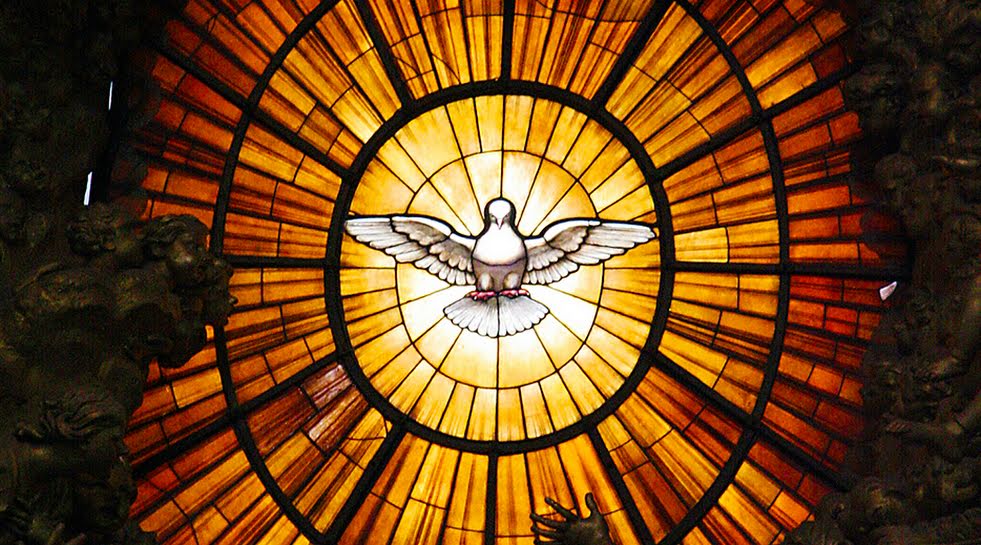
“In evangelization,” Bishop Baron has said, “start with beauty.”
There is a problem with this. Bishop Barron is assuming that beauty, unlike ethics, is accessible to everyone. Many people do not get beauty. Perhaps as many as do not get ethics.
Attending a writers’ meet last evening, I was disappointed that nobody else pointed out the beautiful turns of phrase the featured writer used. “Warmoon.” “None of man, none of nonsense.” “Only the steel husk of empires.”
“He really ought to be a poet,” I observed.
“Why? You can have beautiful language in prose.”
You can, up to a point, but then what is the difference between prose and poetry? Poetry is, definitively, beautiful language: “the best words in the best order,” per Coleridge. If the beauty of the language is the focus, that is poetry, not prose.
I gather that poetry was invisible to those present, because beauty in language was invisible to those present—none of them, after all, noticed it in the passage. To them, although writers, writing was apparently about entertainment—an exciting and captivating plot.
One can, of course, have an exciting or captivating plot in either poetry or prose. See Beowulf, or the Odyssey. But put it in beautiful language, and it is poetry.
Even in a supposed poetry group I attended a week ago, a group of published poets, I found no sensitivity to beauty of language. All were to submit a poem on the theme, “on Earth we are all briefly gorgeous.” All submitted, with no special elegance, an expression of some trauma they experienced personally; as if poetry was about venting emotions or grievances. It was only a matter of “my suffering is greater than your suffering.”
This is psychotherapy, not poetry.
Worse, psychotherapy doesn’t work. It leads only to narcissism.
When I remarked to a well-intentioned friend that I found a particular woman unutterably beautiful, he assumed I wanted to hook up with her. Despite being married.
We seem to commonly associate beauty with mere sexual attractiveness. With a physical rather than a spiritual pleasure.
Most people say they get a sunset. I wonder… do they? Or do they just know they are supposed to?
Most people seem to like music. But are they reacting only to some physical sensation, like the urge to move your body and feel the healthy stretch of muscles and deep breathing?
Entire religions seem not to get beauty: Islam, with its iconoclasm, banning visual representations. Protestantism, wanting once to ban dancing, the theatre, and celebrations like Christmas. Such things were, according to the Puritans, if not idolatrous, sinfully frivolous.
This is disturbing, because beauty is one of the three transcendentals, along with the true and the good, from which value itself comes. God himself is definitely, as St. Augustine formulated it, perfect beauty, perfect truth or being, and perfect good.
“Late have I loved you, O Beauty ever ancient, ever new, late have I loved you!”
To be insensitive to beauty is to turn away from God.
And I think we are losing our sense of beauty in recent years. The world is getting uglier. The arts seem moribund.
Perhaps Bishop Barron is right, however. Jesus did not come for everyone; he makes this clear in the Beatitudes. Perhaps sensitivity to beauty is the sign that you are of his flock.
Cultures differ widely in their ability to appreciate beauty. The English, Germans, and Americans have no sense of beauty. The Romance nations, France, Spain, Italy, are good at it. So are the Slavs, and the Celts. The Koreans are much better at it than the Japanese or Chinese.
In Canada, it is easy to see the difference. Toronto has little beauty. Even the people are slovenly in dress. In Montreal or Quebec City, there is beauty around every corner. The beauty in Ontario is only in small towns settled by the Irish or Scots: Westport, Perth, Elora. Saint John, heavily settled by the Irish, is awash in beauty, the houses brightly coloured.
Why the difference? To some extent, no doubt, religion—the difference between Catholic and Protestant—has its influence. But it also seems to me that the ability to appreciate beauty is related in some mysterious way to the experience of suffering. Jesus more or less says this in the Beatitudes.

Why are we here?
Many people plainly suppose we are here to seek pleasure. A high school friend used to say “we’re just two ends of a gastrointestinal tract.” A hotel co-worker said sex was what made life worthwhile.
This is the perspective of an animal or a robot. It is also a will-o-the-wisp. Without hunger, food does not satisfy. Without abstinence, sex is just work. It all becomes addiction, and pleasure is gone.
Some people think life is about achieving “success.” Success here means power and social authority over other people. This is actively active evil. And it certainly does not lead to contentment. “Uneasy is the head that wears the crown.”
Some people say that life is about having children, and giving them a start in life. This is the Darwinian perspective; the Bible too does say “go forth and multiply.” Kids are part of our job, at least. But it does not entirely satisfy. If your life is meaningless, so are your children’s lives.
Some people say life is about sacrifice of self to the collective: one owes ultimate allegiance to one’s parents, one’s community, and one’s homeland. “Dulce et decorum est pro patria mori.” But this is idolatry: one’s nation, one’s government, or one’s parents can be either good or bad. This leads to “good Germans,” Fascism, racism, and nepotism.
Some say that life is about going about doing good to others. And it is, in detail: we are to clothe the naked and feed the hungry, when we encounter them. But this can easily become a form of ego-worship. The Bible warns that if we do good and are seen to do good, we already have our reward; we are acting in self-interest. God does not need you to save the world; realistically, things are already going as he intends. I suspect figures like Mother Teresa.
The meaning of life is to seek the true, the good, and the beautiful.
This is necessarily so, because truth, beauty, and good are the only things of value in themselves. They do not derive their value from anything else, and everything else is valuable only to the extent that it is true, good, or beautiful.
These values can be falsified and misunderstood. People often confuse beauty with sexual allure, for example. People misconstrue fact as truth, truth as fact. Facts are only one form of truth, and a trivial form. And people misrepresent goodness in many ways.
It is not public charity. It is also not being “nice,” and getting along with everyone. That requires having no principles, and giving everyone what they want. This is, at best, moral cowardice, at worst devious self-interest. It requires aiding and abetting evil whenever it appears.
True good is justice. Not to be confused with the current leftist concept of “social justice,” a euphemism for injustice. Justice means giving everyone what they deserve on their merits.
How does one, in practical terms, do this?
First, in art. Good art manifests beauty. Art is adding beauty to the world. This is an intrinsic good, even if no other mortal sees this beauty. God does, and with him you are building the New Jerusalem, which the Bible describes to us as a vast work of art. But if possible, the Bible also tells us to “let your light shine,” and be a leaven to those around you.
Good art must also be true. As Keats said, “truth is beauty, beauty truth; that is all ye know, and all ye need to know.” One may speak truth outside of art, but inside of art, you must. And speaking truth outside of art can be dangerous. Jesus warned: “Do not give dogs what is sacred; do not throw your pearls to pigs. If you do, they may trample them under their feet, and turn and tear you to pieces.” So he spoke in parables. Art is intended, as Emily Dickenson said, to “tell all the truth, but tell it slant. Success in circuit lies.” Those who have eyes to see, will see.
Good art must also serve justice. We are aware of this when, for example, we read or watch a play. We will rebel, intellectually and emotionally, whether watching tragedy or comedy, if the resolution does not serve justice. Karma must come around. No cheap happy endings, and no gratuitous deaths.
Beyond art is something more: the practice of a religion. To bind yourself to a religion is, in effect, to make your life a work of art. Art shows the way; religion IS the way.
But there is no just going through the motions here, no “church on Sunday,” no hypocrisy. We are talking of full commitment, of “prayer without ceasing.” That is the ultimate. That is sainthood.
Does poetry mean anything? My friend Antiochus says no. The meaning is just what each reader takes from it. This is the postmodern view.
He writes “what about when one person reads the poem one way and is absolutist in his view about what it means, and another person reads the poem a second way and is absolutist in his view about what it means?”
That is when discussion, and learning, can begin. They each present their evidence and their arguments to arrive at the truth. One is right, and the other is wrong; or perhaps, they are both wrong, and the discussion will reveal this.
If, on the other hand, everyone is simply entitled to their own interpretation, there can be no discussion, no learning, no movement towards truth, and no agreement. No contact of souls. At worst, they struggle to the death for dominance; or they try to shout one another into silence. As with our current politics. Or else, more happily, they must simply ignore each other. You say the poem looks like a camel; I say it looks like a lobster. It cannot matter what you think. We have made no meaningful contact, we have learned nothing, and neither of us is closer to truth.
Let me back up and explain my absolute commitment to absolutism. I believe, agreeing with philosophers stretching back at least to Plato, and not only in the West, that the purpose and meaning of human life is to seek the Good, the True, and the Beautiful—the three great absolutes. This must be so, because we perceive these three things as of self-evident value.
Anything we do that is not directed towards achieving one of these three goals is wasted time and effort. So if poetry does not itself strive to express some truth, it is to that extent without value. If we, in turn, do not strive to find the truth of the poem, we are just rolling stones up a hill.
You might argue, I imagine, that poetry is just about Beauty, not Truth or Goodness. If so, it is of relatively less value than something that combines Beauty and Truth. But I agree with Keats: “Truth is Beauty, Beauty Truth; that is all ye know, and all ye need to know.” Transcendental values cannot really be separated. Nothing is truly beautiful that is not also both true and good; nothing can be good that is not also true; and so forth. The beauty we perceive in a poem is an intuitive initial perception of truth and goodness.
Antiochus writes that, if someone misinterprets a poem, “that's on the poet's shoulders because the clarity wasn't there.” I disagree. Being easy to understand is not traditionally the task of the poet, or of poetry. TS Eliot actually criticizes Rudyard Kipling for being too easy to understand: “We expect to have to defend a poet against the charge of obscurity; we have to defend Kipling against the charge of excessive lucidity.”
No doubt a poet should strive to be no more obscure than necessary—Eliot is saying that, implicitly, too. Poets must be defended against that charge. But a good poem should be, will be, difficult to understand. Because it is speaking of some deep truth, and deep truths are intrinsically hard to grasp.
Heraclitus: “One would never discover the limits of psyche, should one traverse every road―so deep is its logos."
Show me an easy poem, and I’ll show you doggerel.
Antiochus argues that anyone’s “honest evaluation, with no underlying agenda, of what [a poem] means is legitimate.”
Does this mean that it is impossible to be honest, yet wrong? People once honestly believed the sun orbits the earth; I once honestly believed Santa put those presents in the stockings. Or does “legitimate” mean something other than true here? Is it possible for an opinion to be wrong, yet “legitimate”? If it only means “sincere,” Antiochus has said only that honest opinions are honest opinions.
A bit off topic, but Antiochus also wants to insist that you can say all the same things in prose that you can in poetry. Let me explain why I believe that is not so. Prose is the written word: it lives on the page. Poetry is often called the spoken word; but that is wrong. Poetry is the remembered word; it lives in memory, as a new bit of mental furniture, our programming. Accordingly, it can accomplish things that prose cannot. On an analogy with medicine, poetry does mental surgery, and permanently alters a soul. Prose too may heal, but like a pill, its direct effects do not last.
This is of course a generalization. Plots, characters, even verbatim passages of prose can linger in the mind. But poetry, properly assimilated, is remembered word for word.
Antiochus improperly then uses the example of bad poets to argue that poetry is not in fact a difficult form:
“I have known a lot of bad poets, beginning with the plethora of teenaged girls in high school and continuing through to creative writing classes and continuing further to published writers of whose work I could make neither head nor tail, and I could never see that the poet's intent was to write something he or she couldn't say in prose.”
This is like using the example of your kid sister’s caterwauling violin practice to show that it is easy to play the violin. It proves the opposite. There are far more good prose writers than poets, and there is far more good prose in the world than good poetry. It is easier to prescribe a pill than to do brain surgery.
Leonard Cohen refused on at least one occasion to call himself a poet, saying that poetry is a judgement, and nobody has the right to pass that judgement on themselves. Recall Coleridge’s definition of poetry, “the best words in the best order.” That is a high bar to clear. Most contemporary so-called “poetry” is nothing but self-absorbed prose without grammar or punctuation. It could easily be computer-generated—and has been.

 |
| Relics of the Rwandan genocide. |

 |
| Winged Victory of Samothrace. |
This is the verdict: Light has come into the world, but people loved darkness instead of light because their deeds were evil. Everyone who does evil hates the light, and will not come into the light for fear that their deeds will be exposed.

 |
| Radha, image of the devotee, with Krishna. |

