Playing the Indian Card

Showing posts with label Anglosphere. Show all posts

Saturday, May 09, 2026

Lord North's Mistake


He lost America

Surely one of the worst policy failures in modern history was Lord North’s loss of the 13 colonies in the American War of Independence. And the solution seems so simple. They objected to taxation without representation; so give them representation, as Edmund Burke urged at the time. What’s the problem? Give them seats proportional to population at Westminster.

Had this been done, Canada and the Caribbean would presumably also still be a part of a British Federation. United, it would probably have been a force powerful enough to have prevented the two World Wars and all the suffering they produced. European or “Western” civilization would not be in the funk it is in now.

It is not too late to fix this historic error. There is still no reason for Britain, America, Canada, and Australia to be independent countries, despite their common language, common interests, and common culture. Forget worries about Trump annexing Canada; why resist? It is an outcome devoutly to be wished. 

For one thing, in case it has slipped the reader’s notice, the US economy has been thundering past those of Canada or Britain, or anyone else. This is because the US is the centre of the high-tech boom, or rather, the intensifying series of high-tech booms. We should all want to be a part of this prosperity. We non-Americans are losing out.

And these booms happen in the US largely because of its large free market, which allows for niche testing and rapid expansion of new products. It is no accident that the US’s most successful competitor is China, who has even more of this advantage: triple the population, an even bigger market in terms of raw consumers, if with less purchasing power.

And so, if we do not want to see China and its authoritarian government gain world ascendancy and become able to dictate to the rest of us, we need to expand the US market and US power. We need to expand to include Britain, Canada, New Zealand, Australia, the Caribbean. 

Let’s fix Lord North’s blunder. 


Friday, January 03, 2020

The New Anglosphere: A Prediction


Brexit is going to be awkward for Ireland.

We’ve fussed about a hard border with Northern Ireland, but I’m not sure we have yet realized the real implications. For reasons of geography and shared history and culture, Irish foreign trade is naturally overwhelmingly with the UK; the UK out of the union, and Ireland in, does not work for the Irish economy.

The obvious solution is not keeping Northern Ireland within the European customs union, but taking Ireland out.

But it is also intolerable to Ireland to be thus dominated by England alone. Belonging to the bigger club was important in that regard.

This, it seems to me, is one more argument for a big new customs union of the English-speaking democracies. A union that included the US, Canada, Australia and New Zealand along with the UK and Ireland would protect the latter from British domination; and seems natural since so much of the populations of the other members are ethnically Irish. Form a union including Australia, the US, and Canada, and it seems strange for Ireland not to be a part. They are part of the same ethnic family, with much shared history.

Such a union would also benefit the UK by reducing the risks of Scottish independence disrupting the economy. Scotland could, if it chose, become independent of the UK, while still remaining in the larger union, and the economic effects would be minimal. And Scotland will feel, like Ireland, less concerned with English domination within a larger union. Reducing any temptation to split in order to remain in the EU. As with Ireland, Scottish trade is inevitably overwhelmingly with England in any case, not with continental Europe.

The logic of it all is strong enough that I think it is likely to happen. It is all very much in the UK’s interest, and Ireland’s interest, in compensation for the loss of easy access to European markets. It is in Ireland’s and Scotland’s interest to counterbalance domination by England. It is in Canada’s interest, to counterbalance domination by the US. It is in New Zealand’s interest, to counterbalance domination by Australia. If it included a military union, it would be in Australia’s interest for security against an increasingly expansionist China.

And it seems to me it is also in America’s interest, in expanding their sphere of influence. They will naturally dominate the union. And they too might want the increased military and economic power to counter an expansionist China.

An additional attraction for Canadians would be the ability for snowbirds to migrate south more easily. For the same reason, the union might welcome in Malta or Greek Cyprus, both of whom have historic ties. This would preserve a similar snowbird option for Brits, with their loss of easy access to Spain, and benefit these economies.

I predict the idea is likely to pick up steam soon, as the realities of Britain’s exit from the EU become clear.


Monday, September 05, 2016

More on the Anglophone Union


A piece I read recently on the idea of CANZUK (the union of Canada, Austalia, New Zealand, and the UK) proposes Calgary as the capital. Their logic is, first, that the capital cannot be in the UK, and second, that Calgary is roughly equidistant from everyone.

I take their first point. The UK is already likely to dominate by population, and the equality of member states must be underlined. Australia and Canada are not going to sign on for a revival of the British Empire.

But as to the second—Calgary seems to qualify as equidistant from all other capitals, but only by being equally remote from everyone. Nobody chooses a capital on that basis—otherwise Australia would be administered from Alice Springs, and Canada from Churchill, Manitoba. Calgary is also profoundly landlocked, and this is unsuitable for the capital of an essentially maritime nation, connected historically and geographically by the oceans.

The capital should, of course, be Montreal. A seaport, convenient to Ottawa, and the closest large city outside the British Isles to the bulk of the union population in the British Isles. Montreal has such cultural and historical heft that it seems entitled to be the capital of somewhere, and so far it is the capital of nowhere. Moreover, its choice as capital might help convince Francophone Quebec to support the notion of joining this vast Anglophone endeavour. Once made capital, it would serve as insurance that Quebec not in future want to separate.

I even see an ideal site for the new administrative complex: the Place des Nations end of Ile Ste. Helene, built for Expo 67, now a park. It is available, it is close to downtown, it is linked by rapid transit, and, as an island shaped like a ship’s prow, it is symbolically appropriate for this maritime trading union.


Thursday, September 01, 2016

A Third Empire


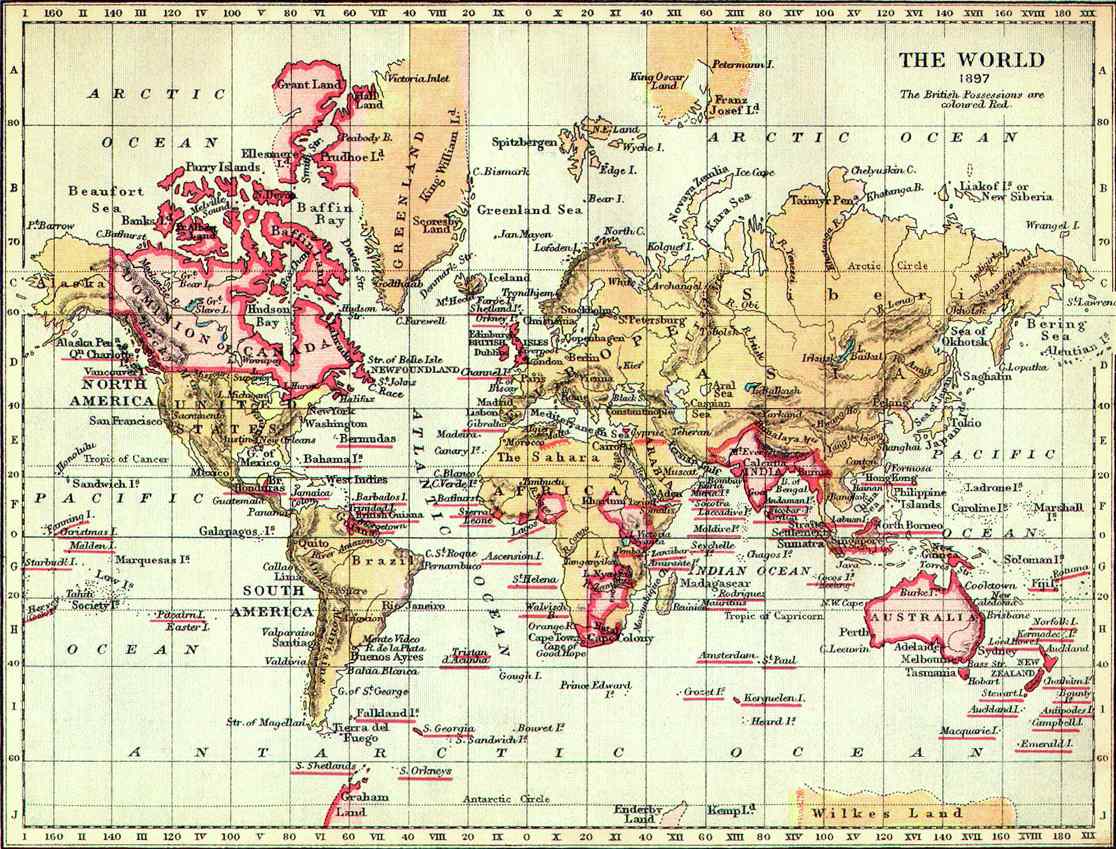
Big Pink.


With Brexit, a union of the Anglosphere becomes more plausible. And you hear more mention of it. Most British commentators, true, do not include the US in the proposed entity, as I would. This is perhaps understandable, as the US would completely dominate any such union. The UK does not like being number two.

But then let's play the ball where it lies: without the US for now. It seems to me that the concept of such a union still makes mighty good sense for the potential players: most obviously, Canada, the UK, Australia, and New Zealand.

First and for all, of course, there is the benefit of free trade, and the free movement of people. Canadians could choose to move to and work in Australia, and Britons in Canada. Canadians who look with envy at the greater career opportunities in the huge American market, especially, should appreciate this.

For Britain, there is secure access to the natural resources of Canada and Australia. It makes more sense for the UK to establish free trade in this direction than with Europe, because European nations are much of a muchness; they all more or less offer the same competitive advantage, a large skilled labour force, and so are natural competitors. By contrast, Britain's strengths and Australia's are more complimentary: Britain has a large skilled labour force, and strong, established service industries, but lacks Australia's natural resources.

It also makes more sense in cultural terms, of course, for Britain to reach hands across the sea than to stick with Europe. Its culture, and especially its political culture, is far closer to that of Canada than to that of Italy. Moreover, Britain is by tradition and geography a maritime trading nation; its natural ties are not the land ties and the ties of proximity that drive the rest of the EU.

For Canada, the great allure is, as has always been the core of the Canadian experience, a counterbalance to the strong centrifugal force of the USA next door. As part of a Commonwealth Union, Canada would be, unlike with the US, and indeed from then on in dealing with the US, much more of an equal partner. Canada has a vast territory that, if ever challenged, it does not have the manpower to protect. Now, it relies entirely on tacit US protection. That is beneath the dignity of a great nation. That is the state of being a colony. Better a formal military alliance with Britain, which does have the manpower.

Moreover, Canada’s security needs fit Britain’s capabilities like a glove fits a hand. Britain is by tradition a naval power. Canada has the longest coastline in the world.

If Canada remains in NAFTA, the addition of Commonwealth Union membership would also be a great trading advantage. By setting up in Canada, American firms could gain access to the significant British market, as well as those of Australasia. British firms could in the same way gain access to the gigantic American and Mexican markets.

What sets may also rise again.


Australia has almost the same defense concerns as Canada. It lives in a possibly dangerous neighbourhood, and like Canada lacks the population to defend a vast territory. As an island nation, it needs naval power above all else.

As goes Australia so goes New Zealand--present ties make the two inseparable. At the same time, becoming part of a larger union protects New Zealand from being too dominated by its much bigger neighbour.

There are other potential partners. Ireland, for example. Ireland does not, for historical reasons, want too close an embrace from Britain. But it was vastly to Ireland's economic advantage to be in the EU alongside the UK. Now that the UK is out, Ireland's position is awkward: most of its truck, trade and transit is with Britain, rather than the more distant remainder of Europe. A Commonwealth Union gives Ireland a new and viable option: join the larger group, and the presence of largely catholic Canada and largely Irish Australia prevent English influence from becoming suffocating, as in the EU. Joining the Anglophone union might also make Irish reunification easier: the counterbalancing presence of Britain, Canada, and Australia in the larger union might well make Ulster Protestants feel more secure with Dublin as their capital. Instead of losing their British ties in joining the Republic, they would be broadening them.

The former British colonies of the Caribbean might also make worthy partners. From their point of view, union would boost tourism, often their main income. From the perspective of Canada, and to a lesser extent Britain, they would offer ideal winter tourism and retirement destinations. No doubt there would be some migration of locals to the greener economic pastures of the more developed dominions, but this is not a major consideration pro or con: we are speaking of small populations. Nor are all Caribbean nations poor: the Bahamas, for example, if a member of the union, could pull its own economic weight.

The union might be especially attractive to several Caribbean islands with mixed English and French histories; the strengthening of cultural and tourism ties with Quebec could be alluring. For Quebec, they could be a source of Francophone immigration. More generally, few Caribbean islands are really viable, economically or militarily, as nations by themselves. Joining a larger jurisdiction would be entirely to their advantage.

Singapore would also be on my list. It, too, is too small to protect its own interests, and it is a strategic plum too attractive to any aggressor. Better to form a voluntary union with some larger entity where its concerns are heard, than to sit and quack. This is why, despite ultimately insurmountable demographic difficulties, Singaporeans tried hard to form a union with Malaysia. Association with the Commonwealth Dominions should be more comfortable. Singapore, in return, would be invaluable to the other partners as a regional naval base, and as a regional headquarters to do business with Asia. If Singapore retained its membership in ASEAN at the same time, it would have huge trade advantages, and could offer British, Canadian or Australian firms easy access to the vast and fast-growing Southeast Asian market.

The projected union still, to my mind, with these members, seems relatively lacking in one essential resource—indeed, the most vital. Manpower. Even with these several strong nations linked together, the total population would not be that far north of 100 million—less than a third the population of the US, less than one twelfth the population of China, about the population of Japan. Worse, the demographic trends are toward population decline, barring large immigration from elsewhere. This makes the future, and future prosperity, insecure.

Yet there are obvious risks to large-scale immigration. It can change the culture. This matters: cultures are not equal. The greatest advantage the Anglosphere has, and has always had, is its culture, a culture of public order, respect for law and authority, for individual and property rights, and relative honesty in government. Where and how, then, can the proposed union safely secure its demographic future, without handing away the keys? The more so since the rate of population growth even in the less developed world is beginning to slacken?
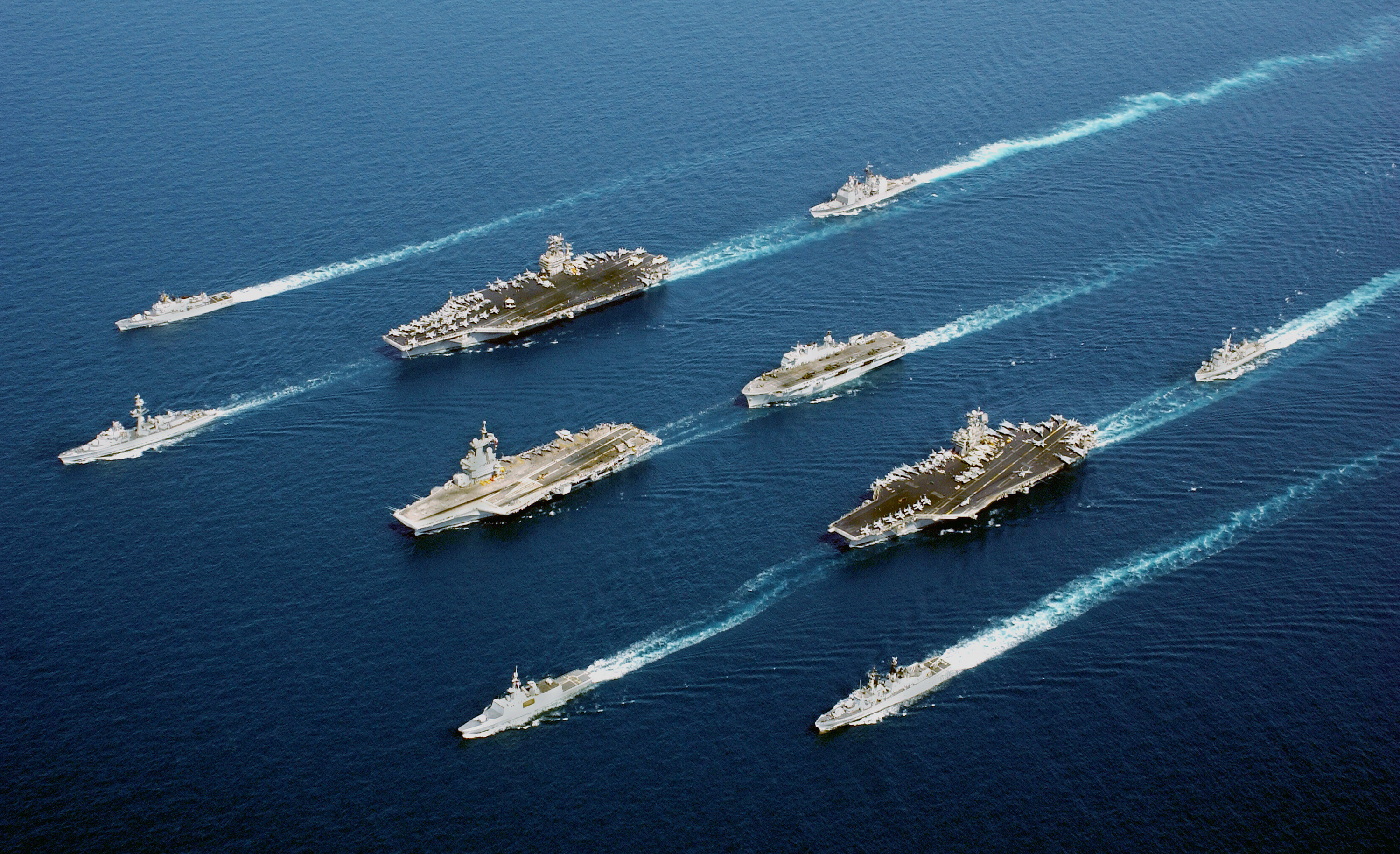
Nobody here but us Filipinos.


India is the obvious solution, but it would be a culturally indigestible chunk. It is many times larger than the rest of the union put together. And Indian culture is, in the end, significantly alien: different languages, very different religion. Moreover, a land power, with other great land powers on its borders—a valuable complementary ally, no doubt, but not a good blend as a full strategic partner.

A better alternative, I propose, is union with the Philippines. Its population, soon to be 100 million, would ensure sufficient manpower for the foreseeble future while being just small enough not to overwhelm. Any Filipino who has graduated high school can speak English, and English is the lingua franca of the country. It is, like the rest of the union, predominantly Christian. It is an archipelago, defensible by a naval power. It is a functioning democracy. While its governmental and legal system are not quite the same as the Commonwealth Realms, they are close relatives: Manila follows the American model, with much current talk of moving towards the Westminster parliamentary system. The Philippines has a strong tradition of seafaring--one in five of the world's sailors today is Filipino. This meshes well with British traditions, and is especially valuable to what would be primarily a sea power and a trading nation. This trading tradition also, not incidentally, makes Filipinos particularly apt at navigating cultural differences and at migration. Wherever they settle, you find no Filipino ghettos. There are not Filipino neighbourhoods the way there are Little Italys or Chinatowns. Give them a generation, and a Filipino family has assimilated.

I expect the Philippines, for their part, would welcome the association. Not just for the obvious economic opportunities for Filipinos, either. When the American Navy pulled out of Subic Bay, there was graffiti reading "Yankee, go home-- and take me with you." Whatever mild thirst there might have been then for going it alone, moreover, has faded a fair bit in the face of new Chinese expansionism in the South China Sea. The Philippines needs to join up with a legitimate naval power.

Britain, Canada, Singapore, and Australia can finance the ships; the Philippines can supply able sailors. The former can offer the capital, the factories, the resources; the Philippines can supply the many willing hands.

Will the pour Filipinos take jobs away from less-skilled Britons or Canadians? Sure. No doubt. But the choice is this: let local and loyal Filipinos take the jobs, or let then be taken by distant Chinese and others. If allied Filipinos take them, the money paid stays and circulates in the union, making the overall opportunities for all of us greater. If we send it to China, the capital and the opportunities are there. And then serve to strengthen an alien system that may be antithetical to our interests.

One more reason that we all might want to do this: one hopes it is temporary, but the US is beginning to look punched out. It seems weary of shouldering alone the burden of being "the world's policeman." Time, perhaps, to call in Scotland Yard. Nations like Britain, Canada, Australia, and the Philippines, who have relied since WWII upon the assured aid of the American military mammoth whenever needed, might be wise to start making alternative arrangements. Indeed, such a strong new partner might persuade the Americans too to stay in the fight. Either way, surely better for our interests than passively ceding the field to some unpredictable other. China? A new caliphate? The BRICS?

The US, in a new wave of its traditional isolationism, also seems to be pulling back from trade deals. The Germans and the French are muttering that the US is not negotiating in good faith on the proposed free trade deal with the EU. But Washington is perhaps only reacting to popular opinion. Americans are sick of the world outside. Both major presidential candidates have announced against the TPP, to which both Canada and Australia were wedded.

This presents for others both a danger and an opportunity. With the US pulling back, the rest of us need new trading partners elsewhere. And it also leaves an opening for someone else to seize the trading opportunities the US is waiving. Another argument for a Commonwealth customs union.

I believe that the union, as proposed, as a free trade area and a unified military entity, would begin life as the third-largest economy in the world, and the third-largest military power. It would only grow in influence and importance from there.

Traditional British naval ensign. You know, I see three blank quadrants that might be filled.


Monday, February 22, 2016

Brexit


Along with Boris Johnson and Nigel Farage, they two most interesting politicians in Britain, I back Brexit.

I think Johnson is right that a British exit would not be all that disruptive, but would probably end with a free trade deal that omitted all the political ties which interfere with British sovereignty. Free trade with Britain is just in everyone's interest in the rest of Europe.

Furthermore, I think the British people will in fact vote to leave. Currently, polls show them almost evenly split, with perhaps a slight preference for the no side—i.e., for staying in. However, the referendum looks to me like the same sort of opportunity to thumb ones nose at the ruling elite as is manifested in the US in the candidacies of Donald Trump and Bernie Sanders. Not to mention the Tea Party a few years ago. This is a world-wide tendency; it is of a piece, if far more muted due to circumstances, as the Arab Spring, It is driven by technology: Web 2.0, social media, the growing lack of any need for control from above by a ruling elite.

I have long hoped the UK would leave the EU and instead join NAFTA. We are brothers over here; he fit would just be a lot more natural. A union of the Anglosphere also makes sense in terms of preserving our geopolitical interests. One hopes Ireland, Australia, and New Zealand would also soon come on board.

I hope the US and Canada are working behind the scenes to set this all in motion should the referendum go against Europe.

Tuesday, October 20, 2015

Cheer Up, Conservatives


Governments ought to change at regular intervals, just to keep things honest. After ten years, an administration tends to run out of ideas and energy. A time out of power is a time to recharge the batteries.

Trudeau may be unqualified, inexperineced, and not very bright, but he has some experienced and qualified people around him. With luck, he will be wise enough to listen to their counsel.

In the meantime, look at the bigger picture. In the Anglosphere as a whole, here is who is in power. right of centre in blue, left-of centre in red.


Saturday, July 12, 2014

Whatever Happened to Northern Ireland?

If present trends continue, Northern Ireland will have a Catholic majority as of January or February, 2016. This upcoming demographic deadline has a lot to do with the current peace in Ulster: the Unionists have realized they have no option but to moderate and seek allies. (And a sumilar deadline faces Israel).

According to the Good Friday Agreement which acheived the current peace in Northern Ireland, reunification of the North with the Irish Republic must occur if and when majorities in both North and South vote for it.

This might now actually happen, and rather soon.

Add this to the legal possibility that Scotland might declare independence as a result of the upcoming referendum, or some future one.

Will Britain be reduced to the United Kingdom of England and Wales? Can Britain live with this?

I think such an event might be one more factor encouraging the creation of a formal anglosphere, in which England, Scotland, and Ireland reassociate as equals within a larger comity including some or all of Canada, the US, Australia, New Zealand, India, Singapore, and some of the Caribbean islands.

Wednesday, November 14, 2012

The Three Great Powers


Three World Powers: Anglosphere, Holy Roman Empire, Muslim Caliphate

Angela Merkel has recently noted, correctly, that Christianity is the most persecuted of the world’s religions. That persecution has been getting worse. John Paul II called the 20th century the “century of martyrs,” but it is worse than ever in the 21st.

One obvious reason why the persecution of Christianity is getting worse is that Christianity used to have some kind of state protection. When Korea executed every Catholic in the country, in the 1870s, French gunships sailed up the Han in response. Imperial Russia, Spain, France, and the Holy Roman Empire all saw themselves at most times as the protectors of the faithful; the entire Christian world, more or less, was ready to act together in a crisis like the Crusades.

Unfortunately, there are now more fissures in Christianity than there were in the Crusades. But look only at Catholicism. While no other candidate looks likely to replace the US and its imperial doctrine of liberal democracy on the world’s stage, if anyone is to do this eventually, a reconstituted Holy Roman Empire might be a leading candidate. Note that a successful empire must be held together by a governing philosophy or ideology, with some pretentions to being worldwide. Catholicism is certainly one such ideology. If the crisis of Christianity were to ever come to general public consciousness, it might serve as a trigger to some sort of unification, as it did once in the Crusades, or in the Age of Exploration.

Catholicism unites all of South and Central America, for a start—one of the most promising areas of the world in terms of future development. Add Mediterranean Europe: France, Spain, Portugal, Italy, Malta, Croatia; and then realms of the old Holy Roman Empire in Central Europe: Austria and Slovakia, at a minimum. Ireland, Belgium, Poland, and Lithuania; the Philippines; East Timor; the Seychelles. These are all countries so overwhelmingly Catholic that using Catholicism as a state ideology should pose no social problems. We are not talking 50% plus one, but overwhelmingly Catholic countries.

It is one of the few possible groupings that seem capable of replacing the US and the Anglosphere in world leadership.

Interestingly, there is little overlap with the Anglosphere, either: only the Philippines, Ireland and Malta. Accordingly, it also seems conceivable that the two entities might some day reconstitute themselves as global rivals.

In addition, the revival of a Holy Roman Empire would naturally either prompt or be prompted by a revival of something like the Muslim Caliphate—a unification of the Muslim lands at least of the Middle East. Again, there would be no overlap.

China and India? Less significant, because neither really has a unifying ideology with universal implications. Russia and Orthodoxy might form another large unit, but not in the same league with these three.

Interesting fodder for a speculative fiction scenario. Probably nothing more. But then again, things can change suddenly...

Friday, October 19, 2012

Parliament of the Imperial Federation


"Freedom, Fraternity, Federation": The British Empire in 1886.

Assuming each seat represented 500,000 constituents, here is the representation by population for a "Parliament of the Imperial Federation," as envisaged once before World War I. The idea is now underfgoing a revival, thanks to the near-collapse of the EU.

Most of those currently pushing the idea speak of limiting it to the “developed” members of the British Commonwealth. The following are usually given as the most likely members:

England: 102 members
Canada: 68 members
Australia: 44 members
Scotland: 10 members
New Zealand: 8 members
Wales: 6 members
Northern Ireland: 4 members

Total: 242 members; population circa 121 million.

But Malta, Cyprus, Singapore, the Bahamas, Barbados, and Trinidad and Tobago now also seem to qualify as developed:

Malta: 1 member
Bahamas and other islands of the West Indies: 1 member
Barbados and other islands of the West Indies: 1 member
Trinidad and Tobago: 2 members
Singapore: 10 members
Cyprus: 2 members

Total: 257 members; population circa 128 million.

This is still, of course, far from the entirety of the “Anglosphere.” A number of big players are missing:

Ireland: 9 members
Jamaica: 6 members
USA: 628 members
India: 2410 members
Philippines: 207 members
South Africa: 98 members

There are obvious problems with incorporating some of these. The USA would dwarf the rest put together. India would dwarf the rest including even the USA, and flood the union with cheap labour. The Philippines would also be a huge injection of cheap labour; Jamaica a smaller one. Which might be either good or bad.

Leaving aside labour and wages, I cannot see a union working well with any one member too dominant. The danger of democracy is of any large majority bullying and oppressing any distinct minority.

Personally, I'd like to see a union including Ireland, the USA, Jamaica, and the Philippines. I would hope that including the Philippines would give enough counterweight to prevent complete domination by the US.

And since it's my fantasy, I guess I get my way.

Saturday, September 29, 2012

The New British/Anglophone Empire


The biggest "Red State" ever.


Here's another writer talking about a revived British/Anglosphere Empire. He sees the recent deal between Canada and Britain to share Embassies as a step in that direction.

Tuesday, August 14, 2012

Angus Reid Poll Suggests Plurality of Britons for Leaving EU


Sounds as though, if Cameron is serious about holding a referendum, it might really result in the UK leaving Europe.

Not that I think it would be a good idea in the modern world for Britain to try to go it alone. Just that I think they're in the wrong trading block. I'd rather see a combined NAFTA-Commonwealth Bloc, with a few other members (Ireland, The Philippines...)--roughly, the "Anglosphere." The combination is far more natural, in terms of shared political, legal, and economic traditions. It would be much bigger and more powerful. And I think it makes more economic sense--a more diverse bloc has more to trade profitably.

Friday, July 13, 2012

Telegraph Writer Says What I've Been Saying for Years

Might the sun yet rise, and never set again, on the Anglophone Empire?


...Britain would have a great future economically and politically  allied with the Anglosphere instead of the EU.

The Special Relationship with Washington would only be strengthened, not weakened, as America looks beyond the emperor with no clothes in Brussels to a resurgent Britain freed of the shackles of the EU’s Common Foreign and Security Policy and Common Security and Defence Policy. And it would only be a matter of time before a free trade agreement was negotiated and signed between the US and UK, reinforcing the biggest bilateral investment relationship in the world. It would also be a major opportunity for Britain to reinvigorate ties with the Anglosphere nations of Canada, Australia, New Zealand and India, as well as important English-speaking trading partners in Asia such as Singapore and Hong Kong. 

Link. 

Saturday, December 24, 2011

The Renaissance of the British Empire


Bigger than a breadbox.
The recent exclusion of the UK from the latest deal to rescue the Euro moves us a big step closer to seeing the Anglosphere reunite--Britain is visibly and definitively pulling back from the EU now.

But then, a guest on the BBC was just quoted as saying the Euro itself is now doomed; it is only a matter of time. And the EU itself is likely to break up when this happens.

England may then not be the only European country interested in chipping in instead with NAFTA. Among those shopping for some new association might well be Ireland, Spain, and Portugal--all turfed out of the Euro as bad financial risks. All three have powerful New World connections.

I can see a possible reunion, not just of the old British Empire plus the US, but this also combined with the old Spanish Empire plus the old Portuguese Empire, for a that much more formidable free trade area. This free trade area would be far stronger than the EU, because it would combine areas with a great diversity of resources and economic strengths, along with greater unity of language and culture. It could include two important emerging powerhouses, India and Brazil.

It would permanently dwarf China.

Friday, November 11, 2011

Britain's Choice


The current “Eurozone” crisis really does seem to be moving in an interesting direction. The response of France and Germany seems to be to push for an “ever closer union,” but a more restricted one, to counter the sorts of stresses now apparent in the monetary union. This is fundamentally a plan to break up the EU.

Britain now faces the choice of throwing in its lot with a monetary union that has so far looked like a very bad idea, and surrendering a good deal of its sovereignty, or being relegated to a second-tier status within Europe.

Time to propose again my own preferred alternative: an Anglosphere union. Britain should instead leave Europe and join what is now called NAFTA. Trade ties would probably almost automatically bring Ireland with it, possibly some Scandinavian countries. Australia and New Zealand would find it hard then to stay out, given the cultural ties. Most of the English-speaking nations of the Caribbean would probably join in a flash if the opportunity was offered—they've ben seeking union with Canada, the US or Britain for some time anyway. Voila! More or less the union I've been speaking of.

It makes sense not just on grounds of shared culture or shared trade, but a shared historic political and economic philosophy. The Anglosphere is the home of the social philosophies of John Locke and Adam Smith, not to mention the legal traditions of Common Law and Magna Carta. I think they would find it much easier and more comfortable to work together in a tighter economic or political union that Britain would with the rather different traditions of Europe.