Past experience has shown me that I have a truly appalling record at making predictions for the upcoming year. Fortunately, last year, I was too ill to make any. Because they would have been wrong.
A lot of people have very bad premonitions for the coming year. A lot of people have high hopes. I think odds are that there will continue, as last year, to be many surprises. This is happening because of technology. The world is changing. We are at a moment at least as important as the invention of printing. More probably, as the invention of writing. It is bound and sure to have wide-ranging political, social, cultural, and economic ramifications, and we have only begun to see them.
Self-driving cars are almost here. Farewell to much of the expense and difficulty of travelling. Farewell to most of the human toll of traffic accidents. Farewell to the need for any form of government public transit. Farewell for the need for parking space. And farewell to the single most common job in North America.
The rest of the working class will be hit as hard. Robotics will kill most manual jobs. Checkout cashiers are already no longer needed. Drones can already replace deliverymen. As robots become cheaper than even Chinese workers, manufacturing may begin to re-relocate.
Nor are only working class jobs in danger. The Trump revolution was a part of a general revolution against the professional “elite.” This was the biggest part of the printing revolution, and it is bound to be much bigger now. Doctors are actually now obsolete; they hang on because of their social power, but it will not last. Lawyers are obsolete. Teachers are obsolete. Journalists are obsolete. Accountants are obsolete. No doubt engineers are obsolete. Why are the rest of us going to keep giving them money and power when they serve no useful function?
This I can foresee. But how much of it is going to happen in the next year? That I cannot foresee.
Part of Trump’s victory was a revolt against political correctness. I think political correctness, feminism, and the LGBT lobby are truly dead now. From now on, they will be a laughing stock, and it will not take long before everyone will be embarrassed to identify with them. This is the sort of thing that dies fast.
Part of Trump’s victory also was a revolt against free trade. I have always believed in free trade. I still do; I think that it will continue, that Trump is just bargaining for a better deal. If not, I expect economic trouble worldwide. Even if free trade hurts some producers, it helps others; and it helps all consumers. Not everyone is a producer; everyone is a consumer. This is before we even begin to look at the issue of comparative advantage. Or the obvious moral point that all men are brothers, and there is a basic immorality in taking jobs away from the relatively poor in Indonesia to give them to the relatively rich in Michigan.
As for immigration, I have in the past been generally in favour—on the grounds that if we do not bring the workers to Canada, the jobs will just go to cheap labour elsewhere. That may no longer hold, with the growing capabilities of robotics. Robots in Canada may soon be cheaper than people in China. The need to keep our population of active workers growing may also soon no longer apply. What happens if improvements in life expectancy, entirely probable with the unlocking of the human genome, begin to kick in? Labour may become irrelevant, and only capital matter. Good joke on Marx.
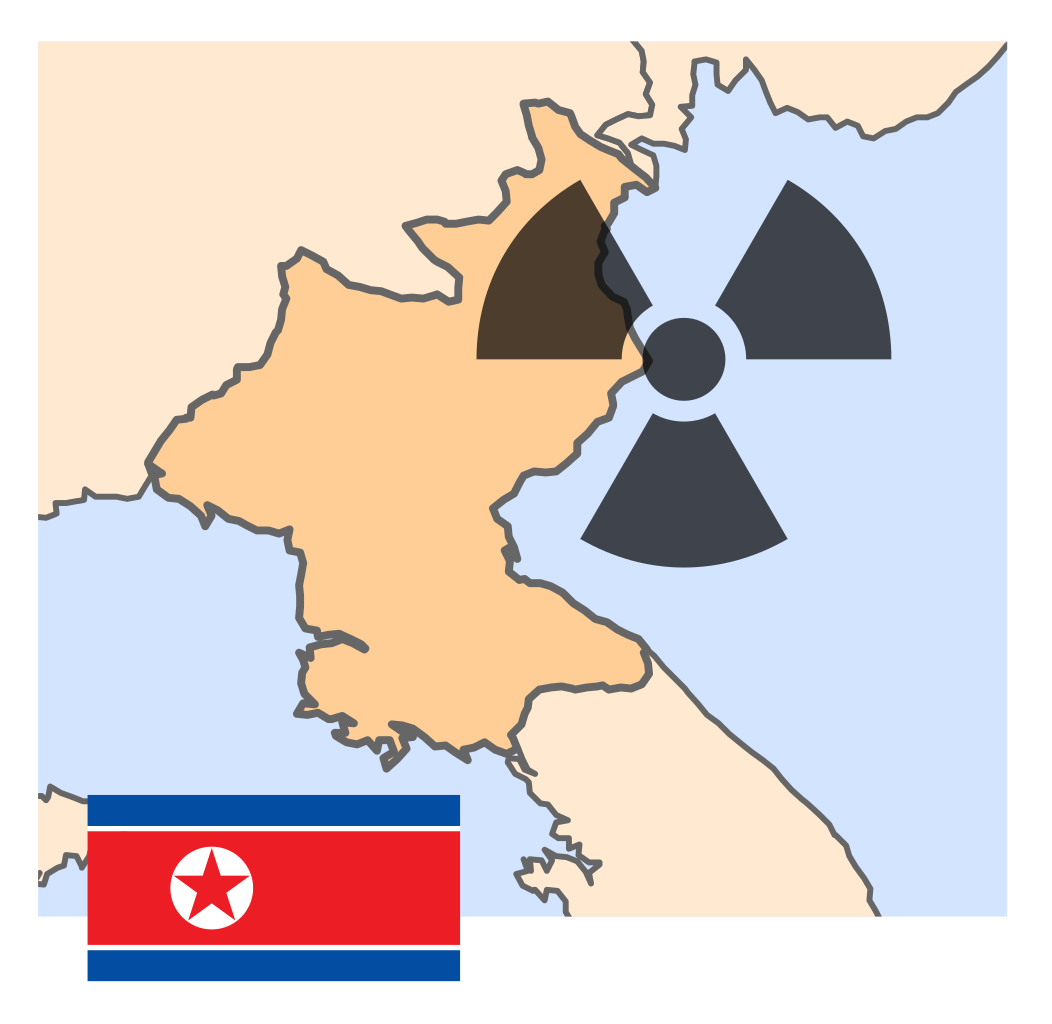
One thing catches my eye this January. Trump has tweeted “North Korea just stated that it is in the final stages of developing a nuclear weapon capable of reaching parts of the U.S. It won't happen!”
Is he serious? How is he going to prevent it?
Commentators I have seen all say this will require tougher sanctions, or sitting down at the table with Kim Jong Un, or maybe infecting them with some computer virus. A preemptive strike, of course, is out of the question.
But is it?
Surely the US, if it has the will and is prepared to accept the possible repercussions, has the capability to take out whatever North Korea has in a preemptive strike. The land area of North Korea is much less than that of, say, Iran, and every inch of it has been under close US surveillance since 1950. The Americans have bases just across the border. What Israel could do in Iraq, surely the US can do in North Korea.
Yes, this could mean war. Yes, North Korea has artillery that could hit Seoul.
On the other hand, it seems certain that, in any all-out war, the North would lose--so long as they still do not have nuclear weapons. Their only hope would be blitzkrieg, as they tried in the Korean War. It almost worked then because the South had no air power and no anti-tank weaponry. That is not going to be repeated. And the reason they had no anti-tank weaponry then still holds—the Korean Peninsula is lousy blitzkrieg terrain. Think Switzerland.
The Jucheists have been playing the game of provocation just short of war for over sixty years. Because it pays off for them. They shake down for some handout to stop, and then they can repeat the cycle in a few years. Perhaps it would be healthy to call their bluff. Their own actions suggest it is a bluff. Do the leaders in Pyongyang really want to die?
 |
| Luckily, Gananoque remains out of range. |
Moreover, isn’t it, on balance, more dangerous to do nothing, and allow the DPRK’s hostile and unpredictable government to develop the ability to deliver a nuclear warhead on Los Angeles or San Francisco? Then they could really go for the Danegeld.
Would China react? I doubt it. They only engaged last time when the UN forces got close to their own border. China is on the rise; the longer they can postpone any confrontation, the better their chances. So long as their basic interests are not threatened, they are better off keeping the peace and keeping their economy growing. They have distanced themselves enough from the Pyongyang regime that their prestige is not on the line here, if they stay out. A harshly-worded protest is about the most I would expect.
At the same time, such a strike might be a useful shot across the bow to Iran and Russia, who have been acting pushy in the last few years. It would reassure American allies everywhere.
Trump is no doubt setting the table at this point to scare North Korea into pulling back on their nuclear program. And, more importantly, to give China fair warning. But the Kim regime is used to getting away with this stuff, and is entirely capable of miscalculating. If they do not pull back, hitting them hard would be the best way to set the table for the next negotiation with the next adversary.
It’s the art of the deal.
So here’s one prediction: Trump bombs North Korea.





 Posts