Playing the Indian Card

Showing posts with label anatman. Show all posts

Wednesday, February 04, 2026

No Easy Walk to Freedom


I recently shocked someone by pointing out that the ultimate goal of Buddhism is suicide.

“Wait,” she objected. “Isn’t it enlightenment?”

No, that is not Buddhist terminology. The Buddhist goal of the eightfold path is “nirvana.” Nirvana actually means extinction: like the snuffing out of a candle. Actually the opposite of enlightenment.

What you are snuffing out is the self—anatta, anatman, “no self.” 

Hence, literally, the goal is suicide.

This gets complicated when you believe in reincarnation. It is not a simple matter of shooting yourself in the head; you’ll just be born again. It takes many lifetimes to accomplish the task.

I am not sure Buddhism would be as appealing in the West if more Westerners understood this. I think too many embrace Buddhism because they imagine it is an easier path than Christianity. People (wrongly) imagine it lacks a moral code and so any pesky feelings of guilt. 


Tuesday, December 26, 2023

It's All about Me, Right?


were we led all that way for
Birth or Death? There was a Birth, certainly
We had evidence and no doubt. I had seen birth and death,
But had thought they were different; this Birth was
Hard and bitter agony for us, like Death, our death.

Elizabeth Gilbert wrote a travel memoir titled Eat, Pray, Love, in which, following a divorce she initiated at 34, she travels to Italy for the food, then to India for the spiritual insight, then meets and marries a man in Bali. (They have since divorced.) It has been made into a movie, starring Julia Roberts.

It sounds to me like a parody of the rootlessness and frivolousness of modern life in the developed world, existential angst among the Karens. But Oprah Winfrey loved it. Friend Xerxes also takes it seriously, and cites as revelatory the author’s key insight: “God lives in me, AS me.”

One understands how this is something she might have picked up in India. “Tat tvam asi,” “That art thou”: “that” being Brahman, the undifferentiated Godhead. Brahman-Atman, a common formulation of Advaita Vedanta Hinduism; monism. “All is one.”

It is not clear to me, however, that it means what she thinks it means. It is dangerous to parachute into a foreign religious tradition with your own prior assumptions. You can get thing backwards.

It means that the individual self is insignificant and transitory, like a raindrop falling into the ocean of Brahman. Or like a momentary hand gesture of the dancing Siva, the glitter of a sequin on his thigh. I suspect Gilbert, her acolytes, and Xerxes are reading this instead in the Satanic way: “I am God, and there is no other God before me.” Fatally wrong.


Monism, Advaita Vedanta, is more popular with foreign spiritual tourists than with Indians. Buddhism objects to the “Brahman-Atman” formulation with its counter-doctrine of “anatman”: “there is no self.” Precisely because of the danger of misinterpretation. It is self that must die, not God. Others object that “All is one” is a meaningless statement: one compared to what? And then there is Ramakrishna’s succinct practical observation: “I want to taste sugar; I don’t want to BE sugar.”

Among actual Indians, Advaita Vedanta has been mostly supplanted for centuries by devotional Vaishnavism.

The issue is that one must “die to self.” “He must become greater; I must become less.” C.S. Lewis writes: “The very first step is to try to forget about the self altogether. Your real, new self will not come as long as you are looking for it. It will come when you are looking for Him.”

In the Gospel of John, Jesus says we must be born again. That is one way to put it. But in order to be born again, we must first die in some sense. It is the death of the will.


Saturday, November 16, 2019

So What Is Mental Illness?


Bodhidharma.

To begin with, it is not illness.

People generally seem not to realize that calling these things “illnesses” is a metaphor or an analogy. It depends on seeing our souls as equivalent to our bodies.

Yet they are fundamentally different. Our bodies can be seen like a machine that we operate.

But our minds are ourselves. We do not use the mind. We are the mind.

Because we use the body like a machine, it is easy to understand its functions. Each part has proper operations we can recognize. Illness is when some part is not performing its function.

But do we know what the proper function is of a soul? Of a mind? Of a self?

If we do, that is a religious question, not one psychiatry can answer.

Freud proposed that the proper function of a human being is to work and have sex. This reduces the human person itself to a machine. Is that really all there is? If it is, who wouldn’t be depressed?

If this is true, moreover, why listen to a psychiatrist? They are doing whatever they do only to get paid and get laid. This does not involve, notably, either telling the truth or doing anyone else any good. Should you trust them with your soul?

This sounds harsh, but this is what the logic boils down to.

Psychiatry and psychology in general have to rely on the goal of “being normal”; which is to say, being average. Being like everyone else. Again, not an inspiring goal. If mental health means simply conformity, it is a sinister thing: sinister to human freedom, and to human progress. Jews are not normal. Gandhi was not normal. Mandela was not normal. Einstein was not normal. Steve Jobs was not normal. Shakespeare was not normal.

It should be no surprise to us that people who have accomplished any great thing usually show the same symptoms the DSM lists in its descriptions of mental illness. This has become a commonplace recently, but it was already well understood by Plato and Aristotle.

Aristotle’s Problem XXX:

Why is it that all those who have become eminent in philosophy or politics or poetry or the arts are clearly of a melancholic temperament, and some of them to such an extent as to be affected by diseases caused by black bile?

Psychiatry has no answer. Religion does. And I think it is possible here to speak for religions generally. What is the proper function of the human person? The proper function of the human soul is to seek truth and good. Many will add beauty.

On this definition, it is entirely possible that the symptoms psychiatry considers mental illness are actually signs of mental health.

Consider Buddhism.

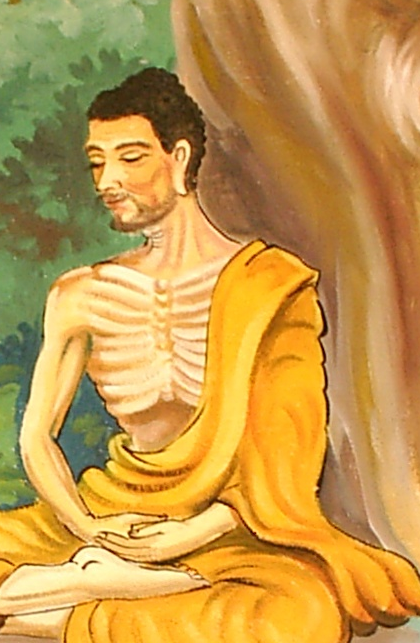
Gautama reveals the Four Noble Truths in the deer park at Banares.

Buddhism’s first Noble Truth is that all existence is suffering, dukka, “ill-being.” That’s one symptom of depression: “depressed mood.”

Buddhism’s second Noble Truth is that suffering is caused by attachment. The third Noble Truth is that one ends suffering by ending all cravings, all attachments. That’s a second symptom of depression, according to the DSM: “Markedly diminished interest or pleasure in all, or almost all, activities.”

The fourth Noble Truth is the eightfold path, which involves, essentially, withdrawing from the world and sitting still, meditating, practicing mindfulness: “A slowing down of thought and a reduction of physical movement.” That’s a third symptom of depression.

Through such meditation, one comes to the critical insight of anatman, anatta: the self is an illusion, “no self.” That’s a fourth symptom of depression: “depersonalization.” “Feelings of worthlessness.”

The ultimate goal is “nirvana”: “cessation,” like the snuffing out of a candle. This sounds a lot like a fifth DSM symptom, “recurrent thoughts of death, recurrent suicidal ideation without a specific plan.” More literally, in Buddhism, suicide is considered an honourable choice, more or less to be encouraged.

That’s five symptoms, meaning, according to the DSM, that any sincere Buddhist is suffering from depression.

Some will no doubt take this as evidence that the religious are insane. Some similarly argue that Muhammed was an epileptic, and the apostles in the upper room were hallucinating Jesus’s resurrection. Mad, all mad. But really, who are you going to believe, the acknowledged best minds of the world’s entire population over at least the past two millennia, or the relatively distinguished panel who came up with the DSM a few years ago?

It seems most reasonable on the evidence to posit that, suffering as they unquestionably are, the average “mentally ill” person is actually functioning better as a human being than the average person.

Religion does, it is true, recognize such a thing as spiritual or mental sickness. There are two forms: error, and sin. The first falls short of the truth; the second falls short of the good.

But religion is where these answers can be found.


Saturday, July 27, 2013

Descartes vs. Gautama


Je pense, donc je suis-- Descartes.

Cogito ergo sum
-- “I think, therefore I am.” Descartes found the existence of the self to be the one self-evident, undeniable truth. From this, he constructed the Enlightenment cosmology that we live by today.

Je pense, donc, je ne suis pas--Gautama.
Yet in around 500 BC, the Buddha Gautama seems to have come to the very opposite conclusion: the key to his own cosmology is “anatta”--”no self.” His personal revelation was that the self did not exist. From this, for him, all else followed.

I believe both are right. Descartes is right that we cannot deny the existence of the self as a perceiving subject; to do so would be an immediate contradiction. Then who is denying?

But beyond that, what can we say about this self? What are the properties that make it what it is? The instant we try to assign any property to it, we are again involved in a contradiction—because the instant it can perceive a property, that property is, ipso facto, not an aspect of the perceiver, but a thing perceived. Anything ascribed to the self therefore appears to be, in Aquinas's terminology, an accident, rather than a real quality. I am not fat or thin; were I the one instead of the other, I would still be the same self. I am not male or female; were I the one instead of the other, I would still be the same self. I am not old or young, Jew or Greek, or anything else in particular.

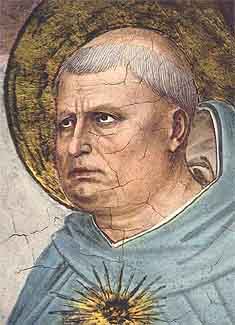
It's all an accident - Aquinas.

So the self is nothing in particular. In this real sense, it is nothing: “not this, not that,” in the formulation of the Upanishads. From this insight, it seems to me the Buddha is correct that cravings for one thing or another are nonsensical, like a dog chasing its own tail. Nothing can be acquired by the self.

One can see all things, then, as a movie playing before us in a darkened theatre. Nothing touches the self.