Playing the Indian Card

Showing posts with label Scheer. Show all posts

Wednesday, November 27, 2019

The Kinsella Tapes


CBC has apparently gotten hold of tapes of Warren Kinsella discussing his work on a backdoor social media campaign to smear Maxime Bernier,

Aside from any moral issues, this strikes me as evidence of gross political malpractice by Scheer's team.

First question: where do you suppose the CBC got the tapes?

Almost necessarily, from someone at Kinsella's firm, hoping to discredit the Conservatives.

It is as though the Scheer team handed a loaded revolver to a known enemy, and painted a target on their t-shirt. What did they expect?

Even apart from this, it makes dubious political sense to try to character assassinate the smaller party over to their right. Granted, the PPC might cause some vote splitting. At the same time, their presence forces the debate rightward, presenting the argument for policies near Scheer's on the spectrum, and making his own look more moderate. Slandering their views as "racist" risks tarring the Conservatives as well, by association. Just in case the adversary missed with that loaded pistol, Scheer's men had a loaded shotgun ready, pointed at their foot.

After all, Bernier a couple of years ago came within a few votes of becoming the Tory leader.

It's all so dumb it almost seems easier to believe Scheer is secretly a Liberal himself.


Saturday, November 09, 2019

Lies, Damned Lies, and Politics


And if you don't like this face, I have another one...

It is alarming how everyone in the media is going after Andrew Scheer for being Catholic. This injection of religious prejudice is something Canada has not seen before—at least until they went after Stockwell Day. And for good reason. In a nation nominally divided about 50/50 Protestant/Catholic, it is profoundly dangerous to civil peace.

The Canadian balancing act.

Not to mention being discriminatory. JJ McCullough makes a good point: imagine the blowback if the media similarly went after Singh for his Sikh beliefs. Indeed, if Scheer were Muslim, this line of criticism would violate the notorious M-103, prohibiting “Islamophobia.”

It also seems to me that this attack encapsulates, quite probably intentionally, terrible practical advice to the Tory party. There is a substantial part of the public who agree with Scheer and the Catholic Church on these issues, roughly 50%, quite aside from the 50% who are nominally Catholic, and may be poked awake to that allegiance. And they are being represented by no other party. A fifty percent vote in Canada guarantees a perpetual majority. The last thing the left should want is for the Conservatives to run on being conservative.

Unfortunately, we cannot count on either the Canadian Conservatives or Andrew Scheer showing either courage or common sense on this matter. Class allegiances seem to trump either self- or public interests.

Scheer was recently asked, not for the first time, “Do you believe that being gay is a sin?”

And he answered:

“We made it very clear during the election, in the last few months and years, that our party is inclusive. We believe in equality of the rights of all Canadians. My personal opinion is that I respect the rights of every single Canadian. And my personal commitment is to stand up — that is my personal opinion — my personal commitment to Canadians is to always fight for the rights of all Canadians, including LGBTQ Canadians.”

The correct answer, for a faithful Catholic, would be a simple “no.”

It is hard to believe Scheer does not know this. 

No, the Catholic Church does not believe, and has never believed, that being attracted to the same sex, “being gay,” is a sin. Homosexual ACTS are sins; the distinction is fundamental.

Nor does believing that homosexual acts are sins mean that, in the words of a recent Global story, “you believe that a significant number of your fellow citizens — even some whom are legislators — are morally deficient, defective.”

This is a gross misunderstanding not only of Catholicism, but of morality itself. Homosexual acts are sinful; so are fornication, masturbation, or using most forms of birth control. So is gossiping, or swearing, or getting drunk. And so on. All of which puts the average person with homosexual inclinations pretty much in the same boat as the average person generally. Nothing very special here about being gay. We all have temptations to sin. The greatest sin, to Catholicism, would be asserting that one is without sin.

It is worth noting that prominent homosexuals have historically most often found the Catholic Church their spiritual home: Andy Warhol, Oscar Wilde, Milo Yiannopoulos, Tennessee Williams, Evelyn Waugh.

Equally obviously, believing that homosexual acts are sinful does not require making them crimes. Nobody is calling for laws against masturbation, or gossip. Crime and sin are very different issues, and this is obvious as can be from the Biblical outset: Jesus was crucified by the state as a criminal. “Render unto Caesar what is Caesar’s, unto God what is God’s.”

All of this is no doubt too complicated to go into in a scrum outside a committee room; but why could Scheer not have simply and accurately answered “no”?

The real problem with Scheer is not his beliefs, but that he cannot be honest and straightforward. Even when it is to his benefit. He gives the constant impression of having a hidden agenda; because he has a hidden agenda. In his own mind, he is in the business of conning the people. That is what is hurting him.

We see something similar emerging in the US Democratic primaries. It took far longer than I thought it would, but Elizabeth Warren seems now to be slipping, and Bernie Sanders gaining, on this issue. Asked about her health care plans requiring higher taxes, Warren keeps giving evasive answers. Sanders responds, “of course they will. Nothing is free. But …”

This is the secret of Sanders’ remarkable impact last cycle, and also of Trump’s success. They don’t show contempt for the public. They don’t try to con. “I’m a socialist.” "What's bad about being friends with Russia?"

This is something of which Scheer seems incapable. And he is of course not alone; most of the politicos and the political commentators think along the same lines. They are uniformly urging him and the Conservatives to either change principles or lie more strenuously. Seeing Biden’s prospects fade further south, Michael Bloomberg is putting himself forward. The idea is that, as a “moderate,” he would have the best chance against Trump. 

I suspect that calculation is no longer going to work. If people do not remember what you used to say, they can now look it up. Flips are flops. Principles matter.

Not at all incidentally, this is largely the same problem causing such turbulence for Pope Francis. He always prevaricates, no doubt thinking this is the smart thing to do to keep everyone happy. Instead, this is leading to growing rifts within the Church.

Compare the Catechism of the Catholic Church, produced by popes JPII and Benedict. We can go to it and see exactly what the teaching of the church is on homosexuality. Without it, how would we have countered the false charge that Catholics think being gay is a sin?

Ambiguity on principle is a principal tool of the Devil. It is why John the Baptist came, “to make the ways straight for the Lord.”

St. John the Baptist


Monday, November 04, 2019

Sticking with Scheer


Some argue he just looks too much like a chipmunk to ever be prime minister.

Everyone is now out to get Andrew Scheer. Odd, since he was the most successful of the three big party leaders in the last election. Trudeau lost votes and seats. Singh lost votes and seats. Scheer gained both.

This, however, follows old and honoured Tory tradition. Since at least the dying days of Diefenbaker, they have ever been quick to form a circular firing squad at the hint of adversity.

It did the NDP no good to dump Mulcair after one election loss. It did the Liberals no good to dump Dion after one election loss. It may as well do the Tories no good again; unless perhaps they have some clear idea that a distinctly different sort of leader and leadership is required. A Churchill, say, instead of a Chamberlain. A Trump instead of a Romney or a Jeb Bush.

But I see no trace of this in the public reasons given for Scheer to go. They seem completely wrong, and harmful as advice. Scheer was a smiling face, and certainly tried to come across as a moderate. Yet according to all the pundits, he failed to do better because of his personal social conservative views, and because he was not enough like the Liberals on fighting climate change.

According to the rolling polls, this is wrong. What hurt Scheer most was simply the public prediction that he might win a majority government. That scared many on the left into the Liberal camp as a strategic move.

As to the Conservatives’ relatively weak showing in Ontario, I hear that their “vaunted ground game” did not materialize this time. As a local deputy returning officer on the day, I found it notable that they managed no candidate’s representative at my polling station for the count.

This strongly suggests that the problem was a lack of enthusiasm. The same thing that killed Romney. It was not that the Conservative platform differed too markedly from that of the NDP or Liberals. It was that it did not differ enough, giving ideologically-driven volunteers and voters little reason to come out.

It is often said by Liberals that they lose whenever they run to the right. We saw the same for the NDP in 2015: they veered towards the centre, the Liberals swung over to their left. The Dippers dropped to third, the third-place Liberals surged improbably to power.

People in general value sincerity and principle more than any specific ideology. This is ever more so in these days of democratized information, or, to use the journalistic cliché, “social media.” Witness the witless rise below the undefended border of Bernie Sanders and Alexandria Ocasia-Cortez.

But even going with ideological voting, and a cynical approach based on reading the polls, it makes the best sense for Conservatives to pull right and not left on social issues and climate change. One does not need a majority of the vote to get a majority government in Canada; one needs something approaching 40%. Four parties, the Liberals, NDP, Greens, and BQ, are splitting the vote that supports unregulated abortion, carbon taxes, special rights for transsexuals, laws against “hate speech,” stiffer gun bans, and so forth. Yet polls suggest that roughly half or even more of the electorate do not hold these positions. If any of these became the decisive issue in an election, and the Tories were the only party to vote for if you were on that side, it would actually mean a crushing Tory majority.

But even leave aside all partisan considerations, and consider the health of the Canadian democracy. How good a situation is it when a large portion of the electorate, perhaps even a majority, has no vote—that is, no party to vote for that represents their views? Not great for peace, order, or good government.

That this is so commonly now the case is why we see everywhere else the rise of “populist” parties. We are overdue in Canada—held back, I suspect, because in a way we were the first out of that gate, with Preston Manning’s Reform Party. That led to an unreasonable fear of “splitting the vote on the right.” So we have lapsed right back into the untenable situation that then forced Reform to form: the way, under Mulroney, there was nothing to choose between Tories and Grits, and no one to vote for if you were not keen on Charlottetown or Meech Lake and a new, unamendable, constitution.

If there is a problem with Scheer, it is that he is not forceful enough, fiery enough, in his public persona, to make a populist case. He radiates business as usual. The problem with his view on abortion in the TVA debate was not that he was opposed to abortion, but that he tried to fudge it and be on both sides of the issue. Same with climate change.

But suppose Scheer is jettisoned, who replaces him as Tory leader? Where’s our white knight? Maxime Bernier would have been best last time; but it is too late to turn to Bernier now. He has declared the entire Tory party corrupt. Were he to run, he would automatically lose the principled image that makes him appealing.

Peter MacKay? As a so-called “Red Tory,” a classic conservative, he would if anything further reduce the distance between the Liberal and Conservative platforms, exactly the wrong move by my estimation. MacKay notoriously has no charisma. And he is a model of the unprincipled politician: he captured the PC leadership by a backroom guarantee to David Orchard that he would never unite the PCs with the Alliance. Then he immediately moved to unite the PCs with the Alliance. Political dishonesty could not get much more butt naked than that.

Jason Kenney? He’s just been elected as premier of Alberta. It is way too soon for him to make the jump; it would look too opportunistic. Doug Ford? Same problem, plus his current unpopularity in any case. Brad Wall? Has the problem of not being bilingual. Lisa Raitt? Just lost her seat.

There are certainly possible stars in the caucus and beyond. Candice Bergen; Rona Ambrose; Erin O’Toole; Pierre Poilevre. But nobody seems an obviously better option than Scheer, or suggests a strikingly different style or approach.


Wednesday, March 20, 2019

Blowing in the Wind


A few days ago, I wrote about the slaughter in Christchurch, and that of course everybody is going to come out and say they are against murder and hate; but they always say that, and it does nothing.

Actually, this time, in Canada, not everyone has done so. And this looks significant.

Andrew Scheer’s initial statement seemed to avoid saying that the victims were Muslim.

“Freedom has come under attack in New Zealand as peaceful worshippers are targeted in a despicable act of evil. All people must be able to practice their faith freely and without fear.”

He was quickly criticized for this omission, and sent out a second statement that was more explicit. 


Maxime Bernier


Maxime Bernier did not. He first said nothing about the incident, and then, when challenged, responded that there was no call to issue a statement. He did not automatically issue statements whenever Christians or others were attacked either.

“Some journalists have no decency. Did this one harass me or anybody else when dozens of Christians were massacred in Nigeria and the Philippines weeks ago? Why not? As a rule I don’t comment on these horrible tragedies in other countries. Period.”

Bernier has a point. Islam has been given more consideration in Canada in recent years than Christianity or Judaism. Witness House of Commons resolutions consciously and deliberately condemning “Islamophobia,” without referring to other religions—religions that suffer more actual hate crimes.

But this reaction, by Scheer and Bernier, suggests that politicians are now no longer certain they gain politically by defending Muslims. Even at a time when one might expect natural sympathy. That’s chilling. They are making a careful calculation instead; fingers are to the wind. And the direction of the wind may be shifting.

Important moral for any minority in a democracy: do not trust government to protect you from a lynch mob. The same lynch mob elected them. 

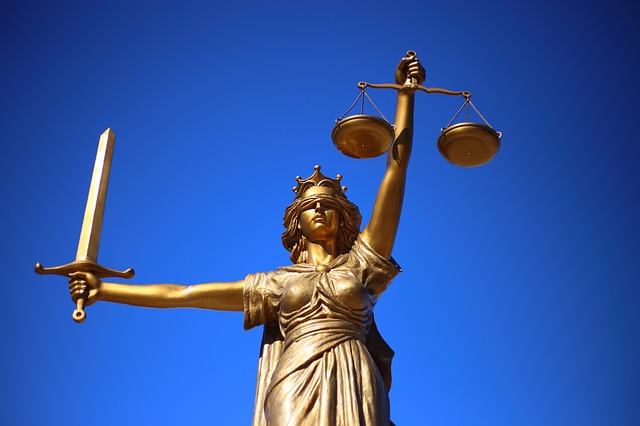
There is a reason for the blindfold.

This is one of the great overlooked advantages of Empire. The authorities in London, and those they sent out to administer, were divorced from local factions and prejudices. They could view disputes with a disinterested eye, and so would dispense justice. Good news for minorities everywhere: Sikhs in India, Ibo in Nigeria, Hakka in Malaysia, French in Canada. This is always less probable in either a democracy or a local oligarchy.

Witness the very different experience of aboriginal people in Canada, under the Empire, and in the US. Thomas Darcy McGee found the same to be true for the Irish: Montreal treated them more fairly than Boston, where the signs went up that “no Irish need apply.” Witness the disparate treatment of Africans in the two countries. 

It was real.


In theory, liberal democracies also have checks and balances built in to restrain the mob. This is the point of the Senate, in either Canada or the US. This is the point of a constitution and a separate judiciary. To some extent, this is the point of a federation.

Unfortunately, we have increasingly politicized them.

While all the talk has been, for the past forty years or, about celebrating minorities, do not be misled. Our system is not set up for this, and this was never true. It looked true only so long as so-called “minorities” constituted a majority voting bloc, and some disliked minority—such as “cisgendered Anglo straight white males”—could be falsely presented as the majority. But the focus of the mob can just as easily, and abruptly, swing to another victim: the Jews, or white women, or the Muslims, and so forth. We are beginning to see this.

First they came for the cisgendered Anglo straight white males, and I said nothing, for I was not a cisgendered Anglo straight white male. Then they came for the Jews, and I said nothing, for I was not a Jew. Then they came for the Muslims …

Saturday, June 03, 2017

Scheer's Chances


Old Al.

The pundits have decided that Andrew Scheer has little chance of success as Conservative leader. Only two majority governments in Canadian history, they point out, have ever been defeated after only one term: Alexander Mackenzie and R.B. Bennett.

Scheer will likely lose his first election, and be replaced.

RB

That is true, as far as it goes; but is rather little data to go on. If we include provincial elections, we quickly find further examples. Bob Rae, Ontario, 1990. Lost in 1995 to a PC majority under Mike Harris. Dave Barrett, BC, 1972. Lost in 1975 to a Socred majority under Bill Bennett. That’s off the top of my head. The same pattern was followed by a number of United Farmers governments across Canada. Sterling Lyon managed to blow a majority in one term in Manitoba, 1977-81.

Bob.

The typical scenario goes like this: brash young leader comes to power unexpectedly, spends like a drunk monkey, gets thrown out next election.

Trudeau might fit the mold.


Thursday, June 01, 2017

Scheer as Tory Leader


I cannot tell a lie. I did not expect to be, but I was really disappointed when Andrew Scheer won the Tory leadership. For a time, I had to mourn Mad Max, even though Scheer had been my own second choice.

Bernier was the exciting candidate. I hope he does not go away.

But it may be that Scheer was the wiser choice. He does a better job of representing the Conservative party as a whole, all factions. That may be more important. He is a smart guy, a good speaker in the Commons, popular with MPs.

It is interesting to analyze the vote to figure out how strong each of the factions are within the party. It gives a good idea of what the new leader has to work with, and who needs to have a place at the table.

SoCons – 40%. This is roughly Scheer’s tenth ballot total. This is the point at which Brad Trost dropped out, leaving Scheer the only social conservative candidate. For the hard-core SoCon vote, see Trost’s final total: 14.3%. But some hard core SoCons may already have been with Scheer at this point, on winnability.


Libertarians - 30% This, I think, can be assumed from Bernier’s first ballot total. He was THE libertarian/classic liberal candidate in the race, and I can see no reason for a liberal to vote for anyone else.

Red Tories – 20%. O'Toole final ballot. At this point, I think Red Tories had nowhere else to go. For hard core Red Tories, 7.5% – Michael Chong first ballot results. This may well include some non-Tories who signed up to vote in the leadership, but who would never vote Conservative in an actual election. Grits just hedging their bets.

Populists – 10%. Kellie Leitch’s final vote total. These are the Trumpists. Evidently only a minor faction in the Canadian Conservative party.

One thing that really struck me was how dignified, polite, and friendly it all was, in comparison to recent politics in the US. This despite the fact that ideological differences were really quite strong.

Civil political discourse still holds among Canadian Conservatives. Andrew Scheer is an exceptionally good model of that.

And maybe that is what Canada most wants, and most needs, at this historical moment: a leader and a party that will preserve our best traditions of peace, order, general amity, politeness, and good government. We do not want to happen here what has been happening in the US.


Some are saying, as if it is a criticism, that Scheer is too much like Harper.

Recently, I was invited to participate in a poll on who had been the best prime minister of Canada ever.

Look at the candidates. Look at the record.

It is hard not to conclude that it was Harper.