Playing the Indian Card

Showing posts with label Democratic field. Show all posts

Tuesday, May 14, 2019

The Biden Bump


What are those bright lights? They seem to be coming towards me...


Defying my prediction, and my thesis that the general public is radicalizing, Joe Biden’s poll numbers have gone up since he announced his candidacy for the US presidency. He’s now at 40%, well ahead of Sanders in second place at 16% or so. I had predicted that his numbers would be highest when he first declared.

I still think Biden will not be the Democratic nominee. If he is, he will be easily beaten.

Biden has the name recognition. The rest of the field is mostly utter unknowns. It would be odd, in these circumstances, if Biden were not way ahead. A lot of people will be choosing Biden now because he is the only candidate about which they yet have an opinion.

Granted, they probably also know Sanders. But Biden is also the only candidate who seems to be running as a moderate, perhaps with the exception of the unknown and suppressed Tulsi Gabbard. He has that ideological turf staked out, for now. Sanders is sharing the left lane with everyone else in the race, some of whom do have at least some local name recognition.

So Biden’s current numbers are probably his theoretical ceiling. Anyone who finds him an acceptable nominee is probably backing him now. And it is less than fifty percent.

Biden still runs a real risk of being swallowed in a sudden wave of Gabbardmania. Some other anonymous insurgent could restyle himself or herself, being unknown, to poach the ideologically moderate vote. Even if that never happens, even if Biden wins Iowa and New Hampshire, where such hurricanes often happen, what matters is what leftward candidate comes closest to Biden then. The leftist vote will start converging, as others drop out, and the last red standing should overtake Old White Joe.

This did not work with the Republicans last time, because the other candidates did not drop out quickly enough to break Trump’s early momentum. But the way the Democrats have it all set up, this factor may not even matter. They have killed the “winner-take-all” primaries. So no early and insurmountable delegate lead seems possible.

This does not even take into account the likelihood that Biden, on past performance, will make major gaffes while campaigning. Nor the probable effects of opposition research on his dangerously long tail of past and currently intolerable positions, gaffes, and gropes. Nor does it factor in the Democratic love for dark horses, and their tendency to get bored with any early front runner.

So why have Biden’s numbers gone up after announcing?

I think this may have to do with the popping of the Buttigieg bubble, which was bound to happen whether or not Biden entered the race. For a time, Mayor Pete was the grinning face on every magazine cover, notably, Trump has pointed out, Mad magazine. Just like O’Rourke before him. Regrettably, though, the impression has now gotten around that he is mortal. Zits have been sighted. His prior supporters needed some new place to idle their vote. He also looked to many at first as though he was taking a moderate line; then he veered left. Probably making the same calculation that we have, that the moderate ceiling was too low within the party. So Biden became the obvious alternative. For now. Until someone else as improbable emerges from the pack.

If 40% of the Democratic electorate is still moderate enough to be considered sane, that figure will not hold for those most likely to volunteer, caucus, or vote in the primaries. Those who get engaged will be the all fired up. Folks who are driven by policy concerns, which is to say, ideology, or folks who feel mad as hell and are not going to take it any more. Giving more radical or insurgent candidates, that look like a poke in some establishment’s eye, more traction.

We can see such party activists thinking, generally, “We bit our tongues, we did not go with socialism, we did what the party bigwigs wanted last time, we nominated Clinton and not Sanders. How did that turn out? Where did it get us? Now it is our turn.”

This tends to be a strong sentiment after a party has lost a close election, especially one they expected to win. After Kennedy squeaked past Nixon back in 1960, the Republicans turned against the party’s pragmatists and placeholders, and nominated Goldwater. Having lost incumbency to Nixon in 1968, with the conventional and party establishment choice, Humphrey, instead of one of the charismatic insurgents, McCarthy or Kennedy, the Dems turned to the goofy ideologue McGovern next. Losing to Carter with grey incumbent Ford in 1976, the Republicans turned next to Reagan the radical cowboy. You see the same dynamic elsewhere; albeit not in Canada, where everyone is more obedient.

It would be against human nature for the Democratic pack mules to fall in line again behind a candidate backed by the party establishment, and ideologically more moderate than the rest of the field. Even if they nominate someone like that, everyone stays home instead to work on IEDs.

The only Democratic candidate who would have a chance next time against Trump would be a Democratic candidate who looked more anti-establishment than Trump. Not necessarily further to the left—that is not the same thing. And that seems like a tall order.


Thursday, February 21, 2019

Dem Stakes


Forget it. Nobody votes for a guy with a moustache. Ask Tom Dewey. Wait a minute: are we sure that isn't Tom Dewey in blackface? Isn't that disqualifying these days?


Now that Bernie Sanders is in the race, can Michael Dukakis be far behind? Why haven't we heard yet from Barney Frank?

Current odds:

Kamala Harris: most likely to be nominee. You can see the operatives lining up behind her. But given her inexperience, the fact that she is not yet defined in the public eye, and has not really been vetted, great potential to implode.

Joe Biden: living on name recognition. Would fade once others gained exposure. He might have a shot if Harris implodes.

Tulsi Gabbard: dark horse most likely to catch fire. Wait--did I just mix a metaphor? We have already seen weird stories that she is Putin’s candidate, that she’s “homophobic,” that her campaign team is imploding. Conclusion: someone thinks she is a real threat, and is scared. And such attacks, rather than hurting her, might mark her as the one candidate people can vote for to really get up the party establishment’s nose.

Beto O’Rourke: his fifteen minutes are up. People say, “But he’s such a great fundraiser.” Put another way, he’s bought and pre-owned by special interests. Not hard to turn that against him.

Cory Booker: not a symbolic choice after Barack Obama. Empty feel-good campaign. And not impressive personally. No reason for anyone to vote for him.

Bernie Sanders: people are tired of him. His main strength last time was simply that he was not Hillary Clinton. He still isn’t, but now others can make that claim.

Elizabeth Warren: probably could not carry Massachusetts in her own party’s primary. Hell, probably could not carry even a single Cherokee reservation. Did somebody say reservations? Any additional exposure only hurts her; she sounded best before she opened her mouth.

Michael Bloomberg: might surprise. For one thing, his successor as New York mayor, De Blasio, is making him look awfully good by comparison. He has the funding. With Trump’s nomination secure, a moderate like him might benefit from crossover primary voting.

Gillibrand, Klobuchar: look and feel similar enough that I think they cancel each other’s chances out by splitting the blonde vote. Given that their main pitch is “Vote for me. I have a vagina!” Both of them are pipped there by Harris, who can also boast a more fashionable skin tone. There are also disturbing claims about how Klobuchar treats her staff. Since they seem so similar, Gillibrand will probably get blamed too. I blame her myself.

Julian Castro: someone says he’s one to watch. Okay, I’ll watch. Is he moving?

Monday, October 26, 2015

Camelittle


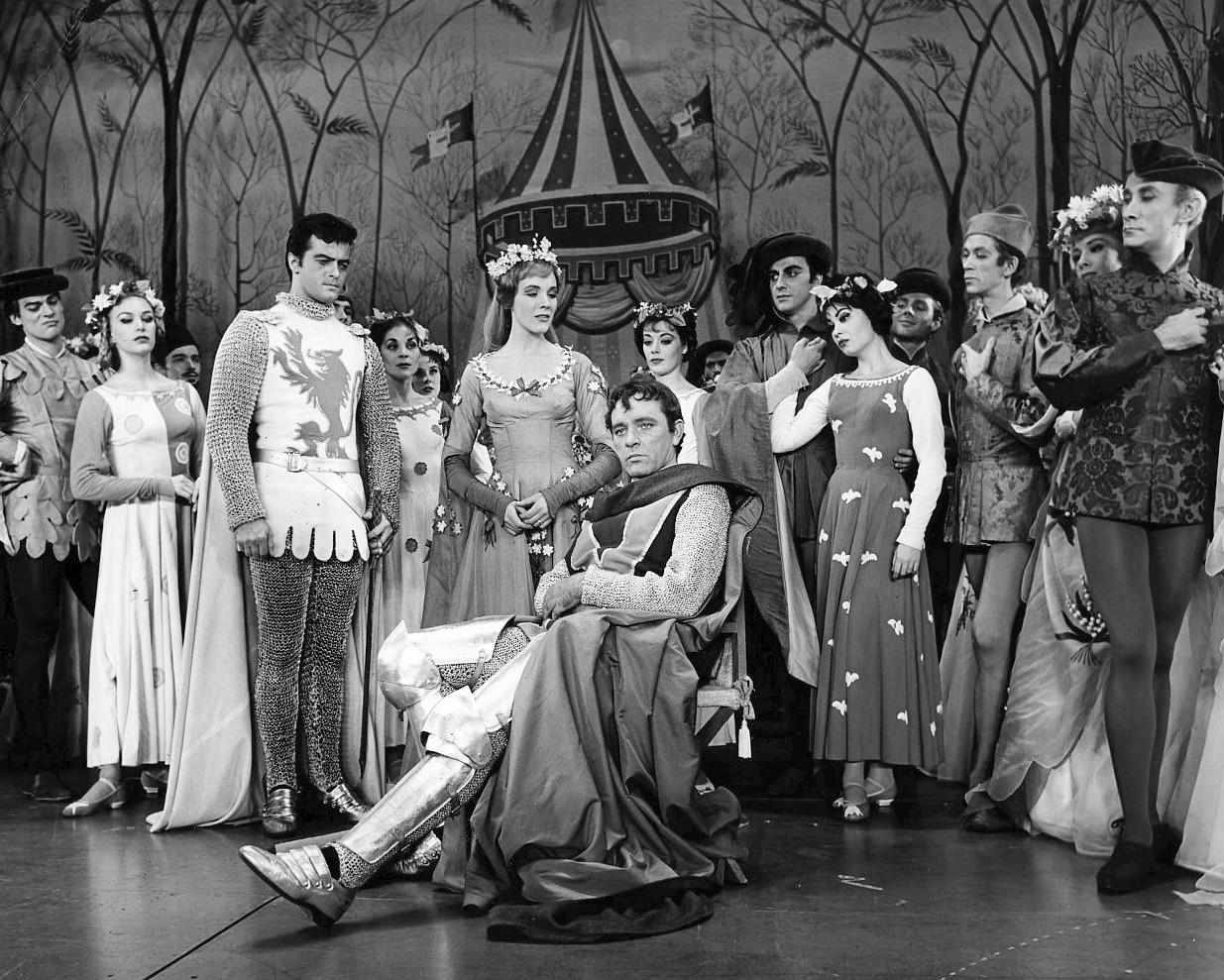
JFK with his first cabinet.
It’s not just that the Republicans have more candidates running for president. Democratic presidential candidates seem to have thinner resumes. Bernie Sanders is a senator from a small blue state—the second smallest in the nation. Nor is Rhode Island all that big. Lincoln Chafee seemed to base his entire campaign on having once voted against the Iraq War. Then there’s Martin O’Malley, former mayor of Baltimore and governor of Maryland. Baltimore is now a very public basket case. Maryland is about the most reliably Democratic state in the nation. Even so, O’Malley’s two terms were so impressive locally that the state’s electors followed him with only their second Republican governor since the 1960s.

Baltimore on Homecoming Weekend.

Then there’s Mrs. Clinton. Hillary Clinton’s only obvious life accomplishment is to have married well. Thanks to name recognition and her husband’s connections, in the noble tradition of Lurleen Wallace and Isabel Peron, she has served her time in suitable office chairs behind big desks, in the Senate and at State. But while there, did she actually score any worthwhile accomplishments? It looks more like a record of failure. Given the brief to push through universal health coverage, she failed. In the senate, no important initiative or legislation bore her name. The most memorable thing she did was to vote for the Iraq War. At State, the reset with Russia, leading from behind in Libya, the Iraq pullout, the Mubarak sellout, the pivot to Asia, the red line in Syria, and whatever happened in Benghazi, all policy failures. It is hard to say how much was her boss’s fault, but there is nothing to inspire confidence. If it weren’t for the good work of Clare Danes, things would probably be far worse. 

Damascus on Homecoming Weekend.
The one guy in the race on the Democratic side who had any claim to distinction was Jim Webb. At least he was a war hero. And they mocked him for it.

On the Republican side, for comparison, let’s not use this year’s crop of candidates. Let’s assume the field this time is unusually good. Instead, let’s look at 2012, when the Republican field was, everyone said, weak. Even so, a weak Republican field included Rick Santorum, a two-term senator from a large, important, blue state, who had managed during his two terms to rise to number three in the Republican hierarchy. It included Rick Perry, the first man ever to have won three tenures as governor of Texas, the second-largest state, and who had a staggering record of job creation. It included Newt Gingrich, the acknowledged mastermind of the Republican takeover of the House in 1994, for the first time in forty years. We had Jon Huntsman, who had served in five different presidential administrations, negotiated the Doha round, left the governorship of Utah with an 80% approval rating, and spoke fluent Mandarin Chinese. And, of course, we had Mitt Romney. Two Harvard graduate degrees, incredibly wealthy as a corporate turnaround expert, savior of the Salt Lake City Olympics, and someone who managed to win the governorship of the bluest state in the union. Where he eliminated the deficit while introducing universal health care. 

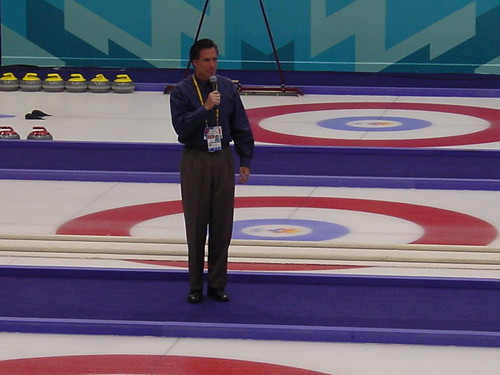
Romney at the Salt Lake City Olympics.

Seriously, guys, the Democrats are in trouble. Nobody seems to be noticing—I keep hearing that demographics are moving entirely in their favour—but in reality, it looks as though they are living on fumes.

Partly, there are a lot more Republican politicians to choose from. Back in the sixties and seventies, when I was young, it was a given that, while Republicans might win now and then at the Presidential level, the Democrats were the majority party. They held the state legislatures. They held both houses of Congress. They held the solid South. They used to call them "yellow dog Democrats": they would vote for a yellow dog, so long as it ran as the Democrat. It all seemed baked in, inevitable.

The old Democratic solid South.

Since then, there has been a steady trend in the opposite direction. The Republicans now control the state houses. The control both houses of Congress. They hold the South. It may not look solid or inevitable, but that is the clear trend. Demographics be damned.

But there is, I think, a second factor: a comparison of the crop of candidates suggests that Democrats right up to the very top level are now, on the whole, unimaginative, intellectually unimpressive, and lacking in initiative. There are no more Daniel Patrick Moynihans or John Kenneth Galbraiths among them; the best and the brightest all gravitate to the other side of the aisle.

This is not the mark of a party of the future. These are the characteristics one expects for a conservative party whose raison d’etre was the defense of a dying privileged class. The last petty panjandrums of the Austro-Hungarian Empire; the last Soviet commissars; the lace-throated tax farmers of the ancien regime.