Playing the Indian Card

Friday, January 13, 2023

Breaking News: A Child Died 125 Years Ago


LeBret Indian Residential School, Saskatchewan

A human jawbone has been found at the site of the former LeBret Indian Residential School in Saskatchewan. Coroners say it is the jaw of a child 4-6 years old, and he or she died somewhere around 125 years ago.

This is being played as big news in the media, as proof that children were subject to genocide at the residential schools and were buried in mass graves. However, one cannot help but notice that, after loudly and internationally declaring there were mass graves, and after a year and a half of searching since across the Canadian West, this is all the solid evidence anyone has produced. One child’s jawbone.

Was it ever in an unmarked grave? Perhaps the grave marker has been lost. Perhaps the remains were inadvertently exhumed from a marked grave by gophers or ground squirrels or the spring rains.

Did he or she die of unnatural causes? Child mortality 125 years ago was high. “One third of all children born in 1830 [in Canada] did not make it to their fifth birthday. Child mortality remained above 25 percent for the remainder of the nineteenth century, before falling at a much faster rate throughout the 1900s.” (Statista, https://www.statista.com/statistics/1041751/canada-all-time-child-mortality-rate/#:~:text=Child%20mortality%20in%20Canada%2C%201830%2D2020&text=This%20means%20that%20one%20third,faster%20rate%20throughout%20the%201900s.) Tuberculosis was common among native children, in the schools or on the reserves.

Was he or she a student at the school? School starts at six; they didn’t do kindergarten back then. This skeleton is just within possible range. The school sits in a reserve; this might have been any child living on the reserve.

Finally, if this was a student at the school, and there was foul play, murders happen everywhere. Why does this reflect on the school, and not on the government of the reserve?

A child died about 125 years ago. For those who care deeply, there is a more immediate problem. One word. Abortion.


Wednesday, January 11, 2023

How Many Souls Fit under a Microscope?


I think psychiatry and psychology do enormous harm. “Psyche” is soul. You cannot have a materialist psychology, that does not even believe in the existence of the soul. 

That blanket statement includes Jordan Peterson. While I generally agree with his politics, all he has managed to do in his thinking on psychology, in his rules for life and related videos, is to struggle his own way through a corn maze of miseducation to the unlocked front door of the stable. He is perhaps ready to acknowledge the existence of God. That puts him in the position of a baby about to be baptized; not a leader.

More regrettably, psychology suffuses our culture. We treat it like a religion; except that people seem to cling to their preferred psychological theories more fiercely and with less logic or evidence than anyone ever clings to a religion. Marking it as an idolatry, or, in psychological language, a delusion.

A sample text in a current textbook—in English, not Psychology--is all about the problem of bullying. And it explains, as psychology does, that people become bullies because they have themselves been bullied; or because they have been neglected by their parents, and do it to get attention.

One vital thing is immediately missing in this analysis: free will. As we see here, psychology reduces everyone to NPCs—except the psychologist. You stick in this pin, and you get that response.

The tremendous advantage of this viewpoint is that it eliminates right and wrong. With no moral choices, there is no morality. This is a great boon to those who want to do wrong, of course. Accordingly, psychology promotes evil.

That is actually the perfect philosophy to create bullies. It exonerates them. And it makes it unnecessary, indeed impossible, for them to change their behaviour, to improve themselves—because, after all, they have no free will. At the same time, the psychologists see themselves as gods, having agency over their patients when their patients do not—attracting bullies to the profession. And of course being logically inconsistent, and denying the essential moral principle, that of human equality: do unto others.

All this would be utterly damning even if it were true that bullies are tempted (albeit not compelled) to bully because they have themselves been bullied. But this too is improbable. Being bullied is painful. Experiencing pain, does the average person really want to impose it on someone else? If, for example, you put your hand on a hot stove, and get burned, are you motivated to encourage others to put their hands on hot stoves?

For most people, the reverse. Being bullied would convict you not to bully another. You would develop empathy and a fierce sense of justice. 

And this is just what you find in those who have been abused. Elon Musk is one example. He apparently bought Twitter to end the bullying.

Why do psychologists believe the opposite? 

First, because they simply ask bullies why they bully, and accept the answer. No bully is going to voluntarily take the blame. The obvious dodge is to insist they are actually the victim. 

And, being bullies themselves, the psychologists embrace the explanation.

As for bullying coming from a lack of attention from parents, this is nonsensical, because as a child, in order to get away with bullying, you generally do not want adult witnesses. So it is not what you are going to do if you want attention from your parents. It is the opposite of what you would do.

THis too probably comes from bullies refusing to take responsibility for their actions. So they will shift the blame to their parents: "I wouldn't have been able to do it if they had kept a closer eye on me."

The best approach to psychology is to assume that everything it says will be the opposite of the truth.

I think we all secretly know this. It is more or less the basic principle Freud propounded, when he claimed that everything our subconscious says to us means its opposite. He was actually revealing that tendency in himself.


Tuesday, January 10, 2023

The Vampires of China


These claims about the Chinese Communist Party are hard to credit. I have heard them from more than one source; but one source may be getting them from the other. They sound like enemy propaganda. On the other hand, we are discovering these days that most conspiracy theories are real.

It would explain the longevity of top Chinese leaders. It would explain why so many are dying now. And it would explain the Chinese zero Covid policy, which otherwise seemed mad. They kept it in place because the top leadership generally was immunocompromised due to multiple organ transplants, and so especially vulnerable to the virus.

If true, the CCP leaders have been killing young people in large numbers to give themselves a few years more of life. And not life of a high quality; life in extreme old age, with all of its frustrations, aches, and pains. Do they have no conscience? Having grown up in a Buddhist-influenced culture, do they have no fear of karma?

I suspect they do have a conscience, and do believe in karma. That is really the only explanation why they would go so far to extend their lives. They are desperate to eke out only a few more miserable years because they are aware of what they have already done, and know they face retribution after they die. It is typical psychopathic behaviour that, rather than take the easier and happier route of repentance or apology, they double down. As Himmler once explained, once they had started killing Jews, the Nazis dared not stop, for fear of retribution.

Elizabeth I, not at all the “good queen” she is often claimed to be, in her last years was terrified of falling asleep, because she feared she would not wake up. She would remain standing each night, to stay awake, until after perhaps fifteen hours in this position, she eventually collapsed. Her last words were supposedly “All my possessions for one moment of time.”

We ought not to envy such people. But we must also understand what they are.

Only the good die young.


Monday, January 09, 2023

Michael Knowles on Prince Harry


I think Michael Knowles may here have an explanation for the common near-death experience, not to mention acid trip, in which the witness reports back the assurance that there is no such thing as sin, and the universe is all about unconditional love. Which contradicts the Bible and the visions of the saints. The visionaries of Fatima, for example, saw innumerable souls falling into Hell. 

How to reconcile the two contradictory reports?

Easy. Given only that there is a Devil, he has a vested interest in telling people there is no sin, and no hell. If you are a bad person, and in his power, is he going to warn you?

You can probably only trust what you experience in an NDE or on an acid trip if you have knowingly put yourself in the hands of the one true God.


Those Beyond Prayer


John at the Jordan


If anyone sees his brother sinning, if the sin is not deadly, he should pray to God and he will give him life. This is only for those whose sin is not deadly. There is such a thing as deadly sin, about which I do not say that you should pray. All wrongdoing is sin, but there is sin that is not deadly.

We know that anyone begotten by God does not sin; but the one begotten by God he protects, and the Evil One cannot touch him. 

We know that we belong to God, and the whole world is under the power of the Evil One. 

We also know that the Son of God has come and has given us discernment to know the one who is true. And we are in the one who is true, in his Son Jesus Christ. He is the true God and eternal life. 

Children, be on your guard against idols.


This passage from the First Epistle of John, the first reading at last Sunday’s mass, is challenging.

First, it says “We know that anyone begotten by God does not sin.” This seems to contradict the Catholic position that we are all sinners. If this is so, if Christians cannot sin, there ought to be no need for the sacrament of confession.

Second, it says you need not pray for those guilty of grievous sin. Aren’t we supposed to pray for everyone? Aren’t we supposed to love our enemy, and seek the best for them?

Third, it affirms that the true follower of Christ is capable of telling who else is and is not true. So much for the popular doctrine that we are not to judge, not “be judgemental.” Apparently we can judge, reliably.

Fourth, it declares that “the whole world is under the power of the Evil One.” Surely a surprise to any “Hallelujah Chorus” or “prosperity gospel” Christians. And anyone who thinks they can live a Christian life reconciled to the world.

These issues are interconnected. 

As to the first point, other translations render “We know that anyone begotten by God does not sin” as “will not continue to sin,” “will not persist in sin.” The literal translation from the Greek is “not continues to sin.” This can be read not as meaning we will not sin once we believe in God, or that we will not persist in sin, which is to say, develop a vice. Because a vice, a kind of addiction, surrenders a part of our will, the vices are often conceived of as independent spirits, demons. Hence, developing a vice counts as “the Evil One touching us,” getting his hands on us. When we develop a vice, we “belong” to the Evil One, and no longer to God. 

This fits with the distinction between ordinary sins and “deadly sins” in the reading (the Greek is literally “sin unto death”). When we pray for someone who has sinned, we are presumably praying for their soul, that they do not fall into vice. If they have fallen into vice, there is no more we can do.

The vices are, after all, called the “Seven Deadly Sins.” They are deadly because they are settled habits. They both persist, in principle unto death, and are the death of the soul. If they can ever be escaped, it takes a miracle.

If this seems harsh, it seems to be the attitude of John the Baptist in the Gospel. He calls to repentance: and the people come out into the desert. If they do, expressing thereby their repentance, he washes them of their sins. 

But not everyone.

But when he saw many of the Pharisees and Sadducees come to his baptism, he said unto them, O generation of vipers, who hath warned you to flee from the wrath to come?

They are not welcome to repent. Either it is an impossibility, or else it offends divine justice.

And John the Baptist seem fully capable of judging them on sight.

This is also the obvious sense of Jesus dividing mankind onto sheep and goats, and condemning goats to the eternal fire.

Consider now the last words of this passage, “Children, be on your guard against idols.”

Vices, because they take over the will, are demons. They are idols. When you develop a vice, you have surrendered your will to some idol.


Sunday, January 08, 2023

On Liberty


Is your first thought really to have sex wth her?

We are all endowed by our creator, say the US Declaration of Independence, with inalienable rights to “life, liberty, and the pursuit of happiness.”

Have you ever wondered why there are three items in that list, and not two? Doesn’t liberty mean liberty to pursue happiness? Was Jefferson only padding his list?

No; we misunderstand what liberty means. Liberty means, and meant to the founders, liberty to obey one’s conscience. The right to act as a moral being, exercising our free will, without which we have no chance at salvation. Genesis tells us this is the reason we are here. This is why the first words of the first amendment to the Constitution are “Congress shall make no law respecting an establishment of religion, or prohibiting the free exercise thereof.” After life itself, this is the most essential right.

This has been lost in recent years, as our devotion to religion has waned. Now we think liberty means doing whatever we want to do.

But liberty does not imply the right to pornography, for example, or gay sex, or alcohol, or recreational drugs, or abortion. Which is why, until recent years, no legislature or court thought there was a problem with laws against them. For nobody feels obliged by their conscience to make or view pornography, or to have sex with someone to whom they are not married, or get drunk, or to abort their child. All are only pursuing pleasure. Religious liberty also need not extend to any faith that does not impose demands on one’s conscience: it does not require respect in law for atheists, or satanists, or pagans who worship their gods only out of fear or hope for favour. Nobody until recently thought it did.

These can, on the other hand, be understood to be covered by “pursuit of happiness.” Although until recently, courts and legislatures have not taken this right seriously. Pursuit of happiness indeed seems to imply one has a right to anything that in your own opinion makes you feel good, so long as it does not harm your neighbour.

The classic source for the idea of these inalienable human rights, although they have earlier antecedents in the Christian tradition, is John Locke. But his triad was “life, liberty, and possession of property.” Jefferson and his committee changed the third right. I think Locke’s formulation makes better sense. 

For one thing, protection of property from theft is in practical terms one of the primary reasons to institute government among men. One does not need government to pursue happiness. Property ownership is also essential to a functioning democracy. It can allow for self-sufficiency, and so one can, if necessary, stand up to government in a crisis.

Perhaps more importantly, one can never achieve happiness by pursuing it. That leads too many down a primrose path to addictions and ennui and ruin; we are seeing this more and more today. Simply having this so famously in the Declaration may have misguided many.


Saturday, January 07, 2023

Bad News, Adam


Orestes pursued by the Furies.


In his latest column, friend Xerxes writes that it is important to challenge our fixed notions. This is to introduce the concept of “eternal life.”

As my own body moves inexorably towards its expiry date, I become increasingly convinced that we are bodied people. Not disembodied souls.

            We cannot think, act, or even remember, without our bodies. Our thought processes depend on inputs from every organ. Eyes and ears, of course. Also heart, lungs, guts, skin…

            Without a body, there can be no ‘me’.

            If that conclusion offends you, sorry. You don’t have to believe it. Stick with your own beliefs. But I need to be honest – that’s where I am, at this stage in my life.

            The circle of life shrinks as we grow older. Ultimately, it contains just one person. Me.

            Then one day I’ll be gone, too.

            And life will go on without me.

Notice that he gives no argument or evidence for this belief. He does not, in other words, challenge it. Just as he is saying we must do.

Notice also the phrase “I need to be honest.” We are obliged to be honest at all times. Therefore, if anyone ever uses the phrase “to be honest,” he is actually admitting he is generally not honest. He is reserving the right to lie.

These are examples of how our conscience works. It will not really allow us to get away with anything. It obliges us to condemn ourselves. Xerxes actually does not believe that consciousness ends at death, and he inadvertently tells us so, if we are paying attention. 

He is whistling past the graveyard, to use an old expression. He is like the child playing peek-a-boo, who thinks that, if he covers his eyes, he cannot be seen. If there is no afterlife, he need not fear punishment after death. A consoling thought to many.

Irrational as this is, it is the common human reaction. Denial is the common human reaction. It is in the Book of Genesis, after the original sin:

Then the man and his wife heard the sound of the Lord God as he was walking in the garden in the cool of the day, and they hid from the Lord God among the trees of the garden.

Yeah; hide from God. That ought to work.

This is actually the ultimate evidence that there is an afterlife. We know there is an afterlife, because we know there is a Hell. We can see that we are programmed, the universe is programmed, by some cosmic programmer, for justice. Anyone who studies history comes to realize, as Martin Luther King says, that “the arc of history bends towards justice.” We see in the lives of those around us, as we see here, that the unjust either soon or eventually turn to self-sabotage.

And yet, we also see that it commonly takes longer than a human life to actually see justice served. Van Gogh was unrecognized in his lifetime. Mao and Stalin died in their beds.

Accordingly, when we do not see individual justice fully served in this world, we must assume the existence of an afterlife, which compensates those here wronged, or who suffered for justice, and punishes those who here do wrong, or profit from injustice. That same cosmic program would have it so.

All the world believes this, as if it is indeed part of our operating system: pagans as much as monotheists. 

For monotheists, it is the divine judgment: 

When the Son of Man comes in his glory, and all the angels with him, he will sit on his glorious throne. All the nations will be gathered before him, and he will separate the people one from another as a shepherd separates the sheep from the goats. He will put the sheep on his right and the goats on his left.

Then the King will say to those on his right, "Come, you who are blessed by my Father; take your inheritance, the kingdom prepared for you since the creation of the world.”…

Then he will say to those on his left, "Depart from me, you who are cursed, into the eternal fire prepared for the devil and his angels.” …

Then they will go away to eternal punishment, but the righteous to eternal life.

For Buddhists and Hindus, it is karma.

“As a man himself sows, so he himself reaps; no man inherits the good or evil act of another man. The fruit is of the same quality as the action.” – Mahabharata.

Whatever is not achieved in this lifetime, determines one’s rebirth into a life of comfort or of suffering; or into hell itself. You can’t escape karma.

The ancient Greeks called it Dike, an iron law which even the gods were subject to. Evil deeds evoked Erinyes, Furies, which would pursue you in life to the ends of the Earth. After death, one faced an eternal punishment to suit one’s crimes. Greedy Tantalus, thirsty, could not bend down to drink the water that rose to his chest. Hungry, above him he saw a fruit tree forever just out of reach. 

Hear me, illustrious Furies, mighty named, terrible powers, for prudent counsel famed; Holy and pure, from Hades born and Proserpine, whom lovely locks adorn: Whose piercing sight, with vision unconfined, surveys the deeds of all the impious kind: On Fate attendant, punishing the race with wrath severe of deeds unjust and base. Dark-coloured queens, whose glittering eyes are bright with dreadful, radiant, life-destroying, light: Eternal rulers, terrible and strong, to whom revenge, and tortures dire belong; Fatal and horrid to the human sight, with snaky tresses wandering the night; Either approach, and in these rites rejoice, for you I call with holy, suppliant voice. -- Orphic Hymn 69

So we know the afterlife is real. We know because of many who have risen from the dead, and told us what they saw. We know from saints who have had visions. We know from those who have heard in dreams from deceased relatives. Christians have the warrant of the Bible. But we know primarily because we know from our programming and our conscience, and from our own close observation of the actions of conscience in history and in others, that Hell is real. 


Friday, January 06, 2023

Going to Hell


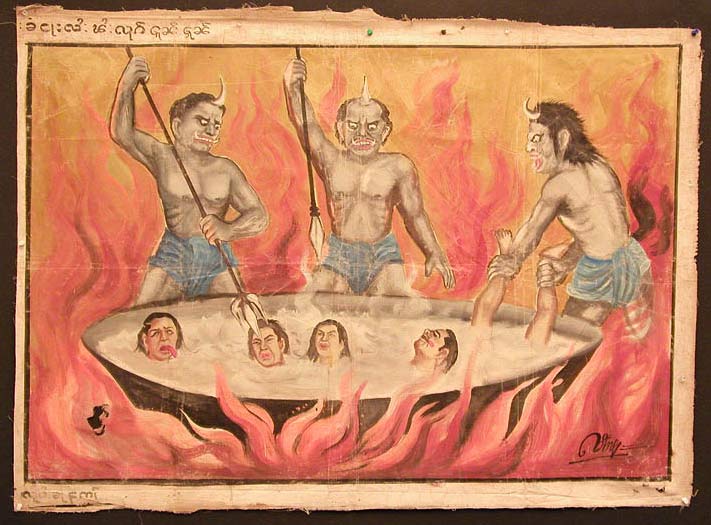
A Buddhist image of hell.

“Abraham replied, 'They have Moses and the prophets; they should listen to them.' He said, 'No, father Abraham; but if someone goes to them from the dead, they will repent.' He said to him, 'If they do not listen to Moses and the prophets, neither will they be convinced even if someone rises from the dead.'"

My father once said the most shocking thing.

“I believe the Jews really are the chosen people. That’s why we have to keep them down. Otherwise they’d control everything.”

Leaving out any other details of my father’s life and deeds, this seems to sum up something essential and unambiguous.

The comment, made in all sincerity, is shocking, of course, for its antisemitism. And antisemitism, history, especially modern history, has shown us, is the most sinister and least forgivable form of racism. Anti-black or anti-Indian discrimination can often look like benevolence. People can convince themselves they are doing it in good heart. Not so antisemitism. 

A Muslim image of hell.

Of course, my father was also prejudiced against blacks and Indians, and other groups.

It is also an obvious expression of envy. It tracks closely the sin of Cain. Cain killed Abel because he thought Abel was favoured by God. After pride, envy is the worst of the deadly sins.

But there is something even more disturbing here. My father was saying

  1. He believed in God.
  2. He was God’s enemy.

So he did not have the alibi of ignorance. He knew he was going against God, and fully intended to do so.

Years later, my father has now died, without any sign of repentance, on this or as far as I can remember over any other of his acts or views. His will seemed spiteful. Always a heavy drinker, he encouraged everyone to get drunk at his funeral.

We can never be sure, but this looks like the perfect example of a soul bound for eternal torment.

“God predestines no one to go to hell; for this, a willful turning away from God is necessary, and persistence in it until the end.”

And God did seem to be merciful. He gave my father ample time, close to ninety years, to sort things out. He never did.

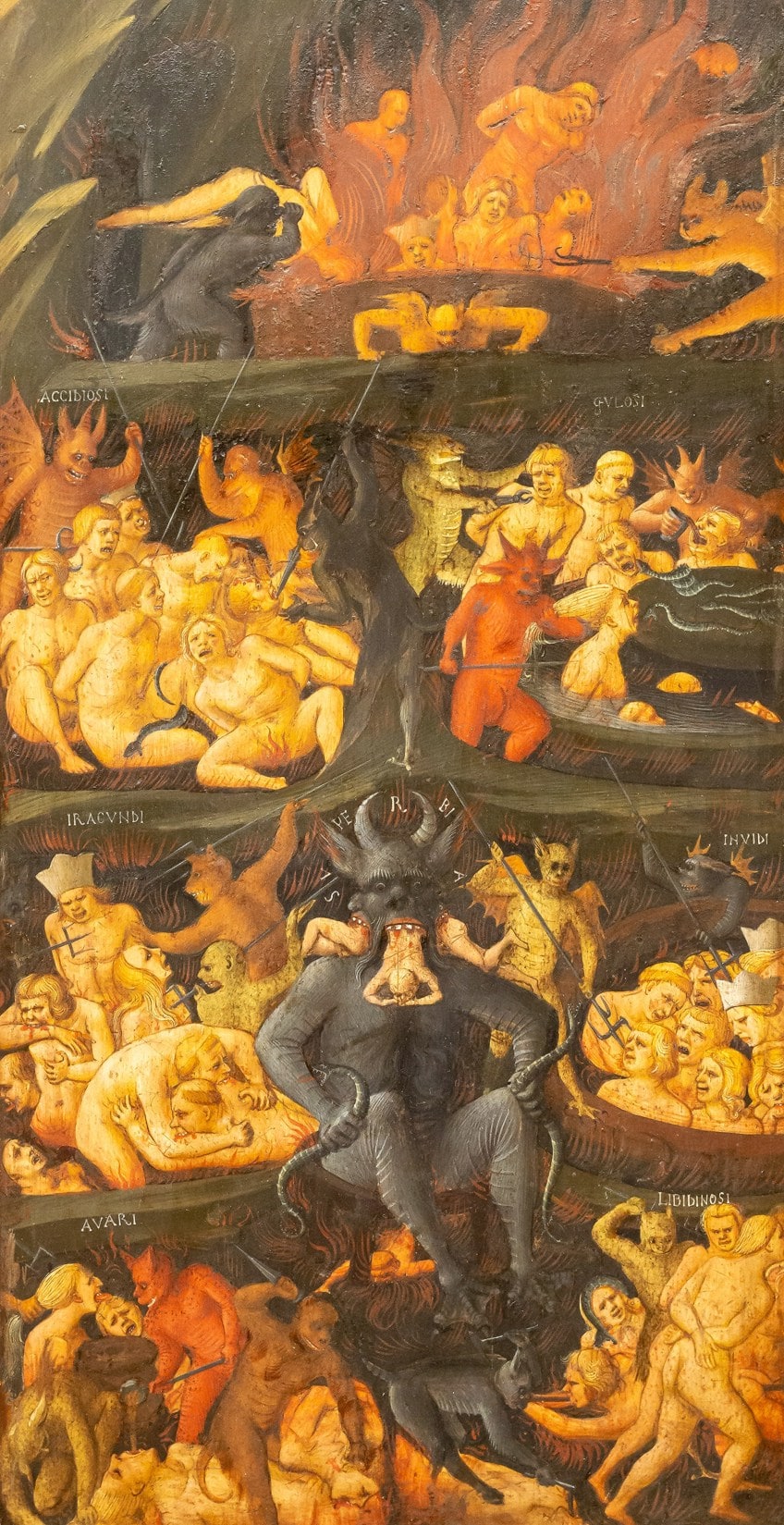
An early Renaissance Christian view of hell.

Why would anyone choose to go to hell? Milton gives the reason, in the words of Satan in Paradise Lost:

"Better to reign in Hell than serve in Heaven”

It is pride, the first and worst of vices.

It troubles me often to think of my father suffering in hell. The traditional image is of burning—supposedly the most painful way to die, but continuing forever. Muslim sources are, if anything, more disturbing than Christian ones. Buddhist sources too speak of awful tortures.

Of course this does not make literal sense, because after death one has no body. Old authorities argue this does not matter, that one may have the same sensation, without the physical organs. Modern authorities, and the Catechism of the Church, say “The chief punishment of hell is eternal separation from God.”

That makes the fire image a metaphor; but is hardly reassuring. Eternal separation from God seems likely to be more terrible than physical suffering—as mental anguish in this life is easily worse than the worst physical pain.

I think I did my best during his life to fraternally correct, to point out to him the need for a change of heart—and paid bitterly for it. That at least is some consolation. But it is a heavy thought, that one’s father is lost forever.

Reader, consider your own case.


Thursday, January 05, 2023

The Plot Thickens


A new video from Dr. John Campbell, including an oblique reference to having to take down his previous video.


Mass Shooters and SSRIs


Can't vouch for any of this, but it is interesting.

I think antidepressants are dangerous when they're given, as they commonly are, to narcissists. 

They reduce inhibitions. That is their main effect.

This is somewhat helpful for the truly depressed if only a bandaid solution: like alcohol. It dulls down without dealing with the problem.

It is lethal for narcissists, who often have symptoms indistinguishable from depression for the DSM and so to mainstream psychiatry. Like alcohol, it can lead in narcissists to violence and greater cruelty. But without incapacitating them, as alcohol will.


The Cleveland Study


Earlier today, there was a video from Dr. John Campbell-- a voice of reason on Covid, never an alarmist--reporting on a study from Cleveland that actually suggested people getting vaccinated were more likely ot get Covid.

This seems incredible, yet it was quite a large study. And Campbell would probably have noticed any obvious flaw in it.

That video has now been taken down from YouTube, as has another video I saw earlier referring to it.

I wonder what is going on. 

Here is a news story still up that refers to it.


What the Hades?


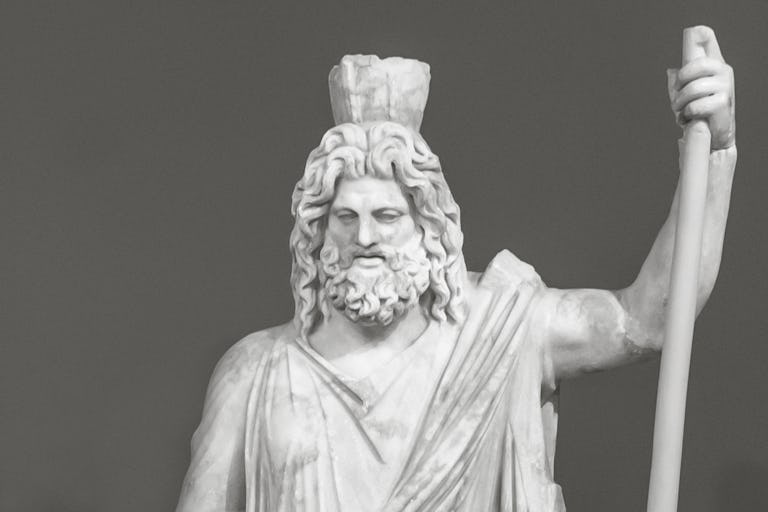
As explained recently on this blog, the pagan gods and goddesses are real, and can overcome our will and command obedience when we lose touch with the one true God. But there is one important god I overlooked: Hades.

He is not as sinister as he might sound.

Understand that the Greek underworld, which he rules, is the memory. Hades is the spirit we call nostalgia. Things in memory develop a golden quality, which can be seductive. As a result, some people live mostly in their memories of bygone days. These same people can tend to hunger for death; although this is not the only path to suicidal thinking. 

Saying it is memory might make the underworld sound ephemeral. That would be a misunderstanding. It is the world of the present that is ephemeral. The present is gone in an instant; one never steps into the same stream twice. By contrast, everything in memory is eternal. That is what gives it that golden glow. We can, as individuals, it is true, forget things, but that does not mean they are no longer there—any more than the ceiling of our bedroom is no longer there if we close our eyes. A sudden smell or the sound of music can evoke a memory long forgotten. It was always there, in some spiritual storehouse. 

Nor is there any reason to suppose that spiritual storehouse memory is individual. More or less by definition, anything that continues to exist when we are not conscious of it is not part of our consciousness, of our mind. It has objective existence.

Accordingly, imagining our memories die with us makes no more sense than supposing the physical world is limited to our own experience of it—and dies with us. I have never visited Africa. I have no memories of it. Is that important evidence that Africa does not exist?

It is more plausible to suppose that we die into our memories.


Wednesday, January 04, 2023

Damar Hamlin


Damar Hamlin’s collapse on the field during a late-season televised game may be a turning point. At last report, he is still in critical condition.

We do not know that it was due to the Covid vaccine. But we know that sudden deaths of young men from heart attacks are exponentially more common suddenly. The Covid vaccine is the most likely suspect.

Assuming this proves to be the case, seeing it happen right before their eyes on live TV is going to make denial a lot harder for millions of ordinary Americans. The kitty may be out of the disposable plastic container. The powers that be may, will, and already are trying to suppress that claim, but people saw something troubling. They will ask questions.

I think the Canadian government knew by the fall of 2021 that the vaccines had dangerous side effects. This best explains their behaviour since about that point. After assuring the public that there would never be a requirement to get vaccinated, they imposed one. Despite an exceptionally high voluntary vaccination rate, and just when it was clear that herd immunity was not a possibility. This looks like the automatic narcissistic reaction to learning one has made a mistake: rather than admit error, one doubles down and attacks the victim. 

This also explains why the Canadian Liberals went for a seemingly unnecessary and pointless snap election at about that time, and are preparing again for one this spring: they know they have something to hide, and expect it to come out at any time. Then they would have no chance at re-election. Better to go now and grab four more years. This explains why they imposed the Emergency Act with no good reason. The Freedom Convoy was peaceful and reasonable, but the Liberals were hearing footsteps behind them. This explains why Nathaniel Erskine-Smith was so sensitive about references to the Nuremberg protocols, when as far as I could see nobody was raising the issue. And I follow the news pretty closely. They knew they were vulnerable to this charge: of performing medical experiments on their own citizenry. 

The good news is that, if the powers that be in Canada and in other parts of the Anglosphere collapse, we rather suddenly have real leaders to replace them. In Canada, Pierre Poilievre is ready to step in. In the US, Ron De Santis’s stock will rise dramatically. Trump bears some responsibility for the vaccine. In Britain, Jacob Rees-Mogg has apparently laid down the groundwork for a leadership bid. With a lot of luck, he might take over the leadership before the next election.

One can dream of how much better the political and cultural climate would be if, two years from now, these three were in power. And the authoritarian left thoroughly discredited. And Putin, Xi, and Khamenei gone as well.


Monday, January 02, 2023

The Holy Month of Educators


Not a teacher.


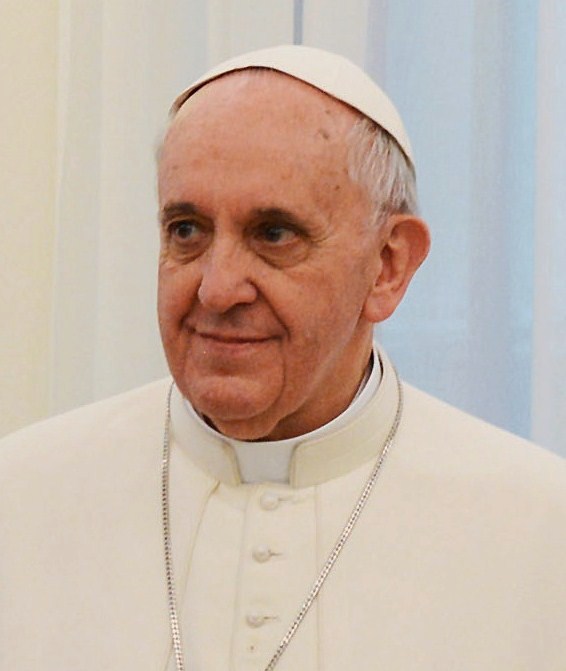
Pope Francis has declared January a month of prayer for educators. I guess I ought to be happy about this. He’s even composed a special prayer.

If I were to compose a prayer for teachers, it would be that they—we—always teach truth, and only truth, that we always think of what is best for our students, and that we have patience with them. All of these have Biblical warrants I could cite. This is also the advice of the great teachers of the past, Socrates, Plato, Confucius, St. John Bosco.

 Francis’s suggested prayer mentions none of these things:

“We pray that educators may be credible witnesses, teaching fraternity rather than competition and helping the youngest and most vulnerable above all.”

This seems off the wall; scatterbrained, as all of Francis’s pronouncements seem strangely scatterbrained.

Credible? Why merely believable, or believed, and not truthful?

If there is a moral problem with competition, we should also pray that it be abolished in the world of sports. No scores should be kept, I suppose, and all games should end in a tie. Anything else teaches immorality. Can we all get behind that? 

Competition is an effective educational tool: it adds interest and incentive. It informs the student of their progress. Teaching without it is simply far less effective.

Helping the youngest above all? Hardly a key concern; educators rarely have mixed ages in their classes. If they do, what is the moral value of favouring one student over another on the basis of age? This is arbitrary age discrimination.

Helping the most vulnerable? In a school or other educational context, vulnerable to what? Falling down the stairs? Being bullied? Catching COVID? Without specifying a threat, this is meaningless. Depending on the threat, it is primarily the job of a school nurse, custodian, or vice-principal, not the teacher.

From this prayer, I think we can conclude several things. First, that Pope Francis has no idea what teaching is about. Second, his worldview is not informed by Christianity. Third, he has at best a second-class intellect. Fourth, he doesn’t like to use it. He mailed this one in.

At a guess, it looks like the subtext is Marxism: competition is bad, because it might lead to free markets. There also seems to be a whiff of postmodern nihilism.

Francis’s papacy frequently sows confusion over faith and morals: failing in the primary responsibility of a pontiff. Nor does he show a pastoral touch, as might have compensated for this. Clarity is an important element of pastoral care; and beyond this, Francis’s management style tends to be gruff and autocratic, and dissent and dissatisfaction within the church has grown during his papacy. Think Archbishop Vigano, the dubia of the four cardinals, the German synod. 

So what were the cardinal electors thinking when they chose him?

When he first appeared on the balcony of St. Peter’s, in a cloud of black smoke, my thought was that he looked like an accountant, not a pope. That may be it. Perhaps he was chosen for his presumed administrative abilities, to crack heads and put the Vatican’s organizational and financial house in order. It has been notoriously corrupt and dishevelled, and this was an area in which John Paul II and Benedict, in their gentleness, had failed.

Unfortunately, I see no evidence that Francis has made any headway on this. I hate to say it, but his attitude has looked more like “why beat them if you can join them?”


Sunday, January 01, 2023

Happy New Year


The New Polytheism


Hermes and Athena

Many suppose that Christians do not believe in the pagan gods. I’ve heard atheists make the point that they just believe in one fewer god than monotheists.

This is a misunderstanding of the nature of the pagan gods. It ignores the Bible. It also, on a little reflection, makes no sense. The ancient Greeks, so logical and deep in their thinking, just arbitrarily believed in things that did not exist?

And the Greeks or Romans could recognize their same gods in Egypt or Mesopotamia or Germany or India or Carthage. Could they all have fixed upon the same random fantasies?

Of course the pagan gods existed. Being immortal, by definition, they continue to exist. Being a monotheist simply means you are not to worship them. They have no saving power. “You shall have no other gods before me.”

The pagan gods are disembodied spirits. We know they exist, because we find they command reverence and take over the will. They are wills that act independently of our own. We know they exist for the same reason we know other people exist: by the evidence of their independent will.

The easiest example to illustrate the point is Dionysus, as god of wine. We are aware that wine, or other drugs, take over the mind and distort the will. There is an old saying, “First the man takes a drink. Then the drink takes a drink. Then the drink takes the man.” We once spoke of absinthe as the “green fairy.” Not a metaphor. At the point of drunkenness, the man is an avatar of Dionysus. He is possessed by the daemon Dionysus. As were his traditional acolytes, the Maenads, who ran wild in the forests and tore things apart.

Dionysus is an especially crude and obvious model, but the same is true of the other well-known polytheistic gods. They are spirits that can possess and animate us.

Consider Aphrodite, with her son Eros. As any male of a certain age can attest, she is capable of driving us mad, causing us to act against our own interests. “The lunatic, the lover, and the poet, are of imagination all compact.” She expresses herself in female physical beauty, the sort that, we might say in our gross materialist way, triggers hormones. Shakespeare rightly portrays erotic love in “A Midsummer Night’s Dream,” or “Romeo and Juliet,” as like a madness or a drug. Leonard Cohen was a prominent and rather tragic victim of this daemon.

The juice of it on sleeping eyelids laid

Will make or man or woman madly dote

Upon the next live creature that it sees

More respectably, Hephaestos, Aphrodite’s sometime spouse, is the daemon of geekdom, the “weaponized autism” that keeps so many young men in their basements, fascinated by logical and practical problems. They lose themselves in this—the sure sign of demonic possession--and neglect other aspects of their lives. They become avatars of the smith god, trolls working at their forges.

Ares may be less obvious; yet we are all possessed, at times, by the spirit of Ares. We are outside ourselves, out of our right minds, in combat, in a fistfight, or in a heated argument. In such situations, it is as if we are driven by another spirit, so that we are heedless of our own safety or best interests.

Athena is more difficult to dislike. The poet Miriam Waddington laments, in her memoirs, that too few Canadians value “the aesthetic life.” The aesthetic life is the life of an acolyte of Athena. It too involves an all-consuming passion, and lack of regard to other aspects of life. Like an alcoholic, one is likely to end up starving in a garret.

Hera is the irrational drive for social status and propriety: people who surrender their selves to live their lives in the eyes of others.

Zeus is power: the spirit that possessed Mao, Napoleon, Hitler, Stalin.

Apollo, as the sun god, is the god we worship as “science” today. Under his influence we see only the impressions of the physical senses as real, neglecting the larger metaphysical elements of existence.

Artemis, his sister, is the illusory drive for innocence.  She is exceptionally powerful in our times, as “the state of nature.” An idolatrous nature, she must remain forever virgin and shun men. Those who worship her, like Rousseau, believe in the “noble savage” and the idea that civilization corrupts. She is the spirit who, if she possesses you, may cause anorexia nervosa. Or, in some large part, feminism.

Ceres, her counterpoint, is the “maternal instinct.” Admirable at the proper dosage, it can easily become idolatrous. It drives some women, and fewer men, to a hysterical attitude towards their children, in which the latter can do no wrong, or can never be left alone. Acolytes can come to live through their children, possessing and being possessed by them. This too is like a drug, is a madness.

Hermes is more subtle, and perhaps for this more powerful. He is the spirit of commerce, in the sense of communication of all sorts. His spirit we know as postmodernism. To his disciples, “reality” is a matter of social consensus. To say a thing is to make it so. He makes us obsess over political correctness and pronouns. His adherents are eventually no longer in touch with reality at all.

Hestia is the spirit we call “family values.” To her the cow and apple pie are sacred. She may look harmless, but on the larger scale, she is the soul of nationalism, of racism. All for the “fatherland” or “motherland”; our race is our extended family. One can see how this often works against the interests of the individual acolyte, and against the interests of humankind.

Poseidon, god of seas and horses and hurricanes, is the spirit of change. We see a lot of him currently, too. He is the spirit of “wanderlust,” for some an addiction, pulling them out of themselves. But we also see him in those who call themselves “progressives,” or yearn for unspecified “hope and change,” or for “diversity.” Change by itself, of course, is not an intrinsic good. Necessarily, much that is good may end up being sacrificed to the idol “change.”

All of these daemons are held in decent check by the worship of the one true God, who is Truth, Good, and Beauty. They have been held in check for the past two thousand years. They fade like the stars of night when the sun appears. So too the more disreputable vices: wrath, acedia, envy, lust, gluttony, greed, pride. All the petty ambient spirits who can take over the human will.

Yet now, because the faith in the one true God is fading, we see them all reemerging in our time.

We see a rise in all sorts of strange madnesses. 

We see rough beasts now slouching towards Bethlehem to be born.


Saturday, December 31, 2022

mRNA vaccine safety data


When someone like John Campbell is calling them out, you know they've done wrong.

I for one have become deeply disillusioned. When this pandemic began, I trusted the authorities to, in the end, be of good will. 

I no longer belive this.


Friday, December 30, 2022

Predictions for 2023


My record for predictions is appalling. Just like everyone else. Who, looking forward to 2022, predicted the Freedom Convoy? The declaration of the Emergency Act? The Russian invasion of Ukraine, and Ukraine’s ability to push back? That the UK would run through three prime ministers? That Elon Musk would buy Twitter and open its files? That the US Supreme Court would overturn Roe v. Wade?

But it is my tradition to make my predictions at the New Year, so what the heck. 2023 looks particularly unstable. I have an intuition that we have reached a watershed, and 2023 will be a year of change. 

The regimes in Iran, Russia, and China all look shaky. If any one of them tumbles, this will make the fall of the others more probable. If all three go, we may have a new world.

Russia perhaps looks most likely. It seems now as though Putin cannot win his war, and losing a war usually means the fall of an autocratic government. Wise men say that, if Putin goes, it will be a palace coup, and he will be replaced by somebody more hard line than he is. But this does not seem viable: Putin is not losing in Ukraine due to lack of trying. What could a harder line produce? War against NATO? Given that Russia cannot deal with Ukraine, expanding the war simply looks like suicide.

It seems to me the only path open to Russia is to dump Putin, blame the war on him, withdraw all troops from Ukraine, and pursue a new policy of rapprochement with the West. If you can’t beat them …

Iran looks next most likely. My Iranian contacts all seem confident the regime cannot survive the current wave of protests. And if that regime falls, its successor is again likely to be pro-Western. Just as the reaction to the pro-Western and secularizing shah was to go fundamentalist and Islamist, the reaction to an Islamist regime will likely be to go pro-Western. Rumours are that mosque attendance in Iran is low, and there are many secret conversions to Christianity.

If Iran goes pro-Western, and Russia pulls in its horns, we may have peace in the Middle East.

I have been predicting the fall of the CCP since 1992. It looked shaky then. I think the original appointment of Xi and his strongarm tactics were themselves acts of desperation. They are now coming unglued: Xi had to back down over zero Covid. All he had was fear, and now fear is not working.

Worldwide, there is a struggle between government elites everywhere, who see the internet as an opportunity for Big Brother-style control, and the people, who see the internet as an opportunity to organize themselves without the need for government elites. The Freedom Convoy in Canada was a set-piece example. It is getting nasty, and could get nastier. But I am hopeful that the essential logic of the internet, improved communication, leads in the direction of greater democracy and freedom, not more government control. As did the invention of printing, or the Industrial Revolution, for parallels. Technology favours freedom.

Economists predict worldwide recession, and inflation slowly easing. This is beyond my area of expertise. Broadly, though, I think the improvements in technology through computerization ought to continue improving general prosperity, even if there are bumps in the road, and the effects of the Covid lockdowns, like those of the Spanish flu, ought to be transitory. If the war in Ukraine has been costly, there ought also to be a “peace dividend” if any or all of the three bellicose regimes actually fall.

Housing prices are crashing all over the place. They needed to; housing costs were unrealistically high. It was an investment bubble. 

It might be an unexpectedly good year, after a string of bad ones.