Playing the Indian Card

Showing posts with label teachers. Show all posts

Monday, January 02, 2023

The Holy Month of Educators


Not a teacher.


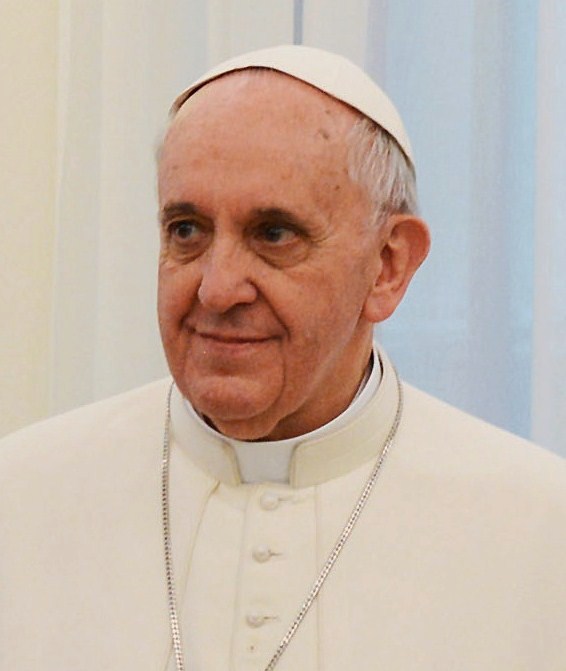
Pope Francis has declared January a month of prayer for educators. I guess I ought to be happy about this. He’s even composed a special prayer.

If I were to compose a prayer for teachers, it would be that they—we—always teach truth, and only truth, that we always think of what is best for our students, and that we have patience with them. All of these have Biblical warrants I could cite. This is also the advice of the great teachers of the past, Socrates, Plato, Confucius, St. John Bosco.

 Francis’s suggested prayer mentions none of these things:

“We pray that educators may be credible witnesses, teaching fraternity rather than competition and helping the youngest and most vulnerable above all.”

This seems off the wall; scatterbrained, as all of Francis’s pronouncements seem strangely scatterbrained.

Credible? Why merely believable, or believed, and not truthful?

If there is a moral problem with competition, we should also pray that it be abolished in the world of sports. No scores should be kept, I suppose, and all games should end in a tie. Anything else teaches immorality. Can we all get behind that? 

Competition is an effective educational tool: it adds interest and incentive. It informs the student of their progress. Teaching without it is simply far less effective.

Helping the youngest above all? Hardly a key concern; educators rarely have mixed ages in their classes. If they do, what is the moral value of favouring one student over another on the basis of age? This is arbitrary age discrimination.

Helping the most vulnerable? In a school or other educational context, vulnerable to what? Falling down the stairs? Being bullied? Catching COVID? Without specifying a threat, this is meaningless. Depending on the threat, it is primarily the job of a school nurse, custodian, or vice-principal, not the teacher.

From this prayer, I think we can conclude several things. First, that Pope Francis has no idea what teaching is about. Second, his worldview is not informed by Christianity. Third, he has at best a second-class intellect. Fourth, he doesn’t like to use it. He mailed this one in.

At a guess, it looks like the subtext is Marxism: competition is bad, because it might lead to free markets. There also seems to be a whiff of postmodern nihilism.

Francis’s papacy frequently sows confusion over faith and morals: failing in the primary responsibility of a pontiff. Nor does he show a pastoral touch, as might have compensated for this. Clarity is an important element of pastoral care; and beyond this, Francis’s management style tends to be gruff and autocratic, and dissent and dissatisfaction within the church has grown during his papacy. Think Archbishop Vigano, the dubia of the four cardinals, the German synod. 

So what were the cardinal electors thinking when they chose him?

When he first appeared on the balcony of St. Peter’s, in a cloud of black smoke, my thought was that he looked like an accountant, not a pope. That may be it. Perhaps he was chosen for his presumed administrative abilities, to crack heads and put the Vatican’s organizational and financial house in order. It has been notoriously corrupt and dishevelled, and this was an area in which John Paul II and Benedict, in their gentleness, had failed.

Unfortunately, I see no evidence that Francis has made any headway on this. I hate to say it, but his attitude has looked more like “why beat them if you can join them?”



Friday, October 08, 2021

Teachers' Day


October 5 was International Teachers’ Day, a day not generally observed in Canada. It ought to be. There is no more important job than that of teacher. Confucius, the most influential thinker who ever lived, never held any higher position. Neither did Socrates or Aristotle; and who is more influential in Western civilization than they? Yet we know of them only from their students’ reports and lecture notes.

Actually, there is a more influential figure over the West than Socrates or Aristotle: Jesus. His followers, too, addressed him as “Rebbe,” “teacher.” We know him, too, only from their lecture notes.

I expect that most readers can, as I can, remember some special teacher in their past who influenced them deeply, who is responsible in some important way for what they later became. Mr. More in grade 6, who confirmed my love of poetry; of A. Pat Smith in grade 13, who drove me into literature; of Professor John Cooke at Queen’s, who lured me into comparative religion; of Paul Nowack at Ryerson, who found me too old to have had the influence he might have had, but who taught me again the value of storytelling. 

Since being a teacher is about as glorious a job as anyone could have, is seems odd that Canada has no “teachers’ day,” and that Canadian teachers often prefer to call themselves “educators.” As though reaching for some euphemism. Teaching has fallen into disrepute. While we may disagree on the problem and the remedy, we seem all agreed, including teachers, that there is something very wrong with the schools.

This is the more alarming, because it is improbable. We all spontaneously want to learn; we are programmed for it. We all remember with respect approaching awe the good teachers we have had. It must take some doing to poison that well.

Moreover, a culture or civilization that fails to produce great teachers is a culture or civilization that is dying. This is the essential task of a culture: to pass on the accumulated wisdom generation to generation.

The spectacular success of Jordan Peterson shows how deep the hunger is for good teachers. That is what Peterson is: he does not have an especially good record as a researcher. He is a teacher The world is responding..

What have we done to so badly mess things up? 


Wednesday, November 08, 2017

The Light That Failed


One of the saddest things is the world is to see the light of learning go out. Especially in your own children. And I have seen it several times.

At age three or four, kids always seem to be looking forward with great excitement to at last going to school. Certainly my kids were.

By about grade three or four, they always hate school.

Something is wrong here. Love of learning is spontaneous. All of us naturally love to learn.

And that craving for knowledge does not disappear: it is redirected outside of school to learning how to skateboard, how to twerk, how to beat some video game, how to solve Rubik's cube, how to photoshop a picture, how to do almost anything. Learning something new is one of life's great joys.

Only in school is learning considered subversive. Children are actively discouraged from learning, and only “bad” kids fail to get the message. Time taken learning something is seen as time taken away from school.

How could we manage to screw things up so badly?

To begin with, without a free market, any enterprise soon comes to be run for the benefit of the employees, not the customers. Our schools are there for the teachers and the administrators.

Notably, the dumbest university students end up in education, excepting only those who major in public administration—and therefore the dumbest run the schools.

One test in Massachusetts showed that most aspiring public school teachers in that state--73%--could not achieve math standards required of their grade 5 students. The students are on average smarter, and know more, than their teachers. How's that likely to work?

There is a simple principle here: you cannot teach what you do not know.

And another: the best students will be the best teachers. These are the experts at how to learn.

Currently, we are recruiting the worst.

It may be, as many argue, that the best students do not want to be teachers. But it might be worth testing that hypothesis. It may be instead that the best students do not want to go to ed school.

By all reports, you learn nothing there. It is just a lot of busy work. This would be especially frustrating to anyone who is a good student and who loves learning. The educational theories they promote are usually pop psychology: right brain-left brain, “learning styles,” and other notions that never have any scientific basis, nor any basis in the humanities. They have all been pretty comprehensively disproven in the massive “Operation Follow Through” project in the 1970s: every technique sponsored by an ed school did worse than the control.

On the other hand, anyone who has survived classroom life as a student for 16 years or more, particularly at an academically rigorous college, necessarily has a thorough grounding in teaching techniques: in what works, and in what does not work. He or she is not likely to learn anything more of value in a few weeks of classroom observation at ed school. Nor is there any scientific basis for believing classroom observation tells us anything of importance.

In order to justify their existence, the ed schools must continually come up with new theories to teach their students something they do not already know, something that would not have occurred to them naturally, or that they would already have been exposed to in 16 years of classroom attendance. Almost inevitably, these tend to be extremely bad teaching ideas--things no competent teacher would have done. Which the ed school graduate then feels required to introduce to the classrooms of the wider world.

How would that work?

And there is another problem. Any self-governing profession is in essence a cartel, in which the members get to choose their competitors. They have a vested interest in not selecting someone much better at the job them themselves. Accordingly, once the teaching profession established itself as the special preserve of the academically inadequate, it began to work hard to keep good students, and good teachers, out; out of the ed schools, and, if they survive, out of the schools themselves. My daughter, who has been going to a private school, asks, “Why do the best teachers always get fired?”

It is true. And obvious enough to a ten-year-old.

The best prescription for improving the schools is 1) do not hire grads in education, 2) bust the teachers' unions, 3) do not put hiring decisions in the hands of teachers.

Hire the candidate with the best marks from the best school, measured by SAT score required to get in, with a major in the subject they will teach. A grad degree in the subject if available. This is not complicated.


Tuesday, December 23, 2014

The Problem with Our Schools


Why are our schools bad and getting worse?

  1. Bullies seek power. That is, they seek situations in which they can exercise power over others. This should be self-evident.
  2. As a general rule, people enjoy doing what they are good at. They do not enjoy doing what they are not good at. This should also be self-evident.
  3. By its nature, teaching as a job is going to attract bullies. It offers the chance to micromanage the lives of a room full of powerless victims. Not to mention sexual issues.
  4. As we do not acknowledge this problem, we have no structures in place to prevent it. A huge proportion of teachers are natural bullies.
  5. Once they are in the teaching field, bullies will gravitate to administration. This gives greater power, so greater opportunity for their favourite pastime. This is a general problem in all organizations, but is worse in teaching because the initial pool of bullies is much larger.
  6. Bad teachers will also be more likely to gravitate to administration, for reason 2, above.
  7. Therefore, educational administration will be primarily composed of the worst teachers and the worst bullies.
  8. We currently evaluate teaching quality at the elementary and high school level entirely or almost entirely by classroom observations.
  9. Those doing the classroom observations are these administrators.
  10. We know from many studies that classroom observations are not, in fact, objectively valid measures of teaching quality. What happens, inevitably, is just what common sense would suggest: evaluators reward those teaching the same way they would.
  11. The sole advantage of classroom observations are that they give total control, which is to say, total power, to the administrator. That they are used everywhere is a measure of how bad our problem is with bullies in administration.
  12. Given this system, we have the worst teachers evaluating all others, rewarding them for teaching badly, and punishing them for teaching well.
  13. Bullying behavior will also be encouraged and rewarded.
  14. Because they care about what they do, and about the students, the best teachers will be the most easily bullied.
  15. Given this system, over time, the teaching quality will inevitably get worse and worse, as even marginally good teachers are thrown out of the schools.

How do we fix this?

  1. Fire them all. Harsh, but necessary.
  2. Hire all new teachers, avoiding anyone who has previously taught in the public schools or attended ed school. 
  3. Have teacher performance evaluated by surveys of parents and students. 
  4. Have all administrators elected, either by the teachers or by the local parents.


How do we fix this?

1. Fire them all.

2. Hire all new teachers, avoiding anyone who has previously taught in the public schools or attended ed school.

3. Have their performance evaluated by surveys of parents and students.


4. Have all administrators elected, either by the teachers or by the local parents.

Tuesday, June 25, 2013

Don't Taze Me, Teach!


A friend sends the following piece about a student who won a court case against a bullying teacher.

http://news.yahoo.com/student-booted-class-saying-don-t-accept-gays-123034366.html


The case is not egregious—the school board itself ruled in the student's favour. I do wonder if the matter would have turned out so well in Canada, where freedom of speech is far less well respected. Moreover, it needs to be said straight off that the student is ill-informed about his own Catholicism. Catholicism certainly does not reject gays. In my experience, gays often make the best Catholics.

But it does illustrate a few interesting points. First, how "anti-bullying" programmes are so easily turned by any teacher already inclined to bullying into an ideal bullying opportunity. If you want to reduce bullying, you do not give more power to those already in a position of authority. Yet this is exactly what anti-bullying programmes do.

Next, the fact that the students seemed to stand up against this bullying speaks well of them. We hear a lot of complaints from teachers—and parents, for that matter—about today's students being harder and harder to discipline. But I wonder how much of this supposed growing problem with discipline in the schools us really due to the fact that we increasingly put people at the heads of classrooms that the students innately cannot respect, because they are genuinely not worthy of that respect. And how much of it is because the schools are trying to push political correctness and indoctrination instead of clear thinking and real learning?

In such a circumstance, the only intelligent and honourable response is to argue back and to rebel. Would we really want our kids quietly accepting this? Do we want our schools to turn out "Good Germans"?

I wonder how much less our supposed classroom discipline problems would be if we went back to the common-sense method of teacher recruitment: selecting teachers on the basis of 1) subject knowledge, and 2) good moral character.

Monday, June 10, 2013

A Teacher Resigns on YouTube


A friend sends the following video, posted on YouTube by a resigning teacher:


I think I can endorse everything she says from what I have seen myself, though I am not in the public schools.

The fundamental problem with the schools since the turn of the 20th century has been that they have tried to reduce students to objects and education to an assembly line. The current supposed "reforms" are not reforms, but further steps in this continuing process. The new emphasis is on standardized assessment because it makes it all look "scientific" and "efficient"--more like a factory. But this is entirely cynical--we know perfectly well in scientific terms that such assessments are relatively meaningless.

It is amazing that any good, honest teachers make it into the profession any longer; if they do, they are driven out. Leaving the field to those who are there either for as much money as they can get given their limited talents, and/or for the opportunity to bully. The worst of these naturally move up into administration, where the money is better and where the bullying opportunities are greater. And once there, they throw their weight around as much as they can, because that's who they are--bullies. This is why office politics are worse in "education" than anywhere else you can think of. This is why administration in the schools has been growing by leaps and bounds. This is why kids now get expelled from schools for such things as saying "Bang! Bang!" during recess.

And this is why the costs of education are skyrocketing without any improvement in results: because people who go into teaching now are not there for the kids, but for the money.


Michelle Rhee, former DC schools commissioner.

This is also why the current forms of "teacher evaluation" are designed, just as this teacher says, never to reward good teachers or good teaching, but rather to give administrators as much arbitrary power as possible. Like the wrongly celebrated Michelle Rhee in Washington. Which they will naturally use first on the best teachers. Because the most sincere teachers care more, they make the most satisfying victims.

I think the system is beyond saving. Certainly, there is no real possibility of reform from within.

Tuesday, April 16, 2013

What Makes Finnish Schools So Successful?

An infographic.

But they bury the lede.

Is it really having no homework that makes the difference? While I have a lot of sympathy with letting kids be kids, I think the overwhelming difference between the Finnish education system and less successful systems, borne out by studies, is this:

Only the top ten percent of college graduates are admitted into teaching programs.

This is the opposite of the practice in the US. But it is the same practice as in Korea and China, both with significantly successful education systems on the same metrics.

Monday, November 26, 2012

Cheating Teachers in the US South


So—teachers are required to pass a test that is reportedly not difficult for a high school graduate. If they fail, they can keep trying. And yet some prospective teachers are actually cheating on the test by hiring stand-ins, at some obvious risk to their futures.

It isn’t fair to blame all teachers for the conduct of what may be a very small number of cheaters. However, surely it is significant that these test-sitters are all recent graduate of ed schools. It means that you can graduate from ed school while still knowing a lot less about your subject than the average student you are then employed to teach. What does that say about ed school?

But I suspect it’s worse than that. I suspect this kind of thing—cheating on your qualifications-- is actually encouraged by teachers’ college and the current professional regime.

The problem is that it is itself so obviously a fraud from the beginning. Everyone engaged in the exercise knows that you get passed in any education course no matter what; nobody fails, unless for political reasons. Everyone engaged in the exercise knows that the common practice of teacher evaluation by classroom evaluation is a fraud; it has nothing to do with whether you can teach, and everything to do with your personal relationship with the principal. Again, nobody fails, unless for political reasons. Probably some, if not most know that the typical form of "research" in education is a fraud, and has no scientific validity.

This sets a certain example—a culture of cheating. Anyone with a serious moral objection to teaching would feel morally obliged to leave ed school after a semester, if they were so naïve as to sign up without knowing all this in the first place. Accordingly, among other problems, the present system is systematically excluding from the trade those of high moral character.

This is especially troublesome, because the most valuable thing a teacher can do is to set an example to his or her students of good moral conduct. In the era immediately prior to the current “scientific” “profession” of teaching, and for millennia before, a good moral character was always considered the first consideration in hiring a teacher.

It seems like such a failure at the intergenerational transfer of morals (let alone knowledge) is a remarkably efficient way to destroy a nation, a culture, or a civilization.

Cheating Teachers in the US South


So—teachers are required to pass a test that is reportedly not difficult for a high school graduate. If they fail, they can keep trying. And yet some prospective teachers are actually cheating on the test by hiring stand-ins, at some obvious risk to their futures.

It isn’t fair to blame all teachers for the conduct of what may be a very small number of cheaters. However, surely it is significant that these test-sitters are all recent graduate of ed schools. It means that you can graduate from ed school while still knowing a lot less about your subject than the average student you are then employed to teach. What does that say about ed school?

But I suspect it’s worse than that. I suspect this kind of thing—cheating on your qualifications-- is actually encouraged by teachers’ college and the current professional regime.

The problem is that it is itself so obviously a fraud from the beginning. Everyone engaged in the exercise knows that you get passed in any education course no matter what; nobody fails, unless for political reasons. Everybody engaged in the exercise knows that the common practice of teacher evaluation by classroom evaluation is a fraud; it has nothing to do with whether you can teach, and everything to do with your personal relationship with the principal. Again, nobody fails, unless for political reasons.

This sets a certain example—a culture of cheating. Anyone with a serious moral objection to teaching would feel morally obliged to leave ed school after a semester, if they were so naïve as to sign up without knowing all this in the first place. Accordingly, among other problems, the present system is systematically excluding from the trade those of high moral character.

This is especially troublesome, because the most valuable thing a teacher can do is to set an example to his or her students of good moral conduct. In the era immediately prior to the current “scientific” “profession” of teaching, and for millennia before, a good moral character was always considered the first consideration in hiring a teacher.

It seems like such a failure at the intergenerational transfer of morals (let alone knowledge) is a remarkably efficient way to destroy a nation, a culture, or a civilization.