Playing the Indian Card

Saturday, December 11, 2021

You Will Live Forever. Deal with It.


Friend Xerxes has made a declaration in his most recent column:

“Nor are we, as some like to believe, immortal souls temporarily housed in human bodies.”

He does not explain this claim.

To Christians, the Bible is a final authority. The Bible seems utterly definitive in saying this is exactly what we are. 

“And these will go away into eternal punishment, but the righteous into eternal life.”

But the Bible also agrees with all other ancient authorities. The pagan Romans and Greeks also held this to be so—that the soul goes on to an afterlife. The Egyptians, Chinese, and Hindus held it to be so. The native people of North America held it to be so. The aborigines of Australia held it to be so.

An appeal to authority is not definitive. But if you are going against all authority, the onus is on you to make your case. As Chesterton observed, you cannot tear down a fence simply because you do not understand why it is there. Nobody has the right to tear down a fence until they do understand why it is there. If you were to proclaim that there was no such place as Africa, you would need to explain why all the atlases are wrong.

Xerxes perhaps hints at an argument in the parenthetical comment, “as some like to believe.” This suggests that people believe in an immortal soul and an afterlife because they find it comforting. This is a familiar claim from Christopher Hitchens and Richard Dawkins.

But why is it not at least as comforting to suppose that at death, consciousness simply ends? What sounds bad about eternal rest? This is the very goal of Buddhism: nirvana, “extinction.” It is the goal of Advaita Vedanta Hinduism: moksha, “release.”

The afterlife, on the other hand, Christian, pagan, Hindu, or Buddhist, implies judgement and just punishment. This cannot be comforting to those conscious of having done wrong. And, according to Christian teaching, we are all worthy of condemnation; nobody can assume salvation.


Remember Hamlet’s famous soliloquy.

To be, or not to be, that is the question:

Whether 'tis nobler in the mind to suffer

The slings and arrows of outrageous fortune,

Or to take Arms against a Sea of troubles,

And by opposing end them: to die, to sleep

No more; and by a sleep, to say we end

The heart-ache, and the thousand natural shocks

That Flesh is heir to? 'Tis a consummation

Devoutly to be wished. To die, to sleep,

To sleep, perchance to Dream; aye, there's the rub,

For in that sleep of death, what dreams may come..


It is he who denies the afterlife who is indulging in wishful thinking—whistling past the proverbial graveyard.

Beyond the voice of universal authority, there is empirical evidence—scientific evidence--here and now of the immortality of the soul.

First, it is all but conclusively proven by some “Near Death Experiences” that consciousness continues after physical death, and in the absence of detectable brain activity. There are also examples of people with virtually no brain tissue who nevertheless are conscious and can function normally—suggesting that consciousness is not dependent on the physical brain. The brain may only be, more or less as Descartes suggested, a conduit between consciousness and the physical world, more or less as the eye or hand is. Second, “ghost stories” are common all over the world: encounters with disembodied souls.  Many are purely empirical accounts: people see things, people hear things, people feel things. If we do not accept these claims, or accept the simplest explanation for them, isn’t it often only for the unscientific reason that they do not fit materialist preconceptions? They are common all over the world: encounters with disembodied souls. And note that we do not, on the whole, find ghost stories comforting. Believing in an afterlife is not wish fulfilment. Our most natural reaction is fear. 

Hamlet suggests the analogy of sleep and dreams. We know that consciousness persists when the senses shut down in sleep. Why wouldn‘t it persist in physical death, when the senses shut down permanently? We all have the experience of consciousness continuing without our physical senses. By contrast, do any of us have any kind of empirical experience of ceasing to exist?

In our experience, sensed objects die or decay or disappear, but thoughts do not. I see a hummingbird at my feeder. After a few minutes, he is gone. Nevertheless, I am still able to see a hummingbird in my mind. Everything is immortal in memory, in thought form: sensations, thoughts, emotions, urges. We may no longer feel the emotion. We may no longer consent to the idea. Yet we can still summon them to consciousness; we are aware of them.

You might object that memories too fade over time. Perhaps this is what Buddhists are counting on. But is it true? Over time, we may have trouble retrieving a particular memory; but it does seem it is always still there somewhere. The taste of a madeleine, as Proust relates, can bring it all back vividly. A smell, a familiar melody—returning to a place. Wilder Penfield could stimulate vivid memories with electric probes.

So it looks as though all things, once created, continue to exist forever in some metaphysical place, the “storehouse memory,” or “storehouse consciousness,” to use the Buddhist phrase. This is perhaps also where abstract eternal concepts reside: the truths of mathematics or logic, the concept of justice, moral good and evil, beauty, truth, and so forth. Plato’s realm of ideal forms, the Bible’s Kingdom of Heaven. 

Berkeley pointed out that this realm is more immediate, clear, and certain than the physical world. The existence of the physical world is a mere hypothesis, and an unnecessary one. As Christians, we hold it to be real, on authority. Most cultures do not.

We are immortal souls, temporarily housed in human bodies. At the end of time, we will again be housed in physical bodies, but perfected ones.


Friday, December 10, 2021

Modern Parenting Styles


An example essay in the text from which I am teaching seems to have no concept of teaching values or ethics. It classifies parents as either “lenient” or “disciplinarian.” But the only point it sees for “discipline” is “safety and protection of the children.” No thought that learning discipline prepares a child to deal with adversity, to be independent, to achieve success through deferred gratification, or to restrain their instincts out of respect for the rights of others.

Perhaps worse, the essence of discipline is presented as not being permitted to play outside or make friends outside the family. These are a perfect way to prevent a child from learning ethics, or discipline, or how to deal with adversity. They are examples of treating a child like a possession. They are narcissistic on the part of the parent.

But the “lenient” style of parenting, as given, won’t teach ethics either. It is described as just letting the child do as they like, including howling in a crowded theatre.

Either of these “parenting styles” is child abuse. Yet they are presented as the only alternatives, and neither is condemned.

More evidence that our civilization has lost its bearings. Its bearings are its ethics.


Thursday, December 09, 2021

What Dreams May Come


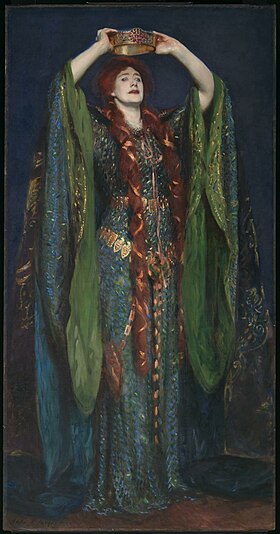
John Singer Sargent

One argument against the proposition made here recently that dreams are visions of an eternal world, in which we will live after death, is that most of us have both good and bad dreams. So are we bound for heaven, or hell? Shouldn’t good people have only good dreams, and bad people only nightmares?

But that would not be useful. If one had only good dreams, one might stop making an effort. And one might seek death, life by comparison seeming unbearable.

True, those who commit evil are more likely to have nightmares. MacBeth, having murdered Duncan, speaks of “these terrible dreams that shake us nightly.” Lady MacBeth sleepwalks, acting out her sense of guilt. We treat others well so that we sleep soundly at night. 

On the other hand, some good people too seem plagued by nightmares.

The point is presumably to warn us that something is wrong. It may be that we have done evil, and are bound for the pit unless we repent. Or it may be that evil is being done to us, and that we must do something to protect ourselves from it. This, after all, is what bodily pain is for.

To know which requires a careful consideration of the dream. 


Tuesday, December 07, 2021

Butterfly Dreams


In the 4th century B.C., Chuang-tzu asked the question. “Am I a man who dreamt last night of being a butterfly, or am I a butterfly dreaming I am a man?”

Has anyone satisfactorily answered this question?

Descartes asks himself the same question:

“At this moment it does indeed seem to me that it is with eyes awake that I am looking at this paper; that this head which I move is not asleep, that it is deliberately and of set purpose that I extend my hand and perceive it; what happens in sleep does not appear so clear nor so distinct as does all this. But in thinking over this I remind myself that on many occasions I have in sleep been deceived by similar illusions, and in dwelling carefully on this reflection I see so manifestly that there are no certain indications by which we may clearly distinguish wakefulness from sleep that I am lost in astonishment. And my astonishment is such that it is almost capable of persuading me that I now dream.”

We pinch ourselves to see if we are awake. But of course this does not work. It should be entirely possible to pinch ourselves in a dream.

Descartes ultimately resolves the question by proposing that God, being by definition all-good, would not delude us; and so what we perceive as clear and distinct must be the reality. And we perceive daily reality, he says, more clearly and more distinctly than we do our dreams.

But does this work?

To begin with, is it obvious that we experience our daily lives more clearly and distinctly than we do our dreams? Or is this just our perception when we are awake? How clearly do we remember how clear and distinct our dreams were, when we are awake? For that matter, how clearly do we remember how clear and distinct our daily life is when we are dreaming? Aren’t dream worlds perfectly clear and distinct while we dream, and our “real” daily life, if we are aware of it at all, vague and distant?

And even if this is so, even if dreams are less clearly perceived than the turnips we had at lunch, doesn’t Descartes’s own logic argue that the world of dreams is also real? Others can lie to us; we can lie to ourselves, causing delusions. We can misinterpret what we see, and mistake a reflection for an oasis. But dreams come neither of our own free will or from others. Nor do they involve the interpretation of some sense perception, introducing human error. While we might also misperceive this or that in a dream, why would God allow them to systematically deceive us?

By Descartes’s logic, he would not. And I do not think anyone else has ever given a batter response to Chuang-tzu. If we accept the world of our senses as real, as referring to a real place, we apparently must accept that the world we perceive in our dreams is also real, referring to a real place. God would not so deceive us.

Most human cultures, at all times and places, have accordingly assumed so. Dreams are either the language in which God talks to us, or they are a window into a real, objectively existing spiritual realm. Or both.

This explains the fact that the images that appear to us in dreams are not arbitrary, but predictable. Although dragons do not occur in the sensed world, the dragon is familiar to cultures all around the world. So is the phoenix, the unicorn, the sea monster, and so forth. Wherever the Greeks or Romans conquered, they had no trouble identifying the local gods as versions of their own gods. Jung traced the same motifs in the dreams of his Zurich patients and in ancient texts from India and elsewhere. He called these archetypes, but never gave a clear and consistent account of where they came from. The structure of the brain?

Why not see them, with Plato, as ideal forms, eternally existent in the spiritual realm?

When Jesus said “the Kingdom of Heaven is within you,” or “among you,” was he referring to its imaginative perception in dreams? Are we given a foretaste of the afterlife, both heaven and hell, in our dreams? Is this where we will live after the physical world fades away, just as it is where we live every night, when we lose consciousness of the physical world around us?

I think it is the obvious assumption.


Sunday, December 05, 2021

The Way We Weren't


Marguerite de Bourgeouys sculpture, downtown Montreal

I am currently forced to homeschool my daughter. It is just as well. We’ve been going through the prescribed text for Canadian history together. It’s alarmingly bad.

Most recently, it includes a chapter of detail about everyday life in New France. This is, to begin with, not a proper subject for history. We have apparently forgotten why we study history in the first place: to learn the lessons of the past. People’s everyday lives do not, on the whole, provide such lessons, for they had little chance to make choices that might alter the course of history. History properly has to do with matters of government policy, for the most part. Life lessons are important too, no doubt, but these we get from tales of saints and heroes and villains; not the lives of average persons in aggregate.

As to government policy, the book asserts, several times, that the French government saw their North American colony as something to exploit “to make the home country rich.” They did this through the mercantile system, forcing the colony to trade with the motherland. This seems a distortion of history. It should go without saying that a colony needed to pay for itself—that the cost of defending and administering it must not be higher than it returned in taxes. But there is every evidence that the French government saw themselves as also being in North America for the benefit of the natives: in order to convert them to Catholic Christianity and teach them how to improve their lives. And the mercantile system equally committed the mother country to trade with the colonies; trade is not exploitation.

As to the lives of ordinary people, the book goes on at some length over just how exploitative the seigneurial system was, whether there was class mobility, and how large was the pre-conquest middle class. Such class analysis tends to presuppose Marxism; otherwise it is of little interest. In any case, the written records are not sufficient to draw any conclusions. It is all conjecture tainted by political agendas. And such an excursus kills any narrative flow; it is the narrative flow that makes history interesting.

The text also diverts from any narrative continuity to point out that torture was used in the Quebec courts—30 times over a century. It goes into the methods in some detail. This may entertain adolescent boys, but it is not relevant to history. It seems little more than an opportunity to gossip unfavourably about our ancestors.

As is the two pages spent on slavery in New France. This seems disproportionate for a practice that was more common almost everywhere else except continental Europe, and which had no economic impact in New France. It seems mostly, again, a chance to find fault with our ancestors.

The book is openly hostile to Catholicism. It suggests that the average habitant was really more pagan than Christian, because “Canadian children heard tales of flying canoes, werewolves, and encounters with the devil.” Even though the same could be said of Canadian children today, or children at any time or place. 

Most disturbing to me is that the book spends only a half a page on women in New France, under the segregated subhead “Women in the Workplace.” It is not just that this ignores the work of women in the home, despite the concentration on ordinary people and ordinary lives. It also omits much of the history I read and heard as a student in Quebec half a century ago. Then, we knew of Madeleine de Vercheres, who defended almost single-handed against an Iroquois attack; of Marie de l’Incarnation, who founded the first school on the continent; Margeurite de Bourgeouys, who co-founded Montreal, built the first church, and started the first school; Jeanne Mance, who started the first hospital, which grew to a string of hospitals across Eastern Canada; Marie-Marguerite d'Youville, who built the first orphanage and hospice, the origins of the Canadian social security system; and St. Kateri Tekakwitha. 

Now all we get is brief sentences about some woman running a mill, or continuing their husband’s business after his death.

Why this radical devaluation of women? In part, I imagine, because it is now politically incorrect to say anything that sounds good about Catholics or the religious; and most of these women were nuns. In part, I imagine, because it is politically incorrect to admit that women had important roles before Betty Friedan. They were supposed, after all, to be oppressed.

It would all have been a terrible miseducation for my daughter.


Saturday, December 04, 2021

A Few Reasons for Hope


Back in early 2020 we joked about how 2020 was one piece of incredibly bad news after another. And we looked forward to 2021 taking over. But 2021 has probably been worse than 2020—notably in number of covid deaths. And the bad news keeps coming.

Here are a few hopeful thoughts:

Crisis tends to precipitate change.

1. In France, a presidential election cycle is beginning. Macron, the incumbent, is a centrist. His two closest rivals are both on the right. And not the centre right, not Gaullists; on the “far right,” people The Economist used to refer to as “thugs.” The “far right” candidates may not win, but the discussion and the issues have changed. The argument always used to be between the Gaullists and the Socialists. The Socialists are pretty much out of the picture.

2. In Britain, we have seen Brexit and the historic defeat of a left-leaning Labour Party in the last general election. Even if Boris Johnson is squishy, he faces competition from the right, from Nigel Farage and UKIP, as well as from the left. If those right of him do not have a presence in parliament, Farage demonstrated in the last European election that this could soon change, if they grow dissatisfied.

3. In the USA, the Democrats narrowly won the last election cycle; but the polls show their popularity now extremely low. It is not just Joe Biden who looks as though he could not get re-elected. Kamala Harris is almost as unpopular. The current cold shower of leftist policies may inoculate the States from voting left for some time to come. Just as it was unlucky for the Republicans to be in power when the Great Depression hit, or in the 2008 financial crisis. Trump himself should have been reelected, had it not been for Covid. Now the Democrats probably own it, and more.

4. The shakiness of the Chinese economy may be bad news for the world’s markets, and may cause recession or depression. That’s the bad news. But it may also cause the regime to fall. That would be much more significant good news. China under the current regime is the main threat to freedom and to world peace. It is more than a little perverse to worry about a bad Chinese economy. 

5. There is a chance that the new Omicron variant of covid is milder—we do not know yet. If it is milder, it may be to our benefit that it out-competes more dangerous strains. If it is not milder, the next strain may be. We may settle down to a covid that is no more dangerous than the seasonal flu.

6. The left is fighting back harder and harder, and making more and more outlandish claims and demands. They are more obviously simply denying truths we can all see for ourselves. This feels like the final act. “First they ignore you. Then they mock you. Then they fight you. Then you win.” The left is spending quickly any moral capital they once claimed. As it gets harder for good people and for intelligent people to be on the left, people may soon be ashamed to admit they are on the left, for fear of scorn or ridicule. When this happens, and it feels close, it is over.

7. The left is now in a position, thanks to political correctness and open denial of realities, of finding humour hostile. As a result, Saturday Night Live is no longer funny; Gutfield is. Stephen Colbert is no longer funny. Steven Crowder is. Nobody hears from The Onion any longer. It is now always the Babylon Bee. When it is no longer fun to be on one side, the other side wins. We saw this in the Sixties when the funny stuff was all on the left: National Lampoon, Month Python, George Carlin, Lenny Bruce. It was the best evidence that the right was intellectually bankrupt then. Now it shows the positions have flipped.

8. More and more public personalities who used to be on the left, or whom we assumed to be on the left, are now moving to or coming out as rightist. Dr. Oz is one recent example. When he announced for the Senate, I automatically assumed it was for the Democrats. He was Hollywood, and he was Oprah. Not so. He was a closet Republican. Tim Poole has stopped insisting he is on the left. Joe Rogan sounds more right wing. Jon Stewart sounds more right-wing. Jimmy Dore sounds more right-wing. People are walking away. I suspect that soon it will not be cool to be on the left.

9. It looks as though the Supreme Court might, by summer, overturn or restrict Roe v. Wade. While this would make no immediate difference even in the USA, it would be a heavy blow to the argument that abortion is a human right, accepted in Canada and perhaps elsewhere largely on the American model.

10. In the end, you cannot hold back the avalanche of information on the Internet.

Hope this helps.


Friday, December 03, 2021

Happily Ever After?


Do you recognize the person in this picture?

Nobody seems to get fairy tales.

A text from which I am currently teaching uses Cinderella as a hook. “Almost everyone knows how the story of Cinderella ends, but do people actually think about how she spent her days before she met the prince?”

Suprisingly, at least to me, few students seem to find the answer obvious. Even though without it, without Cinderella’s initial state of neglect and abuse, there is no story. Even though it is made her and the story’s defining characteristic: “Ella-in-the-cinders.” Everyone seems to think of her only as the happily-ever-after princess, in a princess gown.

But my text itself seems not to get it. It goes on to comment, “If someone had asked Cinderella what chores she did not particularly like, she probably would have answered, ‘Why none, of course. Housework is my duty.’” As though she was perfectly content with sleeping in the cinders while her sisters went to the ball. 

Why this weird blindness to what is, primarily, a tale of child abuse?

So, indeed, are most fairy tales. Snow White’s mother wants to kill her and eat her. Beauty’s father allows her to do all the work, while her two sisters abuse her relentlessly. Then he expects her to give up her life for his. Hansel and Gretel’s parents abandon them twice to be eaten by wolves. Rapunzel’s parents trade her for a mess of potage, then her stepmother locks her in an exitless tower.

Yet nobody seems to notice. Over time, most fairy tales have been sanitized, supposedly to remove anything that would upset small children. The violence is taken out, and any sexual innuendo. Witches or trolls may be too scary. Yet the abuse tends to remain, as though no one notices it—although, to be fair, it is so central to the stories that they would probably be meaningless without it.

It is not just child abuse which seems to be invisible in storyland. Jesus’s parables, too, are invariably misinterpreted. For example, nobody seems to notice the critical point of “The Good Samaritan”—although it is also apparent in its common title. It is not just the obvious point that it is good to do good; it is that the one person who did good was a Samaritan. After thieves had done evil, and a priest and a Levite ignored it.

The parable of the Prodigal Son I have seen similarly misinterpreted, even though the point is again in the standard title. Some apparently think that it is all about condemning the one son for wanting to leave the family farm.

In the Parable of the Talents, nobody seems to notice that the servant who is praised for good stewardship has made the money by lending at interest—prohibited by the Mosaic Law.

Although not a parable, the story of the woman taken in adultery is a similar case. Everybody seems to insist that Jesus overlooks the sin of the woman caught in adultery. He does not; he calls her out for it, and tells her to go and sin no more. The point is that he is not prepared to stone her to death, to give up on her.

My friend Xerxes, quoting some Protestant theologian, recently asserted that Jesus’s parables on the Kingdom of Heaven were really about the value of friendship. Heaven was being a friend to all. None of this nonsense about sheep and goats.

It occurs to me that there is a common thread here. It is a general denial of evil. We refuse to see evils committed in front of us; we pretend they do not exist.

To do so, to wash our hands and ask, with Pilate, “what is truth?” is itself the ultimate evil. Anyone might do an evil act. But to categorically deny the existence of evil is to crucify Christ in the flesh.


So You Thought It Was Over?


Is there really a bat in here?


Two bits of troubling information on Covid. First, confirmation that people who have previously had Covid can be reinfected with the Omicron variant. Second, 80% of a sampling of white-tail deer have or have had Covid. So Covid now has an “animal reservoir” from which to re-emerge forever in new variants, even if we eliminate it in the human population.

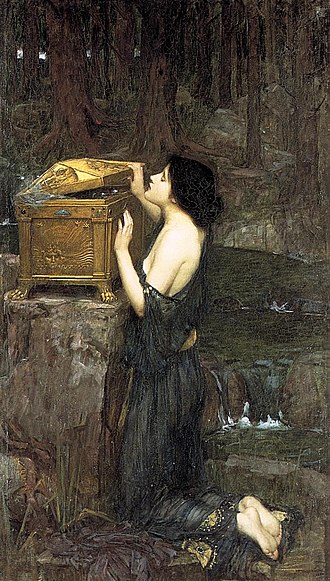
Pandora’s box is well and fully open now. 

But as with Pandora’s box, one hope remains: that Omicron will be milder in its effects.


Thursday, December 02, 2021

The Words of the Prophets are Erased from the Tenement Halls


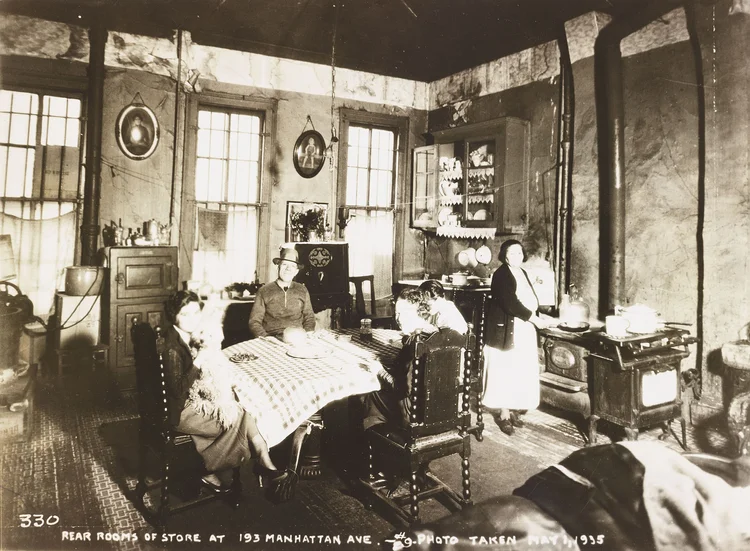
I am horrified to learn what has happened to the Tenement Museum in New York.

I saw it perhaps 12 or 15 years ago, and it was a high point of the trip. Although I can claim no personal ties to that history, I grew up to my Irish grandmother’s rendition of “The Sidewalks of New York.” It was a kind of anthem to North American Irish. We looked to New York as a kind of ethnic capital, since there was little left to us back in Ireland.

Growing up, there were still areas of Montreal and Kingston, too, that we were told never to go to as kids. They were the tenements our Irish ancestors had inhabited. We were still to insecure in our status to be comfortable about them. Be seen there, and we might easily be taken for “that kind” of Irish. Goose Village, Griffintown, Point St. Charles. In Kingston, the entire north quadrant was as if roped off. In Toronto, it was Cabbagetown, Corktown, St. James Town.

I have been warned on several occasions, by women, almost on first meeting, that their mothers had made them promise never to become involved with anyone Irish. In college, the student newspaper once published an opi9nion piece titled “Let’s sink Ireland for a Day.”

The historic discrimination against the Irish, or the Jews, or the Poles, has not abated; it is still common. It is the life experience of many now living; Jews are still the most common target of all hate crimes. Yet now we Irish, Jews, and Poles, are having our own history here erased while being falsely accused of being the “oppressors” of other groups with whom our ancestors rarely came in contact. Or when they did, met as equals and most often comrades at the bottom of the greased pole. 

I suspect it is just a continuation of the same discrimination; just a new excuse to discriminate against the Irish or the Jews, while using them as a scapegoat for the sins of others. Like scapegoating poor Scots-Irish “rednecks” in the South for supposed discrimination and slavery, when their own ancestors never owned slaves, and came as indentured servants, a kind of term-limited slavery, themselves.


Tuesday, November 30, 2021

In the Bleak Midwinter


It is time for Advent music. 

Inthe real world, nothing else seems to matter as much.


Monday, November 29, 2021

Racism and Tribalism


Those on the left are these days portraying what they call “racism” as something permeating all our institutions. Most recently, the Salvation Army has endorsed this concept. It warns of “systemic racism,” “the well-institutionalized pattern of discrimination that cuts across major political, economic and social organizations in a society,” leading to “inequity.”

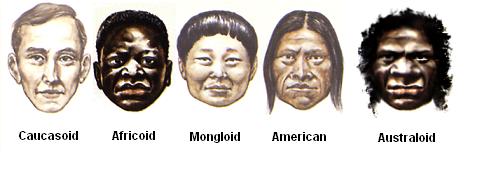
Historically speaking, “racism” is only a recent problem. The concept of race in the human context is more or less a product of Social Darwinism, from the scientism of the 19th century. Before that, people were aware of breeding, heredity, and culture—that is, social class—but not race. Nor, before that time, did the average person in most parts of in the world have any experience of people of races other than their own.

That’s too recent for anything like an original sin. Any structures that pre-exist Darwin, like the US Constitution, or the English common law, or liberal democracy, are necessarily innocent of the charge.

Tribalism—seeing only members of your own culture or social group as fully human—is an older problem. It is a universal and instinctive tendency, but obviously more thoroughly indulged in tribal societies, and less with a social philosophy or culture that claims to apply to all mankind. Accordingly, the best means to reduce the tendency to tribalism is to insist on the doctrine of universal human rights and support the major universalist religions like Christianity.

Yet this is exactly what the modern left want to tear down. They are quite openly pushing for a return to tribalism and group conflict.

The Devil commonly uses words to mean their opposite.


Sunday, November 28, 2021

Hopeful News--or at Least, Hopeful Thought


While initial reports of the new Omicron variant of Covid were alarming, the news has more recently looked a little brighter. The South African doctor who first detected the strain says she has only seen mild cases. 

If Omicron is extremely contagious yet causes only mild symptoms, it may actually work like a vaccine, quickly inoculating large populations. 

Here’s hoping…


Friday, November 26, 2021

Armageddon Nervous


The news is coming in fast right now--about the new Omicron variant of COVID. It sounds as though it is far more virulent than the previous strains, as contagious as anything we’ve ever seen. Just when it looked as though we were about to come out of the pandemic, down we go again. I first heard of the new variant yesterday. Today, it is already reported from seven African countries, Belgium, Israel, Hong Kong, and South Korea. Hospitalizations in one South Africa province have doubled in the past day. The New York Times is running live updates.

Speculation is that it may be able to bypass the vaccinations, since it has mutated significantly. Nobody is prepared to say yet whether it is more or less deadly than previous strains. One doctor says lockdowns are not going to do much against this one.

Meantime, yesterday the abstract of a study was released suggesting that the mRNA vaccines significantly increase the risk of heart disease and stroke.

Stock markets are taking a hit.

It begins to feel as though we are in a downward spiral. It reminds me of the pace of Orson Welles’s radio version of War of the Worlds.


Thursday, November 25, 2021

Shut Up and Think for Yourself


Christina Wyman has written a piece for NBC decrying parents who want to interfere with their children’s education. She laments that “parents think they have the right to control teaching and learning because their children are the ones being educated.” “It’s sort of like entering a surgical unit thinking you can interfere with an operation simply because the patient is your child.” After all, “Teaching, too, is a science. Unless they’re licensed and certified, parents aren’t qualified to make decisions about curricula.”

This is eleven different kinds of wrong. It is wrong on every point. And not list a little wrong on them. 

To begin with, overseeing their children’s education is the primary duty of parents.

"The role of parents in education is of such importance that it is almost impossible to provide an adequate substitute." The right and the duty of parents to educate their children are primordial and inalienable. – Catechism of the Catholic Church

Wyman cites the analogy of medicine. Fine. Here the patient has the right to choose their own doctor, and then to refuse any given treatment—for themselves and for their child. Let it be so in education. Let parents choose the school and curriculum.

And make the teachers liable to be sued for malpractice, as doctors can be.

I’m good with that.

But unlike medicine, teaching is not a science. It is not evidence-based. There is no empirical—which is to say, scientific—evidence that certified teachers teach better than a random person off the street. In fact, the evidence shows the opposite. Those who are homeschooled do better than those who come up through the public schools on standardized tests and in university—literally, then, a random member of the public can do better. Those who attend private schools, where teachers do not have to hold professional qualifications, also do better. Sending your child to a “qualified teacher” is the worst available option.

Wyman goes on to assert that “An educator’s primary goal is to teach students to think.” This is an odd thing to say to justify refusing parents the right to think about their children’s schooling. The public schools deliberately repress this, and were designed to do so in the early 20th century. One of the great attractions to private schools is that they, unlike the public schools, do teach students how to think. That means teaching them philosophy, logic, rhetoric, formal debating. Subjects definitive of the private schools, and rarely seen in public schools. It would mean teaching using the Socratic Method. What public school does?

The question: is Wyman that stupid, or that corrupt?

And how stupid or corrupt are our politicians if they accept this?


Paper Freedoms


Everyone has the following fundamental freedoms:

(a) freedom of conscience and religion;

(b) freedom of thought, belief, opinion and expression, including freedom of the press and other media of communication;


My Filipina wife agrees that one big problem with living in Canada is the lack of freedom of speech. She notes that one could speak more freely in Saudi Arabia. I have heard the same from Polish friends—that you could speak more freely in the old Communist East Bloc than you can in Canada. 

It is not just that saying the wrong thing can get you two years in prison. A slight misstep can cost you your job, your career, your family.

In Canada, you need to think very carefully before you say anything, and you are still liable to get into trouble. Because the goalposts keep moving.

It is ironic that freedom of speech is guaranteed in the Canadian constitution. But a constitution is only a piece of paper, if it is not honoured by the government and the courts.

We are doing this liberal democracy thing wrong.


Monday, November 22, 2021

The Weimar States of America


With its reaction to Kyle Rittenhouse’s acquittal, at least a large portion of the left has surely shown themselves to be delusional, and a danger to themselves and others. Neither logic nor evidence can penetrate their “narrative.” Even after the trial and verdict, many are insisting that Rittenhouse was a “white supremacist” who transported a weapon illegally across state lines in order to kill blacks. Assuming it was an expression of left-wing ideology—we do not know yet—what could be a more dramatic image of pure evil attacking good than the video of an SUV ploughing into a Christmas parade? It has become this stark. Now parents who complain about their children’s schooling are “domestic terrorists.” Anyone who defends the doctrine that all men are created equal is a “racist” and a “white supremacist.”

This poses an eternal problem for a liberal democracy. What do you do with a popular movement that itself denies liberal democracy? What happens if, as in Weimar Germany, it manages to attract a plurality of voters?

Ed Driscoll has put out a video, based on Harold Bloom’s The Closing of the American Mind, that posits that America was seeded with the same ideas as Weimar Germany beginning in the 1920s. It all came originally from German thinkers like Nietzsche and Freud—not to mention Marx. Bloom summarizes it as “value relativism.”

History tells us where that ends. It would seem to be an inevitability.


For heathen heart that puts her trust

   In reeking tube and iron shard,

All valiant dust that builds on dust,

   And guarding, calls not Thee to guard,

For frantic boast and foolish word—

Thy mercy on Thy People, Lord!


Sunday, November 21, 2021

Letterkenny Problems


Nothing I love better than a classic Canadian small-town comedy, except perhaps for a classic Canadian coming-of-age film. Why is it these are the classic Canadian themes, and why is it they speak to me so deeply?

Having binged through Corner Gas and Schitt’s Creek, I am now on Letterkenny. All three share what is most characteristic about Canadian rural comedies: the rustics are the normal ones, and the city folk are the odd outsiders. I trace the trope back to Leacock’s Sunshine Sketches, with at least an assist from Anne of Green Gables.

The characters on Letterkenny are deliberately two-dimensional. This means nobody really gets to show much acting chops. Even so, I think Evan Stern as Roald is a standout. Nathan Dales is also very convincing as Daryl. Reilly seems almost real.

On the other side, I find K. Trevor Wilson’s portrayal of Squirrelly Dan annoying. He randomly adds an “s” sound to the end of words, supposedly in imitation of a rural Ontario accent. To a linguist, and to someone who grew up partly in rural Ontario, this is gratingly wrong. The “s” should only be added to “you” to express the plural, and to verbs in the simple present tense, not randomly. Stupid city guy. Wilson grew up in Toronto.

Other characters I find a bit too cartoonish to warm to are Gail with her weird stance, Stewart with his hostile glare, McMurray with his mumble, and Dickson with his auctioneer shtick. 

But the show is just so full of wordplay and inside jokes that it is irresistible.


The Feast of Christ the King


Christ Pantocrator, from the interior dome of the Church of the Holy Sepulchre


Pilate said to Jesus, “Are you the King of the Jews?”

Jesus answered, “Do you say this on your own or have others told you about me?”

Pilate answered, “I am not a Jew, am I? Your own nation and the chief priests handed you over to me. What have you done?”

Jesus answered, “My kingdom does not belong to this world. If my kingdom did belong to this world, my attendants would be fighting to keep me from being handed over to the Jews. But as it is, my kingdom is not here.”

So Pilate said to him, “Then you are a king?” Jesus answered, “You say I am a king. For this I was born and for this I came into the world, to testify to the truth. Everyone who belongs to the truth listens to my voice.”

John 18: 33-37


Today is the feast of Christ the King, Catholic New Year.

Jesus does not say here that he is or is not a king. “You say I am a king.” 

But the last sentence says he is the king of everyone who seeks truth. The essence of being a king is that people do as you say. “Everyone who belongs to the truth listens to my voice.”

Pilate does not get this. He does not get it because he does not belong to the truth; as he reveals in the next verse:

Pilate said to him, “What is truth?”

Pilate is a zombie. To Pilate, the king of truth is not a king; he has no dominion, and no power.

This is definitive, conversely, of who is and is not a true Christian. Christ himself is truth, and king of truth. Accordingly, anyone who seeks and prizes truth is a Christian. Anyone who does not, regardless of whether he mouths the Latin name “Jesus,” in or outside of a church, is not.

And then again, I think whoever seeks and prizes truth, and sits down and carefully reads the gospels, is going to recognize the ring of truth. At the same time, those who do not seek truth are perfectly capable of reading them, and quoting them, and having no idea what it’s all about.

Friend Xerxes just yesterday quoted a Scottish theologian, John Macmurray, as asserting that the “kingdom of heaven” over which Jesus reigns is “friendship.”

“Jesus said contradictory things about it. That the kingdom could appear at any moment. And that the kingdom was already here, and known.

The only human experience true for both statements, Macmurray argued, was friendship.”

Friendship is for from the only human experience that can appear at any moment, yet be already here and known. Think about it for a moment: any possible concept we might have of the future fits, pretty much by definition. 

Reducing the Kingdom of Heaven, over which Jesus is king, would seem to require a willful misreading of the gospel.

Friendship does not require God to incarnate and die for us. Friendship is known to all mankind. The oldest known connected narrative, the Epic of Gilgamesh, is the story of a friendship, between Gilgamesh and Enkidu. 

Macmurray might respond that the Christian ideal is of friendship among all men. 

But try to reconcile that reading with the following passage:

When the Son of Man comes in his glory, and all the angels with him, then he will sit on his glorious throne. Before him will be gathered all the nations, and he will separate people one from another as a shepherd separates the sheep from the goats. And he will place the sheep on his right, but the goats on the left. Then the King will say to those on his right, ‘Come, you who are blessed by my Father, inherit the kingdom prepared for you from the foundation of the world.

This cannot be a universal friendship, then, for it separates mankind into definite camps, and condemns one.

Consider too this passage:

And He said to them, ‘Truly I say to you, there is no one who has left house or wife or brothers or parents or children, for the sake of the kingdom of God, who will not receive many times as much at this time and in the age to come, eternal life.’

This places the kingdom about one’s commitment to family. If the kingdom of God is friendship, this places friendship above love of family. Most people would say family takes priority over friends: blood is thicker than water, and so forth. Is saying friends are more important than family a profound and worthy message?

The Greeks, of course—meaning Jews in Jesus’s time—recognized various forms of love, for which we have only one word. Friendship was philios, family love was storge, sexual love was eros. Divine love, of which Jesus spoke, was agape, sometimes taken as cognate with the English word “charity.” Not philios.

But charity in turn is not the kingdom; it is necessary to enter the kingdom. The kingdom is truth. Or, one might say, the real world.


Friday, November 19, 2021

The Canadian Dictatorship


Senator Batters

Conservative senator Denise Batters called this week for a review of Erin O’Toole’s leadership. Within a few days, Erin O’Toole had ejected her from the Conservative caucus.

This shows how dysfunctional the Canadian system has become. MPs and party members are supposed to choose their leader; the leader is not supposed to choose the MPs and party members. This is an innovation introduced, I believe, by Jean Chretien, based on the right of the leader to sign or refuse to sign the papers for parliamentary candidates to legally stand for office, and it makes Canada almost an elected dictatorship. It ensures that there is no serious discussion of issues in parliament.

We saw similar dictatorial conduct when Justin Trudeau rid himself of Jody Wilson-Raybould and Jane Philpott.

We must end this power.