





 Posts


Showing posts with label imperialism. Show all posts
Showing posts with label imperialism. Show all posts
Wednesday, December 13, 2023


Sunday, December 11, 2022
Al Purdy's Racism

In a piece he titled “Norma, Eunice, and Judy,” Al Purdy lamented, as I do, the general disrespect in Canada for Canadian culture. He regrets, in his own day, Canadian children growing up thinking they live in “a nation without culture, art, or literature.” It is, he says, “a country where the native literature is added to English Literature or American Literature like an afterthought. Where it is said to be not worth teaching.”
It is the colonial mentality. And, if anything, it is getting worse, with our own prime minister (eternal shame be upon him) claiming there is no Canadian culture, with government cultural funding going as a priority to “multiculturalism.” In other words, any culture but Canadian culture.
Purdy then tells the tale of Jim Foley, an unusually well-educated Ontario high school teacher who “realized that Canada must be the only country in the world where high school kids aren’t taught their own literature.” He began his own database of Canadian literature, confident that in a few years “Margaret Laurence, Atwood, Layton, Garner, and all the others who talk about the place we live in, their voices will be heard and taught in our schools.”
These words were spoken in 1974. It is now the butt end of 2022, and it still has not happened. Instead, the reverse. Kids now read American pop novels in school, watch Hollywood movies, and read and discuss anything written by anyone claiming to be aboriginal. Or failing that, they will be assigned a book by an immigrant with views hostile to the country and the culture.
Precisely the attitude of a colonizer.
And Purdy and Foley would now be declared “racist” for wanting to promote Canadian literature.
Saturday, September 10, 2022
Postcolonial Poverty
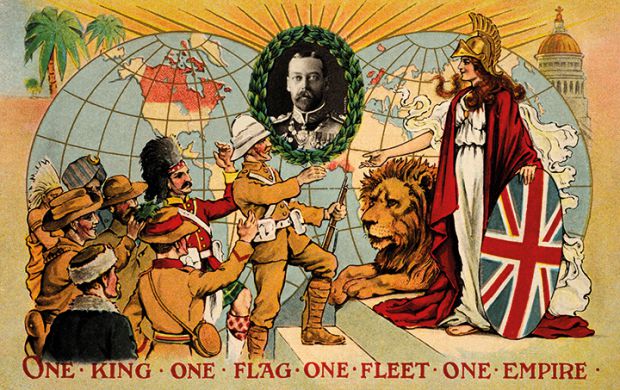
With the death of Queen Elizabeth, much is inevitably being said of the evils of the British Empire.
It is an interesting fact that Columbus discovered the New World the same year that the Spanish finally expelled the Moors. In other words, Spain began its greatest, most glorious era the very year it slipped the yoke of colonization itself.
The Dutch repeated the trick: they built an overseas empire just
as they were casting off the Spanish yoke in turn.
The Jews, we know, are notably successful. Within living
memory, they were hunted and killed throughout Europe.
In 1930, under the British Empire, India was responsible for
6.42% of world GDP. Five years after independence, it was down to 3.8%. In
2010, it was at 4.2%; it has risen in the last few years to 7.19%.
In other words, places like Africa and South Asia cannot
blame their present poverty on having been oppressed three generations ago. Modern
American blacks cannot blame their present poverty on slavery a century and a
half ago. It does not work like that.
Monday, August 15, 2022
Freedom at Midnight

Today marks India’s Independence Day, which friend Xerxes considers the end of empire and the beginning of the era of decolonization.
I think he’s off by a couple of centuries or so. I’d pick July 4, 1776. Not just because that date marked the independence of 13 former colonies, but because the USA then inspired and sponsored decolonization generally. Soon after, most of the nations of the Western Hemisphere declared their independence. I believe Canadian or Australian independence was also inevitable due to the American model. That’s a large portion of the world to overlook.
Moreover, the fundamental revolutionary principle, “no taxation without representation,” if applied anywhere, makes empire impossible. It’s not an empire, or a colony, if everyone gets the vote.
The nations thus formed, on the American model, therefore further refused themselves to have empires or colonies.
The next most important date in the history of decolonization was January 8, 1918. This is when US President Wilson declared his Fourteen Points, which he was more or less able to impose at the WWI peace conferences. This dismantled the Ottoman, Austro-Hungarian, and Russian Empires, another huge swath of the world. Ireland soon broke away from the British Empire. The Korean independence movement formed. The dissolution of remaining empires would have to wait, but the philosophical foundation had been laid. This is the novel idea that political boundaries should correspond to ethnic boundaries---the nation state. This made little sense for kingdoms; more for republics and democracies. When former German colonies were divided among the victors, they were assigned as League of Nations “mandates,” not as sovereign territory. Eventual independence was now assumed—for all colonies.
August 15, 1947, was just the biggest single colony to go.
But the British Raj itself did not end prior Indian independence. When the British arrived, India was under the control of the Mughals, from Uzbekistan. Empire and colonialism was not a European invention. It was the universal norm from ancient Mesopotamia until 1776, or even until Wilson’s Fourteen Points. It is the nation state, decolonialization, and democracy, and not empire, that is Europe’s historic contribution. Or rather, Europe’s and America’s.
Wilson’s ethnic nation states too have brought their problems. The nation state, after all, has given us Nazi Germany, the Young Turks, much strife at partition in India, and similar strife elsewhere—one might mention Ireland, Cyprus, Palestine, Rwanda, Croatia, Bosnia, Kosovo, Sri Lanka, Burma, Timor Leste, … it is an almost endless list. The EU can be seen as an attempt to return to some of the benefits of Empire. So too NAFTA and the Trans-Pacific Partnership.
Were it not democratic, modern India would still be an empire. It incorporates disparate ethnic groups, of disparate languages and cultures, under one government. So too for Canada, were it not democratic. Democracy is the key, not division into ethnic states--national ghettos.
Monday, December 02, 2019
Regime-Change Wars
 |
| A 19th Century British political cartoon. |
I like the sincerity of Tulsi Gabbard. I believe she would be the strongest candidate for the Democrats against Donald Trump. And I think she is being treated dishonestly by a corrupt Democratic Party establishment and media.
But what about the merits of her central issue, ending American involvement in “regime-change wars”?
She has a point in international law, or what international law said until Kosovo. Until then, intervening in another country’s internal politics, no matter what, was considered unprovoked aggression.
But then there was the Rwandan holocaust, and opinion shifted to holding France morally responsible for not intervening.
I at first resisted this new principle, that there was an obligation upon other nations to intervene in defense of human rights. I was, on reflection, wrong.
This, after all, is the same moral principle as our obligation to intervene if we see someone being raped or stabbed or beaten up. “None so guilty as the innocent bystander.”
So it follows that America, because it has the capability, has the moral obligation to intervene against any regime that is flagrantly violating the human rights of either its own or some other people. It is not okay to gas Jews. It is not okay to stand aside and let it happen. Sorry, Tulsi.
I believe Gabbard sincerely sees it differently, for the simple reason that she is a Hindu.
Hinduism or Buddhism can endlessly tolerate injustice without a moral obligation to intervene because of the doctrine of karma. If someone is being raped or stabbed or otherwise viciously mistreated, if some group is being systematically wiped doubt, it is no doubt just reward for some terrible thing they have done in a past life. No injustice is possible; no cause for us to get involved.
I leave the reader to decide how they feel about this stance; but from it follows the conclusion, for example, that having a criminal justice system is illegitimate.
Gabbard and her supporters would no doubt go on to argue that recent “regime change” wars have not just been costly, but have not worked. They will cite Iraq and Afghanistan.
We have actually had several recent case studies, since this new doctrine has become accepted: Kosovo, Iraq, Afghanistan, Libya, and Syria.
In the first case, the Western allies stayed on to establish stability, and, after some years, Kosovo has emerged as a functioning multi-party democracy. In Kosovo, it seems that the “regime change” war did work. One might also mention the postwar experience with Germany, Japan, or Italy, although WWII was not just a “regime change” war.
In the second case, Iraq, some stability did seem to have been achieved, after some years of struggle, then lost by what looks like a premature US departure. After some limited re-engagement, Iraq looks more stable. In Afghanistan, relatively low-level conflict continues. In these two cases, long-term results cannot really be determined.
Appalled by the cost of these two interventions, however, when things then turned nasty internally in Libya, the West tried a different tack: go in, take out the regime, and leave. This is, to be honest, what I too thought would be the better policy. You can lead a nation to democracy, but you cannot force them to be democrats. It’s a contradiction in terms.
But this approach seems to have turned out worse: Libya remains in chaos, and human rights abuses remain common.
Disappointed again, when Syria then went south, the West reverted to the old, pre-Rwanda approach: do nothing.
And this has worked out worst of all: an ongoing holocaust of historic proportions, a refugee crisis flooding the borders of Europe, and the intervention of other foreign powers less friendly to human rights: Russia, Iran. As none have the strength to force a resolution, conflict looks to continue indefinitely.
So we’ve tried all the possible approaches, and in terms of defending human rights, the option of intervention, however costly, is visibly the best.
Americans, of course, are historically tempted to ignore the rest of the world’s problems, protected they are by oceans vast and deep. That may or may not be wise—but it is not the moral way.
Those alert to history may realize that Britain, in the nineteenth century, faced the same choice. Protecting the human rights of foreigners was actually the sentiment upon which was built much of the British Empire. Britain spent a lot of "blood and treasure," as the modern clichéd usage goes, ending the slave trade, thuggery, piracy, suttee, the caste system, banditry, endless local conflicts, and the like.
Honesty compels us to admit that, no so uncommonly, colonialism is actually a good idea.
Sunday, July 01, 2018
Vietnam and Afghanistan
 |
| The way we were... |
Saw a documentary on the Vietnam War last night. It is remarkable how memories of Vietnam, once such a pressing issue, at least to those of us who were young, have faded. For a time, the trauma of Vietnam seemed overwhelming, and the end of American domination in the world. It was, the Americans thought, the first war they ever lost. God had deserted them; or they had deserted God. When Reagan a decade later send a few thousand marines into Grenada, the world gasped at his recklessness. After Vietnam? Unthinkable!
And now Afghanistan has dragged on as long, and nobody notices.
My opinion of Vietnam has not changed; not since I read the Pentagon Papers in 1971. I don't think the Americans were wrong in any moral sense to go in. It would have been better for the South Vietnamese had they won. But it was foolish. Just look on a map. First off, they could never invade North Vietnam, or, the Korean War informed them, they would be engaged in a land war in Asia with China. That would be the world's worst-case scenario for American arms, it being a distant sea power. As a result, they were committed to a purely defensive war; they could not win, only hold the line. Unless the North Vietnamese decided to give up, they had to lose.

Worse, South Vietnam is little more than one extended border. Insurgents could slip over that border at any time, at any point. No part of the country could ever be secured. The only way the US could fix that problem was to invade and conquer Laos and Cambodia, which would be a clear act of aggression against neutral countries, a flagrant violation of international law, and would damage US prestige as badly as or worse than losing the war.
All of this was obvious before the US went in.
I do not blame LBJ for going in; he was already committed, and to pull out would have meant a huge loss of American prestige. I do not think you can blame Kennedy either. His hands were similarly tied by prior commitments. You can blame Eisenhower. First, at Suez, he kicked the slats out from under the French and British empires. He forced them out of the game, and so out of Indochina. Then he committed the US to preserving the status quo under which the French left. He put America's head in the guillotine, and pulled the cord. It just took a few years for the blade to fall, and by then he was out of office. Anything after that would have been a grievous loss of American prestige, with perhaps disastrous consequences: the domino effect everyone worried about. The US would have shown itself an unreliable ally.
So why doesn't Afghanistan provoke the same public angst as Vietnam did?
It was almost as obviously dumb from the start. Afghan conditions defeated the Soviet Union, when it was the second-greatest military power on Earth. And a heck of a lot closer for resupply than the US. They defeated the British, when they were the greatest military power on Earth. And a heck of a lot closer to their base in India. Why, other than insane hubris, would the US (and NATO) attempt the same folly? Afghanistan is mountainous—perfect for guerilla warfare, so good for it that local governments have never been able to maintain control. Back in the Sixties, Afghanistan was still famous, as it had been throughout history, for bandits. The roads were never secure. Its natural state is constant total war. It has no seacoast—a huge logistical problem for a sea power like the US. And this also means that it is all border, through which insurgents can always pass in and out. The long border with Pakistan works just as did the Ho Chi Minh Trail. And NATO cannot invade Pakistan to do anything about it.

The American war aim, back in 2001, was to punish the Taliban for refusing to hand over Osama Bin Laden and for hosting Al Qaeda bases. That mission was accomplished within two months. The US should then have handed the reins of power, such as they were, to their local allies, the Northern Alliance, and pulled out. This is how the British or French used to do it back in the days of empire; this is good old “gunboat diplomacy.” Send in a mobile force, burn down the Summer Palace, and withdraw in good order. Lesson taught. If they go back and do it again, go in and do it again.
 |
| US White House after Royal Navy raid, War of 1812. |
Anything else is, if you will pardon the term, colonialism. You really do not have to stay and take over the country, do you?
But Vietnam was a much bigger conflict: it required the draft, a lot of unhappy involuntary soldiers, and a lot more casualties. Afghanistan is far less fierce.
In fact, it is so relatively placid that there may be real, material reasons for NATO to want to stay, even if the conflict is unwinnable. It might still be useful as a live-fire training and testing ground for NATO arms and tactics. In case of and more serious conflict, having forces recently battle tested is a huge advantage.
Unfortunately, real people are dying. I'd still pull out. With a strike force waiting on Diego Garcia.
Wednesday, March 21, 2018
The Case for Colonialism

Former Queen’s prof (now at Portland State) Dr. Bruce Gilley has been summarily removed from Queens’ Centre for International and Defense Policy for publishing a paper titled “The Case for Colonialism.” Apparently arguing that colonialism can be moral in some circumstances is now intolerable.
But of course it can, or at least a reasonable argument can be made. Kosovo, for example, was a colonialist intervention. Bosnia was. Such interventions to prevent human rights abuses are not rare in the annals of European 19th century colonialism. More often than we are told, the intervention of the European power was largely humanitarian in intent. It was a matter of peacekeeping, or of preventing a holocaust.
Even when this is not the case, much colonialism can be compared to the sound corporate policy, when a business is not doing well, of bringing in new management from outside. It works in business; it works as well in government.
Of course, at the time that Europe was colonizing the rest of the world, European culture was also significantly more technologically advanced than any of its colonies. The colonial authority introduced this new technology, improving living standards: railroads were laid, canals dug, new industries developed, schools and hospitals founded. Sure, European firms profited in building and managing these things; but so did the local inhabitants.
The case against colonialism is that it infantilizes people; makes the colonized dependent and strips them of initiative. And this is an important issue.
But really—the idea that different ethnicities should be sovereign and govern themselves is a new idea, dating from about 1917 or so and Woodrow Wilson’s Fourteen Points. Before that, everywhere, colonization was the universal norm. It is, moreover, arguably racist to insist that there is something wrong with it—that government ought always to be on the basis of race or ethnicity. And this position that governments must be ethnically-based is disastrous for minorities everywhere.
Tuesday, November 28, 2017
Colonialism in Vogue

This piece explains why. And why journalism in general is in trouble.
Teen Vogue was supposed to be about fashion. Teenaged girls bought it to learn about the latest in fashion. Instead they often got stuff like this. Stuff they were suppose to pay for and read whether they liked it or not.
Not only is it irrelevant to their known interests. It is also telling them that they, or at least their presumably European ancestors, were bad people.
Worse, it is full of falsehoods. It is misinformation.
Begin with the subhead: “There were two major waves of colonialism in recorded history.”
They mean the colonization of the Americas, and the colonization of Africa.
No, empire and colonialism has been the standard system of government for most of mankind for all of recorded history; since ancient Mesopotamia. The nation-state is the new idea; and it emerged first Europe.
“Colonial logic asserted that a place did not exist unless white people had seen it and testified to its existence.”
An absurdity which, of course, nobody ever believed. And speaking of “white” people here, ith reference to the early exploration of the Americas, is an anachronism. “White” became a meaningful concept only much more recently, and only in some places, most notably the US. “Race” was not an issue before Darwin and modern biology. The issue in the case of America was that the existence of this continent was not in any known written source. It is similar to the situation today when some new plant or animal species is “discovered.” Nobody, then or now, ever thought that the thing did not exist before it was known to science, or that people living locally did not know about it.
“Yet, in many history books, Europe’s expansion is remembered as exploration”
That is exactly what it was, in the first instance—exploration.
“The first indigenous people he [Columbus] came across were the Taíno, who accounted for the majority of people living on the island of Hispaniola (which is now divided into Haiti and the Dominican Republic). They had a highly evolved and complex culture.”
That is at best a matter of opinion. Columbus's own first impression on encountering them was “they were a people very poor in everything.”
Speaking of the colonization of Africa, and the borders that resulted, Teen Vogue explains, “These artificial borders split cultural groups.”
True, they did. But left unsaid is that any attempt to draw a political map of Africa on ethnic grounds would have produced no stable borders at all, and no viable national economies. The thing about tribal culture is that ethnic groups are small, not exclusive to any one particular plot of land, and tend to migrate. Any borders, not just these ones, would have mixed and matched cultural groups.
“Indigenous political, economic, and social institutions were decimated, as were traditional ways of life, which were deemed inferior.”
Both British and French policy throughout the continent was actually to leave all existing power structures and leaders in place, and work through them. But, offered a better tool, people will use it. Cars work better for their purpose than donkeys, and TVs work better than jungle drums. The obvious reason for the decline in traditional African cultural practices was that the traditional ways of life actually were inferior. Yet this possibility is not even entertained.
“Among the most brutal of colonial regimes was that of Belgium under King Leopold II, known as 'the Butcher of Congo.' His well-documented acts of violence against the Congolese people resulted in an estimated 10 million deaths.”
This leaves the impression that the conduct of Leopold in the Congo was not too far off the mainstream, and can serve as an example of European colonization more generally. In fact, as the term “Butcher of the Congo” suggests, it was a scandal and considered an atrocity of historic proportions at the time. Belgium was forced, under intense diplomatic pressure from other European nations, to correct the situation. Citing it as an example is like citing the War in Bosnia as an example of modern European politics.
“Belgium, like a lot of the white Western world, can directly attribute much of its wealth and prosperity to the exploitation and deaths of indigenous people of color.”
No. The thing about European colonialism, and largely what led to its downfall, is that it was a money-losing proposition for the Imperial powers. Just as its Communist empire was, a few generations later, to the Soviet Union. Eventually, they, like Britain, France, or Portugal before them, could no longer afford it. Empire instead was considered a burden and a duty, done, if not purely for idealistic reasons, for national prestige.
Speaking of the first settlers in America, Teen Vogue reports:
“The majority did not want peace and harmony between cultures; they wanted the land for themselves. They did not want to share the abundant resources; they wanted to generate wealth to fill their own pockets.”
This might possibly have been true for some individuals outside of Disney cartoons. It was not official policy; both British and French authorities did all they could think of to establish and preserve peace and harmony with the native inhabitants. There was no good reason for conflict over resources. The presence of each group was beneficial to the other. There was plenty of land for everyone. Even aside from the fact that farming was a far more efficient use of the land than the traditional hunting and gathering known to the Indians, the Indian population had already been decimated by disease, and was not even using much of the land for traditional hunting. In any case, trading furs with the Europeans was far more profitable.
And very few of the early settlers were thinking in terms of wealth or of filling their pockets. These were the poorest folk in the Europe of the time, a time of periodic starvation. They were only concerned with surviving the next winter.
“Most had no respect for indigenous cultures or histories; they wanted to enforce their own instead.”
Just the reverse is true, in North America. The literary record shows a consistent idealization of native Indian cultures among European writers, from Montesquieu and Rousseau (the “noble savage” idea) through the Romantics, Washington Irving, Zane Grey, and the Western movie genre to the present day.
“These colonizers did not care that land was considered sacred and communal. Most believed that everything, including the earth, was meant to be bought and sold.”
Indians had little concept of land ownership at any level, and for good reason: they did not much use it. It was of little importance or interest to them, not being farmers. It was just something they passed through. Far from being considered sacred, it was considered only vaguely and provisionally there. The reality was the dream. There was no “communal ownership.” There was no ownership at all, and different communities passed often through the same lands. They no more owned the land than gypsies do. For this reason, they did not think of buying or selling it, just as we do not think of buying or selling air.
The idea of human stewardship over land comes with settled agriculture. The idea of human stewardship over “nature” is from the Old Testament. It is not found in most other cultures.
“The Europeans who first settled along the East Coast of the United States believed it was their Manifest Destiny, or God-granted right, to claim territory for themselves and their posterity.“
Nope. “Manifest Destiny” refers to a later (19th century) idea among Americans that the US was destined to stretch to the Pacific. The phrase does not imply any “God-given right.” Nor did this have to do with taking land from indigenous people. It was a question of acquiring territory from other European powers. In any American or British lands, Indian sovereignty had already been ceded by the Royal Proclamation of 1763 and the Treaty of Niagara of 1764.
“The legacy of colonialism continues to manifest in obvious ways: Many of the world’s poorest countries are former European colonies.”
True, but on the whole, their relative poverty has generally become worse since the Europeans left, this was usually at least four generations ago. In the same four generations, uncounted immigrant families have risen from poverty to wealth in North America. Why the difference? At the same time, some of the poorest countries in the world today are ones that lack this experience of being European colonies: Afghanistan, for example, is the poorest country in Asia. Ethiopia is close to the poorest in Africa. Haiti, the poorest country in the Americas, threw off the foreign yoke way back in 1804. Before most European countries did.
Why do magazines like Teen Vogue print such garbage? I expect mostly because it is easy. An article like this takes no reporting or interviewing anyone; and the author has evidently not bothered with much book research. One book is cited, and it is a commonly assigned undergrad read published in 1972. This is the sort of thing that can be written off the top of someone's head, simply from established prejudices. Political motives are probably purely secondary; being “politically correct,” suiting a political agenda, is probably only a useful justification for the laziness. With the right politics, you do not have to actually do the assignment. From the point of view of the assigning editor, similarly, with the right politics, you do not have to come up with any novel article ideas, and assignment is easy.
This is what comes from making journalists “professionals”: it becomes journalism for the convenience of the journalist, not for the wants or needs of the reader.
Subscribe to:
Posts (Atom)