Playing the Indian Card

Wednesday, December 28, 2016

Trump the Bully


That ought to work.

Here is yet another nasty piece about Donald Trump in the media, referring to him as the “bully-in-chief.” And here’s another. Here and everywhere, Trump is being called a bully.

He is not.

This ought to serve as a warning to us all. “Bullying” as a concept is being misappropriated. It is being used to bully.

This is possible because the concept of “bullying” starts out be ing pretty vague. This makes it terribly useful to those who would use it to push others around. It can be redefined more or less at will to target anyone you want to kick around. It’s even better in this regard than “sexual harassment.”

On what basis is Trump a bully? I would think being the aggressor was a sine qua non. Otherwise, it can be the one who stands up for himself or others when attacked by a bully, who is charged with bullying.

Yet this, worryingly, seems to be missing from many definitions.

Merriam-Webster: “a blustering browbeating person; especially: one habitually cruel to others who are weaker”

Trump as he is shown on Pixabay.

Oxford: “A person who uses strength or power to harm or intimidate those who are weaker.”

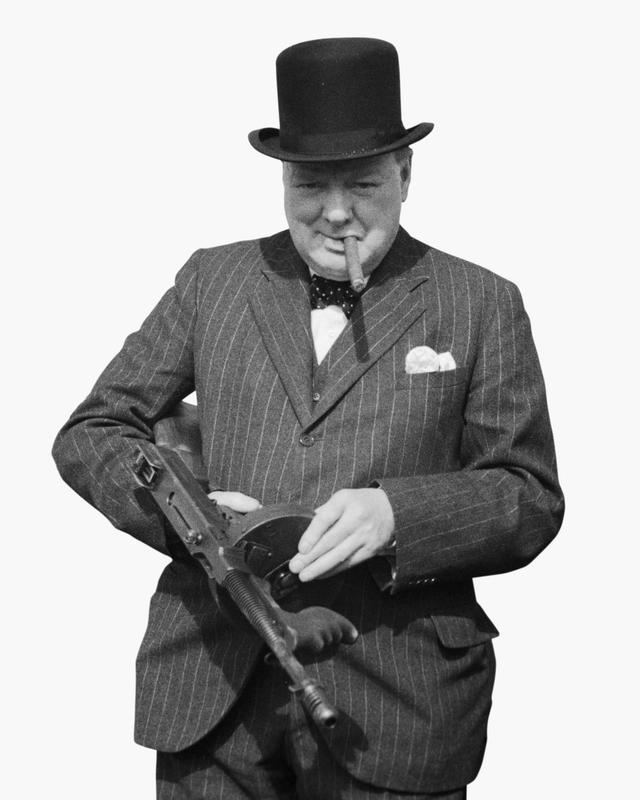
By this definition, Roosevelt or Churchill were bullies. After all, they were demonstrably stronger in the end than Nazi Germany and Imperial Japan. And they were certainly mean to them. Police are by this definition also bullies when they arrest a suspect; the state is bullying when they bring a criminal to trial. Anyone who wins a fight is, ipso facto, the bully.

Moreover, we have commonly seen the premise that there are systemic “imbalances of power” misused to discriminate already. If anyone who fights someone who is weaker is a bully, then, given the “fact” of male or privilege, any time there is a conflict between black and white, or male and female, the man or the white can be charged with “bullying,” regardless of the actual circumstances.

Not great; especially when such a definition gets put into law. The concept of a disparity in power being definitive is then an open invitation to use the law against groups already suffering discrimination. That is just the way it seems to be being used already: descriptions of bullying commonly refer to race, sexual orientation, and disability, as if this were part of the definition. Hitler would have happily pointed out that Jews had, on average, greater wealth and social power than Aryan Germans. Stalin would have said the same of the kulaks, or the Young Turks of the Armenians.

So much for equal protection under the law.

Picture of Churchill the bully favoured by Nazi propaganda. 


Proposed legislation and other initiatives in Canada to prevent “bullying” in schools always presupposes that only students can bully, never teachers or the school administration. This is absurd even on the basis of a supposed power differential: so kids are always more powerful than adults?

No; what will actually happen is that the charge of “bullying” will always be used by those in power against those lacking power. It will, in other words, always be used to bully, never to prevent bullying.

Some definitions suggest that bullying has to do with violence. That fits the materialist preoccupations of the age. But it surely does not, as the charge is commonly used. Trump, unlike the police or Roosevelt, is clearly not violent.

So it has to do then with his insulting language? Indeed, Singal specifically calls Trump a bully for “constantly launching attacks— many of them rather offensive— against both his political rivals and members of the media he believes have treated him unfairly.” Insults? Attacks? You mean like calling someone a “sociopath,” accusing them, despite being married to an immigrant, of “dog whistle xenophobia,” accusing them without evidence of abusing their wife, calling them a “ham-faced, race-baiting, woman-hating monster,” accusing them without evidence of “violent misogyny,” again without evidence of “gaslighting the entire world,” referring to their wife as a “kidnap victim” in their marriage, referring to her as a “piece of ass,” a “fibreglass mannequin” whose “body is available to inspect at the click of a button,” saying they have a “thug’s understanding” of consent, and want to “violently screw the world”? Glad we have that cleared up.

Yet Trump is not guilty of anything like this, unlike his detractors. Not only do they obviously go much further than he ever has, in calling people ugly or “low energy” or “fat” or “little.” (Ouch?) He also seems scrupulous in only doing so if he has himself been attacked. No sucker punches, no drive-bys. Only the honour of a duelist. He was notably nice to Ted Cruz, for example, until Cruz began to attack him. And even after people have been nasty, Trump seems to be magnanimous once they stop: notice his recent overtures to Mitt Romney, or Paul Ryan. Note the appointment of Ben Carson as HUD Secretary.

By contrast, cowardly leftist commentators like the present poison penners cannot plausibly claim that Trump has attacked them first.

So why is Trump the bully, and Laurie Penny is not?

Singal, in turn, gives his own “expert” advice to the other Republican candidates: “if I were advising the Republican Party I’d say to the other candidates, ‘You guys, together, should be shooting Trump down,’”

That is, they should gang up on him.

So how is it that Trump is a bully, but ganging up is not bullying? “Bullying Canada” lists, as one of the “four most common forms of bullying,” “keeping certain people out of a group.” This goes rather further than that.

It could hardly be clearer that the charge of “bullying” can be used, and is currently being used, to suppress dissent and keep the peasants down.

The key to Trump’s popularity is in fact that he has had the guts to resist being bullied. Two words: “political correctness.” The Republican rank and file grew fed up with candidates who insisted on remaining polite and being steamrolled by the biased media and the forces of political correctness who would shout them down. Political correctness has been and remains an endemic form of bullying that has infested our culture: speech codes, “hate speech” tribunals, “microaggressions,” sexual harassment kangaroo courts, the open browbeating and scapegoating of whites, males, heterosexuals, Christians, and the “cisgendered”: real instances of bullying, in the proper sense, both endemic and severe in its consequences. They are unprovoked, they are persistent, and their intent is to intimidate and control.

Trump had the stomach, the self-confidence, and the financial means to stand up and say “Hell no.”

That made him a champion for all the bullied masses.

The bullies, of course, are having none of this.


Monday, December 26, 2016

Christmas Music


On the second day of Christmas ...


Hallelujah


Bathsheba

There has been some controversy among Leonard Cohen fans about the Christmas version of Hallelujah I posted here a few days ago, sung by an autistic Irish girl. There were noisy objections that the song had been subverted by being recast as a Christmas carol, with correspondingly altered lyrics. I grant that it is odd to try to top a Cohen lyric. But one fellow writes on the Cohen fan site,

“after all it is a song about FemDom, bondage, domination and (hush) SEX. ‘She tied you to her kitchen chair, she broke your crown she cut your hair and from your lips she drew a Hallelujah’..... ‘I remember when I moved in you, the holy dove was moving too and every breath we took was Hallelujah. ?..’ .. about as far removed from a Christmas carol as it gets.”

Actually, no. Are we so out of touch with our Western cultural heritage that Biblical allusions are no longer recognized?

Perhaps that is the secret of Cohen’s success. As he once observed of his popularity in Norway, “maybe they like me because they can’t understand the words.” Would he be so popular if everyone understood his religious commitments? Other poets have fallen out of popular favour for as much. The late great TS Eliot, for example; not to mention Nobel Laureate Bob Dylan. It does not do to let them know you’re not on Satan’s side.

But it is also striking how those who think Cohen is writing about sex think of themselves as the true cognoscenti, and look down on those who suggest otherwise.

“It seems that MANY of us, who apparently have the intellectual acumen to ‘understand’ the lyrics,” one member of this sophomore squad writes, “are thinking the same thing. What are these people thinking?? It's sad, discouraging, and in a real way, terrifying. What has become of literacy?“

What indeed?

But then, a lot of people took Freud seriously too.

Also striking is how this class of readers seem offended at the existence of Christianity. “to change his lyrics into something about a baby boy that's come to save us all.. is pretty twisted,” writes the original complainant. How dare these filthy Christians lay their hands on it?

No, the quoted lines are not about female domination or bondage. These are Biblical references. Is the Bible about sex, then?

Do I really need to explain? Perhaps I do. The lines, “She tied you to a kitchen chair/
She broke your throne, and she cut your hair” might sound to some like kinky sex, but they are more clearly about Samson and Delilah.

Samson and Delilah have wild abandoned sex.

4 Some time later, he fell in love with a woman in the Valley of Sorek whose name was Delilah. 5 The rulers of the Philistines went to her and said, “See if you can lure him into showing you the secret of his great strength and how we can overpower him so we may tie him up and subdue him. Each one of us will give you eleven hundred shekels of silver.”
6 So Delilah said to Samson, “Tell me the secret of your great strength and how you can be tied up and subdued.”
7 Samson answered her, “If anyone ties me with seven fresh bowstrings that have not been dried, I’ll become as weak as any other man.”
8 Then the rulers of the Philistines brought her seven fresh bowstrings that had not been dried, and she tied him with them. 9 With men hidden in the room, she called to him, “Samson, the Philistines are upon you!” But he snapped the bowstrings as easily as a piece of string snaps when it comes close to a flame. So the secret of his strength was not discovered.
10 Then Delilah said to Samson, “You have made a fool of me; you lied to me. Come now, tell me how you can be tied.”
11 He said, “If anyone ties me securely with new ropes that have never been used, I’ll become as weak as any other man.”
12 So Delilah took new ropes and tied him with them. Then, with men hidden in the room, she called to him, “Samson, the Philistines are upon you!” But he snapped the ropes off his arms as if they were threads.
13 Delilah then said to Samson, “All this time you have been making a fool of me and lying to me. Tell me how you can be tied.”
He replied, “If you weave the seven braids of my head into the fabric on the loom and tighten it with the pin, I’ll become as weak as any other man.” So while he was sleeping, Delilah took the seven braids of his head, wove them into the fabric 14 and tightened it with the pin.
Again she called to him, “Samson, the Philistines are upon you!” He awoke from his sleep and pulled up the pin and the loom, with the fabric.
15 Then she said to him, “How can you say, ‘I love you,’ when you won’t confide in me? This is the third time you have made a fool of me and haven’t told me the secret of your great strength.” 16 With such nagging she prodded him day after day until he was sick to death of it.
17 So he told her everything. “No razor has ever been used on my head,” he said, “because I have been a Nazirite dedicated to God from my mother’s womb. If my head were shaved, my strength would leave me, and I would become as weak as any other man.”
18 When Delilah saw that he had told her everything, she sent word to the rulers of the Philistines, “Come back once more; he has told me everything.” So the rulers of the Philistines returned with the silver in their hands. 19 After putting him to sleep on her lap, she called for someone to shave off the seven braids of his hair, and so began to subdue him. And his strength left him.”

Not exactly glorifying sex either, is it? His lust was Samson’s downfall.

Moreover, if it were about bondage, why a kitchen, and not a bedroom, chair? There seems to be an allusion to the idiom “tied to his wife’s apron strings.” Which fits the Samson story.

The other line cited above as clearly sexual is “I remember when I moved in you, the holy dove was moving too and every breath we took was Hallelujah.?..”

Under what circumstances, even bondage or female domination, does the sex act involve a “holy dove”?

Indeed, in some early version of the lyrics, that line reads “Holy Ghost.” In other words, it appears to refer to the Annunciation. Nothing to do with Christmas?

Mary and the holy dove have wild, abandoned sex

Then said Mary unto the angel, How shall this be, seeing I know not a man? 35 And the angel answered and said unto her, The Holy Ghost shall come upon thee, and the power of the Highest shall overshadow thee: therefore also that holy thing which shall be born of thee shall be called the Son of God. 36

Of course, one might argue that what is depicted cannot be the Annunciation, because the man is speaking. Mary was a woman. But in Jewish mysticism, Kabbalah, God is both male and female. And the sex act is commonly used as an image of inspiration. Inspiration: literally, drawing in breath. “Every breath we drew was Hallelujah.”

Granted that there are sexual allusions here. But sexual love is used as a metaphor for the divine love throughout the Western tradition: in, for example, St. John of the Cross and St. Theresa of Avila. The Dark Night of the Soul:

O guiding dark of night!
O dark of night more darling than the dawn!
O night that can unite
A lover and loved one,
Lover and loved one moved in unison.

And on my flowering breast
Which I had kept for him and him alone
He slept as I caressed
And loved him for my own,
Breathing an air from redolent cedars blown.

That is explicitly not about sex.

It is also clearly there in the Bible: the Song of Songs.

Song of Songs

My beloved is to me a bag of myrrh that lies between my breasts. My beloved is to me a cluster of henna blossoms in the vineyards of En-gedi. Ah, you are beautiful, my love; ah, you are beautiful; your eyes are doves. Ah, you are beautiful, my beloved, truly lovely.

I am a rose of Sharon, a lily of the valleys. As a lily among brambles, so is my love among maidens. As an apple tree among the trees of the wood, so is my beloved among young men. With great delight I sat in his shadow, and his fruit was sweet to my taste. He brought me to the banqueting house, and his intention toward me was love. Sustain me with raisins, refresh me with apples; for I am faint with love. O that his left hand were under my head, and that his right hand embraced me!

Your lips distill nectar, my bride; honey and milk are under your tongue; the scent of your garments is like the scent of Lebanon. A garden locked is my sister, my bride, a garden locked, a fountain sealed. Your channel is an orchard of pomegranates with all choicest fruits, henna with nard, nard and saffron, calamus and cinnamon, with all trees of frankincense, myrrh and aloes, with all chief spices– a garden fountain, a well of living water, and flowing streams from Lebanon. Awake, O north wind, and come, O south wind! Blow upon my garden that its fragrance may be wafted abroad. Let my beloved come to his garden, and eat its choicest fruits….

Nope, not about sex.

And it is central to the Jewish mystical tradition, the Kabbalah. One can assume that Cohen, descended from celebrated Rabbinical scholars, knew this tradition well enough. He is clearly relying on it when he addresses God as both father and lover in the song “Lover, Lover, Lover”:

I asked my father,
I said, "Father change my name."
The one I'm using now it's covered up
with fear and filth and cowardice and shame.
Yes and lover, lover, lover, lover, lover, lover, lover come back to me,
yes and lover, lover, lover, lover, lover, lover, lover come back to me.

He said, "I locked you in this body,
I meant it as a kind of trial.
You can use it for a weapon,
or to make some woman smile."

Traditionally, in Judaism, the study of Kabbalah is restricted only to older scholars steeped in holiness, “who will be sure to study it in the spirit of holiness in which it was written.” This is at least partly because “the sometimes explicit sexual imagery used in Kabbalah... could focus the student’s mind unnecessarily on sexuality. Instead of divesting this imagery from its physical sense and understanding it abstractly, the student may become preoccupied with thoughts about sex itself, which could be debasing or even lead to illicit lusts, or worse” (Kabbalah Online).

The reception of Cohen’s work here illustrates the concern. Another writer suggests that “we can all agree” that the chorus of “Hallelujah!” refers to the moment of orgasm. As with Hermann Hesse, another widely misunderstood spiritual writer, is it wise to put this stuff out there, deeply valuable to some, but also so badly misleading some others? Do they end up, as the old Rabbis feared, leading some down the primrose path to that other place?

I guess it is proper enough; because Jesus did exactly the same:

9 His disciples asked him what this parable meant. 10 He said, “The knowledge of the secrets of the kingdom of God has been given to you, but to others I speak in parables, so that, 
‘though seeing, they may not see;
though hearing, they may not understand.’

Let he who has ears to hear, hear.

The song begins with a clear religious reference—a reference so unambiguous that it is willful to understand the song in other than a religious sense. Those who still insist on doing so have surely chosen their own path:

Now I've heard there was a secret chord
That David played, and it pleased the Lord

So this song is sung in the spirit of the psalms. It is a prayer. Not incidentally, King David and the Psalms are strongly associated in the Jewish tradition with the Shekhinah, the visible and audible presence of God, which is conceived as feminine.

Granted, the next line seems not to be addressed to God: “But you don’t really care for music, do ya?” So who is “you”?

It is, the next verse suggests, King David-presumably as the type of the mortal human seeking a relationship with God.

“Your faith was strong but you needed proof”

The song then refers to the story of David and Bathsheba.

Bathsheba receives David's letter


Your faith was strong but you needed proof
You saw her bathing on the roof
Her beauty and the moonlight overthrew you

No, Cohen did not see a neighbour bathing on their roof from his room in the Chelsea hotel.

2 One evening David got up from his bed and walked around on the roof of the palace. From the roof he saw a woman bathing. The woman was very beautiful, 3 and David sent someone to find out about her. The man said, “She is Bathsheba, the daughter of Eliam and the wife of Uriah the Hittite.” 4 Then David sent messengers to get her. She came to him, and he slept with her. (Now she was purifying herself from her monthly uncleanness.) Then she went back home. 5 The woman conceived and sent word to David, saying, ‘I am pregnant.’”

Again, not a glorification of sex. David’s great sin. He then had Bathsheba’s husband, Uriah, killed to cover up his crime.

The secularist interpreters mock those who have “Hallelujah!” played at their funerals, as has become common: “..quite a strange song, especially for a funeral, but some men have no taste at all..”

However, the idea of the “secret chord” in the first line seems to be a reference to Sullivan and Proctor’s famous composition, “The Lost Chord,” which was in fact written as a funeral piece. Nothing strange about it, then. The reference seems clearer when you notice that the opening lines of Cohen’s song are sung over a keyboard riff.

The Lost Chord

Seated one day at the organ,
I was weary and ill at ease,
And my fingers wandered idly
Over the noisy keys. 
I know not what I was playing,
Or what I was dreaming then;
But I struck one chord of music,
Like the sound of a great Amen. 
It flooded the crimson twilight,
Like the close of an angel's psalm,
And it lay on my fevered spirit
With a touch of infinite calm. 
It quieted pain and sorrow,
Like love overcoming strife;
It seemed the harmonious echo
From our discordant life. 
It linked all perplexèd meanings
Into one perfect peace,
And trembled away into silence
As if it were loth to cease. 
I have sought, but I seek it vainly,
That one lost chord divine,
Which came from the soul of the organ,
And entered into mine. 
It may be that death's bright angel
Will speak in that chord again,
It may be that only in Heav'n
I shall hear that grand Amen.

The connection with the present song seems obvious. “That great Amen”? That “Hallelujah”? Cohen as songwriter and poet would of course know the prior piece. It is introduced at the very beginning of the composition as a part of its setting.

As in Sullivan and Proctor’s song, so in the Bible, David’s music is presented as a cure for “pain and sorrow”--Saul’s melancholia.

David sings Solly Wolly Doodle all the day.

23Whenever the spirit from God came on Saul, David would take up his lyre and play. Then relief would come to Saul; he would feel better, and the evil spirit would leave him.

Hence, too, Cohen’s song.

“It goes like this
The fourth, the fifth
The minor fall, the major lift
The baffled king composing Hallelujah”

Surely “the minor fall, the major lift” refers on one level to sin and redemption. Hence to King David’s great sin, of having Uriah killed to take his wife, Bathsheba, which nevertheless God forgave him for. Hence Samson’s sin of telling Delilah his secret weakness, from which nevertheless he was finally redeemed in pulling down the Philistine temple. In other words, sin is part of the framework of redemption. It is only when we are “baffled” that the divine light gets in.

In the case of both figures, Samson and David, the specific sin was lust. So, yes, in this sense the song is about lust—but as an instance of sin.

“There's a blaze of light
In every word
It doesn't matter which you heard
The holy or the broken Hallelujah”

Light is the common image of the Shekhinah, the Divine Presence, in Kabbalah. It is also the spirit that inspires prophecy; and the psalms. Cohen is saying that poetry and music, all human inspiration, are expressions of the divine. At the same time, he is making the point often made by the creative that inspiration comes through pain and failure. So does redemption. The two are the one thing.

I did my best, it wasn't much
I couldn't feel, so I tried to touch

Yes, these lines too are about physical sex, but again, as a failure. It is represented as a false alternative, a substitute for the reality of love. God, you may recall, is love. Eros is a bogus substitute for agape.

Cohen recorded a second version of the song with different lyrics, less clearly spiritual in nature. Among the new words:

“Baby, I've been here before.
I know this room, I've walked this floor.
I used to live alone before I knew ya.”

This sets the situation: the end of some romantic relationship. With the implication that this is a repeated experience—something inevitable. “Man is in love and loves what vanishes.” If you love anything in the physical realm, you are necessarily setting yourself up for loss.

But he might also still be speaking to the feminine aspect of God. It is then the repeating story of the human-divine relationship, of always falling back into sin.

Paris, 1941. Nazi selfie


Yeah I've seen your flag on the marble arch,
But listen, love is not some kind of victory march,
No it's a cold and it's a very broken Hallelujah.

This seems another criticism of Eros as false love. Purely sexual love is love as a victory of one ego over another—the use of another as an object. It is like the love of a gourmand for a steak—is he really concerned with the welfare of the cow?

Any love that is purely sexual is purely selfish; although, of course, love can also be purely selfish without being sexual, and love can be both sexual and unselfish. True love is a denial of self. “He must grow greater, and I must grow less.”

The reference to a marble arch representing victory might summon images of the Nazis marching through the Arc de Triomphe during Word War II. That would surely have resonance for a Jew. But an even stronger resonance might be the Arch of Titus in Rome, the original model for the Arc in Paris and for other victory arches throughout Europe. Which, not incidentally, commemorates the destruction of Jerusalem and the Second Temple.

Relief from Arch of Titus: Romans parading their booty from the Second Temple


Purely selfish love is the defeat of God’s people.

There was a time you let me know
What's really going on below,
Ah but now you never show it to me, do ya?

Snigger. He’s obviously talking about a woman’s vagina, right?

“’Going on below’ refers to the most earthly of things: sexual arousal. This lyric explains how the speaker no longer has intimate access to his lover, and more crassly, her sex.” – Genius lyrics.

Well, plausibly, but really only when she is standing upright. Which means, not in the context of sex, doesn’t it? Who has sex standing or sitting up? Maybe if tied to a kitchen chair? And what really “goes on” in a vagina outside of sex? Urination? Menstruation?

Bit of a stretch to make it sexual.

“Below” in human terms more plausibly means “below the surface.” That is, sharing her feelings and her true thoughts. The problem is diagnosed as a relationship without real sharing, which is to say, the sharing of thoughts and emotions. As opposed to bodily fluids.

An even more plausible explanation, it seems to me, is that the singer is indeed here again addressing God. He is getting no answers in his prayer life. Hence “below” would have an easy and obvious meaning: this physical, mortal world. Note that Kabbalah conceives of the created world as a matter of “shells,” concealing the divine glory below their surface. Evil hardens the shells; virtue exposes the light through their cracks.

The singer, like David, is expressing his bafflement.

Maybe there's a god above,
But all I've ever seemed to learn from love
Is how to shoot at someone who outdrew ya.

Aha! Cohen is expressing doubt about the very existence of God!

Maybe. Or maybe he is speaking idiomatically, as we might say, “maybe Cohen is a great poet, but he can’t make a decent liver sandwich.” That is, not really expressing doubt that God exists, or that Cohen is a great poet, but asking “Why is it that...” You know, the problem of evil thing. You may have heard of it. And, at the same time, for the comment to make sense with the next line, you must accept the reference “God is love.” That suggests, in turn, that any references here to love are ultimately references to God.

And Cohen is giving his answer to the problem of evil: it is our own failing, in that we love selfishly. Or rather, we are selfish instead of loving.

He concludes:

Even though it all went wrong
I'll stand before the Lord of Song
With nothing on my tongue but Hallelujah

Note that: yet again, he reprises, this song is a prayer to the Lord.

Could it really be much clearer?

Merry Christmas.


Saturday, December 24, 2016

Advent Music


Korea, Summer, 1951: A Canadian Who Did Not Survive Remembers


August in Asia is hotter than death;
Christ, that a cold rain could fall!
Like the rains that I knew where the jackpines grew
In Canada, when I was small.

Every rock, every brick, is as hot as a wick,
And wickedly ripples the air;
If I could I would go where the sweet Chinooks blow,
For I know of no night fevers there.

I don't that much mind that I die here or there;
When you're dead, you're just dead, as a rule.
But please don't cremate me, deep-freeze me in state--
Damn Sam McGee, let me die cool.
-- Stephen K. Roney


Monday, December 19, 2016

Faithless Electors


A lot of people on the right are getting irate about the talk of some members of the Electoral College refusing to vote for Trump; and especially about the video put out by a few actors advocating this.

Why? This is exactly what the Electoral College is there for. Would they rather go with straight popular vote? Clinton won the popular vote.

The initiative is unlikely to work. And it would be a bad thing, I believe,  if it did work. Too many people would feel cheated. On the whole, it would almost surely be less disruptive at this point to let Trump become president. But even if it did succeed,  it would not mean Clinton would become president. Almost certainly, the majority of electors being Republican, they would choose another Republican. Or the selection would be thrown to the Republican house.

Dumb idea, but no skin off the Republicans' nose.


Post Truth


Marcuse

It is bizarre to see so many on the Left now accusing Donald Trump of a “post truth” attitude. And as if this is some new and terrible thing.

That is and was the "post-modern turn": that truth is subjective, that there is no absolute or objective truth, that truth is "socially constructed." As PBS sums it up, "Postmodernism is largely a reaction to the assumed certainty of scientific, or objective, efforts to explain reality."

Lies no longer exist once you embrace postmodernism.

Rely on “impartial fact-checkers” to guard against “fake news”? Not going to work, once the journalism profession itself has embraced postmodernism. If truth is relative, neither facts, nor mathematics, nor logic, settle anything. Some feminists now argue that mathematics, science, and logic are "tools of the patriarchy." Ethics is now subject to "cultural relativism" rather than appeal to any first principles like Kant’s categorical imperative. As Marcuse wrote, “moral commands and prohibitions are no longer relevant." Postmodernism explicitly rejects scientific truth.

Derrida" self-proclaimed Marxist, denounced "logocentrism."

Where did all this come from? Certainly, it was not Trump’s innovation, It has been the core teaching of the New Left for the past sixty or more years. It is from Marcuse and the Frankfurt School. Marcuse's ideal society was, wrote KoÅ‚akowski, “to be ruled despotically by an enlightened group [who] have realized in themselves the unity of Logos and Eros, and thrown off the vexatious authority of logic, mathematics, and the empirical sciences.” Marcuse, it turn, was heavily influenced here by Heidegger, who was influenced by Nietzsche.

"Even the ears have walls," they wrote on the walls during the Paris uprising. From this font, for example, feminism comes, along with the newer emphasis on “gender rights”: the idea that “male” and “female” are purely social constructs. Scientific facts like chromosomes and human anatomy are now irrelevant.

Having pushed this idea for a good fifty or sixty years, it is funny to hear some on the left now complain that Donald Trump is supposedly embracing it. It is laughable to hear them suddenly troubled by “fake news,” when “fake news” has become the stock in trade of the establishment press.

Not that he is. As far as I can tell, he has not, as have the members of the New Left, ever expressly reserved the right to make up his own truths. You say he sometimes says things that are not true? And you assert this is a new thing for politicians?

How’s that one for a made-up truth?

Heidegger

Perhaps it is not hypocrisy. If you follow the wonderland logic of postmodernism and the New Left, that truth is whatever I want it to be, then I guess it follows that anyone who disagrees with me is either lying or simply denying reality. Any news I do not like is, by definition, “fake.” There can be no question here of others having equal rights. Unless I choose to allow it. There is left only one way, of course, to settle disputes: might makes right. Whoever is in power gets to do as they like.

You will note that Heidegger embraced the Nazis in their day, who in turn embraced Nietzsche. There is an obvious sympathy of attitudes.

Still, the accusation seems pretty ironic. Because a big part of Trump's appeal to his many supporters is that, unlike the usual politicians, he tells it straight. He speaks the truth.

One example is his taunt of Clinton, or Obama, to just once call Islamic terrorism Islamic terrorism. Or how about hearing the Democratic candidates all publicly disown the statement that "all lives matter"? Trump took the flak for saying, sensibly, that he reserved the right to challenge the election results if they looked bogus. He could have taken the easy political path of insisting he would not, like Hillary Clinton. Who then, of course, when she lost, challenged the election results.

Political correctness, itself a part of the New Left/postmodernist turn, at its base holds that saying a thing is so matters more than whether it is so.

That is a good definition of lying.

The revolt against political correctness has been the very core of Trump's appeal.


Advent Music


Sunday, December 18, 2016

That Crazy Ben Carson


As each new Trump cabinet pick was announced, all the red flags went up from the left saying they were alarming and completely unqualified.

In the case of Ben Carson, they dredged up this article from when he announced his presidential candidacy way back a couple of years ago.

Titled "13 Ridiculous Things Ben Carson Actually Believes," it lists "13 arguments that Carson has made during his political career":


Women who get abortions are like slaveholders
On NBC’s Meet the Press in October, Carson compared women who terminate their unwanted pregnancies to slaveowners who “thought that they had the right to do whatever they wanted to that slave.”

Carson is wrong. Abortion is objectively worse than slavery. Slaves were allowed their most basic right, the right to life.

Obamacare is the worst thing since slavery 
Back in 2013, when Carson was still gaining recognition in the Republican Party, he said in a speech that “Obamacare is really I think the worst thing that has happened in this nation since slavery.”
Carson is exaggerating here. Agreed. But does it really represent a "belief" of his, or is it just a case of hyperbole for rhetorical effect?
 
‘Hitler’ could happen in the U.S. today 
In September, he said at a campaign event that a Nazi-like force could come to power in the United States.
So when Carson said it a year ago, it was "ridiculous." Yet left wingers are saying it all over the place now.

Jews could have prevented the Holocaust if they had guns 
In an interview with CNN in October, Carson blamed the Holocaust on the fact that Nazis took guns away from the Jewish people. “I think the likelihood of Hitler being able to accomplish his goals would have been greatly diminished if the people had been armed,” Carson said. “There’s a reason these dictatorial people take the guns first.”
Carson is obviously right; it's common sense, and something Jews have been saying since at least the days of the Warsaw ghetto uprising. Not, as the headline falsely implies, that having guns would necessarily have prevented the Holocaust, but, as Carson actually said, the odds of the Nazi program succeeding or being worth pursuing would have been greatly diminished.

College campuses should be monitored for liberal political speech 
On Glenn Beck’s radio program in October, Carson advocated for the censorship of “extreme political bias” on college campuses, saying the Department of Education should “monitor our institutions of higher education for extreme political bias and deny federal funding if it exists.”
Again, Carson is obviously right. But the headline lies. He did not call for censorship, nor for campuses to be monitored for liberal political speech, but for the suppression of free speech. He was calling for the opposite of what the headline claims. Up is not down, and black is not white.

Muslims should be disqualified from the presidency 
During an interview on Meet the Press in September, Carson now infamously said that a Muslim could not become the president of the United States. “I would not advocate that we put a Muslim in charge of this nation,” he said. “I absolutely would not agree with that.”
Another lying headline. Carson was saying that he would not vote for or support a Muslim for president. He would presumably say the same about a Democrat. Does that mean he believes Democrats should be disqualified from the presidency?

It is reasonable, too, to argue that Islam is incompatible with liberal democracy. It does not, for example, recognize the separation of church and state. A Muslim president would be duty bound, by his religion, to impose its religious obligations and law on the nation.

There’s a war on ‘what’s inside of women’ 
During a campaign stop this summer, Carson denied the argument used to describe the Republican Party’s policies that restrict women’s rights. 
“There is no war on women,” he said. “There may be a war on what’s inside of women, but there is no war on women in this country.”
Carson is of course right. There is no war on women in the US, or anywhere else. To deny this propagandistic lie is "ridiculous"? Where's their body count?

Being gay is a choice because prison turns people gay 
Carson said in a CNN interview in March that homosexuality is a choice, citing people who “go into prison straight — and when they come out, they’re gay” as proof. He later attempted to apologize for the remarks in which he addressed those who were offended, but reinforced his belief that sexual orientation is chosen.
I wonder--what is the precise difference between "apologizing" and "attempting to apologize"? It does rather seem like the attempt is the thing itself.

In the original interview, Andrew Cuomo first asked Carson whether gays "have control over their sexuality." Which of course they, like everyone else, do. Otherwise, how could we prosecute for rape? Carson had every reason to think Cuomo was then speaking of "being gay" in this sense: of indulging in acts of gay sex. So Carson was just saying what is obvious.

Even so, later that same afternoon, he withdrew the comment as possibly misleading, and clarified, properly, that the jury was out on how much of homosexuality as a predisposition is genetic, and how much a matter of choice. To avoid any misunderstanding.

But how come we are all now free to choose even our own gender--except homosexuals?

There’s no such thing as a war crime 
Carson also said earlier this year that the U.S. should not hesitate to send troops to defeat the Islamic State and should not fear prosecution for any of its actions abroad. In the Fox News interview, he suggested that the military should not be subject to any war crimes law. 
“If you’re gonna have rules for war, you should just have a rule that says no war,” he said. “Other than that, we have to win.”
Another bit of fake news. Carson did not mention war crimes. What he said was, "Our military needs to know that they’re not gonna be prosecuted when they come back, because somebody has said 'You did something that was politically incorrect.' There is no such thing as a politically correct war. We need to grow up, we need to mature. If you’re gonna have rules for war, you should just have a rule that says no war. Other than that, we have to win. Our life depends on it."

Are international laws of war, things like banning genocide or torture, simply a matter of "political correctness"? The author may believe so, but he has no business ascribing that opinion to Carson. Granted, his saying "no rules" was incorrect if taken literally, but it was clearly a matter of hyperbole to underline a point.

Is this wrong? Hyperbole is commonly used by Jesus in the New Testament. Not a bad moral guide. Maybe these folks ought to read it some time.

Obama is depressing the economy to keep people on welfare 
After appearing on The View last year and saying that Americans have become dependent on welfare, Carson elaborated on Fox News. “Do you think that people who are on welfare want to be on welfare?” Fox’s Megyn Kelly asked him. 
“I think some people have that as a way of life,” Carson responded, later adding that “perhaps some of the things that are going on right now which could be easily remedied are not being remedied in order to keep the economy depressed because there would be no appetite for many of the social programs if people were doing well.”
Carson's response to Kelly is reasonable. We may fairly debate how widespread the problem is; but surely it is not sane to claim that nobody is ever on welfare voluntarily. It is also a fair point that bureaucrats in social services ultimately have a vested interest in keeping the economy, and their "clients," doing relatively poorly. Why would it be wrong to point this out? It seems just as unreasonable, or at least terminally naive, to insist, without evidence or argument, that a deliberate hobbling of the economy for political purposes or personal self interest never happens. Two words: trade unions. Not to mention anti-trust laws. Is that two words, or three?

Obama signed immigration reform to bring in government-dependent voters 
After speaking out about welfare, Carson said in an interview months later that Obama’s executive action on immigration was part of a “nefarious agenda” to bring new voters into the United States who will be dependent on government. 
“Is he just trying to instead of get out the vote, bring in the vote?” former Republican Rep. J.D. Hayworth asked Carson. “Is this all designed to have new voters — despite the fact he claims they’re not going to get citizenship — is the long-term goal to bring in a new class of voters dependent on government?”
“Of course it is,” Carson replied.
Recent immigrants are a block vote in the US, Canada and the UK, and they tend to vote for the left. (Special interest politics--their natural allegiances tend still to be to their own ethnic group, not to their new home). We have good reason therefore to fear that leftist parties may be inclined to pump up the immigrant flow not for the best interests of the country, but the best interests of their party and political future. It is a strategy that has been employed more or less openly by Labour in Britain, the Liberals in Canada, and the Democrats in the US. Surely we all know this? 

Congress should be able to remove judges for voting for marriage equality 
In an interview with a conservative radio host earlier this year, Carson said it was “unconstitutional” that judges have ruled in favor of equality despite statewide ballot initiatives that resulted in different outcomes. Carson said that when federal judges make rulings like this, “our Congress actually has the right to reprimand or remove them.”

I thought that Carson was mistaken here, but it seems he may be right. I found a paper lamenting that this power to dismiss judges was never used: http://www.tulanelink.com/tulanelink/sassower_01a.htm. Of course, the issue is not, as stated, "equality"--that begs the question--but a constitutional right to gay marriage.

Anarchy could cancel the 2016 election 
Carson warned in an interview in 2014 that if we “continue down this pathway that we are going down,” referring to “this pathway where everything is framed in a political sense and our representatives are not working for the people, they’re working for their party,” then the anarchy could lead to the 2016 election being called off. He claimed that the growing national debt, ISIS and the then-Democratic controlled U.S. Senate’s refusal to consider legislation passed by the Republican House of Representatives all pointed toward the idea that the country is headed toward anarchy.
You could argue, I suppose, that the election was not actually called off. But surely Carson has been provenright here. He said this two years ago. Look at how bad things have gotten since, with people in the streets protesting the results of the election, claiming the election was hacked, that "fake news" falsified the vote, that the electoral college must be abolished, that the electoral college must, on the other hand, overturn the results of the vote, and so forth. It hasn't come to anarchy or to dictatorship yet, but that is surely the road the US is jogging down. After all, if we cannot accept that elections decide things, and cannot agree on what is objective truth, if everything is relative, what can settle anything, but naked force?

And speaking of accepting the existence of objective truth, and the rules of fair play, and the risk of anarchy or dictatorship otherwise, why is it that left wing spokespeople so consistently, as here, either misrepresent the views of the right, or anathematize them, both without addressing the arguments?

Why can they not tolerate open discussion?

This is not the view naturally held by anyone who is confident they can win the argument.

The left considers open discussion of the issues a threat. This means they hold at least one common view that they know in their heart is untenable.

I think, in the end, it starts with a scarlet "a" and rhymes with Tim Hortion.


Wednesday, December 14, 2016

Viola Desmond, Canada's Heroine


Laura Secord

It is sometimes embarrassing to be Canadian. We Canadians often foolishly think of ourselves as superior to Americans, because they seem to see no other countries except America--celebrating, for example, their baseball “World Series.” But the truth is, Canadians are only one step more aware of the world: they think there are two countries, Canada and the US. And whatever they see happening in the US, they must have too. Kid brother syndrome.

The latest example is having a woman’s face on the $10 bill. A bunch of American feminists started a fuss over this, arguing that there has never been a woman on the ‘Cano currency. To be fair, there have certainly been women on the coinage, but it was apparently an important matter of discrimination that they were not shown on paper.

And so the Canadian feminists, and the Canadian government had to follow suit, and find a woman to put on the bills.

Never mind that there has virtually always been a woman on the Canadian paper, as well as metal, currency; and less often a man. Isn’t Queen Elizabeth a woman?

Okay, we’re supposed to ignore that. She doesn’t count. The Vancouver Province writes that this will be the first woman "other than the Queen" to be featured on Canadian currency.

But this too is untrue. Leave aside one obvious previous queen. Leave aside the symbolic Britannia. Leave aside images of anonymous, perhaps imaginary female scientists and peacekeepers. Even apart from all these, it used to be customary to give the other side of the bill to the Governor General and his wife, both getting equal billing. Granted, not always: one bill featured Princess Patricia alone.

So the project makes no sense; unless it is to discriminate against men.

But wait: there’s more. It is not enough that Canada must slavishly follow the US in putting a new woman on a bill. The Americans chose a black woman, a civil rights figure, Harriet Tubman. So, despite there being so many fewer blacks in Canada, despite there having been no (or less than anywhere else in the world, at least) slavery in Canada, despite black and white being insignificant categories in Canadian history, Canada actually had to find a black woman too: the mighty and well-remembered Viola Desmond.

This is provincial on several levels. Do our cultural and political “elite” really know so little about Canadian history? There should have been no problem with finding a prominent and worthy woman for the banknotes. Leave aside Queen Victoria, who could be considered the founder of the country, and was its first head of state. Didn’t these people grow up reading of Laura Secord and Madeleine de Vercheres? Did they not grow up reading Lucy Maud Montgomery’s Anne of Green Gables? Perhaps less famous, but still important, are Gabrielle Roy, Mary Travers (La Bolduc), who more or less founded the French Canadian musical tradition, Marguerite Bourgeoys and Marie de l’Incarnation, who started the first Canadian schools, Jeanne Mance, who founded the first hospitals, Emily Carr, Katherine Tekakwitha?

Madeleine de Vercheres


Choosing someone as relatively insignificant as Viola Desmond, with her literally penny ante experience of being held overnight in jail and charged $20 for not paying a cent in tax, is ultimately an insult to Canadian women. It suggests that this is the greatest thing they have ever contributed to Canadian culture or national life. And it is an insult individually to all the women more deserving of such an honour.

One can see politically correct objections to memorializing some of them. Not valid objections, but ones ignorant people might justify. Madeleine de Vercheres’s bravery was in defending her community against aboriginal people. Golly, we don’t want to see First Nations as the enemy, do we? Yet the French of the time were allied with the local Indians. The Mohawks who attached Vercheres were foreign invaders, from upstate New York, who sought to wipe out the resident Canadian tribes. Bourgeoys, Mance, de l’Incarnation, and Tekakwitha are Catholic saints or beatified. But, if their contributions are worth admiring, this ought to be neither here nor there. Obviously, a deeply religious person is going to be of some religion. To bar them from public recognition for this fact is to discriminate against all religions and religious—despite the truth that religiosity is a trait any society in its right mind ought to promote.

And even were these wrongheaded possible objections granted, there were good and obvious candidates. Why, other than slavish imitation of the Americans, or racism, choose instead Viola Desmond?

And there is a further problem. Laura Secord or Madeleine de Vercheres defended Canada. Lucy Maud Montgomery or La Bolduc built Canadian culture. Desmond did what she did, to the extent that it was of benefit to anyone, for an ethnic minority within Canada, not for Canada as a whole. It is wrong, therefore, for Canada as a whole to especially commemorate it, because by doing so, unless it at the same time commemorates heroines from every other conceivable ethnic group, the Canadian government is giving preferential treatment to one ethnic group over others. It is saying that the concerns of black Canadians are more important than the concerns of Icelandic Canadians, or Sri Lankan Canadians, or Welsh Canadians, or Maltese Canadians, or any other of a hundred or two recognizable ethnic groups.

And then, even if you are big on racism being okay if a currently-favoured group is favoured, even if you accept the idea that heroines of black Canadians deserve racial preference, Viola Desmond does not seem especially worth the honour. There was never any legal segregation in Canada. There was never violation of equal treatment by the law. Which is to say, there was no struggle for civil rights. Desmond was no Rosa Parks. Her act had no legal significance.

In the US South of Rosa Parks, segregation was a matter of law. In Canada, there were no Jim Crow laws. There was no legal distinction made between “black” and “white.”

In the absence of laws requiring discrimination, there is no need for laws prohibiting it. Because it is naturally in the best interests of any business not to (illegitimately) discriminate. What business anywhere is better off with fewer customers?

If they really want to lose money—then that is their business. There is such a thing as freedom of association.

There was and can have been no systemic discrimination in Nova Scotia in Desmond’s time. One theatre may have chosen to discriminate racially, as was and is their natural, which is to say inalienable, right; or they may not have. It seems unlikely, as it would be against their own interests. And the theatre management denied it. If they did, and the segregation that did exist was not by mutual consent, this was simply a business opportunity for some other theatre in town.

In fact, ironically, Desmond owed her own business success to such informal business discrimination. Black hair, and black skin, is physically different from “white” hair. As a result, white beauticians and hair stylists did not take black customers. The extra training needed to work with black skin and hair no doubt did not seem worth the small number of possible extra customers. Who in any case would probably be more inclined to trust another black woman to understand their needs.

As a result—a great business opportunity for Desmond and many other black woman across North America. She had her own hairdressing school and her own line of black beauty products.

It might, therefore, not have occurred to her that she was striking a blow against racial segregation. This could be why she herself never mentioned race or racial discrimination at her trial. She just wanted to sit near the screen, and did not understand why she could not. Did she, for that matter, even see herself as unambiguously “black”? After all, her mother was white. And the reality that her own family was mixed demonstrates the general lack of racial segregation at the time in Nova Scotia.

If the law wanted to discriminate against her, they did not go out of their way to do so. Race was not mentioned by anyone at her trial. She was charged with refusing to pay the provincial entertainment tax, and, on conviction, fined only the minimum amount. She did not appeal. Later, urged by others, she launched an unsuccessful attempt to sue. It was not entertained by the courts, primarily because she had waited so long. There is a logic to this, which is why the time limitation is there: if there was an obvious injustice, why should it take the victim so long to decide so?

Of course, the official line is that the theatre refused to sell her a ticket for the ground floor because of her race. But the only witness we have to this fact is Viola Desmond; who might be considered, under the circumstances, to have some interest in the outcome of the case. The prosecution presented three witnesses who testified otherwise: that she bought a cheaper gallery ticket, but insisted on sitting on the ground floor. They might all have been lying; but the judge had every reason to accept the word of three witnesses over that of one accused. And, frankly, so should we, by all known rules of evidence.

It is not hard to see what might have occurred without assuming racism. Yes, the theatre was segregated. However, according to the management, this was simply a matter of local custom. It was not official theatre policy, and certainly not legally required or enforceable by law. It is entirely plausible that this was so. Like any other ethnic group, like humans generally, blacks tend to prefer to hang with other blacks. So too with “whites.” So segregation is the natural state, if everyone is given their druthers.

Blacks were, on the whole, in those days, poorer than whites. Tickets to the balcony were only two thirds the price of seats on the ground. So, naturally, the blacks would tend to congregate there. Indeed, they seem to have had the better deal. Balcony seats are not necessarily worse seats: in opera houses, theatres, and playhouses, VIP boxes are at the balcony level. Good deal for the blacks; why wouldn’t they prefer the balcony? Whites seem to have been paying a premium for no good reason.

So, Desmond comes in and asks for a ticket. The ticket agent simply assumes she wants a ticket for the balcony, for which she appears to be eligible. Desmond, unaware of local custom, assumes her cut-price ticket gives her the right to sit anywhere. She, being near-sighted, prefers the ground floor. When she sits on the ground floor, and is asked to move to the balcony, she takes offense. She assumes they are messing with her because of her race, and refuses. But from the point of view of theatre management, she has paid only thirty cents for a forty cent seat. Maybe they try to explain this to her. Maybe she does not believe the explanation. Does she really offer to pay the difference? Or is she too angry to listen to the explanation?

If we must commemorate Viola Desmond, let’s at least keep it in proportion to the incident.

Remember her on the penny. That is literally what her case was worth.

We can honour her every time a new one is minted.


Advent Music


McInnis and Crowder on Being Canadian


Canadians React to Trump


Tuesday, December 13, 2016

The Trump Inauguration


The latest silly anti-Trump story floating around is that his team is finding trouble getting top-name musicians to perform for his inauguration. It seems fantastically unlikely someone would not jump at the chance. But if they really are, might I suggest the Beach Boys and ZZ Top? Both brave enough to be publicly Republicans, and representative of a good slice of American culture.


Advent Music


Sunday, December 11, 2016

Our Lady of the Fjords


On June 24, 1905, this iceberg appeared in St. John's harbour, Newfoundland.

That, of course, was St. Jean Baptiste Day. St. Jean Baptiste is patron saint of French Canada. He is also patron saint of St. John's, which is named for him. And the reason it is named for him, in turn, is that Newfoundland was discovered by John Cabot on June 24.

Strange set of coincidences, no?

This Canadian photograph is the first photograph ever taken of an apparition of the Blessed Virgin.

Thanks and a tip of the Hatlo hat to ChurchPop.


Thursday, December 08, 2016

The Future of Retail

The Atrocity of Trump


Got the below cry of righteous outrage in my Facebook feed:

There is something FUNDAMENTALLY WRONG about a system in which a candidate can get TWO MILLION more votes than their oppositon yet still "lose" due to an archaiac system like the Electoral College, which counts votes by STATES with excessive weight being given to small states. This is in ADDITION to the unprofessional and unethical PUBLIC conduct of an FBI director confusing and INTERFERING with an election, Trump's gross and vulgar mud slinging and name calling, possible illegal Russian contact with Trump, illegal hacking and other interference with our election by a foreign power and false pretext Republican voter harassment schemes. The Constitution provides the Electoral College with the power to DENY an UNQUALIFIED person the office even if that person got more votes. Here, the UNQUALIFIED candidate didn't even do THAT but got LESS votes. The Electoral College has a right and duty to DENY the UNQUALIFIED Trump the office and elect instead the MAJORITY vote getter Clinton!
A response:

  1. The electoral college is there as a check on democracy, which can otherwise become the tyranny of the majority. Remember that Hitler was popularly elected. Other checks and balances on democracy are the Senate and the Supreme Court. If you want to abolish the Electoral College, logically, you should also abolish them. Both are considerably more distant from direct democracy than the electoral college.
  2. Comey's intervention in the electoral process was more in favour of Clinton than against her. He should indeed have stayed out if it; and she would have been worse off for it. He should not have publicly advised not to prosecute, and he certainly should have gone more aggressively after the evidence at that point. This would have prevented the later announcement that hurt her campaign--but by leaving her under formal investigation, if not indictment, throughout.
  3. Trump's name calling? Who has been called more names than Trump and his supporters? Names like "basket of deplorables," "irredeemable," "racist," "white supremacist," "white nationalist," "Fascist," "misogynist," and on and on. As was Bush II in his day. Trump is just the first guy on the other side who fought back.
  4. Trump's possible illegal contact with Russia? Purely a theoretical possibility. We have no more evidence of this than of the same charge against Clinton. No, we have better evidence that Clinton was coordinating with Russia. What about that uranium deal while she was Secretary of State? What about the Clinton Foundation's "pay for play" in general? What about leaving her communications open to Russian intelligence? Could she have been that stupid, that it was not intentional? How about leaving Syria open to Russian intervention by not acting on the "red line" warning? Could Russia have done better with anyone else?
  5. Illegal hacking of the election by a foreign power is also purely speculation. If it did occur, we cannot assume who it was intended to favour. Most probably, the goal was to cast doubt on the legitimacy of the process, whomever won.
  6. Republican voter harassment schemes? Trump asked his supporters to be on the watch for voter fraud. Preventing voter fraud is not voter suppression. To assume the latter was meant by Trump, and understood as such by his supporters, implies some hidden and very sophisticated means of communication between them that the rest of us cannot detect. Sounds a lot like a paranoid fantasy.
  7. The author contradicts himself in objecting to the electoral college as undemocratic, and then demanding they overturn the results of the vote. If th electoral college were to ignore the vote, on the grounds that Trump is not fit to be president. it would certainly not be in favour of Hillary Clinton. A good argument could be made that she is at least as unfit, with criminal investigations ongoing. And the electors are mostly Republicans. If Trump is really the problem, the author should be appealing to the Democratic eletors not to vote for Hillary Clinton, but for some Republican other than Trump, Slim chance ,but this just might shake free enough Democratic electors to give us President Pence or President Romney. Happy now?

Today's Advent Music


Sunday, December 04, 2016

A Steal at $18.5

Taipei Calling


A lot of folks are upset at Trump for taking a call from the president of Taiwan, considering it either a costly blunder or a reckless act.

I don’t see it.

It is simply not America’s business to carry water for the Chinese regime. An American citizen has the right to talk to anyone he pleases. China’s internal affairs are China’s problem, not America’s.

It is simply showing weakness for an American president-to-be too be overly sensitive to China’s wishes. It implies subservience. If China really wants something so exceptional from the US as a consistent denial of the reality on the ground, they ought to be prepared to give up something significant for it. Chin has not, after all, been behaving terribly well recently from the US point of view, with their encroachments in the South China Sea.

Some are protesting that the move makes no economic sense. China is a crucial trading partner, and holds a huge amount of US debt. Taiwan is, after all, only a small island of 20 million people.

But that cuts both ways. It is servile and defeatist to assume the US needs trade with China more than China needs trade with the US. Why so? Why not bargain hard? Chins holds lots of US debt? Fine—so they can refuse to lend any more. On the other hand, the US could suspend payments on that debt. Now who is worse off?

Looks to me like a savvy move. Projects an image of strength.  

Women Raping Men


Back when I was on the Standards Committee of the Editors' Association of Canada, we developed a course for prospective editors. One author wanted to make the point that it was not always necessary to use inclusive language: some things pertained only to men, or only to women. Her chosen example was rape: it was never necessary to say "he or she" raped "him or her." Since, of course, only men raped.

I objected at the time, for the obvious reason that I knew personally men who had been raped by women. And it turns out it is not uncommon.

http://www.theatlantic.com/science/archive/2016/11/the-understudied-female-sexual-predator/503492/?utm_source=eb

About time we drove a stake through the heart of this prejudice.