Playing the Indian Card

Showing posts with label automation. Show all posts

Friday, August 08, 2025

Who Exactly is Obsolete?


Elon Musk has recently expressed the opinion that soon, thanks to AI, engineers and programmers with be obsolete. 

It stands to reason. These are jobs involving systematic reasoning. Thinking in a straight line. That’s what computers do best, and better than humans.


I believe that, truth told, medical doctors are already obsolete. AI can diagnose more reliably than any human. And that is what doctors, other than surgeons, do.

Accounting, too, is systematic reasoning and surely easily automated.

So what does this mean to all those parents, and all those government and other organizations, who have been pushing STEM?

A dead end. As usual, the experts were wrong.

The one thing AI cannot do, and will, I warrant, never be able to do, is to think creatively. It can only reshuffle what is already there.

What we need are the humanities, the fields that tell us why and where we ought to be going. We want philosophers and ethicists and people who know the lessons of history at the controls, asking the right questions and keeping AI on a leash to ensure it serves humanity.

And beyond that, it is the creatives, the artists, poets, inventors and entrepreneurs, who will inherit the earth.


Wednesday, October 16, 2019

Does the Left Hand Know What the Left Hand Is Doing?


Main man of the Yang Gang.

I was unable to find a live feed last night for the US Democratic Presidential debate. I am only able to review someone else’s selections of highlights today.

Tulsi Gabbard seemed to be appealing for Republican support. She expressly disavowed talk of impeachment and Hillary Clinton’s “deplorables” remark. She spoke of her personal friendship with Trey Gowdy.

This strikes me as good strategy. The rest of the field has been leaning left; she has less competition for Democratic moderates. Biden was doing well on this basis, but Biden is probably flaming out, with the Ukrainian/Chinese scandal. In addition, the Republican race is sewn up. No interest in their primaries. In such a case, Republicans may tend to cross over and vote in the Democratic primaries. So a Republican outreach may help her get the nomination.

And should she get the nomination, it will certainly help her in a general election.

Andrew Yang was the other candidate who seemed to have something to say. The rest were, for me, painful to listen to: it was all boilerplate, sloganeering, lacking any spark of insight. Yang said different things. With his talk of jobs lost to automation and his GAI, he is making a pitch to the working class guys in the rust belt.

And he gives the impression of understanding the new technology, and having some valuable insight. He inspires confidence.

Yang and Gabbard are, I think, in terms of sheer electability, the Democrats’ best options. Gabbard at the debate endorsed Yang’s main plank, the Guaranteed Annual Income. It’s a dream, but together, they’d make a good team. Yang for economic policy, Gabbard for foreign policy.

But something even more interesting. Yang made a strong case that jobs are rapidly disappearing: everyone is seeing their local main street shutting down, and all the automated kiosks now at Target and Macdonald’s. It must be said that the employment figures do not bear this out. Instead, US or Canadian employment is at historic highs. Yet these are jobs being visibly lost—let alone what must be happening in factories. Truck driving is the most common job in Canada, or America, and it looks as though it might be replaced within a few years by self-driving vehicles.

It might be an example of what Marshall McLuhan inaptly once called “the dinosaur effect.” Things in society and technology often seem to be at their highest point of ascendancy just before they collapse. It might be true of the job market. A strong demand for labour may itself hasten the arrival of the machines.

Nobody else on that stage challenged Yang on his claims. They all saw this as a big issue. And I have seen the same said elsewhere—recently, some economist advised that 40% of all American jobs would be gone within a dozen years. Nor is Yang the only guy in Silicon Valley warning of this; and those guys in Silicon Valley have a good track record for seeing what is beyond the horizon.

Now let’s shift focus to the current Canadian campaign, and our most recent leaders’ debate. There, someone made the familiar boilerplate point—can’t recall who, this time—that Canada needed its historically high level of immigration, because we need more workers to sustain our social programs. And everyone present agreed. Not even Maxime Bernier challenges this. He wants fewer immigrants overall, but he wants to select for needed job skills. . He would only cut down on other categories of immigration.

These two universally held truths are plainly incompatible.

If the American Democrats are right, we are setting ourselves up for a pending social catastrophe.

And how is it that nobody is talking about this discrepancy?


Tuesday, June 26, 2018

The Absent Crisis of Unemployment


Everyone has recently been worrying about the loss of jobs with automation. Especially the hi-tech guys. They have been saying we will need to introduce a guaranteed minimum income to take care of all the people who will soon be thrown out of work.

But, strangely enough, that is not yet happening. Instead, in Canada and the US, there is a labour shortage. Unemployment is on a downward trend.

Self-driving trucks were about to kill off the single most common job in North America, truck driving. Instead, I read that, at least for now, there is a serious shortage of truck drivers.

What's going on?

Perhaps the same thing that went on during the Industrial Revolution. It looked as though a lot of people were going to lose their jobs to machines then too. That's more or less the basis of Marxist doctrine. Everyone expects an apocalypse of poverty. Yet the opposite happened: lots more jobs for lots more people. And better jobs, with higher pay.

There is a logic behind this. Automation makes the actual production of goods, or delivery of services, cheaper. As goods become cheaper, more people can and will buy them. The overall wealth increases. The fact that fewer people are employed making each item is more than counterbalanced by the fact that more items are made and sold.

It may be happening again this time.

I was really beginning to doubt that it could. After all, this time, it was not just manual jobs that were being automated, but at least on the near horizon, professions as well. What's left?

What's left, perhaps, is creativity. Maybe everybody becomes an “artisan” of one sort or another.


Monday, May 08, 2017

Automation of the Professions


More predictions of the automation of the professions here.

the professions, particularly medicine, but also law, are particularly well-suited for automation precisely because they’re the products of intelligence and reason carefully applied to the solution of problems. It’s their very ‘if this then that’ approach that lends itself so well to automation. The better a profession can explain why it does something, the more easily much of its work can be automated. 
About a decade or so ago, I recall some physicians who treated cancer being surprised when a expert in decision-making studied their practices and concluded that everything they were doing was the result of the answers to some combination among 150 questions. If A, B, and C were true, then the doctors would start treatment X. If A, B, and D were true, then it’d be treatment Y instead.

Another reason, of course, why the professions are prime candidates for automation, is that the labour is so expensive.

Monday, March 20, 2017

On Jobs Becoming Obsolete


This article claims that, despite all the fuss and worry we are hearing these days, automation has actually killed only one occupation in the last sixty years.

And as soon as you read that line, I bet that you, like me I, could immediately name it.

Wasn’t that long ago. Remember the Bill Dana show on TV?


At first I thought I could immediately think of another: typesetter. I painstakingly taught myself to typeset electronically, back in the day. Totally useless skill now.


But the article is right not to include it. The job has not disappeared. It is now part of graphic design. And really, it always was. Once, the mighty typesetter was given the task of laying out the page as part of his job. Now, the guy who designs the page, as part of that job, chooses the type.

Another one for which I happen to be personally trained is switchboard operator. I used to be a demon switchboard operator. And enjoyed it. It required skill, you met people, sort of, and you could get good at it. I would have said it was gone now: I have seen switchboards like the ones I used in museums. But many of the same functions have melded into the job of receptionist. If we no longer need someone to connect the wires and ring in, we do still sometimes want a human to field our call and direct it for us.


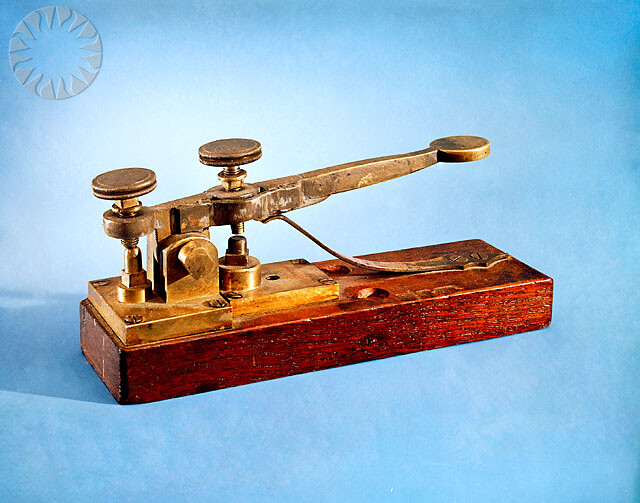
Telegraph operator also occurred to me. Not a job I’ve ever done, but a skilled job that probably as very satisfying. Thomas Edison started out as a telegraph operator. I did get to learn to use a teletype machine, and loved it. But I discover that in Canada, as a matter of fact, you still can send a telegram.


This is all good news. It means we may be wrong to worry about inevitably growing unemployment, our jobs taken over by machines. What really happens, or has happened so far, is that automation makes it cheaper to do things, lowering costs to the consumer, and so boosting demand. So we make, buy, and get more stuff. Employment remains buoyant. At the same time, it tends to take away the more boring aspects of a job, leaving the more interesting parts.

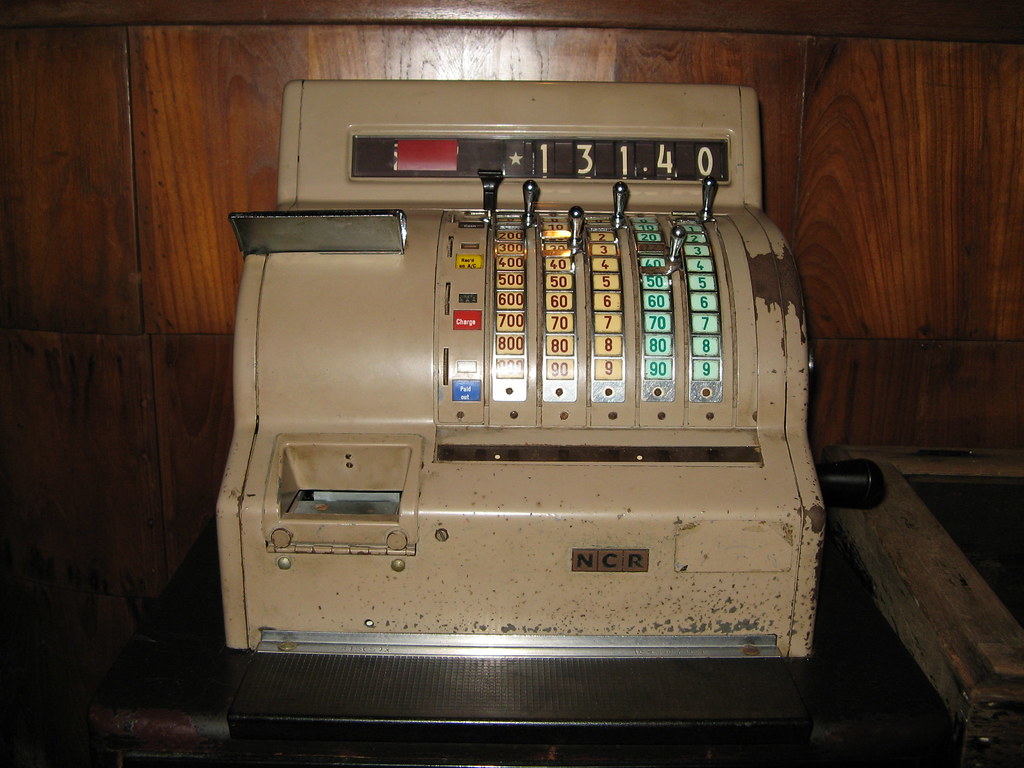
Not that I don’t still get nostalgic over the satisfying clicks of an adding machine, or the whirr of a big cash register, or the thrill of a call smoothly connected, the phone rung, and answered. They were therapeutic sounds, and they are gone. There is satisfaction in rolling your own.

Mine was more modern than this, but it still had a hand crank in case the power went out.

There are other jobs that have gone, and some have gone through technology, but not directly. The iceman, for example, no longer cometh. Not that ice is obsolete; you can still sell ice, and could probably arrange to deliver it too. So you can’t quite say the job is obsolete. It’s a particular use of ice that has gone.


Some jobs are probably coming back. For a while, as we all became urbanized, the old catalog store business seemed to have died.


But isn’t that what Amazon is?


Sunday, November 20, 2016

The Guaranteed Annual Income


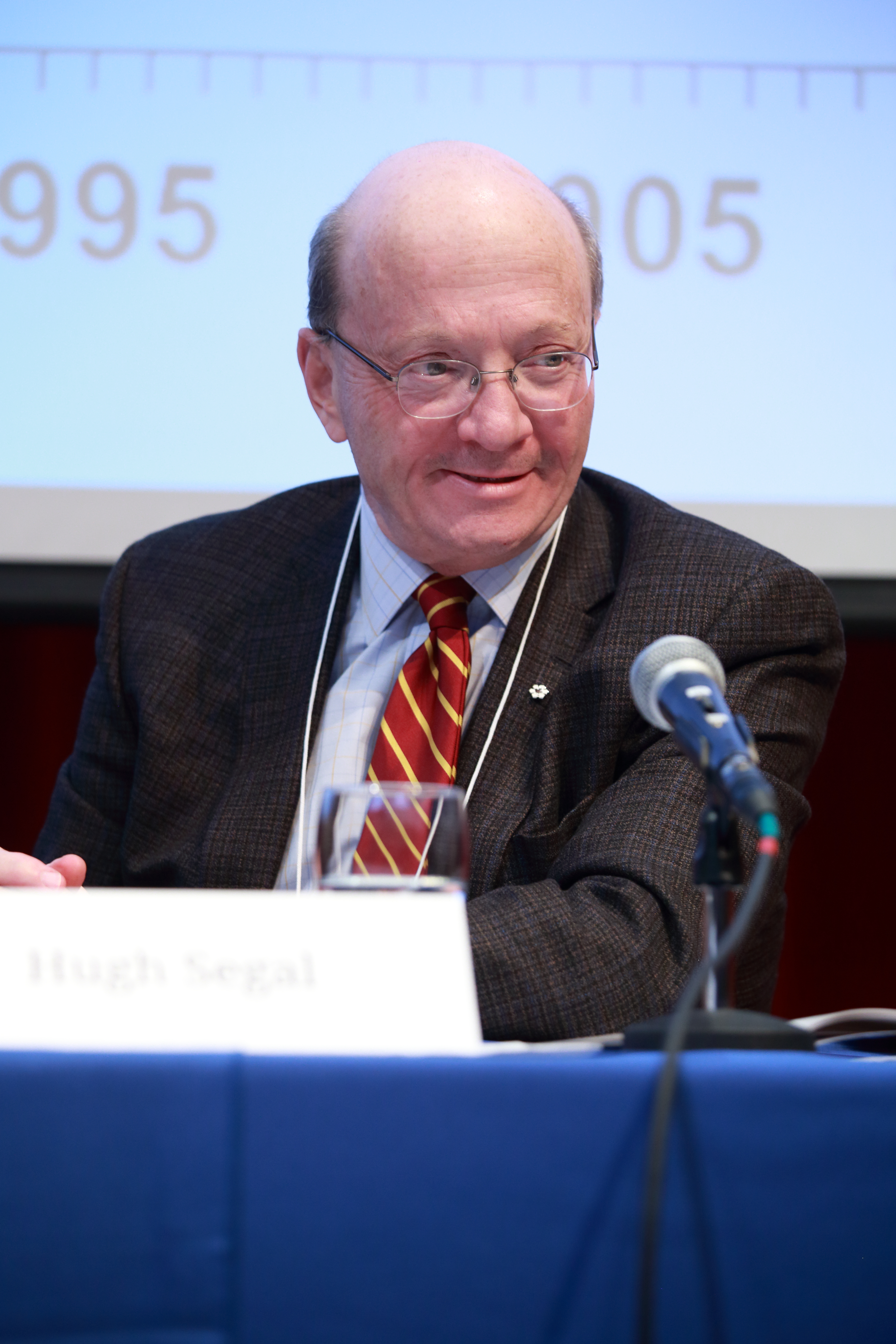
Senator Hugh Segal, badly in need of a haircut.

The American working class is in full revolt. This is for many reasons, but one big one is economic.

The current popular surge for Brexit, for Donald Trump, against immigration, seems at least largely due to the concern that the working class is losing job opportunities.

Shutting the doors to immigration will not work. Neither will trade protectionism. Dog, that’s the wrong tree.

Building walls against newcomers only means jobs will move to other countries, as the developed world becomes less competitive. If you must pay a minimum wage of $15 in Canada, but you can get a Chinese or Indian worker to do the same work for $5, it is hard to see how to keep the work, or the money, in Canada. Better for our economy to have the jobs here, however low-paid.

Nor will trade protectionism work. It will raise prices for consumers, which will be a net loss. Only some of us are producers all of us are consumers. And it cuts us off from markets. You can only go so far on everyone taking in everyone else’s laundry.

Worse, even if these measures worked to protect the unskilled from globalism, they would be doing nothing for the real problem: automation.

In the past, improvements in technology have always led, overall, to more, not fewer jobs. The lower cost of production was cashed in mostly on a higher standard of living, with everyone buying more stuff. But there may be a ceiling to that: economists talk of the declining utility of income or wealth above a certain point, and I am not certain we have not reached it, at least in the developed world. My kids are not too interested in getting any more toys. Too much is available free on the Internet that is a lot more fun.

The same could be said for my old addiction to magazine, newspapers, and books.

Elon Musk, who tends to be a bit of a visionary, suggests most jobs will soon be take over by machine. So does this recent piece. Robots can do the same manual labour humans do at $2 an hour.

Nor can we escape this by concentrating on services rather than manufacturing.

The single most common job in North America is truck driving. That is already obsolete. Self-driving trucks are available now. Taxi driving is also gone. Cashiers can be easily replaced, and already have been in some places. In China, they have begin putting up buildings with 3-D printers.

Its not just blue-collar work either. The bulk of legal work is a matter of consulting past cases, or thumbing through law books. Infinitely easier by computer. The bulk of medical work is diagnosis. Easy, and more accurate, by computer. Bookkeeping, accounting? Easily handled by software. And, of course, the economies of automation here are much more compelling.

So now what happens? After all, the wealth is still there, and growing. It is just all in the hands of investors, not of labour.

The great political danger, too, is that the American working class, having put their faith in Trump's solution of lower immigration and trade protectionism, will not be terribly happy when they discover it makes things worse instead of better. They are mad now, and in a mood to disrupt. Imagine what it will be like then, if nobody has any solutions for them.

Welding robot.

Enter, perhaps, Hugh Segal’s proposal for a Guaranteed Annual Income.

I especially think right-wing parties should embrace it and put it in the forefront of their programmes.

The claim that the right wing does not care about the poor is a powerful argument against the right. It is time to address this. Give a strong push to the GAI idea, and call the left’s bluff.

In principle, GAI would cost less than what we are doing currently. Now, most of the money that is supposed to go to the poor instead goes to salaries for bureaucrats to administer the complex programmes. By simplifying the process, just giving money instead of trying to run the lives of the poor, we can let the poor live better for less. The money gets spent on more important things, and distortions in the market, always inefficiencies, are removed.

I have seen, as an argument against the plan, that it would only cause inflation in the price of basic goods like rent and food basics, so that the poor would end up no better off. But that is a problem with the present system, which the GAI would fix. Inflation happens when the seller can be confident of getting the asking price however high. As when the government commits to pay for housing for the poor, or medicine, or tuition. It is then a sweetheart deal, crony capitalism. It happens even if the government should commit to pay for a specified service up to a certain amount. The price will automatically rise everywhere to that amount.

But if the government simply gives the poor an adequate income, this will not happen, because the free market remains. Individuals, given the choice of renting a comparable apartment at either $600 or $800 per month, are naturally going to choose the $600 offer, and use the additional money on some other want or need. There remains a competitive advantage in building apartments and renting them for $600.

This incentive to go for the cheapest option, of course, declines with greater overall wealth. Then one can indulge in trivialities like preferred colour or neighbourhood.

In other words redistributing to the poor, instead of giving it to bureaucrats, should serve to lower the price of essentials, not raise it.

The next objection is more serious: that many, given an adequate guaranteed income, will stop working. That may be so—this is the main issue any pilot should be trying to determine. However, the incomplete evidence from an earlier trial in Manitoba is that it does not happen. The only people there who stopped working were mothers with small children—and there is a good case that society is better off having them at home in any case. It is an investment in our future.

And here, we should not compare the GAI in its effects with perfection, but with what we have at present. Our current system makes it difficult for those on social assistance to take work: they usually lose their social assistance. And it is not easy, if necessary, to get back on it again. Bureaucracy.

A well-crafted GAI could still make taking a job worthwhile—taking back, say, only fifty cents for each new dollar earned, up to a ceiling. If it did, there is reason to believe almost everyone, given the chance, would take one. Not only do most people find having more money better than having less; most people are not content having nothing in particular to do all day.

In any case, once again, this mat not even be an issue: there may be no more jobs to be had.

Would that be so bad? The ancient Greeks believed leisure was essential to the fully human life. That after all, was why God made slaves. This was also the foundational thought of feudalism and European chivalry. To work for a living was beneath the dignity of a gentleman.

We might all then devote ourselves to what life is really supposed to be about: to the humanities, so-named for a reason. And to the creative arts, the one human activity at which machines cannot replace us.

A renaissance of the humanities and the arts might be the single greatest possible improvement in our general quality of life. We do pretty well already on material things.

At the same time, if any other jobs remain at which humans might be of some special worth, those who already had their basic needs provided for might be happy to take them for a small consideration. They no longer need to make the proverbial “living wage.” Making our industries all more competitive.

There are worse futures to fear.

Welcome! I'm from the future, and I'm here to help.