Playing the Indian Card

Showing posts with label immigration. Show all posts

Tuesday, July 21, 2026

Solving the Insoluble Problems of the Day

A problem solver

The world seems faced right now with several insoluble problems.

I do not believe in complaining about insoluble problems. So instead, I propose to offer solutions.

The first problem is fairly local: Canada is in alarming shape. While France, the UK, the US, Italy, Germany, the Netherlands, and the like seem to have insurgent movements poised to take power and perhaps pull them out of their current death spiral, Canada does not. The Liberal party remains in power, after a dozen years, and worse, remains strong in the polls. Pierre Poilievre is not that distinct an alternative, and is not getting traction in any case. Although he is a brilliant rhetorician,  he does not evoke in the electorate a feeling of confidence in his competence or his ability to turn things around. 

Who else is there on the radar who might be our Trump, LePen, or Farage? Maxime Bernier is the man who has claimed that mantle, and he has good credentials, but he lacks the necessary charisma. 

The other guy who comes to mind is Kevin O’Leary. Full of charisma, likeable, and a highly successful businessman. His problem is that he does not speak French, so he is a non-starter in Quebec.

Here’s a solution: form a joint leadership of the People’s Party, Bernier and O’Leary. Who, if elected, would be joint prime ministers. 

There is Canadian precedent for this. The Green Party has had joint leaders. Quebec solidaire has had joint leaders. Canada has historically had joint premiers in Macdonald-Cartier, Baldwin-LaFontaine, and other governments of the United Provinces period.

The second insoluble problem is population. The governments of the developed world have been caught between a rock and a hard place: population collapse will make government finances unsustainable. To prevent this, governments have been opening the doors to a flood of immigrants. But this mass immigration has instead actually further taxed government services, while disrupting social harmony. And after all, can you really save Italy by replacing all the Italians and the Italian culture? What have you saved?

But just take your busy fingers off the panic button. This crisis, I think, will solve itself, if we can convince governments to stop tinkering.

Shut the doors to more immigrants. Technology will in the near future increase healthy lifespan so that people will no longer need to retire at 60 or 65. AI and robotics can replace many human hands; less population will be needed to generate the same level of wealth. The robots will pay for our retirements.

The third insoluble problem is the war in Iran. Trump needed to go in; Iran could not be allowed to get nuclear weapons. But they have turned out to be immune to Trump’s tactics. He hoped to frighten them to a deal; but they are a suicide cult, and so will not surrender no matter how bad he makes their situation. Which is, of course, the very reason they could not be allowed to get nuclear weapons. Destroying the world wouldn’t bother them.

Nor can Trump consider a land invasion. The Iranian landscape and its large population makes that too costly. 

The solution is to get weapons to the Iranian people themselves, to allow them to overthrow the regime. What is needed is a large-scale smuggling operation. 

There; problems solved.


Sunday, June 21, 2026

Immigration Causes and Effects


The tide is swiftly and surely turning in the developed world against mass immigration. That pendulum is swinging hard.

This puts Western governments in a pickle. 

In Canada, the government has so far only taken modest measures to reduce the flow of immigrants. And the population of Canada has already actually declined over the first quarter of this year. Enumerating for the census, I find many of the apartments I have been assigned unoccupied—despite our supposed housing shortage.

Without mass immigration, the population of the developed countries is going to shrink. We knew that—it was one of the arguments for mass immigration all along.

What might that mean? It had governments panicked. No new workers to cover pension obligations; labour shortages; a shrinking economy unable to cover massive government debts. Government borrowing has been a Ponzi scheme that may soon hit the wall.

Despite that, I am delighted to see popular opinion turn against mass immigration. If rioting in Belfast is needed to stop it, I say the rioting is justified. It was never an acceptable solution. You cannot preserve the Canadian nation, the British nation, or any other nation, by flooding in foreigners. A nation is more than a government. A nation is the people and their culture. A new population with a different culture or cultures is no longer the same nation.

Moreover, I do not believe the depopulation panic is justified. Governments tend to panic. We got into the crisis of depopulation through relentless government warnings of overpopulation—at its extreme, the Chinese “one child policy.” Our leaders are blind, and become leaders in large part because they crave power. They will always overreact and want to intervene in the course of events. 

Elon Musk and others with their fingers on the pulse of technology are predicting that medicine is on the cusp of conquering many diseases, and significantly lengthening the human lifespan. If so, no pension funding problem, no labour shortage, perhaps no population decline. No longer any upside to large-scale immigration.

We also have the rapid development of AI and robotics. Less need for human labour, and an exponential increase in productivity. Musk, Yang, et al warn we may have nothing for most people to do. Any population increase will only be a burden on the public purse.

All things considered, the worst choice bet on the future governments could make right now is to let in many new immigrants from very different cultures. 

Which is, of course, exactly what they have been doing.


Sunday, June 07, 2026

Where to Source Immigrants


An American

There is much backlash now against mass immigration to the various countries of the developed West. The argument is that these large numbers of outsiders are not assimilating, nor augmenting, the resident culture, but introducing incompatible cultural differences.

The solution seems simple. The developed West is built on Judeo-Christian values and assumptions. What we now call “Western civilization” is simply what was previously called “Christendom.”

If we arguably need immigrants to keep the social services solvent, and to keep us economically competitive, there are ample sources available for Jewish and Christian immigrants who would, by this logic, fit in easily and become contributing Canadians, or Americans, or Englishmen, or Germans.

Perhaps most obviously, the Philippines. Although Filipinos have already come to Canada in large numbers, there are no Filipino ghettos. Filipinos assimilate readily, attend the local churches, and keep the laws. So too with Korean Christian immigrants. So too with Lebanese Christians. You do not see street riots, or demands for special treatment, or the changing of laws.

And note, importantly, that these groups are racially diverse, not “white.” Skin colour or race is not the issue. 

Another large group available: Central and South Americans—historically Christian, and interested in emigration for economic reasons. The US is concerned, legitimately, about illegal immigration, but, that said, Hispanics or Latinos do seem to assimilate within a couple of generations.

Regrettably, Christian immigrants from the Caribbean or from Africa do not seem as readily assimilable. But it is not because of race per se. It is because they tend to have a chip on their shoulder against “white” people due to the popular narrative about slavery, colonialism, and the struggle for racial equality in the US and South Africa. Their self-identity is deeply involved with the “African” group identity and with being alienated from “whites.” They import racism. 

So, if we must have large-scale immigration, it should be from historically Christian lands, or of historically Christian or Jewish minorities elsewhere. “Historically,” because otherwise it would be easy for desiring economic migrants to convert nominally to Christianity to gain entry.


Friday, February 27, 2026

Brave New World


Where I came in...


I was early into the computer revolution—1979. I was developing software soon after. I felt then that people did not recognize the significance of the desktop computer. It seemed to me this was a technological advance comparable to the invention of movable type—an improvement in the dissemination of knowledge that led to the Renaissance, the Reformation, the Age of Exploration, European dominance of the globe, the invention of empirical science, the general recognition of human rights, the collapse of feudalism, and democracy.

Then came the Internet and the World Wide Web. This was even bigger. Now I thought we were seeing an innovation comparable to the invention of writing. An improvement in the dissemination of knowledge that brought mankind out of the Stone Age into civilization.

But we were not done. Now we have, apparently, AI, something I did not think was possible. This seems comparable in its impact to the development of language itself. Which more or less marks the rise of the human as a being above the animals.

And these three new advances are happening within one lifetime. The first three took hundreds of thousands of years.

It is no surprise that the world seems to be in tumult. How could it not be? This is the most significant period in the history of the human race.

Here’s the good news: the average human life became hugely better with the discovery of language. Human life became incomparably better with the development of writing. Human life became incomparably better with the development of printing. We can assume that these innovations in turn will make life inconceivably better.

So it seems reasonable for Elon Musk to predict a time in the near future when we will all be wealthy, by current standards, perhaps without needing to work at all. The computer revolution and the internet revolution have already made many things that used to be expensive free or almost free; consider how many costly things your smartphone has replaced. 

If so, the spectre of pension funds running out of money is not real. We will have the ability to give everyone a pension, at any age. The government deficits we worry about may be buried in rapid GDP growth.

This means, in turn, that the recent drive by governments throughout the developed world towards mass immigration is gravely short-sighted. We will soon not need more people to do the work at lower skill levels, and will not need their taxes to fund government or pensions. The only factor limiting growth will be labour, but resources. While it may not be difficult to support a larger population, the disruption to the local culture and civil order would not be worth it.


Tuesday, November 11, 2025

A Sensible Immigration Policy

Immigrants arriving at Ellis Island


Many problems are solved if we accept one basic truth: culture is not race; race is not cultu. Culture is not genetic. To suppose cultural behaviour is hard-wired is the essence of racism. Yet that seems to be the common notionu on the left.

Second premise: cultures can be judged, and determined to be better or worse. “Cultural relativism,” popular on the left, the idea that cultures are free to determine truth itself, is the core idea of fascism, if not Nazism,

A culture is a set of tools for living. Like any set of tools, one culture can be better than another—or better at one thing, and worse at another.

A better life, in material and in spiritual terms, shows a better culture. And of course, we should all want a better culture, for a better life.

The cultures we currently call “indigenous” or “aboriginal” are essentially failed cultures. They provide at best a meagre material existence. They have produced little in terms of artifacts or technology or social cohesion or art. While they might retain elements out of sentimentality, given the choice, no moderns purportedly of these cultures actually prefer to live in their traditional way.

An immigrant nation, like Canada, the US, Australia, or Singapore, has the golden opportunity to select immigrants for the quality of their culture, in order to add it to their own. 

This is the secret of the relative success of these immigrant nations: cultural appropriation. Cultural appropriation is how cultures advance.

However, such nations should select immigrants on the basis of the potential added value of their original culture. What skills can they bring, and what can they teach us?

Most obviously, we want all the Jews we can get. Twenty-five percent of all Nobel Prize holders are Jewish, despite their being only 0.2% of the world’s population. Even a small proportion of Jews vastly enriched any culture. Better yet, they are often persecuted, and so might want to emigrate. Any sane nation ought to open their doors wide, and actively oppose antisemitism.

Any European culture is, in world terms, a good bargain. Europe brought us science, human rights, democracy, and most of the best of the arts. Barely a century ago, Europe ruled the world. The downside is that we already have the best of Europe, and Europe is doing so well that fewer might want to emigrate. Luckily for us, the Jews in Europe are now feeling increasingly insecure. And we have a golden opportunity to take in more Ukrainians.

We should also look to the European diaspora. Many South Africans of European ancestry might currently want to emigrate. 

Along with a rich cultural heritage, Japan in the last century or two has shown itself to be highly capable. And we do not have many Japanese Canadians or Americans, comparatively speaking. They should be welcomed in.

We do not want to import the Communist ideology, but immigration from the Chinese diaspora sounds promising: from Taiwan, Singapore, Malaysia, Hong Kong, Macau. Chinese or Confucian culture led the world several centuries ago, and seems recently to have regained its footing.

Muslim lands, leaving aside the occasional accident of oil, have been lacking in cultural accomplishments over the past few centuries. This is especially striking since they are the inheritors of some of the most productive cultures of the ancient world: Egypt, Lebanon, Persia, Mesopotamia, Asia Minor. This suggests there is something in Islam that actively inhibits cultural development, and we should not want to import it.

And the problem is not hard to identify: Islam is a holistic ideology, setting down rules with divine sanction for all aspects of society and life. This stifles innovation. Yes, it had a golden era. The Muslim world did well for several centuries after the great Muslim conquests. But this can be explained by their first conquests being these rich ancient cultures. They fuelled continuing creativity for a time, until Islam gradually converted the populace and shut innovation down. To get a sense of what Islamic culture is in the absence of this influence, visit Saudi Arabia, Qatar, or the U.A.E. There is much there that is shiny and new, from oil money. But look past that, look for older traditions. A Muslim life is limited and tribal.

However, this still presents an opportunity. We should welcome members of non-Muslim minorities from Muslim lands: the Maronites, the Yazidis, the Zoroastrians, the Copts, the Indonesian Christians. These groups are likely to have much to contribute in a new milieu, just as they were able to fuel the Muslim Golden Age. And this would be, for us in Canada, largely a new contribution to our culture.

India has also, despite an ancient and rich culture, been in a stall for centuries. I suspect the caste system has curbed development, and is not something we should want to import. Granted that caste has been legally abolished in modern India; nevertheless, it is embedded in the culture, and has religious sanction. There are, again religious minorities that have proven themselves productive within this milieu: the Parsees, Jains, and the Christians of South India all outperform the Indian national averages in education and in income, rather like the Jews.

The worst possible sources for immigrants would be areas that are still highly tribal in nature, and at war among themselves: places like Somalia, Yemen, and most of sub-saharan Africa. This is asking for trouble, probably importing trouble.

It is all simple once we ditch the false lens of race.


Saturday, August 30, 2025

Depopulation Solutions


Things are getting ugly with mass immigration, legal and illegal. Natives are beginning to push back. People begin to feel their own governments are against them. Are they trying to replace their own population? Will Britain or France cease to exist?

The chief reason governments are doing this is, apparently, the growing crisis of depopulation. Government pension schemes are projected to go bankrupt without an infusion of younger workers to support the old. Depopulation means a shrinking economy. Mass immigration was meant to solve this. 

Now it seems to have been a mistake.

So what can governments do?

It may turn out to be a chimera. Elon Musk warns that within the near future, most jobs will be replaced by robotics and AI. We will not need a large population to keep the gears turning. And he predicts enough natural abundance that everyone will be able to live well without working. So no need for more people. No need to worry about social security.

Other scientists predict that, within the foreseeable future, we will find a cure for old age itself. People living longer will mean fewer children are needed to keep the population stable or growing. And these are healthy extra years, not needing to be pensioned.

Government interventions based on projected future crises usually make matters worse. When I was graduating high school, our biology teacher insisted we all read The Population Bomb, which warned us that by the 1980s the world would be starving due to overpopulation. Not underpopulation. Governments like China’s wheeled into action with draconian measures making our current crisis worse.

 The one thing we should not do is spend a lot of taxpayer money on proposed solutions that expand the role of government. Yet the usual suggestions are things like free day care, longer parental leave, or paying people to have children. Making post-secondary education free might look like a useful suggestion—it would reduce the cost of having children. But this has been tried, for example in Germany, and does not seem to make a difference.

Here are some cost-free steps we could take.

First, recriminalize abortion. This seems obvious. Were it not urgently needed for moral reasons, the last thing we should be doing in the circumstances is killing babies.

Second, ban or at least restrict contraceptives. This would of course be unpopular, but would cost nothing and obviously address the problem. 

Third, limit the division of assets at divorce, alimony and child support. A woman ending her marriage ought not to get paid more than another women for the same work, only because her partner earned more. Equal pay for equal work. This would reduce the risk of marriage for successful and wealthy men (or women), the sort who could otherwise afford to have more children.

Fourth, when a marriage breaks up, or a child is born, whoever pays child support gets custody of the child. This seems a no-brainer, and requires the minimum of state intervention. Without this stipulation, any man who marries or even has sex risks slavery. A huge disincentive.

Fifth, ban all programs requiring equal pay for women. Men traditionally got paid more than women not because of discrimination, but because they were assumed to be supporting a family. Nor was this philanthropy for the employer: a married breadwinner was going to be more stable and committed to their job. But this also promoted marriage and the ability to have and raise more children. This would cost the government nothing, and boost the economy at the same time.

Finally, a less practical suggestion; but perhaps the most effective. I think of an old Bob Dylan song, in which President Kennedy asks Bob, “What does it take to make the country grow?” And Dylan answers, “My friend John, Brigitte Bardot. Anita Ekberg. Sophia Loren.” 

Conversely, Scott Adams notes recent surveys report that American are having less sex. And he asks, could this be related to the obesity epidemic?

Sex makes babies. Being sexually attractive promotes sex.

The problem may resolve itself with new treatments for obesity, like Ozempic. 

But beyond this, how about restricting immigration to young, attractive foreign women? This would be an obvious enticement for MGTOW to change their minds. It is women who produce babies. And this way, each baby would at least be half-native, and a mixed family would preserve the local traditions. So much for the fear of becoming extinct as a culture.

If it’s a population emergency, we’re going to have to do it. We men are going to have to suck it up and take one for the team.

Or maybe two or three.


Friday, February 14, 2025

The Ordo Amoris


There is a firestorm raging in the Catholic church on Trump’s policy of deporting illegal aliens. J.D. Vance cited the principle of ordo amoris: that one owes one’s greatest love to family, then community, then country, then mankind. This is indeed, as many conservative commentators have confirmed, traditional Catholic doctrine, supported by Augustine, Aquinas, several recent former popes, and even Pope Francis himself, in his past writings. Vance argued that modern leftism has turned this on its head, elevating the alien, demeaning the family, and condemning the USA. Pope Francis himself then chimed in, insisting Vance and Trump are wrong, that we must love all equally. An American bishop has proposed excommunicating any Catholic who follows Trump’s orders in deporting aliens.

I am personally torn here. Who is right? Before listening to J.D. Vance, I would have taken Francis’s view. However, I am disturbed by the fact that Francis is contradicting himself and prior popes. This suggests that for him, politics is trumping doctrine—and ethics.

We owe greatest love to family? But then, who is our family? See what Jesus says in the Gospel:

And stretching out His hand toward His disciples, He said, “Here are My mother and My brothers! For whoever does the will of My Father in heaven, that person is My brother and sister and mother.” (Matthew 12:46–50)

We owe greater love to those of our own community? But then the Good Samaritan, from a different community, is declared by Jesus to be the true neighbour, and not the Hebrew priest or scribe.

True love, caritas, is a love extended to all. Love restricted to family, or to nation, is too often only shared egotism. Once could cite Hitler’s Germany.

And yet, in defense of Trump and Vance’s position… anyone who has lived in or even visited a Third World country must realize that it is impossible to treat everyone equally. Give of your substance to all who are in need, and you would give away everything you have while doing almost no measurable good to anyone. Seven billion pennies. The poor you shall have always with you.

And, of course, your own children would starve. Does that sound right?

The principle must be this: you help whomever God sends to you, whomever you encounter on your life path, who is deserving, who does the will of God. The Samaritan is your neighbour, because he is good. “Whoever does the will of My Father in heaven.” This is also the lesson of Dives and Lazarus: Lazarus is a good man, and he is on the rich man’s doorstep, within his sight. 

This will usually mean a duty to help deserving members of your family, then your community, then your nation. But not because they are family members or physical neighbours. Because these are the ones God has presented to you for help. This also means you must support a deserving stranger before an immoral member of your family or your community.

How does this translate to government immigration policy? A government has their own population most immediately on their doorstep, literally already present. This means they must be favoured over foreigners, all else being equal. Moreover, the government owes a greater loyalty to the law abiding than to people of known bad moral character, i.e., those who enter the country illegally.

So whether or not he has the reasoning right, Vance is right on policy, and Francis is wrong. Illegal aliens are owed human dignity, but not entry.

It is harder to say how this applies to applicants for legal immigration. Those of good character should be preferred, but other than excluding known criminals, this is hard to establish. And a wealthy nation must restrict immigration in some way; otherwise you have the problem of giving away everything while benefitting no one. So the sensible thing is to choose immigrants for the most benefit brought to those already present. Which is how most nations operate. What skills are in short supply? Who is young and healthy and likely to add by their efforts to the general wealth?

Francis messed up. He is first and foremost a politician.


Tuesday, January 14, 2025

Rape is Not a Part of Islam


Islam is getting a bum rap in the UK grooming gang scandal. Islam does not enable or endorse the behaviour of these young men. That is the reverse of the truth. It is culture shock.

Coming from a culture with strict rules for the separation of the sexes, severe punishments for rape, strict traditions for female dress, the typical Muslim view of the West is that here, by contrast, everything is permitted. My Pakistani friends used to refer proverbially to “the wicked West.”

We always think this way of proximate foreign cultures: to England, France is always synonymous with sexual license. In Barcelona, a strip joint is named “Baghdad,” and nude dancers are called “exotic.” The most famous stripper in Montreal once had the stage name “Fawzia Amir.” In early Canada, sex fantasies centred around the Indians. No surprise if Muslims think the same about us: in the West, all women are available and everything is permitted.

This is a common expression of culture shock. Finding in some new culture that many familiar norms do not apply, you can easily assume that here there are no norms at all, and everyone is free to do as he pleases.

The initial reaction is to act out your fantasies, here where nobody knows you. The second reaction is to despise these immoral and crazy people, and feel righteous in doing them harm.

This sense is that much more severe when coming from a culture with strict social norms.

So young Muslim immigrants are a bad risk for violence and sexual predation, criminal behavior, and mental illness.

And we are making the same mistake they are, by imagining that such outrageous behaviour is endorsed by and part of Islam.

The fault is in our governments, who are blind or deliberately blind to the importance of culture and cultural difference. And this has nothing to do with racism: race is not culture, and those who suppose they are the same are the most profound racists.

It is callous folly to let in large groups of immigrants from quite different cultures. There will be social breakdown and immense suffering, not least for the immigrants themselves.

We should, in all sanity, prioritize immigrants from cultures with social norms most similar to Canada’s. That means we should give absolute preference to Christians, Jews, Americans in the broad sense of that term, and Europeans.

Failing that, we should give preference to those who have a strong religious commitment. That is, just the opposite of our current thinking, that the problem has something to do with religious “extremism.” A strong faith anchor inoculates against culture shock, and ensures the individual does not act out selfish desires. If these Muslim men in Rotherham and other British cities were good Muslims, they would not behave this way despite temptation.


Monday, May 27, 2024

Farage the Islamophobe


There seems to be a firestorm in the UK over Nigel Farage’s recent comments that the UK is letting in too many immigrants who do not support “British values” and “loathe what we stand for.” He is being accused of “Islamophobia” for saying this.

Watch the original interview. It seems to me Farage is perfectly right, and the interviewer dishonest. He is trying to poison the well; Farage is not allowed to cite simple facts, or he is “Islamophobic.” This shuts down debate and leads to bad policy.

Farage here shows himself, once again, a true leader. He will not be intimidated.

Surely it is self-evident that Islam is a set of values. Are these values the same as traditional British values? Are they compatible with them? If not, is British culture and are British values worth preserving?

Let’s take these necessary questions in turn.

Are Islamic values the same as British values? 

They are not, in one essential way. Islam demands sharia law. Nothing, not even the English language, is more central to British culture than British common law; including the principles of Magna Carta and all the rest. 

Next to that, little is more central to British culture than parliamentary democracy. Islam demands a theocracy. There is a reason why there are no functioning democracies in the Muslim Middle East. 

Britain is an officially Christian country; the King is head of the church. Islam is obviously a different creed. Granted, freedom of religion is also a mainstay of modern British culture. But Islam is also doctrinally opposed to freedom of religion: death is the punishment for apostasy. Blasphemy laws apply to non-Muslims; no one may deny the truth of Islam. 

Can these Muslim values coexist with British values? 

On their face, no. And the history of Islam everywhere suggests they cannot. Because of the requirement for sharia law and theocracy, Islam must rule. If there is a substantial Muslim population anywhere, there is an immediate demand for segregation and independence: they will not integrate. 

Are, then, British culture and British values worth preserving?

Just consider the objective accomplishments of British culture. Science, democracy, the Industrial Revolution, Shakespeare, William Blake, the Salvation Army, the Boy Scouts, Dickens, the Brontes, Orwell, football, cricket, rugby, and so on. Suppose it is not the best culture in the world. Even so, surely it is worth preserving. Surely every people has a right to exist, to their culture.

But also consider the quality of the average person’s life in the UK, say over the past few hundred years, with that of the average countryman elsewhere worldwide. Look at the raw economic statistics, or the relative absence of violence and social turmoil.

The answer is obvious. If British culture is lost, it is unlikely to be replaced by something better.

All of these same considerations, of course, apply to Canada; or the US.

This is nothing against Islam. Different countries and different  cultures all have a perfect right to exist. Muslims are free to be Muslims in Muslim countries. British people simply deserve the same right.

Monday, May 06, 2024

Ireland, We Hardly Knew Ye


The Irish immigration situation is ironic. The UK voted to leave the EU mostly because the common people were alarmed at the levels of immigration, in particular “asylum seekers.” They felt their culture was being lost. It was urgent to take control of their own immigration policy. They could not so long as they belonged to the EU. 

Ireland cut up a fuss, demanding that the border between the Republic and Northern Ireland be kept open and unrestricted—they did not want a more divided Ireland.

Now the Irish general public is also up in arms. They fought Britain for centuries to establish their independence. And now they are being colonized by mass waves of foreigners? How is this different from what Cromwell did?

And Britain has begun to take command of their asylum seeker problem, by shipping them off to Rwanda. So, unsurprisingly, the asylum seekers are taking advantage of that open border to flood into Ireland, to avoid deportation back to Africa. 

Putting Ireland on the brink of a general uprising.

This is awkward for the Irish. They are instinctively left-wing, anti-British, and welcoming to outsiders. But they seem to have reached a limit. 

So now what?

The leaders of Europe as a whole are going to need to follow something like the Rwanda model. Popular opposition to mass immigration has become a central issue in many countries now, in Sweden and Denmark, in Italy, in Greece, in France. As it was and continues to be in the US as early as 2016, leading to the election of Trump.

It was a bad idea. It needs to be reversed. The question is, will the EU care enough about Ireland\’s problem to do anything quickly enough to save that nation.

I fear Ireland may have to act unilaterally, perhaps in defiance of the EU, and take the consequences. If the borer is to remain “soft’, they must have the same asylum policies as the UK. They must negotiate their own flights to Rwanda.


Thursday, April 25, 2024

The Peaceable Dominion


There are riots on Parliament Hill applauding terrorism.

One of Canada’s great advantages has always been that it is a high-trust society. It is a place where, as Michael Moore once remarked, people did not lock their doors while at home. That used to be true, and that was unheard of just across the border in the US. The old joke was that, in the streets of Toronto at 2 AM, deserted, cars still always stopped at the lights.

This was a land where the police force was a beloved national symbol. It was the land of “peace, order, and good government.” The streets of Toronto were notoriously clean: “New York run by the Swiss.”

This was much to our economic benefit; we saved money on policing, security systems, fraud protections, wastage; the wheels of commerce turned easily, well-greased, without strain. Perhaps more important, it improved our quality of life. Canada was safe and boring and secure. We could spend less time being anxious and looking behind us. We could be polite and friendly to all.

Canada was unusual; almost unique. 

Mass immigration is inevitably destroying this unique Canadian characteristic, almost the essence of Canadian culture. People coming from other countries do not share this same ethic. Almost all other countries are lower trust. In most countries, you do whatever you think you can get away with. To acculturate a new immigrant to the Canadian way takes time, and total immersion in the Canadian milieu. Bringing in too many immigrants at once makes this less likely. Official multiculturalism makes the problem worse. 

Sadly, Canadians are innocent marks in all this; not accustomed to being assaulted or conned, they have grown to be too trusting.

“Canadians are so naïve,” remarked a Korean friend of mine.

Making the nation a candy shop to anyone of ill intent.

And it is not just that other cultures are less socially responsible, less concerned with honour and neighbourliness and social solidarity. It is also that any recent immigrant, especially when the move is to a very different culture, goes a little crazy, or a lot crazy, with culture shock. They will imagine that there are no rules here. Obviously, if the women here wear short skirts, it is because they want to be raped. Or, if not so disposed, they will decide that all the people here are evil. Either way, they will conclude that they can do whatever they want, rather than adjusting to the way things are done here. Multiculturalism again making this much worse. And, in the back of their mind, they can remember, if it doesn’t work out, they can slip away home. So why not live out their fantasies?

Our leaders seem ignorant of these issues; or else they do not care. Perhaps they are deliberately destroying the country.

We need to end multiculturalism. We need to develop systematic assimilation programs. We need to suspend immigration to allow newcomers time to assimilate. And we need to lock our doors.


Saturday, April 13, 2024

The Promised Land


An Igbo bride.

Canada’s manifest destiny is to be a home for refugees.

That is more or less how it all began, with the UE Loyalists; and continued, with the Highland Clearances and the Irish famine. Even Loius Riel, contrary to popular misinformation that he was trying to keep the land for the aboriginals, had exactly this vision: Canada as a home for refugees. It is the great thing Canada, with its expanses, can do for the world. In so doing, we not only help end the suffering, but also reduce tensions in the land from which the refugees come, since they do not want them. Often, their home countries would be happy to cooperate with “getting them off their hands.”

Imagine, for example, the good Canada could have done if, in the 1930s, we had opened our doors to Jews coming from Germany. 

This is best for Canada as well. Those who come from places they are welcome are most likely to make a firm commitment to Canada and its culture and development. They have no divided loyalties. 

In order to do so, we should stop squandering our immigration quota on mere economic migrants. We should get back to huddled masses yearning to breathe free.

We should favour Christians coming from non-Christian countries. In absolute numbers, Christians are the most oppressed religious group on Earth. At the same time, favouring Christians makes economic and cultural sense. Churches are falling empty and needing to be repurposed or knocked down, the religious art lost or destroyed. This is an economic blow, and a destruction of a significant part of our heritage. Immigrant Christians from other countries could gratefully fill those pews, and keep the structures in good condition.

We should also give absolute preference to all Jews. They are and always have been discriminated against everywhere, and are not safe, as recent events demonstrate, in Israel. This too is to our benefit: Jews are good for the economy and the culture wherever they go. And beautiful old synagogues are also falling empty.

Smaller religions lacking a homeland generally are worthy of unrestricted immigration: the Yazidis, Bahai, Sikhs, Falun Gong, and Parsis.

Muslims are a special case. Although persecuted in many countries, Islam is also uniquely constitutionally prone to persecuting other faiths when it can. No other faiths are legal, for example, in Saudi Arabia. Allowing large-scale Muslim immigration can threaten the security of other faiths in Canada.

There is also ethnic persecution. Tigrayans from Ethiopia; Hakka Chinese from Southeast Asia; Igbo from Nigeria. One group in obvious jeopardy, although it is unfashionable to say so, is “white” South Africans. 

We should not be opening doors to refugees from wars, as opposed to genocides or persecutions. Admitting refugees from both sides, who are simply fleeing the carnage of war, is likely to import the tensions that led to war, and extend the violence to Canadian soil. Admitting refugees from just one side drains it of fighting men to defend it; and those disloyal to their original country in time of need cannot be expected to become model Canadians.

Canadian embassies around the world could be assigned the task of determining what local groups might deserve such special immigrant status; and even coordinate with the local government to remove these “undesirables” without conflict.

Canada would be the richer for it.


Friday, February 16, 2024

Rivers of Blood


The current season of the British series “Call the Midwife” brings us up to 1968, and Enoch Powell’s famous “Rivers of Blood” speech. Of course, all the sympathetic characters we have come to know and love on the series are immediately opposed to this supposedly racist and anti-immigrant sentiment.

I have a problem with this. A Gallup poll at the time showed 74% of Britons agreed with Powell—that is an overwhelming consensus in polling terms. Even 47% of immigrants agreed there needed to be more restrictions on immigration, against 30% who disagreed. 

Apparently it was the press and the politicians who decided the speech was a problem. Do we believe them without looking for ourselves?

Powell himself predicted this reaction in his speech: “people are disposed to mistake predicting troubles for causing troubles and even for desiring troubles: ‘If only,’ they love to think, ‘if only people wouldn't talk about it, it probably wouldn't happen.’"

Are we to believe that all good people would see the speech as reprehensible? And so that that almost all Britons living at the time were not good people? 

This seems racist. 

It is necessary to hear their side; to hear what Powell said.

Powell was not saying there was anything wrong with immigrants, or even that British culture was superior. A racist would have said at least this much. His objection was to mass immigration from a distinctly different culture; because this meant the immigrants would not assimilate. “Their numbers and physical concentration meant the pressures towards integration which normally bear upon any small minority did not operate.”

This can be misrepresented by quotation out of context; and he does use language that was not then, but is now, considered offensive, like “piccaninnies.” But these are pickled red herrings.

“Now,” Powell concludes, “we are seeing the growth of positive forces acting against integration, of vested interests in the preservation and sharpening of racial and religious differences, with a view to the exercise of actual domination.”

We have indeed seen exactly that since, with the growth of the doctrine of “multiculturalism.” Cynical politicians are manipulating ethnic communities to elicit block votes. 

This, Powell warns, was only likely to lead to strife among distinct ethnic ghettoes living in close proximity, seeing themselves as having competing interests. Hence his image of “rivers of blood” in the streets.

Which we seem to be witnessing now.


Wednesday, January 24, 2024

From the River to the Earth's Bounds


The tide is turning against high immigration levels, in Canada and in the rest of the developed world. Back in 2019, I recall a PPC candidate suggesting at a local public meeting that the housing shortage could be addressed at least in part by lowering immigration levels. She faced immediate catcalls, demanding she get off the stage if she had such opinions.

Now that opinion is shared by a majority. According to Nanos Research, a year ago, 61 percent of Canadians were in favour of the current high immigration levels. But by last December, 61 percent felt they should be reduced. Such a rapid turnaround in public opinion is almost unprecedented.

Part of the general snapback against the left agenda; which is now visible, and proceeding apace.

I suspect it is more than the housing shortage. We already had a housing crisis in 2019. Instead, people are waking up to the fact that people from different cultures are not just about colourful dances and new ethnic restaurants, but that they can actually have fundamentally different basic values, which can be antithetical to Canadian values, and cause civil conflict.

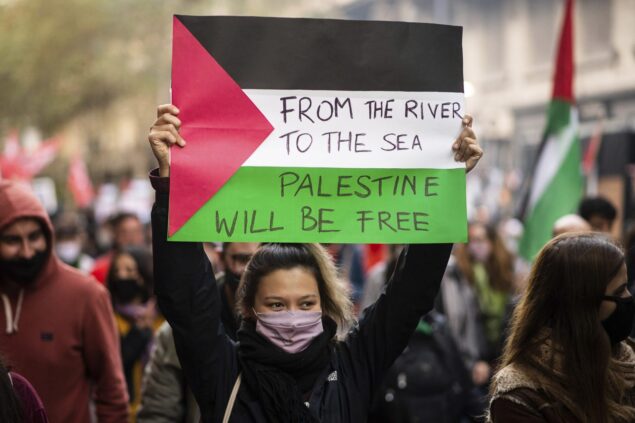
I suspect the many “From the River to the Sea” protests, in Canada and elsewhere, since October 7, have played a large part in this turnaround. It has now also become permissible to point out other problems, like immigrant students improperly exploiting food banks.

It is unfortunate if the focus remains on immigration per se. Immigration itself is not the problem. The problem is multiculturalism. It is madness to bring in large groups of people from radically different cultures without an aggressive program of assimilation and equal treatment.


Saturday, December 09, 2023

Muslim Immigration


I am loath to say anything against Islam. Any religion is better than no religion, and any of the ethical monotheisms is infinitely better than no religion. Living in Saudi Arabia, I felt I had far more in common and could be more relaxed with devout Muslims there than with secularists in Canada. Despite the fact that attending a Catholic mass was illegal.

However, many people are belatedly beginning to realize that Muslim immigration is a problem for Western democracies. We have seen and heard the demands for Jewish genocide. We have seen the unpredictable stabbing and bombing sprees. We have seen the grooming gangs and rapes. 

Muslims do not assimilate politically, and liberal democracy does not assimilate Islam. There is a reason why there are no functioning democracies in the Middle East.

To start with, Islam is opposed to the separation of church and state. The state executed Christianity’s founder, who said “render to Caesar what is Caesar’s, and to God what is God’s.” Judaism, has the tradition of the prophets, who lived alone in the desert and railed against the inequities of the state. But in Islam, the prophet, the original religious authority, was also the secular authority: Muhammed was an emperor. No separation. This means there is no leeway for religious experimentation among citizens. In a Muslim state, any non-Muslim is an alien. Conversely, any Muslim living in a non-Muslim state must see himself as eternally alien, never assimilated, until and unless he can seize political control and institute shariah law.

This is a problem for non-Muslim neighbours, and for any liberal-democratic regime. Note that elsewhere in the world, wherever there is a Muslim majority, they will demand separation and Muslim government.


Any Muslim who remains nominally Muslim yet does not fight for this is a bad Muslim; irreligious and unprincipled. Not the sort of citizen you want either.

If Islam comes to power in any jurisdiction, democracy is also no longer desirable. The state is supposed to be a theocracy, not a democracy. Democracy is blasphemy.

Islam also does not believe in human equality or the right to life in the way Christianity does. Christians believe God loves all of us, even sinners. Islam believes he hates unbelievers, who have rejected his sovereignty. He has issued a commandment to all true believers to kill them. So, no right to life, let alone equal status, for kaffirs.

This is not “Islamism” or “Muslim extremism.” This is Islam, properly understood. It is perfectly reasonable, given the starting premises. God is God. We do not see if it we are raised in a Judeo-Christian culture.

Islam of course does not believe in freedom of religion or freedom of conscience. There is no distinction between individual morality and the law. Why would there be? “If the government is not there to enforce morality,” asked a Muslim friend once, “Why is it there?” So of course, Islam demands such things as laws against homosexuality, laws against adultery, laws against fornication, laws requiring modest dress, laws requiring religious observances, and the like. One is certainly not permitted to choose some different religion: converting away from Islam is punishable by death, since it involves a wilful rejection of God’s sovereignty. 

All this is obviously a problem in a liberal society.

Since Constantine, Western nations have been held together as civil societies by their shared Christian values. As in a couple, so long as fundamental values are shared, and can be appealed to, disagreements can generally be worked out. This used to be universally understood. 

Unfortunately, with the Reformation, this civil consensus was shattered in Europe, and much conflict ensued. This was then resolved by the rise, toward the end of the 18th century, of the “Enlightenment” doctrines of liberalism. This has worked well enough for the West since. There is a reason why the civil monuments in Washington D.C. look reminiscent of pagan temples. 

But it has always been naïve to think that liberalism could be compatible with all religious beliefs. It is reasonably compatible with Hinduism, Buddhism, or Confucianism, all of which recognize a separation of church and state. It is not compatible with Shintoism. It is not compatible with paganism, which resurfaced in Germany as Nazism, more recently in France and America as postmodernism; it is not compatible with atheistic Marxism; and it is not compatible with Islam.

 Now all the major Western nations have let in large numbers of Muslim immigrants. Our leaders have gotten us into this problem out of their own sheer ignorance of religion and of Islam.

But then, Marxists and postmodernists are at least as big a problem.


Thursday, June 08, 2023

How the US Can Save Canada


Given Justin Trudeau’s increasingly autocratic rule, and perhaps also subversion by China, Tucker Carlson recently suggested an American invasion. Don’t Americans owe it to Canadians to defend their freedom? And do they want another Cuba on their northern border?

Let us concede that Canada is going to hell in a handcart. Still, there is a simpler, safer, solution.

The US need only declare Canada in violation of human rights; then accept refugee claims from Canadians, give then green cards and a track to citizenship.

If Trudeau continues on his fast track to tyranny, it would then matter little; individual Canadians could vote with their feet. There is no way any Canadian government could close that vast border.

It would probably also benefit America. The world is facing depopulation; the developed world is responding by opening the doors to immigration. 

But which immigrants? From the American perspective, Canadians are ideal: they are culturally identical. They are already Americans in all but passport.

And the brain drain would probably force the Canadian government to be more respectful towards its citizens. Problem solved, not a shot fired.

Perhaps more generally, depopulation will force governments to pull back from their present growing totalitarianism. I have read that the depopulation after the Black Death had much to do with the end of serfdom; labour became more precious, and had to be wooed. 

Of course, there is the opposite theory, that labour is going to become less needed as automation increases. Yet this has never happened at any previous stage of improved technology. It has always been the opposite: more jobs, and a rise in demand for labour. Improved technology makes goods cheaper; the demand for them rises. Each individual can afford, and wants, more stuff.

As populations collapse, the countries that will grow in power and influence will be those most attractive to immigrants. Prosperity will depend on offering rights and freedoms.


Wednesday, August 31, 2022

The Backlash in Europe


A backlash against high levels of immigration is underway in Europe. Denmark now wants to send refugees from Syria back. If they cannot, they will round them up and put them in camps. Sweden wants to stop accepting refugees. Britain voted for Brexit to cut the flow of immigration, and is now sending refugees to Rwanda. Hungary has built a wall. Politicians have found it necessary to take these positions, which only a little while ago they would have condemned as “far right” and beyond the pale, due to public outcry. 

Politicians in Canada would be wise to take note. This convoy is almost surely headed our way. Those who tie themselves too tightly to the mast of multiculturalism may soon find they have no support.

The problem is not immigration as such; at least that is what the politicians say; and I believe them. We need immigration. It is the failure to integrate. This means social division and high crime rates. It turns out that diversity is not our strength. Strength is from movement towards unity, “e pluribus unum.”

And the problem is not racism or discrimination against immigrants. The problem is that some immigrants discriminate.

Compare Chinese with Japanese Canadians. There has been at least as much discrimination against Japanese immigrants as Chinese—most North Americans can’t tell the difference visually, and if they can, history gives more reason to resent the Japanese. The Chinese were never interred. However, much as I love the Chinese, Chinese do not integrate, and the Japanese do. The Chinese stick together in “Chinatowns.” Japanese intermarry and engage with the culture. There are no, or few, “Japantowns.”

When Europeans move into some other country and then stay aloof, sticking to their own neighbourhoods and not learning the language or culture, we condemn this. We see them as colonizers. 

It works the same way regardless of skin colour. Immigrants who do not integrate are colonizers. They want to change the country they come to to suit them; and this quite properly causes resentment among those already there. They have their own culture, have a right to it, and want to preserve it. Unlike the immigrants, they did not make a choice to change.


An intelligent government can predict and should distinguish among immigrant groups who will strengthen the country, and who will lead to problems. Much is predictable based on cultural characteristics. Chinese, for example, do not integrate well because Confucianism does not recognize any responsibility towards anyone with whom you do not have some formal relationship. Strangers are ghosts. Therefore foreigners are ghosts.

You can also see it from experience. Filipinos are good at integrating. Greeks make good immigrants. Koreans make good immigrants. Sikhs make good immigrants. Jews make good immigrants. Lebanese Christians make good immigrants. They are quickly contributing to the mainstream culture.

Muslims make poor immigrants, for predictable reasons. Islam is not compatible with liberal democracy, Canadian social norms, and religious pluralism. In principle, in Islam, no government is legitimate that is not Muslim, and enforcing Islam as state religion. No law is legitimate that does not conform to shariah law. 

Accordingly, any Muslim immigrant is in principle hostile to the government and alienated from the non-Muslim majority.

You may well argue that this assumption is not fair to “moderate Muslims.” But if someone is prepared to reject the moral code with which they were raised, and which they claim to follow, are they a good bet to be a moral person? Are they not also likely to be a problem, perhaps a worse problem?

I say this with great respect to Islam and to my own Muslim friends. Islam is an admirable ethical system; but it is not compatible with immigration to and assimilation to a non-Muslim nation. Muslims themselves will insist this is so: whenever numbers warrant, they will demand a separate state.


Wednesday, December 23, 2020

Maintiens le Droit


A literary friend, an immigrant to Canada, laments that

“The biggest damage done by racism is that it has shut down critical enquiry and self-critique among minorities. In an attempt to salvage our identity, we paint a blameless picture of our identity, race, ethnicity, religion, culture, and community. ... Racism makes us afraid of self-critique for fear that it may be used against us.”

This take is wrong. Groups that are discriminated against do not close ranks and refuse to criticize one another. Just the reverse: individuals try to “pass,” often by condemning their own group. You get “Uncle Toms”; anti-Semitic Jews; or, as George Bernard Shaw once said, “the Irish are the most honest of all races; they never have anything good to say about each other.”

The fact that we see the exact opposite in Canada’s communities of recent immigrants informs us that the problem is not discrimination against “minorities.” As should be obvious: in contemporary Canada, minority status is celebrated by government. “Multiculturalism” and “diversity” is official government policy. The better comparison is with “professional courtesy”: a doctor is never supposed to criticize another doctor, a lawyer another lawyer, because it might threaten their shared prestige.

Indeed, given Canada’s “hate laws,” anyone criticizing multiculturalism, diversity, or any particular immigrant or foreign culture faces a possible prison term. It is therefore safer for any of us to say nothing against, for example, the rather less than admirable government of Iran, or China, for all that they may oppress their own people, or be opposed to individual rights and human equality. Someone might take offense, and our lives be ruined. It is perfectly fine, safe, and socially acceptable, on the other hand, as my friend notices, to criticize the government or the culture of Canada. Or other nations, like the US or the UK or France, that are friendly to Canada and share its values.

Sadly, my immigrant friend has not yet strayed off the plantation. She naïvely supposes that the left supports free speech. She is puzzled, therefore, that she cannot get literary magazines to publish anything she writes that is critical of the government of her home country.

But it is “the left” that has passed and aggressively supports restrictions on free speech such as those “hate laws.” It is the left that has advanced “deplatforming” opposing views, that has shown up to riot when the wrong speakers are invited to campus, that has engaged in widespread blacklisting, “political correctness,” legally required speech--forcing people to use designated gender pronouns--and so forth. Liberalism, the political philosophy that believes in human rights like freedom of speech, has been gradually forced to the right in North America. Perhaps it started with the rejection by the left of the right to life.

“The left” as such has no particular problem with dictatorships, and broadly supports intrusive government. 

Liberalism is also the philosophy that believes in human equality. It is not helpful to divide people up into “minorities,” as the left always does. Properly speaking, all Canadians are members of ethnic minorities within Canada, and all humans are members of ethnic minorities in global terms. And how we are divided into special interest groups is perfectly arbitrary: why, say, skin colour, and not height? Is a second-generation Chinese immigrant really more culturally like the Chinese of Beijing than like the kid on the next block?

Instead of accentuating our divisions, we ought to be working together to create one unified Canadian culture, and one world culture, open to all of us. That is the special opportunity that Canada, as a post-ethnic nation, offers us.


Wednesday, December 09, 2020

E Pluribus Multis


Here is an interesting and important op-ed by a Mount Royal University professor, that appeared in the Vancouver Sun, but reportedly was soon pulled down. True North further claims that ,because he wrote it, the author was refused entry into the Canadian Armed Forces.

Perhaps the most important passage:

social trust corresponds more closely than any other factor to predicting economic prosperity. Harvard economists Alberto Alesina and co-authors from a paper titled, Fractionalization, argued that greater diversity leads to stunted economic growth. In other words, diversity is a weakness as far as the economy is concerned.

In 1981 The World Values Survey began an investigation into cross-cultural beliefs, values and motivations, and has since shown that societies with high social trust are not only more economically productive but also happier. The most successful are homogeneous countries, not the diverse ones.

The bigger problem is not immigration, but multiculturalism. The goal must be to form a unified Canadian culture.