Playing the Indian Card

Showing posts with label USA. Show all posts

Thursday, August 06, 2026

A Continentalist Manifesto


I have recently been teaching my students W.P. Kinsella’s Shoeless Joe. The novel reads like a long love letter to American culture, ideal for foreign students hoping to enter university in the US. 

But it is written by a Canadian.

At the same time, I see a reference to The Band as the originators back in the 1970s of a new musical genre, “Americana.” Their albums are a celebration of everything American: “Up on Cripple Creek.” “The Night They Drove Old Dixie Down.”

Yet four of the five, including their two chief songwriters, are from London, Ontario.

It is not just The Band or W.P. Kinsella, either. Neil Young, from Toronto via Winnipeg, is also deep Americana. Leonard Cohen has a love affair with American country music. The most hyper-patriotic American Youtubers and political commentators seem to be Canadian refugees: Gad Saad, Steven Crowder, Mark Steyn, Gavin MacInnis, David Freiberg (“Viva Frei”), David Frum, “Clyde Do Something,” Jordan Peterson. Joe Schuster created Superman, who fights for “truth, justice, and the American way.” Schuster was Canadian.

Which leads me to the obvious conclusion: within every Canadian, there is an American screaming to get out.

Most Canadians, to be sure, define their Canadianness by not being American. But that makes the point. It is a textbook case of denial. The only thing that makes us not American is the mere assertion that we are not. By any objective measure, we are the same people, the same culture, the same nation, founded on the same principles: the same language, leaving aside French Canada; a shared geography, a shared home; a shared history; a shared legal system, the English common law; a shared form of government, liberal representative democracy and federalism; a shared patrimony in the UK; exposure to virtually all the same influences in our childhoods, Dr. Seuss and Disney, Sesame Street and Pixar; a shared religion, Christianity, with more or less the same mix of Protestant denominations and Catholicism. We play and have always played the same sports, often across our shared border: baseball, basketball, football, hockey, lacrosse. All have deep roots in both countries--sports often unfamiliar in the rest of the world. Even our standard accents, let alone our language, are indistinguishable to outsiders and usually to ourselves. It is rare to find a Canadian, if not a recent immigrant, without known relatives in the US.

For Canadians, therefore, to criticize America or American culture amounts to self-hate. It is a poison that enfeebles us. Without our Americanness, we have no culture; for we are Americans.

For those brave few who embrace our Americanness, like Kinsella or The Bend, it is visibly exciting, dizzying. You can witness the enthusiasm. It is at last meeting our true selves, discovering our heritage, spreading our wings, and breathing free.

The best thing for Canadians is probably joining the US. Even without the economic benefits—we pay a premium in higher prices and lost opportunities by keeping our independence. Even without the security benefits—with the rise of China, it is reckless not to join forces. And Canada is too vast and underpopulated to defend itself.

For political reasons, the US would not want a full union. That would skew their electoral map leftward; Republicans would never agree.

Kevin O’Leary has the solution. Keep our pretty passports. Canadians do not vote in the US, and the Americans do not vote here. So the Americans can keep their electoral balance, and we can keep our Medicare. But full freedom of movement over the border, like going state to state or province to province. No tariffs, and the right to live and work in either country. Our militaries should be fully integrated, and so should tariffs on anything coming from abroad. We should have the same currency. 

We would be richer, our quality of life would be better, and we would be happier.


Tuesday, February 24, 2026

A Proposed American Empire


Trump openly wants Greenland. He says he wants Canada. 

Canada and Greenland would make the US the world’s largest country, rich in resources it can easily defend. To be honest, it makes sense, and would probably be best for all concerned. I can’t imagine why I would resist being annexed to the US.

Who else should be allowed in? What might an American Empire look like?

They should also annex Cuba. Cuba is not culturally similar. But it would be a mercy. And Cuba is a good forward base in the Caribbean. 

They should annex Guyana—rich in resources, culturally compatible, and a footprint in South America.

Other Caribbean islands do not seem worth the trouble—they would be welfare cases. Except perhaps for the Bahamas.

America should annex Singapore—culturally compatible, and a vital choke point and military base between the Middle East and Far East.

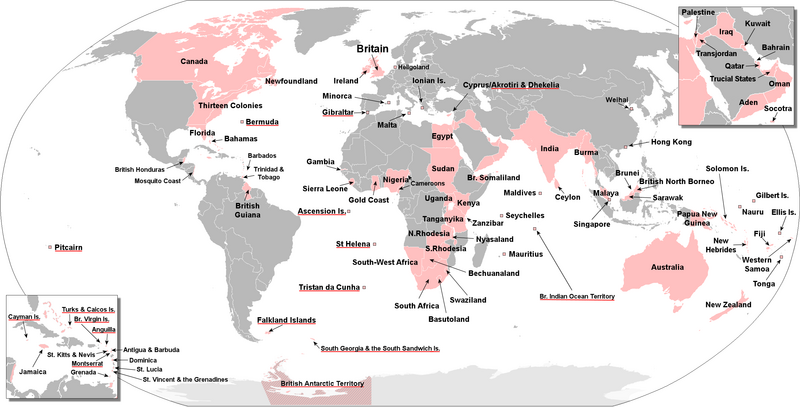
They should annex Australia and New Zealand, for their resources and simply because they are essentially the same ethnicity. Just as China lays claim to Taiwan, it makes no sense for the Anglosphere to be split into separate countries any longer, given our vastly advanced communications and transportation.

On the same principle, the US should form a union with Britain and Ireland. Together again at last. This gives them their forward base for Europe. I think Ireland would be game to come in so long as the US was the dominant partner, and not the UK. This would at the same time solve the problem of Irish reunification and the Northern Irish border. Win-win-win.

They should also annex Malta—they wanted to join the UK decades ago, and they are a strategic point in the Mediterranean. 

The invitation should be extended to the Philippines. Everyone there speaks English to some extent, they are Christian, and they generally embrace American values. Granted, they would be an economic burden, at least at first, but if America needs more population, the Philippines are an ideal source. And they are a great forward base for dealing with troubles in East Asia.

Serious consideration might be given as well to inviting Denmark—another strategic point, at the entrance to the Baltic Sea. 

I realize, of course, that most Canadians would say I am speaking treason. I say the charge is silly.


Thursday, November 27, 2025

Canada and the USA: A Quick Comparison


An American friend sends a clip suggesting that Canadian government corruption is verging on Third World levels.

Sadly, this is not news. It occurs to me that this is a recurring theme in Canadian politics. Canadian governments almost always fall due to corruption. Whoever is the opposition vows to come in and clean things up. Ten years on or so, they too are thrown out for corruption. 

This goes back not just to our first government, under Sir John A. Macdonald, which fell over the Canadian Pacific scandal. It really goes back further, to the days of the Family Compact and the Chateau Clique. These operated as a kind of oligarchy, monopolizing government positions and government largesse: cronyism. Despite “responsible government,” this seems cemented in by long tradition as the Canadian way. People speak these das of the “Laurentian elite.” You see the same attitude percolate through Canadian voluntary associations, which seem invariably cliquish. In government, it is seen in the many subsidies given out to industry under the guise of “regional economic expansion”; the bribes to First Nations, Quebec, feminists, multicultural groups. The untendered contracts. More recently the subsidization of preferred news media.

American politics does not seem to be like this. There have been scandals, certainly, but not such generalized corruption, and never taken for granted as standard operating procedure the way it seems to be in Canada.

This may be partly because in the US there is a better system of checks and balances. A rogue executive can be called out by the legislative, and either by the judiciary, and vice versa.

In Canada, the legislature is controlled by the executive; and the executive gets to nominate the judges. 

But American media also traditionally delight in muckraking; and individual Americans rarely have a good word to say about Washington.

 Under this, and causing this, is a different attitude to government. Canadians are spontaneously deferential to authority, and trust their leaders. Americans are spontaneously suspicious of leaders. And this traces back to our different histories: America formed by rebelling against established authority. Canade was formed by those who insisted on deference to it.

Both attitudes have their advantages. Canada is more orderly; there is more peace in the streets. The greasy wheels turn more smoothly. America is more prosperous and innovative; and there is more freedom. I have lived in both countries. In America, there is freedom in the very air. 

Canada is innately conservative. The US is innately liberal. In the proper meanings of those words.


Wednesday, January 01, 2025

Further Thoughts on the 51st State Thing


I have been looking through a picture book inherited from my uncle, on the Irish influence on the American culture.

Reading it, it becomes obvious to me that the American Irish culture is also my culture. I remember reading the “Bringing Up Father” Sunday strip at my grandparents’ house. Only now do I realize that I unconsciously identified Jiggs and Maggie with my grandfather and grandmother. And yes, corned beef and cabbage was a favourite meal growing up. Grandma would sing us to sleep to “Sidewalks of New York.” 

We never did think of ourselves as different. At least not we Irish. We were just Irish who happened to have settled north instead of south of the border. Was it because of some deep loyalty to Britain or the crown? Hardly. It was originally, surely, just from hardscrabble necessity. We all did what we could and made what we could of the chances we had in the places we landed. From our perspective, the border between us was arbitrary. We were one people. Cousin Fergus was doing very well in the States.

Given that Canada and the US have generally accepted immigrants from the same places, is this not probably true of all other ethnic groups? Do Canadian Jews consider themselves a different culture than American Jews? Canadian Italians than American Italians? 

I have a warm attachment to American culture. It is my culture, as it is the culture in which I grew up. Watching Roy Rogers and dreaming of being a cowboy. Reading the adventures of Tom Swift. Watching anything from Disney. Playing baseball into the dusk—did you know that the first baseball game was played in Ontario? We loved anything from England too, but it always came to us as something admired, but exotic. Admired, perhaps, largely for being exotic. We were Americans, and perhaps lower class because of it.

I cannot see a problem with Canada joining the US. Canadian independence has always felt a little forced, like adolescent rebellion. It might be like growing up.


Monday, January 22, 2024

A Tale of Two Democracies


History is destiny

The fundamental difference between the American and Canadian character can be summed up in this way: both are classless societies, breaking from Europe and the Old World with their ideas of privilege by birth. But this means different things in the two places. In America, everyone is upper class. In Canada, everyone is lower class.

This is an artefact of the two countries’ histories. 

America overthrew their king. So now, every man is king. Canada did not, but banned any aristocracy locally: so their king and ruling class always lived abroad. Everyone in Canada is a peasant.

This explains why Americans are, by comparison, more boisterous and difficult to herd; Canadians instinctively deferential to authority. They know their place. Americans, being royals, look down on most foreigners as mere commoners. Canadians look up to anyone or anything coming from abroad, and move to London or Los Angeles to “make it.”


Sunday, December 03, 2023

On Responsible Henhouse Management


Why is the government of Canada, the USA, and the Catholic Church now so historically awful?

It is simple. We have the foxes in charge of the henhouse. 

Trudeau dislikes Canada; he says there is no Canadian mainstream. It’s all just a romper room to him. Not admirable, like China.

Biden and his backers consider “Make America Great Again” an objectionable sentiment. They’re explicitly not on the side of America.

And would anyone who loves Catholicism and its traditions want to prohibit its central ritual for centuries, the Latin mass? A recent commentator insists that the modernists are well-intentioned, and think they are saving the church. I do not believe it. You do not increase your appeal by denying some option.

Of course these people are going to do what they can to trash the place while they have the chance. 

One might ask, would a moral person seek and accept a position running an institution they despise? Isn’t this deceitful? 

But we needn’t assume these are moral people. It would still be a good career move.

We can’t do much about Francis, but as voters, it was also unwise to put someone who condemns “populism” in charge of a democracy.

I hope there is still enough love for Canada, for America, and for God Incarnate, among ordinary people, those of the Beatitudes, that we can outlast this, outvote this, and salvage it all.


Thursday, November 09, 2023

Monday, August 14, 2023

On Having Enemies


He had many enemies himself.

Xerxes the left-wing columnist asks, in his latest effort, “Why, oh why, does America always seem to need an enemy?”

This reminds me of an Analect of Confucius. Asked about the appointment of officials, Confucius said,

“If a man has no friends, it is necessary to make inquiries.
If a man has no enemies, it is necessary to make inquiries.”

If America did not always have some enemies, this would be prima facie evidence that it was a bad actor.

All conspicously moral people have enemies. Indeed, anyone who does anything conspicuous will have enemies, merely due to envy. Churchill, Martin Luther King, Gandhi, Lincoln—highly controversial and often hated, in their day. Some might recall that Jesus was crucified.

Pursuing his theme, Xerxes laments that the US attacks “Even though most of those enemies had neither the desire nor the ability to invade -- let alone conquer -- the United States of America.”

That is a non sequitur. Self-defense is not the only just grounds for war. You could make this same accusation against the police—constantly harassing people who have done them no harm. Or of anyone who, say, energetically opposed slavery in the US South, given that they were not themselves enslaved. Or objected to Hitler killing Jews, if not themselves Jewish.

They came for the Jews, and I did nothing.
For I was not a Jew.

Not to claim that the USA is always moral or in the right in its foreign engagements. But engagements must be considered one by one. It seems to me a stretch to suggest the US was in the wrong fighting Japan or Germany in WWII.

A discussion of Trump in his comments section is oddly related.

Quoted respondents denounce Trump as a liar, a reprobate, a conspirator, a grifter, a buffoon. Yet none give an example of anything Trump has ever done, or even said, to justify these epithets.

It cannot be that these writers are simply trapped in news silos, unaware of the need to justify their claims to others. They have to know that large numbers of people voted for Trump; they often mention this, lamenting the fact. 

So why do they feel no need to justify their own claims?

The most likely explanation is that they see people who disagree with them as not worth talking to, not worth persuading, their opinions not worth considering. “Deplorables.” Subhuman, with no right to opinions; or they see themselves as superhuman, with the right to pass judgement. 

This attitude is disturbing to anyone who has read Crime and Punishment; it is also the core argument to justify slavery, or the Nazi Holocaust.

They came for the Jews, and I did nothing.
For I was not a Jew.

The alternative explanation is that they know that their position is untenable—they simply assert, and go ad hominem, because they do not dare discuss it. We must assume, in this case, that the real reason they hate Trump is disreputable. We must guess what it is.

But let’s go to the bottom line. Apply Confucius’s principle to Trump. Trump has both fierce detractors and fierce supporters. 

This is actually the sign of a good man.


Thursday, June 08, 2023

How the US Can Save Canada


Given Justin Trudeau’s increasingly autocratic rule, and perhaps also subversion by China, Tucker Carlson recently suggested an American invasion. Don’t Americans owe it to Canadians to defend their freedom? And do they want another Cuba on their northern border?

Let us concede that Canada is going to hell in a handcart. Still, there is a simpler, safer, solution.

The US need only declare Canada in violation of human rights; then accept refugee claims from Canadians, give then green cards and a track to citizenship.

If Trudeau continues on his fast track to tyranny, it would then matter little; individual Canadians could vote with their feet. There is no way any Canadian government could close that vast border.

It would probably also benefit America. The world is facing depopulation; the developed world is responding by opening the doors to immigration. 

But which immigrants? From the American perspective, Canadians are ideal: they are culturally identical. They are already Americans in all but passport.

And the brain drain would probably force the Canadian government to be more respectful towards its citizens. Problem solved, not a shot fired.

Perhaps more generally, depopulation will force governments to pull back from their present growing totalitarianism. I have read that the depopulation after the Black Death had much to do with the end of serfdom; labour became more precious, and had to be wooed. 

Of course, there is the opposite theory, that labour is going to become less needed as automation increases. Yet this has never happened at any previous stage of improved technology. It has always been the opposite: more jobs, and a rise in demand for labour. Improved technology makes goods cheaper; the demand for them rises. Each individual can afford, and wants, more stuff.

As populations collapse, the countries that will grow in power and influence will be those most attractive to immigrants. Prosperity will depend on offering rights and freedoms.


Thursday, February 02, 2023

The Yanks Are Coming! Man the Barricades!


I don’t think it’s a joke, and I don’t think it’s alarming.

If Canada were taken over by a totalitarian regime, say a Nazi or a Communist regime, I would want America to invade. What is more important, Canadian independence, or the lives and rights of Canadians?

Surely any sane person will say, the lives and rights of Canadians. Anything more is ugly nationalism.

There is no particular reason why Canada and the US are separate countries. It is only an accident of history.


Thursday, July 14, 2022

Mr. Biden, Tear Down This Wall


JJ MacCullough is more or less suggesting that Canada be annexed by the USA.

It is not an unreasonable desire—especially given the current rapidly eroding state of freedom in Canada. We ordinary Canadians might soon welcome the sight of American soldiers in our streets.

There never has been a very strong argument for Canada being a separate country. There is little cultural difference between English Canada and the USA. So little that the average Canadian could chat with the average Midwesterner for some time without detecting they are from different countries. If attacked, Canada could not by itself defend its vast land area. We depend on American support for defense. Unification would cement it; remaining independent is freeloading. We may not be able to afford such freeloading much longer, with the rising power of China. And Canadians pay a premium in standard of living and career opportunities for not being fully part of the big US market.

The best argument against annexation is that the Americans don’t want us. Amalgamation with Canada would presumably mean ten more US States, each with two senators, and they would probably all be Democrats. That’s not going to fly with Republicans. For the same reason, Puerto Rico is not admitted to statehood, although they have voted for it. New states have usually joined in pairs, one likely to lean left, one likely to lean right.

And there is more positive reason for Canadian independence. It is a protection for our freedoms. If the government in one place goes bad, the border is near, and assimilation is easy. This was helpful to escaped slaves before the US Civil War; then to Jefferson Davis after it. It was helpful to young Americans during the Vietnam War. It was helpful to William Lyon Mackenzie and the Canadian patriotes after the failure of the rebellions of 1837, and to Riel after the Red River rebellion. We seem to need it now.

Perhaps the best of both worlds would be simply making crossing the border easier. How about mutual automatic right of residence for citizens of either country?

While a porous southern border might be a problem for the US, this open border is not going to cause a flood of either economic migrants or wards of the state. Levels of prosperity and government services are comparable in both countries.

Such a mutual automatic right of residence used to exist between Canada and the UK, and worked well. It currently exists between Australia and New Zealand.

It would be certain to make both countries more prosperous.


Thursday, July 07, 2022

The Invisible Empire


I understand that Russian popular propaganda is more often targeted against the British than against the Americans.

This might seem odd, since either militarily or economically, the Americans are stronger.

But Russia is run by the secret service, and long has been. I remember talking years ago with a well-educated Russian émigré who had Marxist sympathies, and probably once moved in high circles. He expressed with grudging admiration the opinion that nobody could touch the British civil service for efficient bureaucratic control.

I suspect the Russians think the British MI5 is worth more than all the American factories and armaments. And perhaps they are right.

I also suspect that the Russians believe that, for all the USA’s strength on paper, they can be managed. Largely due to their incompetence at intrigue. The Russians probably figure they can control key people. Notably including Hillary Clinton and Joe Biden. The evidence of this is more or less in plain sight, on Hunter Biden’s laptop, and in Hillary Clinton’s storage of all her government files on a private Ukrainian server. The claims from the very same people that Trump was a Russian asset, or that Tulsi Gabbard is, were classic examples of misdirection.

I suspect China is playing the same game. Why wouldn’t they? Biden just began selling off the US strategic oil reserve, at a time of growing international tensions—and sending some of it to China. It is hard to account for some of the things he does with mere incompetence. It looks like deliberate sabotage.

Other Western governments seem to be doing self-destructive things. Notably Canada’s. Might other politicians be owned?

We know the current elite is selfish, and look to their own interests instead of the general welfare. So why wouldn’t they?

Britain may be relatively immune for a variety of reasons. Long experience at espionage, for one. The remarkable ability of the English to conceal their true feelings, making them ideal spies. Global contacts thanks to the old empire. And a surviving tradition of personal honour and duty; the code of the old ruling class.


Sunday, May 03, 2020

The Art of War


Sun Tzu

It seems rather little noticed, in the midst of the general apocalypse, but Donald Trump declared a state of national emergency yesterday. Not because of the coronavirus; that was already a declared state of emergency. About a threat to the power grid.

He says foreign adversaries are creating and increasingly exploiting vulnerabilities.

The emergency order bans the importation of equipment from “adversary nations.”

Something is going on, and it does not sound good.

I argued in this space a few days ago that war between the US and China was improbable; both had more to lose than to gain.

But I was thinking of conventional war.

What seems to have happened, and become apparent suddenly, is the emergence of a new Cold War, between the US and China, in which China is seeking dominance by non-military means, but no other holds barred. By indirection.

It is strange that this is coming to a head at the same time as the coronavirus pandemic, if the coronavirus pandemic is not a part of this plan.

It is too much to think the Chinese deliberately let the virus loose In Wuhan; the virus is indiscriminate, and they would not start by killing their own people. But once it was loose, they seem to have behaved suspiciously: shutting down travel out of Wuhan except overseas, by air. There are signs they deliberately spread the virus to north Italy: one guy who was part of a Chinese government front organization was standing on street corners asking for hugs with the sign “I am not a virus.” They withheld and suppressed information to other governments, while buying up all the protective equipment they could on the world market. Now they are shipping out protective equipment, and test kits, that turn out to be defective. Is this incompetence, or design?

It may be, too, that the virus escaped from a government lab. And it may be that the lab was working on weaponizing viruses.

Meantime, things seem to be heating up in the South China Sea. This seems to have been initiated by China, sinking a Vietnamese fishing boat, then driving off a US Navy ship. They are trying, as they were inevitably going to sooner or later, to assert sovereignty over those sea lanes. Perhaps they hope the US will be too distracted by the virus to respond.

The rumours are spreading that, apart from electrical equipment, many things being imported from China have built-in vulnerabilities allowing Chinese spying and, potentially, control: 5G, Zoom for teleconferencing, HuaWei phones, and so forth.

A couple of weeks or so ago, Trump called out the navy to stop drug trafficking, suggesting there was a sudden surge in the middle of the pandemic. We have long been thinking the problem was Mexico, and I was thinking Venezuela. On that basis, the call made little sense: the border with Mexico was closed. And the navy was of no use at that border. But the ultimate source for most of these opioids is China. They must come across that ocean. Has China been deliberately flooding the Americas with these drugs, inspired by what opium did to disrupt and weaken Qing Dynasty society?

It is beginning to look, as well, as though China has been doing a lot of bribery around the world. The belt and road initiative has been buying governments, but that is above board. There is something else going on. The WHO is in their pocket. This does not seem to be adequately accounted for by the official funding: as Trump keeps saying, the US pays ten times the portion of their budget that China does. It looks as though people, government officials and others, are being bought individually. We are recently hearing of American academics having been bought. The absurdly pro-regime coverage recently from the CBC makes me suspect that Canadian journalists are being bought. Other evidence is how media outlets in the US and Canada swiftly fell in line behind the claim that it was racist to call COVID-19 the "Chinese virus." YouTuber JJ McCullough tells of being offered money by the Chinese government to spread their propaganda on his channel.

It belatedly occurs to me that this is exactly the Chinese way. No open conflict. Everything is done through “back doors.” One day you wake up, and someone new is calling the shots.

It’s war, Jim, but not war as we know it.


Sunday, December 08, 2013

Seeing the End of America's Threescore Years and Ten

This one lasted about 100 years on top.

In his 1985 state of the union address, Ronald Reagan said “We must stand by all our democratic allies. And we must not break faith with those who are risking their lives—on every continent, from Afghanistan to Nicaragua—to defy Soviet-supported aggression and secure rights which have been ours from birth.”

How dated does that sound, 28 years later?

Many are now saying the USA is in decline. And it is true. Not necessarily economically or culturally; but it has definitely declined on the world stage over the past few years, in terms of its diplomatic power.

This might seem surprising only twenty or twenty-five years after the US won the Cold War, “ending history” as we know it and establishing itself as the sole world hyperpower. Shouldn’t we now have total American world hegemony? Instead, almost at the instant of its greatest success, America is retreating everywhere.


The last days of the Berlin Wall.

But there should be no surprise at this. The dynamic here is inevitable; it is why we need never fear any kind of world hegemony or one world government. The whole idea is a will-o-the-wisp. It’s all swamp gas. For better or for worse, it can’t happen.

It takes a sense of clear and present danger to motivate any group of people to pay the price and bear the burden to arrive at great power. Otherwise, it just isn’t worth it; especially for a democracy. The game is never worth the candle. As a result, there is no way to move from a bipolar to a unipolar world. The instant all serious opposition is overcome is the instant any organization either drops its guard and stops taking care of business, or splits into warring factions.

Conversely, any nation or movement that suddenly lunges for world power will automatically arouse opposition substantial enough to make it unlikely to succeed—as it begins to appear to others as a clear and present danger. So any nation that openly seeks world power won’t get it; any nation that gets close to world dominance will be there because it does not want it.

In Reagan’s day, the Soviet Union still looked like a world-wide threat; an "evil empire," or empire of evil. His call for sacrifice made sense to the American people. Now, it does not. If there is a threat to the US from Al Qaeda, Al Qaeda is in the end just a handful of conspirators. An evil gang, not an empire. Moreover, the simpler way to avoid the threat seems to be to withdraw from the Middle East, rather than continue to fight. China’s rise may trouble some geopolitical thinkers, but it is a hard sell to the American public, so long as they derive obvious and immediate benefits from that rise, in cheap goods.

So in the natural course of things, the US will probably fall back now into isolationism. We will slip back from a unipolar world to a multipolar one, as before WWII, but with new players.