Playing the Indian Card

Showing posts with label War of 1812. Show all posts

Wednesday, July 22, 2015

1812 Boat Tours


A Danish gunboat of the period

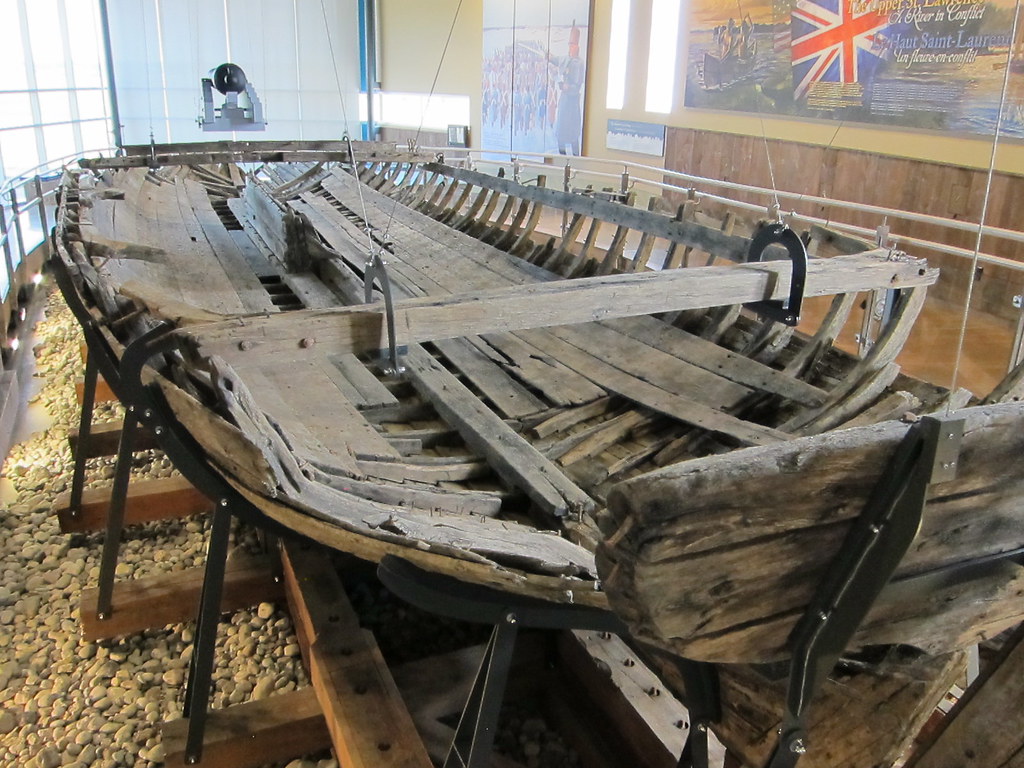
Some years ago, at Brown's Bay, Ontario, archaeologists salvaged what they believe to be the only surviving example of a British gunboat from the War of 1812. More recently, a new team went over the wreck with a fine tooth comb, and published a detailed description of the hull's structure.

I see a business opportunity for someone here.

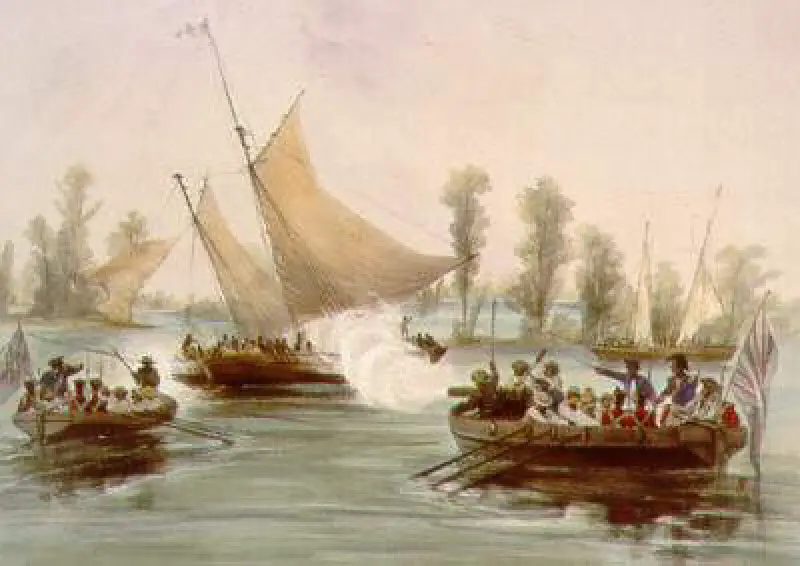
During the War of 1812, the Thousand Islands area was critical: it was along the only supply route between Upper and Lower Canada, and the many islands made it ideal for sneak attacks on shipping, for privateering and even piracy. As a result, Gananoque, “The Canadian Gateway to the Thousand Islands,” was then a station for these gunboats.

"Gunboat engagement in the Thousand Islands"

Today, the Thousand Islands make Gananoque a major tourism destination. And the single most popular draw, as verified by TripAdvisor, as if every resident did not know it, is the boat tours of the islands.

Now imagine an island tour in a reconstructed War of 1812 gunboat, complete with costumed guides and a cannon on the foredeck that fired mid-voyage.

Indeed, why stop there? Why not include a dramatic re-enactment of a skirmish with river pirates, American shore batteries, and/or an American gunboat of the period?

Brown's Bay wreck

Friday, November 07, 2014

The War of 1812 Memorial on Parliament Hill


War of 1812 Memorial, photo courtesy Ottawa Citizen. Left to right: Indian warrior, Canadian militiaman, Newfoundland Fencible, Canadian Voltigeur, Metis cannoneer.

I suppose all nations falsify their histories. It is just more embarrassing to see one's own country do it.

I refer to the new monument to the War of 1812 unveiled on Parliament Hill, “Trial through Diversity.”

The title is already a bad sign, isn't it? Diversity is a big current political value. Does it really apply to the War of 1812, or are we snuggling up together in a Procrustean Bed?

So in the present statue, unveiled to mark the 200th anniversary of the last shot on Canadian soil, we have seven semi-symbolic figures, supposed together to express the “diversity” so important for the defence of Canada in 1812. There are both significant omissions from and additions to the historical record here. Both smell bad.

Most notable is the absence of the British Army. As in, the main force involved. Granted, the Royal Navy is here, as it ought to be. And supposedly, the British Army is represented by the Royal Newfoundland Fencibles. The Royal Newfoundlanders, as a unit, are deserving of recognition; and one can see the political need to include the Atlantic Provinces in the display. But this was not a British formation; it was a locally-raised militia force. And its successor unit is a part of the Canadian, not the British, forces.

No doubt the Canadian government sees no political capital to be gained by honouring a foreign army. But this is ungracious, and, in the end, unnecessary. In fact, a huge proportion of the British soldiery who served in Canada in 1812 ended up staying and settling here, so that their descendants are indeed Canadians.

The second omission is the native contribution. Granted, there is a native figure included, but he is inaccurately posed. He is not shown with a weapon, but pointing the way—as if the native contribution was primarily the job of scouting. The faithful Indian sidekick, like Tonto and the Lone Ranger. This amounts to a radical devaluation in comparison to the reality, which is that native arms under Tecumseh, the Six Nations, and the Mohawks if the St. Lawrence were crucial to the entire affair. It is rather as if a British soldier were portrayed as unarmed and pointing the way for an American GI to commemorate the Second World War. Would that convey a true picture?

Now for the odd additions: the most egregious, and most political, is the woman bandaging the hand of a Voltigeur. Of course, to appease the feminist lobby, they had to work in a woman somehow. They figured they could not credibly pretend that women were fighting, so they threw in a nurse. There must have been nurses, right? Unfortunately for them, it being a long time before Florence Nightingale, there weren't. Each outfit was accompanied by a surgeon for the succor of the wounded; who was, of course, always male.

Then there is the odd anachronism of a Metis firing a cannon. Technically speaking, there must have been a reasonable number of “Metis,” that is, people of mixed European and Indian ancestry, fighting in the war. But they would not, at this period, have thought of themselves as Metis. That concept, and that distinct culture, emerged later, on the Prairies. At this time, they would have been considered, and would have seen themselves as, either French Canadian, English Canadian, or Mohawk, Wyandote, Ojibway. The “Metis” cannoneer has been thrown in for the sake of the historical illusion that Western Canada was somehow involved in the conflict.

To my mind, it demeans the heroes actually involved in the conflict to ignore some of their closest comrades, and then to make them share their honours with strangers who were not there.

Perhaps the larger problem is the idea of putting up statues to groups of people rather than to individuals. This, after all, is the sort of thing that characterizes totalitarian regimes, and perhaps there is a reason for that: lusty, smiling peasants raising their sickles in unison. It encourages groupthink, and represses ideas of individuality. That makes people easier to manage. Because the figures being portrayed are fictional to begin with, their characters and imaginary deeds can be manipulated freely by the powers that be to suit their present needs, and no real deeds or actual characters can be cited to serve as a check on their actions. It becomes so inconvenient, for example, to have someone point out that Martin Luther King was actually against racial preferences.
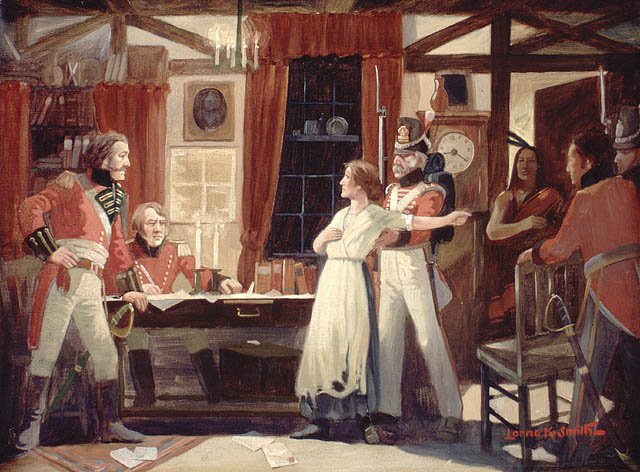
Secord warns FitzGibbon of the American advance at Beaver Dam.

If you really want to celebrate the female contribution to the War of 1812, you could, of course, put up a statue of Laura Secord. What is wrong with Laura Secord, but that her real life and real views might come in conflict with the needs of modern feminism? To celebrate the native contribution, why not a statue of Tecumseh? To celebrate the British regular, there was a chap named Sir Isaac Brock some of you may have heard about—not to mention sadly underappreciated but admirable working-class soldiers like James FitzGibbon. Unfortunately, FitzGibbon had the bad taste not to die young, so that he left many known opinions behind him.
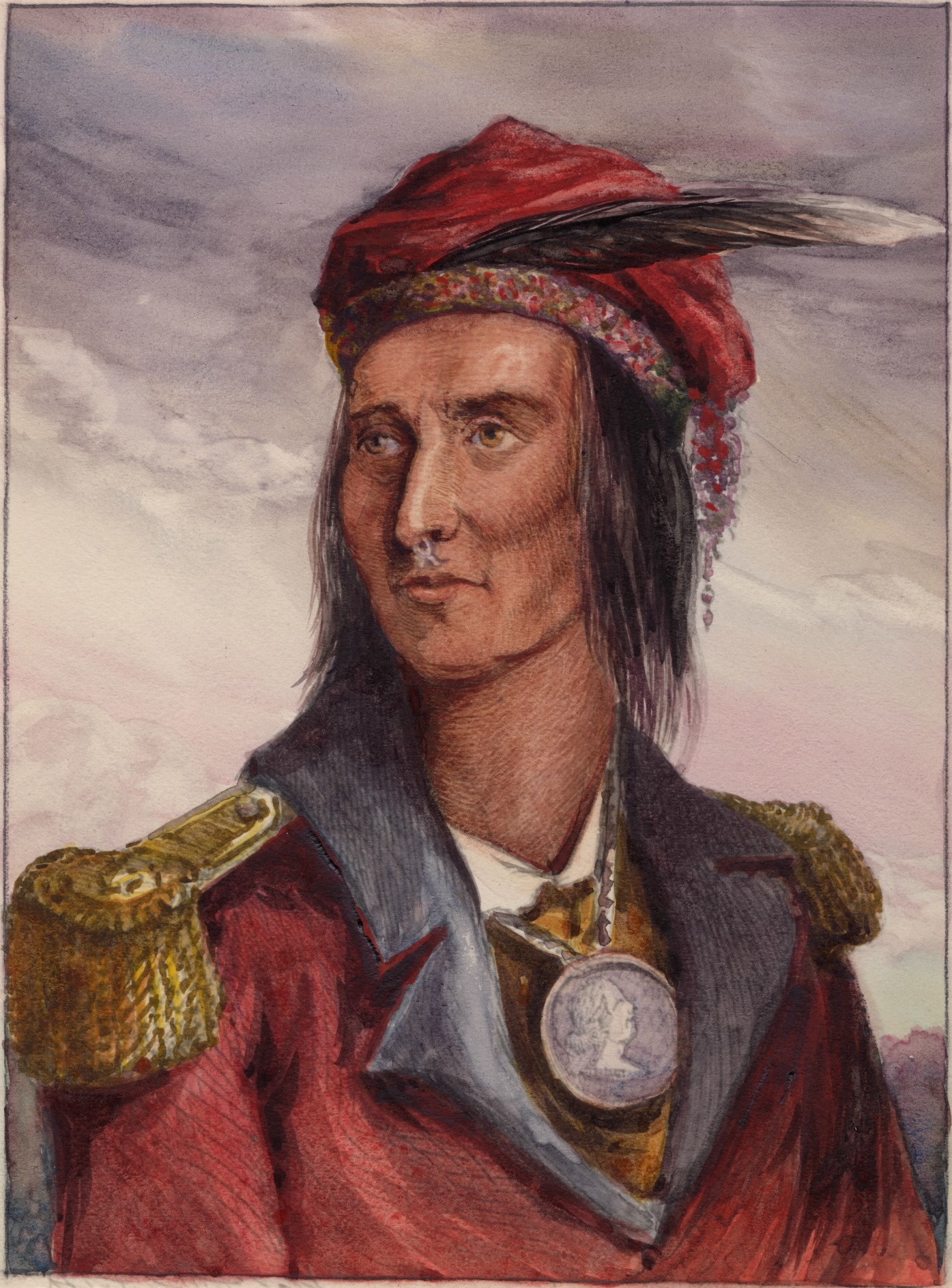
Tecumseh. More than just a handy index finger.
Real people, even when long dead, are so much more difficult than fictional cartoon corporate images to mold to current political ends.

Friday, October 21, 2011

The War of 1812


Coupland's "War of 1812," Toronto


I would have thought that commemorating the War of 1812 was a no-brainer. In fact, I have written in the past about my concern that it is not better commemorated. What future does any country have that will not celebrate its history?

It seems, however, that there is real resistance to the idea in Canada today. Senator Grant Mitchell has posted a strong dissent on the Liberal Senate website (http://www.liberalsenateforum.ca/blog/14326_rss).

His first and main complaint is that remembering history is “dragging us back into the past.” This is an interesting variant of the usual politician's doublespeak that they are “leading us into the future.” Easy for anyone to say, but perfectly meaningless—time being one-dimensional, it is impossible to lead anywhere else but into the future. Conversely, it is nonsensical to speak of “going back into the past.” Except in the sense that all knowledge is necessarily a reach into the past, that is, into memory. To be against going back into the past in this sense is simply to be against knowledge. Which may suit some agendas perfectly, of course...

Mitchell then gives his objections in point form:

  1. Given that the US is our friend, why would we want to remind them that they lost this war and that our forces set the White House on fire?
Burn, baby, burn!


First, let's clear up a common misconception. Canadian forces did not set the White House on fire. The British Navy did, and no Canadians were likely to have been involved. Time to put that old saw to rest.

But as to the larger point, that Canada should not alienate a present friend by celebrating a past dispute: on this advice, Britain had better pull up all those columns with Nelson standing at the top, and rename all those Wellington Streets. After all, France has long been a good friend and important trading partner. And France in turn had best can those D-Day celebrations; Germany is now their closest ally.

But of course, nobody worries about this. It is precisely because these nations are now friends and allies that such commemorations are not provocative. And it is the general course of history, and a good thing, that former enemies usually become friends later. This ought to be pointed out, and celebrated, not suppressed. If it is suppressed, moreover, just about all history is impossible.

  1. It bears no real relevance to the development of the Canadian nation.


    Tecumseh


This claim is a radical bit of historical revisionism. More commonly, it has been felt by historians that the War of 1812 was the true birth of Canada as a nation. In the words of Pierre Burton and the Canadian Encyclopedia, “Canada owes its present shape to negotiations that grew out of the peace, while the war itself - or the myths created by the war - gave Canadians their first sense of community and laid the foundation for their future nationhood. “ By showing they were prepared to fight, even against overwhelming odds, to preserve their independence from the US, Canadians showed their commitment to Canada. Anglophones, Francophones, and aboriginals saw a common cause and fought as one, shoulder to shoulder. If this all bears no relevance to the development of the Canadian nation, one must ask urgently, what does Senator Mitchell imagine the Canadian nation to be? Was it invented by Pierre Trudeau in 1982?

  1. It glorifies war when the war was not necessary or justifiable (to the extent that any war ever is).

Is pacifism ever justifiable? It glorifies moral cowardice. The greatest sin of all is to stand idly by and let evil triumph. God forbid that this should ever become the Canadian way, for it never has been.

As to the War of 1812 specifically, from the Canadian perspective, it was a perfect example of a just war. The US declared war on Britain; Britain did not declare war on the US. The US might or might not have had legitimate grievances against Britain that justified this aggression, but if so, these had nothing to do with Canada. The US invaded Canada; Canada did not invade the US. The Canadian strategy at the beginning of the war was purely defensive. If Canadians had refused to fight, the likely result would have been, quite simply, the end of Canada.

Senator Mitchell is saying, in sum, that the existence of Canada is not necessary or justifiable.

  1. If it means anything to anyone, it certainly does not have a national resonance of any kind, being pretty much irrelevant to the West.

The two-thousand-mile-wide battlefield (part)


Right. By that logic, the US similarly has no business commemorating its War of Independence, which involved, after all, only 13 of the present 50 states. We should also chuck out Canada Day and all this fuss about commemorating Confederation in 1867, since it involved only 4 provinces.

Nice to see the Liberals finally acknowledging that Canada has a West, and that America is our ally, though. This could be a breakthrough.