Playing the Indian Card

Showing posts with label Yeats. Show all posts

Sunday, December 11, 2022

Childhood Memories


Wise words from W.B. Yeats:

We should not make light of the troubles of children. They are worse than ours, because we can see the end of our trouble and they can never see any end.

Of his own childhood:

I know that I am very unhappy and have often said to myself, “when you grow up, never talk as grown-up people do of the happiness of childhood.” I may have already had the night of misery when, having prayed for several days that I might die, I had begun to be afraid that I was dying and prayed that I might live.


Tuesday, November 16, 2021

No Rudder, No Compass, Troubled Seas


WB Yeats, in Nineteen-Nineteen, saw the ordered, mannered Victorian world he knew in collapse, and mankind revealed by the First World War as no more than weasels fighting in a hole.

I get the same sense in 2021. The long moral decline continues, even as we improve our situation materially.

We used to be able to trust the Church as a counterweight to secular excesses, and a moral compass. It seems no longer—Francis acts like a politician with little interest in spiritual matters, presiding over a hierarchy preoccupied with covering up its scandals.

We used to look to the press, the “Fourth Estate,” to rake the muck and hold the high and mighty to account. No longer; the media are now an arm of government. All journalistic ethics have in recent years been abandoned.

We used to assume a neutral and professional civil service. Recent revelations in the US about the “deep state” and the Russia dossier make that now seem naive.

We used to think of the military as a place where ideals of chivalry persisted. No longer: the Canadian military is riddled with scandal, and the American military seems, on the evidence of General Milley, to have gone political.

Artists used to be a prophetic voice, speaking out when the secular powers had gone astray: George Orwell, Sinclair Lewis, William Golding. No longer: all artists can be assumed to be on the partisan left.

Every institution and quarter has been subverted.

I think this comes because we have stopped taking morality seriously. We have called it “conventional morality,” and abandoned it.

Nice chickens. Nice roost.


Monday, February 24, 2020

Come Gather Round Me, Carmelites


St. John of the Cross
Come gather round me, Carmelites,
And praise our chosen man;
Stand upright on your legs awhile
Stand upright while you can.
For soon we go where he has gone,
His bones are underground;
Come sling those holy rosaries
And let the chant resound.

And here’s a cogent reason,
And I have many more
He shunned all use of footwear
Preferring to be poor
Whatever light a dark night’s got
He brought it all to be
And here’s the happy reason:
That St. John saw no “me.”

Spanish Johnnie was a poet;
And one of such a kind
Each Spanish man that sings a song
Keeps St. John in his mind.
Yet Johnnie was a humble man,
Who fought the devil down,
And a humble man's a mighty man,
So pass the wine cup round. 
The Prior and his party
A tragic story made,
This martyr throw in prison
And twice-fortnightly flayed;
But poems that live longest
Are written in distress,
And St. John wrote his Canticle
And St. John passed his test.
-- Stephen K. Roney (after W.B. Yeats).

Monday, December 16, 2019

At All Times in the Mind's Eye


Now as at all times I can see in the mind's eye,
In their stiff, painted clothes, the pale unsatisfied ones
Appear and disappear in the blue depths of the sky
With all their ancient faces like rain-beaten stones,
And all their helms of silver hovering side by side,
And all their eyes still fixed, hoping to find once more,
Being by Calvary's turbulence unsatisfied,
The uncontrollable mystery on the bestial floor.
--W.B. Yeats

Friday, May 08, 2015

The Second Coming


The two beasts of the apocalypse.
Turning and turning in the widening gyre
The falcon cannot hear the falconer;
Things fall apart; the centre cannot hold;
Mere anarchy is loosed upon the world,
The blood-dimmed tide is loosed, and everywhere
The ceremony of innocence is drowned;
The best lack all conviction, while the worst
Are full of passionate intensity.
Surely some revelation is at hand;
Surely the Second Coming is at hand.
The Second Coming! Hardly are those words out
When a vast image out of Spiritus Mundi
Troubles my sight: somewhere in sands of the desert
A shape with lion body and the head of a man,
A gaze blank and pitiless as the sun,
Is moving its slow thighs, while all about it
Reel shadows of the indignant desert birds.
The darkness drops again; but now I know
That twenty centuries of stony sleep
Were vexed to nightmare by a rocking cradle,
And what rough beast, its hour come round at last,
Slouches towards Bethlehem to be born?

For my punts, Yeats’ The Second Coming is one of the finest poems in the English language. It is of historical importance, too. It was written in 1919, just after the First World War and the Russian Revolution, at the moment European civilization seemed to stagger and fall, leaving only the steampunks behind; the day Western Civ ended. It may offer us clues as to why.

The more so as it presents itself as a prophesy. The best artists are inspired, and inspired by the same spirit that inspired the prophets: the Holy Spirit.

The poem is usually supposed to express Yeats’ elaborate gnostic theory of civilizational gyres, in which everything eventually flips into its opposite, in 2,000-year cycles. An early New Ager, he supposedly was speaking of the Dawning of the Age of Aquarius.

Durer's Apocalypse.

Maybe.

I believe this interpretation is unnecessary. After all, a good poet and a good poem will not rely on an esoteric theory known only to a few; it must resonate with many, if not everyone, or it will not work as poem. Yeats was no tyro in this regard. Further, Yeats himself always declined to say that he believed in the theory of the gyres. He said it only gave him “metaphors for poetry.” He self-identified to the end as an Irish Protestant, and Protestant means Protestant Christian. If he toyed with esoteric symbols, why, so did Freemasonry, so did the Orange Order, without regarding themselves as anything other than Protestant. And, if he had really been a pagan, would he not have heralded the dawning of the Age of Aquarius with a little more enthusiasm than is shown?

Moreover, Yeats himself says that this poem is not planned by him to express any definite meaning, but is a spontaneous vision. I take him at his word. This may well be a truth God wishes us to know.

Note that the poem makes perfect sense in orthodox Christian terms. The Book of Revelations itself predicts a rough beast, appearing before the Second Coming of Christ. There will first be a Great Apostasy, and terrible turmoil. And a beast will appear from the wilderness.

Paul says the same in 1st Thessalonians:

For that day will not come, unless the rebellion comes first, and the man of lawlessness[b] is revealed, the son of destruction,[c] 4 who opposes and exalts himself against every so-called god or object of worship, so that he takes his seat in the temple of God, proclaiming himself to be God. ... 9 The coming of the lawless one is by the activity of Satan with all power and false signs and wonders, 10 and with all wicked deception for those who are perishing, because they refused to love the truth and so be saved. 11 Therefore God sends them a strong delusion, so that they may believe what is false, 12 in order that all may be condemned who did not believe the truth but had pleasure in unrighteousness.

To Paul, the primary significance of the anti-Christ is apparently lawlessness, a rebellion against the Divine will. So too for Yeats. The first lines of the poem indeed speaks of “gyres”:

Turning and turning in the widening gyre
The falcon cannot hear the falconer;
Things fall apart; the centre cannot hold;
Mere anarchy is loosed upon the world,

But no background theory of history is necessary. This can be seen quite simply as a mandala, universal symbol of cosmic order, coming apart. A bird is a classic symbol of the soul, as in the case of the Holy Ghost. The centre of the mandala is God. A diagnosis, then, of the civilizational problem: we have stopped listening to and obeying God, as a falcon the falconer. And we have stopped doing so in favour of our innate predatory animal instincts, as if birds of prey.


The blood-dimmed tide is loosed, and everywhere
The ceremony of innocence is drowned;
Quite likely a reference to the First World War. And what is the "ceremony of innocence" but baptism? At the Christian apocalypse, the seas and rivers will turn to blood, according to Revelations.

3 The second angel poured out his bowl on the sea, and it turned into blood like that of a dead person, and every living thing in the sea died.
4 The third angel poured out his bowl on the rivers and springs of water, and they became blood. – Revelations 16
Beast of the Apocalypse.

The best lack all conviction, while the worst
Are full of passionate intensity.
This again sounds like a Biblical reference. In Revelations 3, the church in Laodicea is told:

15 I know your deeds, that you are neither cold nor hot. I wish you were either one or the other! 16 So, because you are lukewarm—neither hot nor cold—I am about to spit you out of my mouth.
Egyptian sphinx at the Met.
Surely some revelation is at hand;
Surely the Second Coming is at hand.

The very expectation that such scenes of chaos predict the Second Coming is a Biblical one; and here is a direct reference to the Book of Revelations more or less by name..

The Second Coming! Hardly are those words out
When a vast image out of Spiritus Mundi
Troubles my sight: somewhere in sands of the desert
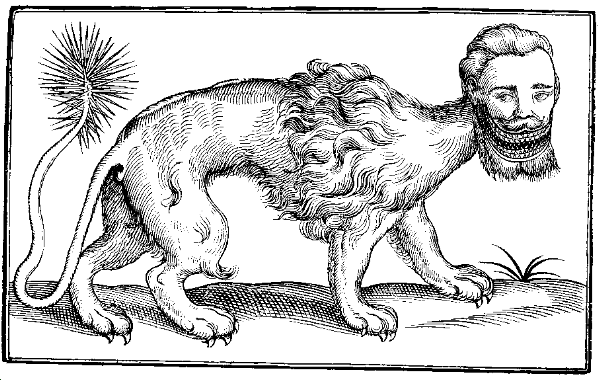
A shape with lion body and the head of a man,

“Spiritus Mundi” seems to be Yeats's own invented term. It is ambiguous: it might refer to something like Jung's “collective unconscious,” but it might as well refer to the Holy Spirit. As to the nature of the beast: its “vastness” suggests materialism: big thing; “things” are getting big. Space is getting big. The desert imagery echoes, or rather prefigures, TS Eliot's “Wasteland” as an image of the modern era. One might see it as a time stripped of all soul or spirit, hence of all living, growing things. All that is left is the purely material, which is in the end just barren sands.

The shape as described is obviously the Egyptian sphinx; implying paganism generally; the situation as it was before, or is without, Christianity. But this is also a sub-human image; an image of man as mostly beast. Like the image of the unleashed falcon, a return to a bestial life of pure predatory instinct. It is perhaps time to breathe the fateful name: Darwin. This is Darwin's universe, “red in tooth and claw.”

Note that Revelations already predicts such a beast appearing before the Second Coming proper; in fact, two:

Then I saw a second beast, coming out of the earth. ... 13 And it performed great signs, even causing fire to come down from heaven to the earth in full view of the people. 14 Because of the signs it was given power to perform on behalf of the first beast, it deceived the inhabitants of the earth. ... 16 It also forced all people, great and small, rich and poor, free and slave, to receive a mark on their right hands or on their foreheads,17 so that they could not buy or sell unless they had the mark, which is the name of the beast or the number of its name.

This is of course the notorious “mark of the beast,” 666. It is hard not to see this as a reference to overreaching by government. But that may be more the Bible's point than the point of Yeats's poem.


Beast of the Apocalypse.

A gaze blank and pitiless as the sun,
Is moving its slow thighs, while all about it
Reel shadows of the indignant desert birds.

The blank gaze seems to me especially important. I think under the influence of scientism, and the scientific imperative of “objectivity,” it has come to be seen as an unambiguous virtue to be unemotional on our approach to the world. In other words, it is “cool” to be “cool.”

It should not be. This is a direct rejection of the prime Christian commandment to love. What is left when emotion is stripped from our world view is pure predatory self interest. The Nazis saw pity as the gravest sin. There is no room for pity or love when it is all survival of the fittest.

The “slow thighs” of the beast surely suggest something sexual. This is a natural concomitant of the reduction of man and the world to a purely physical entity. When it is not about eating, it is about having sex.

The new mandala, the new cosmic order, of scientism, forms around the beast, as the “reeling shadows of the indignant desert birds.” But if birds are souls, here the bird-soul is alienated., from a centre that keeps moving.

The darkness drops again; but now I know
That twenty centuries of stony sleep
Were vexed to nightmare by a rocking cradle,
And what rough beast, its hour come round at last,
Slouches towards Bethlehem to be born?

Slouching towards Bethlehem need not suggest a new faith set to replace Christianity for the next twenty centuries, in keeping with the gyrational theory of history. Both Paul and Revelations speak of the beast or anti-Christ setting itself up as a false God and demanding worship. But this they say will not last.

More interesting is that image of a rocking cradle. Because it cannot refer specifically to the birth of Jesus the Christ twenty centuries ago.

First, and famously, Jesus had no cradle in which to rock. Secondly, that infancy ended a long time ago; how is the cradle still rocking.

No—instead of referring to the Christ child, Yeats is referring to children generally. If the Christian doctrine of love is replaced by a doctrine of bestial pleasure, the first and worst victims are sure to be, not the Jews of Europe, or the blacks of the southern US states, but children generally. The new cool bestial man will want sex free of the responsibility of childbirth and child care.

Yup.

Moloch is back in business.

Monday, January 13, 2014

Sailing to Byzantium


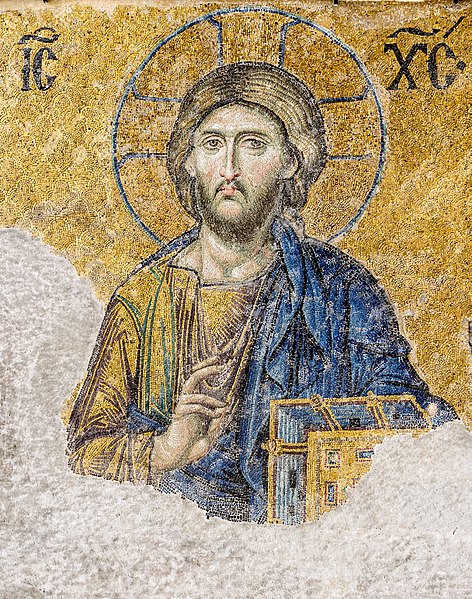
Christ Pantocrator, Hagia Sophia
That is no country for old men. The young
In one another's arms, birds in the trees
– Those dying generations – at their song,
The salmon‐falls, the mackerel‐crowded seas,
Fish, flesh, or fowl, commend all summer long
Whatever is begotten, born, and dies.
Caught in that sensual music all neglect
Monuments of unageing intellect.

An aged man is but a paltry thing,
A tattered coat upon a stick, unless
Soul clap its hands and sing, and louder sing
For every tatter in its mortal dress,
Nor is there singing school but studying
Monuments of its own magnificence;
And therefore I have sailed the seas and come
To the holy city of Byzantium.

O sages standing in God's holy fire
As in the gold mosaic of a wall,
Come from the holy fire, perne in a gyre,
And be the singing‐masters of my soul.
Consume my heart away; sick with desire
And fastened to a dying animal
It knows not what it is; and gather me
Into the artifice of eternity.

Once out of nature I shall never take
My bodily form from any natural thing,
But such a form as Grecian goldsmiths make
Of hammered gold and gold enamelling
To keep a drowsy Emperor awake;
Or set upon a golden bough to sing
To lords and ladies of Byzantium
Of what is past, or passing, or to come.
-- W.B. Yeats

Because we take all our formal education when young, the most important things in our cultural heritage never get properly studied. We learn by and large only what is important to young people; we do not learn what is important to the old.

Now that we are supposedly living longer, and have the institution of retirement, wouldn’t it make sense to create courses for the old in what is most valuable to them in the accumulated thought of the ages? After all, they now have the time to study and to reflect. Now is the time for the Humanities!

In fact, in many traditions—the Jewish, the Hindu—you are not supposed to look at the deeper philosophical questions until you are at least 40.

Monday, November 04, 2013

The Best English Poets


For my money, the best poet in the English language is W. B. Yeats. I think I have read all of his published poems, and most of his prose. He is not read or celebrated nearly as much as he should be because his politics and religion are so foreign to so many. But I think Yeats in the end made it pretty clear that he was a poet above all, and both his politics and his religion were simply what seemed useful at the time to his poetry. The great thing about Yeats is his versatility. He can do it elaborate or simple, romantic or hard-edged, traditional or experimental, and be the best each time.


The best living poet is Leonard Cohen. He might be the second-best of all time. Like Yeats, his politics and his religion seem rather arbitrary, although in this I think he has tended, unlike Yeats, to mature over time. Like Yeats, and unlike most poets, his writing has remained vital into old age. Poetry is more often a young man’s game. But in this, he and Yeats have had an advantage over most poets: a steady income that allowed them to pursue poetry even after they had family responsibilities. The most wonderful thing about Cohen is his minimalism. He can write a poem so simple it is flawless. This is a quality rarely seen since the very beginnings of English poetry.


William Blake has been very important to me, but not so much as a poet: as a thinker. For Yeats and Cohen, the poetry came first; for Blake, the philosophy came first, and the poetry had to bow to fit it. In this, Blake was right and Yeats and Cohen wrong, but the result is that his poetry is not as good, as poetry. Blake’s greatest contribution is his feeling for symbol.


T.S. Eliot is a towering figure. But he is, like Blake, greater as a thinker than as a poet. He had modernism cold before it even began: he invented it, then solved the problem it presented, before anyone else got to the starting gate. Like Blake, he was a great literary critic. His poems lack beauty in the classical sense, which in the end keep them from being the very best poems written. But there is a reason for this. For Eliot, truth came before beauty, and that is to his credit.


Samuel Taylor Coleridge has a numinous quality in his best writing that almost nobody else can match. His prose is also outstanding. The problem is that he wrote so little.


John Donne was the best before the Romantics. Quite breathtaking.

These guys form a club, a school, a tradition. Yeats is very largely responsible for Blake’s reputation today; he promoted him aggressively. Eliot is largely responsible for Donne’s current reputation. Cohen cites Yeats as, after Lorca, his strongest influence. Eliot declared Yeats the best poet who ever lived.

There are other very good poets, but this is the first string. No mean accomplishment to be here: of all man's creations, nothing is as difficult as language. It is almost coterminous with conscious thought itself. In language, writing is the most difficult skill. And in writing, the poem is the most difficult form.

Thursday, November 03, 2011

Oh, The Humanities!


I recently downloaded to my iPod an episode from TVO featuring an award-winning lecturer speaking on W.B. Yeats.

I'll grant that the talk was entertaining, but this guy did not know his stuff. Is this the best we get in university Humanities departments these days?

For example: he referred to Michael Collins as President of Ireland. He was Minister of Finance. He spoke of Padraic Pearse being strapped to a board because of injuries in order to be shot. Pearse survived the Easter Uprising without major injuries; the lecturer is probably thinking of John Connolly, who was tied to a chair. Then he claimed that the Byzantine Empire was destroyed by Crusaders; it was overthrown by the Turks in 1453.

Okay, so history is not his field—even history directly related to his field.

But he also asserted that Yeats' poem “Down by the Salley Gardens” was autobiographical, and referred to an island be used to enjoy visiting. Yeats himself pointed out that the poem was a reconstruction of an old Irish poem, “Ye Rambling Boys of Pleasure,” in which the “salley gardens” already appear.

The universities have somehow become isolated, stagnant pools of misinformation, rumour, and urban legend. Truth is more likely to be found on the Internet. I chalk this up to the free exchange of ideas and information.

Wednesday, November 02, 2011

The Second Coming


What rough beast?


I am interested in Yeats' “The Second Coming” currently as it illustrates my thesis that Western Civilization has never recovered from the First World War. It, along with Eliot's “The Wasteland,” is perhaps the great poetic statement of this in English—though there certainly are many others. “There Will Come Soft Rains” was also written in the year or two after the war ended.

I gather the usual interpretation of “The Second Coming” is that it speaks of Yeats' concept of “The Great Year,” with the idea that after two thousand years Christianity has had its day and is about to be replaced by some new paganism. Fair enough; but there is no need to read it this way. After all, it is no suprise to any Christian that the Second Coming of Christ would involve first the appearance of a “rough beast”--that much is in the Book of Revelations. There is to be a period of tribulation, and it is to last as long as a thousand years. All quite orthodox, in fact.

Durer's Apocalypse, with two rough beasts apparent.


I imagine the notion that the poem is non-Christian, indeed somewhat anti-Christian, comes from the identification of the “rocking cradle” that “vexed to nightmare” “twenty centuries of stony sleep” with the birth of Jesus. This would then imply that Christianity, if only over millennia, actually caused the blood-dimmed tide now unleashed by the rough beast of mere anarchy. But there are multiple problems with this identification.

First, the birth and infancy of Jesus is not, theologically speaking, as important as his death and resurrection. So the poem, if this is its focus, would have slightly misfired here. Second, it is common knowledge, and an essential element of the mythos, that Jesus was not born in a cradle, but in a manger. With Yeats' sensitivity to symbol, it seems incredible that he would have muddled this—to actually make the synecdoche of a cradle represent Jesus himself. This alone, I think, makes the identification impossible, and care has been taken to ensure that this is so.

But it also makes no sense in terms of cause and effect to see the cradle referred to as the cause of both the “twenty centuries of stony sleep” and the “vexing to nightmare.” These are two different and quite disparate things. If the twenty centuries of stony sleep refers to Christianity, the vexing to nightmare cannot.

Finally, Yeats himself elsewhere considers the height of civilization to have occurred in the Byzantine Empire—a resolutley Christian context, the paradigm of a time and place where Christianity ruled both the intellectual and the political world. If things started to go wrong, it must have happened sometime after 1000 AD.

The essential question in the poem, therefore, the climax to which it all points, is the puzzle: who is the baby in that rocking cradle?

Or, indeed, is there a baby in that rocking cradle? For only the cradle, not the baby, is mentioned, as if it were empty. Indeed, implicitly, it must be empty, in order to be filled by the “rough beast” slouching to Bethlehem “to be born.”

If one wracks the good old Spiritus Mundi for some obvious and necessary referet for this rocking cradle, it seems to me the first and strongest reference is to the best-known English lullaby: “Rock-a-Bye Baby.” This nursery rhyme also refers, in a way, to a cradle that is empty—at least, the baby and cradle both fall. This feature of the rhyme is quite odd, and so conspicuous—for centuries, people in English-speaking countries have in fact lulled their babies to sleep with a story of some poor child coming to disaster.
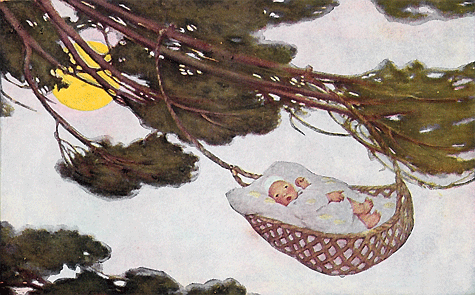
Bad parenting.


But then who is the baby in ths nursery rhyme?

There are a range of theories, and no agreed answer, but I thing the most valuable piece of evidence is the tune to which it is sung. It is a variant of an old Irish tune, as Yeats would surely have known, “Lilibullero.” And Lilibullero is a song about the Glorious Revolution of 1688, which overthrew James II of England and replaced him with King William of Orange, with historic consequences for both England and Ireland.

It seems reasonable then to guess that the words of “Rock-a-Bye Baby” also refer to the same event. And such coded references were indeed commonly necessary in such turbulent times, and commonly used in Ireland. There are a lot of historical examples of satiric rhymes used as political weapons in Ireland.

It seems to me the suspicion is reinforced by the perfect irony of using what was composed as a military march, a war song, as a baby's lullaby. This sounds like deliberate parody. It makes it all seem quite ominous.

Edmund Burke


If this is true, the tree in which the baby rocks is the tree of state, an image of the nation popularised by the Irish statesman Edmund Burke, and influential enough that it is still the logo of the British Conservative Party. The tree represents a society's natural hierarchy: at the top of the tree, “in the treetop,” is the royal family. This identification is in fact explicit in one version of a later verse of the lyrics of the nursery rhyme: “Rock-a-bye, baby, thy cradle is green, Father's a king, and mother's a queen...”
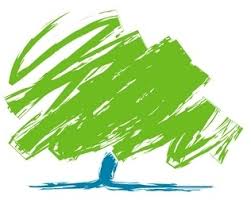
British Conservative Party logo.


The baby, therefore, is a new heir born to the royal family. And this is just what caused the Glorious Revolution in 1688. It was kicked off more or less immediately by the unexpected birth to King James II of a male heir, James Francis Edward. This caused great consternation in some quarters, because James II's wife was openly Catholic, and little James Francis was certain to be raised as a Catholic. The “wind” that blew this innocent child off the top of the tree of state, was then the famous “Protestant wind,” an unseasonably favourable wind that blew William of Orange's ships from Holland to England in 1688. This “Protestant wind,” a catch-phrase of the time, is referred to as well in one popular version of the lyrics to “Lillibulero.” Parliament cut a deal with William, naming him the new king in return for ceding a great deal of the royal prerogatives to Parliament, and James Francis Edward fled into exile.
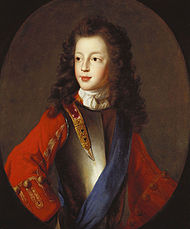
James Francis Edward Stuart


This would seem to make Protestantism and the Reformation the true cause of the rough beast of the Apocalypse. This may be so; Yeats was nominally Protestant, but was not practicing, and was surrounded by an overwhelmingly Catholic mileu. While considerations of class may have prevented him from converting, a portion of his subconscious, at least, might have favoured the old church. Nevertheless, the religious angle does not quite fit. The Glorious Revolution and the deposing of James II was not in this regard an epochal event in the history of the world, only of the British Isles. If the Protestant Rebellion was the trigger for the apocalype, it should have far more naturally been traced back to something like the nailing of Luther's theses to the door of Wurms Cathedral.

But something else about the Glorious Revolution was epochal. It effectively transferred British sovereignty from the king to the people; and this was a first for Europe and for the post-Byzantine world. Parliament, not the king, was now supreme, demonstrated by the ability of Parliament to depose a king. At the same time, the Glorious Revolution established the principle that the civil society was supreme over religion: the people could also depose a church, and dictate to the conscience of a king. This was both novel and revolutionary. The Glorious Revolution led in a straight line, and quite soon, to the political musings of Locke, and quite explicitly to the doctrine of “no taxation without representation” that triggered the later American Revolution, faounded on Lockean doctrine, which in turn triggered the French, which triggered the doctrine of Marx, the many revolutions of 1848, the ideal of nationalism, the Chinese Revolution beginning in 1911, the Russian Revolution of 1917, and the many revolutions, falls of monarchies, and general drowning in blood of all ceremonies of innocence following World War I, at the time that Yeats was writing this poem. Indeed, the doctrine of nationalism can also be blamed for the carnage of the Great War. Note that all the4se subsequent revolutions also shared the essential feature of believing that politics was and ought to be supreme over religion. This poison pill of “Liberalism” caused it to be oppsosed by the Church for many decades.

Widening gyres all beginning with the gentle rocking of one cradle.

The loss of the religious centre of a society, “the ceremonies of innocence,” is indeed a cause of social decline. It implies a fundamental failure of the social consensus which allows societies to function. This fact has been recognized almost everywhere and at all times. It was understood by the Romans to be the cause of the decline of the Roman Empire. Constantine then deliberately revived it for a further thousand years through the formal adoption of Christianity. It was the reason for the sudden rise of Islam in the seventh century. It was the reason for the decline of the Koryo dynasty in Korea; and on and on. A society must be united in its ideals.

Constantine, founder of Byzantium


The modern hope, which reached its apex in the nineteenth century, was that society could find a new centre around the doctrines of liberal democracy and science. New cathedrals were built, even higher than the early Christian ones: the Washington Monument, the Eiffel Tower. But this imagined centre has been losing mass rapidly since the First World War. The poets and artists saw it first, in the 1920s. The general population have taken a lot longer, busy destroying Christianity in the name of false science and a false liberalism for most of the years since, but are gradually coming, I think, to feel the same thing in their guts. Perhaps in another fifty or a hundred years, it will even occur to the academics, naturally the most conservative element of society.

The whole darned thing, Western Civ, looks like it is winding down to its final whimper.