Playing the Indian Card

Showing posts with label Liberals. Show all posts

Sunday, April 13, 2025

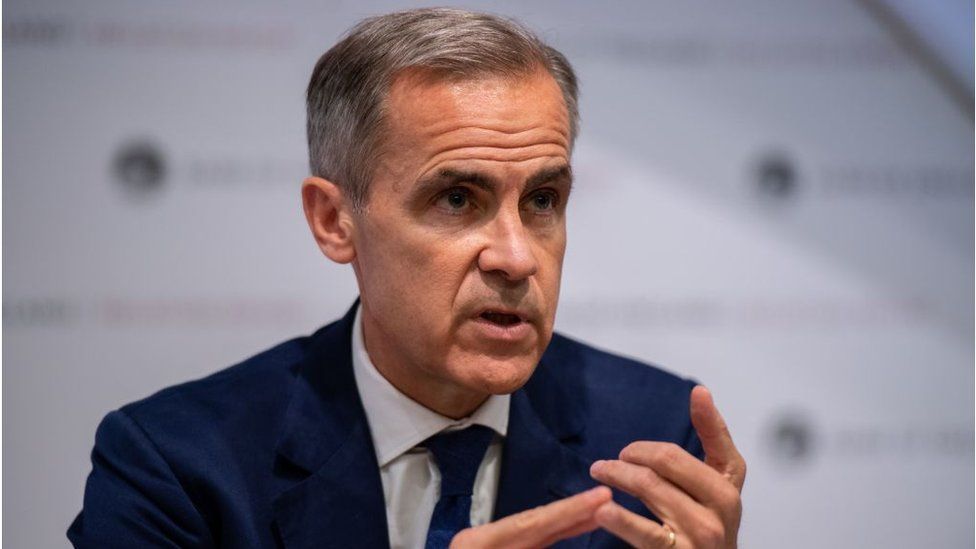
Reasons Not to Vote Carney


As a public service, here are a few reasons not to vote Carney and Liberal in the upcoming Canadian election:

Carney, like Trudeau, seems to be run by China. He seems to be cooperating with Beijing, naming candidates with known connections to the CCP; and refusing to remove candidates known to have such ties. We know the CCP is backing him on social media. His hostility to the US looks like China’s bidding. He looks, in short, like a Manchurian candidate.

We know there is foreign interference in our electoral process. We know there is foreign interference from China specifically. We must know what candidates are compromised. The Liberals have been doing whatever they can to suppress this information, and Carney seems even worse on this than Trudeau. 

In order to find out what is going on, and ensure the security and legitimacy of elections, we must get the Liberals out of power now so we can have an open investigation. 

We seem to be entering a new Cold War, between China and the United States. Carney seems to side with China against the USA. He has declared the US a “national security threat.” Do we really want to side with China in this global conflict? Leaving aside the obvious rights and wrongs of this, we are too vulnerable to attack from the US to contemplate turning on them. It would be fatally arrogant.

Carney has said he will impose even stricter censorship in Canada—making it more like China. “We announced a series of measures with respect to online harm… a sea of misogyny, anti-Semitism, hatred, conspiracy theories—the sort of pollution that's online that washes over our virtual borders from the United States. My government, if we are elected, will be taking action on those American giants who come across [our] border.” Under Trudeau, we have already largely lost freedom of speech, freedom of assembly, and a free press. Carney plans to push further down this road. He must admire China’s “basic dictatorship.”

Carney says he will not repeal the “no new pipelines” bill. He says he will not force a pipeline on Quebec. He and his cabinet want to hobble the oil and gas industry, with their “net zero carbon” program. He has made this a cornerstone of his personal philosophy, in his book “Values.” 

This, Alberta Premier Danielle Smith warns, will trigger a “national unity crisis.” Scott Moe in Saskatchewan is also threatening action. The mechanism to separate is available to them, established through the Quebec referenda. They can vote to leave, and if to their advantage to join the United States. Doing so, they avoid both tariffs and equalization payments. If Alberta merely pulls out of the Canada Pension Plan, they theoretically have the right to take half the fund with them. Canada may be split in two, and without Alberta shovelling cash eastward, much poorer. It is suicidally arrogant for voters in eastern Canada to ignore Alberta’s concerns and vote Carney.

Justin Trudeau, having declared the Emergency Act and frozen bank accounts without legal justification, needed to be so utterly rebuked no future government would ever again try such a thing. Unfortunately, Trudeau resigned without facing a vote. Therefore, we must rebuke his successor Carney, his party, and the cabinet and caucus who supported Trudeau in his actions. Under Carney they remain in power. For the sake of Canadian democracy, they must be thrown out. Every Liberal vote is an act of treason.

While both Carney and Poilievre are foolishly (or cynically) calling for a trade war against the US, this is suicide for Canada. But now that Trump has delayed most tariffs until after the election, in order to negotiate with a new government, Poilievre is at least better placed to negotiate that new trade deal. A new government can more easily reset the relationship and avoid responsibility for the belligerence of the past. It helps that Poilievre is broadly aligned politically with Danielle Smith and Doug Ford, the two premiers who have been most active and most flexible in talks with the Americans. It helps that Poilievre is, like the Republicans in power in the States, a conservative.  Ford, for all his initial bellicosity, has already proposed the obvious solution, reciprocal complete free trade and a shared defense perimeter.

Carney is the perfect globalist. He holds three passports. He has lived and held high government positions abroad. He has declared himself a European. He moved his businesses offshore. There is no reason to believe he holds any great allegiance to Canada. His allegiance is to the globalist elites and their agenda. This may not be in our interests. We need someone who will speak for us to international fora, not speak to us for international fora.

As a high-level investment banker at Brookfield and manager of investment funds, Carney has huge possible conflicts of interest. He is dodging questions about this. He seems even to have suspended his campaign or a few days to avoid questions about this. At a minimum, we must get a good look at the books, his tax returns, and his Cayman Islands and Bermuda addresses before we give him the PM chair for four years. 

He has, he says, put everything in a blind trust. But can he really remain blind to what, for example, Brookfield is invested in day by day? It’s probably in the papers. And in his memory. And, assuming he stays honest, what good is a Prime Minister who must recuse himself from most government decisions?

In modern times, democracies are gradually being taken over by the bureaucracy, the “Deep State,” the “blob.” This becomes an unaccountable ruling class. To forestall this, we must insist always on civilian oversight, on final power remaining always with out elected representatives.

Carney, unfortunately, is the personification of the bureaucratic mind. Voting in a bureaucrat to oversee bureaucrats is surrendering our democracy.

Over the past ten years, under Liberal stewardship, Canada’s GDP per capita has stagnated. Government debt has skyrocketed. The loonie is at a 50-year low against the dollar. We are slipping into the Third World. Carney was economic advisor during half of that time. We already know his policies are a disastrous failure. We must pull out of this nose dive.

Over the past ten years of Liberal leadership, mass migration and multiculturalism have badly damaged Canada’s social fabric, and produced shortages in housing and health care—essentials for life. At the same time, we are being warned that many low-skilled jobs will soon be obsolete due to automation, and a UBI may be needed. Meaning all these new immigrants are likely to be a growing burden to the taxpayer. 

Carney is committed to continuing these policies: mass migration and multiculturalism.

I discover that a Parliamentary committee has, with full support from both the Liberals and the NDP, called for withdrawing tax-exempt status from religious charities. This will further erode our social fabric, and withdraw the most effective support for the poor. 

Carney has been caught lying to the public repeatedly. He plagiarized his doctoral thesis. He has promised new laws that are already on the books. Would you buy a used car from this man?

Would you buy a used government?


Wednesday, February 26, 2025

Liberal Majority Incoming?


The latest Canadian polls show the Liberals leading, and perhaps on the road to a majority government. A spectacular turnaround over just a couple of months, reversing a historic Tory lead of 20 points. 

I for one, did not see this coming. I did not think replacing Justin Trudeau would do much for the Liberals.

But that was before Trump’s tariffs. This is a dramatic “rally round the flag” effect.

It is also due to a collapse of the NDP vote, and to some extent the Bloc vote, not the Conservative vote. It is the NDPers who are rallying to the Liberals.

As with the Kamala mirage last summer in the US, I don’t think this Liberal surge will last. It is based on hype of Mark Carney as the man on a white horse, to voters who do not yet know him.

His popularity is bound to deflate. The party brains have oversold him. Bad command of the narrative.

I have heard it said that, in court, the side that wins is the side that tells a better story. 

This is unnerving for anyone hoping for justice. But it is human nature. Most people live entirely in delusions.

And the same principle holds with the media and the news cycle. Reporters want to spin the best story; drama sells papers or clicks. The public will usually accept this and act accordingly.

The most exciting story for now is Carney and Carney’s rise— because the Conservative lead had been so large. But as soon as Carney is well-established, the obviously more interesting story will be Carney’s fall. Fads are like this—nobody can stand pink flamingos, because everybody bought them, and now they feel foolish.

We have seen this totter and possible fall already in an exaggerated reaction to his getting one word wrong in the French debate Monday evening. He said “avec” instead of “dans”!  “Carney disappoints!” “Carney cannot speak French!” “He is sure to lose to Blanchet and Poilievre in Quebec!”

We should expect more of this. Carney has a target on his back that looks like the CBC logo.

Add to this that Poilievre is a historically good campaigner. Carney, having spent his career as a bureaucrat, is bland and charisma-challenged. History tells us campaigns matter.

I’d put money down on Poilievre still. 


Sunday, June 30, 2024

The Carney Is in Town


Man temporarily dismounted from his white horse.

Yesterday, we wrote a little about the chaos among the Democrats in the U.S. over their leadership. A simultaneous crisis is underway among Canadian Liberals. They have just lost one of the three to five safest Liberal seats in the country, Toronto-St. Paul’s, in a byelection. Their polling is underwater somewhere in Hudson’s Bay. What can they do?

My own local MP, Wayne Long, has just openly called for Trudeau to step down. But the Canadian system is not like the British system. The party leader must sign the nomination papers for all local candidates. That makes him or her a dictator within the party: any sign of disloyalty means the local member is out at the next election. This is very unlike the way the Westminster system is supposed to run; properly, the party leader serves at the pleasure of his or her caucus. After all, the people vote for their local members, not the prime minister. This Westminster system allowed Britain to quickly replace Chamberlain with Churchill in the crisis at the beginning of the Second World War. It could instantly solve America’s problem with Joe Biden’s senility. Losing it also loses the entire point of having debates over legislation in the House of Commons; members cannot vote their conscience. They are just expensive trained seals. 

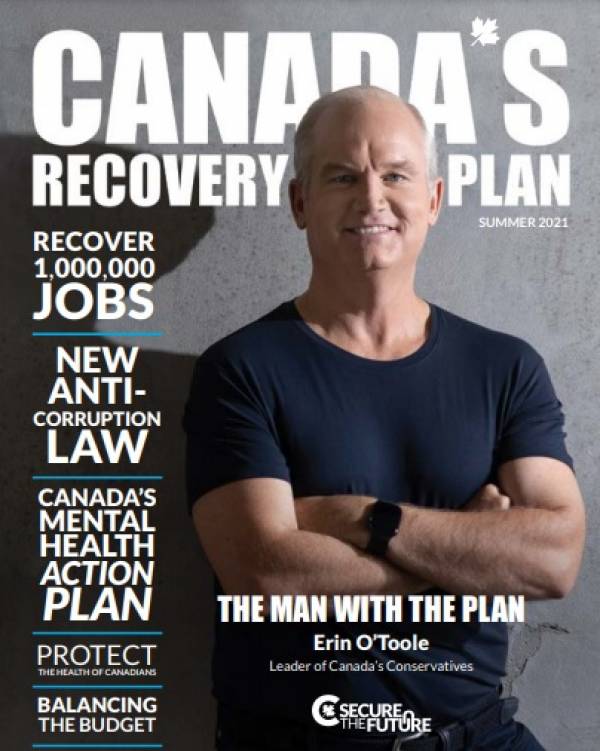
Something like the Westminster system has been revived in the Canadian Conservative Party, thanks to the efforts of Michael Chong. Without it, they would still be stuck with Erin O’Toole, instead of Pierre Poilievre, as leader,

As a result of this Liberal dictatorship, MP’s do not dare come out against the leader. Wayne Long was able to, because he is not running again in any case. And because he has an independent profile back home. Rumour has it that a majority of Liberal members actually want Trudeau to go. But they do not dare raise their hands. All they can do is vote against their own leader in a confidence vote—leading to an election in which they would be barred from running—or cross the floor and join another party.

Trudeau has no intention, it seems, of resigning. Rumour has it that he plans a cabinet shakeup to try to get the poll numbers back up. He wants to sacrifice his finance minister and deputy Prime Minister, Chrystia Freeland, scapegoating her for the taxes and rising cost of living that has queered Canadians on him. This is, interestingly, a tactic favoured by his reputed father, Fidel Castro: blame the economists for supposedly giving bad advice. Then Trudeau’s rumoured plan is to bring in Mark Carney as the new finance minister, as part of a wider cabinet shakeup. Freeland, after all, had no background in finance, business, or economics; she was a journalist. Carney has sterling credentials, literally--as in ponds sterling-- a banker and a former governor of both the Bank of Canada and Bank of England. He might calm the public and give the government credibility. Folks might believe better times were ahead, if they just stuck with the gummint.

Many have pointed out a problem with this plan. Carney has no seat in parliament. All the commentators I have heard or read seem to think this is a constitutional requirement for a cabinet appointment.

It is not. 

Senators can be appointed to cabinet. Justin Trudeau can appoint senators. Pierre Trudeau, wanting cabinet representation from the Prairie provinces, and lacking any M.P.’s, appointed Hazen Argue from the Senate as minister for the Canadian Wheat Board. Appointing from the House of Lords is fairly common in Britain; David Cameron is currently serving as foreign secretary from the House of Lords.

So Trudeau could simply appoint Carney to the Senate. Problem solved.

He does not even need to do that. There is precedent for appointing a member of the general public to the Cabinet, on the understanding that they will run for election within a reasonable time. Pierre Trudeau appointed Pierre Juneau to Cabinet from outside Parliament in 1975.

Since the next election is relatively close in any event, and there is no written law on the matter, only convention, Trudeau could appoint Carney to cabinet on Carney’s public promise to run in that election.

So the Carney plan could work. 

Would Carney want to do it?

Would it save the Liberals?

I think he wants it.

I don’t think it can save the Liberals.

But it may be their best shot. 

Sunday, January 29, 2023

The Secret of Trudeau's Succes


It is an embarrassment to Canada that Justin Trudeau is prime minister. And not just that—he was reelected twice, albeit with a historically low share of the vote. He is clearly not qualified for the job, his temperament is reckless and self-indulgent, and his government has been plagued by scandal throughout. Aside from our own suffering, it makes us all look like craven idiots on the world stage.

This has given Trudeau a reputation as a great campaigner. What else could explain it? But this great campaigning, such as it is, is nothing more than declaring any opposition, and the Tories, white supremacists, misogynists, homophobes, Islamophobes, and so forth. This is not great campaigning so much as Canadians being craven idiots he can play like a pipe organ.

I think much of the blame belongs to the Conservatives. They have failed in their role as Her (now His) Majesty’s Loyal Opposition.  I think Peter MacKay was right to say that, in 2019, Andrew Scheer failed to score on an open net. Trudeau should have been easy to take out. And, if this is so, it is at least as true that Erin O’Toole turned in a poor performance in 2021.

I think the problem, contrary to what many politicos claim, was that these two leaders tried too hard to run toward the centre. Scheer kept a big smile pasted on his face, which looked insincere. He could not give a straight answer on abortion. The voters, or a large segment of them, had reason to suspect a “hidden agenda.” He had beaten Bernier for the leadership in a backroom deal with the milk lobby; proving himself untrustworthy.

O’Toole also smiled relentlessly and openly criticized the former Conservative government. His slogan was “not your father’s Conservative Party.” It made the Conservative Party’s supposed misdeeds, and not Trudeau’s, the issue. It was like a public admission that the party is nefarious. And, since he had run for the leadership as a “true blue” Conservative, voters again had every reason not to trust him.  He showed himself a liar: was he lying to the party faithful then, or to the voters now? Who knows what he would do if in power.

People did not vote for Trudeau. They were voting against the Tories. They were parking their votes with the devil they knew. They were being asked to buy a pig in a poke, and this scared them.


Wednesday, August 03, 2022

A Fall Election?


A rumour is going round that there may be an election in the fall: called by the Liberals, not forced. Justin Trudeau almost seems to be campaigning this summer. 

This at first seems mad to me. Didn’t we have an indecisive election only a year ago, and wasn’t almost the biggest issue the frivolousness of calling an unnecessary election?

This fall we look likely to be suffering from rampant inflation, recession, supply problems, possibly a renewed pandemic, and, some warn, food shortages. Is this a good time for a government to call an election? People have been rioting against governments in Holland and Sri Lanka.

Nor can the Liberals claim, as they did last time, that their legislative program is being blocked. They have their informal coalition with the NDP.

It seems as though Trudeau may genuinely believe that his opposition is only a “fringe minority.” He anticipates Pierre Poilievre winning the Conservative leadership, thinks the general public will be appalled by his “far-right” ideas, and that he, Trudeau, can now grab a majority, freeing him from needing to cater to the NDP. The unrest among the unwashed can even be his issue: the need to put down this radical fringe of racists and misogynists and the supposed like.

This may be a measure of Liberal hubris. They may be out of touch with how ordinary Canadians feel. Or I am.

I’d put money on a big Liberal loss.


Wednesday, March 23, 2022

The Molotov-Ribbentrop--Er, Sorry, the Singh Trudeau--Pact


I was taken by surprise by the formal parliamentary alliance between the Liberals and the NDP. This sort of thing does not generally happen so long after an election. My first thought is that it looked like circling the wagons.

It seemed to make no sense particularly for the NDP. Minority partners almost always get crushed at the next election, because now they are unable to distinguish themselves from the larger alternative. So why vote for a sure loser?

Worse, the Liberals will have been in power for three cycles. By the nature of things, next election, Canadians will be tired of them and want a change. Not a great time to identify yourself with them: to lash yourself to a dying animal.

Andrew Coyne seems to have it figured out.

While up in the polls, the NDP is busted, financially. Maybe their traditional sources of revenue are drying up; maybe they’ve been overspending. But they cannot afford to fight an election in the near future. 

As a result, with the other parties mad as hell and hot for a fight, they are stuck supporting the Liberals anyway, to avoid a snap election. They recently had to support the imposition of the Emergency Act, a reversal of their historic position and an attack on their own traditional working class base. It is humiliating and makes them look sycophantic anyway.

The current agreement saves them from that happening repeatedly; if they have to support the Liberals, now they can claim to be getting something for it.

The Liberals for their part are down in the polls, probably realize they will go down further, and the other opposition parties are eager to vote them out. Probably their own caucus is restless. This gives Trudeau some protection against suddenly being thrown to the wolves. 

It is entirely likely, and probably in the NDP’s interest, that they break the pact before its natural expiry. That way, they can put some distance between themselves and an unpopular government in time for an election. The delicate dance for the Liberals is to do just exactly what the pact requires, so as not to give Singh any legitimate-sounding reason for going back on it.

The surest sign this was all done cynically, expecting to double-cross, is the way the two leaders, and especially Singh, keep stressing how the pact requires trust.

But this will be tricky; as soon as the NDP pulls out, an election will probably be forced. And the NDP is likely to get slaughtered along with the Liberals. This will be a change election, and most likely this leaves the Conservatives in majority territory.


Tuesday, August 24, 2021

Canadian Election Prediction


As a fourth wave of the coronavirus pandemic gained steam, on the day that Kabul fell, with two years left on their mandate, the Liberal government of Canada thought it was a good idea to call an election.

I cannot understand why the polls looked promising. This is a government that has careened from scandal to scandal, failure to failure. Their foreign policy has been disastrous; their spending has been profligate, even before the pandemic. The Governor-General who formally called the election was a recent replacement for a bad appointment. 

They expected to be rewarded for their management of the pandemic. But their management of the pandemic has actually been awful. They bungled the acquisition of vaccines. Canada has done well against the virus, but this is not their doing. The distribution of vaccines has been remarkably efficient: a provincial responsibility. The uptake has been fast: a credit to the Canadian public. In general, the feds have just imitated whatever the US government did in the crisis, meaning they have been spending recklessly. We will probably have an eviction and foreclosure crisis, and inflation to reckon with for some time to come. 

Perhaps the people have been paying attention. Contrary to everyone’s expectations, a week into the new campaign, the Conservatives are suddenly tied with the Libs in the polls.

The voters seem to be in the mood to punish the government for the unnecessary and cynical election. Against the backdrop of Afghanistan, there seem to be more important issues the government should be dealing with. 

Erin O’Toole and the Conservative campaign also seem to be performing so far above expectations. O’Toole has done an impressive job of improving his French. The Tory platform has come up with some novel ideas that sound forward-looking. People may want a clean broom and a fresh start after the dark days of the pandemic, just to emphasize the feeling that they are behind us. O’Toole seems to be projecting those vibes.

I dislike O’Toole’s lack of principles, running for the Conservative leadership as a “true blue” Tory, then swerving left. Having unprincipled leaders is never a good idea. But it might be good politics. It has often been said that the Liberals lose if they run to the right of the Tories. That equally means the Tories win if they run to the left of the Liberals. O’Toole seems to be trying to do this. 

Over the longer term, this is likely to shatter the right into warring factions. But over the shorter term, it might win O’Toole a term in government. Luckily for him, the further right is fatally splintered: there is the PPC, the Maverick Party, and now the True North Party. Bernier will not qualify for the leadership debates, so there will be no voice there to O’Toole’s right. 

In the meantime, running to the left as a Tory encourages the left to fragment. If the Conservatives look scary to the left, they unite behind the Liberals to keep the evil Tories out. If they look friendly, the NDP vote swells, at Liberal expense. 

The NDP’s Jagmeet Singh is personally rather popular. Yves-Francois Blanchet, leading the Bloc Quebecois, is also popular. The BQ pulls votes in Quebec mostly from the Liberals.

For now, the Conservatives have the momentum. Momentum feeds on itself. It can shift, but the Liberals, cynically, chose the shortest possible campaign, in hopes of freezing in their advantage. Now it tends to freeze in the Tory momentum.

Biden’s collapsing popularity in the US also hurts the Liberals. Nobody wants to admit it, but Canadian politics is largely monkey see, monkey do. Canadian leaders tend to be chosen in imitation of a recent popular American leader. Trudeau came in as a Canadian Obama; his father rose as a Canadian JFK. O’Toole was selected by his party because he looked faintly like Trump. Justin Trudeau got a second wind when Biden beat Trump. Now that Trump is looking better and Biden worse, the Canadian kid brother factor tilts in O’Toole’s favour.

I predict the Conservatives will get the most seats.


Saturday, July 27, 2019

Canada Sinks in the World


In a recent interview, Kevin O’Leary made a point I too have made in correspondence, a point that is oddly overlooked, or rather, perhaps, suppressed by the mainstream press: leaving aside any arguments over ideology, the Trudeau government has been spectacularly inept. Most obviously in foreign affairs.

From World War Two roughly until Chrystia Freeland took the portfolio, Canada has been almost universally liked. Despite never being a neutral country, everyone seemed to trust it/us as basically honest and disinterested, polite and not arrogant. So folks abroad tended to prefer Canadian products and Canadian expertise. There seem, for example, to be many more Canadian than American ESL instructors abroad, despite the difference in populations. Canadians came without the political baggage of Americans or Brits.

Yet after a couple of years on Freeland’s watch, Canada has unprecedentedly awful relations with Russia, China, India, Saudi Arabia, and even our biggest trading partner, the USA. Hardly insignificant enemies. It almost seems as though Canada no longer has any friends.

This seems to come from Liberal incompetence, virtue-signalling, and arrogance. Canada has been speaking loudly and carrying a tiny stick.

On the Huawei uproar, O’Leary suggests that Freeland was neatly suckered by Donald Trump. The US was fighting a trade war with China. The natural thing for China to do was to turn to Canada for many of the products they had been getting from the US. Big trade boon for Canada. Instead, Trudeau and Freeland promptly offended China so seriously that this was out of the question. It would have been an unacceptable loss of face to a pipsqueak country.

And then the unprecedented clown show since, of the Canadian government publicly feuding with their own ambassador.

O’Leary suggested how this could have been handled: advise the Chinese through diplomatic channels not to have Meng Wan Zhou’s plane land in Canada, but proceed directly on to Mexico. If necessary, some bogus excuse about bad weather or ospreys nesting on the tarmac could have been used.

Despite holding the bag for America on this one, Canada got nothing out of it. Freeland and Trudeau had also managed to trash our relationship with the US. They publicly insulted Trump in the middle of negotiations on a new NAFTA. Politically, he then had no option but to retaliate. As with China, the USA and Trump could not be seen to be pushed around by some penny-ante power.

The criticism of Saudi Arabia over human rights was meddling in the internal affairs of another country. To do that is deeply insulting to anyone; by the doctrine of human rights, it implies that the current government is illegitimate. Diplomacy consists in not saying such things, unless there is some strategic issue involved.

Or unless you want to pick a fight. The Saudi government again had little alternative but to massively retaliate, for the sake of their internal stability. A Saudi government that appeared to meekly accept scoldings from some Western infidel, grossly sinful “progressive” nation would not hold power long.

So too with India or Russia. Whether or not one agrees with the Trudeau government’s ethical case, what are Russia or India going to do but retaliate? If you want to swagger, you have to be ready to follow it up, at times, as needed, with dangerous and costly measures like sanctions and troop deployments. If you do not, you are doing nobody any good, and exposing innocent Canadians and Canadian business to harm. Aside from making the nation a laughingstock.

Now consider this: Freeland is supposed to be the cabinet's star. Everyone else is presumably worse.


Wednesday, February 24, 2016

The Liberal Deficit


When Justin Trudeau was running in the last election, I recall him making this argument: vote for me. I am levelling with you. Governments always run on a balanced budget, and then as soon as they get in office, they say that the books are far worse than they imagined, and they are not going to be able to keep their promise. Instead, I am giving it to you straight: we will deliberately run a manageable deficit.

Now he is in office, and golly, it turns out the books are far worse than the Liberals imagined. They are going to have to run a much bigger deficit than planned.

The Liberals are playing Canadians for suckers. So far it has worked very well for them, as it has for so many previous governments. In the meantime, they get to blame their profligacy on the previous government.

This ought to be remembered next time they go to the polls.When Justin Trudeau was running in the last election, I recall him making this argument: vote for me. I am levelling with you. Governments always run on a balanced budget, and then as soon as they get in office, they say that the books are far worse than they imagined, and they are not going to be able to keep their promise. Instead, I am giving it to you straight: we will deliberately run a manageable deficit.

Now he is in office, and golly, it turns out the books are far worse than the Liberals imagined. They are going to have to run a much bigger deficit than planned.

The Liberals are playing Canadians for suckers. So far it has worked very well for them, as it has for so many previous governments. In the meantime, they get to blame their profligacy on the previous government.

This ought to be remembered next time they go to the polls.


Wednesday, November 27, 2013

Reasons Canada is Not Ready for Self-Government #5: Justin Trudeau

Sieur Justin Trudeau


Although he was the scion of a wealthy Quebec family, and a well-known public intellectual in that province, in terms of federal electoral politics, Pierre Trudeau came pretty much out of nowhere in 1967, when he was appointed to Pearson’s cabinet, then elected Liberal leader the next year.

So what exactly, he was asked, were his political beliefs?

Trudeau claimed his ideology came from Plato’s Republic.

This seemed to please everyone; it dodged Marxism, and sounded impressively intellectual.

But what does that actually mean?

Plato’s republic was not a democracy. He called for an aristocracy in which leaders were trained from infancy for the role. He also held that there should be no private property, women and children should be held in common, and the lower classes should be kept ignorant and indeed lied to if this is in the interests of the state

Trudeau, in short, was an aristocrat, in all but title, and he was claiming his class privilege to rule.

Canadians thought this was great.

A generation later, the Liberal party has turned to Trudeau’s son to take up his mantle of leadership. Appropriately enough, Trudeau fils has no qualifications for the role whatsoever, except the traditional one of being to the manor born. As Liberal leader, he follows Bob Rae, who follows Michael Ignatieff, who follows Stephane Dion, who follows Paul Martin Jr. – all from well-established families, New World gentry. In Ignatieff’s case, Old World gentry as well. (Thomas Mulcair and Jack Layton are from the same mold, as was John Turner).

To be clear, there is nothing wrong with being an aristocrat. And there is nothing wrong with electing an aristocrat. Winston Churchill and FDR were both blue of blood, and they did well enough for their respective countries.

But in the usual order of things, for an aristocrat to successfully contest an election for the Commons, he is expected to renounce his hereditary privileges and publicly declare himself a democrat at heart.


Pierre Trudeau, Compte d'Outremont.

In Canada, there seems to be no such need. Trudeau pere never bothered to conceal his respect and affection for Fidel Castro. Trudeau fils has recently openly expressed his admiration for dictatorship as a more efficient form of government. He still rides high in the polls, and the Liberals just did very well in four byelections.

Canadians would apparently be happy if relieved of the burden of thinking for themselves. They’d rather be ruled without consultation by a self-appointed, hereditary elite.

And democracy is just not the kind of thing you can force on a people.

Wednesday, October 31, 2012

The Party of the Poor


Only a grocer's daughter...
A friend of mine, a fellow Canadian, backs Obama for the US presidency.

Interesting how Canadians, Brits, Bessarabians and Jordanians always have a favourite in US elections. Nothing could make clearer America’s status as “leader of the free world.”

Why does my friend like Obama? H answer is straightforward. He is well-educated and has a decent teaching job, but considers himself, on the whole, one of society’s “have-nots.” The Democrats he sees as the party of the poor; the Republicans are the party of the rich and of the big corporations.

If I believed this, I would also support the Democratic candidates, so long as competence and honesty were equal. I believe, however, that the Republicans are really the party of the poor, and the Democrats are the party of the upper class.

Formerly on welfare.
It is true, apparently, that those at higher income levels really do break Republican, while those with lower incomes break Democratic. This distinction is not that clear, however; it is more reliable to say that urbanites, rich or poor, break Democratic, while suburbanites and folks in the country, rich or poor, break Republican. And there are no good stats for income levels above $100,000—I suspect that once the income gets stratospheric, you would find a Democratic tilt. The Gates’s, the Buffets, the Soros’s, the Jobs’s seem to trend Democrat.

But look at where the Democratic leaders, or the Republican leaders, went to school. Here my case becomes, I think, clearer. While both parties tend to favour Ivy League, Dems are more consistent about it. This, where you went to school, far more clearly than annual income, indicates class. Ivy Leaguers will tend to be the second or third or fourth generation of wealth in their families. More importantly, they will all know each other, will have grown up together, will have belonged to the same fraternities and gone to the same parties. They will think alike. They will be conscious of themselves in class terms.

University of Saskatchewan, class of 1919.
Quick tally: Obama—Columbia, Harvard. Kerry—Yale. Gore—Harvard. Clinton—Oxford. Dukakis—Swarthmore, Harvard. Mondale—University of Minnesota. Fritz at least was a man of the people.

For the Republicans: Romney—Harvard. McCain—Naval Academy. Bush—Yale. Dole—Washburn University. Bush I—Yale. Reagan—Eureka College. Ford—Yale. Washburn University? Eureka College? Not exactly Ivy League. Definitely more diversity here.

Both parties, in sum, are dominated by an old-money ruling class, but the Democrats more so. If you did not come up through the right schools and the right connections, you have a far better chance of reaching the top among Republicans. This speaks to class consciousness.

Not incidentally, it is the same in Canadian politics. Quick tally of Liberal leaders: Bob Rae and Michael Ignatieff, as is well known, were actually roommates at U of T. Rae: U of T, Oxford. Ignatieff: U of T, Oxford, Harvard. Stephane Dion: Laval, Sciences Po. Paul Martin, U of T. Jean Chretien: Laval. John Turner: UBC, Oxford, Sorbonne. Anyone who did not know each other at Oxford, Laval, or U of T? We’re talking one degree of separation at most.

Conservative leaders: Stephen Harper: University of Calgary. Stockwell Day: no degree. Joe Clark: University of Alberta. Preston Manning: University of Alberta. Brian Mulroney: St. FX, Laval. Kim Campbell, UBC. Jean Charest: Sherbrooke. The most obvious difference between Conservative and Liberal here is East vs. West; but the Western schools are on the whole less well-established, and the Western establishment is often first-generation. And apart from that, we have a far greater spread. Sherbrooke? No degree?

Okay, how about the NDP? They’re the party of the working class, right? Thomas Mulcair: McGill. Jack Layton: McGill. Alexa McDonough: Queen’s, Dalhousie. Audrey McLaughlin: Guelph. Ed Broadbent: U of T. David Lewis: McGill, Oxford. Give them credit for Guelph. Everything else is Canadian Ivy League, with a special shout out to McGill. Could this be why their teams are called the Redmen?

Sure, the Liberals and the NDP want to look after the poor. The upper class has always wanted to look after the poor: part of their mandate and their justification is to look after the poor. In the Arabian Gulf, sheiks are obliged by custom to have a free water tap on the outside wall of their compound, so that the poor can always get fresh drinking water, a major issue in the Arabian desert. The English lord was socially obliged to see to the health of anyone ailing on his estates. And I do not want to be cynical about this; ruling classes are not altogether a bad thing.

But invite them to your parties? Go to school with them? Let them marry your daughter? Elect them to a leadership position? I shouldn’t think so.

And there is a fundamental problem with a ruling elite that claims it is not a ruling elite, but instead “the party of the poor.” This is dishonest, and suggests there may be other dark deeds afoot. A ruling class is only tolerable when it is bound by a strict sense of honour to work for the general good; this speaks of a lack of any such strict sense of honour, and so of a corrupt ruling class.

In the meantime, the choice for those who are poor or on the outside of society in some way is this: do they want to be “taken care of,” by the Liberals or the Democrats or the NDP? Or do they want to move up, no longer being poor, no longer being on the outside? Then you go with the Republicans or the Conservatives.