Playing the Indian Card

Showing posts with label Kipling. Show all posts

Monday, January 26, 2026

If ...

John Kipling


If you can keep your head when all about you   
    Are losing theirs and blaming it on you,   
If you can trust yourself when all men doubt you,
    But make allowance for their doubting too;   
If you can wait and not be tired by waiting,
    Or being lied about, don’t deal in lies,
Or being hated, don’t give way to hating,
    And yet don’t look too good, nor talk too wise:
If you can dream—and not make dreams your master;   
    If you can think—and not make thoughts your aim;   
If you can meet with Triumph and Disaster
    And treat those two impostors just the same;   
If you can bear to hear the truth you’ve spoken
    Twisted by knaves to make a trap for fools,
Or watch the things you gave your life to, broken,
    And stoop and build ’em up with worn-out tools:
If you can make one heap of all your winnings
    And risk it on one turn of pitch-and-toss,
And lose, and start again at your beginnings
    And never breathe a word about your loss;
If you can force your heart and nerve and sinew
    To serve your turn long after they are gone,   
And so hold on when there is nothing in you
    Except the Will which says to them: ‘Hold on!’
If you can talk with crowds and keep your virtue,   
    Or walk with Kings—nor lose the common touch,
If neither foes nor loving friends can hurt you,
    If all men count with you, but none too much;
If you can fill the unforgiving minute
    With sixty seconds’ worth of distance run,   
Yours is the Earth and everything that’s in it,   
    And—which is more—you’ll be a Man, my son!

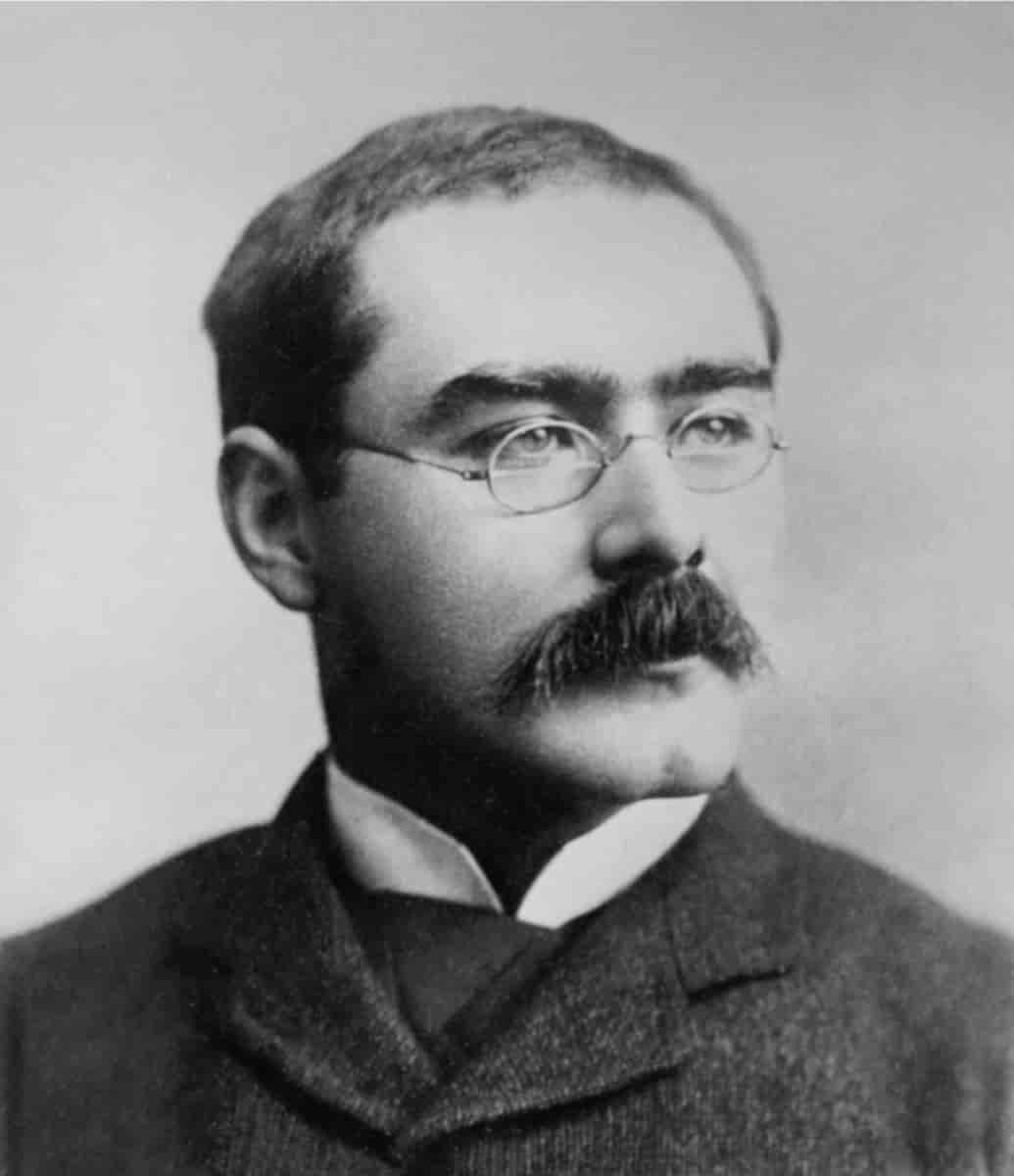
Some years ago, Rudyard Kipling’s poem “If” was voted the most popular poem in England. Muhammed Ali reputedly carried it with him wherever he went.

It is framed as a father’s advice to his son—as Kipling’s advice to his own son John.

It has always seemed to me, frankly, abusive. 

For example, right off, 

“If you can trust yourself when all men doubt you,
    But make allowance for their doubting too;”

Right—so you must trust yourself, yet doubt yourself.

“And yet don’t look too good, nor talk too wise:”
Be good, but not too good; smart, but not too smart?

This kind of moral ambiguity seems to me to be the essence of abusive parenting: setting requirements the child cannot possibly achieve. It is not just that the bar is ridiculously high: it is that the child is here asked to do two contradictory things. This means they can never feel they have got it right, and they remain open to criticism by the parent whenever the mood strikes.

“If neither foes nor loving friends can hurt you,
If all men count with you, but none too much”


This is surely terrible life advice. In order to form a true and loving bond with anyone, you must be ready to be vulnerable. You must expose yourself to being hurt. You must give your heart fully. This is a recipe for a lonely, isolated life.

But this is the advice you would expect from an abusive parent or partner: don’t ever get too close to anyone but me. I want total control. I don’t want you to escape my clutches.

It is typical of a narcissistic parent to discourage deep relationships outside the family. It is typical of an abusive partner to object to your spending too much time with friends.

The penultimate promise with which the poem almost ends, “yours is the Earth and everything that’s in it” is also troubling. It implies that the objective of life is power, not to be a good person. This is the narcissist’s view. 

And by implication, the parent who is speaking is already a god, for presumably he already is a man. So this is his world and everything that’s in it—and, this being so, there is no room for some second ruler, at least until he dies. The poor kid has no chance.

John Kipling, to whom this poem was addressed, died early in the First World War. He was only sixteen; there was no conscription; and his poor eyesight made him ineligible for service. Nevertheless, his father Rudyard was determined that he must go to war, and pulled strings to make it happen. He died charging a German position in the Battle of Loos.

His father composed this epitaph for him: “If any question why we died, Tell them, because our fathers lied.”

I take this as an admission of guilt—although slightly deflected by use of the plural.


Tuesday, December 13, 2022

Kipling's Recessional


Recessional

God of our fathers, known of old,

   Lord of our far-flung battle-line,

Beneath whose awful Hand we hold

   Dominion over palm and pine—

Lord God of Hosts, be with us yet,

Lest we forget—lest we forget!


The tumult and the shouting dies;

   The Captains and the Kings depart:

Still stands Thine ancient sacrifice,

   An humble and a contrite heart.

Lord God of Hosts, be with us yet,

Lest we forget—lest we forget!


Far-called, our navies melt away;

   On dune and headland sinks the fire:

Lo, all our pomp of yesterday

   Is one with Nineveh and Tyre!

Judge of the Nations, spare us yet,

Lest we forget—lest we forget!


If, drunk with sight of power, we loose

   Wild tongues that have not Thee in awe,

Such boastings as the Gentiles use,

   Or lesser breeds without the Law—

Lord God of Hosts, be with us yet,

Lest we forget—lest we forget!


For heathen heart that puts her trust

   In reeking tube and iron shard,

All valiant dust that builds on dust,

   And guarding, calls not Thee to guard,

For frantic boast and foolish word—

Thy mercy on Thy People, Lord!


Rudyard Kipling could hardly be less fashionable in these anti-colonial days. He was a promoter of empire. Worse, like Trump, he was a populist. He wrote for the common man. 

He has also never been to my taste. His prose seems unnecessarily foggy at most times; he rarely seems to make an interesting point. I won Puck of Pook’s Hill as a prize back in grade school, and could never get my head into it. In both poetry and prose, his upper lip is far too stiff for my Irish Catholic temperament. All that English stuff about doing your dooty and dying at the drop of a hat for king and law. Sounds blasphemous to this Mick.

Yet I cannot deny his immense skill as a poet. In the craft of casting memorable lines, he puts anyone writing today in the shade. He won the Nobel Prize for Literature, the youngest person ever at that time, and the first Englishman.

He is the ultimate “people’s poet.” His poem “If…” for all its weird Englishness remains the most popular poem in England. 

I was recently looking again at “The Recessional,” with my students. I think it is his best poem.

Perhaps we ought to see what he has to say. In this poem, at least, I think he does go deep.

The first point I think he makes worth making is that the British Empire is under God’s dominion, and derives its legitimacy by doing God’s work. God is “Lord of our far-flung battle line.” He is “Lord God of Hosts”—of armies.

Kipling is right. To the extent that any government can claim legitimacy, it is because and to the extent that it is doing God’s will. This is more or less the same point made in America’s Declaration of Independence.

Does God then command the armies? Does he play favourites among combatants?

Of course he does. Pacifism is not a Judeo-Christian principle. God plainly favours the Israelites in battle in the Old Testament; the Canaanites, the Philistines, the Babylonians, the Seleucids, the Egyptians, are unambiguously villains.

What is unique about the Judeo-Christian tradition is the idea that God expresses his will and his divine plan through human history. That means in any given war, one side is probably doing his will, and the other side is with the devil.

More broadly, the creation is an eternal war between good and evil. We are to take up our sword and defend the right. Pacifism is simply moral cowardice. 

This ought to be clear enough to natural reason. Whenever a fight breaks out, between two individuals, two groups, or two nations, it is almost inevitably an aggression by one party against the other. Why else? Misunderstandings can be talked through. One party merely calculates it is stronger, and can take what it wants. 

The current war in Ukraine is an example. No, there are not perfectly balanced rights and wrongs on either side. Russia wanted to control Ukraine, and thought they were strong enough to do it.

And here we even also see the hand of God. Who could have predicted that Ukraine would hold out and begin to advance? A close analysis of history actually does suggest that, given anything approaching equality of forces, the side in the right always wins. This is true because we all have a conscience, and it weakens us when we go against it.

So the question is whether the British Empire was rapacious, or was doing the will of God. This is exactly the question Kipling asks, and struggles over.

Being an Empire by itself does not figure: it is neither good nor bad. There is no moral value in being governed by people with the same skin colour or ethnicity as yourself. The question is whether the British brought better and more moral government than the governments they replaced.

Kipling would no doubt see them as doing God’s work in ending slavery, ending the caste system in India, suppressing human sacrifice, toppling oppressive rulers in Africa who practiced cannibalism, ending interminable tribal wars, and so forth. All of which they certainly did. Along with instituting governing structures and infrastructure that successor regimes have almost never seen fit to discard. 

It was no doubt in Kipling’s eyes the world’s police force, introducing and protecting human rights. At a minimum, the case must be made that it was not, that it was oppressive and self-interested. It cannot be assumed.

The usual claim, I suppose, is that Britain exploited the colonies financially, leaving them poorer than they had been. It can certainly be argued that mercantilist policies might do this; but trade generally benefits both parties. And my impression is that the actual numbers do not bear that out.

But this is background. This is not the key message of the poem. It is, rather, that the British might lose their grip on this moral foundation, like “lesser breeds without the law.” 

Who are these lesser breeds?

“Gentiles.” “Heathens.” The distinction made is not racial, but religious. 

And Kipling is more specific: 

Heathen heart that puts her trust

   In reeking tube and iron shard

Kipling is not talking about African tribalists or Amerindian natives. Iron shards are products of the Industrial Revolution, not stone age cultures. Reeking tubes are most obviously found in chemistry labs.

Kipling is warning against “scientism,” the worship of science and technology as our new God. Which is indeed the disease that is currently killing Western civilization.

The prime danger of scientism is that it has no morality. It is “without the law.” 

Kipling was writing ten years after Nietzsche had published Beyond Good and Evil and On the Genealogy of Morals, arguing that man had now replaced God and could create his own morality to suit his purposes.

Such boasting as the gentiles use.


Wednesday, October 17, 2012

The Female of the Species


A merry widow.

 There are many complaints this morning that Candy Crowley was blatantly partisan in her moderation of the Obama-Romney debate last night. Most notably, she interjected to defend Obama against the charge that he misrepresented events in Benghazi--which, of course, he did.

Rudyard Kipling could have explained why it is intrinsically a bad idea to have a woman moderate a debate:

She is wedded to convictions - in default of grosser ties;
Her contentions are her children, Heaven help him, who denies!
He will meet no cool discussion, but the instant, white-hot wild
Wakened female of the species warring as for spouse and child.

...
Proof of evil in nature.
So it comes that Man, the coward, when he gathers to confer
With his fellow-braves in council, dare not leave a place for her
Where, at war with Life and Conscience, he uplifts his erring hands
To some God of abstract justice - which no woman understands.

Though stated in a painstakingly gentlemanly way, what Kipling says here is outrageously politically correct. But ask yourself, isn't it nevertheless true?

 
The first wave of feminism insisted that men and women were identical except for the dangly bits. That was so obviously absurd that no feminist would say it any more today. Now we have so-called "difference feminism." Which means, necessarily, that men may be emotionally and intellectually better suited to some situations than are women, and women may be better suited to some situations than men. Feminists themselves insist on this when, for example, they claim that women are more "nurturing," or less "competitive."

Hello, sailor!
But hang on a moment. If there are differences, they cannot always be in favour of women.

Men read maps better than women. Men are better at abstract spatial reasoning. And women are far more partisan than men.