





 Posts


A friend muses on the decline in popular support for institutions of all kinds since the 1960s. He feels that, for him, the trigger was Rachel Carson’s Silent Spring and the fight with the tobacco companies, which convinced him and others that corporations could not be trusted.
That may have been true for him, but I don’t think it explains the 60s generally. After all, corporations and capitalists had been popular villains since at least the Muckrakers of the early 20th century, if not since Marx and Engels. Nothing new there.
What seemed to me to change in the 1960s was a growing lack of respect not for Wall Street or Madison Avenue, but for Washington and government. It was the police force and the army we complained of in the day, not General Electric. Granted, government was not always highly respected in the Dirty Thirties either; but then it was the lower classes complaining, and often demanding more government, just not this government. Now it was the rich kids, and that was more significant.
To my memory, there were three obvious triggers for this:
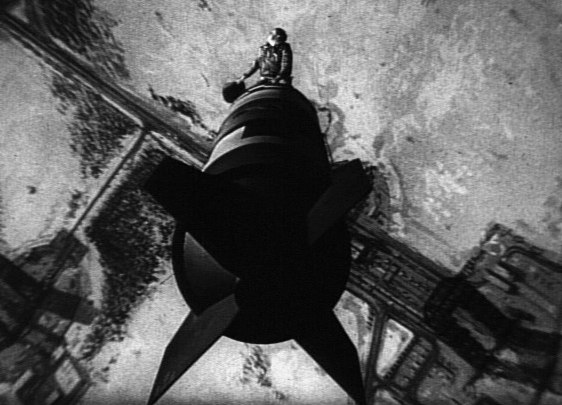 |
| Don't know where, don't know when... |
1. Nuclear weapons and the doctrine of “mutual assured destruction.” This state of affairs seemed to many, as the acronym suggested, “MAD.” Kubrick portrayed the growing suspicion, in “Dr. Strangelove,” that the people who had brought us to this precipice must be nuts. This is where the “peace symbol” came from originally: the “Ban the Bomb” movement.
2. The endless little wars without victory: Korea, then Vietnam. Again, this seemed insane: sending kids off to kill and die without any clear objective. Worse, the people in charge did not seem to understand that this was a problem. I remember Humphrey referring to the “politics of joy” while Vietnam was going on, and referring to Nixon refusing to debate as “our Vietnam.” As if this war was a normal state of affairs. It was as Orwell predicted in 1948: the endless wars without result, among shifting alliances. Eastasia had always been fighting Oceania. Due to the danger of being drafted, this in particular bothered the rich college kids. For the poor, it was probably more like an opportunity.
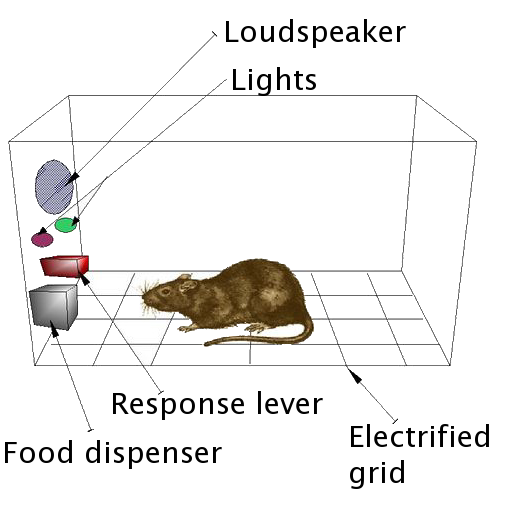 |
| The process of education as conceived by BF Skinner. |
3. Behaviourism. Perhaps this was just me, but I don’t think so. Scientism had run amok, and was seeing the average human being as an object, no more than cattle. It was all too revealing of what those in power really thought of the rest of us; confirmed again later by the tales of the CIA experiments with hallucinogens. Orwell and Huxley saw this early, and it resonated. We forget that a lot of what was happening in the 60s was a rejection of science—“plastics”; “back to the land.”
So the primary enemy was big government, with authority of all kinds under question, notably including science and technology. That is where Rachel Carson and environmentalism comes in: not as some new distrust of corporations or capitalism—pollution was and is worse in Communist countries—but a new (albeit revived from the Romantic era) distrust of science and technology. Which everyone had loved at least since the 1920s.
It is terribly ironic, then, that those who see themselves as the inheritors of the 60’s counterculture also see themselves as the supporters and defenders of big government, on the one hand, and science, on the other. Conversely, it is ironic that those on the right, the real inheritors of the 60’s, still despise the counterculture of those days.
Those who formed the counterculture then often saw themselves as on the left. Not always, though: Kerouac liked Taft, and Dylan liked Goldwater. More basically, they were against big government.
 |
| Humphrey, Johnson, to the left, Reagan to the right. |
And in those days, it was not a clear choice between big government on the left and small government on the right. Lyndon B. Johnson was the biggest advocate of big government ever to sit in the White House. Humphrey was from the same mold. These were the bad guys. Goldwater was obviously an advocate of smaller government. But so—we seem to forget-- were George McGovern, Jimmy Carter, and Jerry Brown. It wasn’t until Walter Mondale in 1988 that the Democrats clearly chose the path of big government again.
Richard Nixon, on the other hand, was a big government conservative, as were the Ontario PCs of that day. He introduced what was then called “the Imperial Presidency,” tried for his own version of Obamacare, and imposed wage and price controls, an interference with the market that seems shocking now. It was not until Reagan in 1980 that the Republican Party clearly chose the path of small government.
So it has only been since about the 1980s that the left has become consistently big government, and the right has become consistently small government.
And what has happened over the same time to the relatively rich college kids who were the hippies, or at least what we used to call “weekend hippies”? Over time—in fact, circa about the 1980s, their forties, they became yuppies, then dinkys, and then the political (and business) establishment. Once they were themselves in control of the levers of power, their conviction that those in control of the levers of power were corrupt began to waver. There was no longer any constituency for a small-government but left-wing candidate.
Which is understandable; but I wish they’d at least admit the sell-out.
In the meantime, though, the realization that the emperor had no clothes that began with rich kids back in the 60’s has remained and grown. This is what my friend was noting, the decline in public trust for all kinds of authorities since the 1960s.
Leaving aside the specific triggers of the 60’s, this has to do with the rapidly growing access to information of all kinds, bypassing “authorities” in general, which began with TV in the 60s.
The richest and best educated were, naturally enough, the first to take advantage of the greater information flow to think for themselves. Hence middle-class kids began to “question authority” and “question everything.” But that process has now moved down the power and money chain.
Now that we have the Web, it is easy to underestimate the importance of TV when it was young. In the day, it really did seem significant that the Viet Nam War was the first televised conflict: the sordid face of war was now seen in every living room. It was suddenly important that Kennedy looked better than Nixon on TV. Despite its dross, TV was a huge new information medium. It was vastly more important than radio, because we are primarily visual creatures. For us, seeing is believing. Radio at least felt as controlled as print. Television at least gave us the illusion of being able to see things for ourselves. And things turned out to look different from the way they had been described. First politicians, then wars, then other things.
At the same time, the advent of TV left the cheaper radio spectrum available to the young. Hence rock and roll, and the 60s music culture that became in large part the communications medium for its political culture.
The computer, the Internet, the cell phone, the tablet, have one by one expanded that circle again and again. There is no end in sight. So a growing suspicion of social authorities of all kinds is only to be expected. Just as happened, in a smaller way, with the invention of movable type. That led to such things as representative government (i.e., democracy), the Reformation, and modern science, the last a reaction against accepting the authority of the ancients over present experience.
It is interesting to ponder what the current media revolution, far more dramatic in nature, is likely to produce in social and political terms.

