Playing the Indian Card

Sunday, December 15, 2013

You Never Gave Me a Goat


Is Papa popping off again?
Pope Francis is causing quite a stir: Time’s Man of the Year and all that. I have not commented much on him yet, largely because I’ve been in mourning over the loss of Pope Benedict’s leadership. I was always Benedict’s biggest fan. But I cannot agree with those who feel Pope Francis is somehow letting down the side.

It rankles me, I admit, when I see a lot of leftists who never before gave a flip for Catholic teaching suddenly enthusiastic about Pope Francis. It rankles me as much when I see rightists and traditionalist Catholics upset and angry with him. Summer soldiers, I suspect, on both sides.

Religion is not politics, and politics is not religion. It is pretty nonsensical to talk about a pope being either “liberal” or “conservative.” Benedict was a theologian, the master of Catholic doctrine. Francis is a pastoral pope. That explains any apparent difference.

“Christian conservatives” in America, who have fought for many years against gay marriage, against abortion, for traditional sexual morality and against growing secularization, no doubt feel now as did the older brother of the prodigal son:
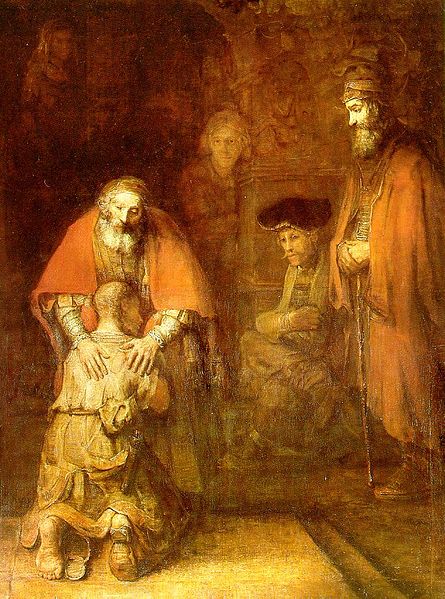

Rembrandt imagines the prodigal son. But what about his brother?
"Behold, these many years I have served you, and I never disobeyed a commandment of yours, but you never gave me a goat, that I might celebrate with my friends. But when this, your son, came, who has devoured your living with prostitutes, you killed the fattened calf for him."

But as the father of the parable points out, this is about the new evangelization. Christian conservatives are already on the right track; there are more souls in need of salvation on the left. The good shepherd, remember, will leave the flock in order to rescue even one lamb who has strayed. Jesus ate with publicans and tax collectors, because the well do not need a doctor. And swagger over this all you want, if you really want to, leftists.

And you rightists, if the left has lately been in the wrong on matters of faith and morals, you in your turn are in peril of the sin of self-righteousness. There is no moral credit to be gained, for any of us, by holding this or that political opinion at no particular risk to our own interests. Praying loudly in the market earns no merit.

Now let's look at specific charges against Pope Francis. We should begin by clearly acknowledging that nothing prevents a pope from being wrong on anything, so long as he is not speaking ex cathedra. There is nothing doctrinally at stake here. Still, it seems to me that what he has said has been perfectly correct, even necessary.

The Pope has been quoted as saying that we must not overemphasize the issues of abortion and contraception, that these can become an “obsession”:

“We cannot insist only on issues related to abortion, gay marriage and the use of contraceptive methods. This is not possible. I have not spoken much about these things, and I was reprimanded for that. But when we speak about these issues, we have to talk about them in a context. The teaching of the church, for that matter, is clear and I am a son of the church, but it is not necessary to talk about these issues all the time.”

He is right. It is hard to think of a sin more objectively grave than abortion. However, religion is about much more than ethics, and there is much more to ethics than sexual mores.Since the society around us is obsessed with sex, there is a real danger here of getting bogged down and allowing the message to be distorted.

Pope Francis has angered some, for some reason, by refusing to judge homosexuals:
“During the return flight from Rio de Janeiro I said that if a homosexual person is of good will and is in search of God, I am no one to judge.”

When the pope says “who am I to judge?” he is perfectly right, and is echoing Jesus. The Church, let alone individual Christians, is not here to judge, but to offer forgiveness and salvation. The accuser is that other guy. Moreover, sin requires motive, and none of us truly knows another’s heart.We can say what is a sin; we cannot say who is a sinner.

Pope Francis has been accused of indifferentism, or moral relativism, for having told an atheist interviewing him that everyone should simply follow his conscience.

“And I repeat it here. Everyone has his own idea of good and evil and must choose to follow the good and fight evil as he conceives them. That would be enough to make the world a better place.”

Indifferentism? He is only expressing indifferentism if one believes that different consciences are going to say different things. This would be true, in turn, only if there were no God. So who's the heretic here? Who here is really assuming moral relativism?

Who is God? Christ is “the Way, the Truth, and the Light.” God is supreme Good by definition. So, if any one of us sincerely seeks the truth, and sincerely seeks the good, he is a good Christian and not an atheist at all, whatever even he himself might pretend.

Conversely, if it were possible, would you really want to follow Catholic teaching against your own conscience? Would that really be a moral thing?

Last but not least, Pope Francis has been accused of soft-headed economics for objecting to unrestricted free markets. In the recent apostolic exhortation  Evangelii Gaudium, he writes:

In this context, some people continue to defend trickle-down theories which assume that economic growth, encouraged by a free market, will inevitably succeed in bringing about greater justice and inclusiveness in the world.

Michael Novak argues that the English translation has been butchered. A more accurate translation from the Spanish or Italian, then, would be:

In this context, some people continue to defend overflow theories which assume that economic growth, encouraged by a free market, will by itself succeed in bringing about greater justice and inclusiveness in the world.

The Pope can hardly have intended the specific implications of the term “trickle-down” in the American political context, so it is surely best to read the passage without it.

Leaving that aside, then, isn't what Pope Francis is saying obviously true? Does anyone believe that the free market, by itself, could or would adequately provide for those, such as the orphan, the disabled, or the elderly, who have little or no directly economic contribution to make? There can be waste, misallocation, and moral hazard, but does anyone believe we can do without any and all social safety nets?

Is Pope Francis acting mischievously, though, by talking down capitalism when there is no clear and better alternative? Not at all: that is the very point. With the fall of Marxism, there is indeed no clear and organized economic alternative to the free market. The danger is that this mere economic theory, in these circumstances, will be looked upon as having supernatural powers—the power to bring us some sort of paradise on earth. It will, in other words, become an idol, a pseudo-religion. To be specific, the worship of Mammon.

Gains that can be made through politics or economics are mostly incremental. The alternative to capitalism is religion, not Marxism.

And here's our bottom line: Reports are that there is a marked upswing in confessions since Francis took the helm. If this is true, it automatically validates Pope Francis’s tactics.It turns out that our new Pope is not just a brilliantly subtle theologian, but a master of the pastoral crosier.


Monday, December 09, 2013

No Surrender


The Greek General Pyrrhus, who won victory after victory against Rome. "Pyrrhic victories."

The secret to most success is simple: just don’t give up until you are winning. If you never give up, you never lose.

Of course, it is not quite as simple as that in practice: sometimes you have to cut your losses before you bankrupt yourself. But many great empires have been built on this simple principle. In both the first and the second Punic Wars, Carthage began by beating the crapusculum out of Rome. They sank the entire Roman fleet twice. Hannibal stormed about Italy at will, pillaging and looting, without effective opposition. But Rome, behind her walls, refused to accept defeat, and never agreed to peace—until they finally won a battle or two. Then, they were ready to talk.


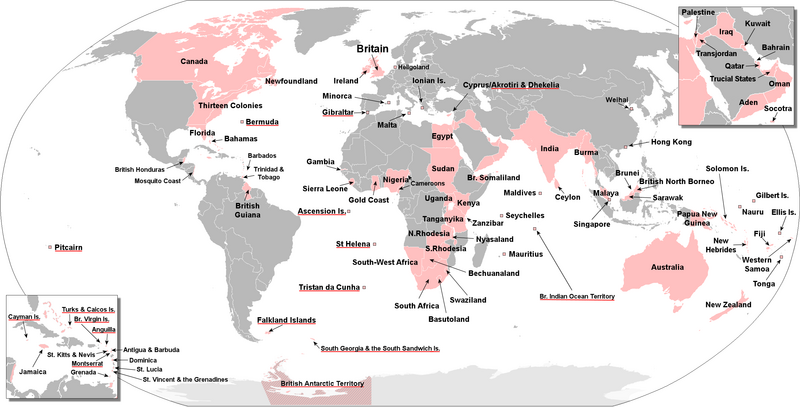
The black knight in Monty Python and the Holy Grail is the embodiment of the historic English character. Bulldog tenacity; the stiff upper lip; sangfroid; keep calm and carry on. Everything is only a flesh wound. From Crecy to El Alamein, Britain always loses every battle of every war--except the last. An orderly retreat is seen, rightly, as a great victory. This kind of perversity built the biggest empire the world has ever known.


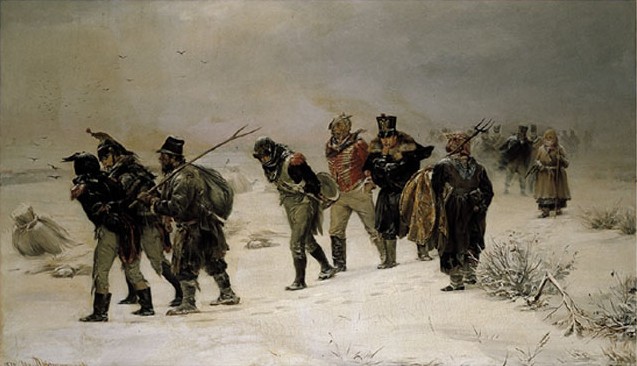
The French retreat from Moscow, 1812.

Russia, too, aided by her vast distances, has perfected the technique. Napoleon defeated Russia in 1812, and occupied Moscow. Hitler defeated Russia in every encounter in 1941. But each time they lost, Russia just retreated and built another defensive line a hundred kilometers further back. Eventually, both Napoleon and Hitler punched themselves out, and, exhausted, were forced to withdraw. What can you do when the other guys just won’t lie down and die?

Sunday, December 08, 2013

Seeing the End of America's Threescore Years and Ten

This one lasted about 100 years on top.

In his 1985 state of the union address, Ronald Reagan said “We must stand by all our democratic allies. And we must not break faith with those who are risking their lives—on every continent, from Afghanistan to Nicaragua—to defy Soviet-supported aggression and secure rights which have been ours from birth.”

How dated does that sound, 28 years later?

Many are now saying the USA is in decline. And it is true. Not necessarily economically or culturally; but it has definitely declined on the world stage over the past few years, in terms of its diplomatic power.

This might seem surprising only twenty or twenty-five years after the US won the Cold War, “ending history” as we know it and establishing itself as the sole world hyperpower. Shouldn’t we now have total American world hegemony? Instead, almost at the instant of its greatest success, America is retreating everywhere.


The last days of the Berlin Wall.

But there should be no surprise at this. The dynamic here is inevitable; it is why we need never fear any kind of world hegemony or one world government. The whole idea is a will-o-the-wisp. It’s all swamp gas. For better or for worse, it can’t happen.

It takes a sense of clear and present danger to motivate any group of people to pay the price and bear the burden to arrive at great power. Otherwise, it just isn’t worth it; especially for a democracy. The game is never worth the candle. As a result, there is no way to move from a bipolar to a unipolar world. The instant all serious opposition is overcome is the instant any organization either drops its guard and stops taking care of business, or splits into warring factions.

Conversely, any nation or movement that suddenly lunges for world power will automatically arouse opposition substantial enough to make it unlikely to succeed—as it begins to appear to others as a clear and present danger. So any nation that openly seeks world power won’t get it; any nation that gets close to world dominance will be there because it does not want it.

In Reagan’s day, the Soviet Union still looked like a world-wide threat; an "evil empire," or empire of evil. His call for sacrifice made sense to the American people. Now, it does not. If there is a threat to the US from Al Qaeda, Al Qaeda is in the end just a handful of conspirators. An evil gang, not an empire. Moreover, the simpler way to avoid the threat seems to be to withdraw from the Middle East, rather than continue to fight. China’s rise may trouble some geopolitical thinkers, but it is a hard sell to the American public, so long as they derive obvious and immediate benefits from that rise, in cheap goods.

So in the natural course of things, the US will probably fall back now into isolationism. We will slip back from a unipolar world to a multipolar one, as before WWII, but with new players.

Thursday, December 05, 2013

Is Superman a Fascist?


Superheroes in general, according to a recent piece in Salon magazine, “are a bunch of Fascists.”

How so? Apparently “The main problem is force: sheer physical force, which lies at the heart of the superhero myth…” This is “essentially a fascist concept.” Beyond this, it appears that superheroes are “hypercapitalist.”

Yes, superheroes defeat their enemies by sheer physical force. So did Churchill and Roosevelt, not to mention Lincoln or Washington. So, by this logic, they are more fascist than Hitler or Mussolini—who in the end failed to apply enough force to defeat their enemies.

Now, as to “hypercapitalism”: I doubt anyone can really figure out Superman’s favourite economic theory. But let’s suppose all these superheroes are capitalists. Bruce Wayne and Tony Stark, after all, are rich. This means they are not fascists. Fascism is a form of socialism: the Nazis were the National Socialist German Workers’ Party, and Mussolini split from the Italian Socialist Party. Stalin, whom our present writer also cites as a fascist, was the general secretary of the Russian Communist Party. If these guys were capitalists, who isn’t?


Flag of the Fascist Party, showing the fasces.

On the other hand, the one core belief of Fascism is corporatism, as the symbol of the fasces is meant to convey. Individualism is to be subsumed into the movement, the race, or the state.

The superhero, on the other hand, is the very embodiment of individualism—one man against the galaxy. The unique, colourful costume is the opposite of a uniform.


First appearance of Batman, 1939.
On top of that, it is an odd and possibly significant fact that the modern superhero is a uniquely Jewish invention. Jerry Siegel and Joe Schuster, who invented Superman, were both Jewish; and he is the acknowledged first of the genre. Bob Kane, who invented Batman, was also Jewish. So is Stan Lee of Marvel, the genius behind the entire “silver age,” creator of Spiderman, the X-Men, Iron Man, and the Fantastic Four. So was his longtime collaborator Jack Kirby.

Superman appeared first in 1938. Batman appeared first in 1939. Stan Lee was born in 1922, and would have been 23 when World War II ended. His first writing job was on Captain America in 1941. Captain America's specialty was, of course, fighting fascists.And he started doing it a full year before America entered WWII.

Captain America #1, appearing a full year before Pearl Harbor.

Can anyone really believe these Jews were all secret Nazis, at the very time that Hitler was doing his worst to the Jews of Europe?


The golem of Prague. Remind anybody of The Thing?

In fact, the reverse is probably the case: the entire superhero genre was probably inspired by Jewish models, such as Samson, the Judges, David, and the Golem of Prague. The lone superhero fighting for justice and to protect the wider community has a long history in the Jewish tradition.

As a matter of fact, there's a thesis in that: the Jewish origin of the superhero.

Wednesday, December 04, 2013

Why They Love Cohen in Norway


Leonard Cohen is a gentleman in the full meaning of the term. Montreal produces them. This is why he is understood and appreciated in Europe, but not in the U.S.A.

Are we missing something in the rest of North America in lacking this class of gentlemen, of people trained in good manners, style, taste, and honour?