
Playing the Indian Card

Showing posts with label college. Show all posts

Friday, May 26, 2017

A Plan to Revive the Secular Humanities


The Humanities are in full collapse. Nobody wants to study “Humanities” any more, and for good reason: they are not taught. Instead, left-wing politics is taught under their guise.

What has happened, and how can we fix it?

The traditional system, peer review, cannot work any longer. It relies upon the field being essentially sound, and only preserving whatever already is. If the system is already corrupted, it only preserves the corruption. How do you clean house and start again?

One approach often suggested is to return to the idea of a Western Canon, a fixed body of knowledge, the “Great Books.”

This seems attractive, but there are two problems.

First, it is artificially limiting, and in a way that is insupportable. We ought not to be studying only the “Western” canon. Any honest search for truth and wisdom must also include the great books of the East: the Confucian classics, the Upanishads, the Tao Te Ching, the Analects, Ibn Khaldun, and so forth.

Okay; not so hard to fix that, on the face of it.

But there is a second problem. It is not just the subject matter that is depraved. It would be perfectly easy to teach a course, or write a research paper, on “the problem of patriarchy in the Old Testament,” or “The homoeroticism of the Arjuna-Krishna relationship in the Bhagavad Gita.”

Arjuna meets Krishna

This is the deeper problem: not the current subject matter of the Humanities, but the interpretive lens.

The hard sciences are all about the interpretive method. It is simple, straightforward, and mechanical: experiment and observation.

By comparison, the Humanities are all at sea, and that is our problem. You have a play by Shakespeare: what do you do with it? How do you, as a scholar, add any value to what Shakespeare has already done?

What, in other words, is the purpose of the Humanities? Very well; read Aristotle. But what do you need a professor for?

This used to be clear: the interpretive lens was theology. Or rather, since theology itself has oftgen become free-form, it was the magisterium, the deposit of faith. One was adding to the mountain of known truth. How did Shakespeare’s Portia conform to or violate the moral law? How did she illuminate it?

Portia: Millais

This is why universities—and schools at lower levels as well—were originally religiously based. That anchor of faith was necessary to the enterprise. Theology was the queen of the sciences.

What we have now is an ark without a rudder. This is actually a problem for the hard sciences as well; but less obviously. For the Humanities, the problem is almost immediate.

The obvious attempt to compensate for this was scientism: the elevation of the techniques of science and its current conclusions to the status of theology.

This was disastrous.

Science cannot touch the Humanities. Science can deal only with what is observable by the senses, the physical, and, by definition, metaphysics is beyond what it can see. So this approach required the invention of a series of pseudo-sciences, ultimately nonsensical, but immediately embraced and pressed into academic service because they offered the Humanities and Humanities scholars an interpretive lens, a mechanical method, which would allow them to churn out papers and courses. Marxism was the original one, and still widely popular: you could do a Marxist or class interpretation of Shakespeare, or Plato, or anything. Freudianism is another popular one. Then there is feminism, behaviourism, structuralism, deconstruction, post-colonialism, and on and on. A new one pops up every few years. All the better, because the low fruit gets picked by that time. The definitive Freudian interpretation of Hamlet has already been written; to write it again, you would have to do better. But now there is an opportunity to do the feminist interpretation.

All of them start out as nonsense in any scientific or philosophical terms, and as a result anything they produce is nonsense. GIGO. Their sole advantage is that they are easy to do.

The obvious solution is to re-establish the Humanities on a religious basis. And this has started to happen, in the movement to re-establish the Christian college. Examples are Our Lady Seat of Wisdom Academy in Barry’s Bay, Redeemer College in Ancaster, and Trinity Western University in BC.

There is still perhaps a bit of a problem with that. It is hard to fit in non-Western materials, because they begin with such different assumptions. And, of course, there is an issue for many with public funding of denominational institutions.

Failing that, at a minimum, public universities’ Humanities departments might set the following rule: no interpretive method may be legitimately applied to a work if the interpretive method is newer than the work itself.

This principle alone would kill much of the faddish nonsense.

It would actually be reasonable to offer a Marxist interpretation of Steinbeck’s The Grapes of Wrath or Malraux’s Man’s Fate. Here, after all, Marx might well have been an influence, and pointing this out could help in understanding the work.

It would, on the other hand, not be reasonable or academically legitimate to offer a feminist interpretation of either, Malraux or Steinbeck, since modern feminism came later, and so cannot have been an influence.

Without this rule, lazy scholars can spend their time learning feminism instead of engaging Malraux.

With it, the work must be engaged with on its own terms, and some awareness of the history of ideas must be displayed and conveyed.


Thursday, March 09, 2017

Coming: Cheap College Online


Scott Adams, the creator of Dilbert, believes college, now almost prohibitively expensive, will soon be free online.

I do not think he is entirely right. His vision calls, for example, for a suspension of all copyright for online education materials. This is a non-starter. It expects everyone to work for free. Not right, and not going to happen. Some may choose, as they can now, to offer their work for free under Creative Commons License.

He also writes “you need some form of accreditation.” I think he overlooks the obvious path. In the future, I suspect, name institutions like Harvard will be limited to creating evaluation procedures. Where you acquire the knowledge is wide open. The university simply certifies that you have it.

But his basic point is correct. It is true right now, at this moment, that online teaching platforms are more flexible, allow better experiences, than classrooms do. At a small fraction of the cost, when you calculate in the need for students to move and cover living expenses.


Monday, October 24, 2016

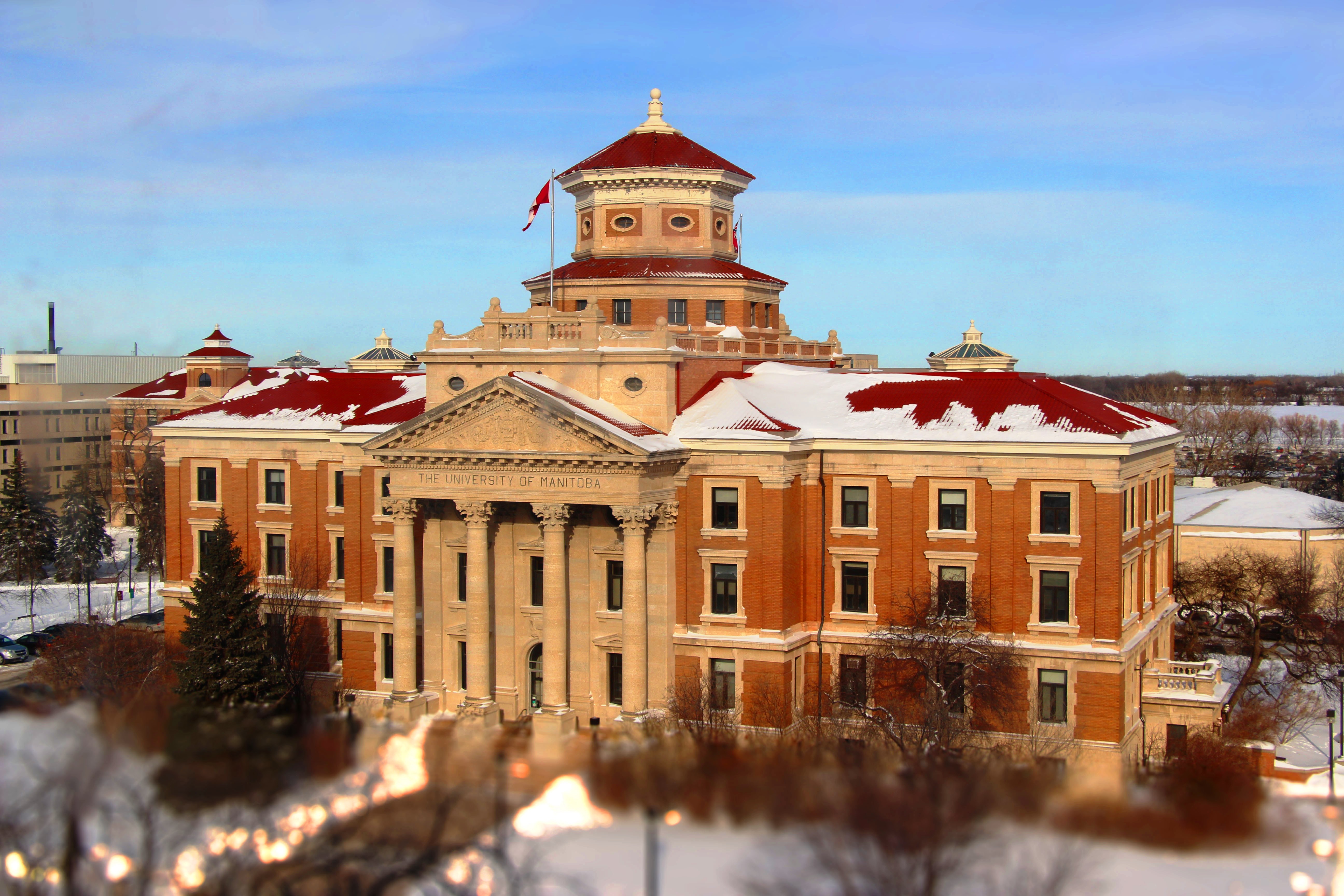
Discrimination at University of Manitoba


Bastion of white privilege.


A recently dismissed sessional instructor at the University of Manitoba has written a piece in the campus graduate student magazine protesting the system of student evaluations that caused her not to be renewed, on the grounds that it is unfair to minority professors.

Her evidence is that studies show “minority faculty often receive significantly lower and more negative evaluations in comparison with their white counterparts.”

Given that no studies are clearly cited, we need not accept that claim. There is a reason why academic standards require clear references and footnotes. Lose that, and anyone can say anything. The word “often” renders it ambiguous in any case—it does not necessarily mean more often than “white” instructors.

But let us assume that is so. It does not demonstrate that said minorities are being discriminated against because of their ethnicity. It might equally demonstrate that the current regime of affirmative action in hiring and promoting is, predictably enough, producing an inferior product. Why would it not, when you hire not on the basis of merit, but of other irrelevant factor like genitalia or skin colour? Merit must suffer, and especially among those of the preferred skin colour. It will correspondingly rise in those groups discriminated against—here, the “whites.”

Odd, though, that this could be a consideration for someone named Sardana Nikolaeva. Isn’t that an Eastern European name? Yet she is implicitly claiming here to be non-white. If Eastern Europeans are not white, who is? Does the term mean anything? Is there really a general prejudice toward Eastern Europeans in Canada?

Indeed, it seems quite a stretch for her to claim she got her--by her own account--universally negative evaluation sheerly because of her supposed visible minority status. Especially since she demonstrates the truth of the complaints in this very essay. Among the intolerable student comments she quotes are, ”she had an agenda,” ”she made me feel ashamed that I was white,” “she hates Canada and our culture,” as if they could not possibly be true. But her next paragraph begins, “As any predominantly white neo-liberal educational institution, the University of Manitoba functions within the politics of ignorance.” Is she not saying that any “white” institution is ipso facto “ignorant”? Would that not include Canada?

The seminar she taught, she explains, “revolved around the topics of racism and discrimination, white privilege, problematic aspects of multiculturalism, and experiences of marginalized communities in Canada.” Doesn’t sound like she has any political agenda, there, does it?

You might also note that much of what she writes is rather difficult to make plain sense of. It is not just the illogical assumption that disparity of outcome must prove discrimination, or her arbitrary concept of “white.” It is sentences like this: “The biased attitudes expressed in student evaluations of minority faculty are particularly problematic as they contribute to already existing practices of discrimination, marginalization, and lack of support from peer faculty and administrators in predominantly white campuses.” That is unnecessarily obscure. Why not “Biased student evaluations add to existing discrimination from colleagues and administrators.” An inability to express thoughts clearly is the most basic sort of incompetence in an instructor.

Anyone who has been reading the news for the past twenty or thirty years, too, must be surprised by the claim made here that college campuses generally are hotbeds of anti-minority and anti-female sentiment. The reverse is the obvious case.

It is simply so that, in a democracy, it is improbable if not impossible to see the government intervene to protect any genuinely oppressed minority from general discrimination. If there really is general discrimination, such measures could not pass the bar of majority approval, pretty much by definition.

It follows that any intervention by the state or by state institutions like public universities in favour of one group over another will always be a case of increasing an advantage already bestowed upon that group by common prejudice.

Black like me...


We can therefore expect student evaluations, in fact, to already be biased in favour of, not against, “visible minority” instructors. But this is not enough. Advantaged groups always expect more advantage. The truly oppressed learn through experience that they must remain silent.

But this, in the end, does not logically apply to an instructor with an Eastern European name. Here, the demand for special rights for preferred minorities is clearly only a cover, an alibi, for discarding the idea of student evaluation of professors in general. The peons of the unwashed majority must be understood to be prejudiced and incompetent, and kept in their place.

Yet the very idea that the customer should have no say in his own interest would be deeply shocking any other context than education. Why should we not choose our own professors, just as we choose our own doctors, lawyers, repairmen, or legislators? Even if the student did not have that natural and inalienable human right, isn’t he, as a purely practical matter, in a better position than anyone else to evaluate the quality of instruction?

In the end, the essay demonstrates the frightening totalitarian tendencies of the modern academy.


Saturday, June 04, 2016

Dead Poets' Society


Students at Yale have just presented a petition complaining that too many of the poets in the English literature curriculum are dead white males. Students at Seattle University have just succeeded in forcing the Dean of Western Civ to go on administrative leave, on the grounds that Western Civ involves too much Western Civ.

I almost want to agree with them. I sometimes think of myself as the original protestor at how culturally narrow the traditional humanities curriculum is—I was arguing this way back in the early Seventies. That's why I ended up, having started as an English major, majoring in Comparative Religion. Comparative Religion was the only strategy allowing me to study perhaps ninety percent of the best thoughts of mankind. Anywhere else, you were effectively limited to post-Renaissance Europe. A rather tiny corner of the world.

I believe we are failing to educate ourselves, or our future generations, if the typical humanities curriculum does not include full majors, let alone courses, in the Chinese classics, the Vedas, and the Talmud. In any one of them, there is a hell of a lot more worth knowing, studying, and thinking about, there than in any given subject in the social sciences. Plus, of course, the valuable intellectual exercise of trying t ocome to terms with a foreign culture. Why, other than laziness or chauvinism, this obsession with only the Greeks?

But still I cannot agree with these present protests. They are moving in exactly the opposite direction. Instead of adding the study of other cultures, they are actually subtacting the study of any cultures at all.

Witness what has come to be called “culture studies.” They include no study whatever of the named culture. Instead, they deal only with modern politics. It is as if there was no China until Westerners appeared at the ports, no India before Clive, no Arabia before T.E. Lawrence.

So why does that appeal to “minority” students? I guess it's because it's an easy degree. It limits everything effectively to the twentieth century and its views; it limits everything to familiar issues. It limits things by and large to things they might well already know. The more so since they can then generally hand in essays based only on their personal experience as a “minority.” No thinking, no reading involved. And they cannot be challenged—everyone is the final authority on their own life.

And easy for the profs—they don't have to learn anything either. They just have to be.

Yet it is a special kind of madness to complain that English literature should cut out all the dead white males. That's like demanding that English studies drop the English.

In one of the bitter ironies of nature, the English turn out to be white of skin. And the major you sign up for is, after all, English, not Hindi or Swahili. English has become an international language over the past hundred years or so, and you begin to see contributions from folks of other ethnic backgrounds. But if you are going to study English literature, inevitably, something like ninety-nine percent of available authors will be white.

Insist on something like the demographics of the American present, and you are going to force-feed random junk, if anything. But then, what the protestors really want is that the course be limited to current authors. Much easier to read, if perhaps of much less educational value.

As for women, since women have not traditionally had to earn a living, there were, until recently, far fewer women spending the blood, sweat, and tears to get published. To insist on proportions reflecting their proportion of the population, instead of their proportion of actual published authors, would again force us either to read only random junk, or current authors.

If current authors are easier to read, they are not English literature. First of all, we cannot communaly judge their quality until they have stood a test of time. The top-grossing novels, or movies, of any given year are rarely the best-remembered. I despair of Dan Brown's chances.

And, too, in literature, the dead get a vote. Writing is immortal by its nature; everyone who ever wrote in English is still in the conversation. To read only the living would be the greatest discrimination.


Thursday, October 03, 2013

The Higher Education Bubble: A Brief History


The Four Aging Lads in 1969.

This piece argues that the higher education bubble in the US—if you agree that there is a bubble—is caused by a shortage of suitable jobs, driving the price of admission for those jobs up.

I don’t think that is the real story.

The history suggests that the movement has been mostly on the supply, not the demand side. As Anne Coulter has pointed out, at the time of the Second World War, the average American had a grade eight education. But immediately after the Second World War, there was the GI Bill, causing a flood of 2.2 extra students who might well not otherwise have been able to afford a higher education. You can see the immediate effects on the culture. Pop culture began to assume a mass market with a college education: The Lettermen, The Four Freshmen, The Four Lads with “Moments to Remember,” the folk boom, the Bohemian musings of Salinger’s short stories.

While the GI Bill was US legislation, the influence of American culture was so great that its effects were felt everywhere; going to college became the normal thing. So too with further US legislation.

The GI Bill sent through a second wave of 1.2 million students after Korea. Add in the “Sputnik Crisis” of 1957. The US’s immediate response to this demonstration of Soviet scientific prowess was to funnel, in the National Defense Education Act, billions of additional dollars into colleges across the US. College funding in the US increased sixfold.


Actually, he had cause.

And then there were the Sixties. The GI Bill was extended to all veterans in the Sixties, and their families: 6.8 million extra collegians. Then there is the issue of the draft deferment given to college students during Vietnam. This too must have had the effect of convincing a huge cohort of young people who would not otherwise have considered it to hang on and get a college degree, or two, or even three.

And so, over a generation or so, 1945-1975, the Baby Boom generation, we have a wholesale manufacturing of new degrees and degree-holders—a glut on the supply side, regardless of demand.

That alone might account for the Sixties. Suddenly you had a whole lot of people going to college who in earlier generations would not have gone to college. People who did not necessarily have a great interest in scholarship or study or the intellectual enterprise.

This was probably a lousy idea.

First, this painfully extended period of dependency is cruel to youth. No wonder, then, that we saw stirrings of rebellion almost immediately, in the 50s, with the emergence of the disaffected teenager and the generation gap; reaching full bore in the 60s. The painfully extended adolescence also surely called forth, almost demanded, the sexual revolution. Since young people could not afford to marry, they sought release in casual sex. It was and is unreasonable to expect otherwise. Societies that really expect celibacy also permit marriage during adolescence. Hence the breakdown of the modern family.

Second, it probably caused the demographic winter we now face throughout the developed world, which really threatens to destroy Western civilization. On the one hand, couples are discouraged from having children by the knowledge that they will now have to support them well into adulthood, in addition to the crippling burdens of tuition. On the other, young people going through their multiple degrees must put off marriage and childbearing for longer. They cannot yet afford it.

Thirdly, the effect on higher education itself has been awful. This one really is a zero-sum game: you cannot raise IQs. More people coming into higher education means the average quality of college graduates and college courses must decline. Rather than raise the general standard of education, for the most part all we have really managed to do is to begin to do in 16 years what we used to do in 12. In particular, the draft deferment has prompted a lot of people to go into graduate school, and then college teaching, who are not themselves scholarly by nature.

This has led in turn to a growing class consciousness. We saw it almost immediately in the 50s: a divide between greasers, who did not go to college, and listened to doo-wop and rock and roll, and the college kids, who listened to folk and jazz and read beatnik poetry. This original divide has blossomed since into the full-scale “culture wars.” Weirdly, during their formative younger years ,the upper class had no money, while the lower class had some, because they already held jobs. This has caused an odd distortion in our politics, so that the rich professionals see themselves as "leftist," while the working poor, the "rednecks," are supposed to be "right-wing."


Meet the new upper class

Now that college is no longer about scholarship or the pursuit of knowledge, it has had to redefine itself, essentially, as a kind of initiation procedure into membership into the broad upper class, the clerical or professional class. One gets a college degree, and especially a higher degree, not by hard work or intelligence, but by conforming to the imposed consensus, to the group interest.

This is the value of the college degree now, and it explains why they are still preferred by employees, even though the actual skills and knowledge gained can seem irrelevant to the job. It demonstrates a reliable commitment to the class/profession. One is going to go along and is not going to rock the boat.

Of all these ill effects, the college tuition bubble, and the college debt bubble, are probably the last and least. But it seems about to make the whole edifice unsustainable.

Thank God.