





 Posts


Showing posts with label apologetics. Show all posts
Showing posts with label apologetics. Show all posts
Friday, May 08, 2026


Saturday, May 30, 2020
The Truth of No Truth
 |
| Frank Turek |
It must be tough to be a Christian apologist or professional debater, like William Lane Craig or Ravi Zacharias. You can have your arguments well researched, as Craig certainly does; but even so, sooner or later someone is going to come at you with something you had not thought of. And you can be left flat-footed.
I fear that tends to happen with Frank Turek. He is not that well-versed in the philosophy. He seems to get flummoxed. When he gets flummoxed, he will not admit it, but resorts to rhetorical tricks.
The person who sincerely seeks truth, wherever that search may lead, is a Christian. Only such a person shows true faith in God. The person who does not sincerely seek truth is not a Christian. You don’t get to be a Christian just by saying so. Frank Turek turns out not to be a Christian.
In a YouTube video I watched, an audience member suggested a possible response to the claim that postmodernism is self-contradictory. Instead of saying “all rules have exceptions,” the postmodernist can say, “all rules have exceptions—except this one.” Unfortunately, Turek simply denounced the statement as “too stupid to answer” and suggested calling the postmodernist who proposed it “poopy-pants.”
Thanks for claiming to speak in my behalf as a Christian, Frank Turek.
Let me respond, then.
The phrase “all rules have exceptions, except this one” to begin with, is not really to the point. A theist or other absolutist could assent to it; a rule can be absolute in principle and still have defined exceptions, or a defined context in which it is true. The Law of Gravity, for example, does not apply in dreams.
The real postmodern position that stands in opposition to theism is “there is no truth.” That is why they speak of “narratives,” and “my truth.” They might say instead, “truth is subjective.” Same meaning. So, rephrase the statement as “there is no truth, except this one.” If you prefer, “truth is subjective, except for this truth.”
But using “this” might be a little misleading. What is “this” in this sentence?
Try to replace it with what it refers to and you immediately get an infinite regression.
“There is no truth except that there is no truth except that there is no truth except that there is no truth…”
“Truth is subjective except for the truth that truth is subjective except for the truth that truth is subjective …”
And the statement never comes to an end. Making it logically impossible on two grounds instead of just one.
Monday, September 22, 2014
Errors about Christianity
 |
| Not Jesus Christ |
One of the most common misunderstandings of Christianity is that it demands belief without reason—“blind faith.” This is “fideism.” For Catholics, it is heresy.
Martin Luther is to blame for this. He wrote, among other things, that “Reason is the greatest enemy that faith has.” Please don’t ask me to defend him on this. Martin Luther is not the final authority for Christianity. Not even most Protestants agree with him on this.
Pope Pius X, in order to stamp out this “modernist” heresy, required all clergy to affirm that “God... can be known with certainty by the natural light of reason... his existence can be demonstrated...” The Catechism of the Catholic Church says “human reason is, strictly speaking, truly capable by its own natural power and light of attaining a true and certain knowledge of the one personal God.” No “faith,” in the sense of a belief in something in the absence of reason or evidence, is required of Catholics. If you in fact believe in anything without reason or evidence, you are a heretic. “Faith in God” means trust in God, not the mere conviction that he exists.
Related to this first misunderstanding is the odd assumption by many that there is no proof of God’s existence. Some will even go so far as to say there is “no evidence” for God. As a matter of plain fact, there are dozens of well-known philosophical proofs of God’s existence. Some of them are given in brief here. Over the history of Western philosophy, there is probably nothing else demonstrated with more certainty than the existence of God--including the existence of the physical world, or the existence of you.
The next common misunderstanding of Christianity is that it holds that all non-Christians (or all non-members of each given denomination) will go to hell. Apparently some Southern Baptists do believe this—I believe the idea comes from Calvin. I leave it to them to defend their claim. For Catholics, however, if you believe whatever you believe sincerely, and you have made every effort to seek the truth, you cannot be faulted. Of course, there is a heavy presupposition that this will lead you to Catholicism. Given that Catholicism is truth, and truth is readily accessible to human reason, it is a strange thing to be sincerely seeking the truth and not to arrive at it. This is referred to as “invincible ignorance.”
The next common misunderstanding is that Christians worship a different God than Muslims. God is, according to the Oxford dictionary “the creator and ruler of the universe and source of all moral authority; the supreme being.” By definition, there cannot be more than one supreme being. Webster’s has: “the perfect and all-powerful spirit or being that is worshipped … as the one who created and rules the universe.” There can be, by definition, only one perfect, all-powerful being. In the words of the Catechism of the Catholic Church: “God is unique; there is only one God: The Christian faith confesses that God is one in nature, substance, and essence.” Therefore, there can be no question of choosing God A over God B to be your God; the notion is nonsensical. God is by definition unique. The most that might be said is that Muslims and Christians have a somewhat different understanding of God.
The next common misunderstanding is that Christians worship a “sky father.” Lord knows where this came from: perhaps from Freud. It is true that God is sometimes depicted, as in the creation of Adam on the Sistine Chapel ceiling, as an old man in a cloud. But one visit to a Catholic Church would prove that this is not the most common representation of the divine. That would be the image of Jesus, a youngish Jewish man. This is the way in which God chose to reveal himself to us, in the incarnation. The two other standard depictions, as the Father and as the Holy Spirit, are a good deal less common. In the case of God the Father, of course, the clouds are purely metaphoric; no Christian believes he lives in the sky, any more than they believe he is their literal father.
Martin Luther is to blame for this. He wrote, among other things, that “Reason is the greatest enemy that faith has.” Please don’t ask me to defend him on this. Martin Luther is not the final authority for Christianity. Not even most Protestants agree with him on this.
Pope Pius X, in order to stamp out this “modernist” heresy, required all clergy to affirm that “God... can be known with certainty by the natural light of reason... his existence can be demonstrated...” The Catechism of the Catholic Church says “human reason is, strictly speaking, truly capable by its own natural power and light of attaining a true and certain knowledge of the one personal God.” No “faith,” in the sense of a belief in something in the absence of reason or evidence, is required of Catholics. If you in fact believe in anything without reason or evidence, you are a heretic. “Faith in God” means trust in God, not the mere conviction that he exists.
Related to this first misunderstanding is the odd assumption by many that there is no proof of God’s existence. Some will even go so far as to say there is “no evidence” for God. As a matter of plain fact, there are dozens of well-known philosophical proofs of God’s existence. Some of them are given in brief here. Over the history of Western philosophy, there is probably nothing else demonstrated with more certainty than the existence of God--including the existence of the physical world, or the existence of you.
The next common misunderstanding of Christianity is that it holds that all non-Christians (or all non-members of each given denomination) will go to hell. Apparently some Southern Baptists do believe this—I believe the idea comes from Calvin. I leave it to them to defend their claim. For Catholics, however, if you believe whatever you believe sincerely, and you have made every effort to seek the truth, you cannot be faulted. Of course, there is a heavy presupposition that this will lead you to Catholicism. Given that Catholicism is truth, and truth is readily accessible to human reason, it is a strange thing to be sincerely seeking the truth and not to arrive at it. This is referred to as “invincible ignorance.”
The next common misunderstanding is that Christians worship a different God than Muslims. God is, according to the Oxford dictionary “the creator and ruler of the universe and source of all moral authority; the supreme being.” By definition, there cannot be more than one supreme being. Webster’s has: “the perfect and all-powerful spirit or being that is worshipped … as the one who created and rules the universe.” There can be, by definition, only one perfect, all-powerful being. In the words of the Catechism of the Catholic Church: “God is unique; there is only one God: The Christian faith confesses that God is one in nature, substance, and essence.” Therefore, there can be no question of choosing God A over God B to be your God; the notion is nonsensical. God is by definition unique. The most that might be said is that Muslims and Christians have a somewhat different understanding of God.
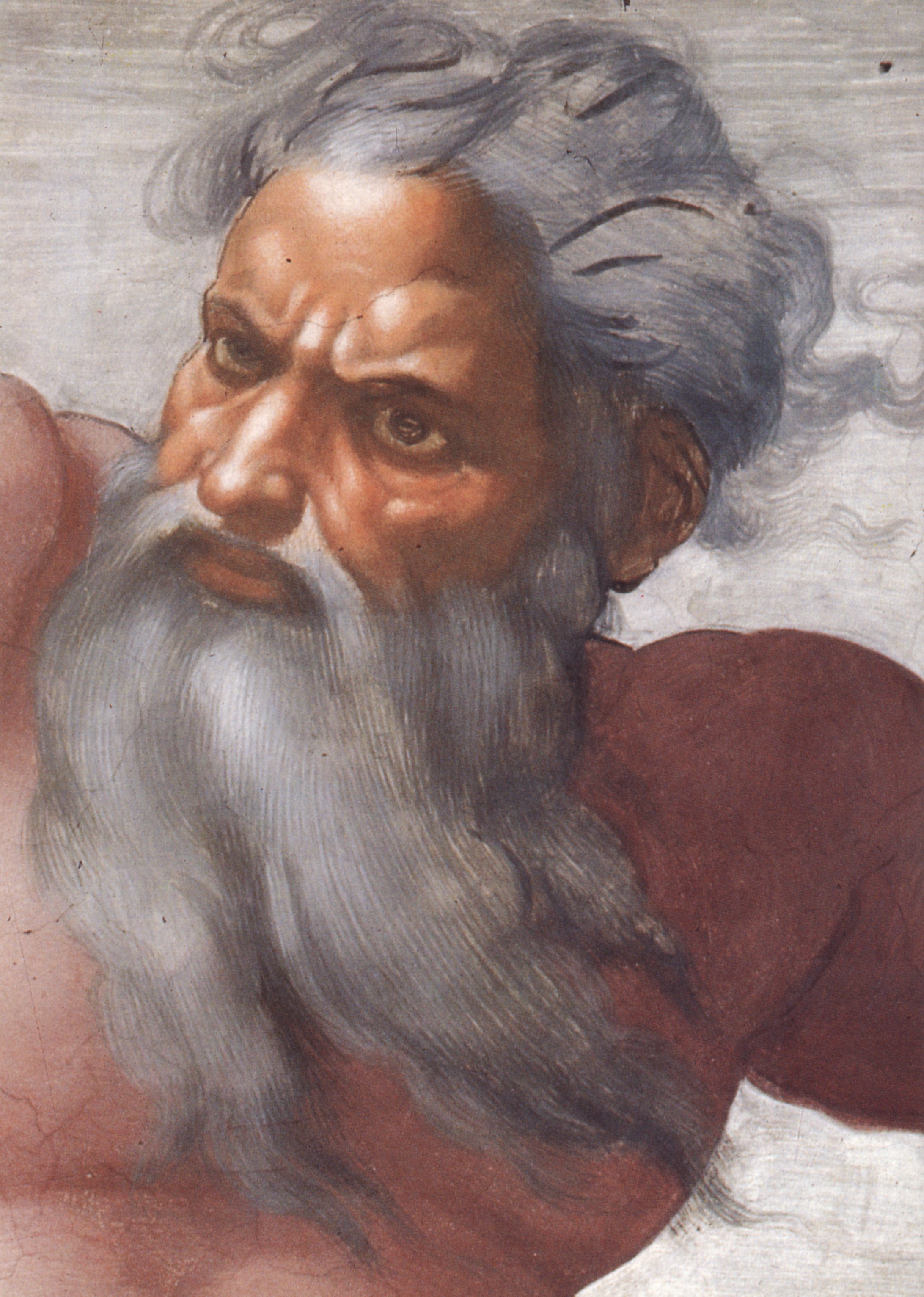 |
| Michelangelo's idea of God the Father. |
The next common misunderstanding is that Christians worship a “sky father.” Lord knows where this came from: perhaps from Freud. It is true that God is sometimes depicted, as in the creation of Adam on the Sistine Chapel ceiling, as an old man in a cloud. But one visit to a Catholic Church would prove that this is not the most common representation of the divine. That would be the image of Jesus, a youngish Jewish man. This is the way in which God chose to reveal himself to us, in the incarnation. The two other standard depictions, as the Father and as the Holy Spirit, are a good deal less common. In the case of God the Father, of course, the clouds are purely metaphoric; no Christian believes he lives in the sky, any more than they believe he is their literal father.
The next common misunderstanding is that Christians think that sin is all about sex. This is pure projection on the part of pagans. No, Adam and Eve's sin in the Garden of Eden was not sex. No, the Immaculate Conception does not mean being born without sex.
One wonders how so many can get the teachings of Christianity so wrong. It is hard to believe it is not deliberate misrepresentation.
Friday, November 30, 2007
Top Five Myths about the Papacy
I know I've heard some of these before. Perhaps you have too. Here's the truth.
Includes a nice clip of ecclesiastical music by Palestrina at the end.
Subscribe to:
Posts (Atom)